A Brotherhood Forged in Grit & Glory
The tribe of the Greybrakke
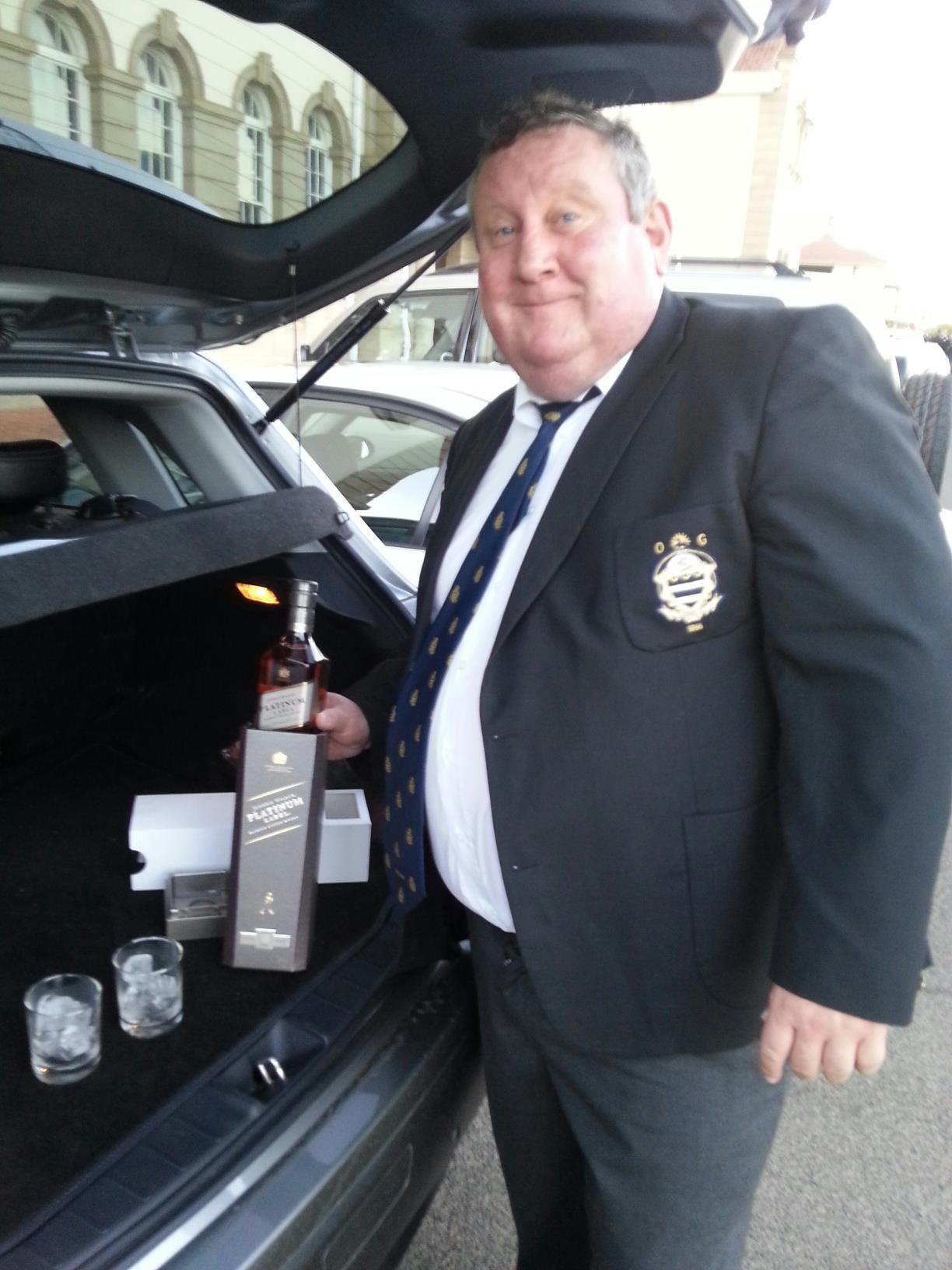
In the heart of the Free State, where the veld stretches wide and the spirit of camaraderie runs deep, stands Grey College, a legendary boys’ school in Bloemfontein, founded in 1855. This isn’t just a school; it’s a crucible for South African heroes, a sporting dynasty, and a brotherhood that binds its scholars for life. From the hallowed halls of Grey emerge the Greybrakke, men who carry the school’s fierce pride and unbreakable bond wherever they go. And at the heart of this lifelong connection lies a tradition as timeless as the school itself: the Noggins.
The Grey Reunie & the Noggin Tradition
Since 1884, the Grey Reunie, the school’s alumni association, has kept the flame of Grey’s brotherhood burning bright. The Noggins are its beating heart, informal, spirited gatherings held on the last Thursday of every month, kicking off around 17:15. These meetups happen not just in Bloemfontein but across South Africa and even in major cities worldwide, wherever Old Greys roam. Picture a local pub or venue, the clink of glasses, and a small pour of ale or whiskey—a noggin, in the old British sense of a quarter-pint measure. It’s a nod to tradition, a chance to share stories of school days, cheer for the current Grey teams, and revel in the unpretentious, gritty vibe that defines the Greybrak.
There’s no stuffy agenda here. Noggins are about laughter, nostalgia, and the kind of tales only Grey boys can tell, rugby triumphs, karreskud adventures, and maybe a cheeky recounting of a schoolboy prank or two. It’s the Grey spirit distilled: raw, real, and rooted in loyalty. Want to join? A quick email to oldboys@greycollege.com will get you the details, times, venues, and who’s hosting in your area. Whether you’re in Bloemfontein or halfway across the globe, there’s a Noggin waiting to welcome you home.
Grey vs. Roos | A Rivalry Steeped in Grit
No tale of Grey College is complete without a nod to its fiercest rival, Paul Roos. Their taunt—“Roos is a legend, Grey is a colour”, is a classic jab, but let’s set the record straight. Paul Roos may be named after a singular “legend” (or a flower, some might say, a bit of a pansy), but Grey? Grey is the colour of bullets, forged in the fire of true grit. Named after Sir George Grey, a hero of South Africa, the British Empire, and New Zealand, the school embodies a legacy of resilience and courage.
Grey College has produced heroes who’ve shaped nations: MT Steyn, Denys Reitz, Sir Laurens van der Post, and a legion of Springboks like Morné du Plessis. And then there’s Ronald Bartels, class of ’84, a legend in his own right, as his good mate Eion “Klaas” du Toit postulated. He may not yet have a statue like Roos, but give it time, Bartels’ story is still being written, and it’s one of grit that outshines any myth or fantasy. And he is just one of thousands of other Greybrakke, who have forged their own story and legacy. The above is an example of being windgat, which is par for the course for any Greybrak.
The Last Noggin with Klaas
The final time I saw Klaas was at a lively Noggin in Parkview, a night that still lingers vividly in my memory. He’d come up to Joburg from the Cape, where he’d made his home, for some business. We met at the Golf Course, and it was like no time had passed. Klaas, with his larger-than-life presence, filled the room with his booming voice and infectious energy. We dove into a marathon catch-up, trading stories and laughing over all the Grey skinder—those tales of old schoolmates and their antics that never failed to spark a chuckle. The man could talk the hind legs off a donkey, and I loved every second of it.
As the evening wound down, I drove him to his Bed and Breakfast, both of us still chuckling over some half-remembered prank from our school days. We said our goodbyes, casual and warm, with no hint of finality. That was the last anyone would see him alive. Klaas passed away in his sleep that night, taken by an apnea that stole him far too soon.
I made the trip down to Paarl for his funeral. The service was held in the kerk, a solemn affair that somehow felt too small to contain the spirit of such a big man. He was a big man. We stood outside the kerk, gauging who was the strongest and youngest to carry in the coffin, which would have been on the really heavy side. However, the undertaker had that covered as Klaas was pushed into the kerk on a set of wheels with no heavy lifting required. We all sighed in relief. Afterward, we gathered for an impromptu Noggin at the Slug and Lettuce, raising glasses to Klaas, sharing stories, and laughing through the ache. Dammit, I miss the big guy. His absence left a hole that no amount of skinder or Castle Lager can fill, but I’ll always carry that last evening in Parkview, his voice echoing through the memories.
There was also a memorable trip I took with him from Jozi to Bloem for the school birthday. It was 5 hours of talking the hind legs off of a donkey. Klaas owned a wine shop in Paarl named the Thirsty Cyclist. We discussed that when my ship comes in I’ll have a side hussle with him of a boutique sparking wine brand with catchy names. In the shops there was one named Gorgeous and I had to buy it. The only better name for it would have been Bodacious. Then there are names like Fat Bottomed, Blonde Bombshell, Black Irish, Cowgirl, Fourty One, Oakvilla, Babbling Brook, and Mastelek. It sounded like so much fun as long as we broke even
The Grey Vibe | Kuifs, Handshakes, & Heroes
What makes Grey special isn’t just its history or its heroes, it’s the vibe. It’s the secret handshake you learn as a boy and carry into manhood. It’s the passion for the school that pulses through every Old Grey, whether you rocked a kuif back in the day or not. It’s the way a Noggin feels like coming home, no matter how many years have passed or where life has taken you.
Grey College isn’t just a school; it’s a way of life. The Noggins are proof of that, a chance to raise a glass, share a laugh, and honor the brotherhood that started it all. So, if you’re an Old Grey, find your nearest Noggin. If you’re not, well, you can only wish you knew what it’s like to be part of this legendary crew. Here’s to Grey, to grit, and to the Noggins that keep the fire burning.
Noggins & Scrums | A Maties Memoir
Back in my student days at Maties, life was a blur of lectures, late nights, and the kind of reckless fun that only youth can justify. One memory that stands out is a Noggins at the Wine Route Hotel, a raucous gathering that’s still legendary in my mind. The guest list was a mix of us rowdy students and, to our surprise, none other than Morné du Plessis, the Springbok legend himself.
The evening started innocently enough, with drinks flowing and stories bouncing around the room. Somehow, the conversation turned to Morné’s infamous tackle on Naas Botha, a moment etched in rugby history. One of the lads, probably fueled by a few too many, suggested we reenact it. Before I knew it, we were clearing space in the hotel lounge for an impromptu scrum. I found myself in the front row, shoulders squared, ready for what I thought would be a bit of a laugh.
But as soon as we locked in, the joke turned deadly serious. It was as if the spirit of the game took over. The scrum surged forward, a chaotic tangle of grunts and shoving. I don’t know what happened behind me, probably a mess of flailing limbs and questionable technique, but the whole thing collapsed into a massive pile of bodies, laughter echoing through the hotel. We were a heap of sweaty, grinning idiots, and Morné, standing off to the side, just shook his head with a chuckle. That night, we learned that even a playful scrum could carry the weight of real passion.
Years later, up in Joburg, I had another brush with rugby royalty. I bumped into the famous Du Plessis brothers, Jannie and Bismarck, both Springbok heroes. It was a somber moment, as Jannie had just lost his son in a tragic accident. I offered my condolences, feeling the weight of his grief in the quiet way he nodded. Despite the heavy moment, they both called me “Oom,” a term of respect that hit me like a ton of bricks. Bliksem, I felt old.
We got to talking, and the conversation turned to Bismarck’s iconic tackle on Dan Carter. It was one of the biggest injustices in Rugby history where a perfectly legit tackle was ruled as “No hands and high”. Absolutely rubbish. The memory sparked a grin, but when someone half-joked about reenacting it, I waved them off. “No ways,” I said, “I’m too old and too much of an Oom for that nonsense now.” We laughed, but I couldn’t help feeling a pang of nostalgia for the days when I’d have been the first to dive into the chaos. Life moves on, but those Maties nights and chance encounters with legends? They’re the stories I’ll carry forever.
Noggins in the Big Smoke
Fresh out of the Navy, with salt still crusting my boots and the sound of the sea echoing in my ears, I landed in Johannesburg, the Big Smoke, they called it, a glittering beast of a city that swallowed wide-eyed country boys like me whole. The air was thick with possibility and exhaust, and I was itching to make a difference as a computer programmer.
My first Noggin was a baptism by fire, courtesy of Gordon. Ah, Gordon, that wiry friend who was always gunning for trouble, like a lit fuse in a powder keg. We were at some sports club in the suburbs, the kind with sticky floors and fluorescent lights buzzing like angry hornets. It started over nothing, as these things do: a spilled drink, a sideways glance, who the hell remembers? The other guy was a fancy pants builder. I later heard whispers about him, turns out he threw these wild client parties where the entertainment ran hot, strippers slinking in like forbidden fruit. Nudge, nudge; you know the drill, wink-wink. The sort of thing that made the wives clutch their pearls and the husbands clear their throats.
Anyway, the argument escalated in that predictable, testosterone-fueled way, voices rising like steam from a kettle. Fists flew, chairs scraped, and before I knew it, I was in the thick of it. I sighed, that deep, world-weary exhale of knowing what was coming, and went all in. Should’ve known my aim was wonky. I lined up what I thought was a guy’s jaw, wound up like a spring, and unleashed a haymaker with every ounce of sailor strength I’d built hauling ropes and dodging swells. But fate, that sly joker, had other plans. My fist veered just a hair, plowing straight into a goddamn brick wall like it had a personal grudge.
The pain hit like a depth charge, white-hot, blooming from my knuckles outward, exploding into my arm and dropping me to my knees. Blood welled up in fat, accusing rivulets, knuckles split open like overripe fruit. I collapsed in a heap, the world blurring at the edges, the roar of the fight fading to a distant hum. Don’t remember much after that... just fragments: mostly Gordon’s laugh cutting through the chaos.
But if my debut was a comedy of errors, the true legends of Noggin lore belonged to the old geezers from the ‘50s, the silver-haired warhorses who wore Safari suits but never lost their appetite for mayhem. They were the architects of the tradition, back when Noggins were less about settling scores and more about thumbing your nose at the crusty high society. And one of their crown jewels? The night they arranged for Glenda Kemp and her python to make an appearance.
Glenda Kemp, what a force she was, a platinum-haired hurricane in fishnets and defiance, born in ‘49 to a buttoned-up Afrikaans family in Bloemfontein that would’ve fainted at the sight of a bare ankle. By the ‘70s, she’d shattered every stained-glass window of apartheid-era propriety, stripping onstage with a three-meter Burmese python named Oupa coiled around her like a living tattoo. Oupa, ”Grandpa” in Afrikaans, slithered across her skin as she danced, a mesmerizing tangle of scales and seduction that had audiences gasping and the police vice squad frothing at the mouth. Picture it: dim lights, tribal drums thumping like a heartbeat, and this lithe rebel shedding layers while the snake’s unblinking eyes dared the crowd to look away. She wasn’t just dancing; she was rebelling, a white Afrikaner girl flipping the bird to the tannies, the politicians, and the whole unwieldy and restrictive environment that choked South Africa back then.
The cops raided her shows like clockwork, Joburg clubs, Cape Town dens, you name it—hauling her off for “public indecency” while fans cheered and dominees preached fire and brimstone. But Glenda? She just laughed it off, quipping once that the police didn’t know whether to arrest her or the snake. It made her a star, a scandal sheet staple, even landed her in a gritty ‘76 flick called Snake Dancer, where she played a version of herself, all sass and serpent. The old geezers, bless their leathery hides, must’ve pulled every string in their Rolodex to get her to a Noggin, imagine the backstage haggling, the winks over brannas: “Bring the python, skattie; it’ll liven up the manne.”
We weren’t around for it, of course, those of us from the national conscription intakes came later, chasing echoes of the glory days. But it’s etched into Noggin legend now, passed down like a sacred scar: the night the air hummed with whispers and wide-eyed awe, arguments forgotten as every eye locked on that slithering spectacle. We chuckle about it still, over warm Castle lagers, slapping knees and shaking heads. “Wish I’d been there,” we say, half-joking, half-envious, toasting to the geezers who lived it loud. In a city that chews up dreams and spits out dust, stories like Glenda’s, wild, unapologetic, wrapped in scales, reminding us what we keep together.
A Noggin with Grant in Dunkeld
Grant, my mate from Kroonstad, and I go way back, nearly half a century of friendship, starting from our school days. The kind of bond where you’ve seen each other through bad haircuts, worse decisions, and the occasional stroke of genius. Grant always seem to suffer bad haircuts! Grant was a Lebanese Catholic and I was a German Lutheran. One particular memory stands out, a night that’s become legend between us, sealed with a laugh that still echoes.
It was a lively evening at a noggin in Dunkeld, one of those spots where the vibe is just right, buzzing but not chaotic. We grabbed a table, and right next to us were two stunning women, all charm and confidence. Grant, never one to miss an opportunity, flashed his classic grin and ordered them drinks, smooth as you like. I could see him gearing up for one of his bold moves, the kind that usually ended with either a phone number or a story to tell.
Now, I’m not sure what it was, maybe the way they leaned into each other or the knowing glances they shared, but something about the scene felt off to me. Call it instinct. Grant, though, was in full charm mode, laying it on thick. Then, out of nowhere, one of the women leaned forward, all politeness, and dropped the bomb: “Thanks for the drinks, but we’re lesbians.”
The look on Grant’s face, priceless. Shock, a flicker of disbelief, then the slow dawn of realization. I couldn’t hold it in. I hit the floor, literally rolling with laughter, tears streaming as Grant tried to salvage his dignity. The women were good sports, chuckling along, but I was done for.
From that night, a running joke was born. I’d deadpan, “Lebanese are from a country, but lesbians are not from Lebanon” and we’d both lose it all over again. It’s the kind of story that defines a friendship, a moment of pure, unscripted hilarity. Here’s to you, Grant, and to many more noggins, and laughs, in the years to come.