Angels
Finding feathers
As a teenager I sat in the Reunie Hall at Grey College in Bloemfontein and listened to Sir Laurens van der Post. It was in the immediate years before Die Groot Krokodil's Rubicon speech and many of my school mates were not convinced a democratic South Africa was viable. It is probably the greatest speech that I have ever heard where I was physically present. His central message and philosophy related to building bridges. It was obvious that he meant us to build bridges between different races and cultures. One of my mentors, Oom Jood wrote Die Groot Krokodil's speech which was then changed without him knowing and it was never delivered in the form he wrote. It was left to FW de Klerk to make the historic announcement four years later which resulted in the release of Mandela and the unbanning of the ANC. Sir Lauren's advice was awesome but not the best. He was one of the world's greatest thinkers and philosophers but for me the best advice come from another source. It has nothing to do with work, technology, politics, or ambition but life.
It came just before the dawn of the new millennium when I met the girl I would marry. She said two words.
In our time together which would stretch to a dozen years she would often repeat those words. The words became a strong bond and a thread that held our life together. I was there when she died, from complications due to undiagnosed coronary artery disease (CAD). I do not hear those two words anymore.
“Kiss me”
It was a normal day in our lives and by mid-morning Kathleen (Kath) was gone. The memories remain and every so often, there is something that reminds me of her. The clouds in the sky, where she would lie on the front lawn with the boys and look up into the beautiful Jozi sky and point out the shapes of animals, especially dogs (mostly Poodles and Dachshunds). I often look at those clouds and see angels.
Rationally angels do not exist but the belief in them is strangely comforting. It makes it easier to deal with and process loss and heartache. They exist to help us through difficult patches in our lives and in that context make perfect sense. I hope to be someone’s angel.
In life we leave digital and physical footprints. It can be a picture embedded in a web site or the memory of an angel.
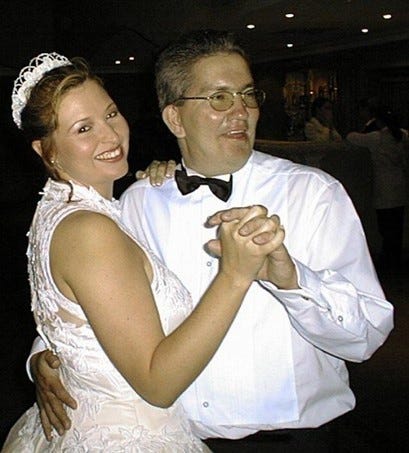
Kath and I shared a common Scottish heritage. Nothing is more indicative of Scotland than the Tartan. Historically very few Tartans, or plaids, were associated with specific Scottish clans or regiments and the wearing was based more on individual taste.
Following the defeat of Bonnie Prince Charlie, the wearing of kilts and tartans except by regiments was banned by the Hanoverians. The same ones to which my ancestors swore allegiance. When these restrictions were lifted there was a revival of Scottish culture. Sir Walter Scott arranged for George IV to tour Scotland during this time and the King proudly wore the Royal Stewart tartan. He hosted a great ball for the leading families of Scotland, who all wore traditional dress. Most family tartans are the plaids that were chosen by the Clan Chief to wear to this famous ball where the participants were all required to be dressed in different tartan. As an example, the tartan for the Elliot clan was the one worn by the Earl and Countess of Minto. While not the Chief, the Earl held the highest aristocratic rank.
I now proudly wear the tartan of the Elliot clan in honour of my oupa JT, even though his maternal tartan of Murray looks better.
Life is hard but then there are times its awesome. Love is an ocean of waves and storms.
Birth is an awesome experience and I have been there when all my sons were born. I do not understand how some treat it as frivolous and walk away. I can understand how It affect George Grey and how as a legacy he started Grey College as a legacy to his son.
My second son Ray had a problem with his kidney that was detected by the gynaecologist during pregnancy. He had an emergency birth about a week before he was due. The sound of his first cry was awesome. Six weeks after birth he went in for a pyeloplasty. Pyeloplasty is major kidney surgery and he remained in ICU for weeks. Although it was hectic, he now has two 100% functioning kidneys.
Callum was next and everything was perfect. There were no problems during pregnancy and the birth went well. I was with him in the recovery room when the nurse hit the crash button. He had developed a hospital lung infection and was taken up into ICU where he was put on a ventilator. He came out of ICU three weeks later. I do not think he has any problems with his lungs now because when he is angry you know about it.
Our first son was Daniel, and he would never take a breath of air outside of his mommy's womb. He had a horseshoe kidney and as a result was unable to develop his lungs. His heart was as large as his chest cavity. This was discovered at 16 weeks and after a second opinion it was determined that terminating the pregnancy would be the best course of action. I signed the court orders and slept the night of the abortion on the floor of the hospital.
Daniel, like his mommy is an angel.
The wrong corner
In the vast, uncharted map of our shared life, Kath and I often spoke of the “corners of the earth”—those remote, metaphorical places where one's beliefs could lead them, far from the familiar shores of reason. For Kath, homeopathy wasn't just a corner; it was her entire world, a sanctuary she defended with an absolute faith that bordered on devotion. It consumed her like an addiction, blinding her to the merits of conventional medicine or even other alternative practices. She swore by its principles, diluting remedies to infinitesimal levels, convinced that the “vital force” they awakened could heal any ailment. Doctors were charlatans in her eyes, their pills and procedures mere poisons disrupting the body's natural harmony.
But beneath that unyielding belief lurked a shadow she couldn't see, or perhaps refused to acknowledge. Kath had CAD, a condition that remained undetected for years, invisible to the subtle intuitions of homeopathic diagnosis. Homeopathy, with its reliance on symptom-matching and energetic imprints, offered no tools to identify or correct something as insidious as this. It couldn't scan tissues, measure markers, or intervene surgically. One fateful day, during a grueling Bikram yoga session, her body twisted in the heat, pushing limits she thought unbreakable, a cyst ruptured, compounding the effects of CAD. She collapsed on the mat, her life slipping away in a room filled with sweat and serenity. The autopsy revealed what we had missed: a physical betrayal that no amount of diluted sugar pills could have prevented or cured.
This tragedy stands as my personal indictment of homeopathy's futility. At its core, homeopathy operates on the pseudoscientific notion of “like cures like,” where substances that cause symptoms in healthy people are diluted to extreme potencies—often to the point where not a single molecule of the original ingredient remains. Proponents claim water retains a “memory” of the substance, imparting healing vibrations. But science tells a different story: rigorous clinical trials, including meta-analyses from bodies like the Cochrane Collaboration, have repeatedly shown that homeopathic remedies perform no better than placebos. They can't detect hidden diseases through blood tests, imaging, or biopsies, nor can they address acute physical crises like ruptures or undetected growths. In Kath's case, it fostered a dangerous complacency, delaying real medical intervention until it was too late. It's not harmless curiosity; it's a gamble with lives, preying on hope while ignoring evidence-based reality.
Her passing shattered me, forcing a reckoning with the dual nature of health, one I had long overlooked in our harmonious bubble. I came to understand that well-being has two inseparable components: the physical, rooted in biology and anatomy, and the psychosomatic, where mind and emotion influence the body in profound ways. Grief manifested in me as perceived physical pain, sharp stabs in my chest, unrelenting fatigue, aches that mimicked heart trouble or worse. I chased shadows through a battery of tests: EKGs, MRIs, blood panels, all coming back clean. Specialists shrugged, diagnosing “nothing wrong,” yet the agony persisted, a ghost haunting my every step.
Desperate, I turned inward, seeking therapies that addressed the mind's grip on the body. Cognitive Behavioral Therapy (CBT) became my anchor, a structured form of psychotherapy that identifies and reshapes negative thought patterns and behaviors. Through guided sessions, I learned to challenge the catastrophic thinking fueling my pain: “This ache means I'm dying too” became “This is grief's echo, temporary and manageable.” Complementing it was Eye Movement Desensitization and Reprocessing (EMDR), a specialized treatment for trauma that uses bilateral stimulation—often rapid eye movements guided by a therapist's hand—to reprocess distressing memories. It felt almost mechanical at first, following lights or taps while revisiting the horror of my presence in the yoga studio during the final moments, but it unlocked buried emotions, diminishing their power over my physical sensations.
These experiences reshaped my writings and my entire approach to life. Where once I focused solely on the tangible—career, adventures, the external world, now I weave in threads of mental health, advocating for vulnerability and self-care. Kath mastered that psychosomatic realm to perfection; her optimism and mindfulness were a balm, keeping stress at bay and fostering joy even in chaos. But her oversight, the dismissal of physical vigilance—proved fatal. Humans are fragile vessels, needing equilibrium between the two: ignore the body, and silent killers creep in; neglect the mind, and psychosomatic storms ravage from within. A deficiency in either isn't just inconvenient, it's debilitating, a corner of the earth from which return is never guaranteed. In honoring Kath, I strive for that balance, turning our shared map into a guide for others navigating the unknown.
The final goodbye
I had to tell two little boys their mother wasn’t coming home. I was told to tell them the truth and answer all their questions. I did.
After that people often ask me what happened and I give one sentence answers. But I have decided to recount that day so those boys that are now older know it all. In essence, it is life.
The day started as any other, for us in any case. Kath and I went to the school because Ray was having difficulty with a teacher. After that I went to work, and Kath went to yoga.
At around 10am I received a call from the yoga gym that Kath wasn’t feeling to well. The gym was five minutes from work and I went there immediately. When I arrived, she told me her back was sore and I asked if she had injured herself? She said no but said it was very painful. I replied that we should go to the hospital. She said she was too sore to walk to the car. I dialed for an ambulance.
We sat on the floor of the toilets waiting for the paramedics but within a few minutes an emergency doctor arrived, and then shortly thereafter the paramedics. They placed Kath on a table in one of the massage rooms and performed a triage. The doctor reported that he was not able to diagnose anything and would transfer her to hospital.
I told her, “I love you” and reached to squeeze her hand. She said, “Babes, please don’t touch me it hurts!” The paramedics then wheeled in the gurney to take her to the ambulance. I stood to one side, and heard the doctor ask her why she was yawning. She said, “I don’t know.”
She then arched her back and her face distorted. It looked like the painting, The Scream. Except I heard no sound. The doctor instructed me to leave the room. He took a scalpel and cut her clothes from the neck down and I went and stood outside the door. I lost count of the times I heard the word, “clear” and the sounds of defibrillation. I dialed Kath’s parents and told them to come to the address of the yoga gym.
Before they arrived, more teams arrived with medical equipment. It was life support. There were now two doctors and one was on the phone next to me relaying symptoms and answering questions. Kath’s parents arrived and shortly afterwards the doctor came outside and said that it was 90 minutes and they were going to shut down life support. Kath’s parents said, “No, it is our little girl, can you not do more?”
I nodded my head in consent to the doctor. The doctor said that they could not take her in the ambulance and we had to call a mortuary van. I asked if he could help with that and he suggested Martin’s which I then arranged.
He asked if I would like to go in and see her? I went in to say goodbye but immediately realized that I’d said goodbye 95 minutes before that.
She died because of a ruptured ovarian cyst. It happens often in woman and isn’t normally fatal. However, Kath had undetected CAD which resulted in a critically low blood pressure from the bleeding.
The pain of death is so small a time frame in relation to the longer life lived. The lived life needs to be remembered as it is full of joy and memories. The passing is but a short pin prick of pain. A final goodbye.