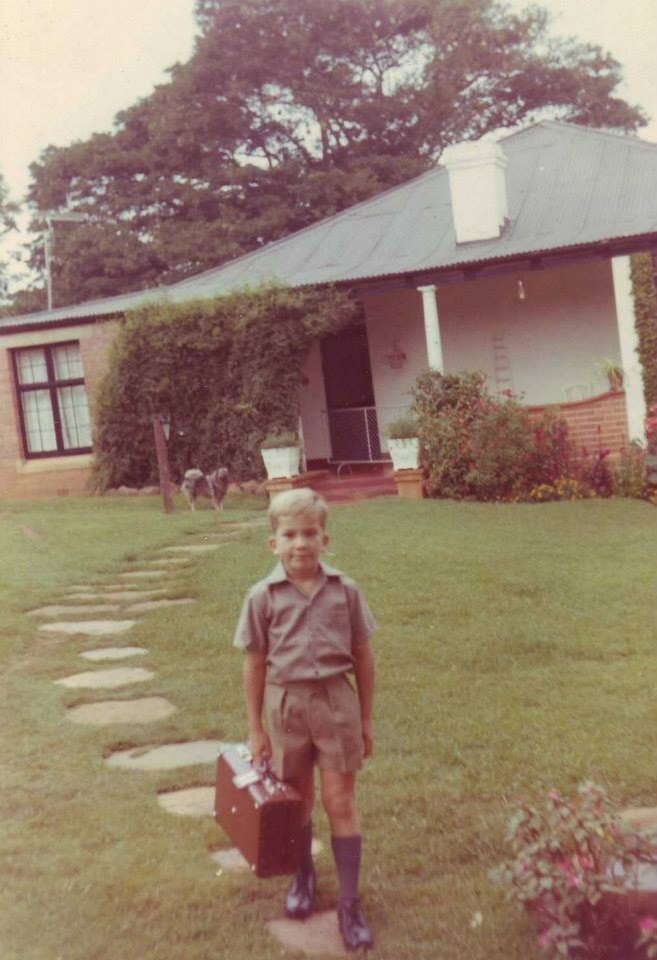
As December rolls in...
Christmas
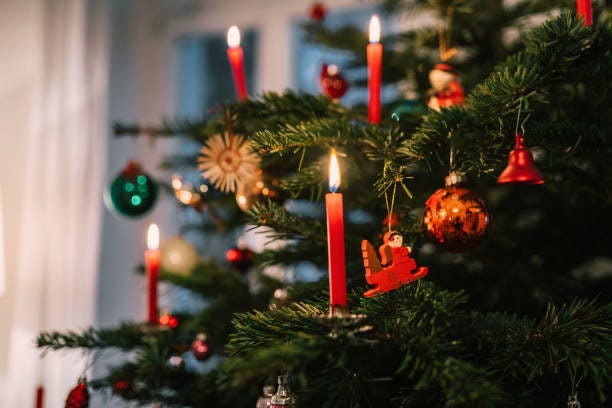
As December rolls in, like clockwork, I dust off my well-worn copy of Love Actually and settle in for the ritual viewing. It’s the quintessential Christmas movie, one that never grows old, with its heartfelt message of love, connection, and holiday magic distilled into pure Christmas essence. For me, Christmas isn’t just a holiday, it’s a tradition that seeps right into my bones, a visceral pull that feels as innate as breathing.
Being German by heritage, I suppose I’m a tree worshipper at heart, a bona fide tree hugger with roots that run deep. My earliest act of arboreal devotion was to a wild fig tree that sprawled outside the window of the dusty farmhouse where I spent my youth. I’d gaze at it for hours, imagining it as a guardian spirit. And it’s no exaggeration to say this reverence is in my blood; our family has over 500 years of documented history intertwined with Christianity, tracing back to the very door in Wittenberg where Martin Luther nailed his 95 Theses, sparking the Reformation. That legacy pulses through me, even if my own beliefs has evolved.
Growing up in New Hanover, the local Lutheran church embodied the season’s splendor. Each year, a massive pine tree would be hauled inside and positioned proudly beside the altar, a towering symbol of evergreen hope. It wasn’t adorned with modern electric lights but with real candles, each one carefully ignited using a match affixed to a long stick—a ritual that filled the air with the warm flicker of flame and the faint scent of melting wax. The sight was mesmerizing, almost sacred. Afterward, the church’s brass band would strike up hymns, their notes resonating through the pews like a communal heartbeat. In the weeks leading up to Christmas, the church bazaar became a highlight, bustling with stalls selling handmade ornaments—delicate glass baubles, wooden carvings, and glittering stars that we’d hang on our own trees at home.
No Christmas memory is complete without visits to my grandmother Bertha, whose kitchen was a haven of holiday delights. She’d serve her traditional Butterkuchen, that buttery yeast cake dusted with sugar and almonds, alongside Zirupskuchen, a syrupy treat that melted on the tongue. Those flavors are the very taste of Christmas for me, evoking warmth and nostalgia in every bite. Even now, living in Johannesburg, I scour the shops each December in search of authentic Lebkuchen—those spiced gingerbread cookies that transport me straight back to my roots.
My parents would put on a Boney M cassette in the Mercedes Benz. We would listen endlessly to “By the Rivers of Babylon”. I’m still transported to the back seat of that car, wedged between my boet and sis every time I hear that song.
My sister shares this passion for the season and takes charge of our family gatherings, orchestrating a sumptuous dinner on Christmas Eve. We skip the fanfare of Christmas Day altogether, honoring the German custom of celebrating on the night before, the Heilige Nacht, or Holy Night. If possible, we seek out a church service where we can join in singing “Silent Night,” its melody wrapping around us like a familiar embrace. The tears come unbidden, rolling down my cheeks without shame, a release of all the accumulated joy and melancholy of the year.
At its core, Christmas for me is about giving—everyone deserves a present, not something extravagant, but a token that’s personal and meaningful, chosen with thought and care. And here’s my confession: for all the Christian heritage in my veins, Christmas isn’t truly religious to me. Sorry, Jesus—it’s something deeper, more primal, woven into my DNA. It’s a potent brew of ancestral echoes, a pause for reflection amid the whirl of life, blending the simple pleasures of tree hugging and Süßigkeiten—the sweets that make the season sparkle. I suppose some might brand me a heretic for saying so, but by choice, I’d leave my Christmas lights twinkling all year round. Their soft glow is too beautiful to confine to just one month. That’s me—unapologetically enchanted by a primitive festival’s enduring magic.
My favourite apostle is Thomas who would always go to first principles, and Christmas is not about the myths but being nice as the first principle.
Window shopping
As a young boy growing up on our family farm in the rolling hills of KwaZulu-Natal, the simple rhythms of rural life shaped my world as I learned the land’s secrets from my father’s calloused hands. But come December, a magical ritual broke the monotony—the annual pilgrimage to Pietermaritzburg for window shopping. This wasn’t just any outing; it was our prelude to Christmas, a shimmering promise of the holiday’s joy wrapped in the cool evening air. The town lay about 30 kilometers away, a journey that felt like crossing into another realm, where the dirt roads gave way to bustling streets alive with lights and laughter.
We’d pile into the Mercedes—my parents, siblings, and I—after supper, when the sun dipped low and the night sky began to twinkle like the decorations we’d soon behold. Pietermaritzburg, with its colonial charm and vibrant energy, was a far cry from our isolated homestead. The main streets pulsed with holiday cheer, shops aglow with festive displays that drew crowds like moths to a flame. But none captivated us more than Stuttafords and John Orrs, the grand dames of the retail scene. Their windows were masterpieces: elaborate tableaux of twinkling trees, mechanical Santas waving merrily, and piles of wrapped gifts that sparked endless “what if” dreams in my childish mind. We’d stroll from one to the next, pressing our noses against the glass, oohing and aahing as the displays unfolded like storybooks come to life. My mother would point out the elegant dresses, my father the sturdy toys, and we’d all imagine what treasures might find their way under our modest tree back home.
Those evenings were pure enchantment, but one particular Christmas Eve outing etched itself into family lore, recounted at every birthday and holiday gathering thereafter with equal parts horror and hilarity. I was not yet going to school, and was wide-eyed and overwhelmed by the urban spectacle. As we lingered before John Orrs’ magnificent window—a veritable winter wonderland of faux snow and animated reindeer—nature called with urgent insistence. Being a farm boy through and through, accustomed to relieving myself against a tree or in the open fields without a second thought, I saw no issue with the matter. So, right there on the bustling sidewalk, I sidled up to the window, dropped my shorts, and let loose a stream against the glass. To my innocent logic, it was as natural as breathing; the city lights reflected in the puddle at my feet like some impromptu holiday art installation.
The gasps from passersby were immediate, but it was a stern-faced lady nearby who broke the spell. She turned to my mortified mother, who was frozen in shock, and quipped dryly, “At least he shook it.” My parents whisked me away amid apologies and stifled laughter, the incident becoming an instant legend. Back on the farm, it was retold with embellishments—how the window nearly steamed up, or how I waved cheerfully to my reflection mid-act. Even now, decades later, as we gather around the table, my sister inevitably pipes up with, “Remember that time in Pietermaritzburg?” and the room erupts in chuckles. It was a lesson in the clash of worlds: the untamed freedom of rural life meeting the polished propriety of the city. In those windows, I didn’t just see holiday dreams; I glimpsed the boundaries of my own innocence, forever marked by a boy’s bold blunder.