Avian Musings
When its not a flock
Humans have long been captivated by birds, not just with their graceful flights and vibrant plumage, but also through the whimsical and often poetic collective nouns assigned to their groups. These terms of venery, originated in medieval England as part of hunting traditions, where knowing the proper name for a gathering of animals demonstrated one’s sophistication. Many trace back to the 15th century, appearing in works like The Book of Saint Albans, a collection of hunting lore attributed to Juliana Berners. Over time, these names have evolved, some drawing from observed behaviours, superstitions, or sheer linguistic creativity. These are the ones which are more than the generic flock of birds.
Let’s start with one of the most infamous: a murder of crows. This term likely stems from folklore associating crows with death and omens, as they were often seen scavenging battlefields or around carcasses. The word “murder” evokes their supposed propensity for mobbing and killing weak members of their own kind, though this behavior is more myth than fact. It first appeared in English literature around the 15th century. Closely related, an unkindness of ravens or a conspiracy of ravens draws from similar dark associations. Ravens, like crows, were linked to mischief and ill omens in medieval times; “unkindness” may refer to legends of ravens abandoning their young, while “conspiracy” hints at their intelligent, scheming nature. These terms were popularized in The Book of Saint Albans.
Moving to waterfowl, a gaggle of geese applies when they’re on land, evoking the noisy, chaotic sound they make— “gaggle” comes from Middle English for babbling or cackling. In flight, however, they become a skein of geese, referring to a thread or yarn, perhaps inspired by the V-shaped formation resembling a skein unwinding. These distinctions highlight how context-specific many collective nouns are, with roots in Old English observations of bird behavior. Similarly, a lamentation of swans captures the mournful trumpeting calls of these elegant birds, a term from the medieval era that poetically anthropomorphizes their sounds as sorrowful cries.
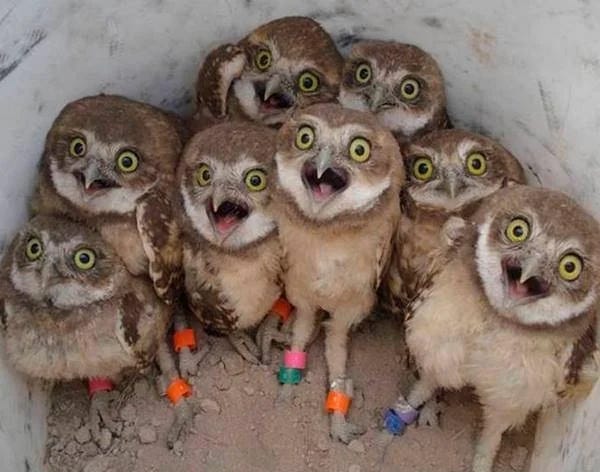
For raptors and predators, the names often evoke power or strategy. A parliament of owls is one of the most evocative, linking to ancient Greek mythology where owls symbolized wisdom (accompanying Athena, goddess of reason). The “parliament” suggests a wise assembly, though its modern popularity surged with C.S. Lewis’s The Chronicles of Narnia. It may have earlier roots in Chaucer’s Parliament of Fowls.
A wake of vultures (when feeding) alludes to a funeral wake, given their role as scavengers circling death; this term emerged from observations of their feeding habits in the 19th century or earlier. A cast of falcons borrows from falconry, where “casting” means releasing birds to hunt, a practice documented in medieval hunting texts. Less common but striking are a brigade of martial eagles, perhaps inspired by the military connotation of “martial” (warlike) and their aggressive hunting in groups, though its exact origin is obscure and may be a modern invention based on behavior.
Shorebirds and waders have equally descriptive terms. A siege of herons refers to their patient, besieging stance while hunting fish, first noted in The Book of Saint Albans. A flamboyance of flamingos perfectly captures their vivid pink hues and showy displays, with “flamboyance” deriving from French words for flame or flair, likely coined as flamingos became more studied in zoos and wild habitats.
A dive of kingfishers evokes their plunging hunting technique, a more recent term based on direct observation rather than ancient lore. An irritation of hadedas are those creatures in our gardens here in South Africa who drive us nuts. An impi of lilac-breasted rollers who are venerated by the Zulus. A sneer of penguins as they look like butlers. A squadron of seagulls as they bomb in unison. A strafe of fish eagles as they fly in when hunting fish. A shag of turtle doves, just because. A tsotsi of cuckoos as they always stealing. A camouflage of Piet My Vrou’s as you can never find our see them. An ambush of Kieviets, as that is what they do! A state capture of Indian Mynahs because of the Guptas. A haunting of sacred ibises as that are flying ghosts. A dazzle of sunbirds as the catch the sun. A catwalk of Hoopoe, because they prance like models. A skinder of Secretary Birds, because that is what a pool of typists do.
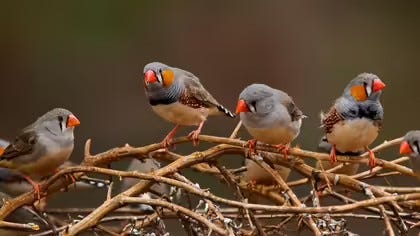
Among smaller birds, personality shines through. A descent of woodpeckers describes their habit of spiraling down tree trunks, a name from noting their vertical movements. A charm of hummingbirds reflects their enchanting, jewel-like appearance and hovering flight, when these new world birds gained popularity in Europe. A scold of jays nods to their loud, scolding calls when alarmed, while a mischief of magpies highlights their thieving, playful reputation in folklore. A trembling of finches may refer to their fluttering wings in flight, and a quarrel of sparrows captures their noisy disputes over food or territory—these terms often stem from 16th-17th century naturalist writings.
More exotic or regional names include a plague of grackles, alluding to their large, invasive flocks that can overwhelm areas like a biblical plague, a term popularized in North American birdwatching circles. A confusion of guinea fowl describes their disorganized, panicky group behavior, originating from African introductions to Europe in the Renaissance. A congregation of weaver birds straightforwardly refers to their intricate woven nests forming communal colonies where they sing like members of a church. Rarer still are a peloton of hammerkops, borrowing from cycling jargon for a tight group (hammerkops look like cyclists with helmets), and a dive of kingfishers, as mentioned earlier.
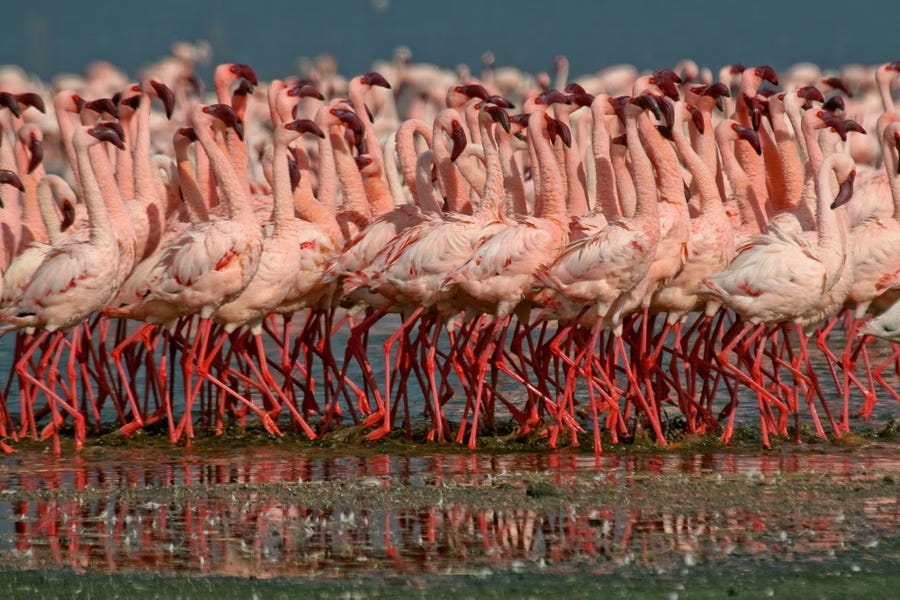
These collective nouns remind us of the rich interplay between language, culture, and nature. While some have ancient roots in superstition and hunting, others are modern inventions inspired by behavior. My personal favorite has to be a flamboyance of flamingos—it’s just so vividly fitting for those leggy, pink spectacles strutting through shallow waters, bringing a touch of extravagance to the avian world. Whether you’re spotting a murder in the treetops or a gaggle on the pond, these names add a layer of delight to birdwatching.