Concerta + Dagga
Why This Combo Can Tip People Into Mania
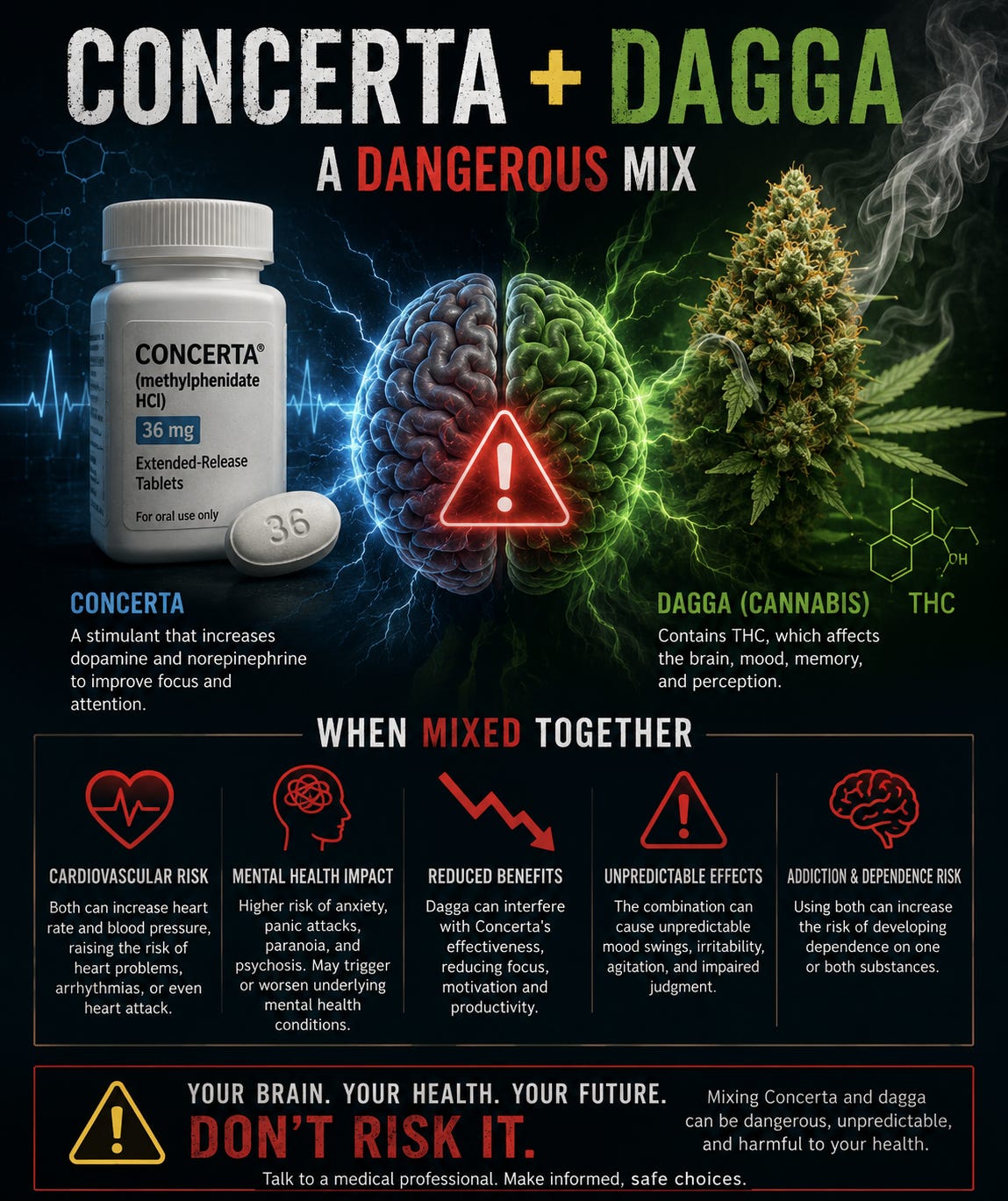
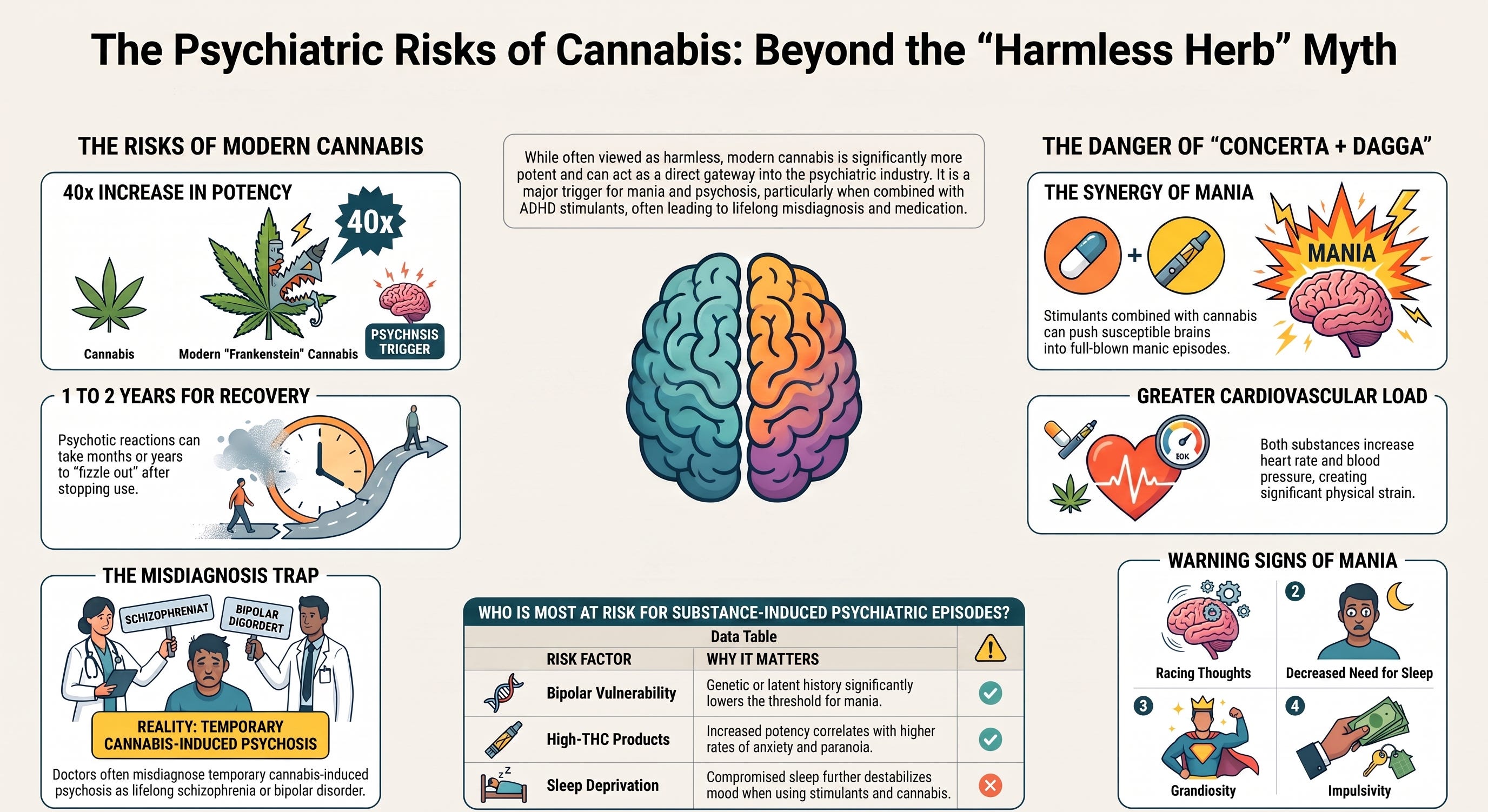
There’s a pattern some people only notice after the fact: they’re on Concerta (or another methylphenidate product) for ADHD, they smoke or otherwise use dagga, and suddenly their mood, energy, sleep, and thinking start running away from them. What begins as “feeling sharper and a bit more chilled” can slide into irritability, racing thoughts, reduced need for sleep, grandiosity, impulsivity, or full-blown manic symptoms.
The combination carries real risk, and the evidence is worth taking seriously.
What each substance does on its own
Concerta is a long-acting stimulant. It increases dopamine and norepinephrine, which helps many people with ADHD focus and regulate attention. Stimulants are also known to be able to trigger manic or mixed episodes, particularly in people who have an underlying bipolar vulnerability, a family history of bipolar disorder, or who take higher-than-prescribed doses. Sleep disruption from the stimulant can further lower the threshold for mood instability.
Dagga (cannabis) has more variable effects. For some it is calming; for others—especially higher-THC products—it increases anxiety, paranoia, or perceptual changes. Cannabis use is associated with a higher risk of new-onset manic symptoms and with a worse course in people who already have bipolar disorder (more manic episodes, more rapid cycling, earlier onset, and greater likelihood of psychotic features). The association is not trivial.
When the two meet
Formal drug-interaction databases often list “no interactions found” between cannabis and methylphenidate. That is not the same as “safe.” Both substances raise heart rate and blood pressure; together the cardiovascular load is greater. Both influence dopamine and other systems involved in mood and reward. Cannabis can blunt some of the cognitive benefits of the stimulant while making the overall drug experience subjectively more enjoyable for some people, which can encourage higher or more frequent use.
There is at least one published case of a clear manic episode linked to the combination: a young man with a childhood history of attention problems who took high doses of methylphenidate (up to 120 mg) plus cannabis during an exam period and ended up hospitalised with disorganised behaviour, aggression, delusions and grandiosity. The final diagnosis was a substance-induced manic episode. Other clinical observations and broader data on stimulants + cannabis, and on cannabis + bipolar risk, point in the same direction: the combination can push susceptible brains into mania or mania-like states.
Who seems most at risk
- People with undiagnosed or latent bipolar spectrum vulnerability
- Those with a family history of bipolar disorder or psychosis
- People taking higher stimulant doses or using the medication in a non-prescribed way
- Heavy or high-THC cannabis use
- Anyone whose sleep is already compromised
Even without a formal bipolar diagnosis, the stimulant’s activating effects plus cannabis’s unpredictable impact on mood and sleep can produce a temporary but dangerous manic or hypomanic picture.
Practical reality
Some people on ADHD medication use cannabis and do not become manic. That does not make the risk zero. The combination can also increase anxiety, paranoia, heart-rate problems, and the chance that the ADHD medication stops working as well as it should. If you are prescribed Concerta (or any stimulant) and you use dagga, the responsible step is to be honest with your doctor. Pretending the two never interact is not protective.
Mania is not a mild inconvenience. It can damage relationships, finances, reputation, and physical health, and it often requires medical intervention to settle. If you or someone you know is on a stimulant and starts showing sustained elevated or irritable mood, decreased need for sleep, racing thoughts, risky behaviour or grandiose ideas after using cannabis, get medical help rather than waiting to see if it settles.