Cough cough
Vaping is a real risk factor that can turn mild “walking pneumonia” into something worse, here’s the evidence.
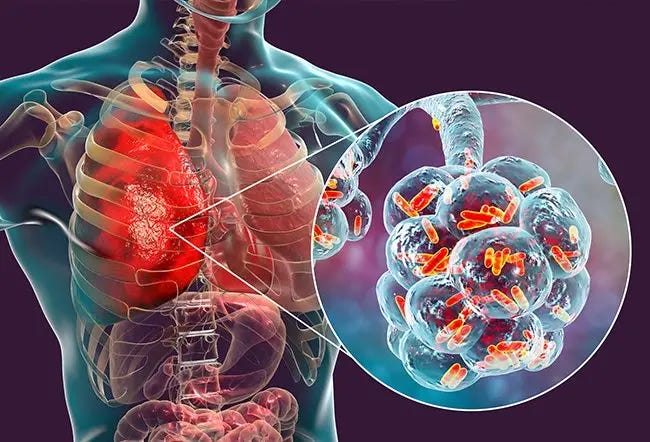
Walking pneumonia is the everyday name for atypical pneumonia, most often caused by Mycoplasma pneumoniae. It usually produces a persistent dry cough, low-grade fever, fatigue, and chest discomfort that people can still “walk around with.” Most healthy people recover without drama. That is the textbook version.
Vaping changes the equation.
How vaping weakens the lungs’ defences
Research shows that the aerosol from e-cigarettes (nicotine or nicotine-free) does several damaging things:
- It increases expression of platelet-activating factor receptor (PAFR) on airway cells. Pneumococcal bacteria (and likely other pathogens) stick more readily to those cells. In human volunteers, PAFR levels rose threefold within an hour of vaping. Lab and mouse studies confirmed higher bacterial adhesion and greater colonisation.
- It impairs mucociliary clearance—the tiny hair-like structures that sweep mucus and invaders out of the airways.
- It triggers inflammation, oxidative stress, and calcium dysregulation in immune cells such as macrophages. Acute vaping can worsen the pathology of bacterial pneumonia in animal models.
- In some users it produces lipoid pneumonia or the broader pattern of EVALI (e-cigarette or vaping product use-associated lung injury), filling alveoli with lipid-laden macrophages and setting the stage for secondary infection.
The net result: the lungs become more hospitable to bacteria and less able to clear them. A typically mild Mycoplasma infection can become prolonged, more symptomatic, or even fulminant.
Case reports are not coincidence
Several published cases describe previously healthy young adults who developed severe respiratory failure from Mycoplasma pneumoniae while actively vaping. In these patients the clinical picture mixed classic EVALI features (lipid-laden macrophages on bronchoalveolar lavage, bilateral infiltrates) with confirmed Mycoplasma infection. The authors’ consistent hypothesis is that vaping-induced lung injury created the conditions for an otherwise “benign” organism to cause serious disease. One early report explicitly called it the first documented link between e-cigarettes and fulminant Mycoplasma pneumonia; later cases have reinforced the pattern.
Vaping has also been linked to more severe outcomes with other bacterial pneumonias (including Klebsiella, MRSA, and unusual organisms) and to higher risk of COVID-19 pneumonia. The common thread is compromised local immunity and airway environment.
Important caveats
Vaping is not the primary cause of most walking-pneumonia cases. Mycoplasma circulates in cycles, especially among school-age children and young adults, and incidence rose again after the COVID period for reasons that have little to do with e-cigarettes. Many people who never vape still get walking pneumonia.
What the data support is that regular vaping is a significant modifiable risk factor. It raises susceptibility, can amplify severity, and may turn a mild infection into one that requires hospital care. That is especially relevant for the young adults who make up a large share of both vapers and Mycoplasma patients.
The practical takeaway
If you or someone you know has a lingering cough, fatigue, and a vaping habit, do not dismiss it as “just walking pneumonia.” Tell the clinician about the vaping. Quitting (or at least stopping while recovering) removes an ongoing source of airway irritation and inflammation. For people using vapes as a smoking-cessation tool, the cleaner options remain nicotine replacement therapy that does not involve inhaling heated aerosols.
The lungs are not designed for repeated exposure to propylene glycol, vegetable glycerin, flavour chemicals, nicotine, or whatever else is in the cartridge. The science is clear enough: vaping makes bacterial pneumonia—including the “walking” kind—harder for the body to handle. That is not alarmism; it is what the laboratory work, the mouse models, and the clinical case series show.
Protect the airways. They are the only ones you get.