Echoes Across Centuries
My Life as Julius Caesar
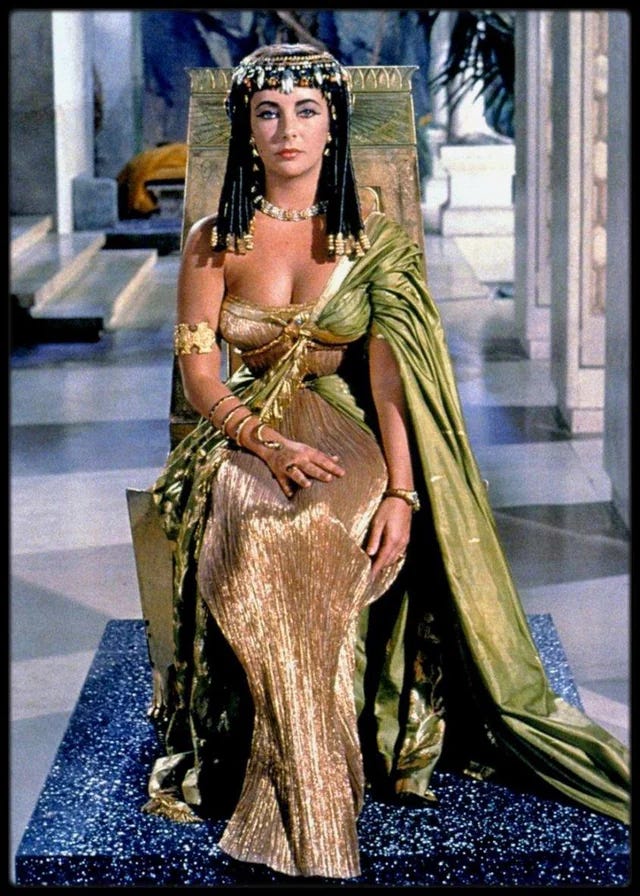
It’s strange how some affinities feel less like admiration and more like recognition. Julius Caesar has lived inside me since I was a boy in that old and dusty Oakville farmhouse, long before I had words for past lives or soul memory. I must have been seven or eight when I first saw him, not in a history book, but as a flickering image projected on the bare dining-room wall. An old reel-to-reel projector had been rigged up, and there he was: Caesar, played by Rex Harrison, commanding the screen while the most beautiful woman I had ever seen, Elizabeth Taylor as Cleopatra, gazed at him with a fire that burned straight through the grainy film and into my chest.
In that moment I didn’t think, “What a great leader.” I thought, “That’s me.” Not in some infantile way. It was deeper, spiritual. I knew the weight of the laurel wreath before I knew what laurel even was. I felt the Nile breeze on my face though I had never left Natal.
And to this day I still have dreams about this.
I am always in a red tunic, the dye still bright, the gold-threaded hem brushing against bronze. The segmented Roman armour, lorica segmentata, fits as though it was forged for my body yesterday. In one hand a gladius, perfectly balanced, almost weightless until it meets resistance, then suddenly alive, singing. The battles change: sometimes the forests of Gaul, mist curling between the oaks; sometimes the dust and blood of Pharsalus; once, memorably, the deck of a trireme off Actium, though history says I wasn’t there. Doesn’t matter. I’m there now.
I fight with a clarity I have never known while awake. Every parry is instinctive, every thrust economical and final. There is no fear, only purpose. Men fall, but I do not gloat; I simply move to the next threat, the next moment that must be shaped. Often I wake shouting in Latin, my voice hoarse, heart racing, sheets twisted. Yet the feeling is never distress. It is triumph, clean and ancient. I reach for my phone to check the time and its always the eleventh hour, and I smile in the dark. The sword skills I wield in dreams still seem to protect me in waking life. Debts get paid. Doors open. Enemies, seen and unseen, keep their distance.
Now, older, I understand there is richer meaning beneath the spectacle.
To dream repeatedly of being a great conqueror, especially one who was both adored & assassinated, is rarely about simple ego. The psyche chooses its symbols with precision. Caesar represents the part of the soul that refuses to accept imposed limits, the part that says, “If the world will not bend, I will cross the Rubicon and make it bend.” The red tunic is Mars, the god of war but also raw life-force. The sword is discrimination, the ability to cut through illusion, to separate what serves from what destroys. To dream of wielding it masterfully, without hesitation or wound, is the unconscious announcing: You have the power to shape your fate. You have done it before. You are doing it now.
And Cleopatra, ah, she is there too, sometimes watching from a marble balcony, sometimes fighting beside me with a dagger. She is the other half of the archetype: the feminine wisdom that knows power is not only force alone, but seduction, strategy, the long game. When Caesar & Cleopatra appear together in the soul’s theatre, they are saying: Integrate. Marry the general and the queen within you. Rule with both the sword and the serpent.
These dreams are not escapism. They are remembrance. They are confirmation that the same fire that burned in a Roman on the Ides of March still burns in this man in a quiet Douglasdale suburb, tempered now by time but no less fierce. Every time I wake with the taste of iron in my mouth and the echo of battle in my ears, I am reminded: I came back to finish what was started. The conquest is no longer of provinces, but of fear, of mediocrity, of every small voice that says stay small.
I crossed the river.
I still am.