Growing Up on Oakvilla Farm next to the Inyosi River
Memories of the first social media network used on party lines around the village of New Hanover
Copper Lines
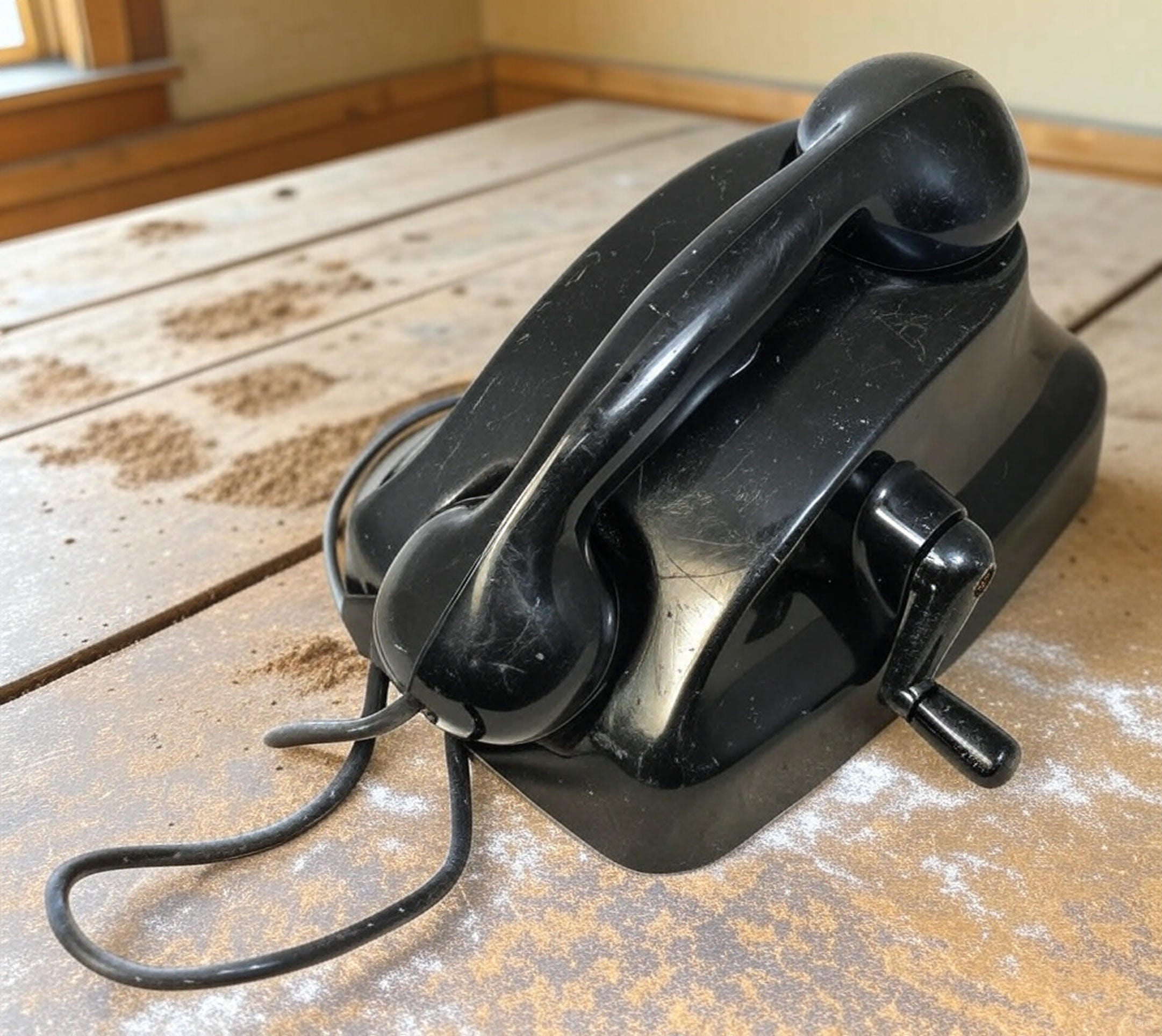
In the 1970s, our farm in the Midlands of Natal, 15 kilometers from New Hanover, was a world of its own, stitched together by copper telephone lines that stretched across the valley. Our phone number was 1821, party line 18, signaled by two long rings and one short. The whole line shared the connection, so every number’s ring echoed through the heavy Siemens Bakelite phone in our passage. You’d hear the hum of the line, while outside the wires were alive with the chatter of birds who used it a useful perch, and you’d wait for your code to pulse through. Pick up too soon, and you’d catch someone else’s conversation, our neighbor’s code, 1811, was one long ring, one short. If you were nosy, you could eavesdrop, but the telltale click of the receiver gave you away. On a farm party line, secrets didn’t last long, and affairs were impossible. We joke that we had social media before it was invented, courtesy of the local exchange lady, Mrs. Bentfinger, who probably knew more about us than we did ourselves. Like she knew that the Madison Hill’s butcher’s neighbour was shagging his wife. Then we all heard about how he discovered them in his bed and proceeded to attempt to inflict severe bodily harm on the neighbour using two blasts from a shotgun as the scoundrel leapt through the window sonder his onderbroek and an erection. That skinder lit up the party lines for weeks.
That old Bakelite phone wasn’t just for calls. It was a beast, big, heavy, and detachable. Disconnect it, and it doubled as a makeshift cattle prodder, sparking with a jolt that could make you jump. The copper lines, humming softly, stretched 15 kilometers to New Hanover, swaying between poles that doubled as perches for the valley’s wildlife. High above, a Martial eagle often claimed the tallest pole, its sharp eyes scanning the Inyosi River below for leguaan lizards, its favorite prey, burrowing along the riverbank. That eagle was my sentinel, watching over the valley as I pedaled my golden Raleigh bicycle down the dusty paths, the wind whipping through my hair.
The ride to New Hanover was no small feat, 15 kilometers of rolling hills and rutted tracks, but the promise of a glass bottle of Coca-Cola made it worth every push of the pedals. We didn’t keep soda on the farm, so that cold, fizzy drink, bought with my pocket money, was a rare treat, a taste of something beyond our quiet world. I’d sit outside the shop, sipping slowly, watching the town move at its unhurried pace, the eagle circling somewhere above. On some days, I would cycle in the opposite direction, up a steep hill and past a shale quarry used by my dad to pave roads on the farm. Near this quarry was a secret donga that was filled with grenadillas. These would flower and turn into heaven on earth with the most beautiful passion flowers. When the fruit was ripe I would come here to suck the inside pulp out of the dark purple oval delicacy. I’d split them in half using a Swiss Army knife gifted to me from my godmother, Tante Johanna. That taste in that moment is singular ectasy! On the other side of this steep hill was my grandparents farm known as Winterhaven where I would go and have huge helpings of Butterkuchen serviced by my Oma Bertha.
Those days are gone now. The Martial eagle, once king of our valley, is endangered, its numbers dwindling as the world changed. No kid today would know the pure, wild joy of that 15-kilometer cycle, the thrill of spotting that eagle soaring overhead, or the strange intimacy of a party line where Mrs. Bentfinger orchestrated our connections. We were ahead of our time, tethered by copper wires and a shared rhythm, living a life that felt boundless under the watchful gaze of the Inyosi’s last great sentinel.
New Hanover Days
New Hanover, a sleepy rural dot in the Natal Midlands, was our town, small but brimming with character. At its heart was the post office, home to the telephone exchange where Mrs. Bentfinger ruled the lines. Dad’s postbox, PO Box 2, was my responsibility whenever we rolled into town in the Datsun bakkie. He’d hand me the keys, and I’d dash to check for mail. Around Christmas the post box would be overflowing with Christmas cards and mom would hang them up in the lounge with a string and washing pegs. A slip meant a parcel waited inside, a small thrill that broke the rhythm of farm life. The town itself was a simple affair: the White House general dealer, a butcher, a hotel with a lively bar, a couple of fuel stations, and the Tea Room. That Tea Room was my oasis, where I’d spend my pocket money on a chilled glass bottle of Coca-Cola, or, if Dad was feeling generous, a packet of Simba crisps to go with it. Salt and vinegar were by favourite, and even now when I taste them I’m transported back in time. He’d grab The Natal Witness and The Mercury there daily, papers that passed through the family’s hands before ending as kindling for the fireplace or repurposed by Mom’s clever hands. For anything big, we’d trek to Pietermaritzburg, but New Hanover had all we needed for the everyday.
We supported the Natal Rugby team. They were called the Banana Boys, and were moered – bliksemed every game. For the life of me I cannot recall ever seeing them win a game. It was kak being a Natal Rugby supporter, but we perceived. We would travel to watch them in Pietermaritzburg in a stadium that famously had posts with a singular ground post much like those you find in grid iron. Then there would be the matches at King’s Park in Durban. Man, that was crazy with crowds I had never before imagined. One game I became lost, amd my parents, their friends and the Durban police force searched for me. I was eventually found by my dad’s cousin Fred Bartels, as I was attempted to hitch a ride back on some random school bus.
Sundays meant piling into the Mercedes for the drive to the Lutheran Church, where Pastor Schreiber’s three-hour sermons tested our endurance, softened only by the church brass band’s rousing hymns. My ancestors have been Lutherans for 500 years. It’s in the blood. It’s not belief or faith its DNA, like instinct. Its not about talking or bullshitting, it’s about actions.
The real joy, though, came on Saturdays at the church bazaars. Those were feasts of German cakes and food, rich and hearty, with the added spark of meeting a few cute frauleins among the stalls. New Hanover was no metropolis, but its small-town pulse, Mrs. Bentfinger’s exchange, the Tea Room’s fizz, and the bazaar’s warmth, made it the perfect anchor for our farm life at Oakvila.
The Cowboy Kid
Back on the farm, I was the cowboy kid, living out my wild west dreams under the African sun. I’d strut around in a cowboy hat and boots, my bed draped with a cowboy blanket and cover that made me feel like I was bunking in a frontier ranch. Tucked into my belt were plastic guns or my prized Gecado pellet gun, ready for imaginary shootouts on the farm. At seven, my dad upped the stakes, letting me fire an Italian shotgun, its kick jolting my small frame. Soon after, I graduated to a Lee Enfield surplus rifle from World War II, its weight and history heavy in my hands. One unforgettable day, we went hunting, and he handed me a Remington 7mm Magnum, made in Finland—a rifle so powerful it felt like I was holding the whole valley’s strength.
Outside my bedroom window, a wild fig tree stood proud, home to a Hamerkop, my kind of bird. Slow and determined, it built its nest of sticks and mud, layer by patient layer. Each morning, I’d crawl out from under my cowboy blanket and peer out to check its steady progress, the nest growing like a monument to persistence. That Hamerkop was my quiet companion, its work a reminder that good things take time.
Before we had television we had books from the library and from Shuter & Shuter in Pietermartizburg. My parents would let me read whatever I wanted and I learnt English from reading, which has left me saying words like I read them. But there was a indulgence. It was Kid Colt photo comics. Bliksem, he was the meneer.
We had a Telefunken television in our lounge. During the day it would display the SABC/SAUK test pattern that also has a handy and very accurate time display. Then once a week, we would congregate around the television on a Thursday and watch High Chaparral. I swear it made me feel like I had been a cowboy of the Chaparral in a previous journey through time. My dad would watch the World at War. Then there was ‘n groot skandal when a naughty and explicit scene was inadverebtly shown by a technician on the SAUK. I missed that but read about it in the papers.
Before the Telefunken came to the lounge in 1976 we would rely on a friend of my parents named Harry. He had a movie projector and there was a place in Pietermaritzburg that rented movie reels. On the walls of our lounge we watched Vivien Leigh in Gone with the Wind and Elizabeth Taylor in Cleopatra. There were also countless Westerns and even Mutiny on the Bounty. Harry taught me hoe to use the projector so that he could sit and enjoy beers with my dad and I use this skill to become the designated movie man at school.
My dad purchased us a 8 bit gaming console that had pong and pelota which made its appearance not long after the Texas Instruments calculator.
Those cowboy days were magic, but they met their match one fateful trip to Pietermaritzburg. We went to the movies and watched Grease, and Olivia Newton-John, with her leather-jacket swagger, stole my heart. Just like that, my cowboy dreams were traded for a greaser’s slicked-back hair and dreams of being Danny Zuko. The wild west faded, replaced by the beat of rock ‘n’ roll and a new kind of cool.
Farmhouse Tunes
In the heart of our Natal Midlands farm, the Philips HiFi was king of the lounge, a grand wooden cabinet housing a radio, amplifier, and record player that filled our evenings with sound. We’d spin Springbok records, those cheeky bootlegs with covers featuring nude girls. Those songs were all covers and I never knew it at the time.
My sister owned a record called Cold Fact by Rodriquez, and we thought he was a rock star more popular than the Beatles. I suppose were really were hicks. My dad had German Oktoberfest Albums named Stumings. We would practice the songs for the Church bazaar that would double up during the month of Oktober as an Oktoberfest. We would all receive large ginger heart shaped cookies to hand on a string around you neck. If you met a cute fraulein, you would persuade her to take a bite of your cookie and hopefully she would reciprocate. Man, those church functions were kinky.
The real magic, though, came from the radio. Mornings kicked off with Jet Jungle, its wild adventures blasting through the speakers, fueling my imagination as I pictured myself soaring alongside the hero. At night, we’d huddle around for Squad Cars, the gritty tales of cops and crooks crackling through the air, keeping us on edge as the farm settled into darkness. Those radio shows, pulsing from the Philips, were the soundtrack of our days, weaving stories as vivid as the Inyosi valley outside.
Streamside Wanderings
On our farm in the Midlands of Natal, I’d wander along the stream that wound through our land, its banks dotted with Leonurus plants, utshwala bezinyoni, the orange wine of the birds, as the Zulu called them. Their vibrant orange flowers, like bursts of plumage, floated above neat green stems, catching the morning light. Sunbirds, their wings flashing like jewels against the blue sky, would swoop down in an aerial dance, gently kissing the bright blooms before flipping upside down to continue their performance in the air. I’d follow their flight, captivated by their grace, each movement a small celebration of the valley’s life.
The stream was a treasure trove. I’d pause to peer into its pools, searching for Platannas, those remarkable frogs that thrived despite being a favorite snack of the Hamerkop. Also along the stream the beautiful musical song of the Oriole bird could be heard. The water’s journey began three-quarters up the hill, where massive granite boulders, nicknamed izinqe for their buttock-like shapes, marked the stream’s source. Up there, timid Reedbuck roamed, their piercing, eerie calls echoing through the air. When startled, they’d bolt for higher ground, their fleeting forms feeling like encounters with celestial creatures, etched forever in my memory.
Even now, I find peace sitting by a stream, listening to the water’s gentle babble. It pulls me back to those simple, pleasant days when life was a quiet adventure, guided by the dance of sunbirds and the call of the wild.
Farm Wheels and Lessons
Life on our farm in the Midlands of Natal was punctuated by the roar of engines and the thrill of speed. My dad’s pride and joy were his Mercedes-Benz cars, each proudly bearing the registration NH 3000. “In Alle Welt,” he’d say, the best cars in the world. I’d sit in the driver’s seat, staring at the three-pointed star on the hood, imagining it as the gun sights of my fighter plane, soaring over the Inyosi valley. To this day, I dream of owning one, a piece of that legacy.
My mom, though, was the real star behind the wheel. No typical farmer’s wife, she was a vision—always dressed like a queen, makeup flawless, with her Elliot, Murray, Bruyns, and Martitz lineage shining through. She was a rally driver at heart, and my friends and I would pile into the back seat, egging her on to “put voet in die hoek!” She’d grin, floor the accelerator, and we’d tear down the dirt road toward the Sterk Spruit bridge. Just before it, we’d hit a bump that sent our stomachs lurching into our throats, our laughter filling the car. Mom was awesome, a beautiful force of nature who made every ride an adventure.
But if there was one vehicle that stole my heart even more than a Mercedes, it was the Massey Ferguson tractor. During holidays, I’d climb aboard and lose myself in the rhythm of farm life—harvesting potatoes, ploughing fields, the diesel engine’s growl and the rich smell of turned earth wrapping me in bliss. Mastelek, my dad, even invented a hydraulic stumper for the tractor, a beast of an implement that yanked tree stumps from the ground like they were nothing. The number had a number of Massey Ferguson tractors including a large four wheel drive one. One day a large Fiat tractor was delivered that also had a large plough. It was of a shock that my dad had broken his loyalty to Massey Ferguson. The Fiat was a dirt burnt orange colour as opposed to the Ferrari red colour of the Massey Ferguson. It was ugly. But damn that Fiat was powerful and could plough at twice the rate of the others. I was soon tearing up the fields in that Fiat.
One day, though, in the workshop, Mastelek swung a hammer to fix something on a tractor, missed, and split his thumb open. I couldn’t help but laugh, big mistake. His backhand was swift, and the lesson was clear: never laugh at your elders, no matter how foolish the moment. That sting stayed with me, as much a part of the farm’s heartbeat as the Mercedes’ purr or the tractor’s rumble.
Ghost Prank Gone Wrong
My boet and I were the kings of pranks on our Natal Midlands farm, always scheming up ways to stir the pot. One evening, we outdid ourselves, rigging a ghost from old sheets tied to a foefie slide, with my battery-operated toy train tucked underneath. Its ghostly whistle was the perfect touch. We crept to the domestic workers’ quarters, knocked on the door, and launched our spectral creation from a nearby pine tree. The screams that erupted were music to our ears, and we collapsed under the pines, rolling with laughter, barely able to breathe.
But the joke turned sour fast. Bullets ripped through the branches above us, splintering bark and sending us scrambling. We burrowed into the dirt behind the tree trunks, hearts pounding, praying we’d make it out alive. When the gunfire finally stopped, we slunk toward the farm kitchen, only to run smack into Dad, his Lee Enfield .303 still in hand. His face was thunder. “Did you cause that screaming?” he demanded, thinking tsotsis had attacked the workers. We nodded sheepishly, and the sjambok came down hard. That night, we learned the hard way that pranks could cost more than laughs in the wilds of the Inyosi valley.
Cane Burn Tragedy
On our farm in the Natal Midlands, part of the hills was set aside for a sugar cane quota from the Dalton Co-op. When cutting season rolled around, the cane fields were set ablaze to strip away the leaves, turning the landscape into a roaring inferno. The burns were a spectacle—flames leaping skyward, heat pulsing through the air, and smoke curling over the Inyosi valley. At the edges of the fields, Zulu workers gathered, knobkerries in hand, ready to bludgeon the Vondos, cane rats that fled the fire and were prized as a delicacy.
I remember one evening vividly, standing just behind the line of workers, their knobkerries raised, eyes fixed on the crackling cane. The air was thick with anticipation and the rustle of animals escaping the flames. I heard a commotion, the sound of something charging through the stalks. The Zulu in front of me, head down, knobkerrie high, braced for a Vondo. But instead, a Reedbuck burst from the field, its powerful leap slamming straight into his head. He crumpled to the ground, and a sickening hush fell. The Reedbuck stumbled, then bolted up into the hills. We later learned the man’s neck had been broken, and he didn’t survive. That moment, seared into my memory, cast a shadow over the fiery spectacle, a stark reminder of the wild unpredictability of life on the farm.
The Idyllic Oakvila Farmhouse
Nestled halfway up a gentle slope in the Natal Midlands, our farmhouse, Oakvila, was a haven of rustic charm, built from handmade red clay bricks that glowed warmly in the sun. It was dusty by mom climbed in and would make it spotless. The corrugated iron roof sang with every rainfall, from a soft patter to a thunderous roar, a constant reminder of nature’s presence. Wrapping around the house was a polished red tile stoep, where white garden furniture and a metal table held court. Here, we’d gather for braais, Dad, Mastelek, slicing steaks on a wooden board, serving them straight from it in what Mom called “the German way,” plates be damned. A honeysuckle creeper climbed a trellis by the front door, its frosted glass inlays catching the light, while a path of pavers led to a tap nestled in Nile grass. That tap was bliss, we’d drink straight from it, mouths open like eager dogs, water cool and pure.
The lawn cascaded down one side of the house, while on the other, a Holly bush stood like a year-round Christmas tree beside vibrant Bougainvilleas in every hue. Inside, the front door opened to a lounge where our Philips HiFi and Telefunken TV lived alongside a patterned lounge suite. Dad’s Lazy Boy sat in the corner, his throne for reading, and a round table hosted our meals, Willow pattern plates for everyday, blue Italian Spode for special days, and enamel cups for breakfast’s rugged charm. Dad’s view on breaking the bread for special occasions involved eating tripe with kop en pootjies. Nooit! A stone fireplace warmed the room, its chimney smoke signaling suppertime during the cold months, calling us home from farm adventures.
A passage ran the length of the house, the Siemens Bakelite phone at its heart, linking us to the world. At one end, a grand staircase spilled into the garden and pool; at the other, the kitchen hummed with life. An Esse wood stove shared space with a modern Defy, a Kelvinator fridge stood sentinel, and outside the kitchen door, a top-loading freezer sat beside hessian mealie bags where our dogs, Schnauzers, Labradors, and a scruffy Keeshond, lounged. My first dog, a Corgi named Girly, met a tragic end from a puffadder’s bite. In the scullery, jars of sauerkraut lined the cupboards, sometimes exploding under pressure in the dead of night, jolting us from sleep. Inside the kitchen was a stunning yellow wood table with a marble top.
The kitchen shared a back stoep with Dad’s farm office, where his ancient desk held treasures like a manual calculator, later upgraded to a Texas Instruments electronic one. My golden Raleigh bicycle rested there, ready for valley rides.
The bathroom, with its cast-iron bath on ornamental feet, was a Roman emperor’s dream, soaking in it felt like ruling an empire. My cowboy-bedspread room sat beside it, my boet’s in the far corner, with our parents’ and sister’s rooms nearby, the latter housing a tall gun cabinet. Yellowwood floors, laid over brick piles, creaked with history, a crawl space beneath hiding a water pump for when the hilltop reservoir, a concrete giant surrounded by African rock pythons that scared me witless, ran dry. A grass-thatched gazebo shaded by a coral tree stood by the pool, and a lean-to garage sheltered Dad’s Mercedes-Benz, reached by a road lined with blooming Mayflower bushes. Between the garage and the pool my sis had a Wendy house. Copper phone lines stretched from the gate, pinned to poles with enamel knobs, while raised diesel tanks loomed nearby.
Beyond the farmhouse, potato fields stretched to the Inyosi River, framed by a chicken coop, workers’ quarters, and a disused cowshed near a mulberry tree dripping with sweet black fruit. Old sheds, buzzing with carpenter bees, and a new steel one housed tractors and potato-sorting operations, the workshop alive with tools and an air compressor I’d mischievously use to puff air into my mouth. A guava orchard, with a lone kumquat tree, led to the sheds, leguaans scurrying across as the dogs went wild. The garden bloomed with tree tomatoes, custard apples, avocados, litchis, and old Gros Michel bananas, while red dongas nearby were our bobsleigh runs on plastic fertilizer bags. Outside my window, a wild fig tree teemed with weaver nests and a Hamerkop’s massive abode, flanked by two sturdy oaks that gave Oakvila its name. The female weavers would destroy the nests made by the males and the yard would be littered by these crushed dreams and attempts. Life in that quaint red-brick house was a tapestry of simple joys, woven from the land’s rhythms and the love that filled its walls. For years I believed the carpenter bees were bumble bees, and then I read that there are no bumble bees in South Africa. Those old sheds were a treasure trove of old stuff and antique farming implements. I should have saved a few to have as works of art in my garden and on shelves in my house. Behind the Oaks was an old grave and the area was covered by mint plants. If you walked there, your footsteps would crush the mint and the smell would explode into your nostrils.
Farm Mishaps & Miracles
Growing up on our farm in the Natal Midlands was a whirlwind of adventure, but not without its scrapes and scares. My boet and sis made sure I was no stranger to the doctor’s needle. One day at my grandmother’s house, my boet, full of mischief, leaped onto the lid of a toy storage compartment in which I had climed to find a toy, splitting my eyebrow open like a ripe peach. Off we went to the doctor, a neighbouring farmer who lived in a mock castle and cruised in a Pontiac, for stitches. Not long after, my sis, in a fit of sibling rivalry, bliksemed me with a spade while we played in the sandpile Dad was using to build a new pool. Another trip to the castle-dwelling doctor, another round of stitches, and a story to tell.
But those were tame compared to two heart-stopping moments that could’ve ended me. The first was on a hike up Blinkwater, the highest peak near our Oakvila farm, named for the way its rock-bound streams gleamed like flashing jewels on sunny days. A big group of us trekked to the summit, where cliffs loomed near the top. I got too close to the edge, slipped, and went over, my heart lurching as the ground vanished. Miraculously, I caught a small tree sprouting just below the cliff’s lip, clinging to it with every ounce of strength. I was frozen, certain I’d plummet to my death at a tender age. A teacher from Wartburg school, calm and steady, talked me down, coaxing me to let go so he could haul me back to safety. His voice was my lifeline, and I’ll never forget the relief of solid ground under my feet.
The second brush with fate came one Sunday at a braai with Mom’s cousins at Hazelmere Dam, where Dad and I also collected Black Bass for our farm’s dams. I was swimming, carefree, when a powerboat roared by, its wake slamming into me. I gulped water, the swirl dragging me under. Disoriented, I thrashed, unable to find the surface, my lungs burning. No one noticed, except one of Mom’s three male cousins, who all happened to be nicknamed Whisky. He dove in, yanking me from the depths just in time. I don’t recall which Whisky saved me, but I raise a glass to him—Sláinte. Those moments, stitched and saved, were the wild pulse of life on the farm, where danger and deliverance danced as close as family.
Seventies Snaps & Rides
Growing up in the seventies on our farm north of New Hanover, cameras were a world away from today’s instant clicks. My Kodak Instamatic was a treasure, but patience was the name of the game. You’d snap a picture and wait, days, weeks, sometimes months, until the film roll was full. Then came the day trip to Pietermaritzburg, a proper outing from the Midlands. We’d drop the film off at the shop, but the wait wasn’t over; the developed photos were only picked up on the next trip, maybe a week or a month later. Because of that, I’ve got fewer photos from my childhood than I’d like, but the memories? They’re vivid, etched deep in the Inyosi valley’s dust.
The half-hour ride to school was its own adventure, shared with our neighbors, the Seales, in their a VW Kombi purchased by Dr Seale and Mastelek, a symbol of my early years. As the youngest, I’d often claim the “dog box” at the back, curling up for extra sleep on the way. That air-cooled engine hummed warmth in winter, toasting my backside as I dozed. On lucky days, Mom would slip me 5c, or was it 10c?, for a bottle of Coke at the New Hanover Tea Room on the way home, the cold fizz a perfect reward after a long day.
School itself was a revelation. My Sub A teacher, always in a miniskirt, was a vision I was too young to fully appreciate, only later, stuck with stern old battle-axes, did I realize how lucky I’d been. More surprising was learning my own name. At home, I was “Bublein” or “Beebee,” my nickname. On my first day at school, the teachers called for “Ronald,” and I just sat there, oblivious. They grumbled to my parents about my unresponsiveness, but how was I to know? I’d never answered to Ronald before. That yellow Kombi, those slow-developing photos, and the discovery of my real name marked the rhythm of a childhood where life unfolded at its own sweet pace.
Potato Fields & Pranks
On our Oakvila farm in the Natal Midlands, Dad was a master of potatoes, cabbages, and madumbis, turning the Inyosi valley’s soil into a bounty. We farmed BP1, Pimpernel and van der Plank potatoes. The were separate varieties for baking, frying and general purpose. He built two dams from scratch, crafting an irrigation system that brought the fields to life. I was his right-hand man, digging trenches with the TLB and laying pipes, sweat and dirt bonding us to the land. To this day, I fancy myself a useful plumber, thanks to those long hours under the sun.
Potatoes were my love—versatile, hearty, and the heart of our table. Mom worked magic with them, baking, boiling, or mashing, and I savored every bite. The whole process, from planting to irrigating to harvesting, was a rhythm I cherished. But madumbis? They were the real stars. Dad’s were unmatched, and on harvest day, local Indian families would roll up in their bakkies, eager to buy them for the best curries in the Midlands. The air would hum with chatter and the promise of spicy feasts.
The potatoes had their own journey, either sold to Simba or shipped to the Durban market. We’d load the spud truck, piling it high with sacks, and make the trek to the city. There, a Lebanese market agent worked his charm to sell them off. We’d bring along local workers to help, and for the new ones, wide-eyed at their first Durban trip, we’d pull a classic prank. We’d coax them into the snake park’s python cage, their mates collapsing in laughter as the poor soul realized they were face-to-face with a slithering giant. We were bad bliksems, alright, but those days in the potato fields, with pipes, pranks, and madumbi curries, were pure, mischievous joy.
The Big Smoke
I now live in the Big Smoke but my heart is still in the Inyosi Valley.
The Floods
The floods have a way of sneaking up on you in KwaZulu-Natal, like an old ghost revisiting the living. I was just a kid back then, maybe ten or eleven, when the Inyosi River turned from a lazy trickle into a roaring beast overnight. It was the late ‘70s, I think—long before the one that ravaged New Hanover again this year, claiming lives and homes in an eerily familiar fury. Our family farm was on the Inyosi’s banks, where it fed into the Sterk Spruit before carving its path through town. That morning, the sky was still bruised with storm clouds, and the water was swollen and furious from days of relentless rain.
My boet, my big brother, a daredevil who could’ve been Evel Knievel’s long-lost twin—spotted the chaos first. “Come on, let’s ride it!” he shouted, his eyes lit up like Christmas lights. Before Ma could holler us back, we’d grabbed those big black tractor inner tubes from the pool and launched ourselves into the current. The Inyosi carried us downstream like we were on some wild amusement park flume, whooping and hollering as branches whipped past and the water tugged at our legs. It felt like freedom, invincible kid stuff, until we hauled ourselves out a few kilometers down and trudged back home, soaked and grinning.
Later that day, Dad piled us into the bakkie to check on town. New Hanover was a war zone—roads turned to mudslides, houses half-submerged, folks wading through waist-deep water with whatever they could salvage. The air smelled of wet earth and despair. Multiple people had drowned, swept away in the night. I remember hearing about the Dutchman most vividly. He was an immigrant from the Netherlands, a quiet bloke who’d built his life on the river’s edge. His place was right in the Sterk Spruit’s path, and when the flood hit peak, it took him and his home in one merciless gulp. They found his body downstream days later. Seeing the wreckage up close stripped away our morning’s thrill; it was a harsh lesson in how nature doesn’t care about your plans or your bravery. My boet, though, he just shrugged it off with that Knievel grin, already plotting our next adventure. God, I miss that reckless spirit.