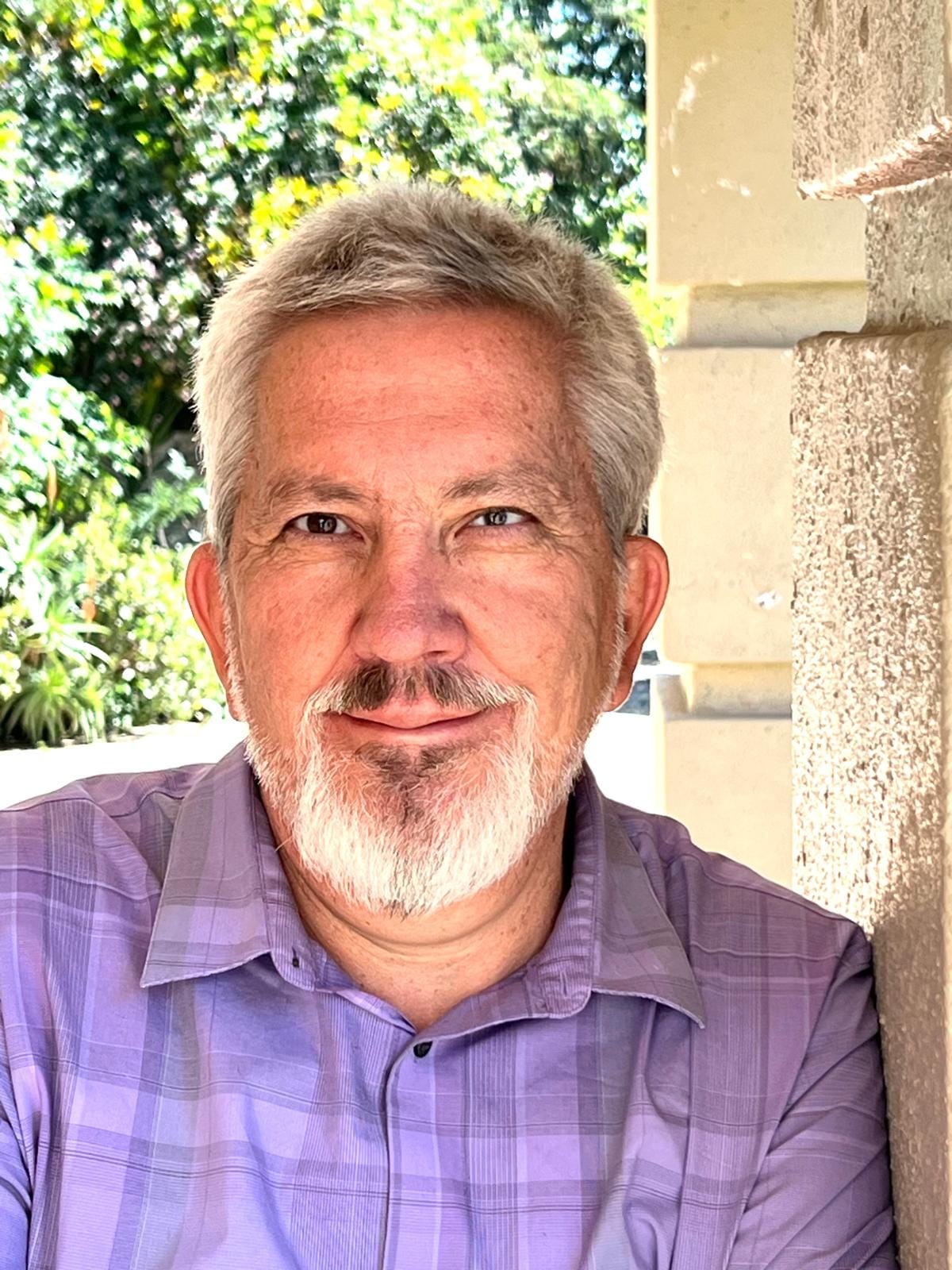
In my previous life I would have been a Roman Gladiator
Andabatae, the blindfolded gladiators of ancient Rome
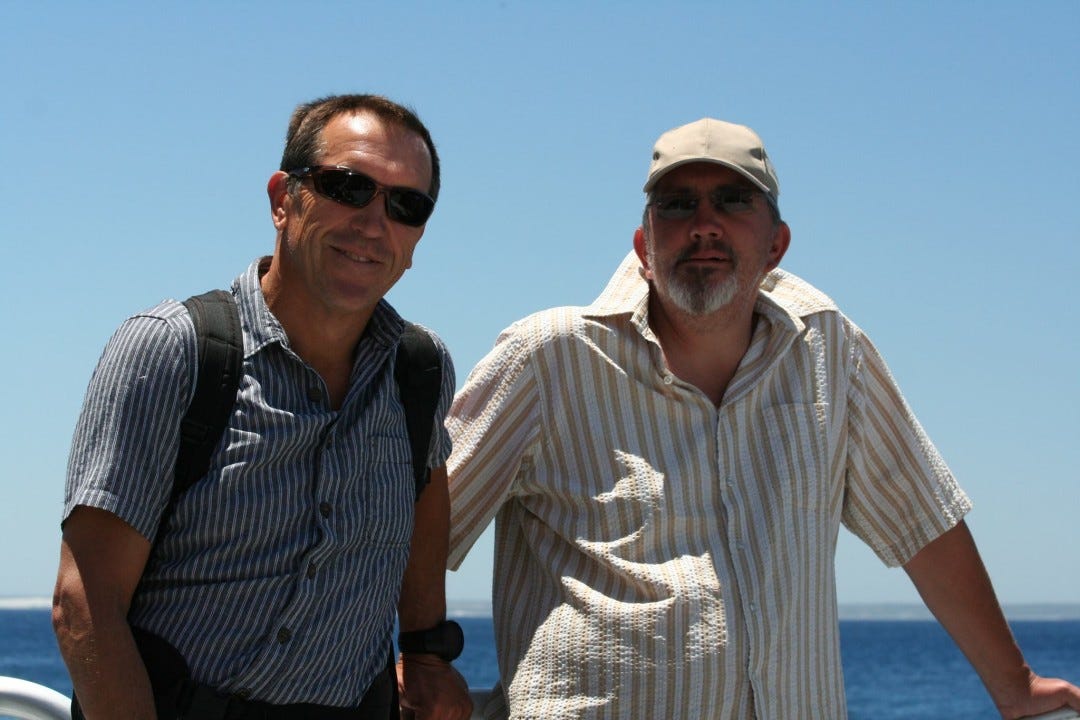
Maties
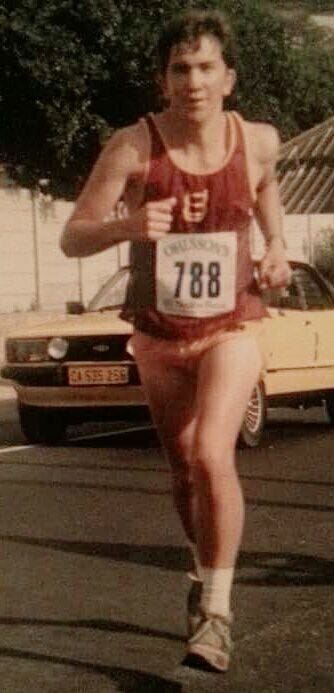
I went to university at Stellenbosch more commonly known as Maties. My brother was my mentor and helped me achieve a BSc in Computer Science and Mathematics. It was at University where I first encountered IBM-compatible PCs namely Olivetti M24s and CW16s. I initially wanted to complete a commerce degree, but computers were what fascinated me and that was the direction I took.
The late eighties in South Africa was a strange period with South African involved in a bush war in Southern Africa. Many of my contemporaries were involved in battles such as the one at Cuito Cuanavale. All white males were conscripted. If you went to University, the call up papers were delayed.
The system of Apartheid was on its last legs and we had some strange contradictions and stories. The biggest pop star we had no-one knew about named Rodriquez. We had songs about that time, like Weeping. Then there was the Groot Krokodil.
Jood
My dad had a friend he had acquainted at the many cocktail parties hosted by his in-laws, the Elliots, named Kobus Jordan. He was given the nickname of Jood and matriculated from Grey in the same year as Alan Paton started the Liberal Party. Paton wrote the novel, Cry the Beloved Country which is a classic South African work and one of the books I read early on in my life. Jood was the one who secured my place to attend Grey College. Jood was ‘n verligte which was a more liberal body of Afrikaans politicians as opposed to the verkramptes, who were more conservative. Jood famously wrote the Rubicon speech for PW Botha, who then tore it up and rejected the reconciliation proposed with black South Africans in its contents. He instead delivered his own version that went down internationally like a lead balloon.
A few years after the infamous Rubicon speech, I graduated with a BSc. South Africa had just signed off on the independence of South West Africa, which would become Namibia. At the graduation ceremony, the Data Processing division of the South African Railways had setup a table. I walked off the stage with my degree and into the foyer as one of the first graduates as my surname was Bartels and students were being called alphabetically. A James Flowers greeted me and asked me if I had a job. I replied in the negative and he asked me how well I had done. I aced Computer Science I proudly told him. He gave me an airplane ticket and hotel accommodation to visit Johannesburg for a job interview. I went for the interview and scored a job as a programmer on IBM mainframes. There was the little matter of me completing my conscription which I was released to do at 50% of my salary. When I returned to work after the Navy, it was around the time of the battle of Shell House and we were leopard crawling around the Transnet buildings with bullets flying around. The country was on tenterhooks because of the upcoming elections.
Word wakker
I reported at Saldanha for basic training in the South African Navy. I drove there in my Toyota 1.6GL and along the way encountered a Rinkhals at the Vredenburg crossroads. It attacked one of the tires of my car. I arrived at the base and one of the first requirements was to complete a medical. I had Microphthalmia which effectively meant I was visually impaired in my left eye. I was going to be send home, but I wanted to experience the same things that all my mates were having in the Defence Force. I passed the medical by pretending I had no problem with my left eye. The eye test required a person to look at an eye chart with your right eye and your left eye. I just repeated what I saw with my right eye covering my hand with my left hand after switching to my left eye and right hand.
By the time the Navy discovered I was blind in one eye, it is really obvious, I had passed range training and it was three months in. Luckily, there was a Commander Smith on the search for Computer Science graduates to look after the Navy’s computers, and there I was dispatched to Naval base Simonstown.
Every morning during training at Saldanha Bay, the base would parade at 8 am and the national flag would be raised on the rigging. I recall those parades and being piped awake with a wise ass saying “word wakker, word wakker, die dag word al hoe kaker...” The rigging on which the national flag was hoisted was painted white and one day I was in a group assigned to repaint it. One conscript was halfway up the rigging, when he dropped the paint tin. There was a huge splotch of paint at the bottom of the main mast of the rigging. We all looked at this and contemplated the opfok that was going to be due to us by the base Gunnery Instructor (GI) as punishment. I then decided to paint the splotch into a nice square at the bottom of the mast. No-one subsequently noticed and we escaped being dished out some of the legendary punishment by the GI.
Six months later, I was back at Saldanha Bay, in the role of the Navy's computer geek. As I walked past the rigging at the parade ground, I saw the new set of conscripts repainting the structure. And there they were, applying a fresh coat of paint on the square at the bottom of the rigging.
An example of this behaviour in an IT context is network engineers who force manual settings when automation is available. An example is network port settings which some guys insist on hard coding. Eish!
Computer geek
Andabatae are gladiators from ancient Rome that fought blindfolded. It was also the name of a computer programme I wrote while I was in the Navy. It was written in assembler to be used on a PC and interacted with a Braille computer known as the David. The telephone exchange operator of the Naval base was blind, he suffered from retinitis pigmentosa and we became friends. As conscripted servicemen we were not an enthusiastic bunch. We would disappear most afternoons to spend time at the Brass Bell pub. Our officers would phone the exchange to enquire where we were and our friend would cover for us by stating we were on the way to the harbour, or had just been to the stores, and send them on a wild goose chase. At the end of the day we would buy him beers.
The Andabatae computer programme provided voice and screen navigation on a text-based DOS system. It was used often with word processing software or with programmes such as DBASEIII. Also included was a file transfer utility to transmit files between the PC and the David computer.
The Romans have always fascinated me and in a previous life I'm sure that I would have been one of those gladiators.
While I was growing up, I very soon realized I was different because I had sight in only one eye. I was the youngest child in the family as was given the nick name of BB. I never realized what my real name was until my first day of primary school. But being blind in one eye I was constantly having to prove my normality to my friends by being extra boisterous. This involved being involved in all adventures and misdemeanours suggested or lead by my brother.
At the age of six my parents went on holiday to view the flowers of the Namaqualand. We went to stay with the Joostens for a few days. Egged on by my brother we were involved in a fruit fight with the cousins. This was great fun and we pelted each other using guavas that grew in the farmyard. That evening at the supper table, after prayer everyone was asked to repent their misdemeanours. I listen in shock as the cousins spilled the beans on our fruit fight to their parents. My brother leaned over to me and told me I was not to say a word about our involvement. When it came to my turn at the end of the table, I stood up and said I was not going to say a word as we were Amastelek. Mastelek was the Zulu name given to my father by the Nkosi of the Gumedes and meant the strong one!
My dad was very fluent in Zulu and could even distinguish regional dialects. The Zulus are at the best of times a boisterous and occasional aggressive group. The Zulu nature is about strength in the here and now. There is nothing like hearsay or deductive reasoning about the past. My dad would tell me that Zulus would only admit to a misdeed when accosted red handed. Else it did not happen, and this was the assimilated culture with which my dad lived. It accounts for what is happening in the current machinations around cronyism and corruption as the Stalingrad defense.
Railways
While I was working for the Railways, they became known as Transnet. After two years at the state-owned enterprise you could join the pension. While everyone who joined at the same time as I received a letter confirming their pension membership, I received a letter rejecting my membership as I was disabled. The discriminatory laws of apartheid South Africa meant exclusion from state pensions for disabled people. I resigned and walked out.
A few years ago, I went to the Donald Gordon Institute which is attached to the Wits Medical School for DNA testing. The researchers were pretty sure that they could identify something in the testing that was an abnormality. The blood tests were taken and send to the Netherlands. There were no known matches for any eye or kidney abnormalities. In most physical abnormalities with eyes, there is also a corresponding kidney abnormality. My Microphthalmia is like the Sardine Run on the east coast of South Africa. The reason for its existence is not known.
Badar
There is a great internal conflict about the term and grouping of being disabled. It is an undesirable term as the word itself means to be incapable, not able or lack the ability to perform tasks. It does not describe the actual physical or mental impairment as that would to be too much effort. It bundles everyone into a condescending grouping of those that are different. Groupings are created with criteria that matches a particular goal, most often political. Neither I nor anyone else who has physical impairments is not able. I am able, just like Douglas Badar, the Battle of Britain fighter pilot. Disabled is a bigoted term and should be removed from common use. Its is the same apartheid thinking that partitioned people into white and non-white. Able and Disabled.
I was born South African and hell no, I am not a disabled South African. I was excluded out of the old South Africa, and I feel excluded out of the new one as well. Much like other groups who have been stereotyped.
Basic Training & Dunbar’s Revenge
Basic training in the Navy was a crucible, a chaotic blend of discipline, exhaustion, and the kind of camaraderie that only forms under pressure. I was 22, a bit older than most of the fresh-faced recruits around me, which gave me just enough confidence to weather the storm. The guy next to me in the barracks, though, was a kid named Dunbar—18, wiry, and full of nervous energy. I’ll never forget the first time I saw him, at the medical bay for our inoculations. Most of us gritted our teeth and took the jabs, but Dunbar? He had a full-blown phobia of needles. When the medic approached with the syringe, his eyes went wide as saucers. He flat-out refused. It took three burly seamen to pin him down, and the second that needle came near, he was thrashing and screaming like a wild animal, throwing punches that didn’t land but sure made a scene. It was chaos, and I couldn’t help but feel for the kid. That was Dunbar—always a little too raw, a little too real.
The Able Seamen (ABs) and Leading Seamen (LSs) smelled blood in the water with Dunbar. They hounded him relentlessly, barking orders, piling on extra duties, and mocking his every misstep. Me? I was less fazed. I’d learned early on that a hard stare and a calm demeanor could keep the worst of them at bay. Dunbar, though, was an easy target, always fidgeting or mouthing off at the wrong moment. I took it upon myself to look out for him, deflecting attention when I could. We’d often pull late-night guard duty together, posted along the perimeter fence in the cold, sharing quiet moments between the monotony. Those shifts were when I got to know him—his quick wit, his stubborn streak, and his burning desire to get even.
Dunbar wasn’t one to let things slide. He hatched a plan one night, his eyes glinting with mischief. The ABs’ dormitory was his target, and his weapon of choice? A fire extinguisher. The idea was to sneak in while they were at the mess, let off the extinguisher, and slip out, leaving chaos in our wake. I agreed to help, mostly to keep him from doing something even dumber. But Dunbar, true to form, couldn’t wait. Instead of sneaking in, he punched out a window, slung the extinguisher through the shattered glass, and let it rip. Foam sprayed everywhere—beds, lockers, the works. Then he bolted, laughing like a maniac as we sprinted back to our barracks. It was an almighty mess, and we both knew there’d be hell to pay.
The next morning at parade, the ABs were livid, stalking up and down the ranks, scanning for guilty faces. Nobody fessed up, of course. Dunbar stood there with his signature grin, practically daring them to figure it out. Then the Gunnery Instructor (GI) rolled in, face like thunder. He called the ABs to attention, demanding to know why their dorm looked like a snowstorm hit it. No answers, just sheepish looks. So, he marched them up and down the parade ground for two solid hours, barking orders while we stood at ease, watching. Dunbar’s grin never faded, but I knew we’d poked the bear. Those ABs were going to be insufferable for the rest of training, and they didn’t disappoint—extra drills, sharper tongues, the works.
We made it through basic training, bruised but unbroken. After “klaar uit,” when we finally passed out of training, I lost track of Dunbar. He vanished into the Navy’s vast machinery, off to some ship or shore posting. I never saw him again, but I’ll always remember that wild kid with the needle phobia and the knack for stirring up trouble. Wherever he is, I bet he’s still grinning.
Sunette, Tea, & a Missed Chance
The Navy base hummed with its usual rhythm—boots on pavement, the distant clatter of machinery, and the sharp bark of orders echoing across the parade ground. My days often revolved around the personnel office, not because I had endless paperwork, but because of Sunette. She worked there, always in crisp white dresses that seemed to glow against the drab military backdrop. Her name alone—Sunette—felt like a burst of sunlight. I was smitten, and I’d find any excuse to visit her, usually under the guise of fixing her computer. My infatuation ran so deep that I poured my heart into coding a Navy personnel management system for her, which I grandly named Gladiator. It was my awkward attempt at winning her over, a digital monument to my crush.
One day, as I crossed the parade ground toward the personnel office, my mind probably lost in thoughts of Sunette, I ran straight into a Chief Petty Officer. He was a barrel of a man, all starch and authority, and he zeroed in on me like a hawk. “Hoekom is jou hare so woes, moes troep?” he bellowed, his Afrikaans cutting through the morning air. My hair, I’ll admit, was a bit wild—windswept and untouched by a comb. “Dit is omdat ek dit nie gesny het nie,” I replied, trying to keep it light. Bad move. His face turned crimson, veins bulging like they might pop. “Wie is jou bevelvoerder?” he demanded. I gave him Commander Smith’s name, and he stormed off, vowing to call my CO and ordering me to the base barber.
Instead of heading to the barber, I made a beeline for Commander Smith’s office. I knocked, and his calm “Come in” was a relief. He was behind his desk, papers neatly stacked, and offered me tea like it was the most natural thing in the world. I’m a tea man—better than coffee any day—and I think he liked that about me. We were tea buddies in a world of instant coffee drinkers. I accepted, and as I sipped, I mentioned I had something to tell him, though I hadn’t quite figured out what. Before I could say more, the old white rotary phone on his desk screeched to life. Those ancient post office phones were loud enough to wake the dead, and I could hear the Chief’s raging voice on the other end, still fuming about my hair.
Commander Smith listened for about a minute, his face unreadable. Then he cut in, cool as you like: “Chief, this is not how it works. You do not phone me or talk to me. You go to your commanding officer of equivalent rank to me and have him speak to me.” He slammed the phone down, and that was that. He turned to me, raising an eyebrow. “What did you want to talk about?” he asked. I shrugged. “Nothing,” I said, and he nodded, unfazed. “Excellent work on that Navy personnel system,” he added, almost as an afterthought. I left his office feeling like I’d dodged a bullet.
Sunette, though—she was the real story. I never mustered the courage to ask her out. The day before my final uitklaar, she invited me to visit her at her flat in Vishoek. I went, heart pounding, and she showed me her budgies, their cheerful chirps filling her small, sunny space. There was a spark, a static in the air, but some awkwardness—mine, probably—kept me from making a move. I was already half-focused on my new job in Johannesburg, my mind racing toward the future. I left, promising myself I’d stay in touch, but I never did.
Dammit. What a missed opportunity.
Eternal Flame
One evening stands out vividly from my days in the Navy, a time when the salty air of the Cape mixed with the raw energy of youth and a touch of rebellion. It was at the Brass Belle in Kalk Bay, a cozy spot tucked along the rugged coastline, where I first heard “Eternal Flame” by the Bangles. The song drifted through the dim, smoke-hazed room like a siren’s call, its haunting melody cutting through the chatter and clink of glasses. Outside, the waves crashed against the rocks with a fury that mirrored the restlessness in our souls—rough seas that night, pounding the shore as if protesting our fleeting shore leave. The Brass Belle was our favorite haunt, right next to a tidal pool that shimmered under the moonlight, and atop the bar counter sat that iconic brass statue of a lovely lass, forever poised in elegant allure, watching over us like a guardian of good times.
In the Navy we had WAFs and they were my eternal flames, especially Sunette in her white dress.
Across the road loomed the Parrot, a rowdier joint that always seemed to beckon with promises of mischief. The Navy brass had a habit of banning us from certain clubs when things got out of hand—fights, pranks, or just too much revelry—and the Parrot was often at the top of that list. I remember one chaotic afternoon when I witnessed the Military Police storm in to clear out the place. They barreled through the doors, barking orders and herding us ratings out like wayward sheep. The resentment boiled over; from that day on, the MPs were persona non grata among the sailors, symbols of the iron fist that clipped our wings just when we needed to soar.
That animosity spilled over in unexpected ways. One lazy afternoon at the mess in Simon’s Town, an MP pulled up on his gleaming motorbike, parking it right out front as if he owned the place. He strode inside with that typical swagger, leaving his ride unattended. Seizing the moment, one of our lads climbed onto the short wall surrounding the stoep and, without a word, relieved himself right onto the bike. Before long, a few more joined in, turning it into a impromptu act of defiance. You should have seen the MP’s face when he returned—priceless, a mix of shock, fury, and disbelief as he stared at his sodden machine. In that instant, amid the laughter echoing from the shadows, we felt a fleeting victory, a reminder that even under the weight of discipline, the spirit of the sea—and a bit of cheeky rebellion—couldn’t be fully tamed. Those were the days that forged bonds stronger than any anchor chain, memories etched like barnacles on the hull of my life.