My Scottish Ancestry
The Maternal Legacy in the Calvinist Influence of Afrikaans
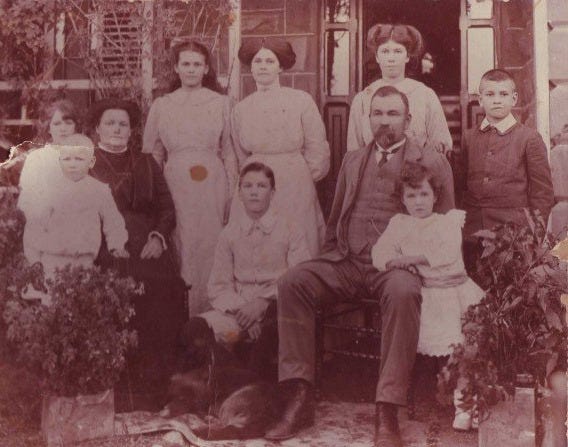
My maternal grandfather, John Elliot, carried the blood of Scotland’s rugged hills in his veins, a descendant of both the Elliots and Murrays—clans known for their resilience and deep Protestant faith. These forebears weren’t just wanderers; they were part of a deliberate wave of Scottish Calvinist ministers and schoolteachers recruited by the British authorities who took control of the Cape Colony in the early 19th century. After the British seized the Cape from the Dutch, and solidified their hold, they sought to anglicize and “civilize” the region, including the rural Boer communities who were often isolated and resistant to outside influence. The Church of Scotland played a key role here, sending educated Calvinists like my ancestors to fill vacancies in the NG Kerk and establish schools. These Scots brought their strict Calvinist theology, emphasizing predestination, moral discipline, and education as tools for upliftment. It was an effort to bridge the cultural divide, teaching English, scripture, and basic skills to the Boers, who were spreading out into the frontier. In essence, this migration helped weave Scottish threads into the fabric of South African society, influencing everything from church governance to community schooling during a time of colonial transition.
The Murrays, in particular, left an indelible mark. My great-great-grandfather, Andrew Murray Sr., emigrated from Scotland in the 1820s, becoming a pivotal figure in the NG Kerk. Born in 1794, he married a woman of Huguenot and German descent, and together they raised a large family in Graaff-Reinet—sixteen children, with five sons following him into the ministry. His son, Andrew Murray Jr., born in 1828, became one of South Africa’s most renowned theologians, pastoring churches across the Cape and authoring over 200 books on prayer and devotion. The Murrays were instrumental in establishing and expanding the NG Kerk, promoting education and missionary work that reached deep into South African society. It was this lineage that named my grandfather John and his brother Andrew, honoring the Murray side through their mother—a nod to the family’s prominence in shaping Afrikaner religious life.
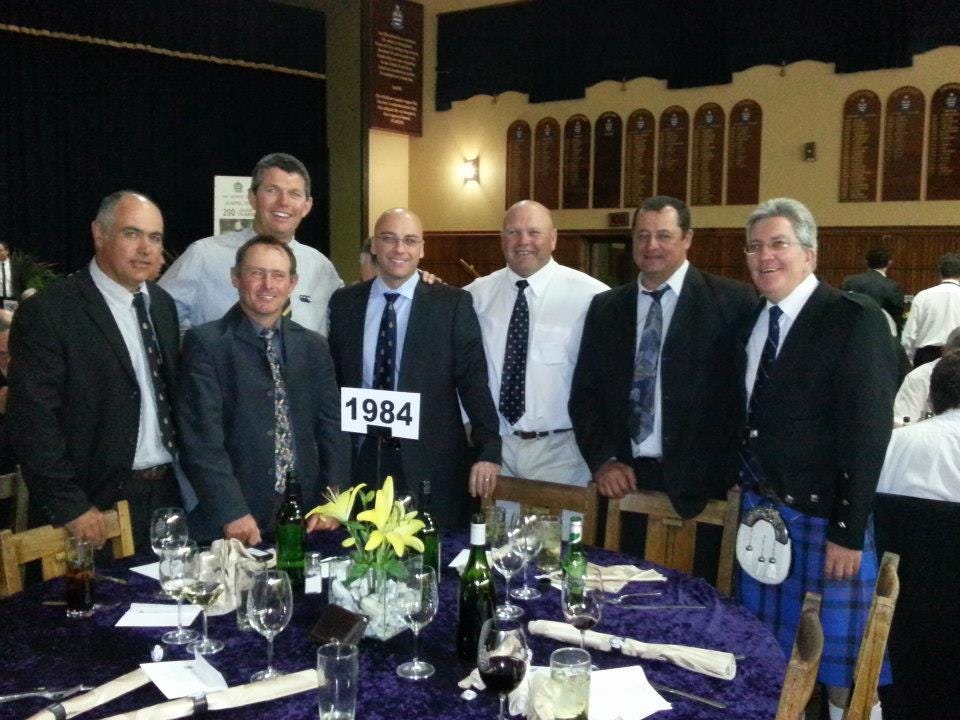
Years later, when I boarded at Grey College, one of the hostels bore Andrew Murray’s name, a quiet reminder of that heritage staring back at me from the dormitory walls. My grandfather himself grew up in Oudtshoorn, rubbing shoulders with neighbors like C.J. Langenhoven, the celebrated Afrikaans poet and advocate who penned the words to “Die Stem.” Langenhoven, born in 1873 in the nearby Ladismith area, was a force in promoting Afrikaans culture and language during a time when English dominance loomed large. My grandfather rose to become treasurer of Langenhoven’s Saamwerk Komitee, an organization focused on cooperative efforts—in literature, politics, and community building—that embodied the spirit of unity Langenhoven championed amid the fractious Afrikaner world.
And fractious they were, those early Afrikaners, like herding cats. Rivalries simmered and boiled over into generational feuds, none more emblematic than the tensions between Gerrit Maritz and Piet Retief during the Great Trek of the 1830s. Maritz, a pragmatic leader, clashed with Retief’s bolder ambitions, even offering to take risks in his stead to avoid disaster as the Voortrekkers pushed northward against Zulu forces and British oversight. These old grudges lingered in family lore; my Ouma Joey would recount them with a stern eye, ensuring we carried the torch forward, lest we forget. Read about my Ouma’s clan (The Maritz Clan).
There’s an ironic twist threading through all this piety and division. In the mid-20th century, Erlo Stegen, founder of the kwaSizabantu Mission and a well known cult, triggered a revival among the Zulus that echoed eerily familiar tales. His book, God Among the Zulus, described a manufactured spiritual outpouring starting in the year that I was born at Mapumulo, complete with confessions, healings, and communal transformation. But when I once stayed with the Joostens during my parents’ holiday to Namaqualand, I rifled through their dusty bookshelf and pulled out a biography of Andrew Murray. Devouring it, I learned of the 1860 revival in Worcester, where Murray Jr. witnessed an explosive awakening—prayer meetings erupting in fervor, sinners repenting en masse, and the Spirit descending like fire on Pentecost. Later, reading Stegen’s narrative, the parallels struck me: the buildup of prayer, the sudden breakthrough, the ripple effects across communities. It felt less like coincidence and more like assimilation, a borrowed blueprint from the Murray story in the Western Cape. This wove a strange thread between my maternal family’s Calvinist roots and the evangelical fervor on my paternal side, blurring the lines of our household’s divided faiths. Read more about kwqSizabantu (The Light Does Not Touch kwaSizabantu).
Ironically, it was at this stay with the Joostens that I myself truly became Mastelek ncane. Read the story about The Strong One.
As for me, I leaned more Lutheran than Calvinist—easier to entertain ideas like evolution without drawing fire. In Lutheran circles, you could ponder Darwin’s theories without immediate ostracism, whereas the NG Kerk crowd saw it as a hard stop, a threat to creation’s literal timeline. My dad, fed me stories from a young age: tales of ancient creatures roaming the earth, our humanoid ancestors evolving over half a million years, not mere thousands. Yet, bound by family ties to the NG Kerk, my mother—ever dutiful—dragged us along with Ouma to services. I’d nod off in the Lutheran pews, lulled by the softer sermons, but in the NG Kerk? No chance. Those kwaad oomies glared with eyes like hawks; I was too kak bang to doze. I toed the line, straight-backed and alert. I’ll never forget the uitkak from Ouma Joey when I slyly pocketed change from the collection plate, swapping my R1 note for what I figured was a fair 50c tithe. Her wrath was biblical, a lesson in thrift and theology I’d carry for life. I explained I wanted an ice cream after church. We did go get ice creams and Ouma bought Dunlop cigarettes.
My alma mater, Grey College, is in essence one of those early Calvinist schools, established by George Grey initially as a seminary but transited very early on into a school for boys. Read more about Grey (Cosmos, Blackjacks & Kharkibos).