My Years at Wartburg-Kirchdorf Primary School
The town where Christophe Bartels had been the Lutheran Pastor
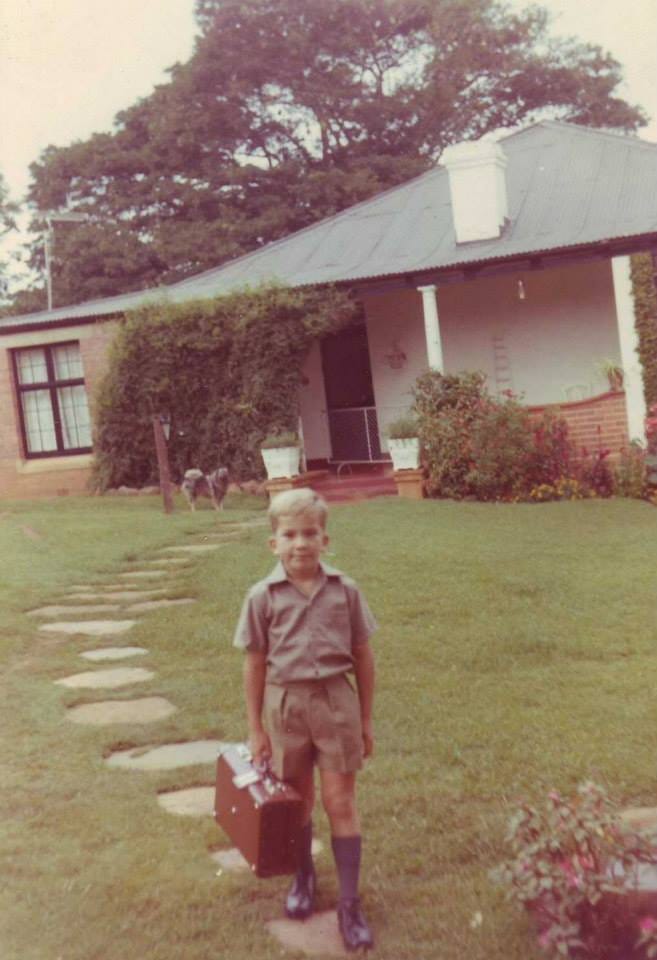
Wartburg-Kirchdorf Primary School, nestled in the small town of Wartburg, was where I spent my formative years from Class 1 to Standard 5. Those years were filled with quirky discoveries, unforgettable characters, and moments that shaped me in ways I didn’t fully appreciate until much later. We wore Khakis clothes and Bata shoes.
On my very first day of school, I learned something shocking: my name wasn’t BB, as I’d always thought. It was Ronald. Imagine the confusion of a six-year-old, striding into school thinking he’s one person, only to be told he’s someone else entirely. That set the tone for the wild ride that was primary school.
Our Class 1 teacher, Miss Hopkins, was the stuff of legends. She wore mini skirts and was, without question, the hottest teacher I ever had, sorry, Jacqui Badenhorst from Grey, you’re a close second. Miss Hopkins was kind, but I once had a disagreement with her that I couldn’t articulate. Language failed me, so I did what any frustrated kid might: I kicked her. Not my proudest moment, but it’s a memory that sticks.
I taught myself English by devouring books. The school library became my domain, I read it shelf by shelf, book by book, until I’d conquered the lot. When I ran out of library books, I scrounged for anything I could find, from dog-eared paperbacks to whatever was lying around at home. Reading wasn’t just a pastime; it was my window to the world.
Music class, however, was not my forte. In Standard 3, the German music teacher, fed up with me for reasons I still don’t understand, bellowed “Raus!” and kicked me out. I stood outside, bewildered, until the principal, Mr. Garz, spotted me. He’d gone to school with my dad, so instead of a lecture, he took me to his office and dialed my dad on his old Siemens Bakelite phone. Those things were so loud I could hear every word. “Ernie,” he said, “your youngest boy was kicked out of class.” “Which class?” my dad asked. “Music,” said Garz. “Don’t worry,” my dad replied coolly, “call me when it’s Maths or Science.” Garz hung up, looked at me, and said, “Your dad says you don’t need to go to music class.” From then on, during music lessons, I’d climb trees instead, my own personal rebellion against rhythm and melody.
One of my favorite memories is building a robot with my friend Derek for a school project. We rigged it up with flashlights and walkie-talkies for control, feeling like mad scientists. Derek, ever the dreamer, fancied himself a spoon-bender like Uri Geller, though I don’t recall him bending much of anything.
Rugby was another adventure. I played as a loose forward, but our team got absolutely klapped by the city schools. The scores were so lopsided they were downright embarrassing, but we kept at it, dirt on our faces and pride in our hearts.
Behind the town hall, I had my first brushes with romance, kissing two girls, Rene and Louis. Those moments felt daring and monumental at the time, though I suspect they were more innocent than my memory makes them out to be.
My best mates were Kim and Karen, with Ivan and Gavin close behind. We were a tight crew, navigating the chaos of school life together. I’d pile into a yellow VW Kombi to get to school with my family and the neighbours, the Seeles, me crammed in the “dog box” at the back with my brown suitcase, a flimsy thing made of hardened cardboard with a lock that broke if you looked at it wrong. Eventually, I upgraded to a canvas rucksack, which felt like a major life improvement.
Lunch was always the same: brown bread and jam. I’d eye the town kids’ fancy sandwiches—white bread slathered with peanut butter or Marmite—and occasionally swipe one during break in the quad. It was a small act of defiance against the class divide I sensed even then.
One day, some older English immigrant kids at school tried to bully me. I told my older brother, who rounded up our cousins, and they sorted those yobbos out proper, moered them stukkend, as we’d say. The principal called my dad again, but Dad, known in town as Mastelek for his fearsome reputation, brushed it off. He even threatened to come down and deal with the bullies himself. Garz had a tough time with him.
Those years at Wartburg-Kirchdorf were a mix of mischief, discovery, and small-town grit. From learning my real name to dodging music class in favor of tree-climbing, from robot-building to rugby defeats, those days shaped me in ways I’m still unpacking. They were raw, real, and utterly unforgettable.
The Projector Days at Primary School
Growing up, I was lucky to get a hands-on education in some unexpected skills, one of which was mastering the art of the film projector. My parents’ friend Harry, a wizard with woodworking tools and a knack for all things mechanical, used to visit our farm with his trusty projector in tow. He’d set it up in our dining room, and we’d transform the blank wall into a flickering cinema screen, watching old movies under his patient guidance. Harry taught me how to thread the film, adjust the focus, and keep the reels spinning smoothly, a skill that, unbeknownst to me, would soon make me a minor legend at school.
Our primary school was a modest affair, a cluster of dated asbestos buildings huddled around a brick classroom block that formed a quad at the heart of it all. The classrooms were functional, a bit weathered, but they held a certain charm. The real magic, though, happened when the projector came out. I don’t know how it happened, but word got around that I knew my way around the machine, and before long, I was the designated “projector nerd.” Whenever a teacher wanted to show a film, I’d be summoned to set up the clunky old beast, threading the film with a mix of pride and nerves, hoping it wouldn’t jam mid-reel.
We watched a lot of nature films, grainy documentaries about African wildlife or deep-sea creatures that captivated us with their otherworldly strangeness. I can still hear the whir of the projector and the collective gasps of my classmates as a lion took down a gazelle or a whale breached the ocean’s surface. One standout memory was watching sports highlights, particularly the grainy footage of Gareth Edwards’ legendary try for the Barbarians against the All Blacks in 1973. The quad echoed with cheers as we relived that moment of rugby brilliance, even if most of us barely understood the game.
There were less thrilling moments, too. Someone, probably an overambitious English teacher, thought it’d be a grand idea to show us Shakespeare adaptations. Those were met with stifled yawns and restless fidgeting. The Bard’s words might have soared on stage, but on a flickering projector screen in a stuffy classroom, they bored the hell out of everyone. Still, there was something special about those days, the ritual of dimming the lights, the clatter of the projector, and the way we’d all gather in that asbestos-lined room, transported, however briefly, to another world.
Ronald Bartels | LinkedIn | Instagram