Reflections on Madge Networks
Tech Missteps & Lost Opportunities
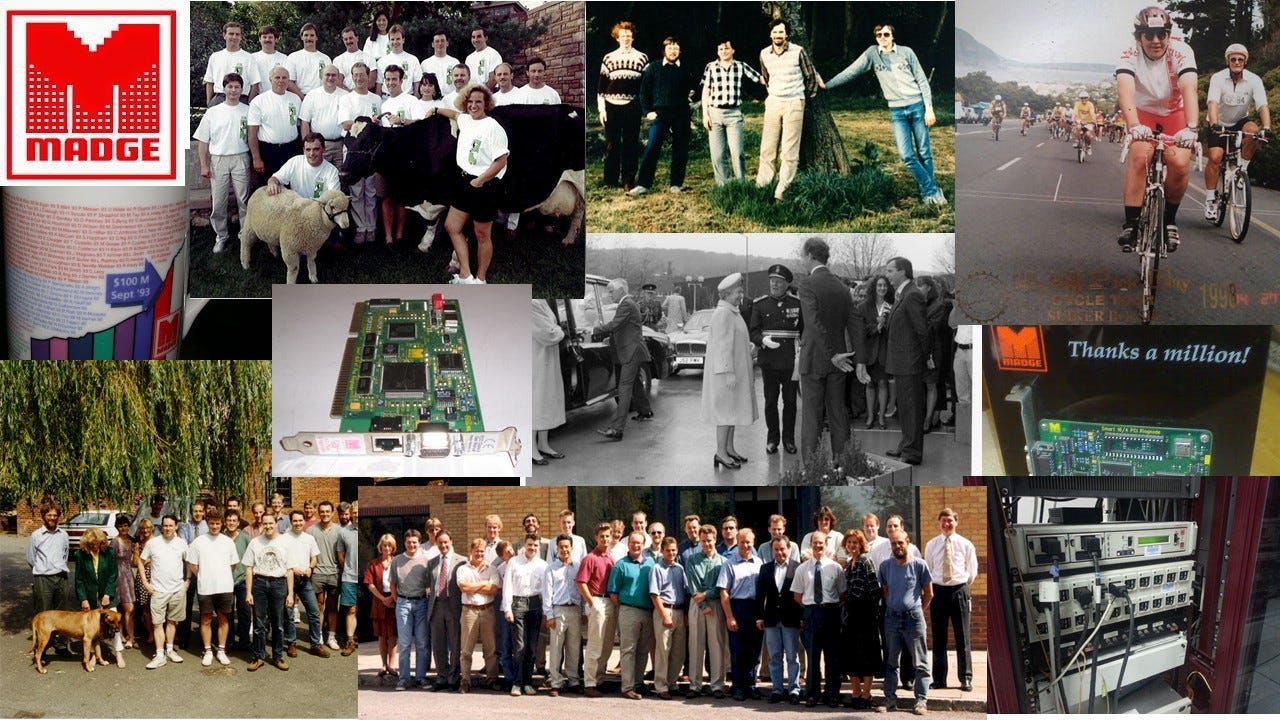
There I was, shooting the breeze with my old mate Duncan over a Sunday braai, the smoke curling up into the African sky as we chewed the fat about life, tech, and everything in between. Duncan wasn’t much of a talker—quiet bloke, kept his cards close—but when he did open up, it was worth listening. Tragically, he took his own life during the COVID pandemic, just another statistic in that godawful mess. Hit me hard; he was a proper buddy, and I had no inkling of the demons he was wrestling with inside. Rest easy, boet.
Our chat that day veered into why Madge Networks, a company where we had both worked at back in the day, went tits up. I’d scribbled about it before, but hashing it out with Duncan brought it all back. My take? Madge had a solid solution in hand and went hunting for a problem to fit it, all while piling on one bad strategic call after another. Truth is, when a company craters like that, it’s never just one reason—it’s a bloody avalanche of them. You’ve got the obvious surface-level cock-ups, the mid-layer blunders propping those up, and then, if you dig deep enough, the root causes lurking at the bottom. No single villain in the piece, but a chorus of them singing in harmony toward disaster. I’ll lay out my two cents here, but I encourage anyone reading this to chip in—the full picture’s probably a group effort.
If you’re hunting for the gold standard in tech brain farts, look no further than Kodak. They bloody well invented the digital camera, the very thing that gutted their film empire, but they were too busy squeezing every last drop from their legacy cash cow to spot the digital tsunami barreling down. That wave also smashed Polaroid, another innovator caught flat-footed. Madge was like a precursor to that duo: they nailed Token Ring networking to perfection but should’ve pivoted hard into silicon for the Ethernet and WiFi juggernauts on the horizon. Instead, they dabbled in mergers and acquisitions without the street smarts that made Cisco kings of that game. Ironically, Cisco did float an offer to buy Madge, but it got knocked back. As we say out here on the Highveld, “Eish!” What a missed shot.
My own run-in with Madge kicked off in ‘93 or ‘94, installing their FDDI adapters into NetWare SFT III servers. They were the only ones that didn’t crash the whole setup—rock solid. From then on, I was a Madge fanboy through and through. As that guy from Remington shavers said, “I joined them.”
Any yarn about Madge has to circle back to their “Switching to ATM” fiasco. It sounded dead clever at the time, sophisticated, even, but it was clumsy as hell and completely missed the boat on the desktop market. Silicon for everyday connectivity was never heading ATM’s way. Back then, the big debate raged between Token Ring and Ethernet, and the verdict was Ethernet won out. But let’s be real: users ditched both for wireless radios—WiFi steamrolled the lot. Funnily enough, today’s Ethernet tech borrows more from Token Ring than you’d think, especially on the fibre side, where standards trace back to FDDI (remember that relic?). As an aside, one of Ethernet’s dumbest holdovers is its tiny frame size—pathetic, really. Token Ring was streets ahead in design on that front and plenty others. And get this: now we’ve got Ethernet rings per G.8032 specs. Talking rings, Token Ring’s source route bridging was a masterpiece compared to Ethernet’s limp transparent bridging. It let you build massive Layer 2 domains without broadcasts melting everything down; Ethernet had to lean on Layer 3 to catch up.
All that sweat poured into Token Ring MACs? In hindsight, Madge could’ve redirected it to ride the storage or wireless wave that was cresting. The real driver wasn’t video or those Jetsons-style fantasies pushing ATM—it was high-speed storage needs. ATM touted QoS as its killer feature, but Ethernet cracked that nut with higher-level protocols and shaping, all at a fraction of the cost thanks to years of price drops. These days, most priority multimedia traffic runs on traffic shaping—not as fancy as ATM’s QoS blueprint, but it gets the job done. Sometimes. I’m into SD-WAN and know it well. In the last few years those shaping protocols have improved with an example being fq-codel and CAKE.
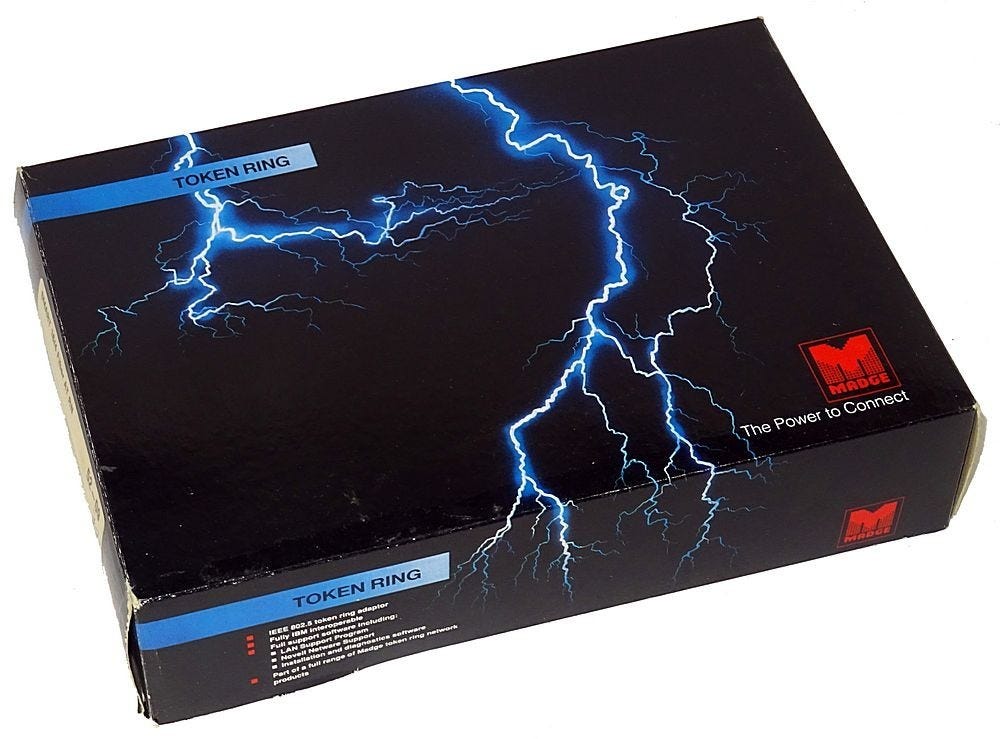
Then there was that late-’90s idiocy: some ponytail in marketing decided to overhaul the corporate identity. Changing your look never boosts sales—it’s a fool’s errand that only lines the pockets of ad agencies. No company’s pulled it off without a hitch, yet they all queue up to try. Classic case? Coke’s New Coke debacle; they had the muscle to backpedal, but Madge? Not so much. Ditching those lightning bolts for brown cardboard boxes? Utter tripe. Went from unique and punchy to bland as dishwater.
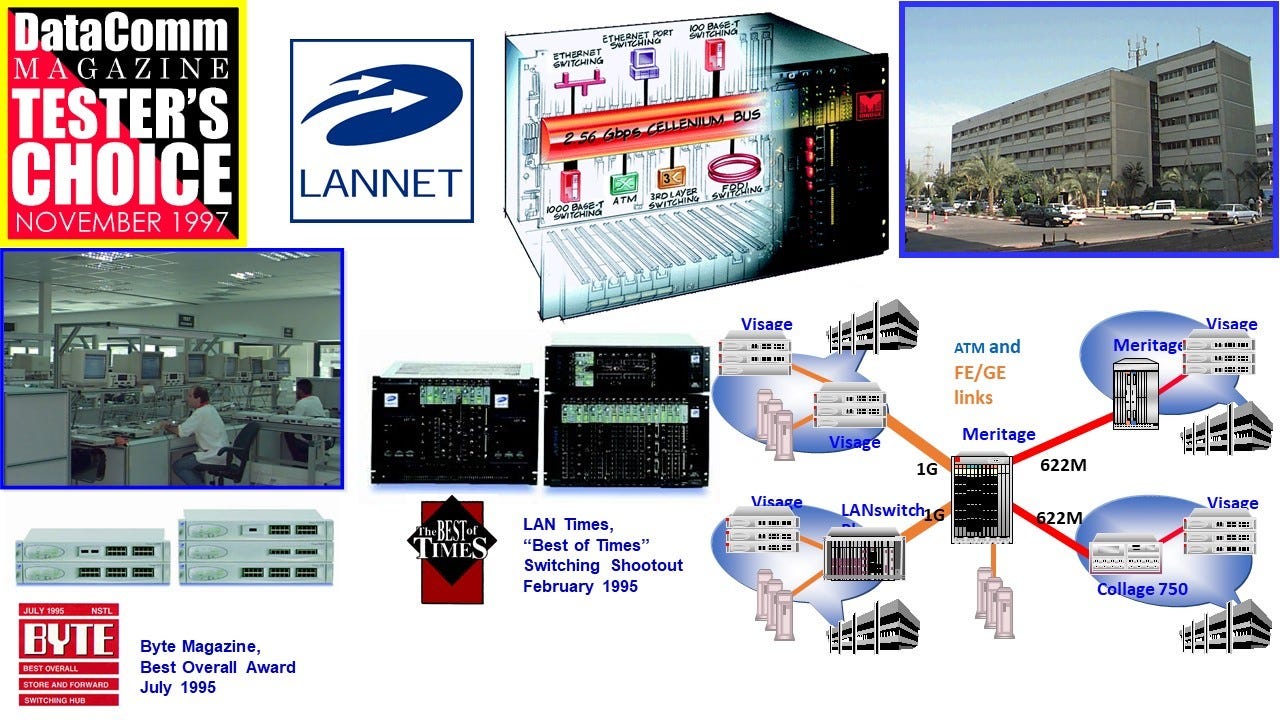
And don’t get me started on the Lannet acquisition in 1995. When I chatted with folks there later, they swore blind they were an Ethernet outfit through and through. Madge, though, heard what they wanted and jammed a square peg into a round hole. Mismatch from the jump, and it showed—Lannet got spun off and sold to Lucent by ‘98.
By 1997, the writing was on the wall: Madge slashed 700 jobs—a third of the workforce—scrapped their ATM push entirely, and shuttered their San Jose HQ to retreat back to the UK. They admitted to overreaching without the resources to duke it out with the big dogs. The company limped on but finally folded in 2003, another victim of Ethernet’s relentless march. Hindsight’s 20/20, but Madge’s story’s a cautionary braai-side tale: innovate or die, but pick your battles wisely, or you’ll end up just another tech fossil in the dust.