Rugby in My Blood
The Try Line of Life

Rugby has always been more than a game in my family; it's a thread woven through generations, binding us with tales of triumph, heartbreak, & the sheer grit of the scrum. Hanging on the wall of my house is a sepia-toned photograph of Riebeeck Elliot, the rugby legend of our clan. Known as “Windhond” for his blistering speed on the wing, he toured Argentina as a Junior Springbok in the thirties. In that faded image, he's captured mid-stride, lean and fierce, his eyes locked on some distant try line. As a boy, I'd stare up at it, imagining the roar of foreign crowds & the dust of South American pitches. Riebeeck wasn't just a player; he was a symbol of what rugby could mean freedom, adventure, & a dash of immortality. Little did I know then that my own story with the oval ball would be far less glamorous, marked by mud, mates, & one catastrophic collapse.
My earliest rugby memories take me back to the green fields of Wartburg Primary School in the mid-1970s. I was a lanky kid, more enthusiasm than skill, but I found my place at the back of the scrum as an eighth man. There's something primal about those schoolboy games, the smell of fresh-cut grass, the sting of tackles, the camaraderie of a team of misfits charging forward. We'd play barefoot half the time, on makeshift pitches, dreaming of one day donning the green & gold. Rugby wasn't just sport; it was our rite of passage, a way to prove we were tough enough for the world.
My father, ever the enabler of these dreams, introduced me to the Boks early on. In the mid-seventies, he bundled us into the Mercedes for a trip to King's Park in Durban to watch the Springboks take on the French. I was barely old enough to grasp the rules, let alone the international rivalry, but the atmosphere was electric, a sea of flags, the thunder of boots on turf, and the collective heartbeat of thousands. The game itself is a blur now; what I remember is the chaos afterward. In the throng of exiting fans, I wandered off, lost in the maze of concrete stands and vendor stalls. Panic set in as the crowds thinned, & hours ticked by before I was found, not by my frantic parents, but by my dad's cousin, who scooped me up like a wayward rugby ball. That day taught me rugby's first hard lesson: the game doesn't end on the field; it spills into life, full of unexpected twists.
By the time I reached high school at Grey College in Bloemfontein, rugby had become my obsession. Grey was a rugby powerhouse, where the sport was religion and the first team were our gods. Every Saturday, we'd pack the stands to watch them battle it out, the air thick with chants and the crack of collisions. Our matric year had its share of glory and gut-punches. We lost badly to Queens College, where Daryll Cullinan, yes, the future cricket star, and Gary Loest carved us up like a Sunday roast chicken in Hamilton Hall. Another game etched in my mind was against Grey High, where our player Spiertjies who played flyhalf got carded for some overzealous play, leaving the team short-handed and seething. At Grey I played in the front row, alternating between prop and hooker, where the real war was waged, grunting, heaving, & holding the line against opponents who seemed twice my size.
But rugby giveth & rugby taketh away. My playing career came to a shattering end on those very Grey fields during a loose scrum that collapsed like a house of cards. I remember the pop, the white-hot pain, and then being carted in an ambulance after being injected with morphine to Universitas Hospital. My leg was broken in 27 places, a mosaic of fractures that required months of rehab. The doctors said I was lucky to walk again, let alone run. That injury closed the door on my dreams of higher honors, but it opened my eyes to rugby's brutal beauty. From then on, I was a spectator, a fan whose passion burned brighter from the sidelines, with the occasional appearance for the Crocs.
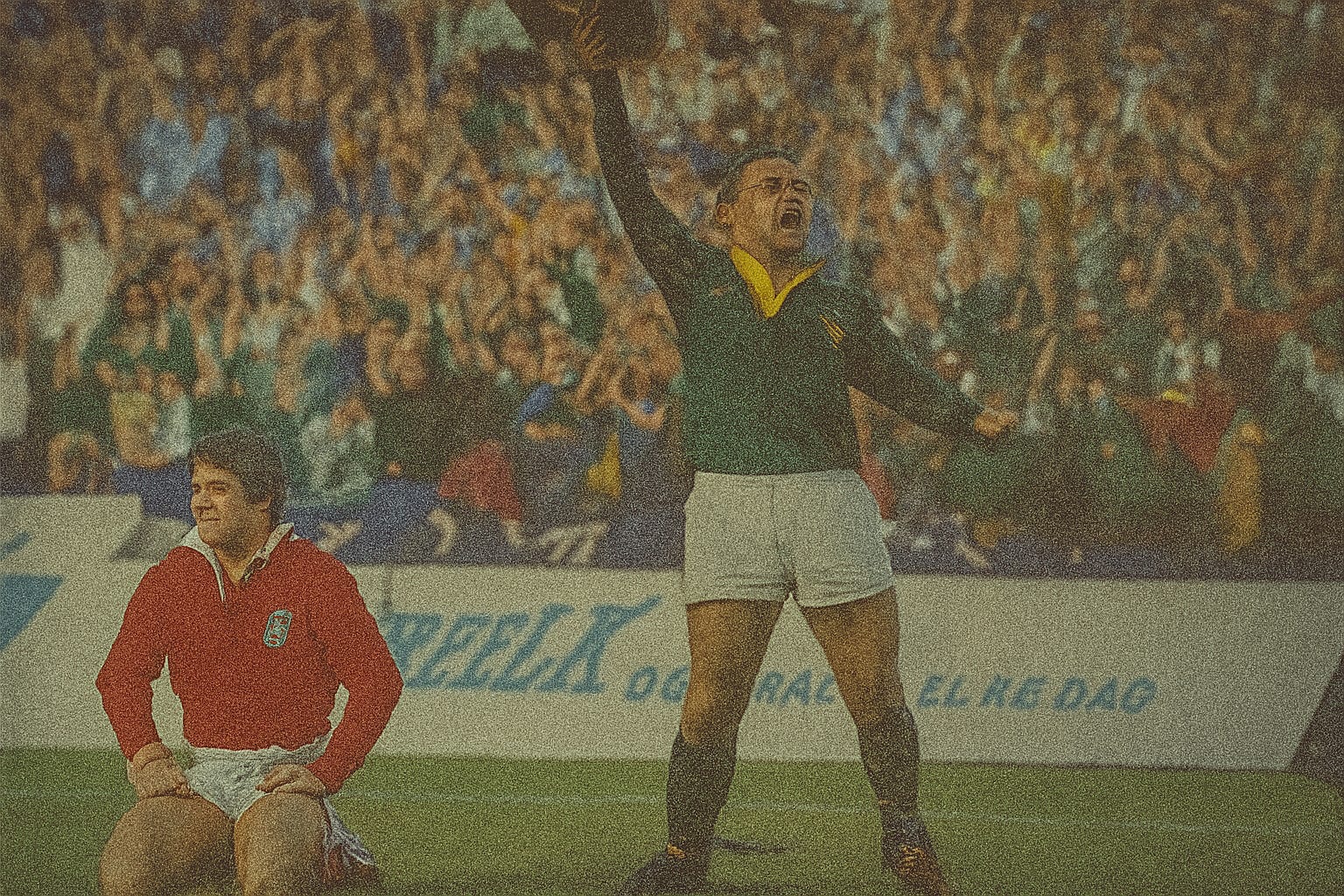
The 1980 British Lions tour remains the pinnacle of my rugby-watching life, a series that captured the nation's soul. I was in Standard 6 at Grey, wide-eyed & wild-hearted, when I went to Bloemfontein Stadium for the second test against the Springboks. We snagged seats right on the try line with Ian Delport, sitting on the fietsbaan, so close we could feel the spray of sweat from the players. The Lions were formidable, but the Boks were on fire that day. Gysie Pienaar, our local hero, ran them ragged, culminating in a spectacular try right in front of us. He dove over the line, ball clutched tight, then leaped up, punching it skyward like a conquered trophy. The crowd erupted; I screamed until my throat was raw. There's a historic photo of that moment, Gysie in triumph, the Lions deflated, & if you look closely in the background, there's a scrawny kid losing his mind. That was me. I talked about it non-stop to my dad, badgering him until he caved & took us to the final test at Loftus Versfeld in Pretoria. The Boks clinched the series, and I felt like I'd been part of history.
Fast-forward to 1995, and rugby was evolving – more professional, more global. South Africa was hosting the World Cup, a symbol of our post-apartheid rebirth. I watched the quarterfinal against Samoa with my brother Andre and my mate Jose, at the famous Ellis Park. The Samoans were demons on the field, tackling with a ferocity that bordered on mythical. Brian Lima, the “Chiropractor,” crunched into the Boks like a human wrecking ball, leaving bodies in his wake. Andre Joubert, our fullback maestro, broke his hand early but soldiered on. Chester Williams stole the show with a hat trick, his speed and guile turning the tide. That game was raw, visceral, a reminder that rugby could be as beautiful as it was brutal. We celebrated late into the night, toasting to a team that embodied our nation's resilience.
The late nineties brought me abroad, chasing rugby adventures across Europe. In Lyon, France, I witnessed Andre Joubert, the “Rolls Royce of Fullbacks”, single-handedly dismantle the French side. It was a masterclass: his sidesteps, his vision, his unflappable calm under pressure. I was there in the stands, decked out in Bok gear, when the camera panned to the crowd. Back home, my mom spotted me on TV and called immediately, not to cheer my fame, but to ask, “What happened to your hair?” The story behind that buzz cut is pure serendipity. Earlier that day, we'd bumped into a busload of US Marines from Germany at a McDonald's. Two were South Africans, homesick and hyped for the game. They invited us aboard for lunch, beers from their cooler boxes, stories swapped over burgers. In a moment of inspired idiocy, they suggested I get a Marine haircut. Why not? A few hours later, shorn like a recruit, I was beaming on national television.
The celebrations continued post-game in a cozy kerb site establishment, where a group of Frenchmen next to us bought rounds of apple cider. Amid the laughter & clinking glasses, I fell head over heels for the waitress, her smile, her accent, the way she navigated the chaos with grace. It was a fleeting crush, but in that moment, rugby had gifted me more than a win; it had opened doors to the world.
Not all trips ended in victory. The test at Twickenham against England was a heartbreaker. We were in it until the dying minutes when Stefan Terblanche, our winger, dropped a straightforward ball in-goal, gifting Jeremy Guscott an easy try. The loss stung, but the pub afterward was legendary. Emboldened by pints, we belted out “Shove that chariot up your ass”, a cheeky twist on their anthem, narrowly escaping the ire of the English fans. For that game, I'd borrowed a massive South African ceremonial flag from the High Commission & tied it to a long pole I'd “liberated” from our hotel. Waving it like a madman, I made national TV again, a blurry green-and-gold blur in the highlights.
My TV streak culminated in Dublin at Lansdowne Road, where the Boks trounced Ireland. The Guinness flowed like the Liffey, warming us against the Irish chill. After the final whistle, still buzzing from the win, I gave an incoherent interview to an Irish broadcaster outside the stadium gates. Slurring praises for the team and the pint in my hand, I must have sounded like a true rugby philosopher, or a complete fool. Either way, it was broadcast back home, adding to my accidental fame.
Looking back, rugby has been my life's try line, a pursuit of glory amid the tackles and tumbles. From Riebeeck's legendary tours to my own shattered leg, from lost-child escapades to international escapades, it's shaped who I am. It's taught me resilience, the joy of brotherhood, and the thrill of the chase. Even now, as I glance at that sepia photo on the wall, I feel the pull of the pitch. Rugby isn't just a game; it's the story we live, one scrum at a time.
Rugby at Grey College
At Grey College, rugby isn’t just a sport—it’s a way of life, woven into the very fabric of the school’s identity. Some might call it religious fervor, but I see it as a means to an end, much like American football in U.S. schools. The passion for rugby fuels school spirit, builds camaraderie, and ensures Grey’s legacy endures. It’s not about worshipping the game; it’s about what it does for the boys who pass through those hallowed halls. Braam Fischer, a Grey scholar & rugby player, embodied this. He played, he contributed, and he moved on, just as I did.
I went to Grey, and like many, I played rugby. In the lower standards, I found myself on the B team, eventually scrumming down in the front row for the Crocs. The Crocs weren’t the first team, nor were they the Cherries, but they were ours. The Head of Rugby’s job is clear: manage the Crocs and Cherries, mold them, and push the first team to be the best in South Africa. It’s a system, a machine, not unlike the Head of Mathematics drilling algebra into our heads. One’s not better than the other, just different. At Grey, we don’t say, “I played rugby at Grey.” We say, “I went to Grey.” That’s the badge we wear, rugby or not.
Nihil Stabile Quod Infidum. Nothing is certain that is untested. That motto hung over us, on and off the field. Playing for the Crocs, I learned lessons no classroom could teach. In the front row, you’re not just pushing against the opposition, you’re pushing against yourself. Grit, resilience, trust in the bloke next to you: these were the real trophies. I’m on the Grey Honours board, not for rugby, but for my own contributions. No rugby player ever claimed their name shone brighter than mine, nor mine than theirs. At Grey, it’s not about why your name is etched up there, it’s that you’re part of something bigger.
The scrum taught me that. You lock in, head down, & drive forward, knowing the team’s behind you. Maths class gave me logic; the Crocs gave me heart. Both shaped me, driving me to feel alive.
Ronald Bartels | LinkedIn | Instagram