Shadows in the Sinews
The physical & emotional differential
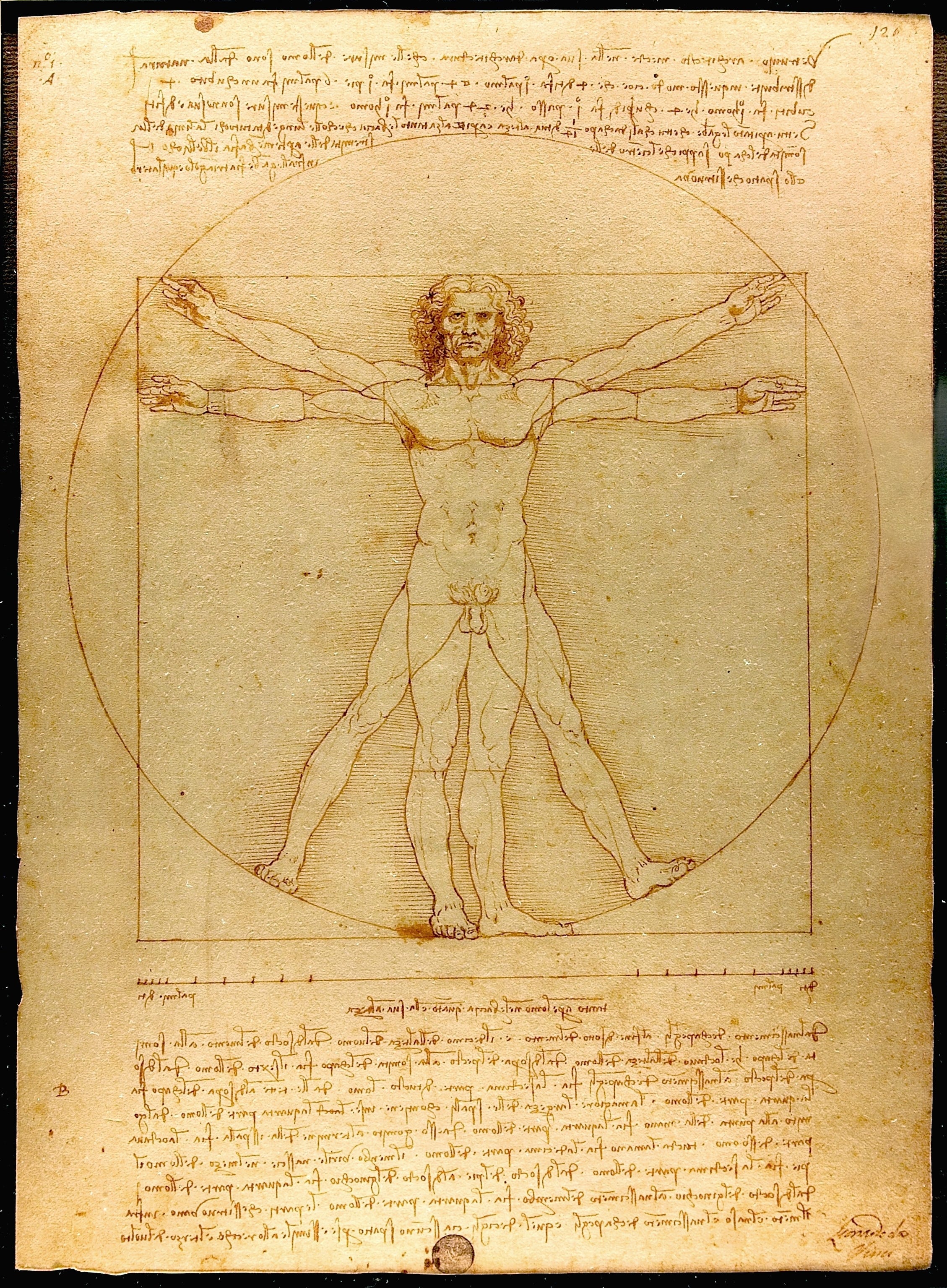
The death of Kathleen (Kath) left me adrift in a sea of equations that no longer balanced. I had always prided myself on being a cold-blooded mathematician, detached, analytical, the kind of mind that could dissect a proof into its irreducible truths without a tremor in my hand. Emotions were variables to be isolated, not forces to be surrendered to. But grief, it turned out, doesn't respect axioms. It manifests in the body first, a psychosomatic ache that coiled around my chest like a rogue integral, tightening with every breath. It wasn't metaphorical pain; it was real enough to send me stumbling to the emergency room of Douglasdale Hospital not once, but many times over the course of a few months.
The first visit was at 2 a.m., after a night of what felt like an elephantine weight pressing down on my sternum. I drove myself there, convinced that some silent infarction was blooming in my arteries, the same cruel thief that had stolen Kath from me. The lights buzzed like faulty tubes in a dim lab as the triage nurse hooked me to monitors. EKG strips unspooled like ticker tape from a market crash: normal. Blood panels came back pristine. “Sir,” the attending physician said, her voice clipped with the exhaustion of shift work, “your heart's fine. This is stress. Grief does that, makes the body mimic what the mind fears.” I nodded, numb, and drove home to an empty bed that still smelled faintly of her.
The second and third visits blurred into a ritual of denial. Same symptoms: vise-like grip in my ribs, shortness of breath that mimicked drowning on dry land. Same tests, troponin levels, stress echoes, even a CT angiogram that lit up nothing but the radiologist's screen saver. By the end, the ER staff knew me by name. “Mr. Bartels,” the head doc finally said, pulling up a chair in the curtained bay, “it's in your head. Not that it's not real—psychosomatic pain is as valid as a broken bone, but it's your brain signaling what your heart can't say.” Ironic, wasn't it? The mathematician felled not by faulty logic, but by the very organ I'd spent a lifetime sidelining.
Words, I learned, are double-edged scalpels. Kath's decline had been hastened by them—whispers from so-called friends, who encouraged her to turn to false faith. So when I turned to therapy, I started with what seemed logical: talking. “Talking heads sessions,” I called them in my private shorthand, a parade of shrinks in jackets who nodded sagely as I unpacked the cargo of my loss. “Tell me more about that feeling,” they'd prompt, pens poised like divining rods. I talked until my throat ached, about the way her laugh had punctuated our mornings, the quiet terror of seeing her final moments. But the sessions left me more restless than before. I'd lie awake in the witching hours, my mind a hamster wheel of hypotheticals: What if I'd seen the signs? What if the equations of our life had aligned differently? Exhaustion was my only mercy, dragging me under at dawn like a riptide.
Finally I pivoted. Talking's for philosophers, I thought. I needed something that rewires the circuits. That's how I stumbled into CBT, Cognitive Behavioral Therapy, and EMDR, Eye Movement Desensitization and Reprocessing. CBT was the mathematician's balm: a structured assault on distorted thoughts, mapping cognitive traps like debugging code. We'd chart my catastrophizing, This pain means I'm dying, and replace it with evidence-based counters: probabilities, not panics. EMDR was stranger, more visceral: bilateral stimulation via finger taps or light bars, forcing my eyes to track patterns while I revisited the trauma. It felt like offloading RAM from a overloaded processor, the memories defragmenting in real time.
Eight sessions in, sleep returned. Not in fits and starts, but solid, dreamless blocks that stitched my frayed edges back together. I woke one morning to birdsong instead of dread, the psychosomatic vise finally slackened. It was a quiet victory, but it birthed a louder question: Why had words failed where these tools succeeded? Kath had been wounded by words, and words alone couldn't cauterize my wounds. If abuse is verbal, a poison distilled through language, then healing must transcend it. It demands immersion in the non-verbal realms, the sensory undercurrents that bypass the chattering mind and speak directly to the flesh and the subconscious.
Consider the forms this healing takes, each a bridge between the corporeal and the ethereal. Aurealization, though I coin it clumsily from “aural,” the realm of sound, draws on rhythm and resonance to recalibrate the nervous system. Think of drumming circles or binaural beats in a therapist's office: low-frequency pulses that mimic the womb's heartbeat, syncing errant brainwaves into coherence. It's physical, yes, vibrations thrumming through bone—but mentally, it dissolves the isolation of grief, reminding the body it's not alone in the echo.
Visualization follows, the deliberate conjuring of images to rewrite neural scripts. In guided imagery sessions, I'd close my eyes and summon not the hospital gurney, but Kath whole and laughing on a sun-dappled hike we'd taken in Castle Gorge. Science backs it: the brain's visual cortex doesn't distinguish fiercely between imagined and observed scenes; MRI scans light up identically. Physically, it lowers cortisol floods, easing the gut's knot of anxiety. Mentally, it's cartography for the soul, plotting paths away from trauma's dead ends.
Tactilization, touch as therapy, is the most primal, a neural handshake that grounds the abstract in the tangible. Reflexology, which I eventually tried, maps the feet like a microcosm of the body: pressure on the solar plexus point to unravel chest tightness, or the heart reflex to coax openness. It's stimulation at its core, mechanoreceptors firing, endorphins cascading, but the mental gift is trust rebuilt stroke by stroke. A masseuse's firm thumbs aren't just kneading muscle; they're affirming survival, one meridian at a time.
Gustatization, the evocation of taste, is subtler, a flavor alchemy for memory's alchemy. In sensory therapy, I'd savor something sharp and alive, a wedge of lemon, its citric bite cutting through the bland fog of depression, or something comforting, like the cardamom warmth of the chai Kath brewed on lazy Sundays. Taste buds link straight to the limbic system, the emotional switchboard; a single sip can anchor you in presence, starving the mind's runaway narratives. Physically, it reignites appetite, combats the nausea of sorrow. Mentally, it's a portal to joy's archives, proving the body still knows delight. My personal favourite is Earl Grey Tea.
Olfactization, scent's subtle sorcery, completes the pentad. Aromatherapy with lavender or eucalyptus—oils diffused or pressed to pulse points, hijacks the olfactory bulb's hotline to the amygdala, dialing down fight-or-flight. I'd inhale deeply during EMDR, the earthy tang of vetiver tethering me to earth when memories threatened to unmoor. It's bodily healing in vapor form: anti-inflammatory compounds absorbed through mucosa. But mentally? It's resurrection by aroma, scents that once bound you to the lost now binding you to renewal.
These aren't alternatives to be siloed, one for the flesh, one for the psyche, but intertwined vines, each vital to the other's climb. Like the twining shoots of the Bowei Volubilis. Exclude the physical, and mental healing floats untethered, prone to relapse. Neglect the mental, and the body becomes a vessel adrift, symptoms cycling like unsolved recurrences. In my case, CBT's logic paired with EMDR's sensory pulse addressed both: validating the pain without indulging it, honoring the mathematician's need for proof while feeding the hidden chambers of feeling.
I don't peddle this as gospel, mind you. I'm no apostle of certainty; if anything, I share an affinity with Thomas, that doubting disciple who demanded to touch the wounds before belief. As a cold-blooded mathematician, my creed is validation, test, measure, iterate—not blind faith. Why do I lean toward CBT from my vantage? Experience, raw and replicated: it handed me tools that scaled, outcomes I could quantify in restored sleep cycles and ER-free months. But divergence is the spice of inquiry; if your path arcs toward mindfulness apps or forest bathing, who am I to subtract? We'd all do well to operate this way, probing, not proselytizing, lest we calcify into echo chambers.
That said, some paths are unequivocally warped, their stories perverted beyond salvage. Cults like KwaSizabantu, with their veiled abuses cloaked in spiritual fervor, or homeopathy—yes, I call it a cult outright, peddle dilutions of truth that mock the rigor of evidence. Homeopathy's “like cures like” in infinite water? It's not healing; it's a placebo dressed in pseudoscience drag, preying on desperation while the body clamors for real intervention. I've seen enough data divergences in my career to spot the fraud: cherry-picked anecdotes over controlled trials, faith over falsifiability. They're cautionary tales, reminders that even in grief's fog, we must demand the empirical, lest we trade one poison for another.
In the end, healing isn't a theorem to prove but a function to approximate, one breath, one scent, one skeptical step at a time. Kath would have smiled at that, her eyes crinkling with that wry mathematician's glint. And in honoring her, I keep approximating.
Ink & Illusions
After grappling with psychosomatic pain that haunted my shoulder, I decided to mark the experience not with resentment, but with art. The pain, though illusory, felt real enough to warrant a permanent emblem. I chose a vibrant Celtic knot, its interwoven strands a nod to my love for Ireland, sparked by a trip with Kath where we wandered among ancient dolmens. Those stone structures, raw and timeless, stirred something in me, an affinity, perhaps, for a druidic past I half-believe I lived. The tattoo, inked on the very spot where the pain once lingered, was a physical echo of a mental battle. I resolved then to mark each future episode with another tattoo, a ritual to ground the intangible in flesh.
But here’s the thing: it never happened again. That phantom pain, once a specter, vanished after that single mark. The Celtic knot remains my only tattoo from that chapter, a solitary testament to a struggle overcome. Its colors vivid greens, blues, and reds seem to pulse with the joy of release, a reminder that some battles end quietly.
Years later, a new challenge emerged. Headaches began creeping in, stubborn and sharp, especially after long cycling sessions. I feared a return of those old, illusory pains. A neurosurgeon’s scan revealed nothing, and I braced myself, half-expecting to ink another mark. Not again, I thought, already imagining the needles hum. But a physiotherapist, called in during a hospital visit, changed the narrative. She asked about my sports, and when I mentioned cycling, she pressed a spot on my neck. I yelped in pain, real and precise, radiated from her touch. Common cycling injury, she said, citing my posture, head tilted to watch the road. A sports massage, not a tattoo, was the remedy. Bliksem, what a relief.
Now, when headaches loom, I book a sports massage, kneading out the tension before it festers.
No new ink has been needed. Yet, the urge for another tattoo persists not born of pain, but of grounding. I want it on my calf, where I feel rooted to the earth. I envision the ship Kandaze, its sails full, sweeping away the last echoes of those illusory pains. I had thought by now I’d have a gallery of tattoos, each a badge of battles fought. Instead, I have one, and soon, perhaps, a second, a ship to sail me forward, free.