Simonstown Days
Computers, Penguins, & a Touch of Rebellion
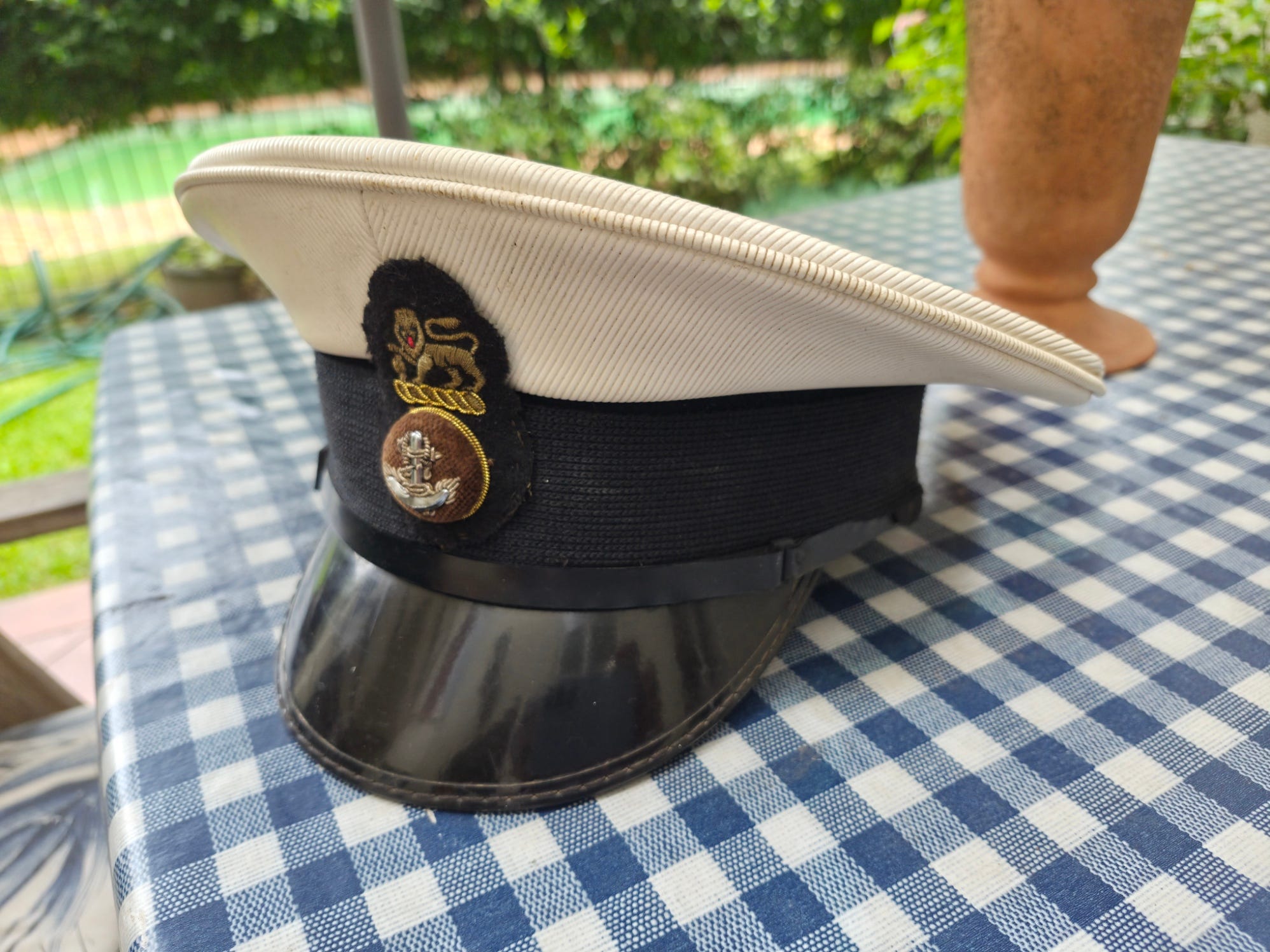
I faked my way into the South African Navy, plain & simple. I was blind in one eye, a fact that should have kept me out of national service altogether. But all my mates were heading off to the SADF, and I wasn’t about to miss out on the adventure, or what I imagined would be the fun. During the medical exam, when they told me to cover one eye and read the chart, I switched hands but kept using the same good eye both times. By the time the doctors 7 the Navy figured it out, I was already deep into my service, & more importantly, I’d become the guy who looked after the Navy’s computers. They couldn’t very well send me home now, could they? The computers needed me more than the rules needed enforcing.
I spent 21 months stationed in Simonstown, that sleepy naval base on the Cape Peninsula with its sweeping views of False Bay. My office sat right next to the library, a quiet corner where I could tinker away. In my early twenties, I wrote program after program for the Navy: personnel systems, stores inventory, monitoring tools. I named them all after the Romans, Gladiator, Andabatae, Aqueduct, Rubicon, because even then I half-believed I was Julius Caesar reincarnated, conquering the digital world one line of code at a time.
Life was easy in those days. There was plenty of free time between debugging sessions. I’d head down to Boulders Beach to swim & dive among the rock pools & swaying kelp forests. Back then, the African penguins were just a handful, not the bustling colony they’d become. I’d suntan on the massive granite boulders, the sun warming my skin while the ocean crashed below. On weekends, I’d hop on my bronze Peugeot bicycle and cycle the peninsula, up and over Red Hill, past baboons chattering on the roadside, sea spray whipping off the waves at Scarborough. One legendary ride ended in disaster when my gear cable snapped halfway down Smitswinkelbaai. I was cursing under my breath, but even that couldn’t spoil the scenery.
Then there was Sunette. She worked in the personnel office on base, always in crisp white dresses that seemed to glow against the drab dark & grey of military life. Her name alone, Sunette, felt like sunlight breaking through cloud. I was utterly smitten. I’d invent any excuse to wander over: “Your computer’s acting up again?” I’d say, fixing some minor glitch while stealing glances. In a grand, silent gesture of devotion, I poured everything into coding the Navy’s personnel management system, naming it SPQR as my personal tribute to her. But courage? That I lacked. I never asked her out.
The day before my final uitklaar, she invited me to her flat in Vishoek. My heart hammered as I knocked on her door. She welcomed me in, showed me her budgies chirping cheerfully in their cage, the small space filled with afternoon light. There was a spark, a tension in the air, but my own awkwardness held me back. My mind was already half in Joburg, where a new job waited. I left with vague promises to stay in touch, & never did. SPQR remained my unspoken love letter, a digital monument to a crush that never quite ignited.
The only real “action” I saw came one unassuming evening. I was heading off base in civvies to meet mates at the Brass Bell in Kalk Bay when a Chief Petty Officer cornered me. “Get a rifle from the guardhouse & come with me,” he barked. His face left no room for argument. I followed him to the mess, where the two flotillas, strike craft & minesweepers, had drunk themselves into a brawl. Sailors were ripping fluorescent tubes from the ceiling and hurling them like spears.
The Chief roared at them to stop. Most did, sheepishly. But one drunk sailor staggered toward us, knife in hand. “Shoot him in the leg,” the Chief ordered. I was holding an FAL—hardly a precision weapon. A shot would have killed or crippled him. Luckily, I hadn’t even loaded it. I flipped the rifle and smashed the butt into his jaw. Lights out. Man down.
I chambered a round, lined the rest up against the wall, and told them the next one to move would regret it. They complied. The Chief fetched the Gunnery Instructor, who marched the lot to the parade ground for hours of drill punishment. I slipped away and still made it to the Brass Bell to sink a few cold ones.
Authority clashes were rarer, but memorable. One morning, crossing the parade ground, my mind no doubt on Sunette—I walked straight into a barrel-chested Warrant Officer. “Hoekom is jou hare so woes, moes troep?” he bellowed. My hair was admittedly wild. “Omdat ek dit nie gesny het nie,” I replied flippantly. Wrong answer. His face went purple. He demanded my commanding officer’s name, Commander Smith, & stormed off, threatening a phone call while ordering me to the barber.
I went straight to Commander Smith’s office instead. He invited me in, offered tea, we were both tea men in a coffee-drinking Navy. and I accepted gratefully. Before I could explain, his old rotary phone rang loudly. It was the WO, still raging. Smith listened calmly, then interrupted: “WO, this is not how it works. You speak to your equivalent rank, who speaks to me.” Slam. Phone down.
He turned to me: “What did you want to discuss?”
“Nothing, sir,” I said.
He nodded. “Excellent work on the personnel system, by the way.”
I left feeling untouchable.
It was during those Simonstown years that history shifted. One day, driving my brown Kalahari Toyota Corolla 1.6 GL along the False Bay coast toward Die Bos to visit my brother, I heard F.W. de Klerk’s speech on the radio, announcing Nelson Mandela’s release. I was passing Die Gat, the ocean stretching endless beside me. The moment felt surreal, suspended between the old world and whatever came next. I’ve never forgotten it.
Looking back, those 21 months were a gentle interlude, computers, crushes, penguins, and the occasional riot broken up with a rifle butt. The Navy gave me freedom disguised as service, and I took every bit of it.