The Arcadia Incident
An Unforgettable New Year’s Awakening
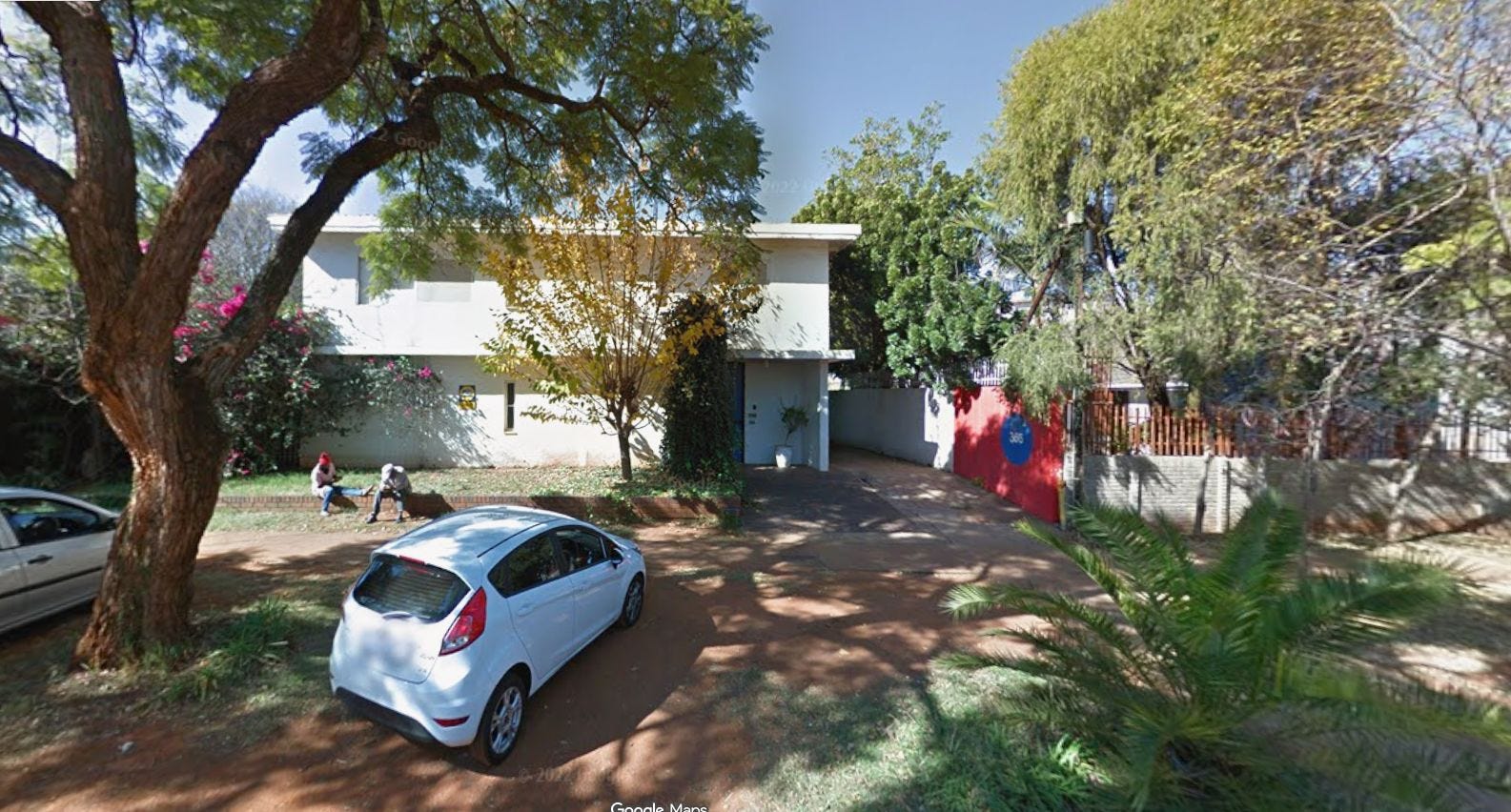
When my sister Lyn embarked on her diplomatic posting to Norway, she was married to Ernst de Jong, a man whose artistic presence filled their home with vibrant paintings that seemed to whisper stories from every wall. They both departed for the fjords, leaving behind their sprawling house in Hill Street, Arcadia—a stone’s throw from the old British High Commission. The keys were entrusted to Ernst’s son, Mark, but his struggles with alcoholism turned the place into a chaotic disaster. Bottles piled up like forgotten sculptures, and the air hung heavy with neglect. About a year into their absence, Lyn reached out to me: Would I consider staying there to keep an eye on things?
It was perfect timing, really. I’d just been stabbed—literally—in the back during a mugging in Johannesburg, and the idea of some quiet recovery time in Pretoria appealed immensely. Besides, it suited my work at Madge Networks, where I was knee-deep in tech projects that demanded focus, constant office presence and some travelling. So, I agreed, packing my bags and settling into what felt like a borrowed life of luxury. The house was enormous, a labyrinth of rooms echoing with the ghosts of previous gatherings. Ernst’s artworks adorned every corner; bold strokes of colour that made the space feel alive even in solitude. And then there was the deep diving pool in the backyard—a crystalline abyss that invited daring plunges on hot afternoons.
I developed a peculiar habit during my stay: rotating through the bedrooms like a nomad in my own temporary kingdom. Each move felt like a fresh start, a mini holiday resetting my mind. One night I’d claim the cozy guest room with its view of the garden; the next, a sun-drenched suite overlooking the street. It was liberating, this freedom to reinvent my evenings.
But let’s talk about New Year’s Eve—or rather, my profound disdain for it. As a cold-blooded mathematician and scientist at heart, I find the whole affair utterly arbitrary. It’s just another day, plucked from the calendar with no ties to any celestial rhythm. No solstice, no equinox, no meaningful position in Earth’s orbit around the sun. Nothing. Why celebrate a random flip of the page? I always aim to sleep right through it, cocooned in indifference. Invariably, though, the universe conspires against me—those infernal fireworks shattering the night like unsolicited applause. Even now, they sabotage my slumber without fail.
This particular New Year was the dawn of 1998, mere months after the world had mourned Princess Diana’s tragic death. The High Commission next door became a shrine of sorts, with an endless stream of floral tributes laid at its gates. I’d stroll past on my walks, admiring the blooms—exquisite arrangements of roses and lilies that turned grief into something almost beautiful.
That night, I’d chosen the main bedroom at the front of the house, closest to the street. True to form, I drifted off before midnight, curtains parted as always. It’s a ritual I’ve kept since forever: letting the sun wake me naturally, syncing my body to the day’s light. Me and the sun—we’re old allies, channeling that primal Neanderthal hunter instinct. Rise with the dawn, rest with the dusk.
I must have slept through the initial revelry, but around 2 a.m., flashing lights invaded the room, pulsing like a bizarre dream. I lay there for a moment, blinking in confusion, until realization hit: These were real, streaming in from the street. Groggy but curious, I sprang from bed in nothing but my boxers and stumbled to the front door. Stepping outside, I found myself face-to-face with a cluster of firefighters and policemen, their vehicles’ strobes painting the night in red and blue.
They stared at me, and I stared back, not yet registering I was half kaalgat. Then their eyes shifted upward, above my head. Puzzled, I followed their gaze. There, wedged improbably into the branches of the towering Jacaranda tree by the curb, sat a red Renault—a flimsy plastic French car, suspended like some absurd modern art installation.
The house was the second from the corner, and I could trace the car’s erratic path: tire tracks gouged into the grassy verge, evidence of a driver who’d failed the turn spectacularly. It had veered off the road, slammed into the guy wire anchoring a power line pole, and then—miraculously—ridden that wire like a ramp straight into the tree’s embrace. The driver’s door hung open, suggesting the culprit, likely poes dronk, had moered out.
I stood there, absorbing the surreal scene, until snickers from a couple of policewomen snapped me back. They were pointing, giggling at my half-kaalgat predicament. Heat rising to my cheeks, I retreated indoors without a word, closed the door firmly, and climbed back into bed. Sleep reclaimed me swiftly, the chaos outside fading like a half-remembered punchline.
In the spiderweb memories of my life, that Arcadia Incident stands out as a quirky moment—a blend of healing solitude and unexpected absurdity. And that New Year? It proved my point: arbitrary, random, and utterly unforgettable.