The Art of the Slow-Burn Google Maps Prank
My Greatest April Fools’ Triumph (That I Almost Missed)
Every year on April 1st, the internet fills with the usual suspects: fake product announcements, photoshopped disasters, and companies pretending they’ve pivoted to selling socks or something equally ridiculous. Most of them land with a thud and disappear by lunchtime.
But the truly legendary pranks? They don’t scream “April Fools!” They whisper it... and then let the world do the screaming for them.
This year, someone pulled off a doozy. They managed to get the White House switchboard phone number showing up on certain Android devices (especially Pixels) as “Epstein Island.” Reporters dialing in got the surprise of their lives. Google quickly killed the edit and blocked the culprit, but for a brief, glorious moment, the prank was perfect, timely, topical, and technically cheeky. It was the kind of Google hacking that makes headlines without anyone getting arrested.
It felt eerily familiar.
Because a decade ago, I did the exact same type of thing. And it became my greatest prank ever.
The Setup
Back in 2017 (or thereabouts, the details are fuzzy in the best way), I decided to play with Google Maps. South Africa was in the middle of the State Capture saga, the Guptas were everywhere in the news, and Saxonwold was basically the punchline of every political joke. Brian Molefe’s infamous “Saxonwold shebeen” excuse had already entered local folklore.
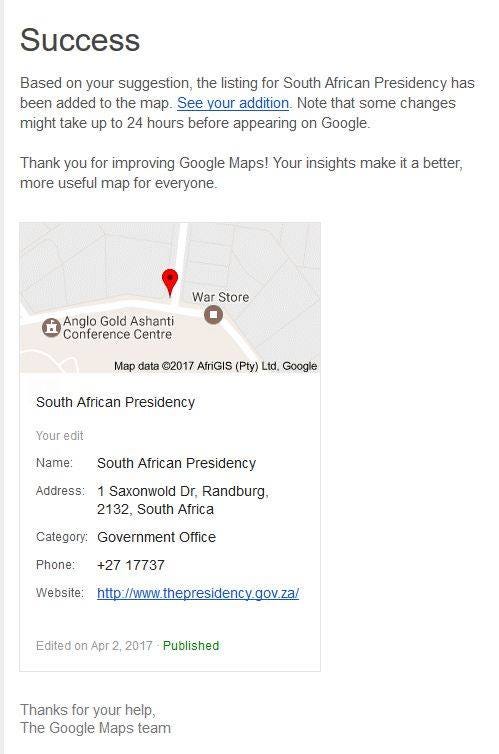
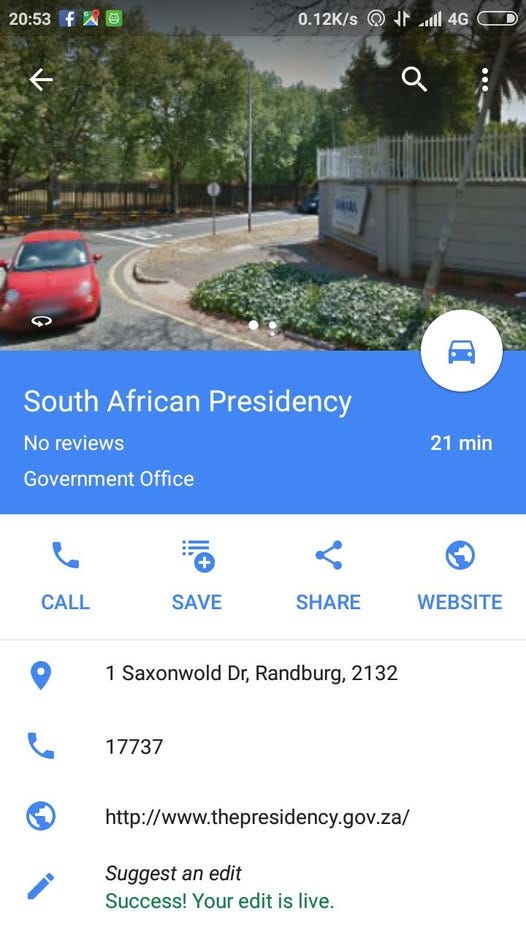
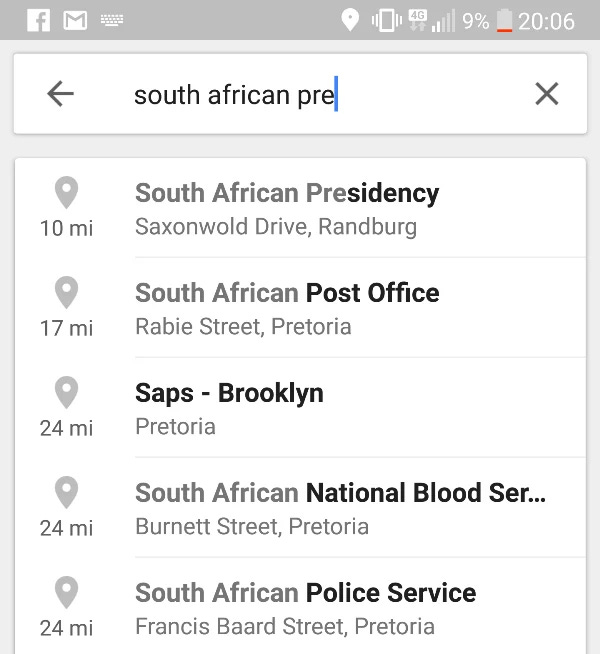
So on April 1st, I made a small, anonymous edit. I pointed the address for “The South African Presidency” to Saxonwold Drive, Randburg, right in the heart of Gupta territory. Nothing too on-the-nose at first, but close enough that anyone paying attention would get the joke. It was a classic Google Maps business/listing hack: suggest an edit, wait for moderation (which was... relaxed back then), and cross your fingers.
I hit submit, chuckled to myself, and went about my day.
Then... nothing happened.
No immediate outrage. No viral tweets. No frantic calls from the Union Buildings. I figured it had either been caught instantly by Google’s filters or it was too subtle. “Ah well,” I thought. “Better luck next year.” I completely forgot about it.
The Slow Burn
Two weeks later, I’m driving through Johannesburg, radio tuned to 702. The headlines come on, and suddenly I hear it:
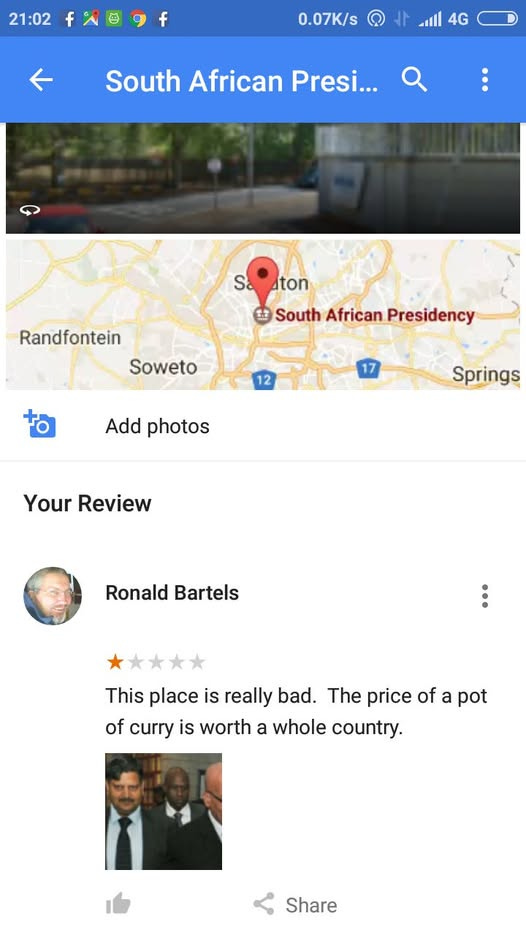
The South African Presidency’s address on Google Maps had been changed to a location in Saxonwold, right near the Gupta compound. Some outlets even called it the “Saxonwold shebeen.” It was front-page news. Papers like MyBroadband, The Citizen, and News24 ran stories. People were losing it. Google eventually noticed and quietly moved the listing back to the Union Buildings in Pretoria.
I nearly swerved off the road laughing.
It wasn’t discovered on April 1st. It simmered. Someone else stumbled across it days later, the media picked it up, and suddenly the entire country was talking about how the Presidency seemed to have relocated to a dodgy shebeen in Saxonwold. The timing was accidental perfection, it landed right in the middle of the political fever pitch, making the joke hit ten times harder than if it had exploded on the day.
I sat there in the car, anonymous and triumphant, thinking: That was me. I did that.
No one ever traced it back (as far as I know). I never claimed credit publicly. It was pure, clean chaos, the best kind.
Why This One Was Special
Most pranks are loud and obvious. They beg for attention. This one was elegant. It used a tool everyone trusts (Google Maps) to subvert something serious (the seat of presidential power) in a way that played perfectly into existing South African satire. It didn’t need a big announcement. The absurdity spoke for itself.
The 2026 White House “Epstein Island” prank is cut from the same cloth: a targeted edit that slips past the gates and lets reality do the heavy lifting. These Google hacks work because they feel plausible for just long enough to make people do a double-take. In a world drowning in obvious fakes, the best April Fools jokes are the ones that make you wonder, even for a second, if it might actually be real.
Lessons from a Master Prankster (Me, Apparently)
Timing is everything — but sometimes delayed timing is even better.
Subtlety beats spectacle. Let the audience connect the dots.
Strike where people least expect it — official listings, maps, phone numbers. Places that feel too boring to prank.
Never confess immediately. Let it breathe. (Though writing about it a decade later on Substack is probably safe.)
If you’re planning your own April Fools mischief this year or next, remember: the greatest pranks aren’t the ones that trend on the day. They’re the ones that make the news two weeks later, when the perpetrator is already sipping coffee and grinning like an idiot in traffic.
Mine did exactly that. And I’ve been chasing that high ever since.
What’s the best prank you’ve ever pulled off — or fallen for? Drop it in the comments. I’m always looking for inspiration.
(And Google, if you’re reading this… no hard feelings. It was just a bit of fun.)