The Gift of Calliope Syndrome
Words
My life, woven from the dusty fields of Oakvilla farm in the Midlands of Natal to the quiet corners of introspection that followed, there’s a peculiar grounding known as “Calliope Syndrome.” It’s not a medical diagnosis you’d find in textbooks, but rather a whimsical label for a phenomenon that afflicts special individuals like me: the chronic mispronunciation of words encountered solely on the page, never in conversation. Named after the mythical muse of epic poetry, whose name itself is a trap, often butchered as “CAL-ee-ope” instead of the proper “ka-LYE-o-pee”—this “syndrome” arises when the written word outpaces the spoken one. You absorb vocabulary through silent immersion in books, building vast mental libraries, but without the auditory cues of everyday dialogue, those words emerge from your lips twisted, unfamiliar, and sometimes hilariously off-key. It’s the brain’s way of prioritizing comprehension over phonetics, a byproduct of solitary reading in a world that values the ear less than the eye.
For me, Calliope Syndrome took root in the fertile soil of my childhood isolation. Growing up on Oakvilla farm, my earliest interactions were a babel of languages, Zulu conversations with farm workers echoing across the fields, while my German and Afrikaans parents navigated our home in their native tongues. Then, in a pragmatic pivot to prepare us for school, they switched us to English, a language that felt as foreign as the distant cities it promised. As the youngest sibling, I was often left behind when my brother and sister went to class, marooned in a sea of solitude with only the farm’s rhythms and my imagination for company. That’s when the books found me, or perhaps I found them, dog-eared volumes stacked in corners, whispering adventures that drowned out the loneliness.
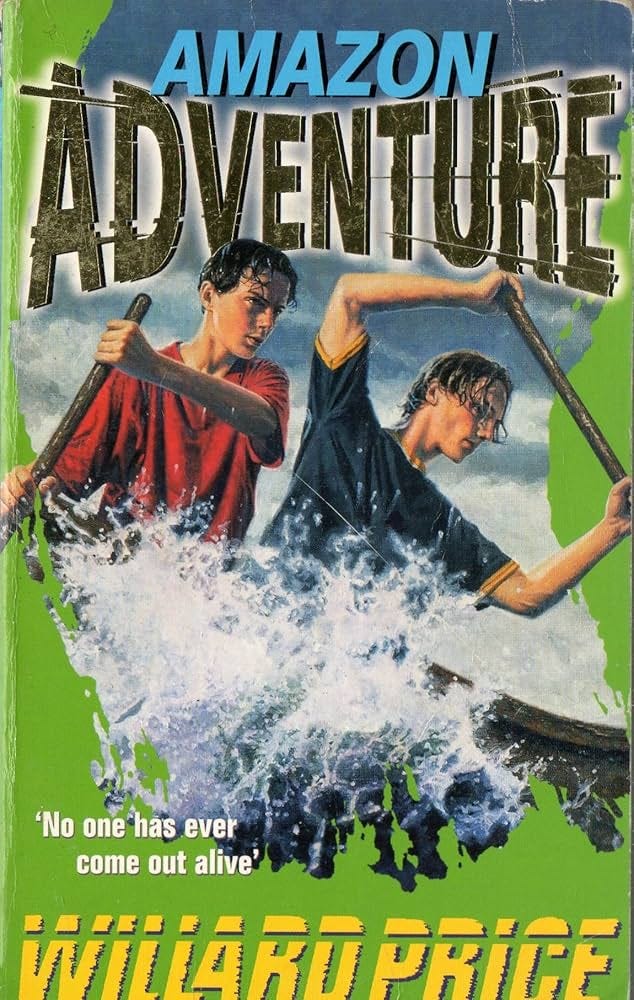
My reading began innocently enough, but it quickly became an obsession. Enid Blyton’s tales of secret seven and famous five were my gateway, their simple enchantments pulling me in. But I outgrew them swiftly, hungering for more. Willard Price’s adventure books transported me to exotic jungles and savannas, teaching me about wildlife and survival in vivid detail. The Hardy Boys fed my detective dreams with mysteries unraveled page by page. I devoured the Oxford Encyclopedia, its entries a feast of facts that expanded my world beyond the farm’s horizons. Then came Eugene N. Marais’s poetic observations on nature and the soul of the white ant, stirring a deeper philosophical bent. A even read some of the Good News Bible. Wilbur Smith’s sweeping African epics and James A. Michener’s historical sagas painted grand narratives of continents and cultures, shaping my opinions on history, resilience, and human folly. These weren’t just stories; they were my companions, my educators, my escape.
I’d read anywhere, anytime, perched in the dog box of our yellow VW Kombi on bumpy rides to school, the world blurring past as words held me captive. On holidays at my grandparents’ house, I’d sprawl on the cool floor, oblivious to family chatter, lost in paragraphs. Conversations faded into background noise; people might call my name, but I was elsewhere, ignoring the pull of the spoken world for the allure of the printed one. This immersion built my inner lexicon brick by brick, but it came at a cost, or rather, a quirk. Words like racist (you pronounce it ray-shist) or “Worcestershire” (a really common one that trips me up) slipped into my vocabulary unseen and unheard, only to betray me later in speech.
Now, well into my mature years, the echoes of Calliope Syndrome linger like a cherished scar. I still stumble over pronunciations, words that feel intimate on the page but alien on the tongue. Yet, I see it not as a flaw, but a blessing, a gift forged in those quiet hours of self-discovery. It reminds me that true expression often lies in the written form, where ideas flow unhindered by the clumsiness of sound. In a life shaped by farms, languages, and the relentless pursuit of knowledge, this syndrome is my badge of honor: proof that books didn’t just inform me, they transformed me, one mispronounced syllable at a time.
Kath’s parents were teachers and would constantly correct my pronunciations, especially at the syssitia. Ironically, they did not understand the syndrome. My brain was hardwired and could not relearn. I just repeated the offense. They just corrected me again. I cannot even recall what those words were, they get deleted.