The Maritz Clan
Descendant of Trekkers & a Stubborn Ouma
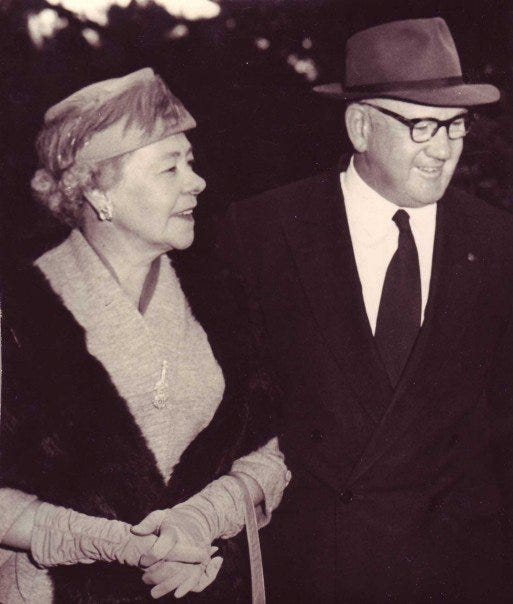
In my family’s history, few threads stand out as vividly as those woven by my Ouma Joey, Johanna Maria Magdalena, to give her full name. She was a force of nature, a woman who chain-smoked her way through life until emphysema claimed her in the eighties. I remember visiting her just before the end, watching her gasp for breath like a fish hauled from the water, her chest heaving with the effort of simply existing. That image seared itself into my mind, a warning that steered me clear of cigarettes forever. Even dagga, with its foul, acrid stench, has no appeal, disgusting stuff, and worse for the lungs. I have no idea about why stoners use it. Ouma’s struggle was my silent vow: I’d never let smoke steal my air or life.
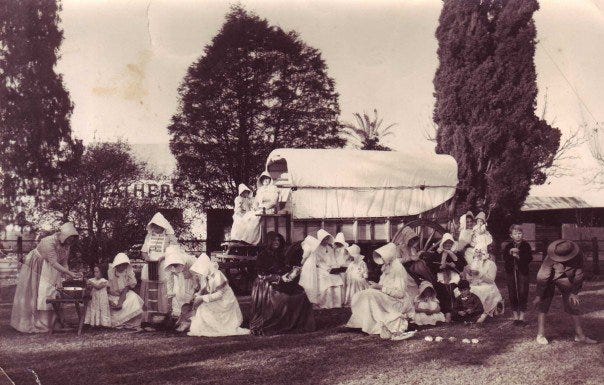
But Ouma Joey was more than her vices; she was the keeper of our clan’s lore, always reminding us that we were part of the proud Maritz lineage. Her mother had been a Maritz before marrying a Bruyns, and Ouma never let a family gathering pass without invoking that heritage. “We’re Maritz blood,” she’d declare in her strong Afrikaans ascent, her voice raspy from years of tobacco. To her, it meant we descended from heroes of the Great Trek, that epic northward migration of Dutch-speaking settlers fleeing British rule in the Cape Colony two centuries ago. Gert Maritz was one of those legendary Voortrekker leaders, a wagon builder and resourceful recruiter who guided the Boer families from Graaff-Reinet across the Orange River into the interior. He wasn’t just a farmer; he was a provisional field cornet, as well as a skilled artisan who kept the trek’s machinery rolling through harsh terrain. His group joined others in the push for freedom, establishing laagers and facing down threats from indigenous groups like the Ndebele. Tragically, Gert died of the lurgy at Sooilaer, near the Tugela River, but his legacy as a steady, principled leader endured. Ouma saw him as the true hero—a man of action and integrity, not the flashier figures who stole the spotlight.
And oh, how she’d rail against his nemesis, Piet Retief. To Ouma, Retief was no shining icon but an unsavory opportunist, a clumsy hero elevated by Afrikaner mythology more through folly than foresight. Piet Retief, born to Huguenot descendants, had a checkered past: repeated bankruptcies from failed land speculations and livestock ventures, losses in Xhosa raids, and a knack for financial missteps that left him deep in debt. He commanded expeditions in the Xhosa Wars and became a voice for disgruntled frontier farmers, penning a manifesto decrying British policies like inadequate slave compensation after abolition. In the Great Trek, Retief emerged as a leader, elected governor of the united laagers and pushing for settlement in Natal. He negotiated with Zulu King Dingane for land, recovering stolen cattle as part of the deal, but his trust proved fatal. He and his men were massacred at Dingane’s kraal, unarmed and ambushed during a supposed celebration. Ouma called it stupidity, not strategy; Retief’s naivety sparked the Battle of Blood River and cemented his martyrdom, but she insisted it was his fate, even divine intervention.
What galled her most was how Retief had insulted Gert Maritz along the way. Notably that last day when he went to Dingaan’s kraal and rode past Maritz’s wagon and called him a lafaard. During the trek, leadership tensions boiled over: Retief was voted governor and chief commandant, while Maritz was relegated to president and judge, a setup that exacerbated rivalries among the Voortrekkers. Maritz and others clashed with Retief, and Ouma spun it as a direct slight to the Maritz Clan, overshadowing his contributions. Even Pietermaritzburg, the city named for both (originally Pieter Maritz Burg), felt like a grudging nod to her hero. “Retief got the glory,” she’d grumble, “but Maritz was the one with honour.”
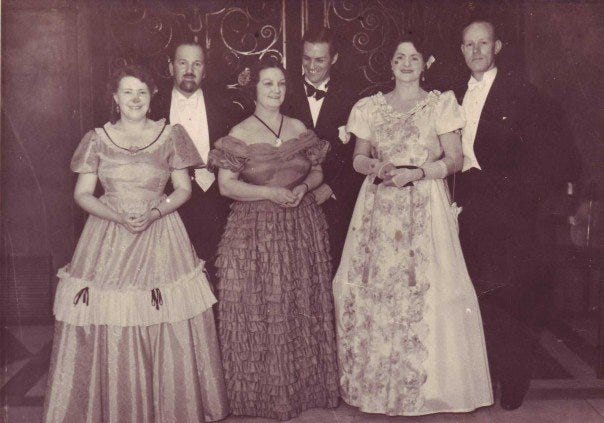
Ouma embodied that Afrikaner spirit in her daily life. She spoke only Afrikaans, dishing out tripe and kop en pootjies, those hearty, offal-heavy stews that warmed the soul on chilly evenings. I’d avoid it but it was my brother’s favourite meal. We’d gather around the table for card games, where she’d accuse my brother Andre of cheating with a sharp tongue and a wink. My mom confided that Ouma wasn’t the ideal mother; society parties and social climbing often trumped raising her daughter. Ouma would tell us about those events, like when the King of England hosted a Ball at the Maritzburg Town Hall and she met Lillibet. But Mom adored her father, JT Elliot, a steady presence who passed when I was just a year old in the late sixties. When Ouma died, she left no inheritance—just memories and that unyielding pride in our roots.
Die Klein Kerk te Noodsberg
Tucked away in the backwaters of Natal, where the air hangs heavy with the molasses scent from the massive Noodsberg sugar mill, stands a modest little Kerk that feels like a relic from another era. Noodsberg is mostly that hulking mill, churning out sugar from the vast cane fields that stretch green around the surrounding area. Right next door is Bruyns Hill, a gentle rise that marks the boundary of my Ouma family’s old stomping grounds. The Kerk, part of the NG Kerk, the Nederduitse Gereformeerde Kerk, that bastion of Afrikaner Calvinism, isn’t much to look at: a simple structure with a handful of wooden pews polished smooth by generations of faithful bums, and an old organ that wheezed hymns like Ouma clearing her throat.
Behind the church lies the real heart of the place: a quiet graveyard where so many of my ancestors’ rest. Maritzes, Bruynses, and others from Ouma Joey’s line, their headstones weathered by rain and time, etched with long forgotten dates, from just after the Trek and beyond. It’s as if the soil there holds the echoes of their footsteps, those granite hard Voortrekkers who pushed north in search of freedom. We’d visit occasionally, dragged along by Ouma Joey, who insisted on attending services despite her raspy cough. “Dis ons kerk,” she’d say in her unyielding Afrikaans. For her, it was more than worship; it was a pilgrimage to honor the dead and remind us, the remaining ones, of where we came from.
The church was so small that us kids were often spared the stuffy confines inside. While the adults filed in for the dominee’s sermon, we’d scamper outside, climbing the gnarled Jacaranda trees that dotted the grounds or wandering among the gravestones like little explorers in a forgotten world. Those trees were our playgrounds, sturdy branches perfect for perching, leaves rustling in the quiet Sunday breeze. I have this recurring dream even now: I’m up in one of those trees, legs dangling, peering through the window at the dominee in his pulpit, his voice booming out in rhythmic Afrikaans about sin, salvation, and the wrath of God. From my leafy vantage, it all seemed so distant, like a performance in a foreign pantomime.
At that tender age, I couldn’t shake the confusion. This NG Kerk God felt different from the one in the Lutheran services or Methodist gatherings we’d sometimes attend with other family branches. If it was the same God—the same creator watching over us all—why the separate churches? Why the different rituals, the varying hymns, the divided flocks? Were the Lutherans worshiping a kinder deity, the Methodists a more forgiving one, and the NG Kerk folks a stricter version? Ouma Joey would ignore my questions with a wave of her cigarette hand, and roll her eyes, but they lingered. Even today, I don’t have a satisfying answer. Maybe it’s human nature to carve up the divine into factions, each claiming their slice of truth. Or perhaps it’s just the way history fractures faith, like light through a prism. Whatever the reason, those childhood moments outside the Noodsberg Kerk, amid the trees and graves, planted seeds of doubt that grew into a lifelong pondering. In the shadow of that sugar mill, the mysteries of belief remain unanswered. And that suits me fine, as I recall my dad, Mastelek, telling me that you will rarely ever find two Afrikaners agreeing about a subject. I think he meant the whole of humanity.
Grey
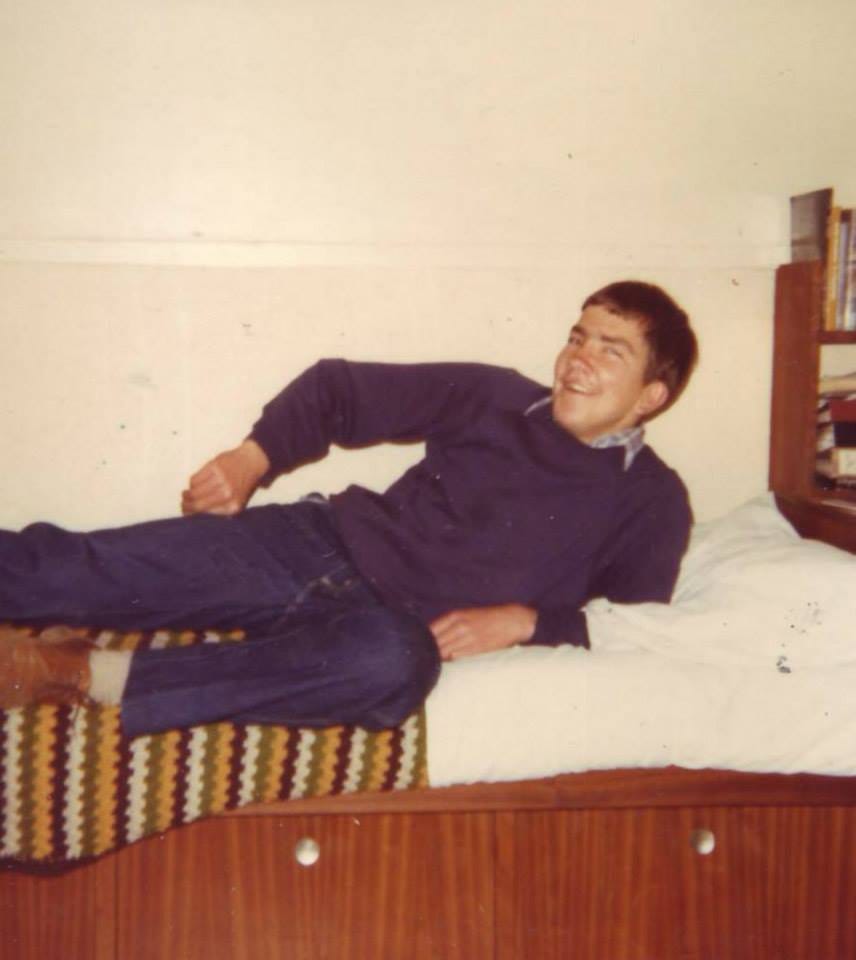
One tangible gift lingers in my regrets: the blanket Joey gave me when I headed to Grey College. It was a homemade woollen crochet piece of multiple coloured stripes, a Navajo-style heirloom I called the “Maritz blanket,” thick and warm against the Free State’s biting winters. I slept under it through those frigid nights in hostel, feeling connected to the trekkers’ endurance. I wish I still had it, a threadbare link to Ouma Joey and the clan she refused to let us forget. In her stories, we weren’t just descendants; we were heirs to a legacy of resilience, forged in ox wagons rolling north through the plains under vast African skies.