The Oakvila Farm Memories & the Path I Travelled
Additional stories about growing up on Oakvilla farm
The Girl Next Door & Horseback Dreams
The farm next to Oakvila was a world of its own. The neighbouring farm was Sterk Spruit owned by a Doctor and named after the river that ran through it from the foot of Blinkwater mountain. At its heart was Linda, the girl who made my young heart race. Her family’s sprawling fields were just over the hill, and I’d concoct any excuse to wander that way. Horse riding lessons became my golden ticket. I wasn’t much for horses at first—my brother’s unease around them had rubbed off on me, but the prospect of seeing Linda made every dusty ride worthwhile. I’d saddle up, feigning confidence, while stealing glances at her as she moved with ease among the stables. Her laugh was like the chime of a bell across the valley, and though I never mustered the courage to confess my crush, those lessons were my happiest hours. The horses, the hay, the soft Natal breeze—they all blurred into the background, and it was just Linda, radiant and untouchable.
First Kisses & Fleeting Romances
Love, or whatever passed for it in those youthful days, was a whirlwind. My first kiss, or rather, a shy peck, came from Alison, whose father ran a dairy farm down the road. It was quick, awkward, and left my cheeks burning, but it felt like a triumph. Then came that unforgettable afternoon at school, when boldness overtook me. Louise, the German girl with eyes like a summer sky, and Rene, the French beauty with a mischievous smile, both found themselves on the receiving end of my newfound confidence. Two kisses in one day, proper ones, not pecks, and I was king of the world, if only for an afternoon. The schoolyard buzzed with whispers, and I walked taller, even if the thrill was fleeting and all because I was the designated judge to who was the better kisser. Needless to say, this unicorn was never repeated again…
Flowers & Family Competitions
My mother’s hands were magic when it came to flowers. She could take a handful of blooms from the Oakvila garden and turn them into art, her arrangements winning ribbons at regional competitions. She taught me the craft, how to balance colors, how to let each stem breathe. I entered a youth competition once, more to make her proud than anything else. To my surprise, I won. The girls in the competition weren’t thrilled, their glares sharper than thorns, and I decided that was my first and last foray into flower arranging. Still, those moments with Ma, snipping roses and weaving greenery on the stoep, are pressed like petals in my memory.
Shortly after my mom & dad married my oupa JT gifted my mom ‘n Knolklimop a.ka. Boweia Volubilis. This is a rare medicinal plant popular amount the zulus and I now have the descendants of that plant in my garden in the Big Smoke. All two hundred.
Sibling Shadows & Silent Resentments
My sister’s words always carried a sting when she spoke of Dad. “He never talked to me,” she’d say, “only to you, because you’re a boy.” It hurt to hear, and I’d push back, asking if she ever tried asking him about his life, his stories. She’d insist he wouldn’t have answered that it was because she was a girl. I wanted to shake her, tell her it wasn’t true. Dad built her a Wendy house, a proper sized dollhouse, just because she asked. He’d have answered any question, I’m sure of it, but she never asked. Next time she brings it up, I’ll tell her to stop, to see it wasn’t one-sided. Families are like that—misunderstandings grow like weeds if you don’t pull them out early.
Breaking from Shadows at Grey College
My brother was the smart one, always a step ahead, and I spent years trying to match him, not outshine him. It paid off, I topped my class at school, found my own strengths. Swimming was one. I won a race once, in the outside lane, blind to the other swimmers, just the crowd’s roar pushing me forward. I didn’t want to look like a fool, so I pushed harder and won. Even beat my brother once, though he’d outrun me any day. He shied away from horses and guns, especially after his friend’s tragic accidental death while handling his dad’s pistol. Dad taught me gun safety, how to respect a rifle, but my brother kept his distance. When a friend drowned in a neighbor’s pool, it shook me. I saw them pull him from the water, and instead of sadness, I felt a fire to learn to swim better. The neighbour doctor’s wife, an American nurse and former competitive swimmer, gave me lessons. Her three daughters including Linda were there, too, and I won’t lie—those swim sessions were as much about them as the strokes.
I wanted to step out of my brother’s shadow, to be my own man. I asked Dad to send me to a proper city school. Most were too pricey, but his friend Jood Jordaan suggested Grey College, his old school. Dad wrote a letter, but the first reply was a rejection. The party line was down, so he drove to town to call Jood. A week later, an acceptance letter arrived, and I was on my way. Jood and Dad went way back, to the sixties referendum when Dad was farming in Richmond. He’d wanted to cut ties with the British, a view not everyone shared. I asked him why and he said no-one needs to sing God save the Queen after watching a movie. A teacher, bitter about Dad’s politics, tried to ruin him—set fire to his farm, even placed a fake ad in Farmer’s Weekly claiming Dad was selling and leaving. Jood, a regional politician, helped Dad through it, and the police tracked down the culprit. The teacher was fired from his job and the district was one of the few in Natal to vote Yes to South Africa becoming a Republic. The Yes victory was small, only 2% and that in no small part was due to that incident and a shift in that district. That same Jood got me into Grey College, and I carried that chance like a torch, ready to light my own path.
Road Trips with Dad
The road to Bloemfontein stretched 500 kilometers, a long ribbon of dust and tar that carried Dad and me from Oakvila to Grey College, where I boarded. We’d pile into the Mercedes NH3000, its engine humming like a promise, or sometimes the Datsun, less grand but just as reliable. Those trips were more than travel—they were a classroom. I’d pepper Dad with questions about our family, our history, and he’d unfold stories like maps, tracing lines back to Richmond, the referendum, and the farm’s struggles. His voice was steady, weaving tales of resilience and roots against the hum of the road.
One year, I joined him on a proper trek, riding shotgun in a truck bound for the Kouebokkeveld to buy seed potatoes. The journey was endless, the landscape shifting from Natal’s green folds to rugged, open plains. We talked for hours—about the land, the seasons, our people. Those moments stitched me to my past, to him. But by my last year at Grey, we got a car with a cassette tape deck. Music filled the cab, and our talks grew quieter, the stories drowned out by scratchy tapes. I didn’t realize then how much I’d miss those long, uninterrupted conversations, the ones that made me know who I was.
Television & Rally Days
Getting our two-hour evening television fix was no small feat at Oakvila. Nestled halfway down the valley’s slope, our house was a dead zone for TV signals. At first, Dad rigged an antenna atop the mountain behind us, tethered to the house by a long, snaking cable. It worked until fire season, when flames claimed the setup. Undeterred, Dad had a signal repeater installed by the lime shed across the valley, bouncing the signal back to us. With that, we were glued to High Chaparral, Bonanza, and Village People—not the pop group, but a gritty series about South African miners. Those evenings, huddled around the flickering screen, felt like a hard-won victory.
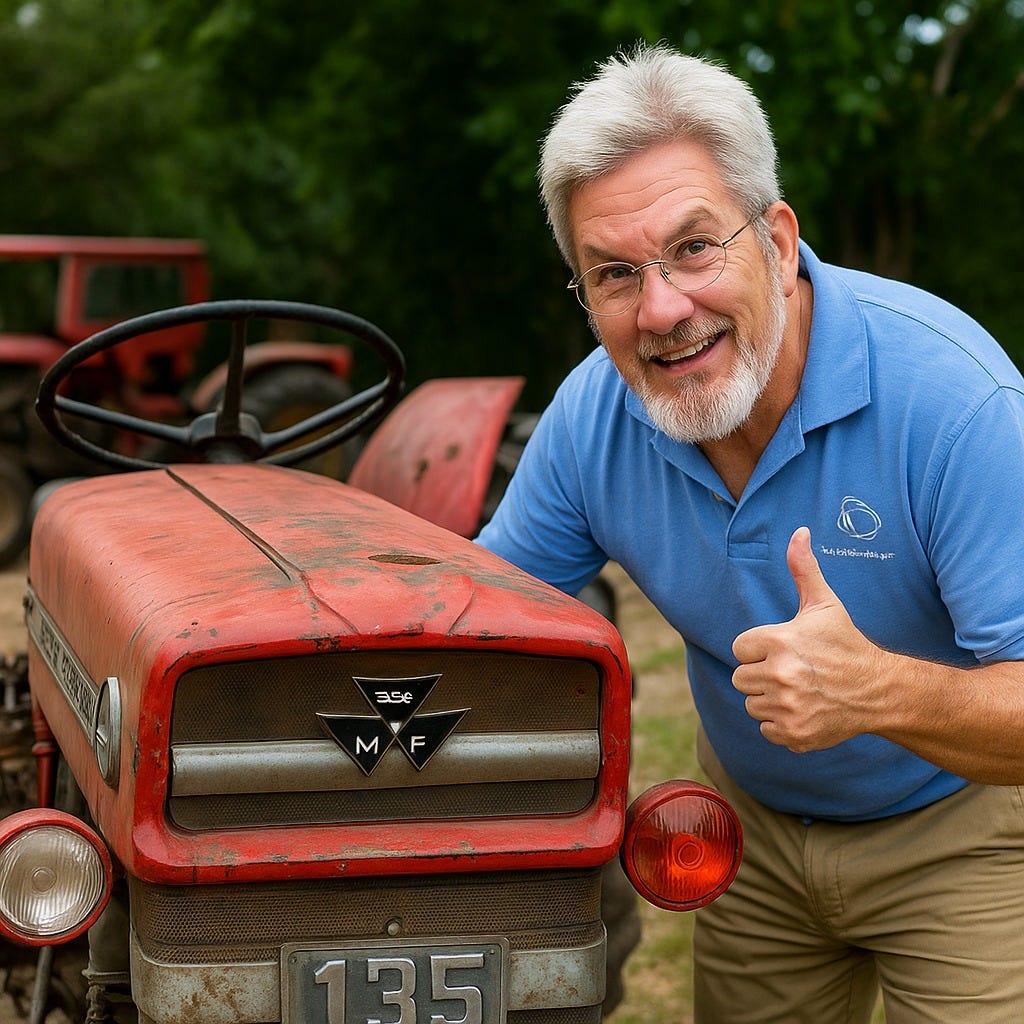
The farm had other thrills, too. Dad’s Tinkabi, an irrigation tractor with a massive tank and oversized wheels, was a beast. Powered by a Lister diesel engine, it sprayed insecticide and weedicide across the fields. In winter, starting it was a battle. The crank handle demanded muscle, and everyone—family, farmhands—lined up to take a turn. When the engine finally roared to life, it kicked like a mule, and you had to leap back to avoid a whack from the spinning handle. It was a ritual, equal parts chore and adventure.
But nothing beat the annual Natal Rally. The organizers would visit Dad beforehand, begging him to keep the irrigation running near the starting line. The result? A gloriously muddy mess. We’d drag our deck chairs to the edge of the field, settling in to watch cars fishtail and slide. Heavy-footed drivers spun out, some veering off the road entirely, plowing into sugar cane fields at breakneck speed. One year, a car smashed into the telephone pole where the martial eagle used to perch, man, that pole was moer toe, and the crowd roared. From our vantage point, we’d track the cars tearing through the valley, cheering when someone took a wrong turn and vanished into the cane. I’d dream of climbing into a souped-up Ford Capri, voet in die hoek, tearing through that special stage with the crowd’s shouts in my ears. Those rally days were pure, electric chaos, and they lit up Oakvila like nothing else.
Doves, Forts, & Farm Adventures
My parents brought home white fantail doves, proud little creatures that puffed out their chests like they owned the place. Dad had a special birdhouse on a pole built for them, a multi-level affair with tiny rooms and a quaint black roof, perched like a palace in the yard. I reckon the martial eagle, ever-watchful from its telephone pole, nabbed a few—the doves’ soft cooing was no match for the weavers’ racket in the wild fig tree. Ma’s garden, a prize-winning spectacle of lawns and rockeries, turned our dusty farmhouse into something out of a countryside dream, and those doves added a touch of elegance, like we were lords of a manor.
We were vegetable farmers, not livestock keepers, so meat came from the New Hanover Co-op butcher. The few chickens we had were scrawny, street-smart survivors, darting around the yard like they’d studied evasion tactics. Catching one was a mission—they’d bolt like lightning. When I did snag one, I’d draw a line in the sand, press its beak to it, and watch it freeze, transfixed. I’d laugh till my sides hurt. The farm was alive with guinea fowl, their cackling chorus filling the sunset. You couldn’t walk ten steps without finding porcupine quills or their speckled feathers. Dad loved a guinea fowl roast, though its gamy taste never won me over. He’d insist it wasn’t sporting to shoot a bird on the ground or in a tree—only in the air. With just one good eye, I was a crack shot, the challenge feeling as natural as breathing.
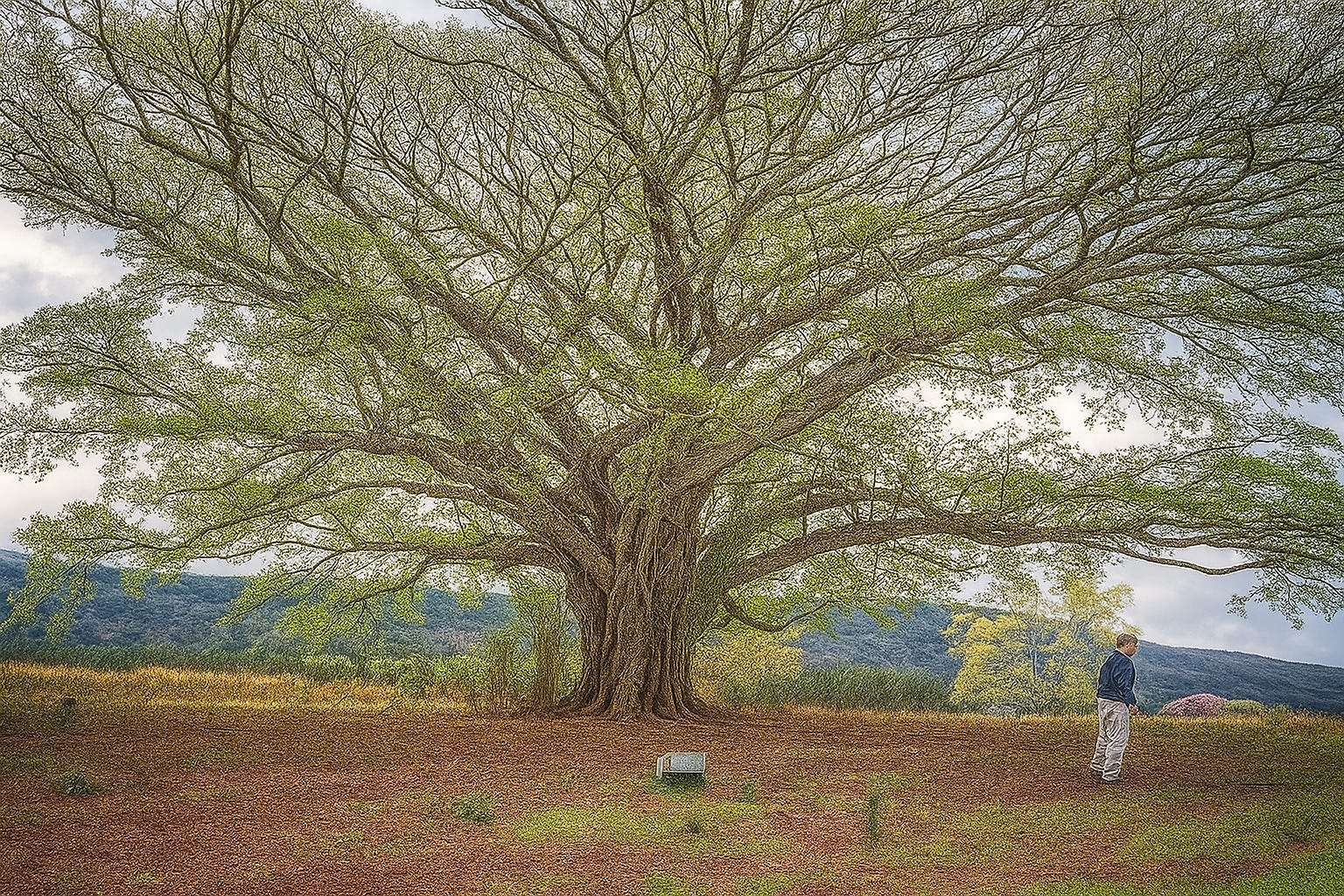
I built forts all over Oakvila, my cowboy playgrounds. There was one in the old sheds, where carpenter bees bored nests into the beams; another in the wild fig tree; one in a donga near the dam’s slopes; another by the babbling stream in the horse camp, where wild Canna plants grew; and one atop the hill, where granite boulders looked like giant Zulu bums. If I’d been naughty and Ma or Dad came looking, I’d vanish into a fort. Once, I disappeared for two full days, sustained by phuthu and maas from the Zulus, who’d chuckle at my antics. I could’ve lasted longer.
One day, Dad roped me into hunting for a missing tractor. The driver had vanished, and the party line buzzed with no sightings. We hopped in the Datsun, scouring the farm. Near the dam wall, we spotted tracks plunging into the water, the tractor’s exhaust stack poking just above the surface. I dove in, hooked chains to the frame, and we hauled it out. The driver was never seen again. Word among the workers was he’d been drinking, took the tractor to visit his girlfriend, and feared Dad’s wrath—Mastelek, they called him. He never returned.
At night, Oakvila was pitch-dark, save for the glow of Zulu fires. I’d roam with a battery torch, camping in my forts just for the thrill. My brother and I spent holiday hours building dams in the farm’s streams, piling stones and mud with a beaver’s obsession. He’d later become an engineer, and I got it—there was a deep satisfaction in shaping water’s flow. We had no beavers on Oakvila, but we had seen them on the nature programs on the Telefunken; we were the beavers, crafting our own wild world.
Zulu Neighbors & Farm Justice
The Zulus on Oakvila, the Gumedes and Ncunes, were a wary lot, steeped in their own ways. They propped their beds on bricks to ward off the tokoloshe, a mischievous spirit I never saw but felt through their hushed tales. The Gumedes marked their cheeks with distinct cuts, badges of their lineage, while the Ncunes stretched their earlobes for bold, ornate earrings that caught the sun. I soaked up their world before I knew my own, learning Zulu as my first tongue, its rhythms as natural as the farm’s dust. But city life—the Big Smoke—diluted it, and now those words slip through my fingers like sand.
They taught me to fear snakes early, especially the puffadder. “It has teeth in its tail,” they’d say, claiming it could strike backward while lazing on a path. I later learned it was just the snake’s sluggish ambush style, but the myth sank deep, and I’d leap over any shadow on a trail. Dad, fluent in Zulu and its dialects, often doubled as a court interpreter when the magistrate—a schoolmate—needed help on busy days. He said Zulu justice didn’t truck with hearsay. A man caught red-handed would confess, but a cow in your kraal wasn’t theft unless you were seen driving it there. No proof, no crime.
Dad hired a towering Ncune as the farm’s walkabout, armed with a knobkerrie to deliver swift justice to anyone caught in the act. But harvest days softened the edges. Vegetables that didn’t make market grade were handed out free to the workers, the rest bartered with a neighbor down the road—a mechanic who’d fix tractors or trade milk for our surplus. Oakvila ran on deals like that, a web of barter weaving us all together, as much a part of the farm as the soil itself.
Thorns, Stews, & Sunday Braais
One day, my sister’s scream echoed across the farm—she’d driven a thorn clean through her foot. She wailed as Dad, calm as ever, grabbed pliers and yanked it out. That set her off again, crying blue murder, tears flowing like a burst dam. Life on Oakvila was like that—sharp moments softened by family. Our farmhouse glowed with incandescent bulbs, no LEDs in sight. The shed had a massive mercury vapor light, like the ones on city streets, humming bright. Electricity powered the farm’s heart, especially the irrigation pumps. Dad, ever resourceful, bought a Wolf electric lawnmower and strung together a tangle of extension cords to tame Ma’s sprawling lawn. In his office, an old valve radio crackled with Morse code and foreign tongues, its wavebands pulling in voices from across the globe. I’d sit there, mesmerized by the pops and hisses, worlds away from our valley.
Ma’s kitchen was a haven of German comfort. Her Stegen’s stew, a recipe from Oma Bertha, was a hearty cousin to Irish stew, rich and warming. We ate brown bread with meat preserves and porridge wurst, a spread I loved but rarely saw elsewhere—store-bought spreads were a luxury glimpsed only in other kids’ school sarmies. Potatoes were our staple: bratkartoffel, poeffer roti, or halved spuds roasted with cheese and spring onion, crisp and golden. Ma served cabbage with nutmeg, and we feasted on farm-grown carrots, cauliflower, and brussels sprouts, alongside Zulu imifino and madumbis. Breakfast was mielie pap, oats, or phutu with maas, but the real treat was Ma’s stywe pap with gravy and boerewors, the Voortrekker’s fare, filling us with history.
Sundays meant braais, the fire loaded with steak, chops, and wors. One Sunday, Dad spotted monkeys raiding the mealies in the valley. He called for his Finnish Sako 7mm Remington Magnum, only for me to confess I’d shot all the bullets in target practice. Unfazed, he sent me for the Czechoslovakian Winchester .458 elephant gun. From the stoep, he took aim, and a monkey vanished like it’d been zapped by a death ray. The rest scattered, bolting for the hills as if the devil himself had arrived. Dad fired again, missing a monkey but hitting an irrigation pipe. A geyser erupted, sending his mate, the magistrate, into fits of laughter. I joined in, only to be sent to the shed for a spare pipe to fix the mess. That braai, with its chaos and meaty smoke, was Oakvila at its finest—wild, warm, and unforgettable.
Phone Books & Walkie-Talkies
Next to the old Siemens Bakelite phone in the farmhouse sat a stack of phone books—Pietermaritzburg, Durban, and the Yellow Pages. They were like treasure maps, listing every person’s number and address in the area, with the Yellow Pages cataloging goods and services. Those books are gone now, swallowed by the internet’s endless sprawl. Dad pored over ads in the Natal Witness and Farmer’s Weekly, always on the hunt for a deal. Ma loved her Garden and Home, dreaming up new corners for her prize-winning garden. My sister, meanwhile, was glued to Scope, its centrefold the first thing I’d sneak a peek at—especially when censorship laws slapped white stars over the models’ nipples. Scope spilled stories we’d never catch on TV or in the papers, a window into a racier world.
The Reader’s Digest was my real teacher, arriving each month in the postbox. I’d devour it cover to cover, its pages schooling me in English better than any classroom. Life on Oakvila moved slow, purchases weren’t impulsive. A trip to the shop took planning, sometimes weeks or months, the pace of the farm setting its own unhurried rhythm.
The real thrill came from Dad’s National walkie-talkies, made in Japan, powered by eight AA batteries each or a 12V line. They worked from one end of the farm to the other, turning me into a kid straight out of CHiPs on our Telefunken TV. I’d cycle to New Hanover, one radio clipped to my belt, and call Ma in the kitchen when I was in range. My brother and sister weren’t keen to chat, so Ma was my lifeline, her voice crackling back through the static, tying me to home no matter how far I roamed.
Yamaha Scramblers & Dirt Road Thrills
When [CHiPs](https://www.instagram.com/reel/DNCojbptoi-/?utmsource=igembed&igrid=AvDGQjg6hVAxrwrn63VYRy “Chips”) started flickering on our Telefunken, Dad brought home two Yamaha scramblers—a DT175 and an AG100. They were our new stallions, replacing the horses for tearing around Oakvila. My brother, the daredevil, led the charge, bragging about his jumps and hill climbs, with me hot on his heels. The best spot was the dam wall, where you’d hit the dirt at speed, the slope steepening near vertical. Time it right, and you’d launch into the air, landing perfectly still on the wall—a heart-pounding thrill that never got old. We carved routes through sheer drops and rocky paths, racing circuits on the district’s dirt roads, kicking up clouds of mud and dust.
Those bikes were freedom, but one lesson stuck hard. A kid in the district died when a corrugated iron sheet flew off a truck’s bed, striking him. From then on, I never tailgated a truck, the memory of that tragedy keeping my throttle in check no matter how wild the ride.
Watching Films on the Telefunken
At Oakvila Farm, the Telefunken television was the heart of our family entertainment, glowing warmly in the living room as we gathered to watch a mix of old movies and classic TV shows. Among the films, [Oklahoma](https://youtu.be/BIGGVE-KiE “Oklahoma”)!_ stands out vividly in my memory, its vibrant musical numbers and sweeping landscapes filling the screen. It was one of many old cowboy movies we enjoyed, alongside Western staples like Bonanza and High Chaparral, broadcast on the SABC with Dorian Berry’s familiar voice as the continuity announcer, guiding us through the evening’s lineup. The Telefunken also brought us timeless religious-themed classics like Ben-Hur, its epic chariot races and grand storytelling captivating us. Those evenings spent watching the flickering screen created a cherished ritual, blending nostalgia, adventure, and drama in the cozy embrace of the farm.
In die hart van my huis, op die muur in die eetkamer, hang ‘n stukkie geskiedenis wat my altyd laat glimlag – ‘n Willow-patroon serviesbord vir gebraaide vleis, so groot dat selfs die Koningin van Engeland trots sou gewees het om dit op haar tafel te gebruik. Dit is my ouma Joey se bord, wat sy van haar ma geërf het. Haar ma was ‘n Maritz, en ek vertel almal dat dit op die Groot Trek was.
Daardie porselein op my muur is gemaak aan die draai van die 19de eeu, so dit was definitief op die Groot Trek. As dit kon praat, watter stories sou dit nie vertel nie! Getrek met os-wa van die Kaap na Natal, deur stofwolke en rivierkruisings, deur die swaarkry van die Voortrekkers. Dit het sekerlik feesmale gesien, waar families bymekaargekom het om te eet en te bid, te midde van die wildernis. Vir my is dit meer as net ‘n bord; dis ‘n skakel na my voorsate, ‘n herinnering aan hul moed en deursettingsvermoë. Elke keer as ek daarna kyk, voel ek die gewig van daardie geskiedenis, en ek wonder oor die hande wat dit gehou het, die stories wat dit stilweg bewaar.
Paving the Way | Shale, Mud, and Unforgettable Farm Adventures
Growing up on the farm, the rhythm of life was dictated by the seasons, the soil, and the whims of the weather. But nothing quite captured the essence of our resourceful, hands-on existence like those rainy seasons when the dirt roads turned into treacherous quagmires. My dad, ever the practical problem-solver, had a simple mantra: if the rain was going to try to keep us from the world, we’d fight back with whatever the land gave us. That’s how I learned the art of loading shale stones onto a dump truck—a chore that doubled as one of my fondest childhood adventures.
It all started with the school run. We’d pile into our trusty yellow Kombi van each morning, a cheerful beacon against the green fields and rolling hills. But come the rains, those roads became a slick nightmare. The wheels would spin futilely in the deep mud, the van bogging down like a stubborn mule, and we’d be stuck, laughing nervously as the clock ticked away to being late. My parents were adamant: education was non-negotiable. “No missed days,” Mom would say firmly, while Dad nodded, already plotting our counterattack. Missing school wasn’t an option in our house; it was the gateway to a bigger life beyond the farm fences.
So, out came the equipment—relics of farm ingenuity that felt like extensions of our family. The loader was a beaten-up old blue Ford tractor, its paint chipped and faded from years of hard labor, with a sturdy bucket bolted to the front like a giant metal scoop. I’d climb up into the seat, feeling ten feet tall, as Dad guided me through the controls. “Easy on the throttle, now scoop low and lift steady,” he’d instruct, his voice calm but commanding. We’d head to the shale pits on the property, where I’d maneuver that bucket to grab heaps of jagged, gray stones—nature’s own paving material, tough and unyielding.
Then there was the dump truck: a converted Ford spud truck, originally designed for hauling potatoes but repurposed for just about anything that needed moving. It had that classic rumble, a deep-throated growl that echoed across the fields as we loaded it up. Bucket by bucket, we’d fill the bed with shale, the stones clattering like applause as they tumbled in. Dad and I would work side by side, with the farm labourers pitching in. The air would fill with dust and the scent of the dust, and by the end of the day, our hands were calloused, our clothes caked in grit, but our spirits soared.
We targeted every troublesome spot—the low dips where water pooled, the curves where the Kombi always slipped. Spreading that shale felt like laying down a promise: no more spinning wheels, no more frantic pushes to free the van from the mud’s grip. Layer by layer, we paved those bits, creating makeshift roads that held firm even in the heaviest downpours. It wasn’t fancy asphalt; it was raw, rugged, and entirely our own handiwork. And it worked. Come rain or shine, we’d make it to school, arriving with stories of our latest conquests over the elements.
Looking back, those days weren’t just about fixing roads—they were about resilience, family bonds, and the sheer joy of turning hardship into triumph. I can still feel the vibration of that old Ford tractor under me, hear the satisfying thud of stones hitting the truck bed. It was absolutely fun, the kind of simple, sweaty fun that sticks with you. Even now, decades later, just thinking about it brings a wide smile to my face. What a great memory, etched in shale and mud, a testament to the farm life that shaped me.