The Reflux Ordeal
A Valve, a Rusty Stand, & Life’s Cruel Timing
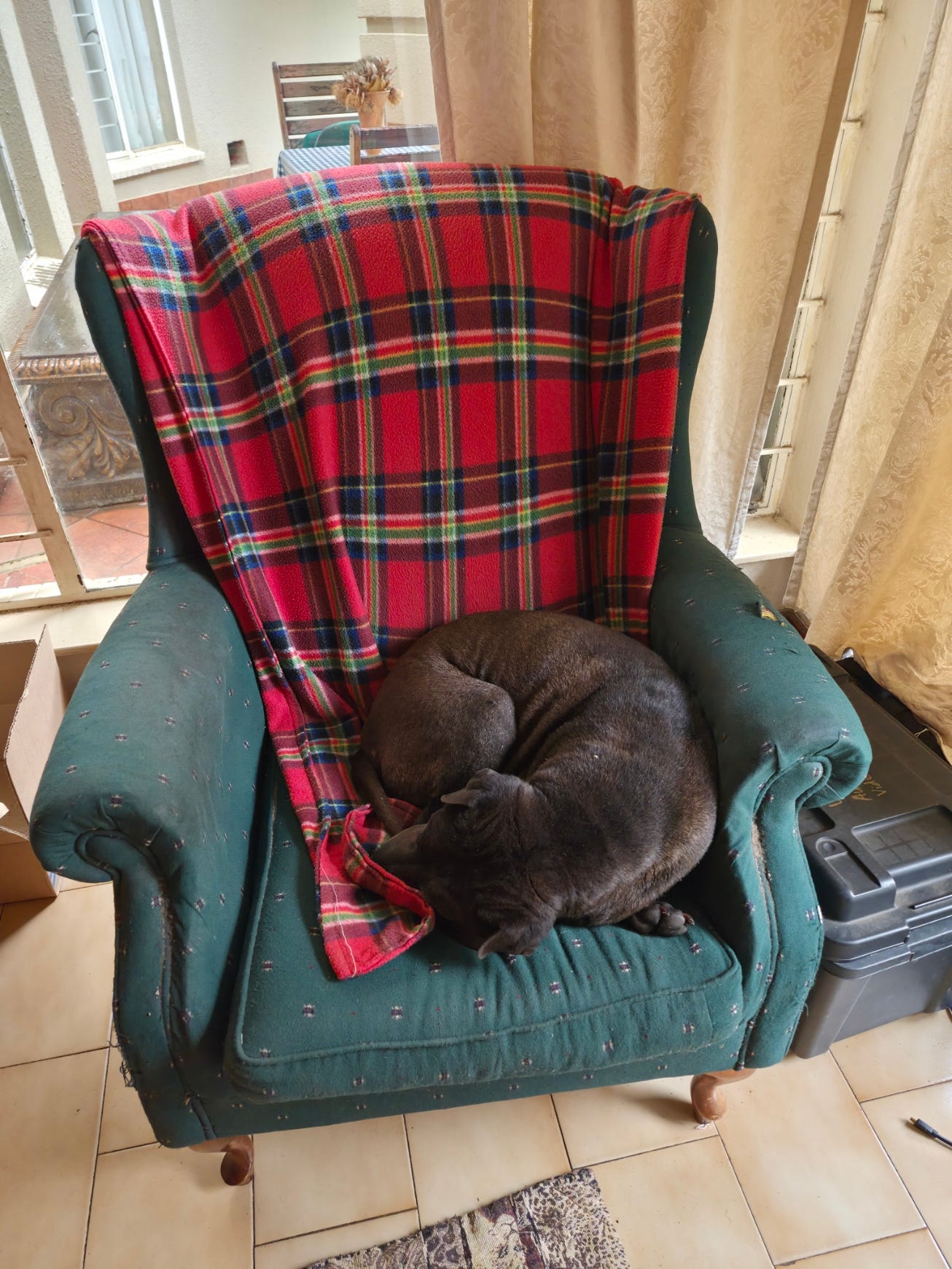
Looking back, the GERD crept up on me like a thief in the night, stealing my sleep and turning my nights into a battleground. Gastroesophageal reflux disease, such a clinical name for something that was a negative burden. The valve at the bottom of my esophagus, that little flap meant to keep stomach acid where it belonged, had decided to go AWOL. Acid would surge up, burning like fiery magma, especially when I lay down. Nights became a ritual of tossing and turning until, defeated, I’d drag myself to the wingback chair in the living room. There, propped upright like an old man, I’d finally drift off, only to wake with a stiff neck and a sour taste in my mouth. It was no way to live, but I soldiered on, grumpy as a Lion with a thorn in its paw.
Kathleen (Kath) saw it all, of course. She watched me struggle, her concern etched in those quiet glances she’d give me over dinner or from across the room. No homeopathic remedies this time, no herbal teas or essential oils she might have suggested for lesser ailments. “Just go see the doctor,” she said one evening, her voice firm but kind. I was being a real asshole to live with back then, I admit it now. Short-tempered, withdrawn, snapping at the smallest things. Kath wanted to help, and in her way, she did by pushing me out the door. I grumbled my way to the appointment, but deep down, I knew she was right.
The doctor listened, nodded, and referred me to a surgeon. That’s when things got invasive. The surgeon shoved a scope up both ends, eina, as we say in South Africa. It was an experience and a half, feeling like a human kebab on a rotisserie. But it confirmed the issue: that faulty valve needed fixing. The recommendation was a laparoscopic Nissen fundoplication—fancy words for folding the top of my stomach around the lower esophagus to create a new, tighter valve. “I’ve done hundreds,” the surgeon assured me with a casual wave. “Chop chop. Easy.”
Ja well, no fine, as the saying goes. Nothing’s ever that straightforward. I checked into Olivedale Hospital, nerves jangling but ready to get it over with. The operation went ahead, and when I woke up in recovery... shit, that was sore. A deep, throbbing ache in my abdomen, like I’d been kicked by a mule. The first day blurred in a haze of morphine and nurses checking vitals. By the second day, I wanted to be discharged, but there was a catch: they wanted proof of a bowel movement before letting me go. Nature, however, wasn’t cooperating.
Eventually, a nurse handed me a tablet to get things moving. I lay there in bed, feeling the rumble build like a storm across the Highveld. This was it. I hauled myself up, clutching the IV drip stand—a rusty relic that looked like it dated back to the sixties. The wheels were seized up, refusing to roll smoothly across the vinyl flooring. Cursing under my breath, I half-lifted, half-dragged the damn thing toward the loo. Occupied. Bloody hell. I made a frantic U-turn, bending over in agony, and shuffled to the one on the other side of the ward. I just made it, slamming the door as the elevator dropped from the top floor to ground in a single, explosive second. I sat there in shock, staring at the wall, while the aftermath echoed like a distant landslide.
They discharged me after that, but not before I vented on the feedback form. I wrote an essay about that rusty drip stand, how it nearly turned my dignified exit into a comedy of errors. The hospital even phoned me later, but I was still in pain and grumpy as ever, so the conversation was short and sharp.
Recovery wasn’t the quick bounce-back I’d imagined. The surgeon had undersold it; it took months of quiet effort, careful eating (nothing but soft foods at first), and a lingering fatigue that sapped my energy. I underestimated the toll, plodding through days that felt like wading through molasses. And then, a couple of months in, life delivered its cruelest blow. Kath, my rock, my gentle nudger toward the doctor—collapsed in a yoga studio. Coronary artery disease. Her heart just failed her. Gone, just like that.
It was a double whammy, physical pain intertwined with an emotional gut-punch that left me reeling. No one really knew how deep it cut; I had to man up, as they say, soldiering on alone through the grief and the healing. Friends offered condolences, but the isolation was profound. I’d forgotten about the operation until recently, my brain erasing it, when Helen mentioned the ordeal on a long phone call, about an hour’s worth of reminiscing, that she and Kath had discussed it back then. Helen hadn’t mentioned it in her letter, but hearing it now stirred up the memories, along with a pang of regret. I must have been impossible to live with during the GERD days. If there’s a feather of repentance to be found, I’ll grasp it and pray for forgiveness.
Yet here I am, still standing. The valve works now, no more nights in the wingback chair. Life’s waves crash and recede, complex and unforgiving, but they haven’t drowned me yet. In the quiet moments, I think of Kath and that rusty stand, and I can’t help but smile through the ache. Survival, it turns out, is part stubbornness, part grace.