The Soul Hiding in the House
We have another one
“I’m bailing, Eddy.”
We were barely a kilometre down the road. One kilometre. The kind of distance you walk to fetch milk, not something you abandon like a failed expedition.
“That Delhi belly still a problem, Grey Hair?” Eddy asked, his chain ticking softly as I coasted to a stop.
“Yes,” I said, swinging a leg off him. “Feels like we’ve done 80km instead of one.”
“You did spend quality time at the white telephone.”
I groaned. “That Indian takeaway was dodge. Remind me to blacklist them.”
Eddy said nothing for a moment. He never rushes words, he carries them like the old humanoid bones from whom he originates, dug up from somewhere deep in the Cradle, worn smooth by time.
We turned back, slowly. Even pushing him felt like effort.
Later that day, the house felt different.
You know how a place settles into itself? The hum of the fridge, the quiet weight of furniture, the soft echo of your own movements. Familiar. Contained.
This was not that.
I was standing in the passage when I heard it, clear, calm, and not mine.
“Send a blanket to Megsi. It’s winter. It’s cold.”
I froze.
Not Eddy. I know Eddy’s voice. He sounds like gravel & patience and something older than language. This voice was… softer. Urgent, but gentle.
“Hello?” I said out loud, which is always a strange thing to do in your own house.
Nothing.
The silence came back, thick & ordinary again.
That evening, I packed two boxes and sent them to Megsi. Blankets, a few odds and ends. It felt like the right thing, even if I couldn’t say why.
Later, I wheeled Eddy out onto the stoep.
“Eddy,” I said, “who was that?”
“I don’t know,” he replied.
His tyres shifted slightly as the evening cooled.
“Haven’t heard anyone else since you sent the samovar to Megsi.”
I laughed softly. “That samovar talked the hind legs off a donkey.”
“Too much,” Eddy agreed. “Always those voorkamer stories. And the Mauritz trek, over & over.”
“It wanted to go,” I said. “You could feel it. It chose Megsi.”
“Or something chose through it,” Eddy said.
That’s the thing about Eddy. He doesn’t dismiss anything outright. He lets the strange sit where it lands.
“So there’s something else here?” I asked.
“There must be,” he said. “If it spoke to you… it’s been listening for longer.”
I looked back into the house.
Objects suddenly felt less like objects.
“Maybe the red clay brick from the Oakvilla farmhouse,” I said. “That place has seen things.”
“Maybe.”
“Or one of the Waterford Crystal flutes. They’ve been around enough celebrations to hold a few ghosts.”
Eddy’s chain clicked, almost like a shrug.
“Could be hiding in the Blue Italian Spode crocks,” I continued. “They’ve got that old-world stubbornness.”
“Or,” Eddy said, “it’s something that doesn’t want to be named yet.”
I paused.
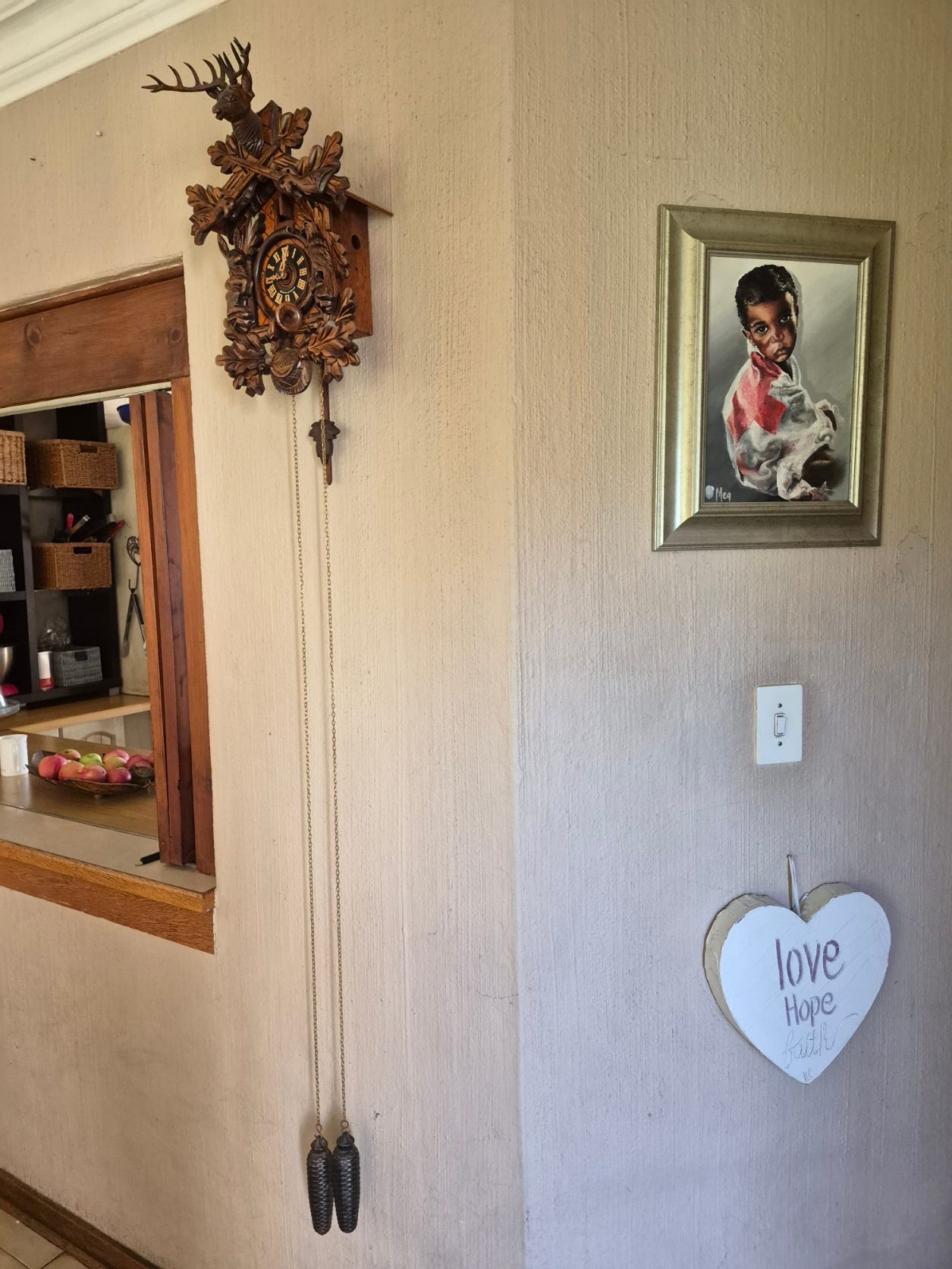
“Maybe it’s one of Megsi’s paintings,” I said quietly.
That felt closer somehow. Like saying it out loud might disturb it.
“I’ll listen,” I said after a while. “Try to reach it.”
“It might be lonely,” Eddy said. “Without the samovar.”
“Ja,” I nodded. “They probably spoke. Shared stories.”
“The samovar always needed an audience.”
“And now it’s gone.”
We sat with that.
“Well,” I said eventually, “it spoke to me once. It will again.”
Eddy didn’t argue.
“Let us wait and see,” he said.
And in the quiet that followed, the house didn’t feel empty at all.