Weihnachten
German Heritage in South Africa
Christmas, for me, has always been a sacred ritual steeped in the traditions of my German heritage—a heritage that refuses to fade, no matter how many sun-scorched South African summers I or my ancestors have endured. In Germany, and across much of the Nordic countries like Sweden, Denmark, and Norway, the true heart of the holiday beats on Christmas Eve, known as Heiligabend or “Holy Evening.” This isn’t some arbitrary choice; it’s rooted in the Biblical narrative of Christ’s birth occurring at night, under the quiet stars, as immortalized in the beloved carol “Stille Nacht, Heilige Nacht” (”Silent Night, Holy Night”), deeply embedded in German culture. The evening unfolds with a sense of solemn anticipation: families gather for a festive meal, often featuring hearty dishes like goose or fish, followed by the lighting of the Advent wreath’s final candle. Carols are sung, prayers are offered, and then comes the Bescherung—the opening of gifts, believed to be delivered by Santa Claus, a nod the the Yanks. Christmas Day, by contrast, is reserved for rest and reflection. In the Nordic lands, this Eve-centric celebration echoes similarly—think of Denmark’s Juleaften, where the tree is danced around, or Sweden’s emphasis on a smorgasbord feast and gifts from the tomte, a gnome-like figure. It’s a method that prioritizes the magic of twilight, the hush of nightfall aligning with the miracle’s intimacy, rather than the bustle of a morning rush.
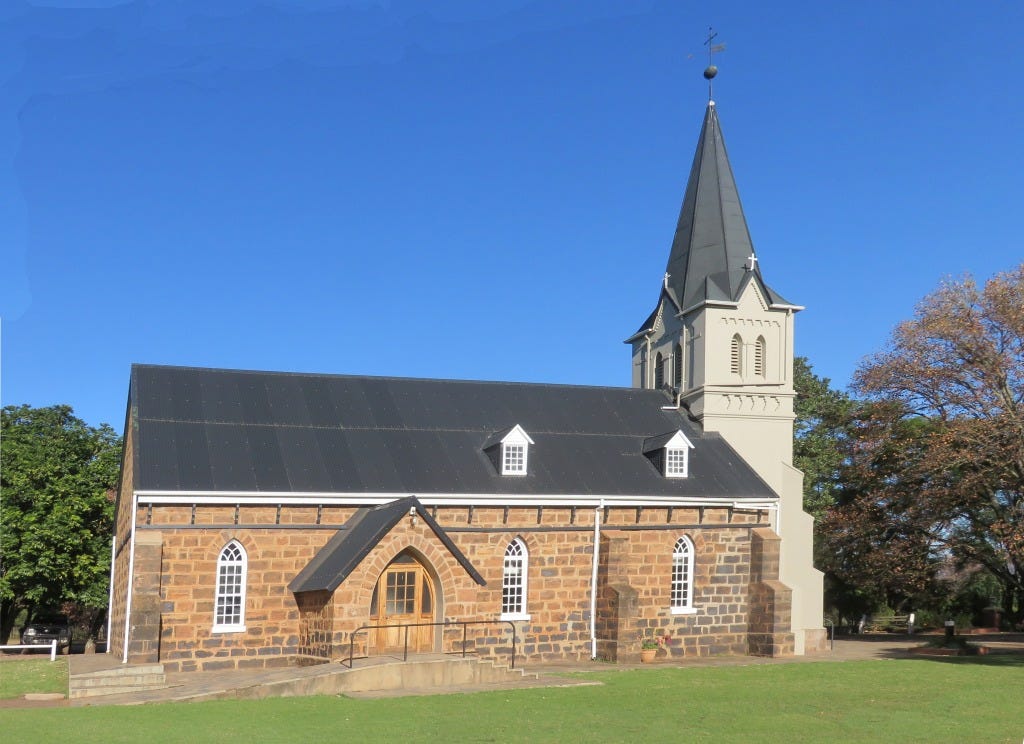
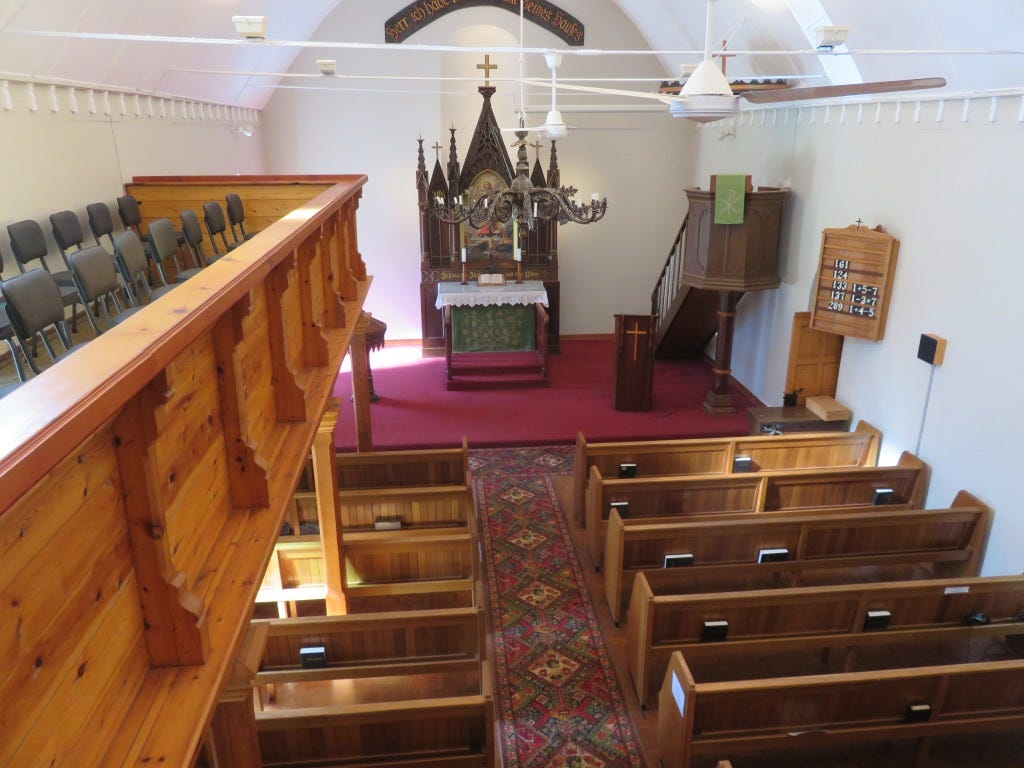
My earliest memories of Christmas transport me back to the New Hanover Church in rural Natal, where the air on Christmas Eve hummed with reverence and pine-scented wonder. The church would erect a colossal fir tree inside that stretched triumphantly to the vaulted roof, its branches heavy with ornaments but illuminated solely by real candles—no garish electric lights to spoil the authenticity. It was a sight of pure majesty, flickering flames casting dancing shadows on the pews, evoking a time when fire was both warmth and warning. We’d join in singing “Stille Nacht,” our voices blending in harmony, the German lyrics rolling off my tongue. Afterward, the brass band would strike up, their horns and tubas filling the night with triumphant melodies that seemed to herald the birth itself. From there, we’d hurry home, hearts alight, to unwrap presents under our own tree, a ritual that felt like the culmination of the holy night, not a prelude to the next day.
Ah, the tree—that evergreen sentinel at the center of it all. For Germans, the fascination with the Weihnachtsbaum runs deep, tracing back to pre-Christian pagan roots when our ancestors were tree worshippers, revering evergreens as symbols of enduring life amid winter’s deathly grip. In ancient Germanic tribes, these trees were adorned during the Yule season to honor the gods and ward off evil spirits, their needles a promise of spring’s return. Christianity wove this into its fabric during the Middle Ages, with figures like Martin Luther credited for popularizing the indoor Christmas tree, candles representing the stars or Christ’s light. To us, it’s more than decoration; it’s sacred, a living emblem of heritage, resilience, and the cycle of renewal. Even now, I can’t imagine a Christmas without one—it’s the axis around which the holiday spins, grounding me in the forests of my forebears.
When I met Kathleen (Kath), our Christmases became a gentle battlefield of traditions, though one fought with love rather than strife. We didn’t have a “trial” holiday together; we met and married in the limbo between one Christmas and the next, so our first shared celebration was a whirlwind of negotiation. She, with her British upbringing, leaned toward the bright bustle of Christmas Day, presents at dawn, a big lunch in the sweltering heat. I, unyieldingly German at my core, insisted on the Eve. We compromised at first, doing both: gifts on the night of the 24th, then more festivities on the 25th. It was exhausting, a blur of wrapping paper and weary smiles. But one year, we simply let go, we celebrated solely on Christmas Eve, then lounged through the next day in blissful relaxation. It felt right, like slipping into a well-worn coat. I’m so glad I won her over, though she’d tease that it wasn’t my persuasion but the practicalities: “It’s usually too hot during the day,” she’d say with a wink, “and it just works better at night.” For me, it was deeper, I couldn’t shake the German in me, that pull toward the holy quiet of evening, where the world’s chaos pauses, and family becomes the star. In the end, our Christmases evolved into something uniquely ours, a blend of old-world ritual and new-world ease, proving that traditions aren’t chains but threads we weave into the fabric of our lives.
Farter💨
When my dad, Mastelek mkhulu, passed away we had a memorial at New Hanover Church. Callum was sitting in the back with his grandpa Owen, when the pastor started reciting the Lord’s prayer in German, Onze Vater. Callum burst into giggles and loudly whispered to his grandpa that the man in front had said, Farter.