Whispers within the Canopy
Encounters with the Eternal Sentinels of Tsitsikamma Forest
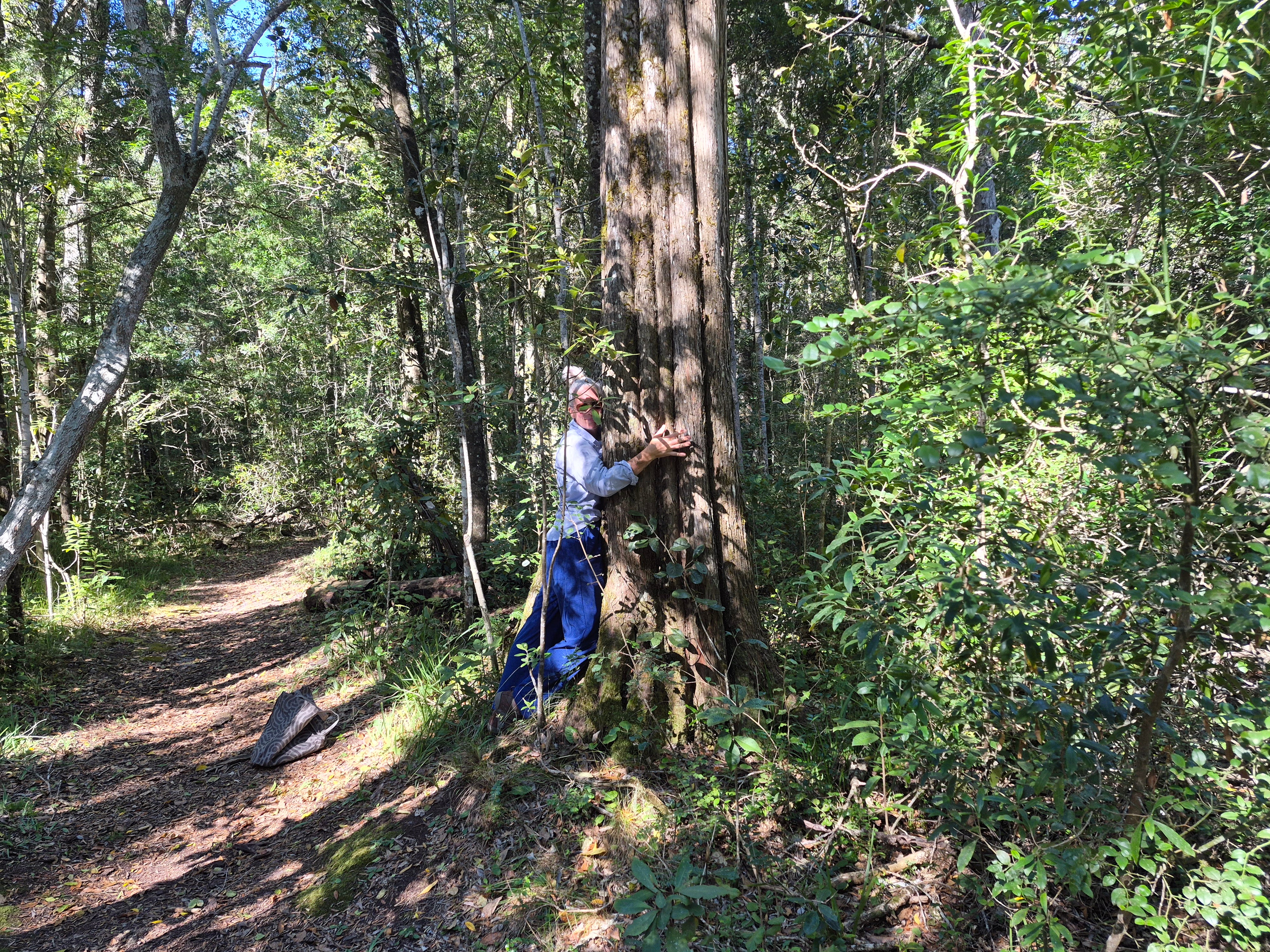
In the hushed embrace of the Tsitsikamma Forest, where the ancient Plaatbos area unfolds like a forgotten chapter from the earth’s own diary, Megs and I wandered one crisp morning, our footsteps soft on the leaf-strewn trails. This was no ordinary hike; it was a pilgrimage into the heart of mystery, where the veil between the seen and the unseen thins to a whisper. For centuries, indigenous tribes across the world have spoken of these elusive guardians, known as Sasquatch to some, Yeti to others, or by sacred names like the Oh-Mah of the Native American peoples, the Wild Man of ancient European lore, or the Yowie in Aboriginal tales. They are the soul creatures of the wild, wandering sentinels of the forest, often dismissed as Bigfoot by the skeptical, but revered as eternal watchers by those who listen.
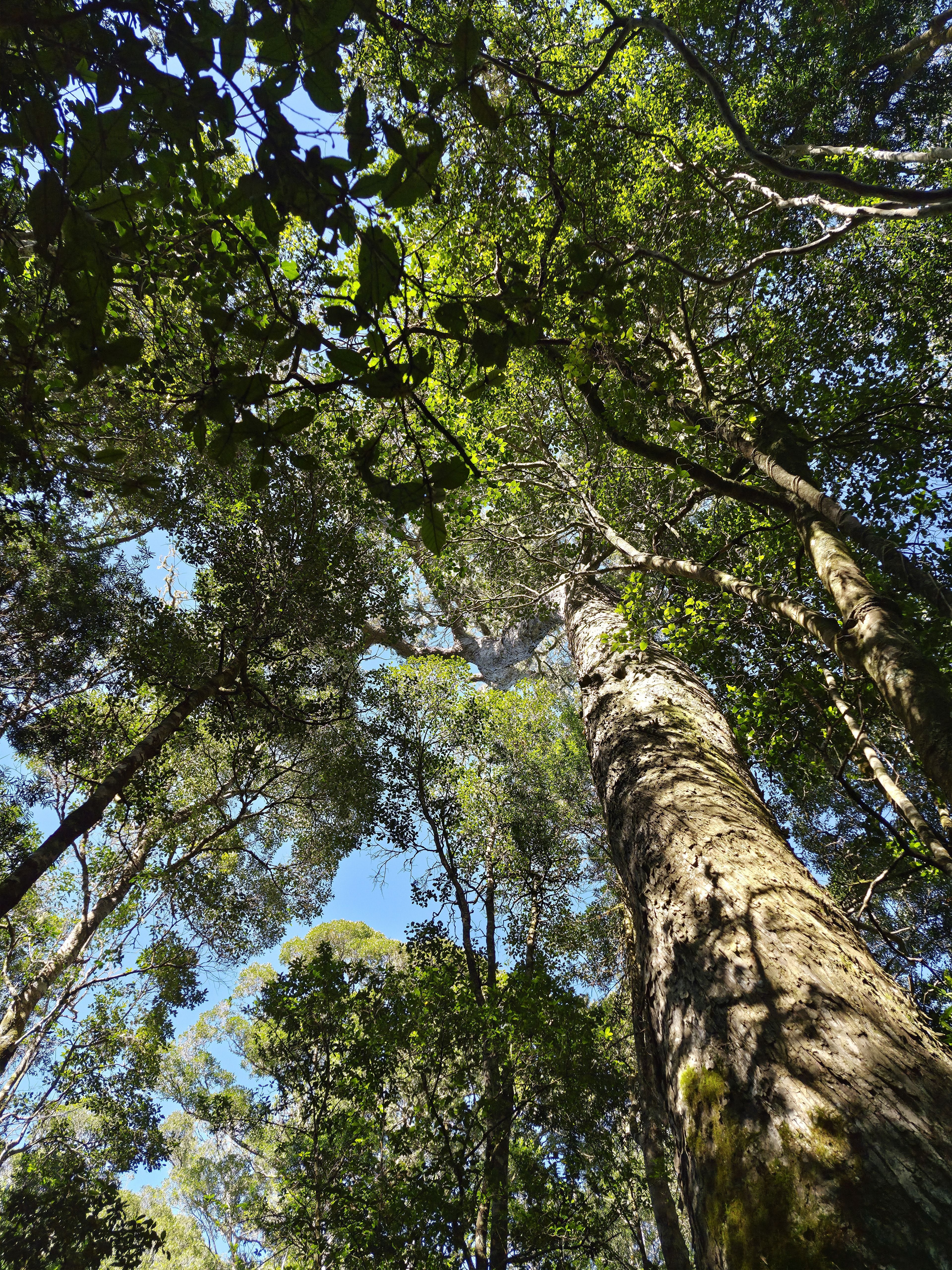
The trees here are titans, each one a living monument to time’s patient art. We paused beneath the towering Outeniqua yellowwoods, their bark etched with the wrinkles of millennia, reaching skyward like ancient pillars holding up the canopy. Nearby, the candlewoods stood sentinel, their slender forms glowing faintly in the dappled light, as if lit from within by some inner flame. Alders clustered along the damper edges, their leaves a shimmering green veil, while wild pears dotted the understory, their twisted branches heavy with the promise of potential fruit. Megs and I stood in awe, necks craned, feeling dwarfed by these giants. But they were more than wood and leaf; they pulsed with souls, vibrant and alive. If you lingered long enough in silence, as we did, the forest revealed its secrets. Through the interplay of shadows and streaks of pale light filtering through the foliage, these souls would manifest, ethereal figures twice our height, gliding soundlessly like wraiths born of the earth itself. Their forms were cloaked in the forest’s own garb: drapes of vibrant moss, clusters of mushrooms sprouting like jewels, and ferns unfurling as natural armor. Camouflaged perfectly, they blended into the bark and undergrowth, invisible to the hurried eye.
These beings have taunted humanity for eons, their presence a teasing riddle, always just beyond the grasp of proof. They leave no footprints in the damp soil, no snapped branches to betray their passage, only the rational mind’s frustration. Yet, there they are, eternal and undeniable to those who attune themselves. As we meandered deeper, we found traces of their whimsy scattered like forgotten offerings: dried fragments of ornamental mushrooms, their caps curled like ancient scrolls; leaves in a riot of colors, crimson, gold, and emerald, arranged as if by deliberate hand; and gnarly sticks twisted into shapes that hinted at stories untold.
Our path led us to a hidden stream, its waters murmuring a melody that drew us like a call from Mother Earth’s heart. We followed until the sound swelled into something truly musical, a symphony of ripples and cascades. There, in a spot where the forest’s energy converged, the soul creatures had wrought their magic. Giant staircases, hewn from the very rocks by forces beyond human ken, ascended to their most holy sanctuaries, deep, ancient hollows brimming with healing essence. These steps were no crude carvings; they were masterpieces, shaped like the strings of colossal harps, allowing the water to play upon them in harmonious notes that soothed the spirit and mended the weary soul.
Even the Knysna loeries, those iridescent birds with their emerald plumage and crimson wings, revered these places. They flitted between the hallowed spots with similar camouflaged grace as the giants, melting into the foliage one moment and emerging the next. They knew the streams as fonts of replenishment, dipping their beaks into the purest flows, and their calls rang out in exuberant bursts, trills of joy that echoed through the trees, as if celebrating the forest’s hidden vitality.
But alas, not all who enter this realm perceive its wonders. Humans buzz past on mountain bikes and segways, their engines whining like impatient insects, or they huff and puff in noisy packs, chattering and stomping without pause. In their haste, they miss it all, the subtle dances of the souls, the sacred staircases, the loeries’ songs. Worse, they crush the forest’s smaller denizens underfoot: the slow-churning chameleons blending with branches, the armored songololos curling into protective balls, the iridescent dragonflies skimming the air like living jewels. The giants observe this intrusion from their shadowed realms, and I swear, in the quiet moments, you can almost hear their sighs, a deep, resonant exhale that rustles the leaves, a lament for the disconnection of our kind. In those woods with Megs, I felt a profound kinship with the unseen, a reminder that true existence thrives not in proof, but in presence.
Einstein
Albert Einstein was a man whose mind unlocked the secrets of the universe, yet he understood that the stars above us are only part of the story. People often painted him as an atheist, a cold rationalist who dismissed the divine in favor of equations and experiments. But that was a misunderstanding, a simplification of a soul far more nuanced. At his core, Einstein recognized a profound difference between the relentless pursuit of scientific truth and the deeper yearnings of humanity. He wasn’t blind to the mysteries that science couldn’t touch; instead, he embraced them with a sense of awe that he called “cosmic religious feeling.”
Einstein once famously said, “Science without belief is lame, belief without science is blind.” It was his way of articulating that balance, a harmony where facts illuminate the path, but wonder and ethics give it meaning. He rejected the idea of a personal God meddling in human affairs, preferring instead the God of Spinoza: an impersonal force revealed in the orderly beauty of nature, the elegant laws that govern everything from atoms to galaxies. This wasn’t atheism; it was a reverence for the universe itself, a acknowledgment that science explains the “how” but leaves the “why” to something more profound. In his view, belief wasn’t about dogmas or rituals but about fostering ideals for individual and communal life, a moral compass that science alone couldn’t provide.
This resonates deeply with my own journey. I’ve come to believe that being right doesn’t guarantee happiness. You can be utterly correct in your facts, armed with irrefutable data, and still feel empty inside. Conversely, you can be wrong, delightfully, humanly wrong, and find joy in the midst of it. Einstein knew this intuitively: human happiness doesn’t have a direct correlation to scientific accuracy. It’s not about proving theorems or debunking myths; it’s about presence, that quiet awareness of the balance between righteousness and joy. We must be rationally aware to avoid the extremes and their inevitable destruction, the fanaticism of unyielding logic on one side, or the chaos of unchecked emotion on the other.
Einstein understood we have to rationalize this balance, to weave the threads of empirical knowledge with the fabric of human experience. In doing so, we don’t diminish science; we elevate our humanity. It’s a lesson I’ve carried through my own trials, reminding me that the greatest discoveries aren’t always in the lab, but in the heart’s quiet reconciliation with the cosmos, or a walk in the forest.