The Morning Patrol with MastelekđŸ’Ș

Stories of Mastelek who enjoys farming Boweia Volubilis

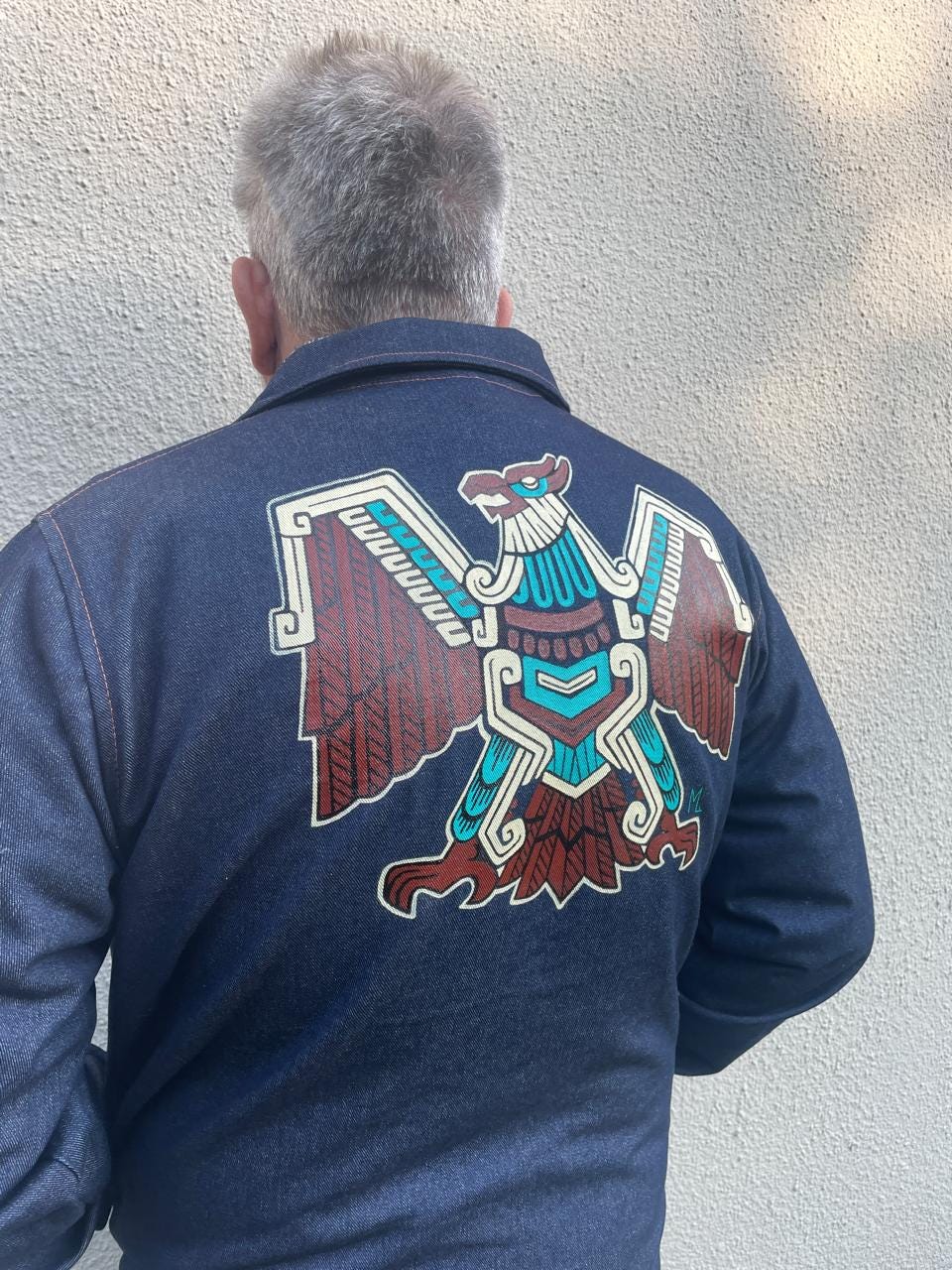
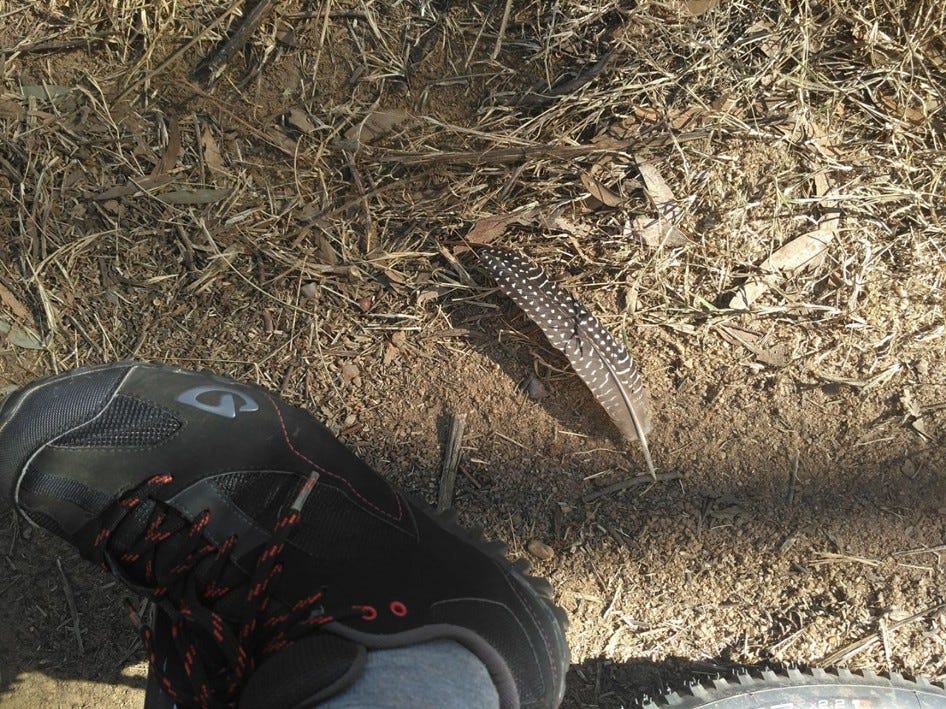
Finding feathers are one of the most calming things for the soul

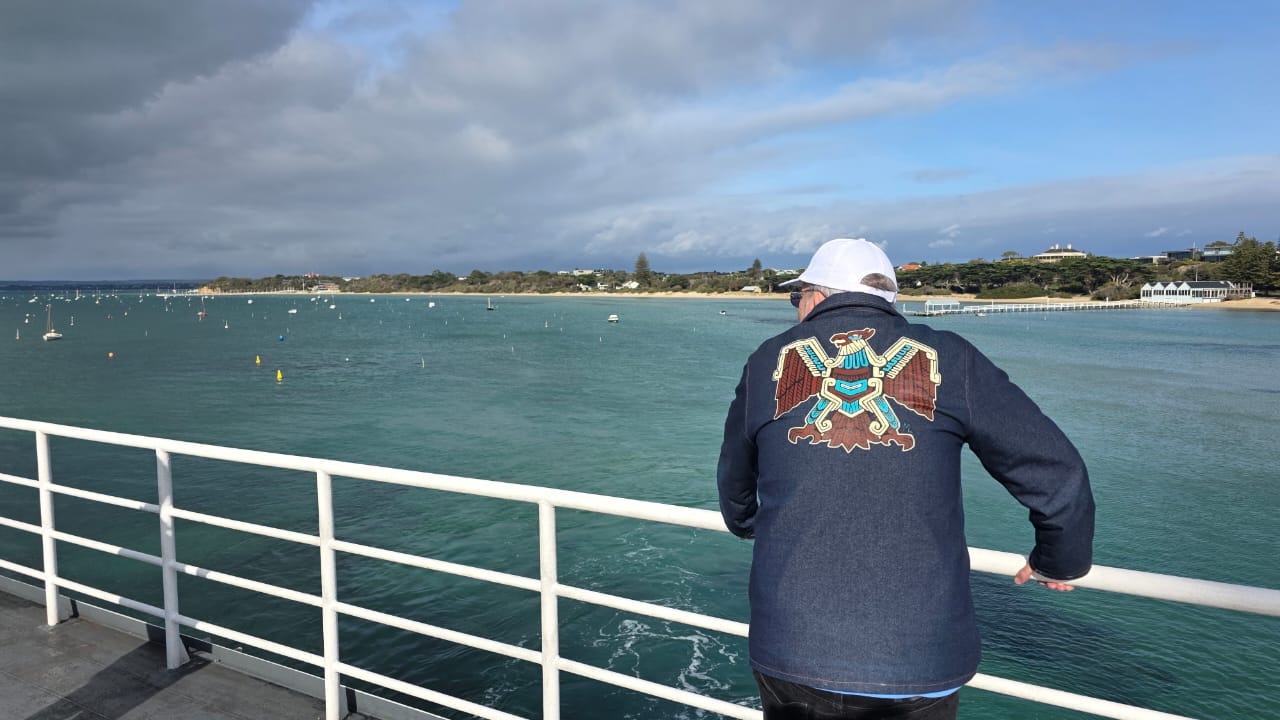
Each time you find a feather whirled by the wind, settled on a windowsill, caught in the bend of your path you have found a corner of the Earth . Not just a place, but a possibility. Not just a fragment of flight, but a thread in the fabric of the sacred. The Navajo call upon feathers not as decoration, but as declaration. In the hands of a DinĂ© Medicine Man, an Ats’os _becomes a whisper of spirit a breath from the high places, where sky kisses mountain.

It is used in healing, in weddings, in the fragile dance between body and soul. To restore harmony. To reawaken the balance between earth and wind, between wound and wonder. A white feather? Ah, that is a note left behind by an angel unsigned, but unmistakable. A softness when the world has gone hard. A hush when the noise is too much._

_In the lands of the Zulu, love is feathered with colour: the lilac-breasted roller a bird so beautiful, it seems painted by joy itself gives its plume to the marriage ritual. Two hearts, stitched together by the bright breath of the wild. And the ostrich, that grand thunderbird of the veld, walks with wealth upon its back. Its feather, wide and bold, speaks of abundance of kings and queens and the weight of gold that once rode upon dust.

Then, back through time, to the temples of Egypt, where the goddess Ma’at held a single feather as her measure. Not of length or weight, but of truth. In the great hall of judgment, your heart was set upon the scales. If it was heavier than her feather, your soul was bound to the devourer. But if it was lighter, if you had walked in balance, if you had spoken only what was true, then paradise opened its gates._

_The feather is never just a feather. It is a compass. It is a message. It is a whisper from the wings of the world.

And when you find one, bend low. Pick it up like a prayer. You have found a corner of the Earth._

~Roald Bartholomew

Ronald Bartels | LinkedIn | Instagram

Its not worth it

When I was sixteen, I lay on a rugby field at Grey College in Bloemfontein, gripped by the worst pain I’d ever known. A loose scrum had collapsed on me during a match, shattering my leg into 27 pieces, as the doctor later told me. I tried to stand, only to see my leg bent at a grotesque right angle. I clawed at the grass, my fingers bleeding, as spasms wracked my body. The coach called for an ambulance, & a kind-hearted teacher we called Os checked on me. Through gritted teeth, I told him I felt “fokkin’ seer.” At Universitas Hospital, morphine dulled the agony, but I waited eight hours in the emergency room before surgery to reset my bones. For sixteen weeks, I wore a plaster cast from toe to hip, my medical expenses covered by the newly established Chris Burger Fund, created to support rugby players injured on the field.

In September, I read about Chris Burger, the fund’s namesake, established by an absolute grey gentleman. A versatile Western Province backline player, he was 28 when a loose scrum collapsed on him in 1980 at the Free State Stadium. Dr. Moss recounted how Chris lay motionless, telling the team doctor, “Dok, ek het geen gevoel in my bene en arms” (Doc, I have no feeling in my legs and arms). Carried off on a makeshift stretcher, he was rushed to Universitas Hospital, the same emergency room where I’d lain. Despite efforts to save him, his broken neck proved fatal. Fully conscious, he faced death with courage, telling Dr. Moss, “I know my God. I am ready to go.” He passed peacefully of respiratory failure the next morning. A loose scrum took his life, just as one had nearly taken mine. He died; I lived.

Along life’s path, I’ve endured other pains & witnessed traumatic deaths, some as bad or worse than that day on the rugby field. Those stories belong to other chapters. But no physical pain, no matter how excruciating, compares to the soul-crushing weight of a toxic work environment. Physical wounds heal with time, casts, & morphine, but psychopathic intimidation & manipulation erode something deeper, your spirit, your sense of self. You can choose to endure a debilitating workplace for financial gain, but at what cost? When the loose scrum of a toxic job collapses, it’s not your life at stake, it’s your soul.

I faced that choice at Investec, where a manager in the dealing room turned my days into a living hell. Incompetent & a master of backstabbing politics, she thrived on making others miserable. I confided in my wife, who saw the toll it was taking. “Leave,” she said. So I did. The second time was at WBS/iBurst, under a micro-managing narcissist who suffocated any spark of creativity or autonomy. When a retrenchment package came up, I seized it without hesitation. This time my wife wasn’t around any more to ask, I did that from muscle memory.

Physical pain, I learned, is temporary. You can grit your teeth, claw the grass, & survive. But a workplace that grinds down your soul? That’s a price too high to pay. No paycheck is worth trading your spirit for a loose scrum that leaves you broken in ways no hospital can fix.

Ronald Bartels | LinkedIn | Instagram

Cranking on memories of the seventies & the experience of weggooi sonblomme

I’ve always been a roadie at heart, a term that, in cycling circles, describes those of us who swear by the sleek lines of a road bike over the rugged grit of a mountain bike. There’s something meditative about cranking away on tarred roads, the steady rhythm of pedals turning like a mantra that clears the mind. On a mountain bike, if you let your thoughts wander the same way, you’re liable to moer into a tree or end up in a sloot. But on the road? Ah, that’s where the magic happens. You can ponder life’s puzzles, soak in the sweeping views, or even carry on a conversation with the rider beside you without fearing for your life. The asphalt becomes your canvas, and the miles melt away as you experience equal parts therapy and adventure. Yes, I am a roadie, through and through.

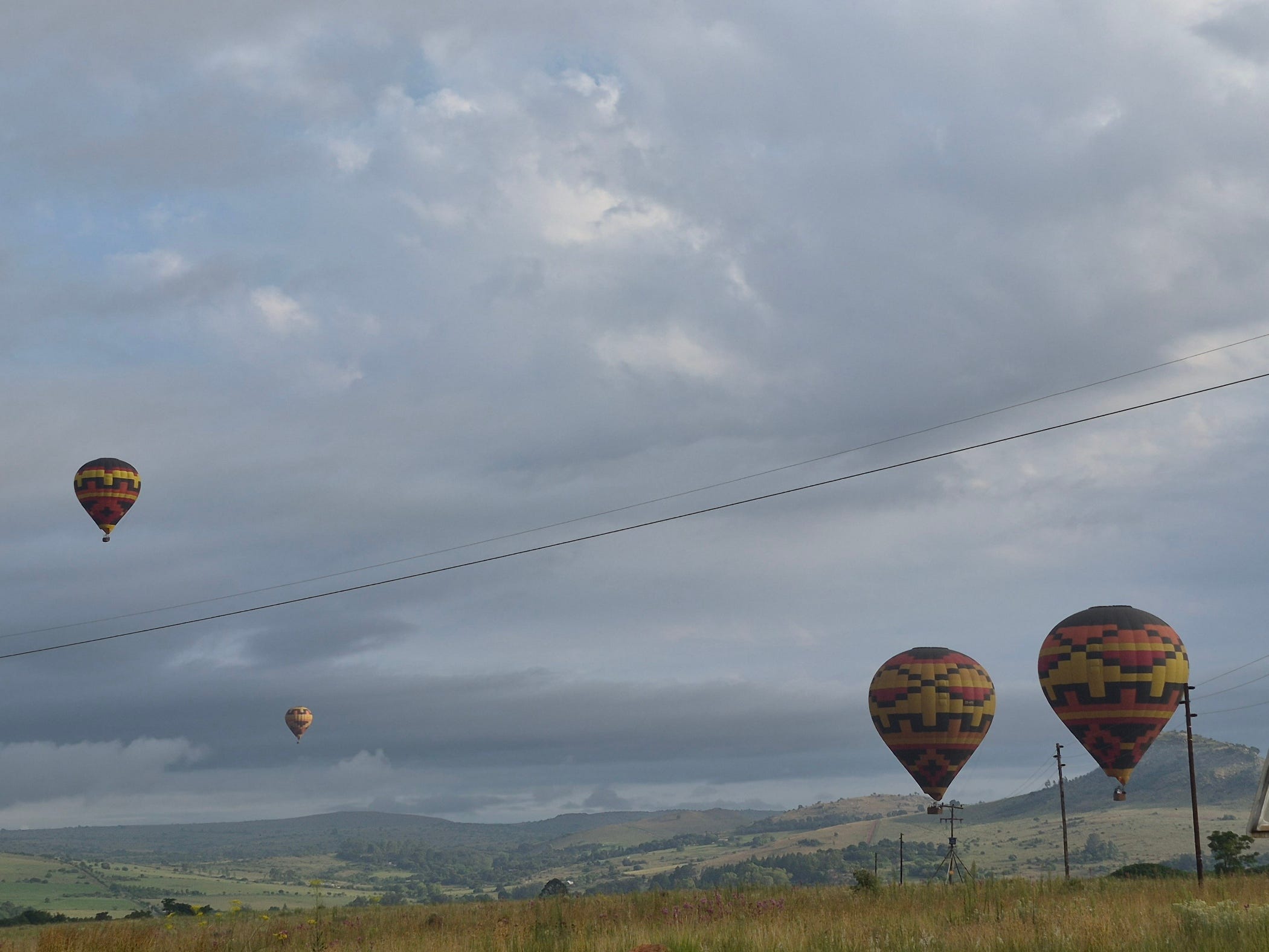
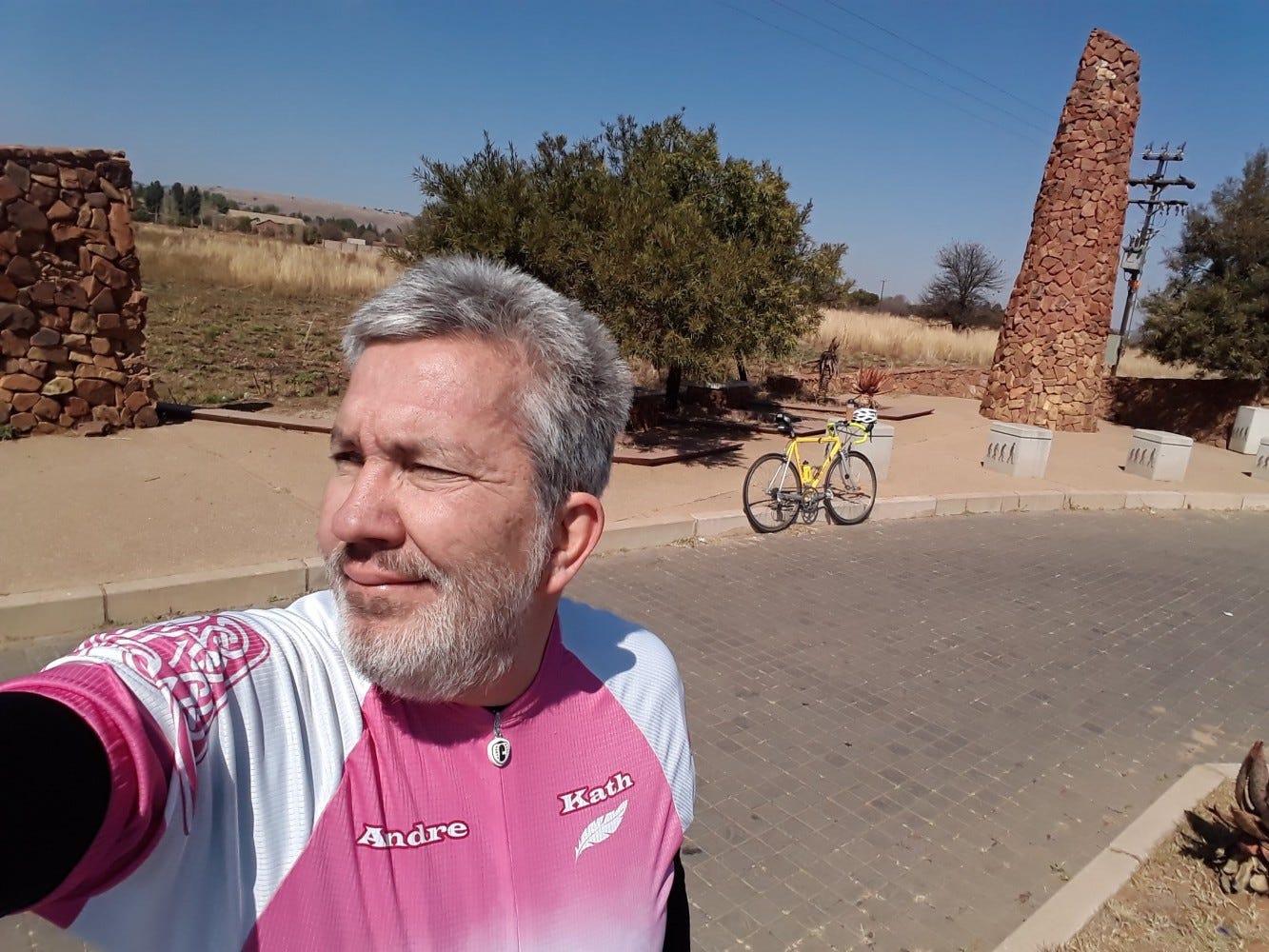
On a crisp morning in the Magliesberg, I saddled up on eddy, my trusty yellow Alu Mega road bike, & released him onto the tar like a thoroughbred at the start of the July. The day started with a spectacle that nearly stole the show from the ride itself: half a dozen hot air balloons drifting lazily across the sky, their vibrant envelopes glowing against the dawn. The only sound breaking the silence was the occasional whoosh of their gas burners, a gentle roar that punctuated the peace. For a fleeting moment, I envied those passengers up there, suspended in quiet awe. Could anything top gliding through the air like that? Well, almost, until I remembered the pure joy of Eddy’s wheels humming beneath me.

As we pedaled on, the ride took an unexpected turn into auditory bliss. One fellow cyclist had a Bluetooth speaker strapped to his bike, blasting ABBA’s “Take a Chance on Me.” There I was, humming along to that infectious seventies rhythm, the lyrics weaving through my thoughts like an old friend. The kilometers rolled away effortlessly, the music turning the open road into my personal cathedral. ABBA provided the hymns, the wind the choir, and each pedal stroke a prayer of gratitude. It was perfection, simple, unadulterated joy on two wheels.

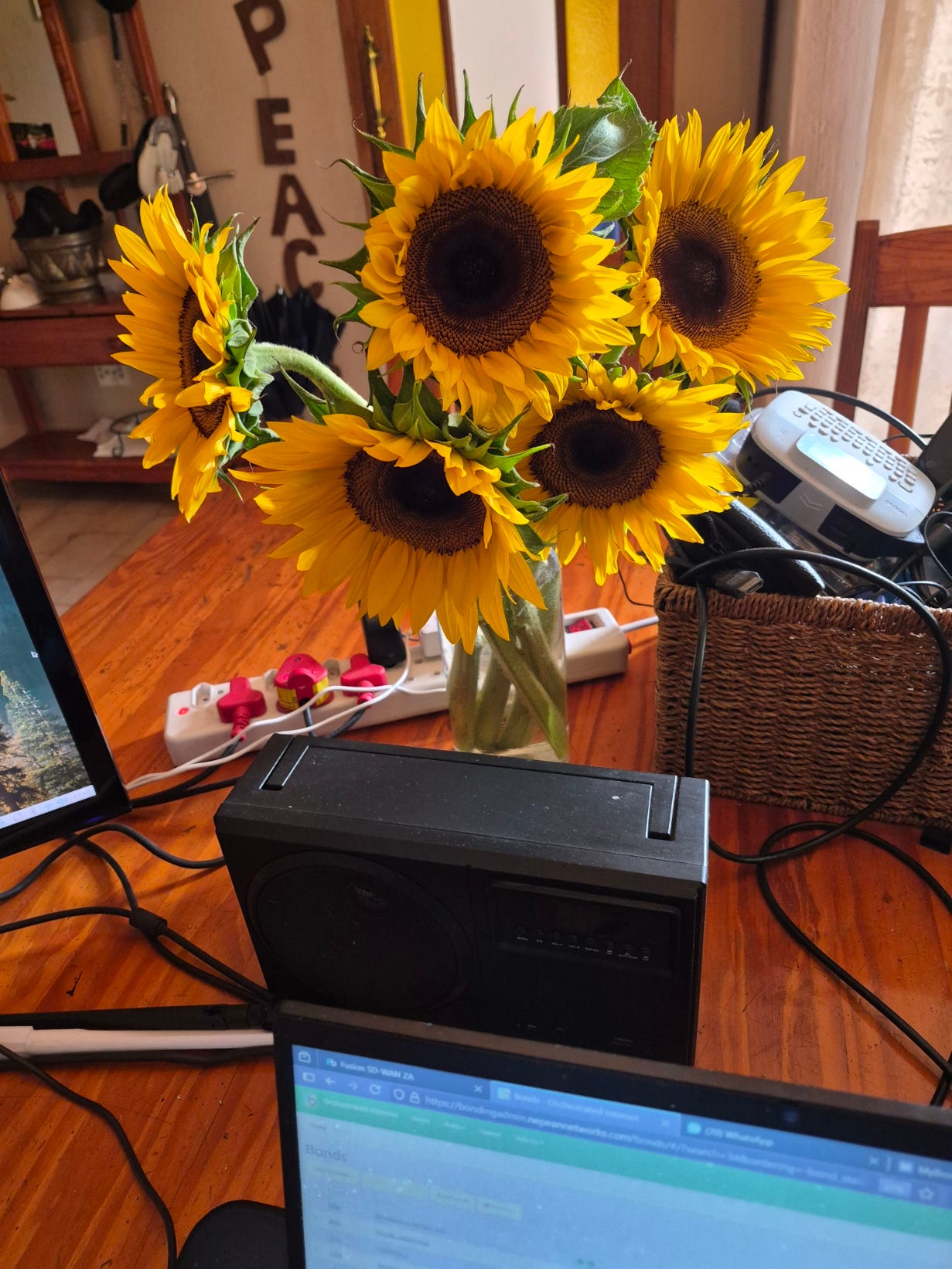
But this cycle held deeper layers, ones that intertwined the thrill of the ride with reflections on loss and legacy. Along the roadside, I spotted clusters of “weggooi sonblomme”, those wild sunflowers that sprout unbidden, blooming defiantly next to the tar. Just the day before, I’d virtually attended a memorial service for Tewie, a school classmate who’d tragically passed after hitting a pothole in a motor accident. The dominee’s sermon in the Grey Reunie Hall lingered in my mind, drawing a poignant parallel from those very flowers. He spoke of how they flourish for only about three weeks, a brief burst of yellow brilliance against the mundane. Yet, their story doesn’t end there. Seeds scatter to the earth, lying dormant until the next season, when they germinate anew, spreading life beyond their own fleeting existence.

It was a metaphor for human life, he said, including Tewie’s. We bloom for a short time, our petals vibrant but temporary. But the seeds we plant in others? Those endure. A teacher’s fleeting word of encouragement might reshape a student’s path forever. A friend’s kindness could ripple through generations. Tewie, with his infectious energy and quiet wisdom, had sown countless seeds in the lives he touched, acts of generosity, moments of laughter, lessons in resilience that now live on in us, his students, friends and family.

As the ride neared its end, we approached a wetland fringed with reeds, alive with the cacophony of red bishops and mousebirds darting about in a symphony of chirps and flutters. While the others attacked the final hills, zooming past in a blur of determination, I pulled over. I stopped, breathed in the earthy scent of the marsh, let the noise wash over me like a benediction. It was my moment of prayer, a quiet communion with the world. Those sunflowers by the road, once mere roadside weeds, now symbolized something profound. I’ll never view them the same again, they’re reminders of brevity, beauty, and the enduring impact we leave behind, even after our own bloom fades.

Ronald Bartels | LinkedIn | Instagram

The reason why I do it

In Ratatouille, there’s that perfect moment when Anton Ego, the Grim Eater himself—the man who built an empire on tearing other people’s dreams to shreds—finally tastes Remy’s dish and is undone by it. He writes something in his review that has lived rent-free in my head ever since:

“Not everyone can become a great artist, but a great artist can come from anywhere
 The bitter truth we critics must face is that, in the grand scheme of things, the average piece of junk is probably more meaningful than our criticism designating it so.”

He’s right. There are too few Remys in the world and far, far too many Antons. I decided a long time ago I didn’t want to be another Anton.

So I write for the same reason Remy cooked: because I have to make something. Not for applause, not for likes, not even to be read. I write because the act of turning memory into words is the closest thing I have to magic—taking the raw, messy ore of a Sunday morning and refining it into something solid I can hold in my hand years later when the details have otherwise rusted away. The page doesn’t care if I’m brilliant. It only asks that I show up and leave something behind that actually exists.

Criticism is easy. Creation is hard. And creation wins.

A Perfectly Ordinary Sunday

This last Sunday I wheeled the fixed and repaired mountain bike out of the house. I did it all myself. Everything that could be tightened, greased, bled or trued had been. She felt eager under me as I cruised past Nirox, the way a good bike does when it knows it’s about to be properly used.

I took the slow, beautiful route out to the caves—to the rock church where I stopped for a flat white. Sitting on the wall was a French triathlete in emerald-green kit, all long legs and quiet confidence. We talked about nothing and everything for ten minutes. I was halfway to inventing an entire future with her when she casually mentioned her partner was learning French so they could move back to Normandy together. Ah well. Smitten for exactly six and a half minutes. A personal best.

On the way back I fell in beside two old geezers on loaded touring bikes, both running Rohloff Speedhubs—those glorious, bomb-proof, fourteen-speed internal gearboxes that cost more than most people’s entire bikes and basically never break. Ever. The cycling equivalent of a Rolex that you can actually take into the trenches. I told them they were bad-ass. They pretended not to be flattered. We all knew the truth. I’d abandon my current stead at the drop of a hat for one of those. But definitely not eddy


Back at Bidon I parked myself at the table next to them. I ordered the Brekkie Bun and two orange juices. One of the geezers looked at my plate, looked at the menu, and ordered exactly the same thing. There’s some strange gravitational pull in the universe that makes people order identical food. When I work it out, I’ll write a story. We moaned in unison about Fourways Mall—how it’s grown like Ron Weasley’s house, the Burrow: floors and extensions and chimneys added willy-nilly until the whole structure looks like it defies physics and good taste in equal measure. One day it will almost certainly collapse under the weight of its own pretension. We can only hope we’re there to watch.

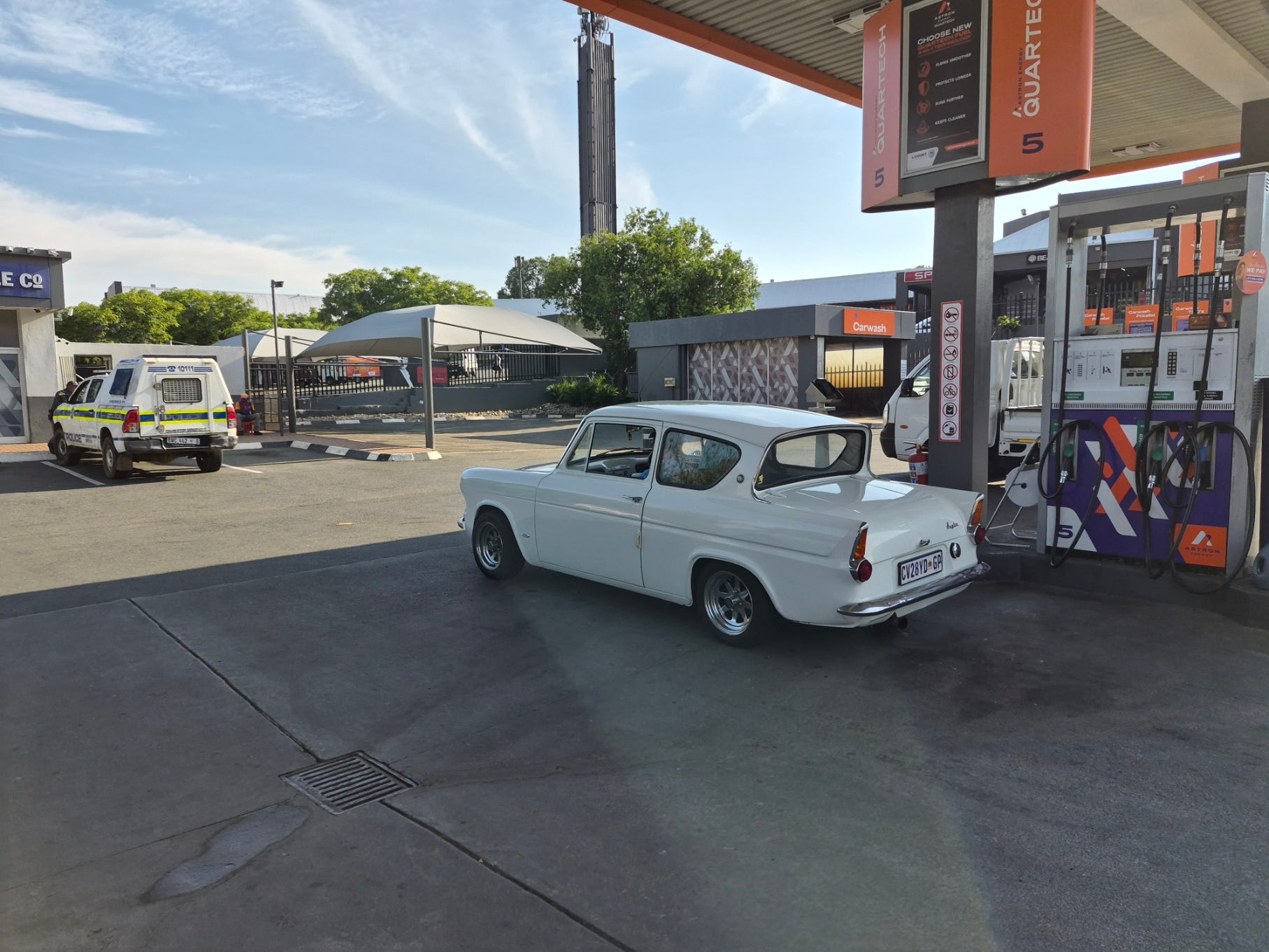
Earlier, on the drive to the Cradle, I’d pulled into the fuel station and found myself parked next to a Ford Anglia—the exact model that flies away with Harry and Ron in Chamber of Secrets. Two old boys were inside demolishing muffins like it was the sixties. I stared. One of them caught me staring and gave me a little salute with his muffin. You cannot script these interactions. As they left the Anglia was over revving as it moved on down the road. Like any old car, I imagined that a few kms down the road, they’d have the bonnet open and looking for loose plates or badly fitted hoses.

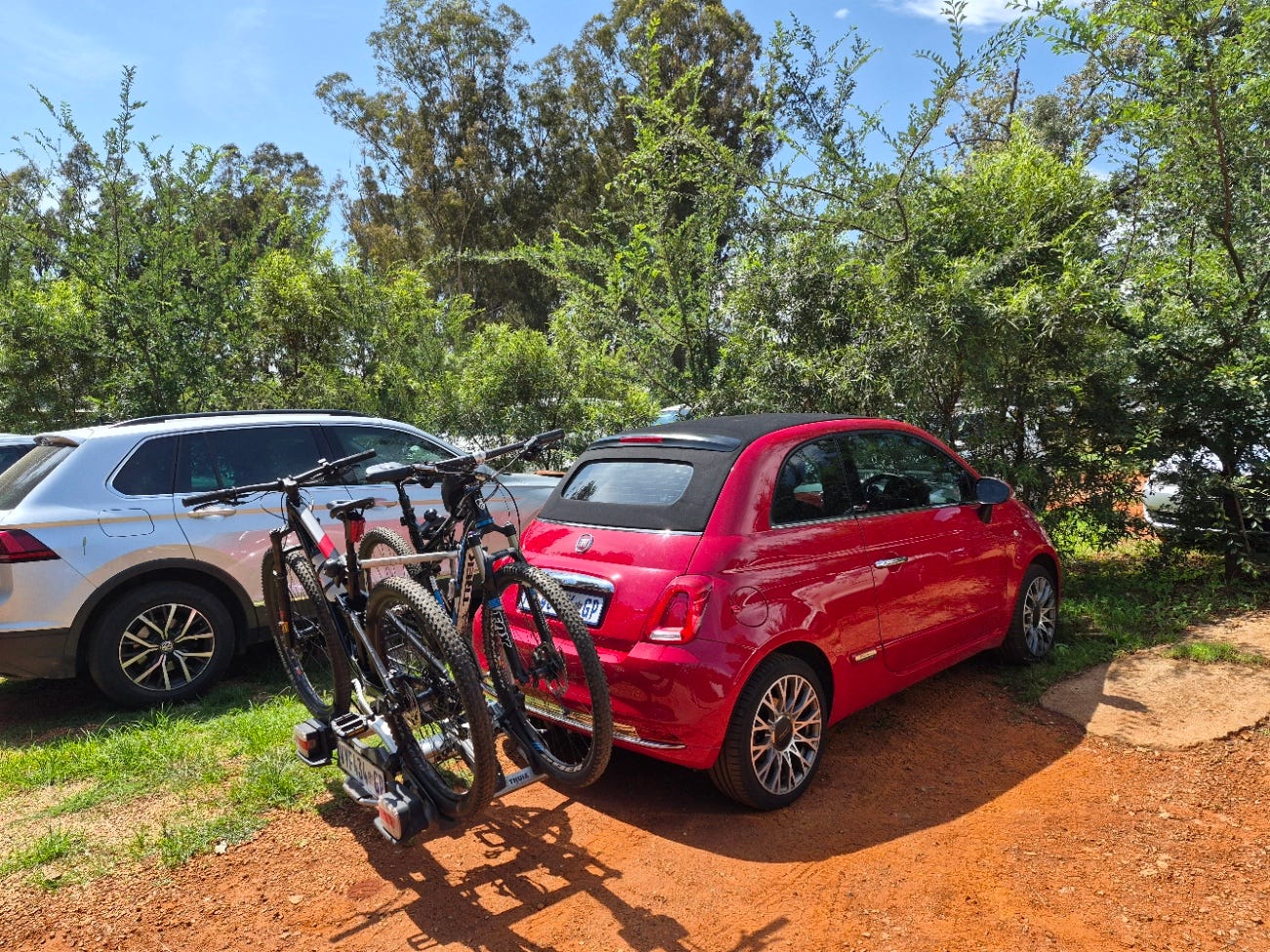
Back at the car park after brekkie, I noticed that Ferrari-red Fiat 500 (photo at the top) had pulled in next to me. Instant recognition. Megs has been in love with those little cars since forever. I’ve promised her that when my ship finally docks—one of these days, sale, lottery, deal, Bitcoin, bank robbery, whatever—I’m buying myself a white BMW 530d, and her that exact Fiat in which ever colour she wants. We’ll look ridiculous and magnificent. Even if the ship never comes in, it’s a damn good story to keep telling.

I peeled off my cycling shoes, and promptly stood barefoot on a bee.

The pain was instant and biblical—a red-hot poker jammed straight through the sole of my foot. Right there, in front of the Fiat and its two gorgeous occupants who were chatting to friends, I performed the greatest act of nonchalance in my life: smiled, nodded, leaned casually against the car as if I were simply admiring the scenery while internally screaming every curse word I knew in Afrikaans.

I did not hop. I did not swear. I did not cry.

Dignity: preserved. Manhood: intact.

I drove home with the window down, breeze blowing, clouds dancing, foot throbbing in time with Sweet Caroline, grinning like an idiot.

This week I’ve done 80km on the road and I’m discovering parts of my body I haven’t met for a while. I was tired but of the good type, not the exhausted with life type. Later on in the arvie, I took a nap. Like the blissful ones we would always have on a Sunday arvie in the Grey hostel. The ones that revitalize.

These are the days I write down. Not the big ones. The small, ridiculous, perfect ones. Because one day I’ll open this and remember that once, on an ordinary Sunday, I rode a bike that finally worked properly, flirted badly with a French triathlete, worshipped at the church of Rohloff, saw the actual flying Ford Anglia, got stung by a bee, and still managed to look cool doing it.

And I’ll think: have some more of these fucking stories


And this video that appears to be a mash up of the Italian Job, Officer and a Gentleman and Scent of a Woman. Out there in the world there is another writer, another kindred spirit, SlĂĄinte!

Ronald Bartels | LinkedIn | Instagram

Know your God

In shadows deep where ox-wagons creaked, A boy from Natal chased the sun’s gold gleam, From Maritz kin, through dust and rivers bleak, Came willow plates, a trekker’s dream.

A godmother, with eyes like flame, Bestowed a watch, gold-ticked from distant shore, One hundred fifty years to chant the name, American heart in every chime it bore.

From Bruyns’ hearth, ‘neath the dragon mountain’s throne, A Spode service, blue as Italy’s wave, Dishes that whispered of the winds they’ve known, Heirlooms that danced from cradle to the grave.

Dad unearthed from attic gloom, A German train, clockwork from trenches’ roar, Just after Great War’s thunder shook the tomb, It chugged through peace on iron tracks once more.

Then youth awoke on Eddy Merckx’s steed, Through Argus miles around the Cape he flew, The bicycle that crowned his burning need, With sweat and glory, victory gleaming true.

To Ireland’s cliffs, where Waterford glass sang, Champagne flutes caught the foam of emerald seas, In toasts to lovers, wild and bittersweet, They sparkled bright as captured memories.

Black Forest pines, where cuckoos carved their call, He traded coin for time in wooden wing, That clock would herald joy, or mark the fall, Of hours fleeing on relentless spring.

Margerite, with paintbrush dipped in light, Gave Dutch girl portrait, cheeks like ripened peach, Her eyes held homelands lost to endless night, A canvas bridge no ocean could impeach.

In Mexico’s sierras, under sombrero’s brim, A hat he won from bandits in the fray, It shaded quests through canyons wild and grim, A trophy bold from freedom’s fierce array.

Oh, treasures gleam, they warm the fleeting breast, Yet hearts grow cold ‘neath gold and crystal’s fire! What joy in dust, what peace in iron chest? True riches burn in heaven’s pure desire!

The years rolled on like trains without a track, Sailing through storms, through love’s unyielding gale, Amassed a hoard, yet something pulls back—An empty ache no trophy could assuage.

One thunderous night, as pain racked the body’s frame, The treasures circled ‘round the bed, Watch ticked its dirge, the cuckoo wailed the name, The bicycle stood sentinel o’erhead. The willow cracked, the Spode in shards did weep, Flutes shattered shrill, the painting tore in twain, Train derailed in silence, cold and deep, Mexican hat blew lost in howling rain.

“What worth your gold?” a voice cried, “These chains of earth that bind the wandering soul? They sparkled once, but now in darkness died— Seek light eternal, make the spirit whole!”

Kneeling in ruin, treasures turned to rust, And whispered prayers to reach beyond the stars, “Forgive my chase through glory’s hollow dust, I know Thee now— my heart forever Thine!” A peace descended, sweeter than the wine In Waterford’s lost flutes, or victory’s crown; No watch could measure love so pure, divine— Smiling: “I’m happy, come down!”

Oh, treasures fade, they warm the fleeting breast, But your own God alone the frozen heart revives! In knowing, all wanderings find rest— Eternal joy where true fulfillment thrives!

~Roald Bartholomew

Ronald Bartels | LinkedIn | Instagram

Living in the Cradle of Humankind

Vredefort Dome

Two billion years ago an asteroid streaked into my neighbourhood and created an impact crater stretching two hundred and fifty kilometres across, known as the Vredefort Dome. Today, much of that crater has been eroded and not much is left as evidence except the melted and distorted rocks that indicated the voracity of the event. We lived in blissful ignorance of its existence until around the time I was born when pictures from space provided clues. I live on the edge of that impact crater in an area known as the Witwatersrand. This region has been core to the history of our planet. A region that gained its name from the colour of the water flowing over its northern edges.

This was by far the biggest event in the entire history of the area but there were several other significant events that shaped South Africa, one being the Anglo-Boer war and the years proceeding them. The region was being expanded and the conversion of the main transport from ox-wagon to railway was in progress when gold was discovered in the Witwatersrand. The gold deposits on the edge of asteroid impact zone were available in seams that could be mined. This triggered an attempt by a British imperialist who wanted to expropriate these by force. His name was Cecil John Rhodes who had made a commercial killing from the diamond mining in Kimberly. The attempt was repealed but would be a significant contributing factor to the Anglo-Boer war that followed.

Rhodes became rich mining diamonds in Kimberly. Such was the desire for the stones in this location, that men dug into the earth and created the largest man-made hole. The hole started as a hill and only once every diamond was extracted, did they stop.

Rinderpest

Shortly after the Cecil John Rhodes caper to the Witwatersrand, known as The Jamison Raid, the whole continent was struck by an outbreak of the Rinderpest. Large herds of cattle died or were culled, and the railway became a key resource and influence.

Albert Gielink, Herman’s father had holdings of cattle and sugar cane. He lost his herds to the Rinderpest and it impacted him badly even though he had several farms, and the sugar cane crops were still viable. His son Herman would use those farms and supplement them with wattle plantations. Wattle was required as a resultant demand from the expanded mining activities within the Witwatersrand.

However, Albert could not come to terms with the loss of his cattle. He committed suicide in the bedroom of his farmhouse. He slit his own throat and the blood soaked the linen of the bed. His daughter then washed the blood from the linen, and he was buried outside the boundary of the cemetery at the Lilienthal church. The Christians deemed that those who committed suicide were not worthy of being interned in the same cemetery as other members of the congregation.

Herman unexpected death in the car crash occurred after the outbreak of war in the world. The region was relatively unaffected by the war which devastated large parts of Europe but for the so-called Spanish flu that arrived with the returning soldiers from the war caused a crisis. The flu spread rapidly around the country via the rail system which the returning soldiers used to go back home after disembarking at Cape Town. Herman and his family survived the flu which devastated many communities but then succumbed to the horrific train accident. The fact that the two sisters survived, abate with bad injuries was incredible as the car was dragged several hundred yards by the train.

More than a hundred years later we are experiencing another pandemic, COVID. It is having the same devastating consequences on people's lives.

The Witwatersrand region is the most important contributor to humankind. This is the area where humanoids of various species first evolved to create humans. Over three hundred thousand years ago we had humanoids in the grasslands of the area that developed due to an optimal climate, neither too cold nor too hot. There was antelope in abundance with lightning creating spontaneous fires that could be exploited. The antelope herds were millions of creatures large and a herd would take days to pass by a specific location. Hunting was easier than a McDonald’s drive through!

Fake news

This history would be discovered when the settlers in the Witwatersrand started growing crops to feed the miners who streamed in when gold was discovered. The farms required lime which they mined from accessible caves in the area. Strange bones were discovered but it was only when an Australian anthropologist looked at them that their significance was realized. This discovery happened soon after the traumatic train accident that my grandmother was involved in.

However, the discovery by the Australian anthropologist mentioned above, Raymond Dart was suppressed by one of the biggest instances of scientific fraud ever published. In Britain, a group of individuals conspired to create the fake Piltdown man. Their inherent bigotry could not process the idea that Europe or even Asia was not the epicentre of the birth of humankind but rather Africa. It would be many decades and only after the Second World War that the Piltdown man hoax was exposed.

In many parts of the world hoax theory is still prevalent over rational thought and this is having been in full and open hysterical progress during the COVID-19 pandemic. In places like the United States the President shunned scientific input and rather supported political expediency. They have also driven an agenda of what is termed as fake news. This labelling has nothing to do with fact but is a blurring of editorial and opinion to discredit legitimised journalism. This is a common totalitarian strategy to discredit major factual based reporting organizations and influence people in a polluted nest of conspiracy theories. The primary example of his distortion is the latest presidential elections in the United States.

Eddy Merckx

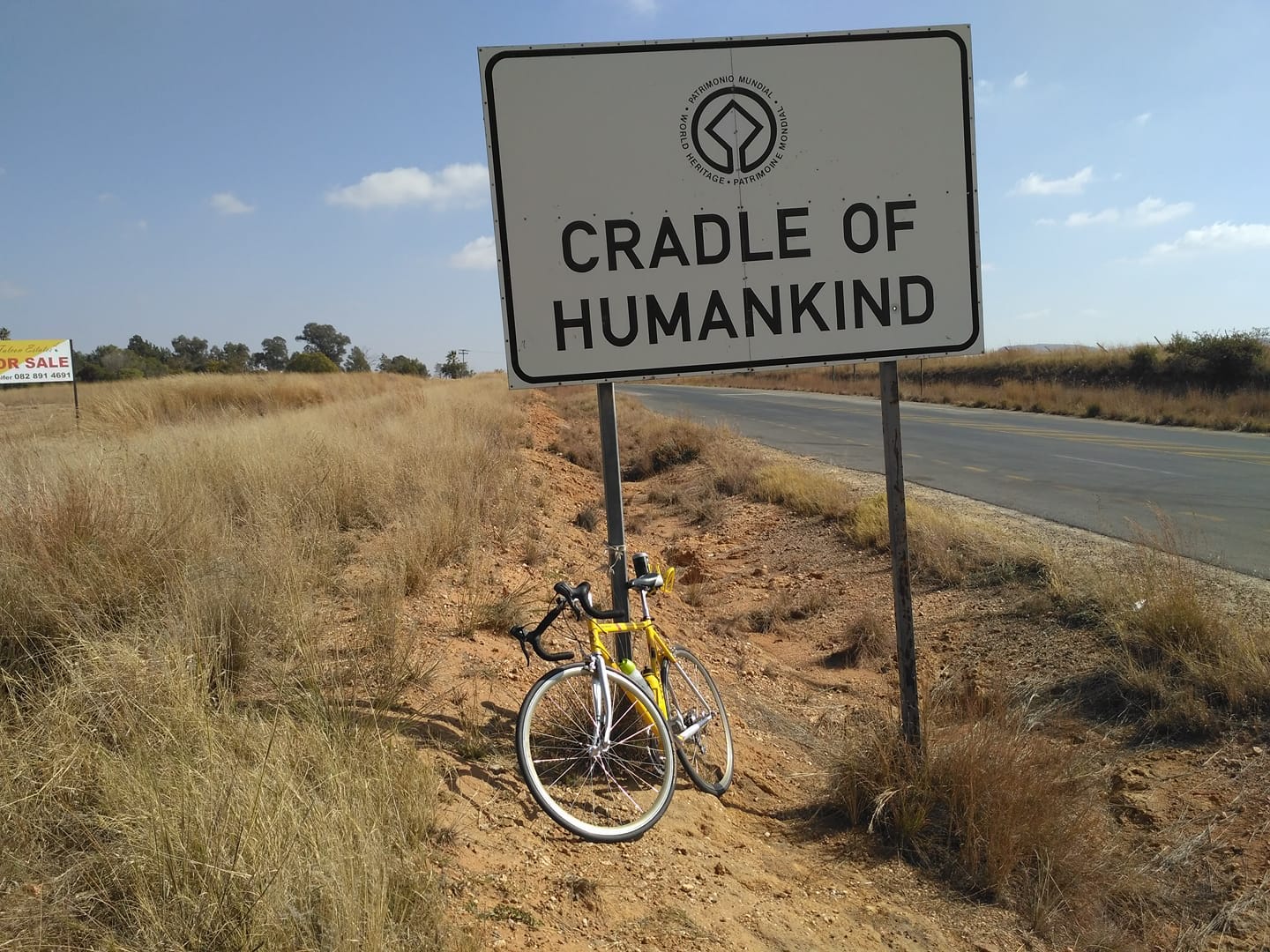
In the Witwatersrand we are still discovering important history which includes human ancestors and separate races of humanoids. All these caves and discoveries are all withing cycling distance of my home. I have a yellow Eddy Merckx road bike. I acquired it when I was still at Madge Networks and it has been one of my main bicycles through the years. It accompanies me riding round the Cradle of Humankind.

Eddy Merckx is a Belgian considered to be the greatest pro-cyclist ever and was born as the Second World War was being wrapped up. He sells his own line of bicycles and I mine is a prized position. It dominated and won the Argus Cycle tour in the year following democracy in South Africa. He is one of my heroes and his never-equalled domination while cycling led to his nickname, when the daughter of one French racer said, “That Belgian guy, he doesn’t even leave you the crumbs. He’s a real cannibal.” The French magazine VĂ©lo described Merckx as “the most accomplished rider that cycling has ever known.” Merckx, who turned professional in before I was born, won the World Championship thrice, the Tour de France and Giro d’Italia five times each, and the Vuelta a España once.

South Africa is full of quirks. In the middle of our winter, along the east coast we have a sardine run. It occurs from May through July when billions of sardines – or more specifically the Southern African pilchard Sardinops sagax – spawns in the cool waters of the Agulhas Bank and move northward along the east coast. Their sheer numbers create a feeding frenzy along the coastline. Why? No-one knows. When we do it will be like looking at those pictures of the Vredefort Dome from space? My dad told me that many people its life lived that way. They never saw the bigger picture. They are picking at the bones and miss seeing the skeleton. He would say this when we discussed my deviant cousin’s Christian beliefs.

Along the same coast we have the Coelacanth, commonly known as olde four legs. This the most ancient of fish is still alive on planet Earth. It lives at great depths and was assumed to have become extinct 65 million years ago. Then year my mom was born this South African popped out of the depths to tell us different.

Evolution

In the minds of some extreme Christian there is a belief of creation based on biblical interpretations of Genesis, which assume we have only been around seven thousand years. This is one of the fundamental beliefs of the Kwasizbantu cult. Notwithstanding our existences as humanoid based life in this area of the Witwatersrand for three hundred thousand years and the legacy of the millions of years of the Coelacanth, and the billions of years of the Vredefort Dome, there are those groups of fundamentalist Christians who disparage it as fake. This is a view not based on scientific observation or deductive reasoning but irrational belief. I am not a part of the Christian grouping and yet even though I have an affinity for the tradition and moral messaging, I always feel alienated as a result. The binary decisions to be called a Christian based on myths are unpalatable as invariable any admittance to acceptable of rational science is viewed as being a heretic.

I am a heretic.

Ronald Bartels | LinkedIn | Instagram

Some unexpected twists & turns
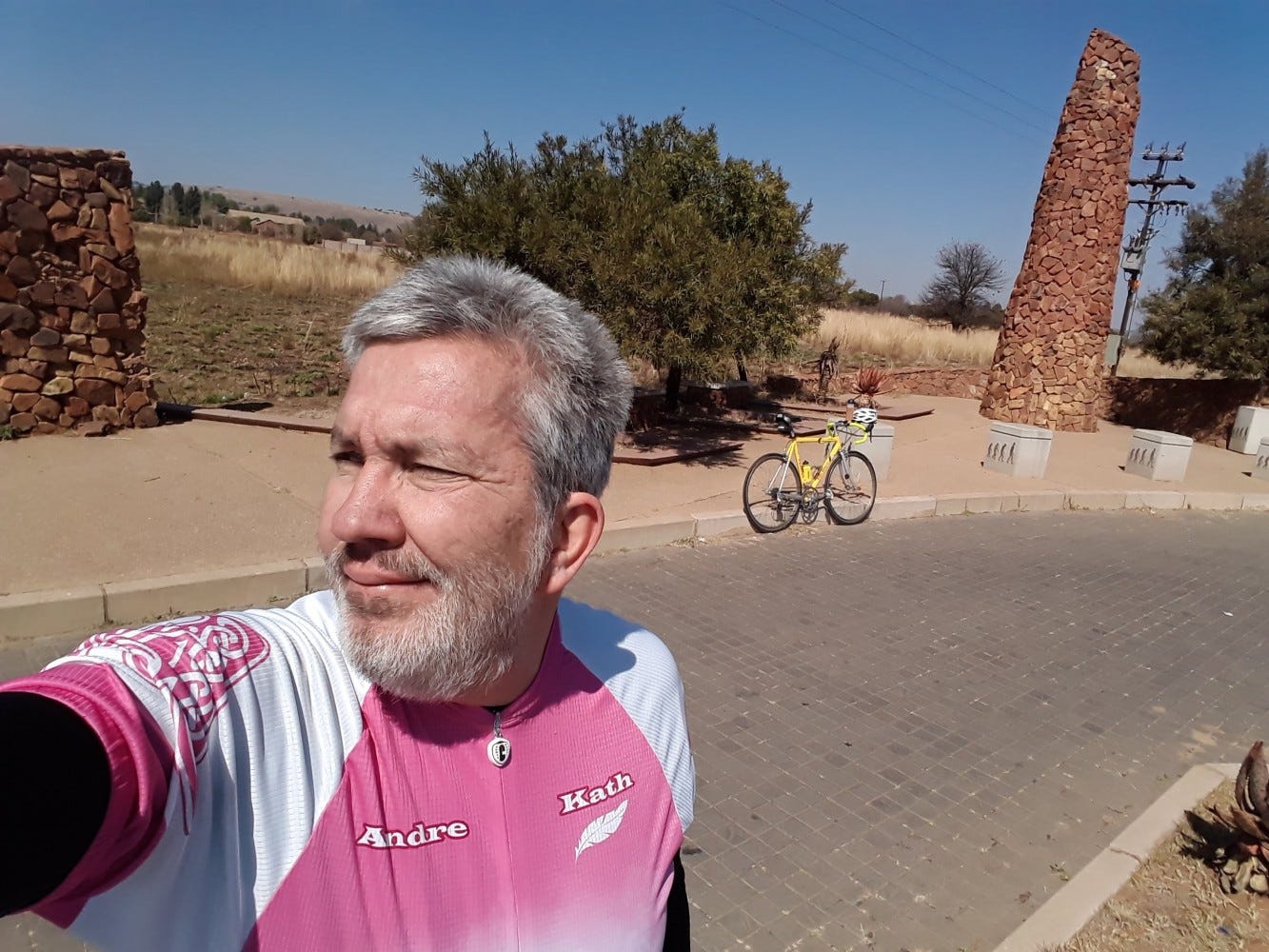
It was a crisp Sunday morning in January, the kind where the air still carries the night’s memory but promises the heat of the day ahead. I rose before 6 a.m. and made my way to George & Sal’s home in the sleepy town of Henley on Klip which was still dead to the world. eddy, my faithful bike, was ready, his frame the vibrant yellow of sun-ripened mielies, wheels pumped to a solid bar, gleaming under the faint light of the rising sun. I loaded him into the car with the quiet efficiency of habit, careful not to wake anyone in the house as I left Douglasdale.

By the time I launched from the Herbert’s driveway in Henley on Klip, the town was utterly still, not a soul stirring. The roads there are pocked with rather rude slowdown bumps. The first one caught me off guard, smashing my nuts. I cursed, a sharp expletive echoing in the empty streets. Lucky for me, no one was awake to hear it.

As I rolled out of town, the landscape opened up into the first mielie fields, their green stalks swaying gently, already heavy with emerging seeds and pods. I breathed deep, inhaling that fresh, leafy scent, earthy & alive, the essence of the Highveld in summer. It invigorated me, chasing away the remnants of sleep.

I was in a thinking mood as I’m a morning person. The questions from the Jerries about kwaSizabantu swirled around in my head. The shunning & abandonment by them of their own flesh & blood weighed on me. I also recalled some other unrelated emails I had come across over time (one from the previous day) and even my boss at Investec. All that behaviour crystallized in awareness on some random spot of tar outside the town. I finally understood what gaslighting meant. That is why eddy is better than any shrink’s couch.

I turned down Blommendal Road, passing the towering Sentech radio masts, silent sentinels from some bygone era of transmissions. I hadn’t a clue if they were still active, but they stood there imposingly against the dawn sky. The road was deserted, not a car in sight, save for the endless parade of birds perched on the power lines running parallel. They eyed me as I cycled past, heads cocked like spectators at Centre Court Wimbledon, judging my form with avian indifference.

Just beyond the towers, I stumbled upon a serene pond flanked by graceful willow trees. It was teeming with life: red bishops and weavers darting about, their calls a symphony of chirps and whistles. I pulled over and watched for a good ten minutes, mesmerized by the flurry of color and sound. But reality tugged at me, there were still 35 kilometers to crank. I saddled up and pressed on.

The road ahead led toward the distant silhouette of Suikerbosrand, its hills a hazy promise on the horizon. Unbeknownst to me, I’d timed my ride with the Fast One cycle race, and suddenly I was swept into the pack, a huffing, puffing crowd of riders clipping along at a brisk pace. For the next 15 kilometers, the solitude of my solo adventure gave way to camaraderie. I chatted with a bloke on a Trek from 1990, a relic even older than eddy, its frame bearing the scars of countless miles. Then there was the lady on a sleek purple machine, an exorbitantly expensive Italian job that screamed precision engineering. I’d love to ride that, I thought, admiring its lines as we pedaled side by side. Well, truth be told the whole package was good & I’m not talking about the bike. Say no more.

Eventually, the race veered north, and I had to deviate back towards Henley on Klip. The route took me through the dairy farms of Randvaal, where even on a Sunday, the tractors hummed in the fields and cows milled about the feed pens, lowing softly. Milk trucks lumbered out from the farms, merging onto the roads with the hiss of releasing air brakes, the only sounds piercing the quiet, alongside eddy’s rumbling wheels on the tar and the wind whispering over my helmet.

Crossing the bridge over the Klip River into the Randvaal dorp, I spotted a shoeless girl in a yellow dress standing on the railing, arms flung high, screaming and crying downstream. Her anguish cut through the morning calm. I hesitated, my pedals slowing for a moment. But it wasn’t my problem, or so I told myself, & I pushed on.

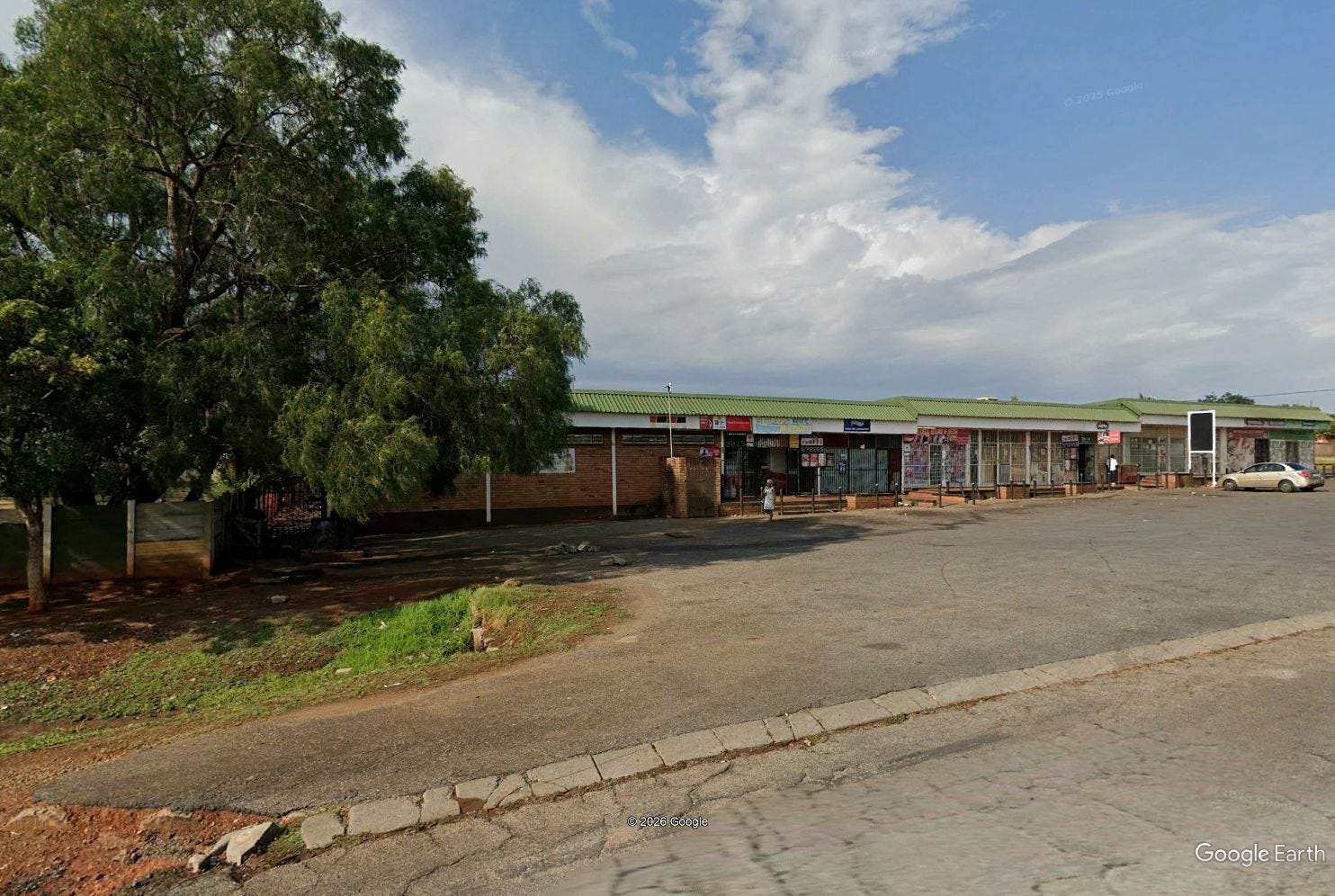
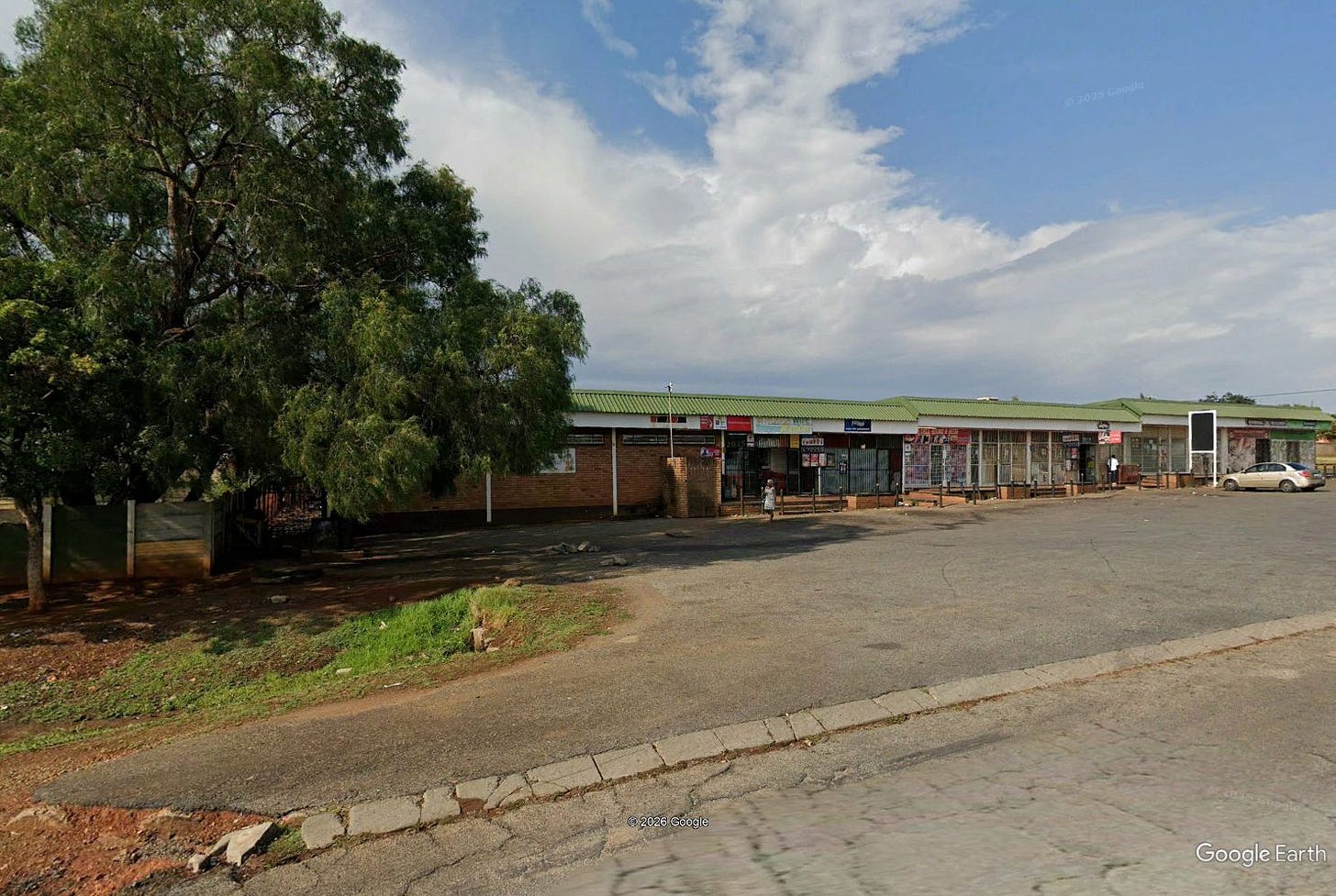
Randvaal’s roads were a minefield of potholes, demanding constant vigilance as I dodged and weaved. I passed the local shops: a bottle store already open for business, a butcher with its shutters up, & a convenience store called the House Wife, whose goods spilled out onto makeshift shelves on the pavement. The people here wore their poverty plainly in threadbare clothes, converging on the shops with purposeful strides. Outside the bottle store, an old, weathered man sat in a wheelchair, swigging brandy straight from the bottle. Beside him, under the shade of a gnarly tree, a group of men in dirty overalls nursed tins of Castle beer, their laughter rough and resigned. It wasn’t even mid morning yet but I assume someone had seen a Boeing. I thought I’d seen it all, but then I had to swerve around a lady cruising down the middle of the road on one of those sit-on electric karts meant for the elderly or impaired, there was no pavement to speak of. At the corner, as I turned onto the road back to Henley, there stood an Assembly of God church, its service in full swing. Outside, a lineup of vintage cars gleamed in the sun: Ford Cortinas, Datsun ZZZ models & a herd of Hiluxes, bliksem, what a sight.

The final stretch wheeled me alongside the railway tracks, with a mine on the near side, its dumps of gravel rising like artificial hills. Occasionally, I’d glimpse railway trucks piled high with the stuff,. Back in Henley, I hit an unexpected detour, a work crew clearing a massive fallen gum tree that blocked the main road. On the alternate path, I spotted a shop called Durban Delicious and made a mental note to swing by on my way home for some bunny chow. It lived up to its name later that day.

Wheels down back at George & Sal’s, I savored a banana and a steaming cup of tea, the simple rewards of effort. We had a long chat about Grey College. I told them about the Wit Olifant incident, the water hydrant fiasco but ran out of time for the whole shebang. That 50-kilometer loop had been excellent, raw, real, & full of the unexpected rhythms of a South African Sunday.
Ronald Bartels

Ronald Bartels | LinkedIn | Instagram
Sunday Morning Snot

This morning I lay in bed with a blocked nose & told eddy there was no ride at the Cradle Loop.

Ek is vol snot, eddy.

“I know,” he said. “We’re in the same bedroom, boet.”

Damn grumpy Belgium bicycle.

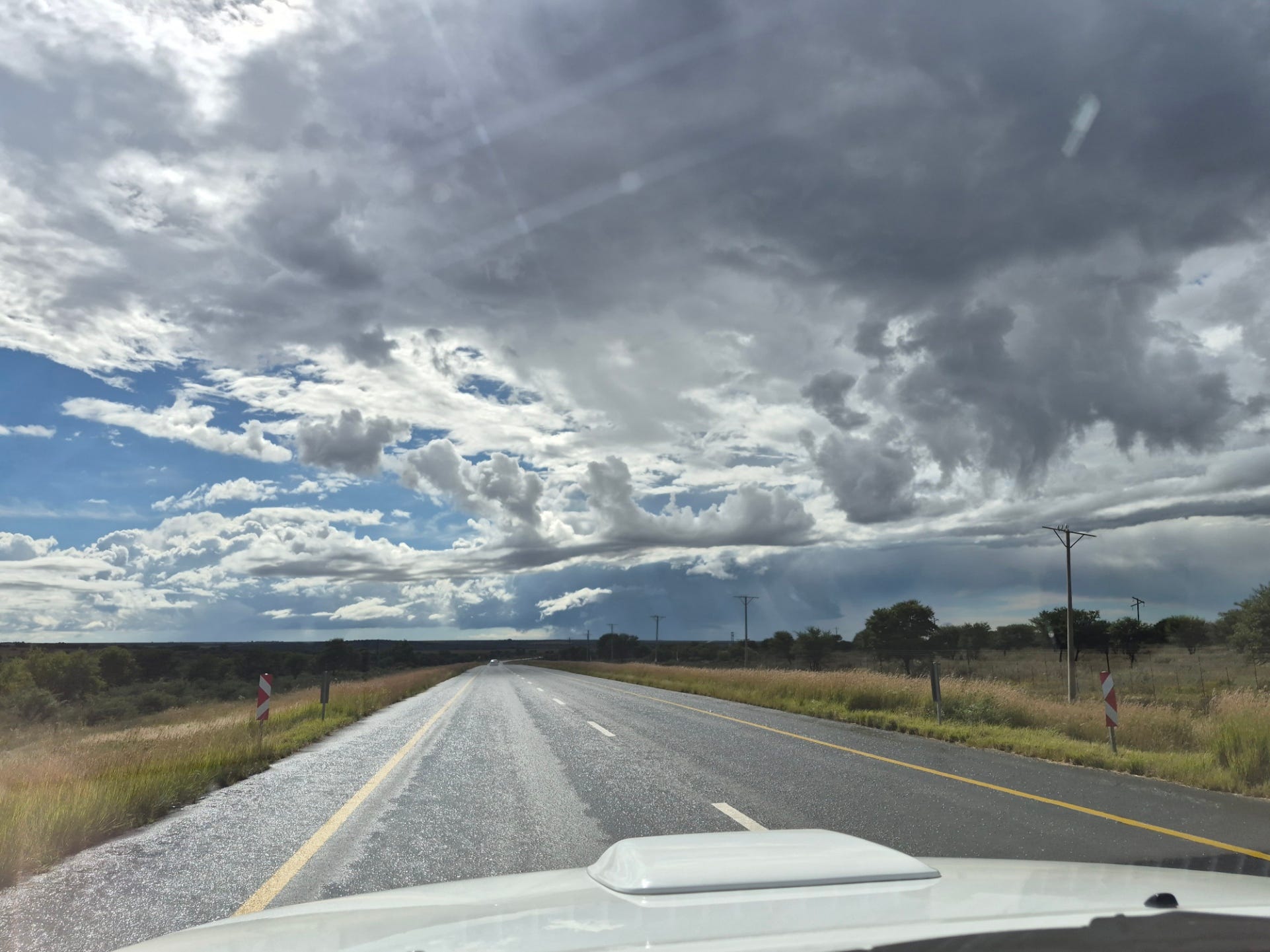
So I stayed put, staring at the ceiling, & the mind did what it does on slow Sundays, drifted back to the road trips to Christiana. It’s a good run through the vlaktes. Nothing flashy, just open sky, long horizons, and that particular Highveld quiet that settles once you leave the Magaliesberg behind.

In Christiana there’s an old steel bridge with lattice work across the Vaal. I have no idea of its exact age, but these single-lane iron structures are scattered all over the country, survivors from a time when rivers still dictated the pace of travel. The one at Christiana feels about the same scale as the bridge over the Tugela at Tugela Ferry. As a kid we crossed that one often on the way to visit my mom’s cousin Boet & his wife Loretta on their farm Steinthal, near Helpmekaar south of Dundee. I’d sleep in an old bed in the rondavel & wake to skaaptjops for breakfast. Man, those breakfasts were legendary.

The road to Christiana meanders past Ventersdorp & Wolmaransstad. Along the way the eucalyptus blue gums & firs stand gnarly and windswept, most of them looking like landscape portraits. There’s a spot where five of them rise in silhouette against the horizon in a mealie field. They look like the horsemen of the apocalypse.

Just leaving Magaliesberg on the road out to Ventersdorp is an Engen. I stop there for water or a coffee. About eighty kilometres further I usually need a comfort break. Next to the road stands one of those sentinel trees heavy with weaver nests, some of the nests already lying on the ground around the trunk. Decades of old glass bottles litter the grass. This stop has been popular for ages. The plastic ones are fewer; they get burnt and melted in the roadside fires.

You cover the distances between maize silos on every horizon. Occasionally the mealies give way to sunflower fields, magnificent when they’re in bloom. In the Magaliesberg you still see Hartebeest. Closer to Wolmaransstad the game changes: Roan antelope, Wildebeest, Springbok. Skirt the detour past Klerksdorp & there’s a field of albino Springbok. I used to pull over & stare. Now I just drive past & barely give them a second glance. There’s also an abandoned uranium mine out that way, & those large microwave towers that once carried the voice traffic between north & south in the seventies, eighties and nineties.

Around the farms near Christiana you’ll find coffee-coloured Springbok & even black ones, plus plenty of Nyala. The town itself sits among large potato farms & pecan nut orchards, a school friend of mine has one right next to the Vaal. Christiana is full of potholes. When you sit beside the river it feels almost biblical, like the Euphrates or the Tigris, slow & wide & indifferent. By the Rivers of Babylon.

There isn’t much else on the road except an excellent padstal just before Wolmaransstad. Proper food. Gourmet burger if you’re lucky.

I’ve continued down that road all the way to Kimberley before. It’s a scenic town still carrying its Victorian bones, red-brick mansions with deep verandahs & metal lacework, the kind of houses built when diamond money flowed thick & fast. The Belgravia suburb is full of them, status symbols from the mining-magnate days, complete with turrets, parapets and those distinctive Kimberley bricks. The Town Hall on Market Square is pure late-Victorian swagger. The Big Hole still sits there like an open wound of history. And yes, Kimberley has proper thrift stores, the kind where you can lose an afternoon hunting for something that once belonged to someone who lived through the diamond rush.

eddy interrupted the daydream.

“Next week Mastelek. No excuses. We crank the loop.”

Right.

Ronald Bartels | LinkedIn | Instagram
The cycling Church

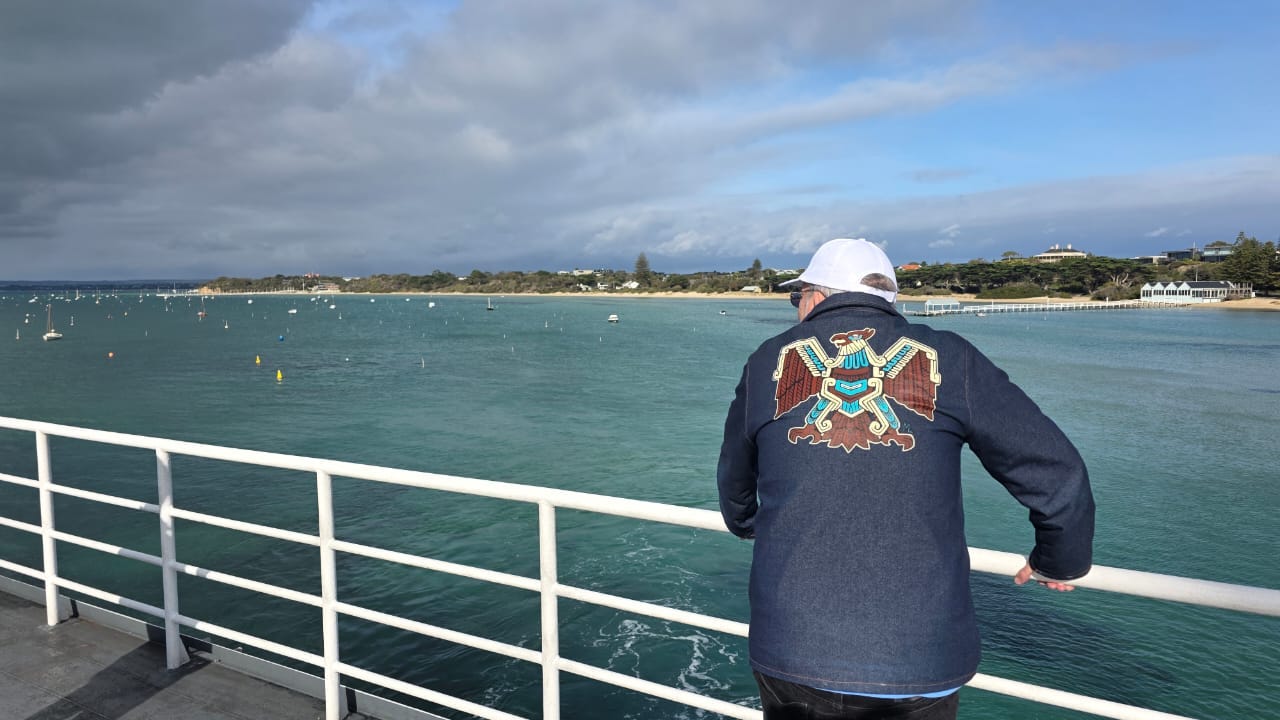
Everyone knows the story: Saul, the persecutor, riding toward Damascus full of certainty and rage, is knocked flat by a blinding light, hears the voice of Christ, and rises as Paul, new name, new eyes, new life. A single moment on a dusty road rewrites a man forever.

My own Damascus moment never came in a flash of light. It came in kilometres. And it comes not once but each time I’m on eddy. I believe Saul had his redemption as the journey changed him, it focused attention to the core of his humanity. My dad Mastelek mkhulu said that the core of Christian values was not to pick at the bones while the whole skeleton was untouched and ignored. On that journey, Saul addressed the skeleton and became Peter.

About twelve kilometres in, when the air thins and the tar starts to rise in the Magaliesberg, the world shrinks to three things: the road, my lungs, and the taste of salt on my lips. The legs are beginning to burn, the heart is hammering like it wants to leave my chest, and the sweat pours off my head in rivers. The wind dries it almost as fast as it falls, leaving that sharp, salty taste of it I have come to crave.

That is when the noise stops. The unpaid bills, the arguments, the endless small humiliations of daily life—they simply fall away, shed like the dead skin of a malting African Rock Python. What remains is astonishingly clear, stripped down to bone truth, the skeleton. I know exactly who I am, what matters, and what does not. Redemption, for me, tastes like salt and effort.

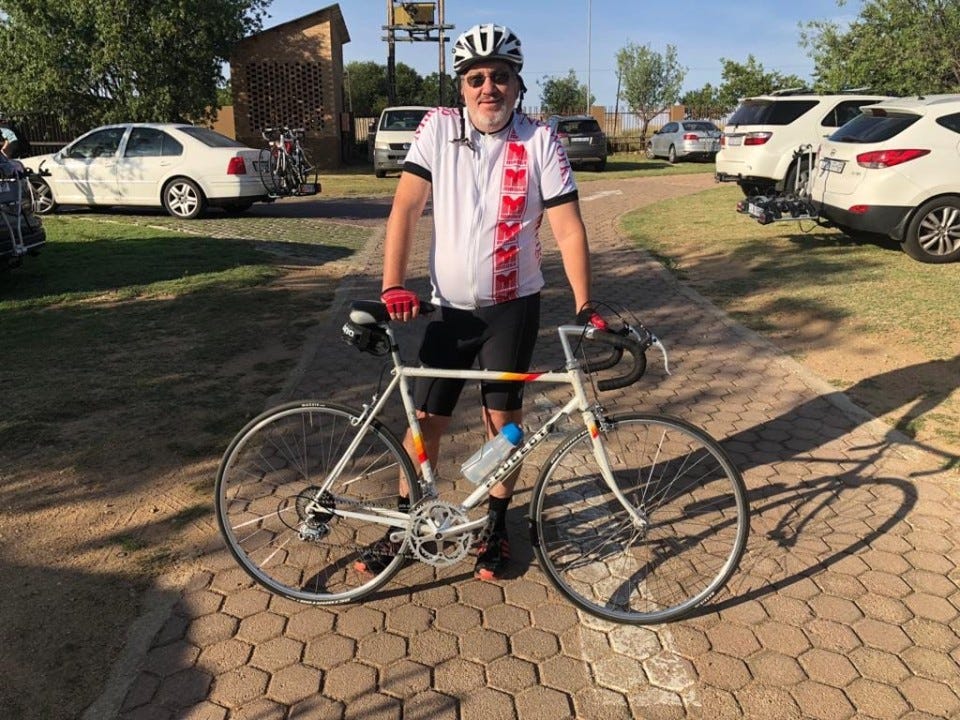
I ride an old yellow Eddy Merckx which I bought second-hand from Gary Beneke, the year he won the Argus. Gary had already pushed that frame to glory; I have added nearly thirty years more. The paint is chipped, the bartape has been replaced so many times, but the bike, Eddy, still feels alive under me. He has carried me through marriage, moments of loss, death, the birth of children, triumphs I bragged about and failures I never admitted. He has never once asked me to be better than I am, only to keep cranking. In that, he has been the most reliable saviour I have ever known. The yellow stead has become one of my heirlooms that define me, just like any sacred item revered by the Navajo.

Sometimes, climbing the long hills towards Hekpoort or the Cradle, I pass other cyclists. They nod or lift a hand off the bars in greeting. We do not know each other’s names, politics, sins, or bank balances. Yet in that moment we are closer than family. We are all in Church, sweating our prayers into the tar, finding whatever grace is available to people who refuse to stay still.

That is my road to Damascus, tarmac instead of dust, a yellow Belgian frame instead of a horse, salt instead of blinding light. And every time I ride it, I come back changed, even if only by a millimetre. Over decades, those millimetres add up to a different man.

Paul got his revelation in an instant. I find mine in the Cradle of Humankind under the dancing clouds of the Highveld escarpment.

Ronald Bartels | LinkedIn | Instagram
Snot en trane

I had no business being there. Nearly sixty years on the clock, and a body that sometimes creaks like the old floorboards of the dusty farmhouse on Oakvilla farm, and yet there I was on the evening of the December full moon, clicking into my pedals outside Biden, ready for the full-moon social ride with Cal and Eddy. The three of us. No pressure. Just the quiet promise of a night ride in the Magaliesburg and whatever the world felt like giving us.

I warmed up alone on the tar from Biden to Avianto. The road was still warm from the day’s sun, and as I rolled through the stone gates I saw it: another wedding in the chapel and guests milling in the garden. White draping, candles, a bride in a dress that caught the last of the sunset. Exactly like ours, twenty-six years earlier, almost to the day. I stopped pedalling and reflected, watching the couple take their photographs under the same trees. Snot en trane. It was the same grief hallucination that you hear in that awesome Irish ballad, Molly Malone. I mounted eddy, wiped my face with the back of my hand, and rode on before anyone noticed the old fart blubbering at the side of the tar.

The Cradle Loop started properly after that. Tar met singing wheels, gradient kicked up, and the young guns in the bunch started cranking like tomorrow was cancelled. I told myself I’d just sit in, take it steady, survive. But something stubborn woke up in my legs. I stayed on the wheels. Up the drags, through the sweeping corners, over the rolls—I matched them. Cal looked across at one point and just shook his head, grinning. I was screaming at Eddy for one last hurrah. I felt ridiculously alive.

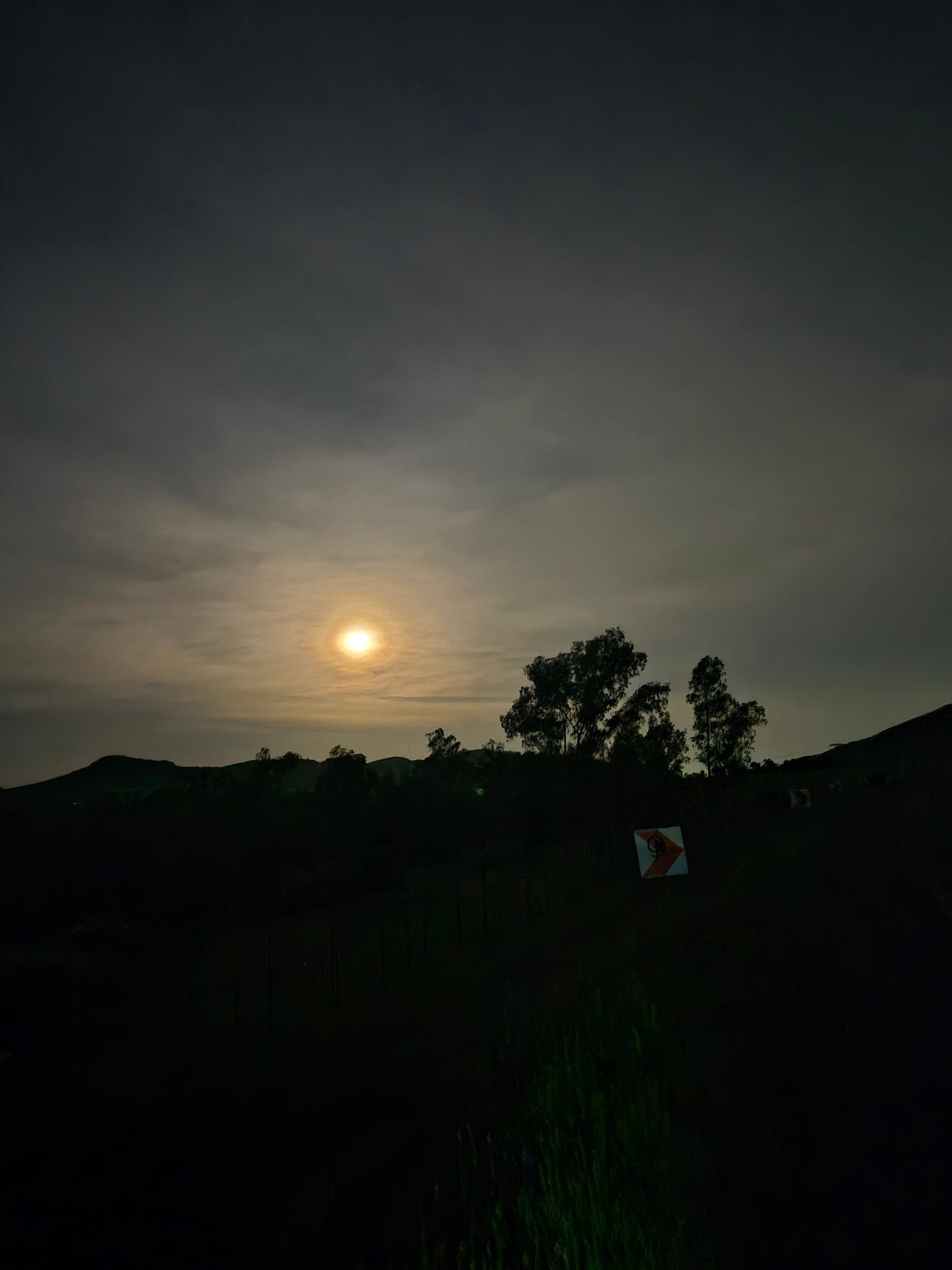
And then the moon came.

It crested the ridge behind us like someone had hung a lantern the size of a small planet in the sky. Not rose—crested. One moment the horizon was dark, the next it was on fire with this huge, low, impossible gold-white disc. This was no ordinary full moon. This was the Cold Moon, the last supermoon of the year, and it had lined up perfectly with a major lunar standstill—the same rare wobble in the moon’s orbit that made the ancient builders align Stonehenge the way they did. Once every couple of decades the moon swings to its most extreme northerly and southerly points. When that extreme coincides with perigee (the moon’s closest approach to Earth), you get something that is generational and won’t in all probability be seen again by me.

It looked close enough to touch. The craters were sharp, the glow almost harsh, yet soft at the edges like candlelight. It threw our shadows ahead of us on the road, long and black and dancing. The bush around us was whispering in worship. Every leaf, every blade of grass, every thorn tree stood out in perfect silhouette. We rode in silence for a long stretch, because what do you say when the sky is doing something that feels older than language?

Eventually the road spat us out back at the finish. Someone had fired up the pizza oven. We sat on hay bales, legs wrecked, hands wrapped around cold beers, eating wood-fired pizzas that were properly rural—charred crusts, fresh rocket, goat’s cheese, figs from the tree overhead. Crunchy, smoky, perfect.

Another old fella wandered over, helmet in hand, smiling. Kevin. Turned out he’s quite the fan of eddy. He was one of those I dropped when the eddy testosterone triggered. He sat with us a while, recounting the exact moment the moon cleared the hills—“I promise you, my boet, I nearly rode off the tar”. He told us he’ll be back next month to try and hang onto our wheels again. I believed him.

That night will stay burned behind my eyes for whatever years I have left. The wedding that made me cry, the legs that refused to quit, riding under a moon that felt like it had come specifically to show off for us. And Kevin’s quiet promise in the firelight: “See you again when we go cranking the Magaliesburg.”

Ja. We’ll be there.

Ronald Bartels | LinkedIn | Instagram