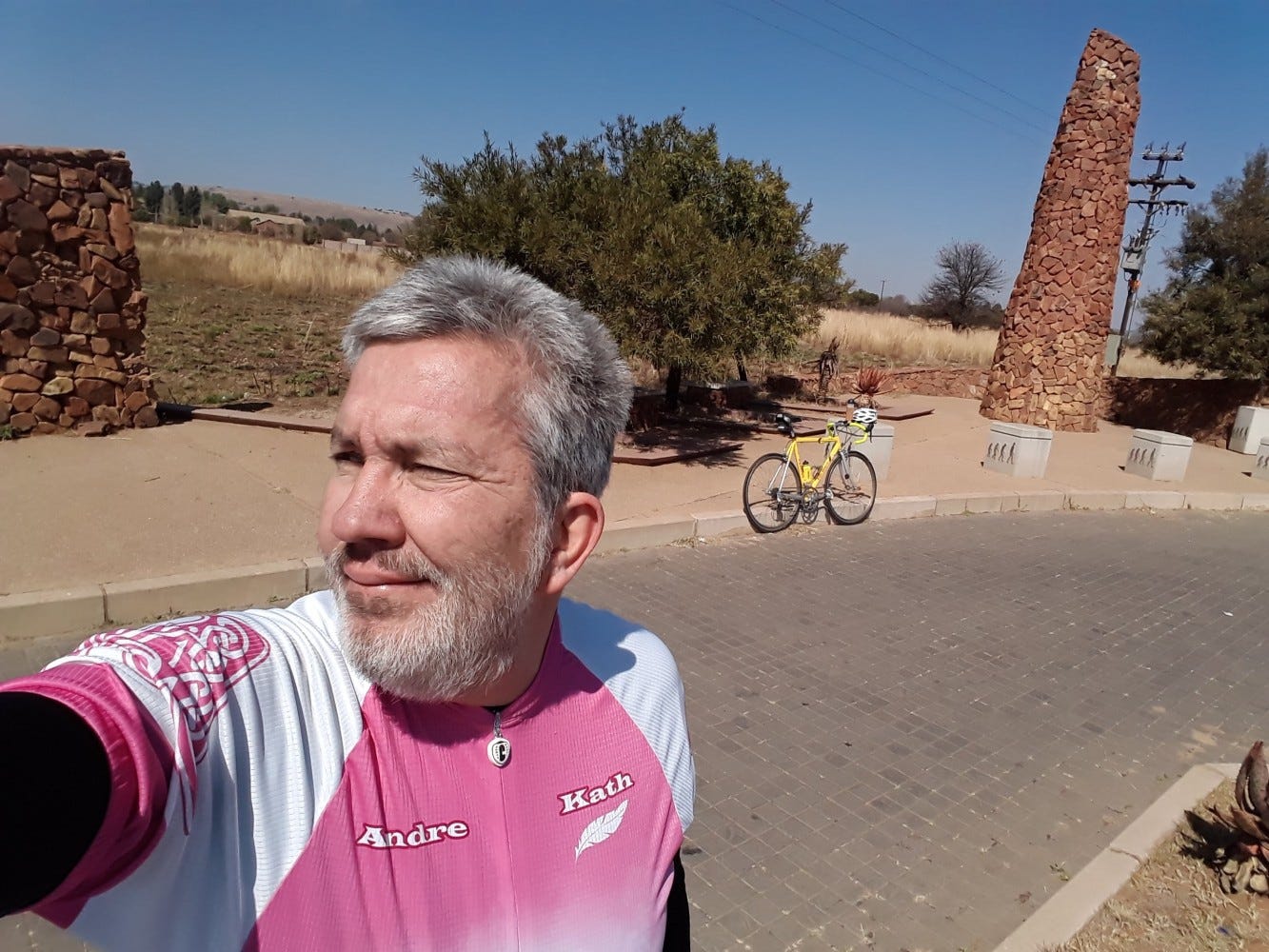
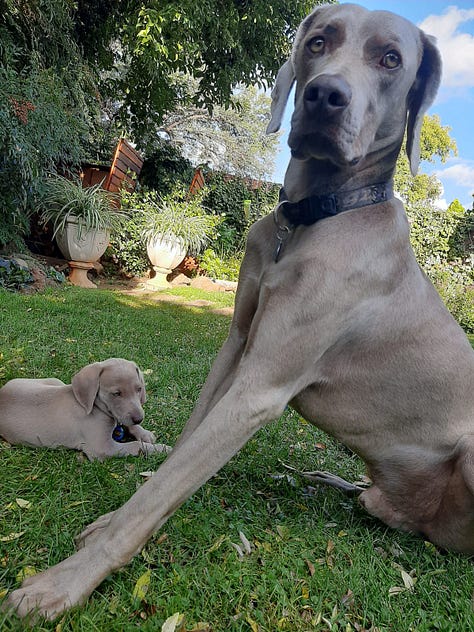
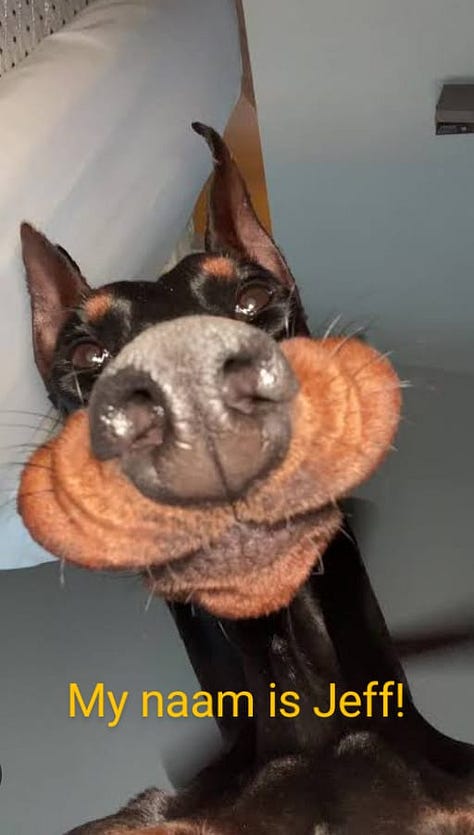
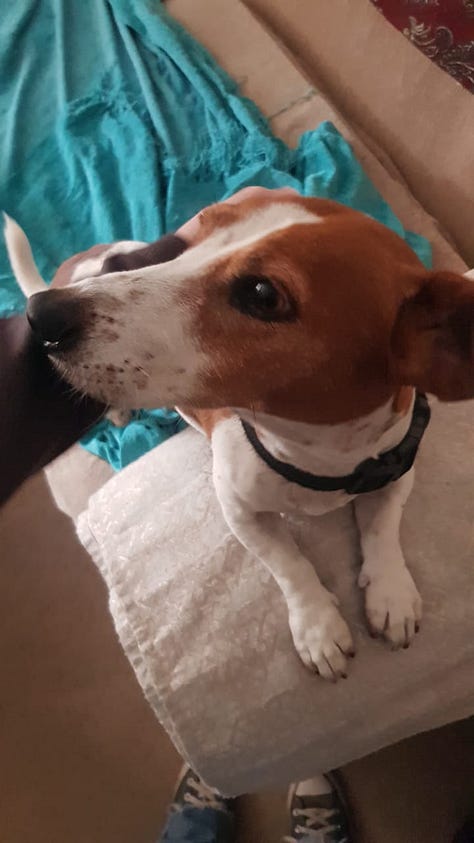
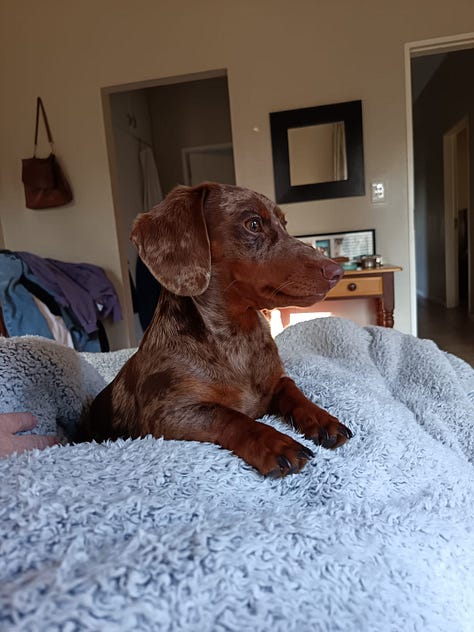
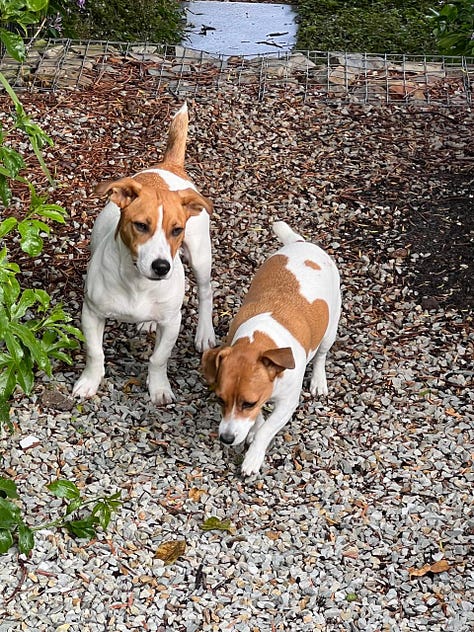
The Morning Patrol with MastelekđŸ’Ș

Stories of Mastelek who enjoys farming Boweia Volubilis

The Breaking of a Cold Blooded Mathematician's Heart
I never imagined that something as gentle as a sugar pill could unravel the thread of our lives. Homeopathy slipped into our marriage like a whisper at first, soft, insistent, promising harmony in a world that felt increasingly discordant. Kathleen (Kath) had always been the seeker in our union, the one with eyes turned toward the unseen currents of the universe. While I was grounded in digital circuits and computational systems, she chased the poetry of the soul: astrology charts at dawn, crystals humming on the windowsill, and endless cups of chamomile tea that tasted like optimism. It was one of the things I loved about her, her unyielding faith in the improbable. But faith, I've learned, can curdle into something fiercer, something that demands allegiance or else.

It started innocently enough, in the spring of our eighth year together. We lived in the leafy suburb of Fourways, still part of the greater metropolis of Johannesburg but closer to the cradle of humankind. Kath was restless, her body a map of vague aches she attributed to “energetic blockages.” A friend from her yoga circle, always those circles, spinning with incense and shared secrets, recommended a homeopath named “Dr” GĂ©nie Rawson. She wasn't a doctor, of course, not in the white-coat sense, but the title clung to her like a borrowed halo. Her office was a converted garage of her home down the road from us, shelves groaning under vials of shimmering remedies that looked more like potion ingredients from a fairy tale than medicine.

Kath came home that first afternoon with her cheeks flushed, clutching a tiny amber bottle as if it were a talisman. “It works,” she said, her voice alight with discovery, “it's been... imprinted. With the essence of arnica. For my shoulders.” I nodded, half-listening as she described how Rawson had peered at her, asking not about symptoms but about her dreams, her childhood fears, the colours she saw when she closed her eyes. It sounded like therapy wrapped in mysticism, harmless enough. If it made her feel better, then it's worth it. What harm could it do? A few drops under the tongue, a placebo wrapped in ritual. Science had its scalpels and scans; this was poetry for the weary.

But poetry has a way of demanding verses in return. Over the months, Rawson became her oracle. Weekly visits turned into rituals: consultations that stretched into hours, discussions of “vital forces” and “like cures like.” Kath's vocabulary shifted, ailments weren't mere pains but “imbalances,” curable not with pills but with dilutions so extreme they bordered on the ethereal. One part toxin to a million parts water, succussed with rhythmic shakes until the very memory of the substance lingered like a ghost. She devoured books on the subject, quoting passages about how homeopathy honoured the body's innate wisdom. I listened, smiling through my skepticism, because her eyes sparkled in a way they hadn't since our honeymoon. And God, how I loved those eyes—hazel flecked with gold, like autumn leaves caught in sunlight.

It was the addiction that crept in unnoticed, the way a tide erodes a cliff one lap at a time. Kath's belief hardened, not into dogma but into a lifeline. She began skipping her annual check-ups at the doctor, waving off my gentle nudges with a laugh. “Why poison myself with their chemicals when this works?” she'd say, holding up another vial, this one for “emotional turbulence.” Our medicine cabinet, once stocked with ibuprofen and antihistamines, emptied in favor of remedy kits: globules for grief, tinctures for tension. I worried, quietly at first, then with a knot in my gut that tightened each time she dismissed a twinge in her chest as “just stress from the full moon.”

The ultimatum came on a winter’s evening in July, the kind that only a warm fire could mitigate. I'd made the mistake of voicing doubt, casual, offhand, after reading an article in the paper about pseudoscience. “It's mostly water, Kath. Studies show it's no better than a placebo.” Her face crumpled, not in anger but in betrayal, as if I'd confessed to loving another. She set down her teacup with deliberate care, the clink echoing like a verdict.

“If you don't believe in this,” she said, her voice steady but threaded with steel, “if you can't trust me enough to see the truth in it... then maybe we can't be together.” The words hung there, heavy as the winter outside. I stared at her, the woman who'd been there through miscarriages and job losses, who'd danced barefoot in the living room to music until dawn. Leave? The thought hollowed me out. Our life was woven too tightly—shared experiences, inside stories, the quiet rhythm of mornings with tea and reading. I couldn't lose her to a disagreement over dilutions. So I swallowed my reservations, wrapped them in a lie of complicity. “I believe in you,” I told her, pulling her close. “That's all that matters.” And in that moment, it was true enough. What harm could it do? A white lie to preserve the fragile architecture of us.

We leaned into it after that, a shared delusion for the sake of peace. I attended a consultation once, sitting awkwardly as Rawson waved a pendulum over a sample of my hair, diagnosing “stagnant chi.” Kath beamed, squeezing my hand, and I played along, popping the pellets she prescribed for my “cynical disposition.” They tasted of nothing, dissolved on the tongue like regret. Life flowed on: yoga classes at Birkham Yoga, the studio at the Design Quarter; lazy Sundays taking walks; nights whispering dreams we had. Her energy surged, or so she claimed—the remedies chasing away the shadows. I saw the glow in her, the renewed vigor, and convinced myself it was real. Love, after all, is the greatest alchemy.

But August arrived with a cruelty disguised as winter's end. The air hummed with heat, the kind that presses against the skin like a warning. Kath had been to Rawson the week before, complaining of fatigue, a vague pressure in her chest she chalked up to “mercury retrograde.” She drew her blood, not for labs, but for his “live blood analysis.” Under a microscope in her dim office, she peered at the crimson river as if divining tea leaves, murmuring about “rouleaux formations” and “toxin burdens.” No EKG, no lipid panel, no stethoscope pressed to her ribs. Just spectacle and suggestion. She sent her home with a bespoke remedy: alcohol diluted to oblivion, succussed with intention, labeled Coronary Harmony. “Dilute the disharmony,” she said, her smile benevolent as a serpent's. She took it faithfully, three drops nightly, trusting it to realign her vital force.

That morning at Birkham Yoga, the studio was alive with the scent of eucalyptus and sweat-soaked mats. Kath unrolled hers near the window, where the light painted her in gold. She'd been practicing more, chasing that elusive balance, her body bending like it remembered youth. I had seen her in the morning, off with a kiss, after dropping the boys at school. “Namaste” she teased, her laugh a melody I hoarded.

The call came as I sat in my office at work. “Mr. Bartels? This is the studio. Your wife's collapsed.” The world tilted, colours bleeding into gray. I raced to the studio while calling for an ambulance, the roads blurring, my mind a chant of please, not her, not now. They tried to revive her multiple times, the paddles' jolt echoing my own shattering pulse. But the damage was done, coronary artery disease, undiagnosed, a silent thief that had narrowed her vessels to whispers. A blockage, they said, fatal without intervention. They rattled off the protocols any cardiologist would have spotted in seconds from a simple treadmill test or blood work. But Rawson's microscope had seen only shadows, her remedies only illusions.

She was on life support for 90 minutes, a ghost on a table, machines beeping like accusations. I had held her hand, the one that had traced constellations on my back, but she had said it hurts. I did say a final, “I love you”, before the end of the earthly journey. The end was like in the painting of the scream. Silent and face distorted as life evaporated.

In the aftermath, I binned all the remedies and books. Not in rage, but in ritual, piling the vials into the wheelie bin. But whose choice was it, really? Mine, for the silence that enabled it? Hers, for the faith that blinded her? Or ours, tangled in the lie that love could cure what science warned against?

Grief is a slow poison, homeopathic in its dilution, one memory stirred into the next, until the whole cup overflows. I miss her most in the quiet moments: the clink of a teacup, the salt on the wind off the sea or the babling sound of a stream. Homeopathy didn't kill her, not directly. But it cost her the seconds of diagnosis, the minutes of intervention, the years we might have stolen from time. What harm could it do? Everything, it turned out. Faith is a beautiful addiction, until it demands your life in tribute.

And so I write this, not to indict the seekers or scorn the mystical, but to honor the woman who chased light into shadows. Kath, my love, if there's imprinting beyond this veil—if some diluted essence carries words across the divide, know that I believe now. Not in the remedies, but in you. Always in you.
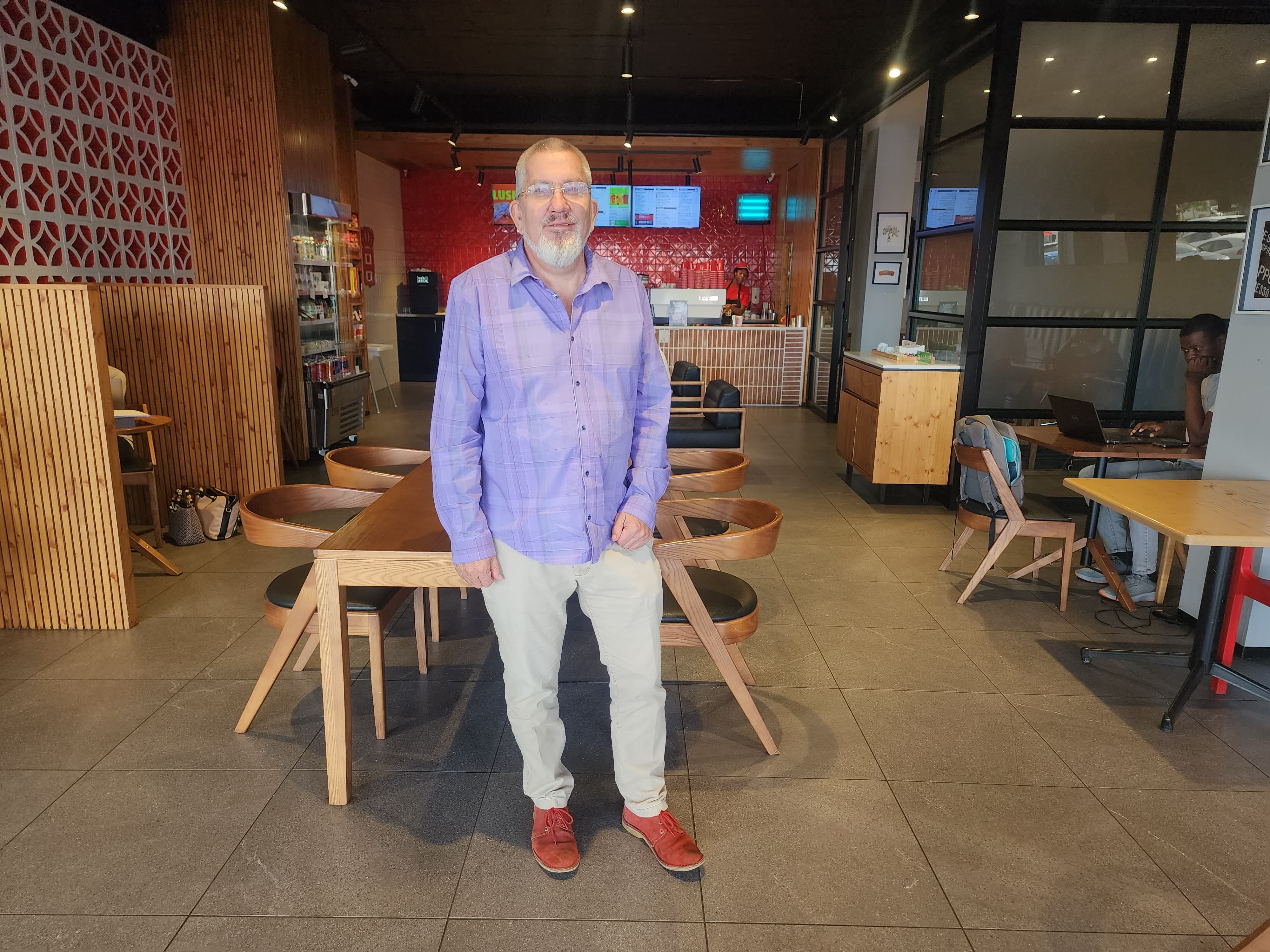
Ronald Bartels | LinkedIn | Instagram

Shadows of Unspoken Worries

In the quiet suburb of Douglasdale, where the Jacaranda trees bloomed in defiant purple against the urban sprawl, Ron sat at his dining table, the letter from Helen trembling slightly in his hands. It was send a few years after Kath’s passing, a fragile bridge to the woman he had loved for just over a decade. Kathleen (Kath), his anchor, his spark, gone too soon from a sudden illness that no one saw coming. Two days before she died, August 15th, she had met with Helen, an old friend whose bond with Ron and Kath stretched back through years of shared laughter, braais, and quiet confidences. Helen’s words, penned with careful empathy, unraveled the conversation like a thread from a tapestry, revealing Kath’s deepest concerns. Ron read it again, his mind drifting back to the life they had built, now fractured by her absence.
Ron had always been the provider, navigating the treacherous waters of corporate South Africa. His time at Investec had been a grind of backstabbing politics and cutthroat ambition, a world where alliances shifted like sand. Kath, with her unyielding spirit, had encouraged him to leave it behind. “You deserve better, Ron,” she’d said one evening over a glass of wine, her eyes bright with conviction. “Life’s too short for that poison.” So he did, stepping into what he hoped would be calmer seas at iBurst. But it was worse, a frying pan to fire scenario, filled with even sharper betrayals and relentless pressure. This time, Ron vowed to shield Kath from it all. It was becoming more difficult to find jobs and that weighed heavily on the decision. He came home with a forced smile, burying the stress deep inside, not wanting to burden her. In hindsight, that silence had been a mistake. Kath, perceptive as ever, had misinterpreted his withdrawal as something deeper, a fading light in his soul. An example was an evening where Kath was putting up pictures on a wall in the dining room. It was late and her sister and friend were with her and she was banging away using a hammer. The next morning, Ron had a tense meeting scheduled at iBurst, that was as usually the case, more of a showdown. He snapped and shouted at the disturbance which was to in all intent and purpose, rather minor.

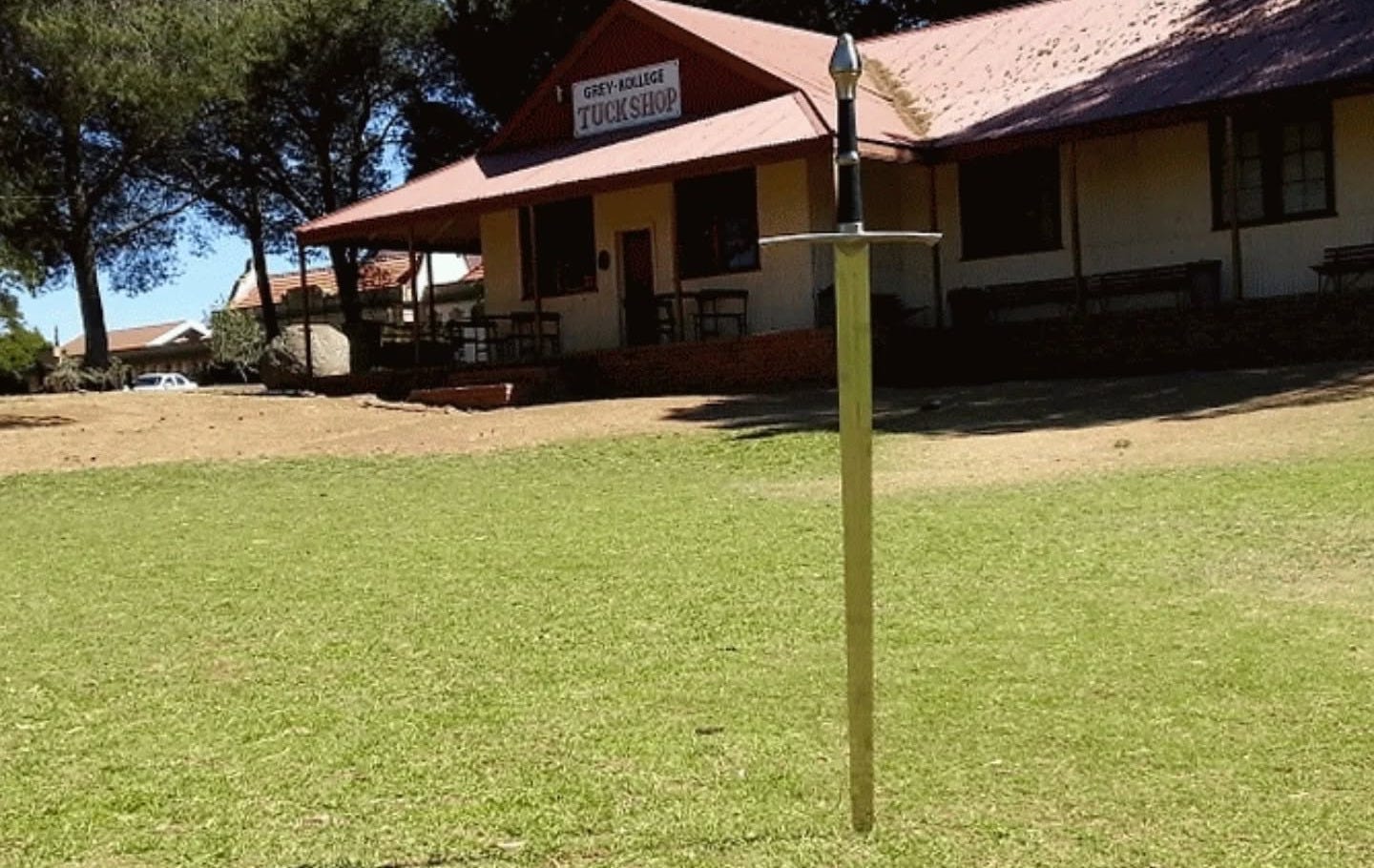
At these iBurst showdowns Ron would channel his inner Scottish heritage and would visualize carving up the belligerents using a broadsword.

The letter began with friendship, the foundation that had drawn Kath to Helen that fateful afternoon. They met at a shopping centre in the area, the air scented with fresh coffee and the faint hum of suburban life outside. Kath had sought her out, along with Peter’s support, Helen’s partner, because they knew Ron best. “Of all our friends,” Kath confided, her voice soft but urgent, “you two understand him like no one else.” She was worried about Ron’s disconnection, how he seemed to drift from the vibrancy of everyday life. It wasn’t just absentmindedness; it was as if the world had lost its colour for him.

As their conversation deepened, Kath turned to work, her own passion a stark contrast to what she saw in Ron. She thrived in her role, drawing fulfillment from every challenge, every small victory. But Ron at iBurst? “He’s not stimulated there,” she told Helen, her brow furrowing. “No challenges, no spark. He needs something creative, something that lets him develop ideas and grow.” Kath dreamed of a life where they both chased their passions, reaping the rewards together. Ron, reading this now, felt a pang of regret. He had hidden the chaos at iBurst so well that Kath thought he was simply unfulfilled, not fighting a daily battle to keep his head above water.

Health weighed heavily on Kath’s mind that day. She spoke of her own enthusiasm for life, the adventures still waiting,trips to the Drakensberg Mountains, lazy Sundays with the family, perhaps even starting those art and calligraphy classes she’d always talked about. “I have so much living to do,” she said, her eyes alight despite the fatigue that had begun to creep in. But Ron? She feared he had lost his zest, that at 50, he might simply stop. “He’s shutting down,” she whispered, “into a place I can’t reach.” It terrified her, this invisible wall growing between them. Ron’s heart ached as he read these words; his “shutdown” was exhaustion from the corporate wars, not a loss of will. How he wished he had opened up, let her in.

Family came next, the core of their world. Kath shared her concerns about Ron’s outbursts of frustration with their son, Ray, a boy testing boundaries, his lack of respect a constant trigger. “Calm, firm authority,” Kath suggested gently to Helen, hoping for Peter’s insight too. “That could mend things.” She acknowledged the pain on both sides; she loved them equally, feeling powerless in the middle. But above all, she yearned for unity. “I want us together as a family,” she said, her voice steady. “Ron as the head, always there.” In those words, Ron saw the depth of her commitment, the family dinners, the holidays, the quiet evenings where they were simply whole.

The letter’s heart lay in their marriage and relationship, passages that brought tears to Ron’s eyes. Kath described their union as wonderful, a tapestry of cherished moments: anniversaries celebrated with stolen weekends away, inside jokes that could dissolve tension in an instant, the way Ron’s hand fit perfectly in hers. “He’s my husband and my best friend,” she praised, recalling how they navigated a rough patch years ago. “We had a perfect relationship, so we didn’t know how to handle the bumps. But marriage guidance helped, it was beneficial.” Ron remembered those sessions, raw and honest, strengthening what was already unbreakable.

And then, the profound: “He’s the light of my life,” Kath had said, her words echoing with unwavering certainty. “I’ve never loved anyone so completely. He’s my soul mate, nothing before compares.” Life without him wasn’t an option; she wanted him as her partner, as the boy’s father, forever. Yet, the depression she sensed in him scared her, fearing it might spill into their shared world. “We love each other unconditionally,” she affirmed, “together until the end of time.” Ron clutched the letter, the paper crinkling under his fingers. Kath had never doubted them, even in her worries.

Helen’s closing words offered solace: “I hope this brings closure to some of the trials and tribulations of life.” For Ron, it did more, it painted a portrait of their marriage, cut short but profoundly real. In shielding Kath, he had unwittingly dimmed her view of him, but her love shone through regardless. As the sun set outside, casting long shadows across the room, Ron folded the letter slowly. It was an accurate story of their life—imperfect, intense, and eternally bound. Kath’s voice, through Helen’s letter, reminded him to live, to find that zest again, for her.

My Peace

That final day was ordinary in every way except for the weight it carried. The night before, we had shared one last intimate moment, making love in the candle light of our bedroom. It wasn’t passionate or frantic; it was tender, a quiet affirmation of the life we’d built together. That was normality and I felt comfort. Here was the thing: in the preceding months we had been less intimate. Her illness was suppressing that desire and it was a red flag I didn’t see. Retrospectively it was obvious. It was something that I’d missed, my attention misdirected by petty work politics.

Then came the moment I’ll never forget, the last agonizing silent scream. Her face contorted in a wordless cry, her body arching as if fighting an invisible force. It was over in seconds, but it felt eternal. Her jaw was an an impossible angle and the eyes open in a look of absolute astonishment. She was gone. Just like that, the woman who had been my partner, my confidante, my everything, slipped into whatever comes next. I sat outside the room for a while with my head in my hands then the paramedic doctor prodded me to make arrangements for a hearse, as she wasn’t going to be sent to a hospital. The first stark prompt of the reality of what had happened.

Kath is an angel now, watching over me in ways I can’t explain but feel deeply. Every time I spot a feather drifting on the breeze, it’s her, a gentle reminder that love doesn’t end with death. That sign came this day after I left the house, stepping into a light drizzle that felt like tears on my cheeks. As I paused outside the door, something caught my eye: a single white feather, floating down from the gray sky like a message from above. It landed softly at my feet, pristine against the wet brick pavement. I picked it up, turning it over in my fingers, and in that poignant moment of reflection, I felt a sliver of peace amid the grief. She was free, and somehow, so was I.

Ronald Bartels

Ronald Bartels | LinkedIn | Instagram

The example of Mastelek

In Plettenberg Bay, where the Indian Ocean meets the Garden Route in deceptive calm, gender-based violence tore through the community like a rip current no one saw coming. A woman named officially as Nicky van Heerden, but Alaska to everyone who felt her wild, free spirit, was murdered by a male. I refuse to call him a man. A man protects. A man builds. This one beat her senseless, then kept going, forcing her face into the sand until she stopped breathing. He walked away afterward, a hyena, a scavenger, a demon wearing human skin, the absolute worst of what humanity can sink to.

I stood before a painting of her by a talented local artist, and the reaction slammed into me like a fist. Nausea. Pure, gut-wrenching nausea. That feeling is no accident. People say trust your gut for a reason. Deep in your belly sits the enteric nervous system, two hundred million neurons lining your intestines, often called the second brain. It talks to your head brain through the vagus nerve, manufacturing most of your serotonin and dopamine, the chemicals that rule mood and emotion. When something is profoundly wrong, your gut doesn’t wait for rational thought; it screams first. Mine did that day, loud and clear.

My own response has always been protection. Whenever these stories surface, sleep brings the same dream: me standing between the woman and the threat, broadsword in hand. The sword in dreams carries ancient weight, justice, courage, the clean cut that separates good from evil. It arrives like clockwork. It did after the above.

With cult violence the dream changes. The stakes rise. Suddenly it is not the broadsword but the FN FAL I trained on in the navy, a battle rifle I knew by feel in the dark. The right arm of the free world. The different me steps forward, the one who will not stand by.

I first saw the cost as a boy. Enid, a family member, had been raped and broken inside a cult. The damage never left her eyes. I still remember Enid. I was at an impressionable age, it has remained, and never dissipated.

South Africa knows this poison too well. The screams I heard as a child still echo in my memory. In the valley of Oakvilla farm, below the house, among the Zulu labourers, the night air that should have been filled with the blissful chorus of insects would suddenly fracture with a woman’s cries, pain, anguish, terror rising up the dark hillside. My father, Mastelek, would set down whatever he was doing, fetch his Lee Enfield .303, climb into the bakkie and drive down to stop it. No hesitation. That is what a man does. Mastelek, was a true cowboy (see the story below).

Society keeps electing males who are not men. One even bragged that he could grab them by the pussy and they would let him, consent implied by power. He became a leader anyway. In South Africa, we all remember Khwezi, Fezekile Ntsukela Kuzwayo. She accused Jacob Zuma of raping her at his Forest Town home. She had trusted him like an uncle. At trial her entire life was dragged through the dirt: her HIV status, her bisexuality, her previous trauma used to paint her as unreliable. Zuma’s supporters chanted outside court, burned her home, threatened to burn the bitch. He was acquitted, took a now-infamous shower to prevent HIV, and three years later became President of South Africa. It was wrong, spectacularly, systemically wrong. The trial exposed the rot: victim-blaming baked into the culture, powerful men shielded, survivors exiled or erased. Khwezi died, still carrying the weight. Zuma is gone and that other guy is still grabbing them by the pussy. Epstein files and all, loyalists coming in to bulldoze dissent.

Physical beatings are monstrous enough. But the slow poison is quieter and just as deadly, verbal tirades, manipulation, the daily erosion of a woman’s worth. It ran through parts of my extended family like invisible rot. When I tried to speak to Kathleen (Kath) about it she looked at me with tired eyes and said, “It’s my problem, Ron. Focus on your own family.” I respected her enough to listen. I let it go.

After Kath passed, I received a voicemail from someone. Normal at first, leaving a message and then saying goodbye. But the call never ended, as she inadvertently did not remember to terminate it. In the background her partner unleashed a foul-mouthed tirade that froze me. I forwarded the message to another family member. The reply was pure transactional: “I’m sorry about how you feel.” Not “This is wrong,” not “How do we stop it?” Just reflection on my feelings. When pushed, “I once said, stop when he was angry!” By then I was a single father with difficult children pulling every ounce of my attention. I let it ride. The same cycle repeated with other extended family members, same situation in different voices, same reflective non-answers.

I have no silver bullet. I wish I did. What I do have is the memory of Mastelek climbing into that bakkie with his rifle, driving toward the darkness because a woman was screaming. That is the standard. That is the example. And until more men choose to live by it, the hyenas will keep walking away.

My own burden is offspring that has a generic verbal tirade problem that is psychological. That is another story for another day.

Ronald Bartels | LinkedIn | Instagram

A Valve, a Rusty Stand, & Life’s Cruel Timing

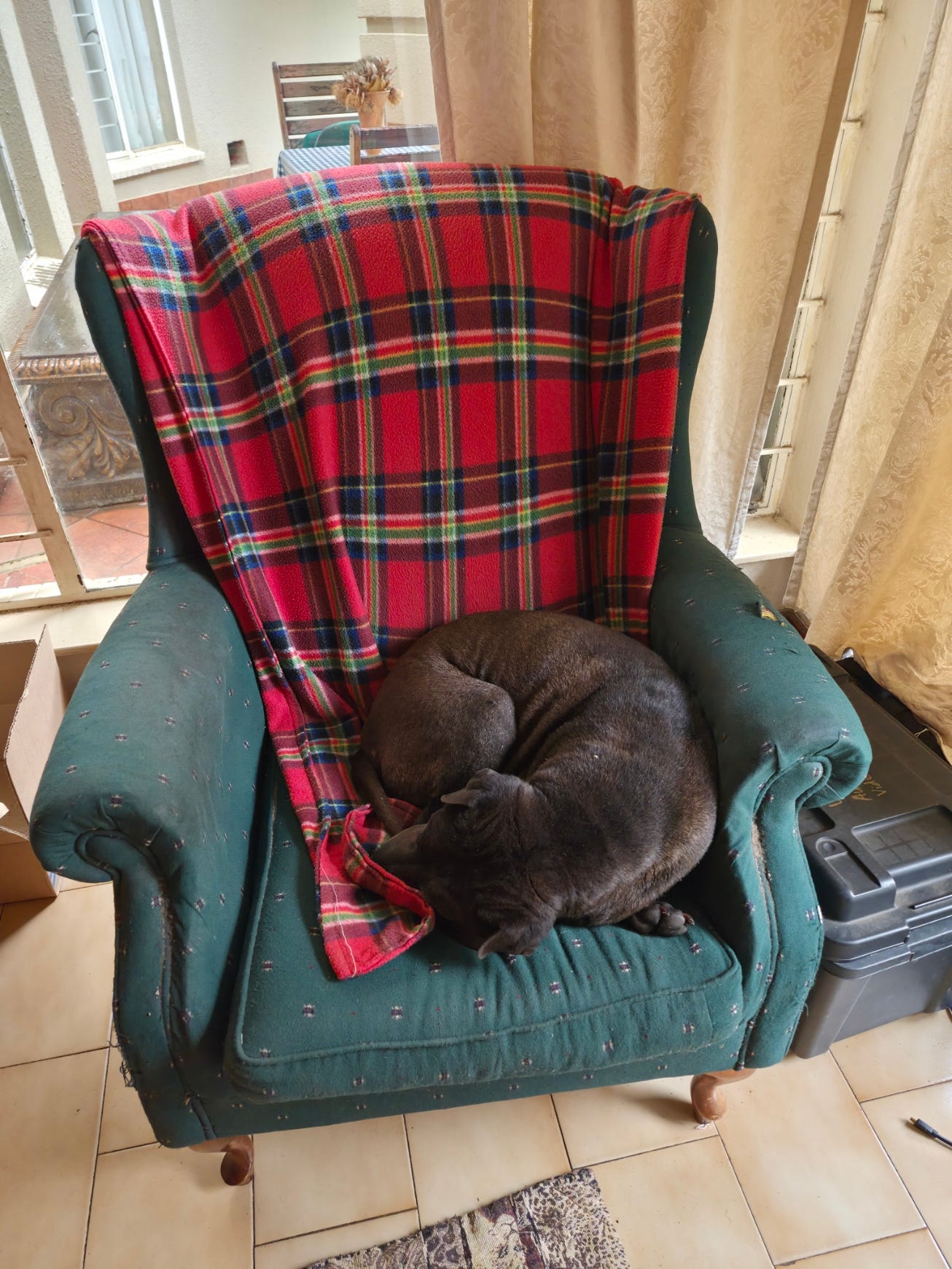
Looking back, the GERD crept up on me like a thief in the night, stealing my sleep and turning my nights into a battleground. Gastroesophageal reflux disease, such a clinical name for something that was a negative burden. The valve at the bottom of my esophagus, that little flap meant to keep stomach acid where it belonged, had decided to go AWOL. Acid would surge up, burning like fiery magma, especially when I lay down. Nights became a ritual of tossing and turning until, defeated, I’d drag myself to the wingback chair in the living room. There, propped upright like an old man, I’d finally drift off, only to wake with a stiff neck and a sour taste in my mouth. It was no way to live, but I soldiered on, grumpy as a Lion with a thorn in its paw.

Kathleen (Kath) saw it all, of course. She watched me struggle, her concern etched in those quiet glances she’d give me over dinner or from across the room. No homeopathic remedies this time, no herbal teas or essential oils she might have suggested for lesser ailments. “Just go see the doctor,” she said one evening, her voice firm but kind. I was being a real asshole to live with back then, I admit it now. Short-tempered, withdrawn, snapping at the smallest things. Kath wanted to help, and in her way, she did by pushing me out the door. I grumbled my way to the appointment, but deep down, I knew she was right.

The doctor listened, nodded, and referred me to a surgeon. That’s when things got invasive. The surgeon shoved a scope up both ends, eina, as we say in South Africa. It was an experience and a half, feeling like a human kebab on a rotisserie. But it confirmed the issue: that faulty valve needed fixing. The recommendation was a laparoscopic Nissen fundoplication—fancy words for folding the top of my stomach around the lower esophagus to create a new, tighter valve. “I’ve done hundreds,” the surgeon assured me with a casual wave. “Chop chop. Easy.”

Ja well, no fine, as the saying goes. Nothing’s ever that straightforward. I checked into Olivedale Hospital, nerves jangling but ready to get it over with. The operation went ahead, and when I woke up in recovery... shit, that was sore. A deep, throbbing ache in my abdomen, like I’d been kicked by a mule. The first day blurred in a haze of morphine and nurses checking vitals. By the second day, I wanted to be discharged, but there was a catch: they wanted proof of a bowel movement before letting me go. Nature, however, wasn’t cooperating.

Eventually, a nurse handed me a tablet to get things moving. I lay there in bed, feeling the rumble build like a storm across the Highveld. This was it. I hauled myself up, clutching the IV drip stand—a rusty relic that looked like it dated back to the sixties. The wheels were seized up, refusing to roll smoothly across the vinyl flooring. Cursing under my breath, I half-lifted, half-dragged the damn thing toward the loo. Occupied. Bloody hell. I made a frantic U-turn, bending over in agony, and shuffled to the one on the other side of the ward. I just made it, slamming the door as the elevator dropped from the top floor to ground in a single, explosive second. I sat there in shock, staring at the wall, while the aftermath echoed like a distant landslide.

They discharged me after that, but not before I vented on the feedback form. I wrote an essay about that rusty drip stand, how it nearly turned my dignified exit into a comedy of errors. The hospital even phoned me later, but I was still in pain and grumpy as ever, so the conversation was short and sharp.

Recovery wasn’t the quick bounce-back I’d imagined. The surgeon had undersold it; it took months of quiet effort, careful eating (nothing but soft foods at first), and a lingering fatigue that sapped my energy. I underestimated the toll, plodding through days that felt like wading through molasses. And then, a couple of months in, life delivered its cruelest blow. Kath, my rock, my gentle nudger toward the doctor—collapsed in a yoga studio. Coronary artery disease. Her heart just failed her. Gone, just like that.

It was a double whammy, physical pain intertwined with an emotional gut-punch that left me reeling. No one really knew how deep it cut; I had to man up, as they say, soldiering on alone through the grief and the healing. Friends offered condolences, but the isolation was profound. I’d forgotten about the operation until recently, my brain erasing it, when Helen mentioned the ordeal on a long phone call, about an hour’s worth of reminiscing, that she and Kath had discussed it back then. Helen hadn’t mentioned it in her letter, but hearing it now stirred up the memories, along with a pang of regret. I must have been impossible to live with during the GERD days. If there’s a feather of repentance to be found, I’ll grasp it and pray for forgiveness.

Yet here I am, still standing. The valve works now, no more nights in the wingback chair. Life’s waves crash and recede, complex and unforgiving, but they haven’t drowned me yet. In the quiet moments, I think of Kath and that rusty stand, and I can’t help but smile through the ache. Survival, it turns out, is part stubbornness, part grace.

Ronald Bartels | LinkedIn | Instagram

Broken Bones & a Love of Words

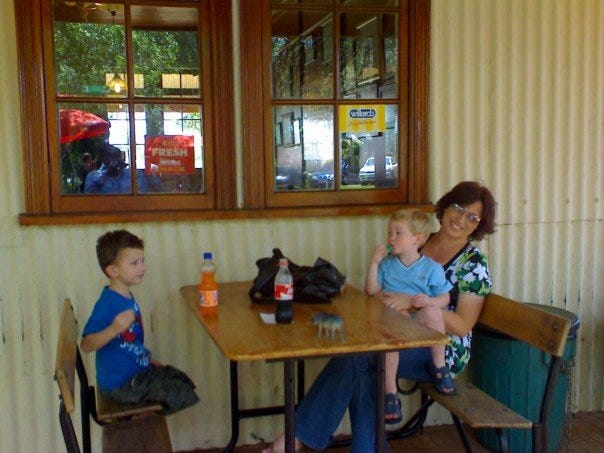
The visit back to Grey with Kathleen (Kath) & the boys was one of those full-circle moments that hit you like a blindside tackle. It was in the late 2000s, I think, & the school hadn’t changed much, same imposing buildings, same manicured fields where I’d left chunks of my dignity & a fair bit of bone. Kath was snapping photos like a tourist, the boys running around, & there I was, staring at that honours board in the Reunie Hall, my name etched in gold. I’d walked past it a hundred times at school without a clue, that my name would also be there. Now, with a family in tow, it felt like a quiet nod from the universe: hey, china, you did alright.

One winter’s day when I was at Grey there was a rugby game like any other, until the scrum collapsed, & my leg, with the ball wedged under it, took the full force. I heard the sound before I felt it: a sickening crack that still echoes in my memory. I even tried to jump up & stand but my right leg was shattered. Twenty-seven breaks. I have never felt pain like that, before or since. I collapsed in a pile in the middle of the Rugby fields of Grey College.

Flat on my back on the field, I was clawing fistfuls of grass out of the ground just to cope. The fields in the Free State are hard & my hands started bleeding. Later in hospital, they bandaged my hands. When the coach ran over & asked how I was feeling, I let loose a string of swear words that would’ve made a sailor blush. My leg was lying at a right angle, twitching uncontrollably, like one of those Mexican lowriders bouncing on hydraulics.

The ambulance arrived. They pumped me full of morphine, loaded me in, & rushed me to emergency. I waited eight long hours before they operated as I had just eaten, piecing my leg back together like a Lego set. During those eight hours they ran out of places on both my legs for the morphine injections. This was the eighties so either they did not have a drip or didn’t use one. The pain was deksels seer.

In the hospital I was visited by Lappies the Rugby coach & some Western Province Rugby players. They told me that my hospital expenses, surgery & doctors were being paid for by the Chris Burger Fund. Chris Burger died in the same emergency room in which I was lying. Chris Burger was injured in a collapsed scrum. I do not remember who the Rugby players were but I remember the jackets. The blue ones with the distinctive red Disa flower on the pocket. I think they were team mates of Chris Burger. One of the players tried to cheer me up by telling a rude joke. I wish I could remember who it was, but in all probability it might have been Rob Louw. Morné du Plessis had retired by then.

My dad arrived up from Natal, took one look at me & took me home to recover, eight weeks of rest, frustration, & introspection. Somewhere in that time, unbeknownst to me, the results for the national writing competition were released which I had entered at the insistence of our English teacher Jackie Badenhorst. She was a banger.

When I finally returned to school, Michua Heyns, our principal, called a full assembly in the Reunie Hall. He gave one of his trademark speeches about balance, academics, sport, culture. The timing was perfect: we had just lost to HTS, & the mood in the school was like a funeral. Rugby was everything to us, & losing felt like national tragedy.

Then Heyns announced that I had won the national writing competition. For a moment, there was silence, then applause that built into a thunderous roar. I hobbled up to the stage on crutches, every step an effort, but every cheer lifting me higher. My right leg was in plaster up to my hip. When I shook his hand & took the certificate, the sound in that hall was unforgettable. It wasn’t just applause, it was pride, defiance, redemption. The kind of sound that stays with you forever.

I came back to school just in time for exams & ended up ninth in the class, my worst result ever. There were about 120 of us in the standard, so I suppose it wasn’t too bad, all things considered. I also went back to the surgeon who replaced my cast. In those days plaster of Paris was used. The hair on my legs had grown into the plaster. I don’t know how it feels to give birth but I know what a bikini wax feels like.

Ronald Bartels | LinkedIn | Instagram

Insightful conversation leading up to our wedding

When Kathleen (Kath) & I decided to tie the knot, her dad wasted no time stepping in like the family patriarch he was. “I’ve got Dr. Don Veysie lined up to handle the ceremony,” he announced. It was a done deal. A meeting was promptly scheduled, and off we went to his church office, where the good doctor jumped straight into the fray. No small talk, no pleasantries about the weather or our engagement story. Instead, he laid down the law: “I’ll only marry you if you complete a marriage guidance course first.”

Kath, ever the practical one, lit up at the idea. “That’s brilliant,” she said, and just like that, we were signed up. I nodded along, but in the back of my mind, I couldn’t shake the feeling that this was some kind of elaborate test. Before we left, he pulled me aside and said, “Come see me alone once the course is done.” An examination? A secret ritual? My imagination ran wild.

The course itself turned out to be a revelation, not the fire-and-brimstone I’d half-expected, but a series of practical evenings that felt like upgraded date nights. We’d hadn’t been together for long, and this forced us to dig deeper, uncovering quirks and habits we’d somehow glossed over in the early stages of the romance. It was eye-opening, the kind of preparation that made me grateful we’d agreed to it. No regrets there.

Once we’d ticked that box, I rang up the doctor and arranged to meet at his home office in Parkview. I arrived a bit nervous, palms sweaty, half-convinced this was where he’d deliver the verdict: thumbs up or elope to Parys? We sat across from each other at his desk, and he didn’t mince words. “Are you a Christian?” he asked point-blank.

I paused, then dove in. “Well, I’m Lutheran, but I have a problem with labels.” He leaned forward, intrigued. “Why’s that?” At the time, the Hansie Cronje cricket scandal was still fresh in everyone’s minds, the South African captain caught in a match-fixing mess, blaming it all on the devil tempting him. “You see, Doctor,” I said, “I don’t believe the devil exists. It’s just an excuse people use to dodge responsibility. If I don’t buy into that, does it mean I’m not a Christian?”

He didn’t flinch. Instead, he smiled and said, “I agree with you.” Now it was my turn to be surprised. “How so?” I pressed. He leaned back, explaining it with the calm precision of someone who’d pondered this a thousand times: “Absolute evil and absolute good can’t coexist, they’d cancel each other out, leaving nothing. The devil, as absolute evil, doesn’t fit in a world like ours.” As a cold-blooded mathematician, that logic hit home. It was elegant, almost equation-like, balancing the scales of existence.

His words stirred up memories of what my dad had taught me about the biblical Jesus. The Bible, he’d said, was penned by Greek speakers who thought in metaphors, not literals. Faith wasn’t about declarations or labels; it was about integrity, actions over words. Gauging someone’s heart by what they said aloud was a fool’s errand, intent showed in deeds. I shared a bit of that with the doctor, and he studied me quietly for a moment, as if weighing me up.

Then, with a nod, he said, “I see you at the wedding ceremony.” Relief washed over me like a tidal wave. As I’d been spilling my guts, a nagging doubt had crept in, maybe brutal honesty wasn’t the smartest play here. But it had worked. We were cleared for takeoff.

In my relief, I almost forgot the practicalities. “How much do I owe you?” I asked. He chuckled. “I expect nothing, but whatever you give, I won’t say no.” Fair enough. On the big day, I slipped a wad of crisp notes to my brother, my best man, with instructions: “Stitch up the dominee for me, I might forget in the chaos.” Later, my brother confessed he’d thought I was being a bit of a schnorrer and topped it up with Dad’s help. At the reception, Dr. Veysie pulled me aside with a grin. “Thanks,” he said. “I had a good chat with your brother.” It was a small gesture, but it capped off the whole adventure perfectly, honest, unexpected, all with a unique touch.

Ronald Bartels | LinkedIn | Instagram

The Beautiful Noise of a Lifetime

Some songs don’t just play in your ears, they settle into your bones & stay there. For me, that sound was Neil Diamond’s.

I first heard him on a crackly FM radio broadcast played over a Philips HiFi in the old farmhouse on Oakvilla. It was the South African hit parade. Later my sister brought home the vinyl of Beautiful Noise. We then dropped the needle, and the opening guitar riff filled the room like warm sunlight through a dusty window. I was a boy then, barefoot on the wooden floors, & the song sent my mind racing across the world, to cities I’d never seen, streets alive with voices and traffic & life. What was that beautiful noise he was singing about? I had to know.

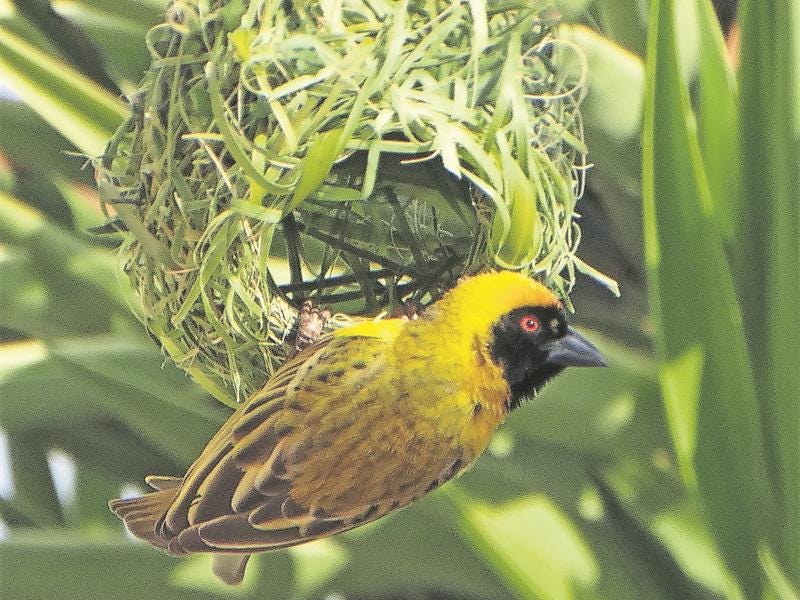
Years later I realised I already did. The real beautiful noise was right outside my bedroom window: the chatter of weavers in the wild fig tree, the liquid call of the orioles at dawn. They had been there all along, singing their own sweet, wild chorus while I was busy dreaming of somewhere else. Neil made me listen to the world, but the best was in reality closer.

By the time I reached Grey College in Bloemfontein, I was already half in love with the man’s music. One Saturday afternoon a group of us walked the long, hot kilometres into town to the cinema, blazers off, ties loosened, pockets jingling with whatever coins we could scrape together. We sat in the dark and watched The Jazz Singer. When Neil stepped onto that stage and opened his mouth, something shifted inside me. “America,” “Love on the Rocks,” “Hello Again”, the songs wrapped around my chest like a hug from someone who understood every lonely corner of a young man’s heart. I walked out of that theatre a proper fan, boots dusty, soul lit up.

A decade and a half rolled by, as they do. Life got busy with work. Then one night in a little pub in Johannesburg, I asked Kathleen (Kath) to marry me. The words were barely out of my mouth when the sound system kicked in. Sweet Caroline. The whole place started singing along, & Kath smiled & gave that signature laugh, while I just stood there grinning like an idiot. Neil had gate-crashed our proposal, & it felt exactly right.

And now, here in the present day, I found myself in a cinema again, this time with flashes of grey in my beard and a few more stories behind my eyes. I went to see Song Sung Blue, the new film about a husband-and-wife Neil Diamond tribute act called Lightning & Thunder. It’s based on a true story: two ordinary people from Milwaukee who turned their love for his music into a life on stage. Hugh Jackman & Kate Hudson play them with such heart you forget they’re acting. The film is funny and tender and, in places, quietly devastating. It shows the joy of chasing a dream together, and the ache when life throws you a curveball you never saw coming. But through it all, Neil’s songs keep playing, lifting them up, carrying them forward.

I sat there in the dark with tears running down my cheeks, not even bothering to wipe them away. Because that music, those songs that had followed me from a dusty farmhouse to a Bloemfontein cinema to a proposal in a pub, still had the power to crack me wide open. Neil Diamond didn’t just give the world great tunes. He gave us permission to feel everything: the wonder, the longing, the gratitude, the heartbreak, and the stubborn, beautiful hope that keeps us singing anyway.

Kath is not with me anymore, an angel in heaven. And somewhere, I like to think, in that wild fig tree back on Oakvilla, the weavers & orioles are still keeping time.

Ronald Bartels | LinkedIn | Instagram

Visions of an Angel

It happened as casually as a discussion about the weather. Kathleen (Kath) had just returned from a trip to America, suffering from jet-lag, but keen to meet me as she stepped off the plane. We later went for dinner at a pub (one of those faux Irish ones that dotted our landscape in the late nineties) and I, ever practical, said, “Why don’t you just move in with me at the townhouse in Norscot Slopes?”

She looked at me with that half-smile that always meant trouble for me. “Not unless we’re married,” she said.

I laughed, then realised she wasn’t joking. So I said the most natural thing in the world: “Well, then
 shall we get married?” And just like that, with no grand gesture, no bended knee, no orchestra swelling in the background, and not even an engagement ring ready, we decided to spend the rest of our lives together. At that moment, and etched forever in my memory the entertainment system where we where having dinner played Sweet Caroline.

She insisted that the next day we go and ask her parents. So off we went to Lombardy East for supper where I went with her father to his office and Kath went with her mom to the kitchen. Her father looked at me when I asked him about his daughter’s hand and I never heard his answer. He stood up and shouted, “GLYYNNNIE!” In walked Kath’s mom, whom I suspected had been speaking to her daughter in the kitchen about it and asked me straight up what were my plans and when was the wedding. Under pressure, and on the spot, I replied that it would be before the end of the year.

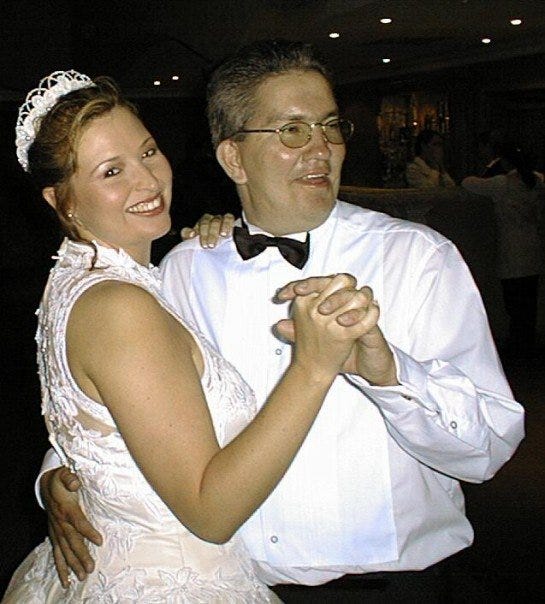
Kath loved candles. Loved them with a passion that bordered on pyromania. When it came to our wedding, she turned the altar at Avianto into a fire hazard of biblical proportions. Round candles, square candles, triangular ones (well actually they were mini-pyramids), and one enormous pillar candle that looked like it had been stolen from a medieval cathedral. When they were all lit, the heat rolled off the altar in waves. The poor priest stood closest, sweating through his vestments, being gently braaied in the name of romance. I could see the beads of perspiration on his forehead and knew exactly how he felt. My suit felt like a sauna. All I could think was: Let’s get this done before we all spontaneously combust. I suspect the priest felt the same; he delivered the shortest homily in Methodist history and practically sprinted through the vows.

The reception was a blur of faces, some beloved, some vaguely familiar, some I met that day and never saw again. Weddings are strange that way; they gather your entire life into one room for a few hours, then scatter everyone back into the wind like what the coyote did to the stars.

We escaped for a brief honeymoon at Mount Grace, then a few indulgent days at the Beverly Hills in Umhlanga. But the real honeymoon, the one we still talked about years later, was Ireland, Bunratty Castle, the Ring of Kerry, rain that felt like a blessing, and Kath laughing in the wind with her hair flying wild at the Cliffs of Moher. To this day, my happy place is Durty Nelly’s at Bunratty.

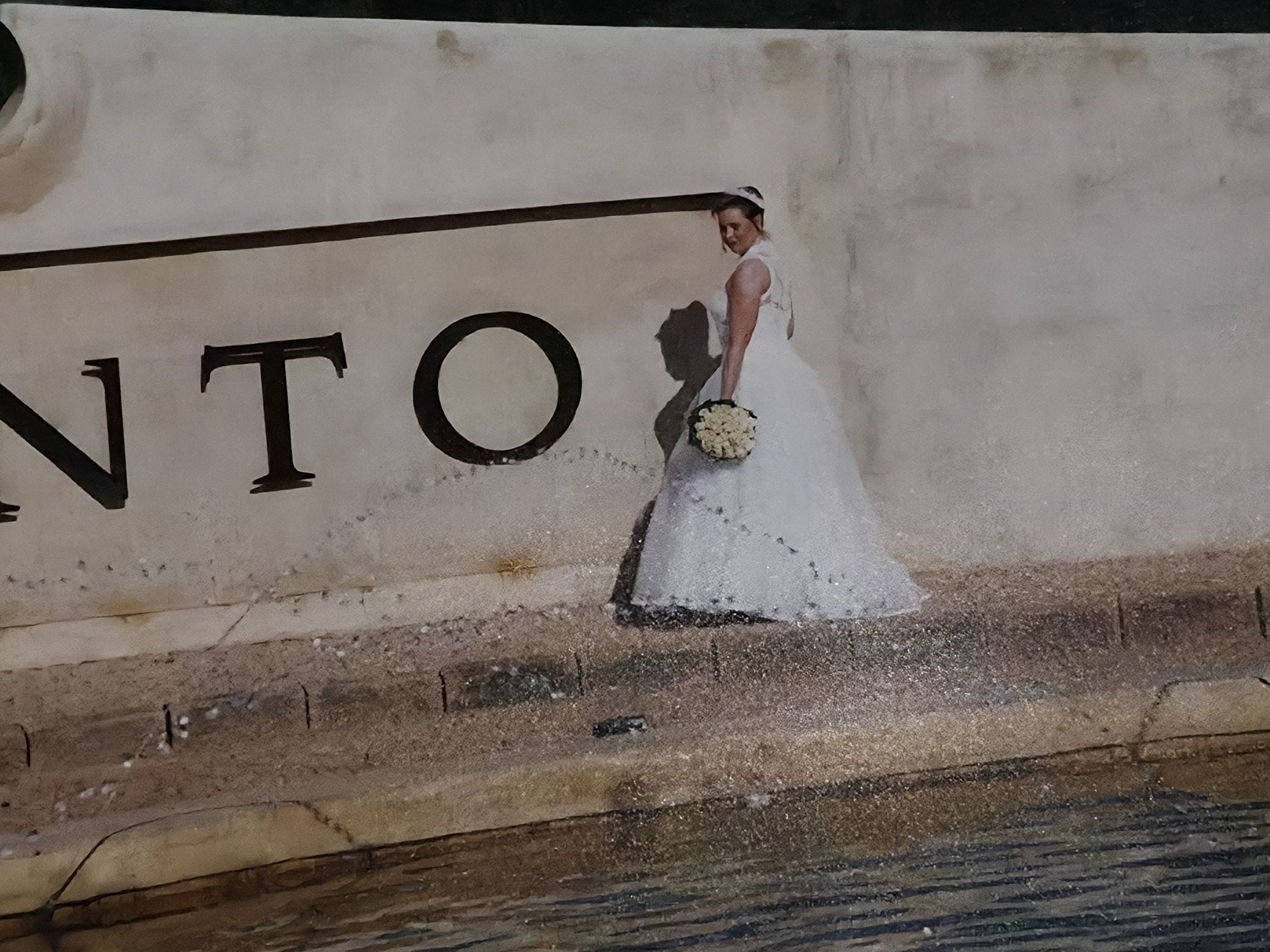
Looking back, it was a magnificent day. And still, on quiet weekend mornings when I’m out on eddy, I take the route past Avianto in Muldersdrift. I slow down as I pass the entrance, glance backwards, and I swear I see her standing there in her wedding dress, holding that bouquet of white roses, smiling at me like she’s been waiting all this time.

I married an angel & she is still there.

This was the the song at the wedding reception. In contemplation, she was already preparing for what was about to happen in choosing it. Most pertinent was that she changed to it at the last moment, away from a Shania Twain ballad.

Ronald Bartels | LinkedIn | Instagram

Kath & Daniel | Angels

The moment we learned we were expecting our first child, Kathleen (Kath) and I were filled with a joy that felt boundless, like a sky stretching endlessly above us. We named him Daniel, a name that carried strength and hope, a name we whispered in quiet moments as we dreamed of the future. But at 22 weeks, during what we thought would be a routine visit to the gynecologist, our world shifted. The doctor’s face grew serious, and he spoke of complications, urging us to see a specialist for a second opinion. We left the office holding hands, our hearts heavy with questions we couldn’t yet voice.

The specialist’s scan was thorough, his movements deliberate as he studied the screen. When he called us into his office, his tone was gentle but unyielding. He explained that Daniel had a horseshoe kidney, a condition that had disrupted his ability to urinate. This, in turn, had stunted the development of his lungs, leaving his heart to grow oversized, crowding the space where his lungs should have been. The words that followed landed like stones: there was no chance Daniel could survive outside the womb. His lungs would not sustain breath; his heart, though strong, would fail under the strain. The specialist recommended termination, giving us a week to prepare for a decision no parent should ever face.

Kath clung to hope, her faith a beacon in the storm. She prayed for a miracle, her hands resting on her belly as she whispered to Daniel, willing him to defy the odds. I held her, my own heart torn between supporting her hope and grappling with the reality we’d been told. But no miracle came. The medical truth was unyielding, and we faced the heart-wrenching choice to let Daniel go. The process, coldly labeled an abortion, required regulatory clearance due to the advanced stage of Kath’s pregnancy. I signed the paperwork for it to be authorized by the court, the specialist’s justification stark on the page, a clinical acknowledgment of our loss.

The night before the procedure, Kath entered the hospital, and I stayed by her side, lying on a thin carpet on the floor of her room, the hardness grounding me in a moment that felt surreal. I held her hand, our silence filled with love and grief. By morning, it was done. Daniel, our son, was gone, leaving an ache that would never fully fade.

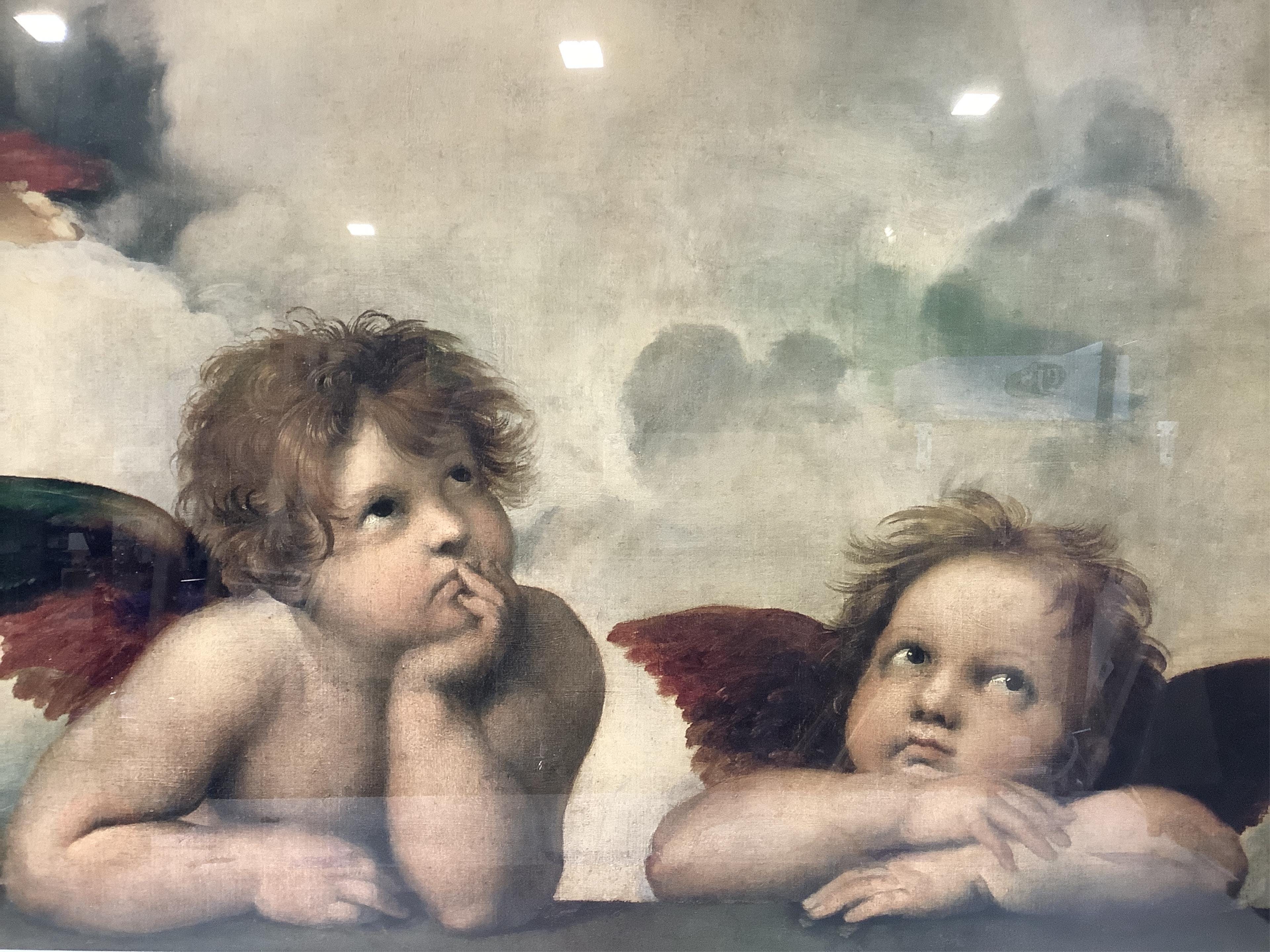
Daniel was more than a moment in our lives; he was a part of us, a light that flickered briefly but burned brightly in our hearts. The trauma of losing him wove itself into the fabric of who Kath and I became, shaping our love, our resilience, and our understanding of life’s fragility. Kath, now an angel herself, carried Daniel’s memory with her, and I believe they are together, watching over me. Their absence is a quiet presence, a reminder of love that endures beyond loss, forever etched in the story of my life.

I often force myself to lie on a hard surface. Its not uncomfortable as there are things that are worse. You see, physical pain comes and goes, while emotional pain is deeper and longer.

Ronald Bartels | LinkedIn | Instagram

Cherished Companions

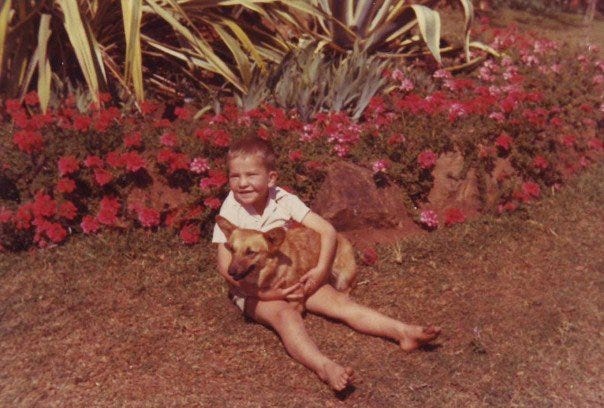
My first dog, Girly, was named by my dad after one of his mother-in-law’s friends, a quirky choice that stuck. She was a Pembroke Welsh Corgi, a breed originating from Wales known for its sturdy, low-slung build, short legs, and herding instincts, often used for driving cattle. Famously favored by Queen Elizabeth II, whom my mom adored, these dogs are lively, affectionate, and athletic despite their compact size. My mom, with her love for “Queen Lilibet,” would bake Queen Elizabeth cake and pore over magazines like Garden & Home, Sarie, Huisgenoot, and Fair Lady, filled with royal stories. I suspect that’s why we ended up with a Corgi on our Oakvilla farm. Girly was my constant shadow, trailing me through fields and adventures, like peas in a pod. If Dad ever raised his voice near me, she’d growl fiercely, sending the family into stitches of laughter. Girly met her fate after an encounter with a Puffadder.

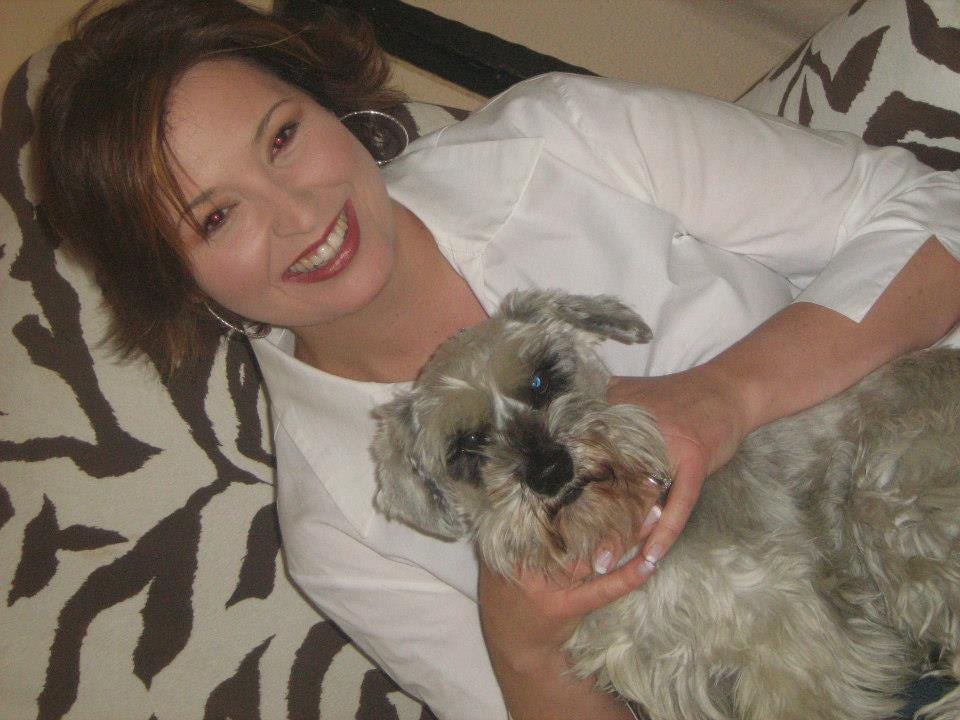
After Girly, came Pepi, a Miniature Schnauzer, a German breed prized for its wiry double coat, bushy eyebrows, and square, sturdy frame, making it an alert and trainable companion often used for ratting. She was a natural hunter, sleeping at the end of my cowboy blanket and turning into an expert mole dispatcher on the farm. Hours spent staring at mole heaps, waiting for the slightest sand shift before pouncing, one mole down. We’d set rat trap cages, meant for drowning in a pool, but as farm cowboys and at my boet’s insistence, we’d release them one by one on the lawn for Pepi to assassinate in seconds flat. No second thoughts in those days. Pepi was an athlete through and through, chasing the bakkie for kilometers without tiring, her tongue lolling as her “turbo” kicked in. Fearless too—she’d circle a hissing snake or sidestep a leguaan’s strike like Muhammad Ali in the ring. When I left for school and university, she became Mom’s devoted shadow; that dog was her everything.

When I married Kathleen (Kath), she wanted a dog of her own, and hearing about Pepi sealed the deal—we found another Miniature Schnauzer, naming her Joey after my ouma. Like Pepi was to me, Joey was Kath’s unwavering companion, shadowing her every move. Kath cherished that little dog. After Kath passed, Joey took up residence at the end of my cowboy blanket, closing the circle from Oakvilla farm in the midlands to our suburb in Douglasdale on the Highveld. She’d rush out to greet me every time I pulled in, small and nimble enough to dodge the car—or so I thought. As she aged, arthritis and joint pain slowed her down, but her spirit stayed young. One heartbreaking day, I came home, and she bolted out as usual. I didn’t realize how frail she’d become. There was a thump under the wheels, and that was the end of Joey. The loss cut deep, a reminder of how these loyal souls weave themselves into the fabric of our lives.

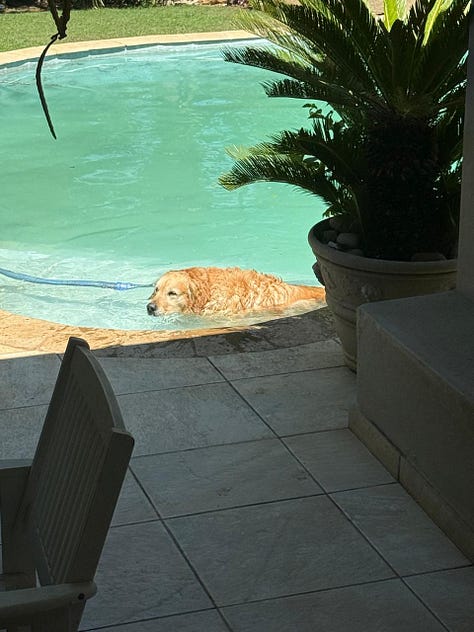
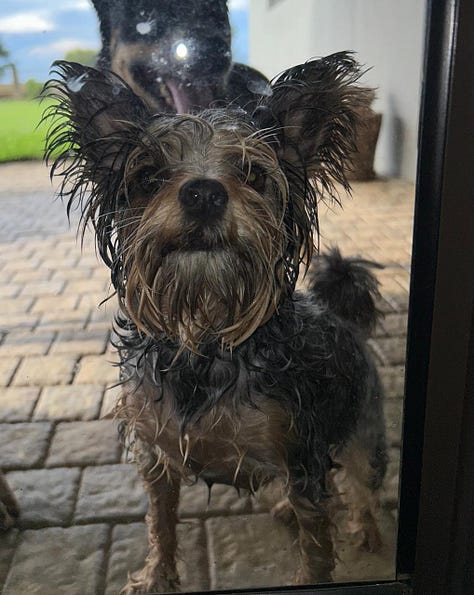
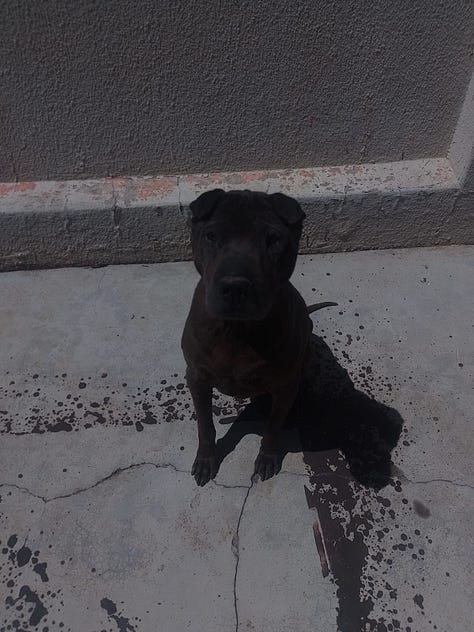
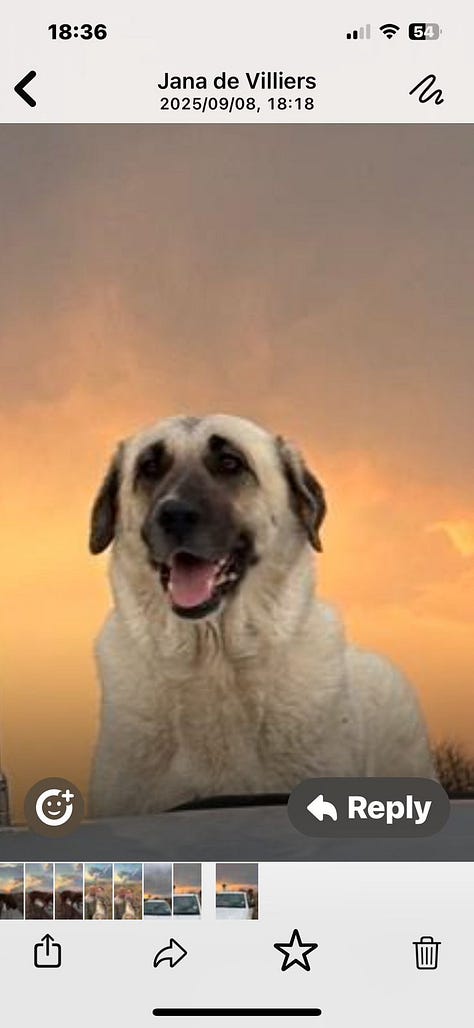
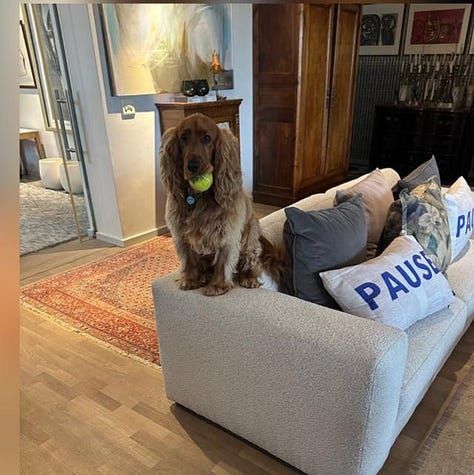
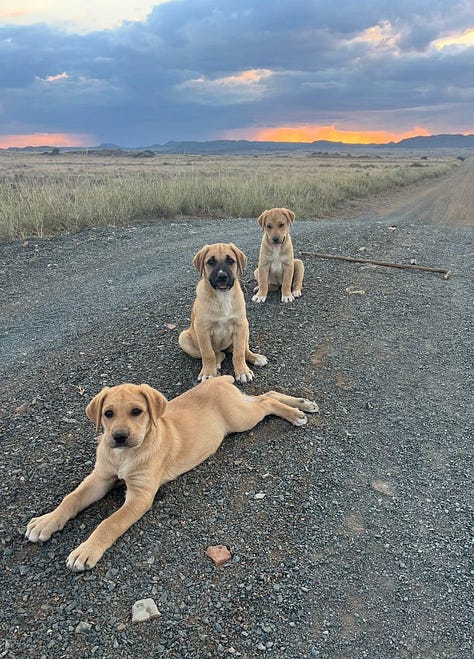
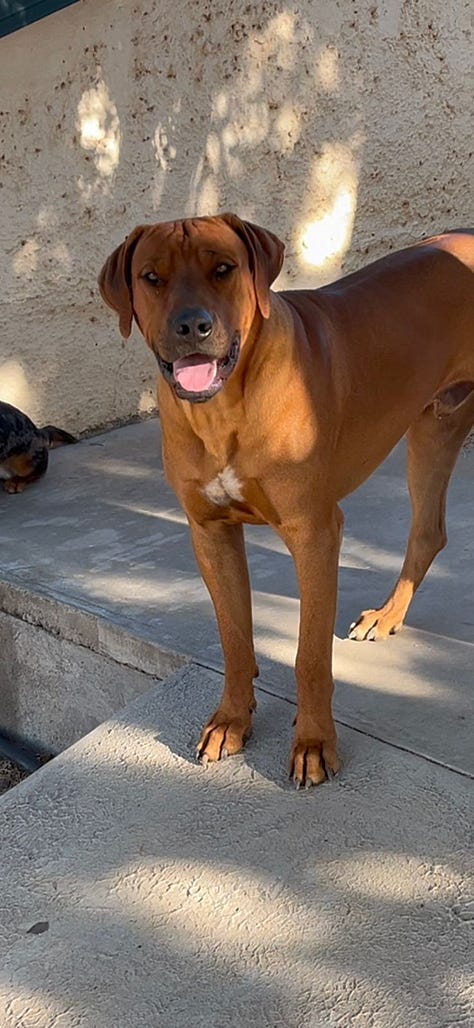
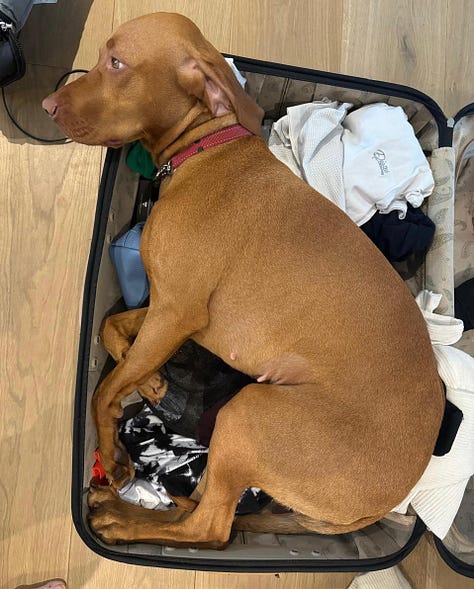
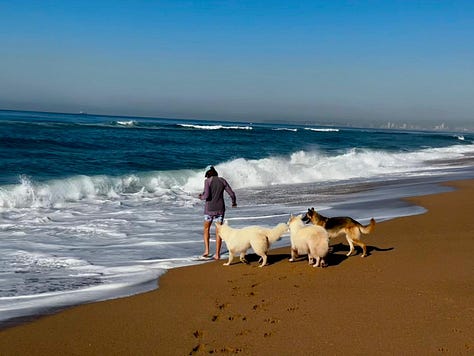
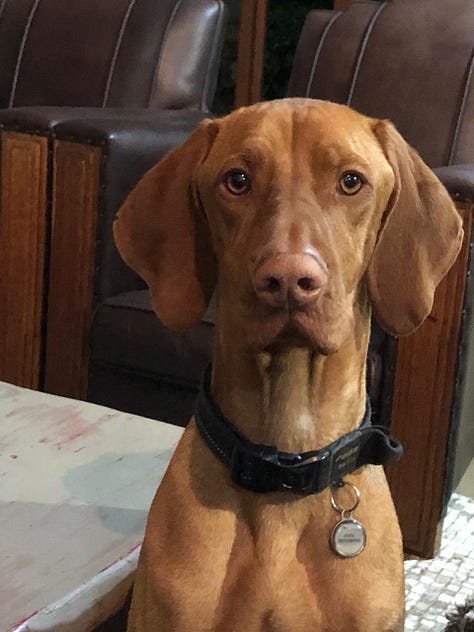
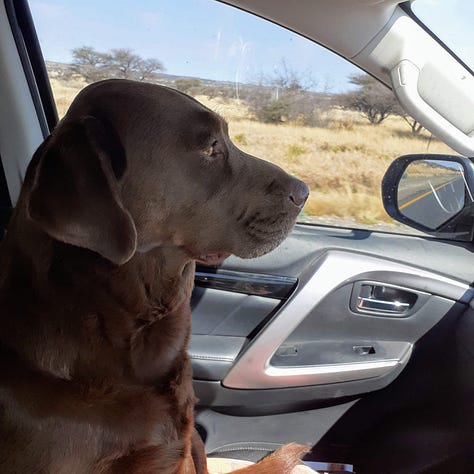
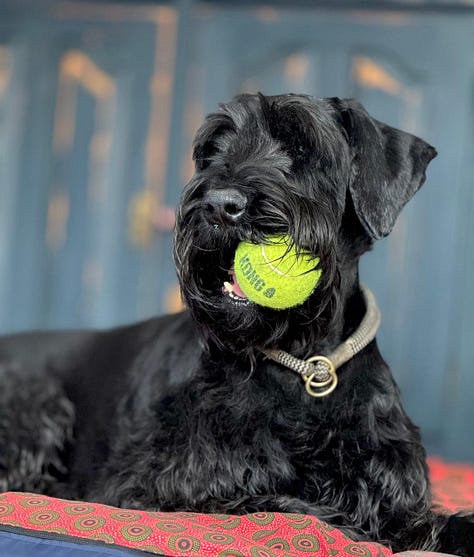
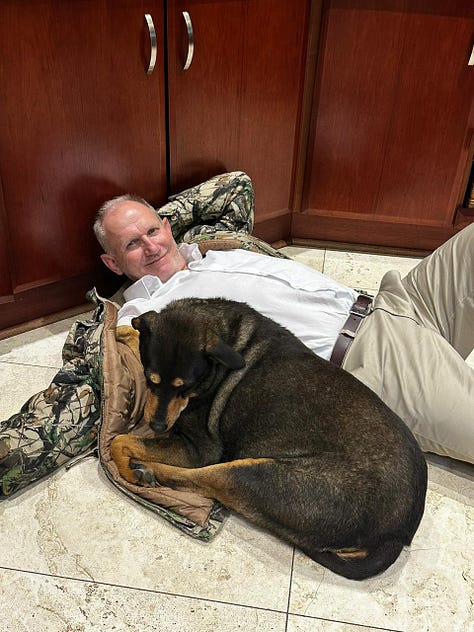
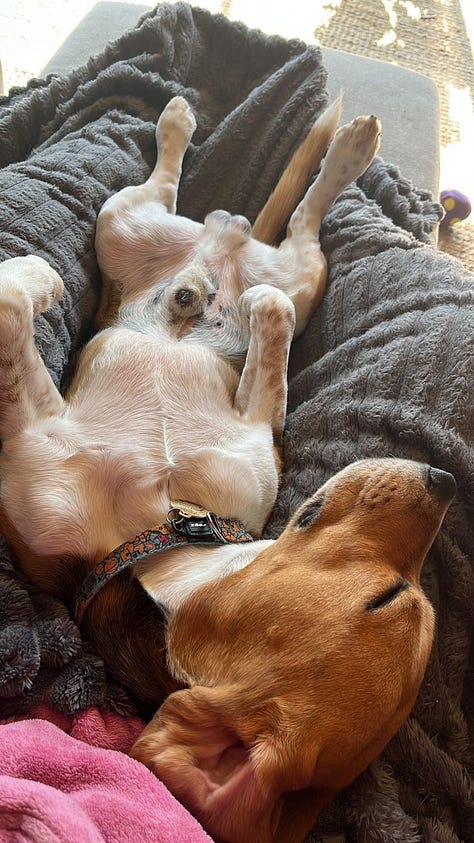
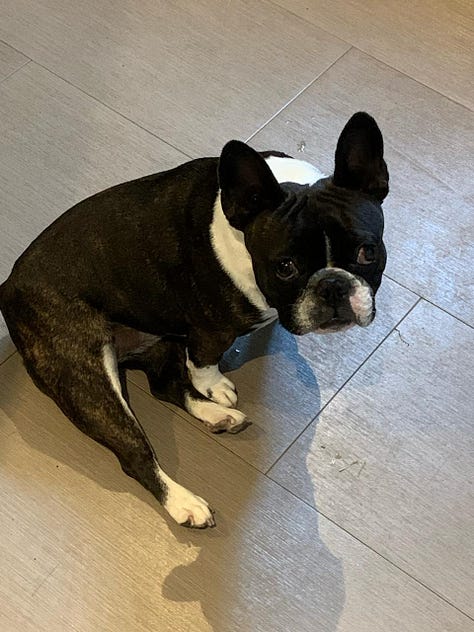
The dogs of my mates from 1984

Ronald Bartels | LinkedIn | Instagram