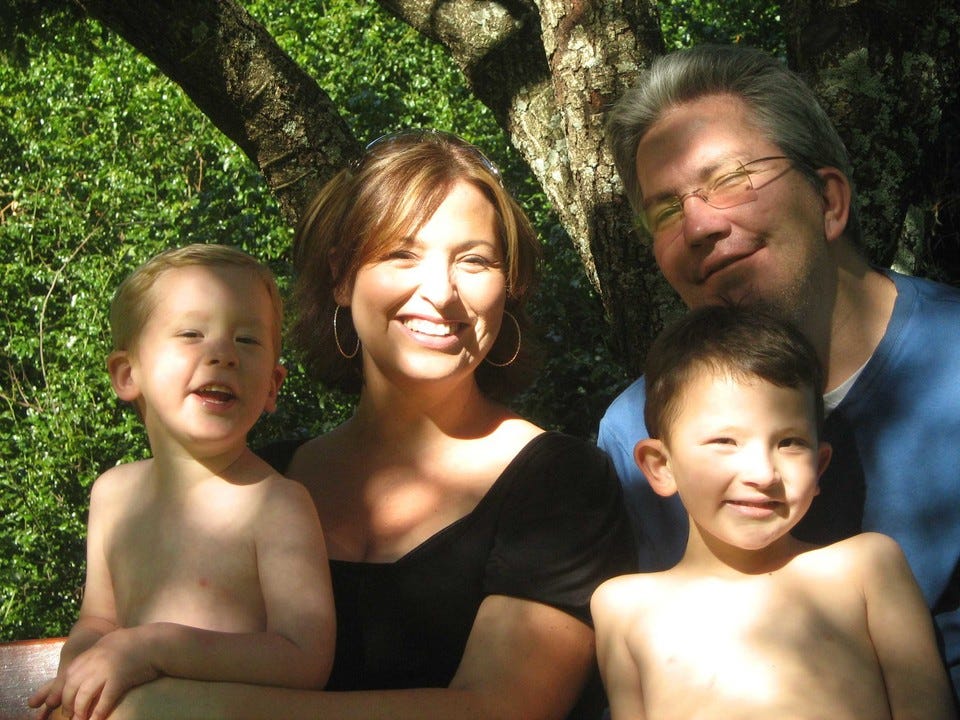
The Morning Patrol with Mastelekđź’Ş

Stories of Mastelek who enjoys farming Boweia Volubilis

A Tapestry of Travel

My wanderlust kicked off with a bang in the early nineties, leaving South Africa for the first time to attend a Netware conference at Elephant Hills in Zimbabwe. The trip was nothing short of epic. We swam kaalgat in the Victoria Falls swimming pool, the cool water a cheeky thrill under the African sun. White-water rafting down the Zambezi was a heart-pounding rush, and our days on a houseboat on Lake Kariba felt like a dream, sunsets, laughter, and the gentle lapping of water. One bloke, Hamilton, earned the nickname Tumbleweed after he stumbled out the back of an aircraft with no stairs, falling flat on his moer. We roared with laughter, and the story became legend.

Next came a flight to Ireland via London for Liz and Noel’s wedding. The craic was mighty, a whirlwind of joy and Irish charm that deserves its own chapter. Ireland’s warmth and spirit left a mark on me, one I’d revisit years later.

Working for Investec meant frequent jaunts to London, the city’s hustle a stark contrast to home. Earlier, with Network Interface Consultants, I jetted to Schiphol Airport in the Netherlands to help Multichoice with their Groupwise and Netware setups. Flying first class was a treat, and the Dutch gifted me blue-and-white Delftware, delicate ceramics that felt like treasures from another era.

One trip to Italy went awry when fog shut down Rome’s Leonardo da Vinci Airport. We diverted to a military airstrip, a chaotic mess that cost me my chance to explore Rome’s ancient wonders. I had to catch a delayed flight to Milan, vowing to return to the Eternal City one day.

With Madge, I traveled to Israel multiple times, flying into Tel Aviv on El Al after intense pre-flight interrogations. Jerusalem was a revelation—walking the Via Dolorosa, visiting the Church of the Nativity, and standing on the Hill of Olives felt like stepping through history. I floated in the Dead Sea’s salty embrace and climbed Masada’s rugged heights, the views from the top etching themselves into my soul.
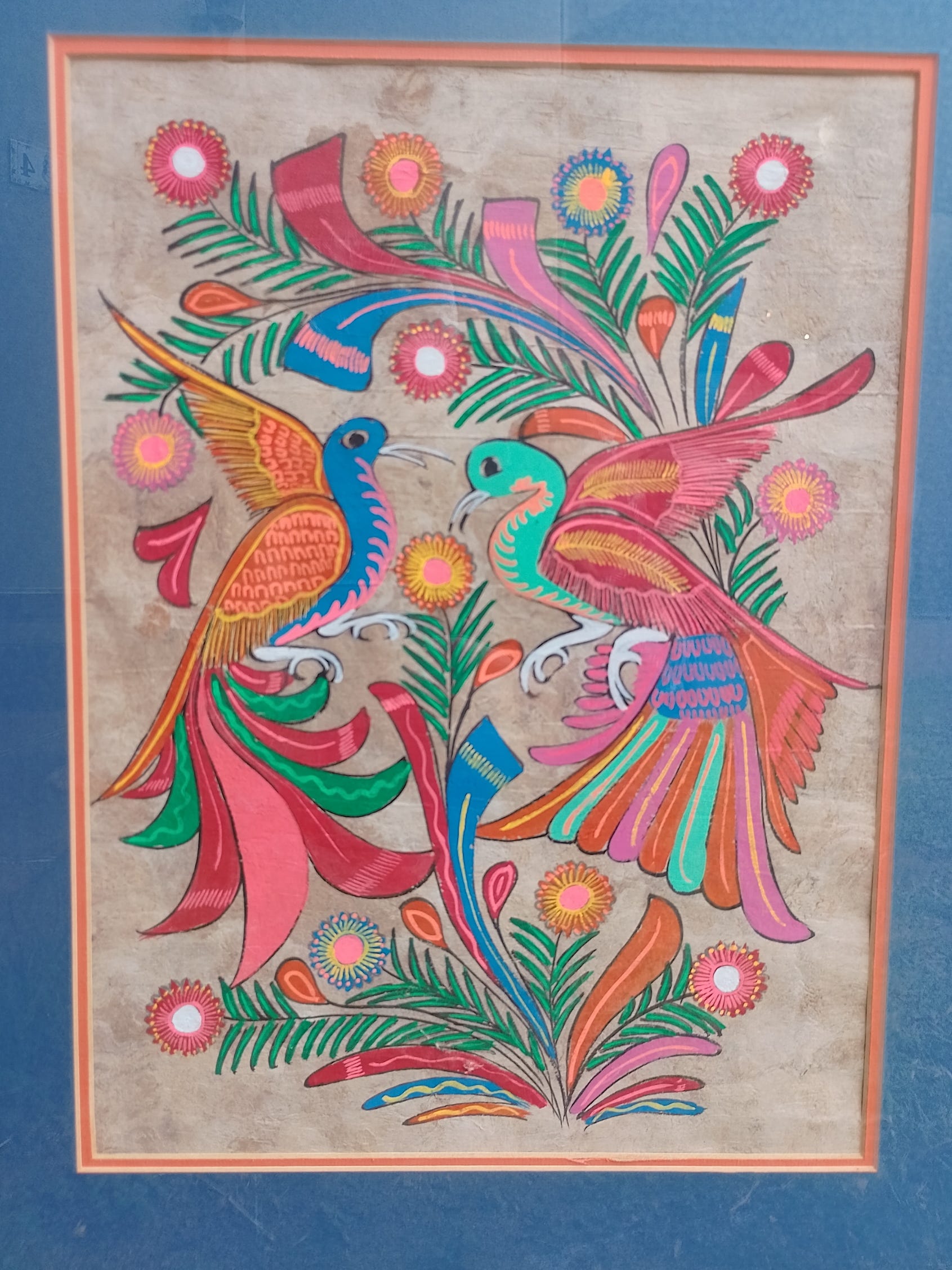
Mexico was another Madge adventure, and Acapulco stole my heart with its vibrant energy. I fell hard for the place—its beaches, its pulse, its life. In Spain, I visited Ronda, my namesake town, and felt an inexplicable connection, as if I’d been a bullfighter there in another life. The town’s dramatic cliffs and storied bullring stirred something deep. Mijas, a nearby mountain village, charmed me despite the pungent donkey taxis. Golfing there, though, proved I was utterly hopeless with a club.

On one of my trips to Europe with Madge I flew on the 747 SP.

New York with Madge was a whirlwind, capped by watching Footloose on Broadway, the music and energy lighting up the night. Back in Ireland for my honeymoon with Kath (Kathleen), we traced the Ring of Kerry, its rugged beauty a perfect backdrop for new beginnings. Other London trips with Investec saw me hopping to Shannon Airport, once circling for 30 minutes because Bill Clinton’s visit had snarled air traffic.

The States called again for IT conferences in New Orleans and Orlando, each trip a mix of work and wonder. More recently, Australia became a regular haunt. I explored Woody Island south of Esperance with my boet, its wild beauty unforgettable. Sorrento’s beachy charm pulled me back for multiple visits, each dip in the ocean a reset for the soul.

New Zealand was a stopover for Jason’s wedding, routed through Hong Kong—a city I found overpriced and overwhelming, one I’d never revisit. But Mauritius? That’s the gem I’d return to in a heartbeat. As an old sailor, its game fishing, catamaran sailing, pristine beaches, and sparkling pools were paradise. The island’s rhythm sang to me, a siren call I’ll answer again someday.

A Dusty Fix & a Whisky-Fueled Night in London

During my time at Investec, I faced a perplexing challenge that took me from the familiarity of remote troubleshooting to the heart of London’s financial district. The dealing room in London was plagued by sluggish network performance, and hours of remote diagnostics yielded no answers. Frustrated but determined, I boarded a plane to tackle the issue on-site.

The day was a marathon of testing one scenario after another. After exhaustive checks, I stumbled upon a subtle but critical issue: a slow error rate on a fibre port—the active bridge port for the dealing room’s VLANs. Enterprise LANs rely on the spanning tree protocol for path protection, a simple yet finicky system. Suspecting the port was the culprit, I informed the head of the dealing room that I’d need to alter the path topology. No sooner had I made the change than he burst in, exclaiming that the network was back to its normal, snappy performance.

The next task was locating the faulty port. This proved trickier than expected, as we wandered the building in search of the right room. Apparently, only a contractor—the cabling guy—ever ventured into that particular closet. After some effort, we found the switch and the offending port. I removed the fibre and ejected the GBIC, only to find my hand coated in dust. The GBIC was filthy, a clear sign of neglect. A few minutes of cleaning the fibre connectors, a quick reinsertion of the GBIC and cable, and the network was humming again.

As a gesture of gratitude, the head of the dealing room offered a remarkable reward: tickets to a whisky tasting event that evening at the Reuters building, hosted by the master distiller of Chivas Regal. He handed the tickets to me and my colleague, David Cripps, and off we went.

The Reuters building, a stunning old sandstone structure opposite the iconic Daily Telegraph, was as grand as expected. The tasting took place in the main boardroom, a posh setting filled with a mix of financial types—some might say “crusty old farts.” Each of us was presented with six single malts and tasked with categorizing them into Scotland’s four whisky regions: Lowlands, Highlands, Speyside, and Islay/Skye. (Campbelltown, sometimes considered a fifth region, wasn’t included.) I eagerly sampled the tots and placed my glasses on a map of Scotland, scoring a respectable four out of six.

The master distiller then announced we’d create a sample blend using the six single malts. David and I exchanged glances—our glasses were empty. “You were meant to taste, not drink,” the distiller said with a grin, but he kindly replenished our malts. We crafted a unique blend, combining the distinct regional flavors into something new. Each region’s single malt brought its own character—peaty, smoky, or smooth—to the mix. By the end, we each had a small sample blend to take home, but not before downing twelve tots of single malt between the tasting and blending.

The night took a spirited turn when the master distiller invited us to the Reuters private bar. There, the barman whipped up whisky cocktails, proving that whisky could be just as delightful mixed as it was neat or with a splash of water. The evening blurred into a whirlwind of laughter and revelry. We ended up partying in Soho, and I vaguely recall a late-night encounter with a policeman outside St. Paul’s. He scolded us for hopping into a taxi with a broken headlight—a minor offense, but a bold one to point out to two people who’d consumed enough whisky to make a dent in Chivas Regal’s marketing budget.

The next morning, I awoke to a pounding headache, convinced a jackhammer was rattling inside my skull. It took me ten groggy minutes to realize the window of our rented flat was wide open, and the real culprit was an actual jackhammer at a construction site next door. The dust of the GBIC and the haze of the whisky-soaked night had left their mark, but the memory of solving a stubborn network issue and celebrating with Scotland’s finest spirits remains a vivid chapter in my journey.
Ronald Bartels | LinkedIn | Instagram

I was born a South African

Apartheid to democracy

The world is one of stereotypes. During my lifetime we moved from apartheid to democracy. That is a part of my life which includes memories of my family and South Africa and reflects on how stereotypes reinforce alienation.

JT

No alt text provided for this image

My maternal grandfather was Langenhoven’s neighbour in Oudtshoorn. Yes, the same guy who wrote the Stem and is considered the father of the Afrikaans language movement together with Preller. As a young lad my grandfather, John Theodore Elliott (JT), had his mom send him to drag Langenhoven out of the pub and home into bed. JT Elliott would become the treasurer of the Saamwerk Kommitee, treasurer of the Rapportryers as well as the Direkteur van Afrikaans at the SAUK. Ironically, I was not accepted as an Afrikaner and was always made to feel alienated from his legacy.

No alt text provided for this image

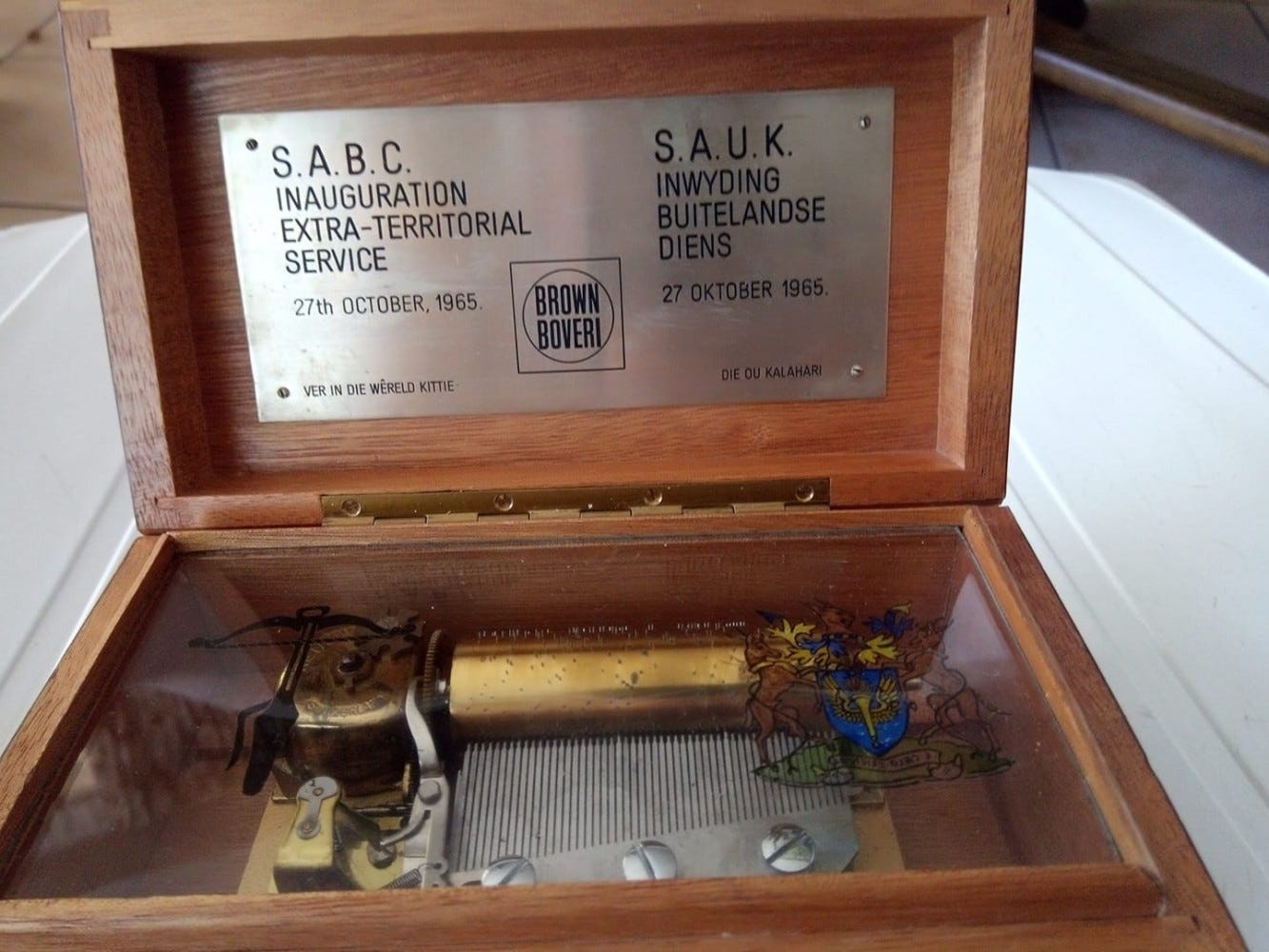
I have a musical box of JT’s that commemorates the establishment of Outside Broadcasting at the SAUK. The two songs are “Ver in die wereld kittie” and “Ver in die ou Kalahari”. These songs are a lament about a longing for an experience that is not available in the present. A universal experience where the current stereotypes do not fit, and a longing is created from the past where the perception is that times were simpler. My memories are a similar lament.

JT’s ancestors arrived in the Cape Colony as part of a delegation of Scottish Calvinists who came to join their brethren on the southern tip of Africa in a community of like minded people. They felt the need to move as they perceived the climate in Scotland not to be of a suitable nature. One part of it is true, it is a darn cold place. One of JT’s father’s contemporaries was Andrew Murray who would play a significant part in the religious development of the then Boers. Although JT was of Scottish heritage he was never accepted as Scottish and became an integral part of the Afrikaans language movement.

Scotland

My wife Kathleen (Kath)’s parents also completed that journey from Scotland to South Africa. It was not because of religious reasons but the practical ones of a post war Scotland being tough and difficult as well as being darn cold. In July when its the warmest month in Scotland, its our coldest month but the same temperature in Scotland, I plan to take a cycle around Loch Lomond as a bucket list item.

The enforced grouping of people into specific associations has always been problematic for me. With each grouping there would be an alienation. There are few that are truly lasting and meaningful and there are some that are repulsive. As I have lived this has amplified, even in this part of the planet Earth in which we live at the southernmost point of the continent of Africa. We went from pariah to Rainbow nation, but then fell short in a cesspool of corruption and cronyism.

Make no mistake that the cycle is present elsewhere in the world, with the first world’s distorted view of nationalism being an example. The big problem is that the means involves behaviour and antagonism by the belligerents that cannot be rationally justified.

Hanoverian Cavalry Officer

My dad’s ancestors arrived on a ship called the Kandaze from Hanover, then a principality in the region of northern Germany. When they left the principality was ruled by the House of Saxe-Coburg and Gotha. A couple of decades after they left Bismarck would invade Hanover to create a greater Germany. The reason being that the principality would not confirm a female heir known as Victoria as head of state and Bismarck seized the opportunity, as the British stood back. The man on that ship was Christof Bartels, who had become a Lutheran missionary, but had been a cavalry officer in the army of Saxe-Coburg and Gotha. Saxe-Coburg and Gotha still exist to the day as the House of Windsor, the hereditary rulers on the United King of Great Britain and Northern Ireland. Christoff paid allegiance to the Windors as a former calvary officer in their regiments and prayed in his churches each Sunday for their welfare. Even with Christof as my ancestor, I was neither British nor German, but maybe Hanovian.

uMshwathi

My dad had a farm named Oakvilla in the Natal Midlands in an area known as uMshwathi. The nearest town was New Hanover and, on our farm, lived the Nkosi of the Gumedes. They are part of a large grouping of over two hundred tribes that form the Zulu nation. As a kid my first words were in Zulu and there was free movement between the dusty farmhouse and the wattle and daub rondavels on the farm. I was given Tonka Toys as birthday and Christmas presents and my mates had clay tractors. We would play next to the Inyosini stream for hours that turned into days with these toys.

My dad bough me a gold Raleigh Sports Bicycle. It had aftermarket three speed gears on the rear hub. During school holidays I would use it to ride to New Hanover and back. The route followed the telephone lines which connected to the exchange located at the Post Office. The lines would hum and be my vocal companion on those rides. This triggered my first passion of riding, which has stayed with me over the years.

My dad was known as Mastelek and I was Mastelek Encane. Amongst the Zulus that referred to being, The Strong One. I was accepted in that small group around our farm, but I was not a Zulu.

Windhond

Elliot Brothers

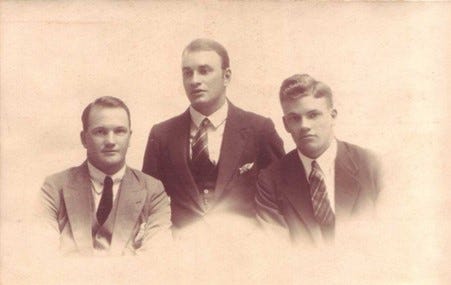
JT’s brother was Riebeeck who played wing in Rugby and was known as Windhond by his teammates. He played for Natal and was selected for the Junior Springboks to play in a tour to Argentina. The land was not yet a test playing nation and there was some debate whether the team would be a Springbok team or not. One of Windhond’s mates was Philip Nel, one of the best Springbok’s captain ever to have led the team. Windhond met a good-looking Spanish lass in Argentina and never returned home. Riebeeck was never an Argentinian even though he made it his home. We are kin.

Grey

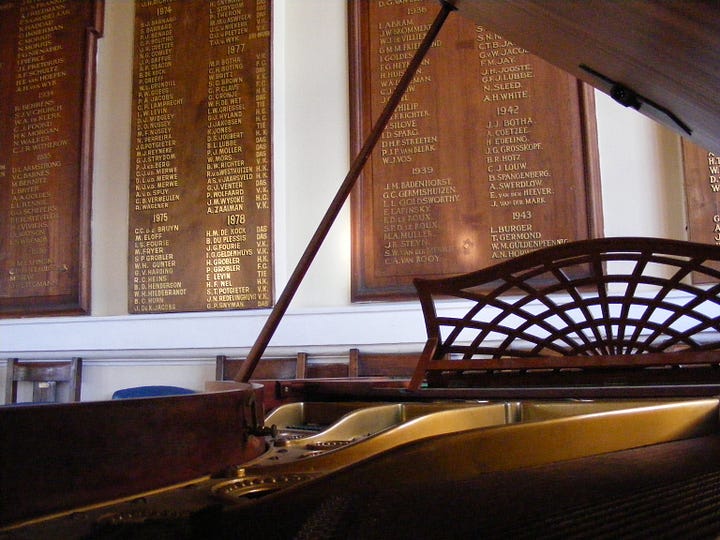
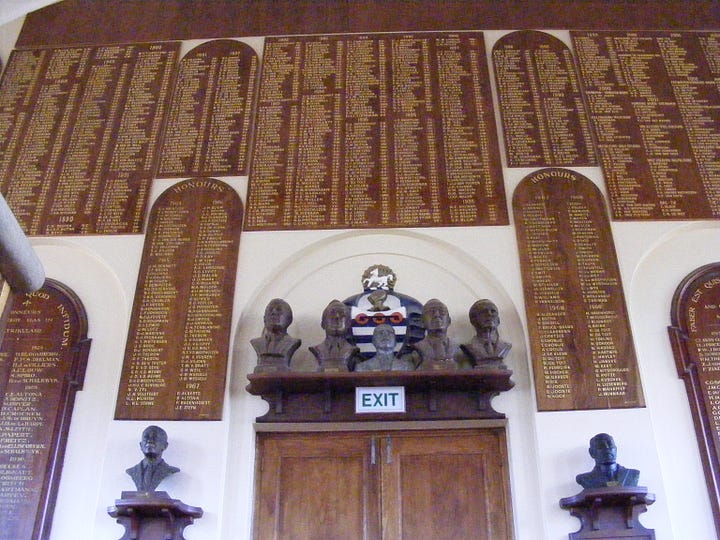
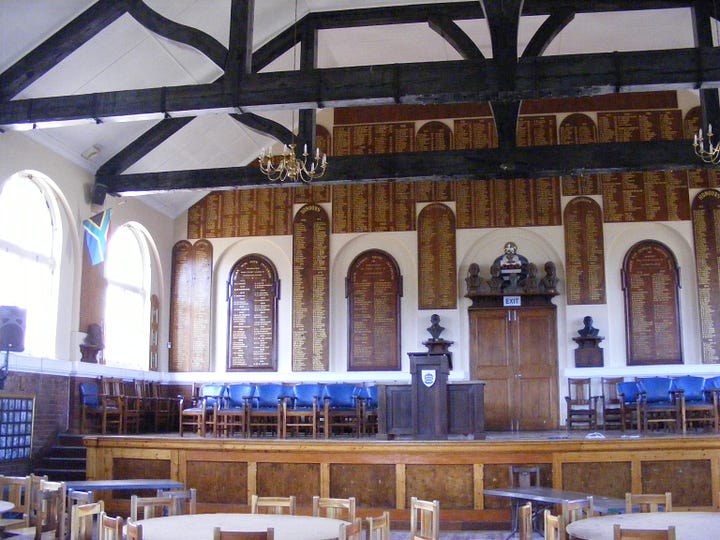
I went to school In Bloemfontein at Grey College where my name appears on the Honours board. On the board below mine appears Braam Fischer, a famous anti-apartheid activist. I matriculated in the year that George Orwell predicted a totalitarian society. At Grey I wrote in the school paper and now here we are full circle in the year of the pandemic. I am writing again because my cousins said I must write a book, and this is for them and all who have encouraged me including Kath. There is no book yet, but I'll post my stories.

Growing up I would spend a large amount of my spare time reading. The books varied from Alan Paton’s Cry the beloved Country to James A. Mitchener’s The Drifters. James A. Mitchener even wrote a book, the Covenant, about South Africa. The book that I read multiple times and fascinated me was Douglas Bader’s Reach for the Sky. It was about a Second World War era pilot who became a hero fighter pilot during the Battle of Britain flying Hurricanes and Spitfires despite losing his legs. The story stuck great resonance with me as there was a guy with a physical impairment who overcome the odds stacked against him to succeed!

Lenore and Ernfried Bartels with their parents

My parents met at the start of the sixties at a mutual acquaintance's wedding. The two people with vastly different backgrounds started a typical South African relationship.

Sixties

I was born in Grey’s hospital in Pietermaritzburg to Lenore and Ernfried as the United States was escalating the war in Vietnam. On the charts that month a new song debuted, The Pied Piper. In a twist of fate, I was born in the hospital named after the same man as the school I would attend. I have Microphthalmia in my left eye. Although this and coloboma affects fourteen in one hundred thousand people, I rarely encounter anyone else with the condition. Famously in the case of the missing Madelaine McCain, she was an example of someone with the condition. I am not disabled. I am not an Afrikaner. I am not Scottish, British, or German. I am neither black nor white and not a Zulu. I am not a Christian. All of these have developed as stereotypes, and I fit into none of them.

I was born a South African.

Ronald Bartels | LinkedIn | Instagram

German Heritage in South Africa

Christmas, for me, has always been a sacred ritual steeped in the traditions of my German heritage—a heritage that refuses to fade, no matter how many sun-scorched South African summers I or my ancestors have endured. In Germany, and across much of the Nordic countries like Sweden, Denmark, and Norway, the true heart of the holiday beats on Christmas Eve, known as Heiligabend or “Holy Evening.” This isn’t some arbitrary choice; it’s rooted in the Biblical narrative of Christ’s birth occurring at night, under the quiet stars, as immortalized in the beloved carol “Stille Nacht, Heilige Nacht” (”Silent Night, Holy Night”), deeply embedded in German culture. The evening unfolds with a sense of solemn anticipation: families gather for a festive meal, often featuring hearty dishes like goose or fish, followed by the lighting of the Advent wreath’s final candle. Carols are sung, prayers are offered, and then comes the Bescherung—the opening of gifts, believed to be delivered by Santa Claus, a nod the the Yanks. Christmas Day, by contrast, is reserved for rest and reflection. In the Nordic lands, this Eve-centric celebration echoes similarly—think of Denmark’s Juleaften, where the tree is danced around, or Sweden’s emphasis on a smorgasbord feast and gifts from the tomte, a gnome-like figure. It’s a method that prioritizes the magic of twilight, the hush of nightfall aligning with the miracle’s intimacy, rather than the bustle of a morning rush.

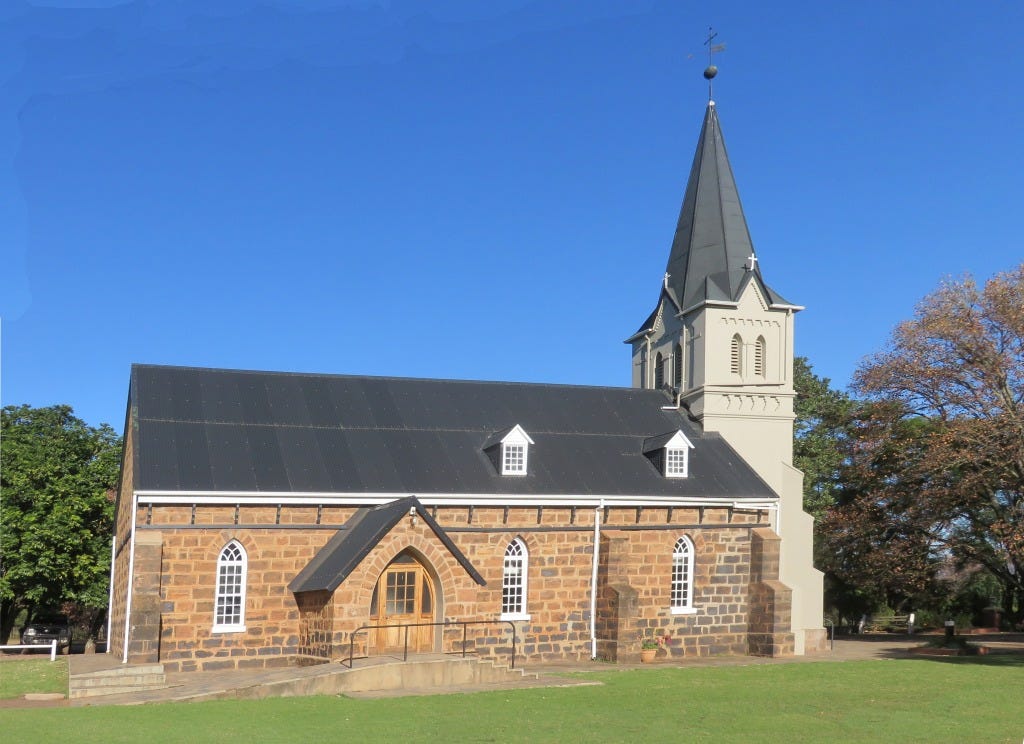
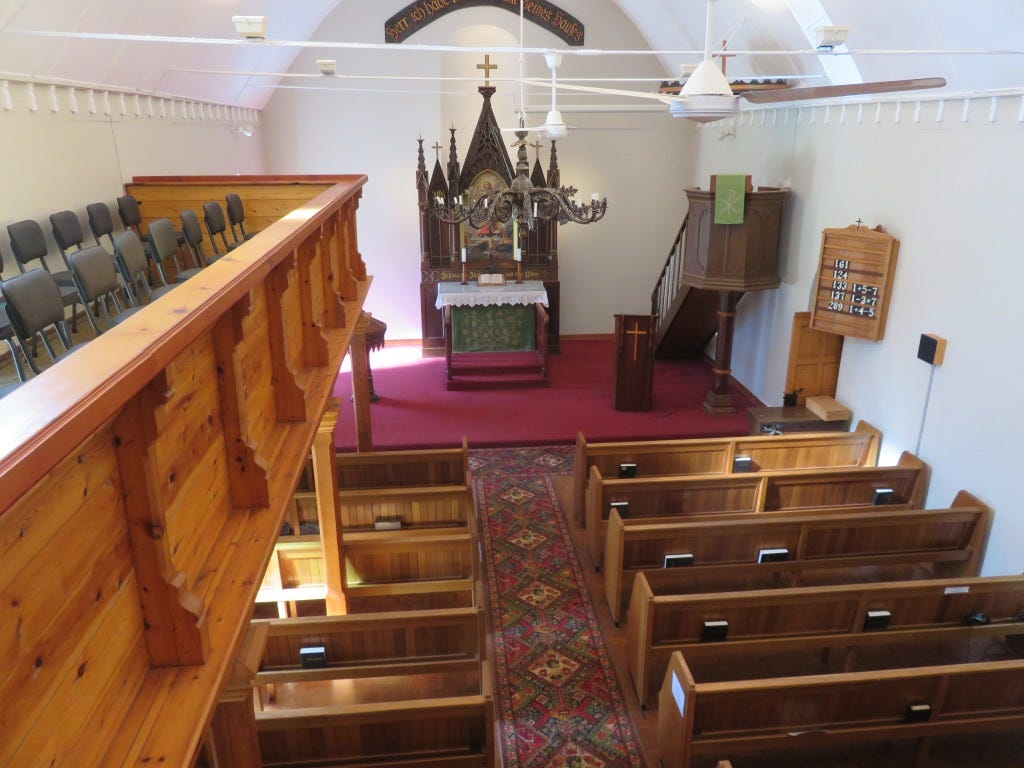
My earliest memories of Christmas transport me back to the New Hanover Church in rural Natal, where the air on Christmas Eve hummed with reverence and pine-scented wonder. The church would erect a colossal fir tree inside that stretched triumphantly to the vaulted roof, its branches heavy with ornaments but illuminated solely by real candles—no garish electric lights to spoil the authenticity. It was a sight of pure majesty, flickering flames casting dancing shadows on the pews, evoking a time when fire was both warmth and warning. We’d join in singing “Stille Nacht,” our voices blending in harmony, the German lyrics rolling off my tongue. Afterward, the brass band would strike up, their horns and tubas filling the night with triumphant melodies that seemed to herald the birth itself. From there, we’d hurry home, hearts alight, to unwrap presents under our own tree, a ritual that felt like the culmination of the holy night, not a prelude to the next day.

Ah, the tree—that evergreen sentinel at the center of it all. For Germans, the fascination with the Weihnachtsbaum runs deep, tracing back to pre-Christian pagan roots when our ancestors were tree worshippers, revering evergreens as symbols of enduring life amid winter’s deathly grip. In ancient Germanic tribes, these trees were adorned during the Yule season to honor the gods and ward off evil spirits, their needles a promise of spring’s return. Christianity wove this into its fabric during the Middle Ages, with figures like Martin Luther credited for popularizing the indoor Christmas tree, candles representing the stars or Christ’s light. To us, it’s more than decoration; it’s sacred, a living emblem of heritage, resilience, and the cycle of renewal. Even now, I can’t imagine a Christmas without one—it’s the axis around which the holiday spins, grounding me in the forests of my forebears.

When I met Kathleen (Kath), our Christmases became a gentle battlefield of traditions, though one fought with love rather than strife. We didn’t have a “trial” holiday together; we met and married in the limbo between one Christmas and the next, so our first shared celebration was a whirlwind of negotiation. She, with her British upbringing, leaned toward the bright bustle of Christmas Day, presents at dawn, a big lunch in the sweltering heat. I, unyieldingly German at my core, insisted on the Eve. We compromised at first, doing both: gifts on the night of the 24th, then more festivities on the 25th. It was exhausting, a blur of wrapping paper and weary smiles. But one year, we simply let go, we celebrated solely on Christmas Eve, then lounged through the next day in blissful relaxation. It felt right, like slipping into a well-worn coat. I’m so glad I won her over, though she’d tease that it wasn’t my persuasion but the practicalities: “It’s usually too hot during the day,” she’d say with a wink, “and it just works better at night.” For me, it was deeper, I couldn’t shake the German in me, that pull toward the holy quiet of evening, where the world’s chaos pauses, and family becomes the star. In the end, our Christmases evolved into something uniquely ours, a blend of old-world ritual and new-world ease, proving that traditions aren’t chains but threads we weave into the fabric of our lives.

Farterđź’¨

When my dad, Mastelek mkhulu, passed away we had a memorial at New Hanover Church. Callum was sitting in the back with his grandpa Owen, when the pastor started reciting the Lord’s prayer in German, Onze Vater. Callum burst into giggles and loudly whispered to his grandpa that the man in front had said, Farter.

Ronald Bartels | LinkedIn | Instagram

Scattering the virtual ashes

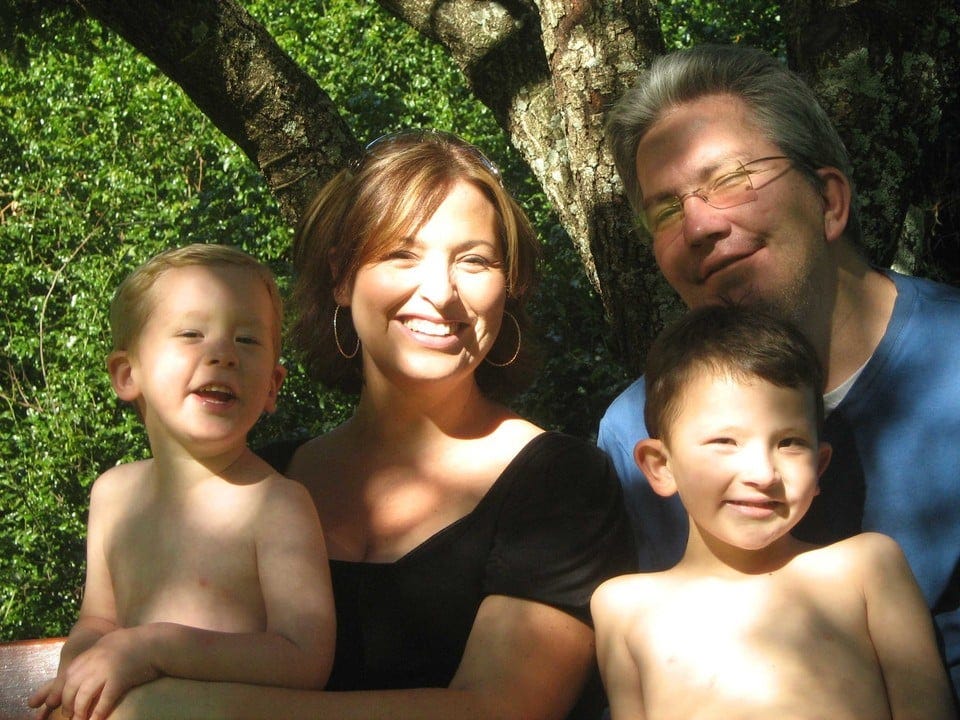
My wife used to say that often she would read about what I was thinking via something I had posted online instead of a personal conversation. Some things are easier to write about than to speak about. Something else my wife used to say is that I never took enough pictures of her and the children. I probably enjoy writing more than I do talking. That’s just me.

I have neglected writing when I changed jobs. My new boss never did encourage me to write and was very disparaging about journalists and Grandmasters on MyBroadband. MyBroadband (access it here) is the biggest technology site in South Africa and there should have been a better relationship with them!. I should not have paused. After all my name is on the board at Grey for Journalism. So I have started again and across multiple media!

On 17th August 2011 my wife passed away. Her wish was to be scattered to the four corners of the Earth. That is a difficult place to find on a map, so we selected three places in the Pilansberg and a koppie at the Norscot Koppies reserve. I also started writing a book, called the Second Corner of the Earth, which was a nod to her wish. Its a work in progress.

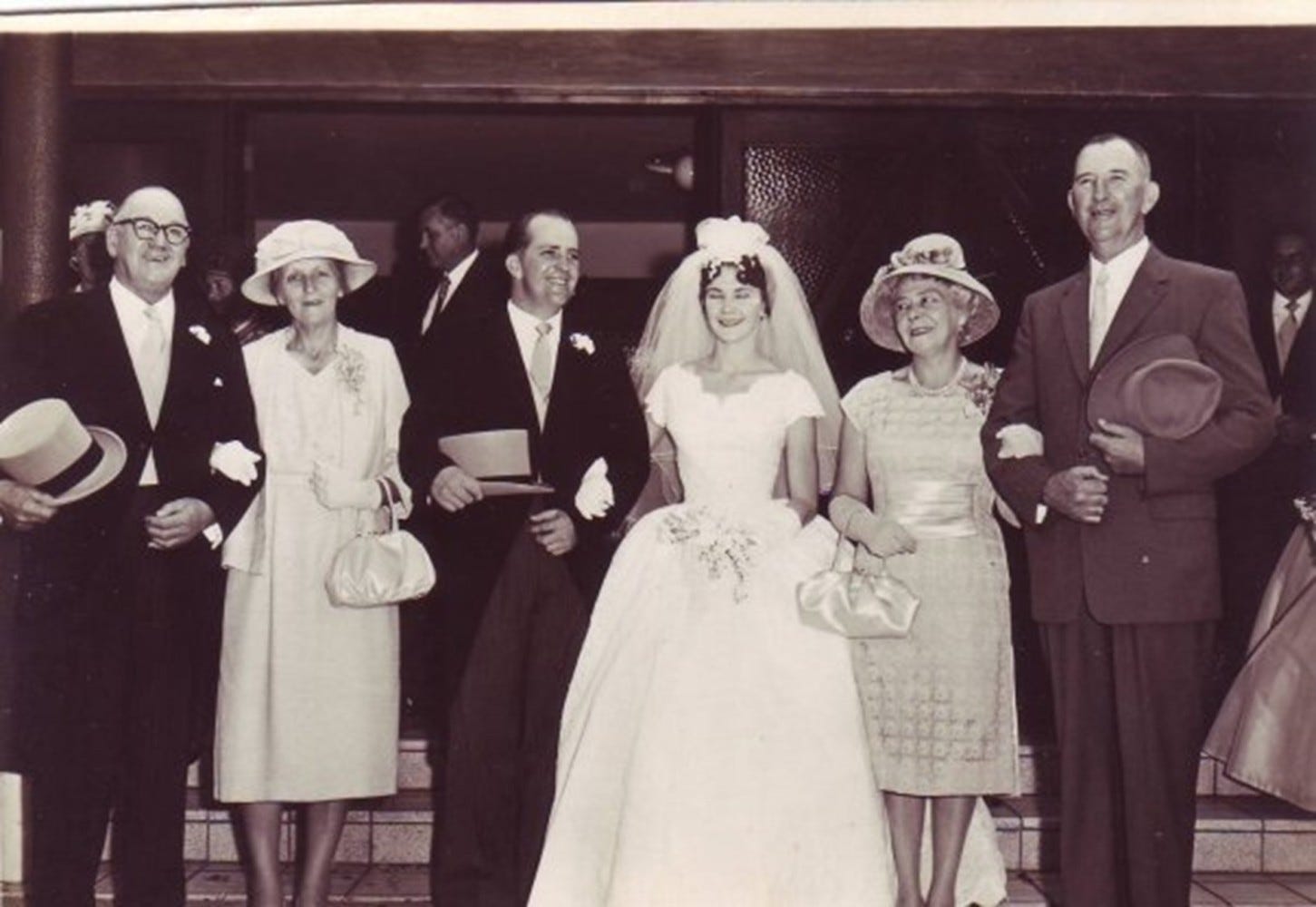
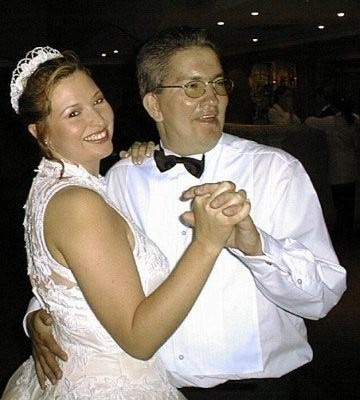
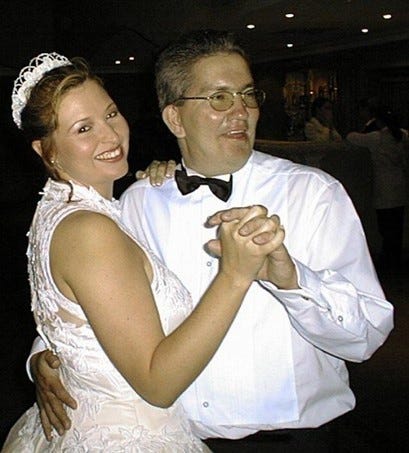
However, her facebook account remains as an electronic tombstone. I realized that when we go, all of that is going to remain is not our scattered ashes but our electronic presence. I started posting pictures of our sons and me online on a regular basis. Somehow it makes me feel that she can see them and smile down at us. I hope there are enough pictures for her to see! In addition, our house had been hit a few times by lightning. The hard disks were toast, which included our photos. The only ones that survived were the online ones. An example, is her favourite wedding picture (see above) which would have been gone had it not been posted online.

Social media has become toxic and can be debilitating. But if you see it as a scrapbook of life and scattered electronic tombstones, its context is different. Its memories, good and some even excruciatingly embarrassing. In reality, I’m writing it for myself and it provides enjoyment and purpose. If you just lurk on social media in a mindless scroll of other people’s content you brain slowly dies and becomes part of the Borg collective. And nothing screams Borg more than Tiktok that has assimilated a generation of mindless humans. If you create content and write yourself, then great, you mind will not shrink. You can even use some AI as a helper, its fine. The robots are not going to take over the world.

The Real Threat Isn’t AI — It’s Forgetting First Principles

Many moons ago, I had a burden. I had been letting go the emotional ashes that the presence of her worldly possessions had created. The last thing I let go were her shoes. I was present when she went and the shoes were on a chair in the room outside under my jacket. During the past year, no-one had asked me what happened in those moments and what were her last words. I logged onto facebook and posted it on her electronic tombstone, her facebook account. It was the same release as when the shoes left, a burden I did not have to carry myself. BTW: the words were: “I don't know.”

My dad is Hanoverian and my mom is from the clan Elliot. How my oupa John's family ended up in Oudtshoorn from the Scottish border is something on which I still need to do some detective work? Regardless, I am sure the genes are responsible for the appreciation of a good Scotch.

I never owned a kilt and Argyle jacket. Kathleen (Kath) who was also Scottish would often suggest I go and buy one. It was one of those things that I would say yes and never get around to doing. The woman I loved died while I was standing next to her on a paramedic's stretcher. I crouched down with my hands over my head listening to the sounds of attempted resuscitation and defibrillation. When that happens you stare in the abyss of insanity.

Turning away from the abyss is not a single motion. It consists of a large number of small things. One of those was keeping the promise of getting that Scottish dress outfit. I went to Chris Mullender who imported the tartan from Scotland and a few months later it was ready.

Now on all smart occasions, I step out in the tartan of the clan Elliot.

PS: Babe, I hope you are still reading... (hope you have found this and know what I'm thinking!)

Ronald Bartels | LinkedIn | Instagram

Reflections on Hansie Cronje

In the annals of cricket, few stories stir the soul quite like that of Hansie Cronje. I’ve written before about how I never bought into his excuse during the match-fixing scandal, that the devil made him do it. It seemed like a desperate plea, a way to rationalize the unraveling of a career built on talent and leadership. Yet, despite that, I firmly believe Hansie possessed a core of integrity that set him apart from so many others in the game. When the chips were down, he manned up. He admitted his mistakes, laid bare his failings before the world, and faced the consequences head-on. No hiding, no denials, just raw honesty in the face of ruin.

Contrast that with the cowardice of the Waugh brothers, Steve and Mark, who spun webs of lies to cover their tracks in their own controversies. And let’s not forget the Ozzies—who’ve always played fast and loose with the spirit of the game. It all came crashing into the open during that infamous sandpaper saga, when Steve Smith, David Warner, and Cameron Bancroft were caught tampering with the ball using yellow grit hidden in their underpants. The hypocrisy of it all boils my blood to this day. The world crucified Hansie for his involvement in match-fixing talks, banning him for life and stripping him of his captaincy. But those Ozzies? They got slaps on the wrist, suspensions that felt more like holidays, and then waltzed right back onto the field, helmets gleaming under the floodlights. Double standards at their finest. If justice were truly blind, Smith, Warner, and the Waughs should have joined Hansie in permanent exile. Banned for life, every last one of them.

The backlash against Hansie extended far beyond the pitch. I remember the sanctimonious outcry when some suggested he didn’t belong in the Hall of Fame. Leading the charge was that scam artist Naas Botha, a man with multiple identities and a trail of debt in his wake. He spouted off about Hansie’s unworthiness, and I couldn’t hold back, I called him a poes straight to his face. He threatened to sic his lawyer on me, but my mates from Grey College rallied without missing a beat. “Don’t worry,” they said. “There are 37 of us who are lawyers, and we’d love nothing more than to teach him a lesson or two.” That shut him up quick.

Then came the day that shattered us all, when Hansie perished in that tragic aircraft accident. It hit me like a thunderbolt, a double whammy that left the old Grey community reeling. I spoke to Kathleen (Kath) rand told her I was heading to the memorial service in Bloemfontein at Grey College. To my surprise, she said she’d join me. So off we went, driving through the Free State landscape, and there we sat on the vintage Reunie Hall chairs next to Zola Budd, sharing in the collective grief. What gnawed at me most was the injustice of it all. Hansie had only talked about fixing matches—he never actually followed through on those dark whispers. Yet he was vilified and cast out. The Ozzies, on the other hand, had physically altered the ball, cheated in plain sight, and what did they get? A temporary timeout and a hero’s return. They showed no integrity, and neither did the cricket authorities who mishandled the whole saga with blatant favoritism. Where was the even-handedness? The fairness that the game supposedly stands for?

A few years later, I bumped into Vollies, my old teacher from Grey, who had risen to become headmaster. He clapped me on the back and said, “Ron, you’re a true Old Grey through and through.” I asked him why, puzzled. “Because you stood up for Hansie when the world turned its back,” he replied. Those words meant more to me than any accolade. And then there was the encounter with Hansie’s dad, Ewie, a few years after that—snot en trane all around—but that’s a tale in another section of my memoirs (See Cosmos, Blackjacks * Kharkibos).

Hansie’s story is a reminder that integrity isn’t about being perfect; it’s about owning your flaws when the spotlight burns brightest. In a world quick to judge and slow to forgive, he remains a flawed hero in my eyes, far more honorable than the cheats who escaped unscathed.

Ronald Bartels | LinkedIn | Instagram

The story that Nico Vivier asked me to write

It was at a Sunday braai at Oom Jan Strydom’s allotment, nestled along the banks of the Umgeni River, that I was first introduced to the Grey handshake. The allotment, leased from the Perry family, was a lush patch of land where Oom Jan grew plump, juicy tomatoes and, down by the river, the most delicious yellow cling peaches. The Perry’s daughter, my mom’s flower girl and one of my godmothers, was a vision, a striking beauty who could’ve passed for Sofia Loren’s twin. Nearly as gorgeous as my future wife, Kathleen (Kath). Not to be outdone, Oom Jan himself had a beautiful wife and daughter. That day, however, it wasn’t the scenery or the peaches that left the deepest mark on me. It was Oom Jood Jordaan, my father’s friend, who introduced me to a tradition that would come to define a part of who I am.

Oom Jood was the reason I had a place at Grey College. When the school’s rejection letter arrived, it was his insistence that overturned it, securing my spot. We met that afternoon at the braai, and as we piled into the back of Oom Jan’s yellow Mazda bakkie to head down to the peach orchards, Oom Jood took me under his wing. As we bumped along the dirt path, the air thick with the smell of ripening fruit, he showed me the Grey handshake—a gesture that, even before I set foot in the school, made me feel part of something bigger.

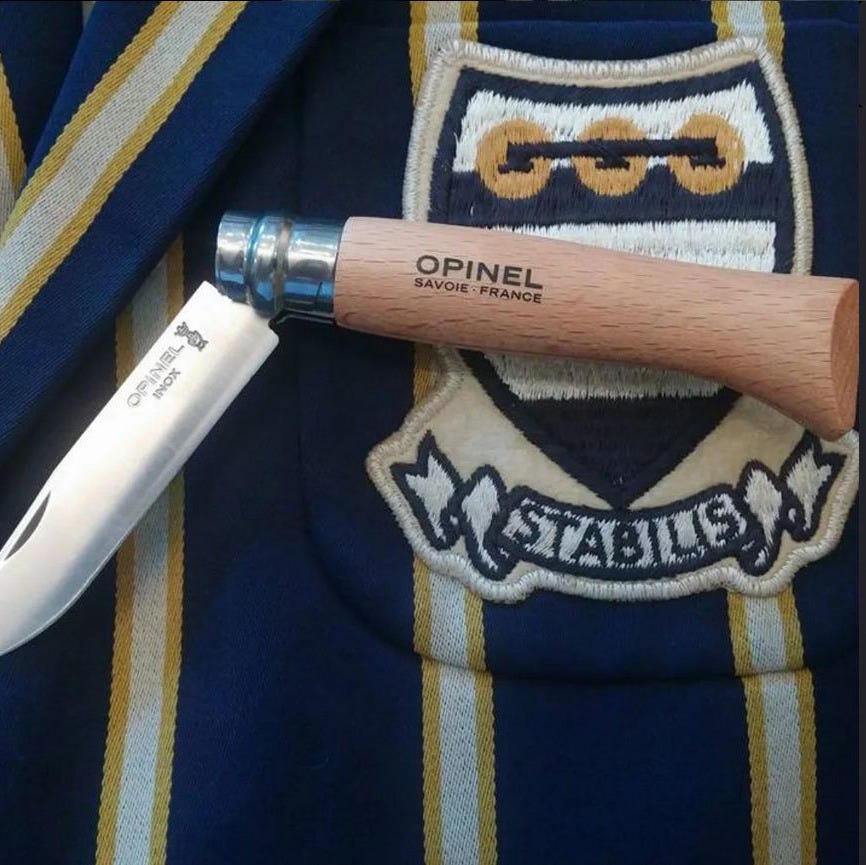
He explained that the handshake was a cornerstone of Grey College’s traditions, a unique greeting shared among the Greybrakke, as the school’s students and alumni were proudly called. I didn’t yet know what it meant to be a Greybrak, but Oom Jood’s words carried weight. “This is how we recognize each other,” he said, his voice warm with pride. “It’s a mark of who we are.” With the river glinting in the distance, he demonstrated the handshake: the hand shaped like a pistol, the top two fingers extended forward, the bottom two curled back, and the thumb raised like a hammer. It was precise, deliberate, and unmistakably unique. As he peeled a peach for me with his French Opinel knife, its blade catching the sunlight, he told me the story behind it.

The Grey handshake, he said, traced its origins to the 1920s, when old scholars returned from the war, bringing with them tales of camaraderie and survival—and French Opinel knives. Those knives bore an emblem on their blades: the hand of John the Baptist, a symbol of quality and craftsmanship. The Greybrakke adopted this hand gesture, transforming it into a handshake that became both a greeting and a badge of honour. It wasn’t just about recognition; it was about embodying the excellence the school stood for, a way to signal that you were part of a brotherhood forged in tradition and pride.

That day, as we plucked peaches from the trees and their sweet juice dripped down my chin, I practiced the handshake with Oom Jood. It felt awkward at first, my fingers fumbling to get the shape just right, but his patient grin encouraged me to keep at it. Little did I know how often I’d use it in the years to come. The handshake became second nature, a reflex that kicked in whenever I met a fellow Greybrak. There were times I’d greet someone with a standard handshake, only to learn they were from Grey. We’d laugh, reset, and start over with the proper Grey handshake, the gesture instantly bridging any gap between us.

The Grey handshake is more than a quirky ritual. It’s a thread that connects generations of Greybrakke, a reminder of the values we carry—loyalty, excellence, and a sense of belonging that endures long after we leave the school’s halls. Every time I form that pistol-shaped grip, I’m transported back to that sunny afternoon on Oom Jan’s bakkie, the taste of fresh peaches on my tongue and Oom Jood’s voice in my ear, welcoming me into a legacy I’d only just begun to understand.

Ronald Bartels | LinkedIn | Instagram

The Epistle of Kathleen

I cannot write Shakespeare but GenAI can, so I gave it one of my stories about a letter from Helen. Its a tragedy of unexpected Greek proportions, but none the less.

PROLOGUE

In quiet Douglasdale, where purple blooms Defy the sprawl of brick and hurried life, A man named Ronald doth sit with trembling hands And holds a letter, penned by Helen’s care Some years after his Kathleen was snatched by death. Two days before she passed, days after the Glorious Twelfth, She sought her friend and poured her secret fears. Mark now the tapestry of love and loss, Of corporate wars, of silence ill-advised, Of soul-mates bound until the end of time. And at the close, a feather from the sky Shall speak of peace. Attend, and you shall see.


ACT I

Scene I – Ronald’s dining-room in Douglasdale. Evening. Jacaranda shadows fall across the table. Ronald sits alone, letter in hand.

RONALD (solus) This fragile bridge of ink, from Helen’s pen, Trembles as doth my soul. Kathleen, my anchor, My spark, my light, gone sudden as a storm That none foresaw. Two days before the end She met with Helen, old and trusted friend, Whose bond with us stretched back through braais and years Of quiet confidences. Now her words Unravel all. I’ll read them once again, And let the past arise before mine eyes.

(He reads aloud, and the scene shifts as by magic to the shopping centre. Soft coffee-scented light. Kathleen and Helen sit together. Peter stands nearby.)

KATHLEEN Of all our friends, dear Helen, thou and Peter Do understand my Ronald like none beside. I sought ye out, for something weighs me down. He drifts… the world hath lost its former hue. Not mere forgetfulness, but deeper still, As if the colour of his days hath fled.

HELEN Sweet Kathleen, speak on. Thy brow is overcast.

KATHLEEN At work he finds no challenge, no bright spark. I thrive amid my tasks, each victory A draught of joy. But he at iBurst sits Unstimulated, starved of growth and art. He needs a place where ideas may take wing, Where creativity may bloom as once The Jacaranda blooms. I dream a life Where both of us chase passion, hand in hand, And reap the harvest of our shared desire.

RONALD (still at his table, aside) Alas! I hid the chaos well, too well. The frying-pan of Investec was hell Of backstabbing and shifting sandy leagues; Yet iBurst proved the fire. Betrayals sharp, Relentless pressure. Jobs grew scarce, and I Came home with forced and painted smiles, Burying stress lest it should burden her. In hindsight, silence was my cruelest fault. She saw withdrawal, thought my light grew dim, When ’twas but exhaustion from the wars.

(The vision continues.)

KATHLEEN Health, too, doth press upon my mind. I feel Such zest for living still, the Drakensberg, Lazy Sundays with the family, Those art and calligraphy classes long deferred. “I have so much living yet to do!” Yet Ronald… I fear at fifty he may stop, Shut down into a place I cannot reach. An invisible wall grows up between us. It terrifies my heart.

RONALD (clutching the letter) My “shutdown” was but weariness of soul From corporate showdowns, where I channeled forth My Scottish blood and in my mind did carve The belligerents with broadsword strokes of rage. One night she hung up pictures late, with hammer And sister and friend about her. I, next morn Facing a tense and ugly confrontation, Did snap and shout at that small noise. O fool!

KATHLEN (continuing to Helen) Our son, young Ray, doth test the boundaries. Ron’s outbursts of frustration wound us both. Advise me, calm, firm authority Might mend the breach. I love them equally And stand between, feeling so powerless. Yet most I yearn for unity: Ronald the head, Always present, our family made whole.

HELEN And of your marriage, dearest friend?

KATHLEEN (her face lighting) ’Tis wonderful, a tapestry of gold: Anniversaries with stolen weekends far, Inside jokes that dissolve all sudden storm, The perfect fit of his hand within mine. He is my husband and my dearest friend. We had a perfect love, and knew not well How bumps should be endured; yet guidance came And proved most beneficial. Now I say, He is the light of my entire life. I’ve never loved so completely, so entire. My soul-mate. Nothing that came before compares. Life without him is no life I would choose. I want him as my partner, and the boy’s True father, forever. Yet the cloud Of sadness I sense in him frightens me, Lest it spill upon our shared estate. Still, we love unconditionally, Together until the very end of time.

RONALD (weeping quietly) She never doubted us, even in her fears. In shielding her I dimmed her view of me, Yet still her love shone pure and undimmed.

(The vision fades. Ronald folds the letter.)

HELEN’S VOICE (as if from the page) I hope these words bring closure to some trials And tribulations of this mortal life.

RONALD They do far more. They paint our marriage true, Imperfect, intense, eternally bound. Kathleen’s voice, through Helen’s pen, commands me live, To find again that zest, for her dear sake.


ACT II

Scene I – The same room, later. Night deepens. Ronald rises and paces.

RONALD That final day was ordinary, save The weight it bore. The night before we shared One last soft intimacy by candle-light. Not passionate frenzy, but a tender seal Upon the life we two had built as one. In months preceding, closeness had grown less, Her illness quenched desire; a red flag I saw not, blinded by petty politics Of office wars. Retrospect makes it plain.

(The stage darkens. A bedroom appears in soft candle-glow. Ronald and Kathleen embrace gently, then the light shifts to the fatal moment.)

KATHLEEN (suddenly arching, face contorted in silent cry) Ah—!

(She freezes in that look of absolute astonishment, jaw at impossible angle, eyes wide. Then stillness.)

RONALD (falling to his knees) The last agonizing silent scream! Over in seconds, yet it stretched like years. She slipped away, my partner, confidante, My everything, into whatever lies beyond. I sat outside with head in hands a while, Until the paramedic doctor came And prodded me to summon forth a hearse. No hospital would claim her. Stark reality Struck like a blade.

PARAMEDIC DOCTOR Sir, arrangements must be made. She will not rise.


ACT III

Scene I – Outside the house. Light drizzle. Grey sky. Ronald emerges, broken.

RONALD

Kathleen is an angel now, and watches still In ways I cannot name yet deeply feel. Each drifting feather on the breeze is she, A gentle token that true love ends not With death’s cold hand.

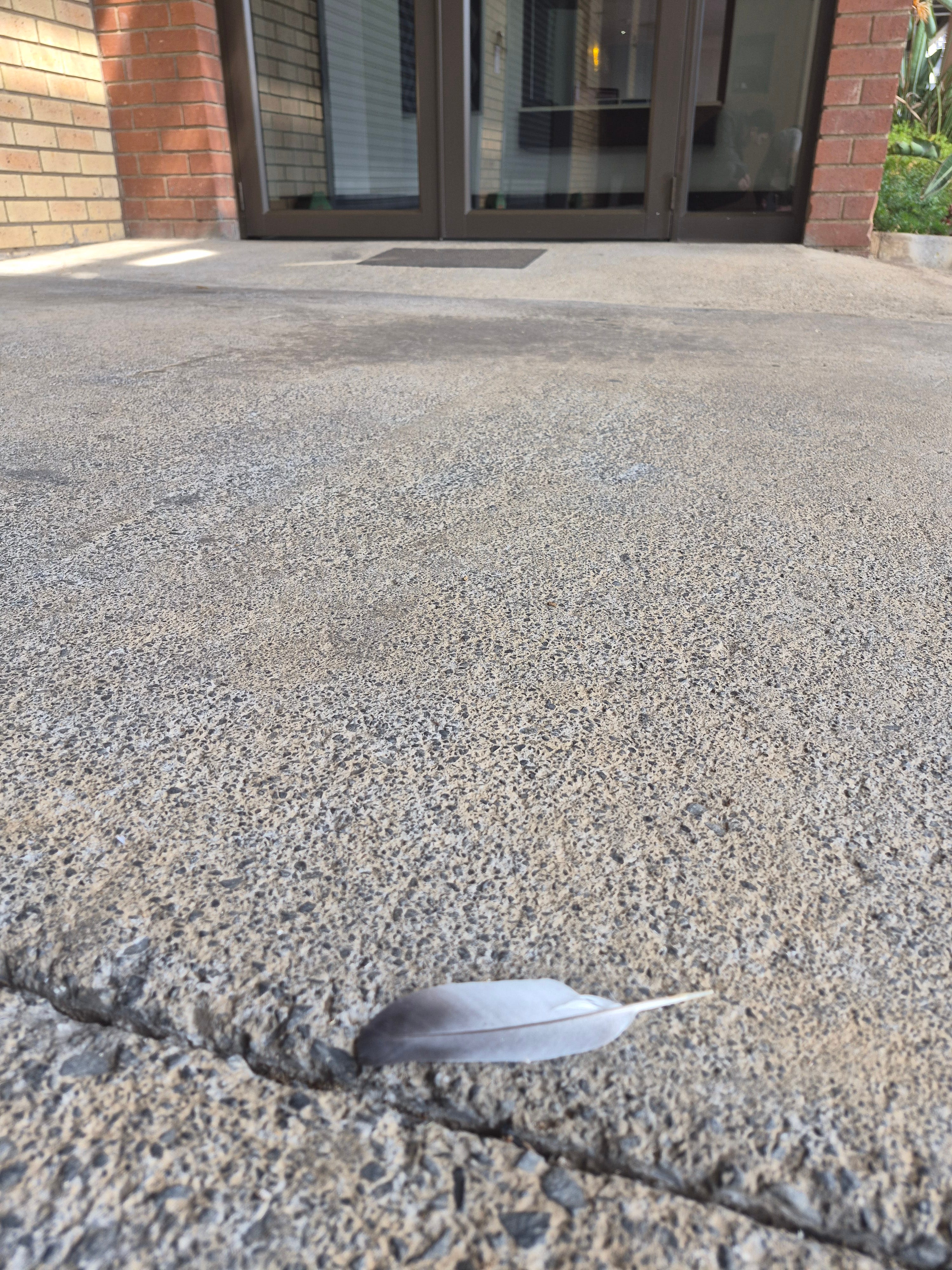
(A single white feather floats down from above and lands at his feet upon the wet brick pavement. He stoops, lifts it, turns it in his fingers.)

RONALD Pristine against the rain-dark stone… O sign! In this most poignant moment of reflection I feel a sliver of pure peace amid The grief that yet remains. She is set free, And somehow, so am I.

(He holds the feather to his heart. Soft light of Jacaranda purple returns. Music of distant birds. Curtain.)


EPILOGUE

Thus ends the tale of Ronald and Kathleen, A love cut short, yet written in the stars And in a letter’s careful, loving lines. Let every soul that shields its pain too well Take heed: speak forth, lest silence build a wall. And when a white feather drifts from the grey, Remember, love outlives the mortal clay. The Jacaranda blooms again in spring; So may the heart that grieves yet learn to sing.

Exeunt omnes.

Mirrors of my Own Lesser Scribbles

One of Kathleen (Kath)’s cherished pastimes was calligraphy, a gentle art that brought her such quiet joy. She would spend hours with her pens and inks, crafting lovely words and snippets of poems onto the pages of her journals or loose sheets of paper. Her strokes were elegant, deliberate, transforming simple letters into flowing masterpieces that seemed to dance across the surface. Sometimes, she’d surprise me with one of these creations, a heartfelt quote or a verse that captured a moment we shared, and I’d treasure it like a whispered secret. Many more I discovered only after she had passed on, tucked away in drawers or between the pages of books, each one a poignant reminder of her thoughtful spirit.

I, too, have always loved writing, though my approach is far less refined. On Saturday mornings, I often find myself at Fournos in Dunkeld West, savoring a Flat White and a chocolate croissant as the world buzzes around me. With my leather-bound journal open before me, I write in longhand cursive, letting thoughts spill out unfiltered. It’s a ritual that feels deeply thought-provoking and refreshing, a pause in the rush of life where ideas can breathe and evolve.

I’ve come to believe that while digital devices are marvelous for their speed and convenience, they simply don’t engage the brain’s pathways in quite the same way as pen and paper. There’s something tactile and intimate about the scratch of a pen on page, the way it forces you to slow down and connect more deeply with your thoughts. In my experience, this analog exercise sparks greater creativity, honing the mind so that when you do turn to digital tools, your content emerges richer and more inspired. Plus, there’s a certain forgiveness in the physical world, you can spill your Flat White across the journal, watch the ink bloom into unexpected patterns, and simply laugh it off. Try that with a laptop or smartphone, and you’re left with tears and a hefty repair bill.

I could never match Kath’s skill in calligraphy; her work was poetry in motion, while mine is more scribbles and stories. Yet, in my own humble way, I honor her legacy every time I pick up that pen. It’s as if she’s there, guiding my hand, reminding me of the beauty in putting words to paper. Hope you’re reading this, Kath, your art lives on through these pages.

Ronald Bartels | LinkedIn | Instagram

Finding feathers

As a teenager I sat in the Reunie Hall at Grey College in Bloemfontein and listened to Sir Laurens van der Post. It was in the immediate years before Die Groot Krokodil's Rubicon speech and many of my school mates were not convinced a democratic South Africa was viable. It is probably the greatest speech that I have ever heard where I was physically present. His central message and philosophy related to building bridges. It was obvious that he meant us to build bridges between different races and cultures. One of my mentors, Oom Jood wrote Die Groot Krokodil's speech which was then changed without him knowing and it was never delivered in the form he wrote. It was left to FW de Klerk to make the historic announcement four years later which resulted in the release of Mandela and the unbanning of the ANC. Sir Lauren's advice was awesome but not the best. He was one of the world's greatest thinkers and philosophers but for me the best advice come from another source. It has nothing to do with work, technology, politics, or ambition but life.

It came just before the dawn of the new millennium when I met the girl I would marry. She said two words.

In our time together which would stretch to a dozen years she would often repeat those words. The words became a strong bond and a thread that held our life together. I was there when she died, from complications due to undiagnosed coronary artery disease (CAD). I do not hear those two words anymore.

“Kiss me”

It was a normal day in our lives and by mid-morning Kathleen (Kath) was gone. The memories remain and every so often, there is something that reminds me of her. The clouds in the sky, where she would lie on the front lawn with the boys and look up into the beautiful Jozi sky and point out the shapes of animals, especially dogs (mostly Poodles and Dachshunds). I often look at those clouds and see angels.

Rationally angels do not exist but the belief in them is strangely comforting. It makes it easier to deal with and process loss and heartache. They exist to help us through difficult patches in our lives and in that context make perfect sense. I hope to be someone’s angel.

In life we leave digital and physical footprints. It can be a picture embedded in a web site or the memory of an angel.

Kath and Ronald

Kath and I shared a common Scottish heritage. Nothing is more indicative of Scotland than the Tartan. Historically very few Tartans, or plaids, were associated with specific Scottish clans or regiments and the wearing was based more on individual taste.

Following the defeat of Bonnie Prince Charlie, the wearing of kilts and tartans except by regiments was banned by the Hanoverians. The same ones to which my ancestors swore allegiance. When these restrictions were lifted there was a revival of Scottish culture. Sir Walter Scott arranged for George IV to tour Scotland during this time and the King proudly wore the Royal Stewart tartan. He hosted a great ball for the leading families of Scotland, who all wore traditional dress. Most family tartans are the plaids that were chosen by the Clan Chief to wear to this famous ball where the participants were all required to be dressed in different tartan. As an example, the tartan for the Elliot clan was the one worn by the Earl and Countess of Minto. While not the Chief, the Earl held the highest aristocratic rank.

I now proudly wear the tartan of the Elliot clan in honour of my oupa JT, even though his maternal tartan of Murray looks better.

Life is hard but then there are times its awesome. Love is an ocean of waves and storms.

Birth is an awesome experience and I have been there when all my sons were born. I do not understand how some treat it as frivolous and walk away. I can understand how It affect George Grey and how as a legacy he started Grey College as a legacy to his son.

My second son Ray had a problem with his kidney that was detected by the gynaecologist during pregnancy. He had an emergency birth about a week before he was due. The sound of his first cry was awesome. Six weeks after birth he went in for a pyeloplasty. Pyeloplasty is major kidney surgery and he remained in ICU for weeks. Although it was hectic, he now has two 100% functioning kidneys.

Callum was next and everything was perfect. There were no problems during pregnancy and the birth went well. I was with him in the recovery room when the nurse hit the crash button. He had developed a hospital lung infection and was taken up into ICU where he was put on a ventilator. He came out of ICU three weeks later. I do not think he has any problems with his lungs now because when he is angry you know about it.

Our first son was Daniel, and he would never take a breath of air outside of his mommy's womb. He had a horseshoe kidney and as a result was unable to develop his lungs. His heart was as large as his chest cavity. This was discovered at 16 weeks and after a second opinion it was determined that terminating the pregnancy would be the best course of action. I signed the court orders and slept the night of the abortion on the floor of the hospital.

Daniel, like his mommy is an angel.

The wrong corner

In the vast, uncharted map of our shared life, Kath and I often spoke of the “corners of the earth”—those remote, metaphorical places where one's beliefs could lead them, far from the familiar shores of reason. For Kath, homeopathy wasn't just a corner; it was her entire world, a sanctuary she defended with an absolute faith that bordered on devotion. It consumed her like an addiction, blinding her to the merits of conventional medicine or even other alternative practices. She swore by its principles, diluting remedies to infinitesimal levels, convinced that the “vital force” they awakened could heal any ailment. Doctors were charlatans in her eyes, their pills and procedures mere poisons disrupting the body's natural harmony.

But beneath that unyielding belief lurked a shadow she couldn't see, or perhaps refused to acknowledge. Kath had CAD, a condition that remained undetected for years, invisible to the subtle intuitions of homeopathic diagnosis. Homeopathy, with its reliance on symptom-matching and energetic imprints, offered no tools to identify or correct something as insidious as this. It couldn't scan tissues, measure markers, or intervene surgically. One fateful day, during a grueling Bikram yoga session, her body twisted in the heat, pushing limits she thought unbreakable, a cyst ruptured, compounding the effects of CAD. She collapsed on the mat, her life slipping away in a room filled with sweat and serenity. The autopsy revealed what we had missed: a physical betrayal that no amount of diluted sugar pills could have prevented or cured.

This tragedy stands as my personal indictment of homeopathy's futility. At its core, homeopathy operates on the pseudoscientific notion of “like cures like,” where substances that cause symptoms in healthy people are diluted to extreme potencies—often to the point where not a single molecule of the original ingredient remains. Proponents claim water retains a “memory” of the substance, imparting healing vibrations. But science tells a different story: rigorous clinical trials, including meta-analyses from bodies like the Cochrane Collaboration, have repeatedly shown that homeopathic remedies perform no better than placebos. They can't detect hidden diseases through blood tests, imaging, or biopsies, nor can they address acute physical crises like ruptures or undetected growths. In Kath's case, it fostered a dangerous complacency, delaying real medical intervention until it was too late. It's not harmless curiosity; it's a gamble with lives, preying on hope while ignoring evidence-based reality.

Her passing shattered me, forcing a reckoning with the dual nature of health, one I had long overlooked in our harmonious bubble. I came to understand that well-being has two inseparable components: the physical, rooted in biology and anatomy, and the psychosomatic, where mind and emotion influence the body in profound ways. Grief manifested in me as perceived physical pain, sharp stabs in my chest, unrelenting fatigue, aches that mimicked heart trouble or worse. I chased shadows through a battery of tests: EKGs, MRIs, blood panels, all coming back clean. Specialists shrugged, diagnosing “nothing wrong,” yet the agony persisted, a ghost haunting my every step.

Desperate, I turned inward, seeking therapies that addressed the mind's grip on the body. Cognitive Behavioral Therapy (CBT) became my anchor, a structured form of psychotherapy that identifies and reshapes negative thought patterns and behaviors. Through guided sessions, I learned to challenge the catastrophic thinking fueling my pain: “This ache means I'm dying too” became “This is grief's echo, temporary and manageable.” Complementing it was Eye Movement Desensitization and Reprocessing (EMDR), a specialized treatment for trauma that uses bilateral stimulation—often rapid eye movements guided by a therapist's hand—to reprocess distressing memories. It felt almost mechanical at first, following lights or taps while revisiting the horror of my presence in the yoga studio during the final moments, but it unlocked buried emotions, diminishing their power over my physical sensations.

These experiences reshaped my writings and my entire approach to life. Where once I focused solely on the tangible—career, adventures, the external world, now I weave in threads of mental health, advocating for vulnerability and self-care. Kath mastered that psychosomatic realm to perfection; her optimism and mindfulness were a balm, keeping stress at bay and fostering joy even in chaos. But her oversight, the dismissal of physical vigilance—proved fatal. Humans are fragile vessels, needing equilibrium between the two: ignore the body, and silent killers creep in; neglect the mind, and psychosomatic storms ravage from within. A deficiency in either isn't just inconvenient, it's debilitating, a corner of the earth from which return is never guaranteed. In honoring Kath, I strive for that balance, turning our shared map into a guide for others navigating the unknown.

The final goodbye

I had to tell two little boys their mother wasn’t coming home. I was told to tell them the truth and answer all their questions. I did.

After that people often ask me what happened and I give one sentence answers. But I have decided to recount that day so those boys that are now older know it all. In essence, it is life.

The day started as any other, for us in any case. Kath and I went to the school because Ray was having difficulty with a teacher. After that I went to work, and Kath went to yoga.

At around 10am I received a call from the yoga gym that Kath wasn’t feeling to well. The gym was five minutes from work and I went there immediately. When I arrived, she told me her back was sore and I asked if she had injured herself? She said no but said it was very painful. I replied that we should go to the hospital. She said she was too sore to walk to the car. I dialed for an ambulance.

We sat on the floor of the toilets waiting for the paramedics but within a few minutes an emergency doctor arrived, and then shortly thereafter the paramedics. They placed Kath on a table in one of the massage rooms and performed a triage. The doctor reported that he was not able to diagnose anything and would transfer her to hospital.

I told her, “I love you” and reached to squeeze her hand. She said, “Babes, please don’t touch me it hurts!” The paramedics then wheeled in the gurney to take her to the ambulance. I stood to one side, and heard the doctor ask her why she was yawning. She said, “I don’t know.”

She then arched her back and her face distorted. It looked like the painting, The Scream. Except I heard no sound. The doctor instructed me to leave the room. He took a scalpel and cut her clothes from the neck down and I went and stood outside the door. I lost count of the times I heard the word, “clear” and the sounds of defibrillation. I dialed Kath’s parents and told them to come to the address of the yoga gym.

Before they arrived, more teams arrived with medical equipment. It was life support. There were now two doctors and one was on the phone next to me relaying symptoms and answering questions. Kath’s parents arrived and shortly afterwards the doctor came outside and said that it was 90 minutes and they were going to shut down life support. Kath’s parents said, “No, it is our little girl, can you not do more?”

I nodded my head in consent to the doctor. The doctor said that they could not take her in the ambulance and we had to call a mortuary van. I asked if he could help with that and he suggested Martin’s which I then arranged.

He asked if I would like to go in and see her? I went in to say goodbye but immediately realized that I’d said goodbye 95 minutes before that.

She died because of a ruptured ovarian cyst. It happens often in woman and isn’t normally fatal. However, Kath had undetected CAD which resulted in a critically low blood pressure from the bleeding.

The pain of death is so small a time frame in relation to the longer life lived. The lived life needs to be remembered as it is full of joy and memories. The passing is but a short pin prick of pain. A final goodbye.

Ronald Bartels | LinkedIn | Instagram

The physical & emotional differential

The death of Kathleen (Kath) left me adrift in a sea of equations that no longer balanced. I had always prided myself on being a cold-blooded mathematician, detached, analytical, the kind of mind that could dissect a proof into its irreducible truths without a tremor in my hand. Emotions were variables to be isolated, not forces to be surrendered to. But grief, it turned out, doesn't respect axioms. It manifests in the body first, a psychosomatic ache that coiled around my chest like a rogue integral, tightening with every breath. It wasn't metaphorical pain; it was real enough to send me stumbling to the emergency room of Douglasdale Hospital not once, but many times over the course of a few months.

The first visit was at 2 a.m., after a night of what felt like an elephantine weight pressing down on my sternum. I drove myself there, convinced that some silent infarction was blooming in my arteries, the same cruel thief that had stolen Kath from me. The lights buzzed like faulty tubes in a dim lab as the triage nurse hooked me to monitors. EKG strips unspooled like ticker tape from a market crash: normal. Blood panels came back pristine. “Sir,” the attending physician said, her voice clipped with the exhaustion of shift work, “your heart's fine. This is stress. Grief does that, makes the body mimic what the mind fears.” I nodded, numb, and drove home to an empty bed that still smelled faintly of her.

The second and third visits blurred into a ritual of denial. Same symptoms: vise-like grip in my ribs, shortness of breath that mimicked drowning on dry land. Same tests, troponin levels, stress echoes, even a CT angiogram that lit up nothing but the radiologist's screen saver. By the end, the ER staff knew me by name. “Mr. Bartels,” the head doc finally said, pulling up a chair in the curtained bay, “it's in your head. Not that it's not real—psychosomatic pain is as valid as a broken bone, but it's your brain signaling what your heart can't say.” Ironic, wasn't it? The mathematician felled not by faulty logic, but by the very organ I'd spent a lifetime sidelining.

Words, I learned, are double-edged scalpels. Kath's decline had been hastened by them—whispers from so-called friends, who encouraged her to turn to false faith. So when I turned to therapy, I started with what seemed logical: talking. “Talking heads sessions,” I called them in my private shorthand, a parade of shrinks in jackets who nodded sagely as I unpacked the cargo of my loss. “Tell me more about that feeling,” they'd prompt, pens poised like divining rods. I talked until my throat ached, about the way her laugh had punctuated our mornings, the quiet terror of seeing her final moments. But the sessions left me more restless than before. I'd lie awake in the witching hours, my mind a hamster wheel of hypotheticals: What if I'd seen the signs? What if the equations of our life had aligned differently? Exhaustion was my only mercy, dragging me under at dawn like a riptide.

Finally I pivoted. Talking's for philosophers, I thought. I needed something that rewires the circuits. That's how I stumbled into CBT, Cognitive Behavioral Therapy, and EMDR, Eye Movement Desensitization and Reprocessing. CBT was the mathematician's balm: a structured assault on distorted thoughts, mapping cognitive traps like debugging code. We'd chart my catastrophizing, This pain means I'm dying, and replace it with evidence-based counters: probabilities, not panics. EMDR was stranger, more visceral: bilateral stimulation via finger taps or light bars, forcing my eyes to track patterns while I revisited the trauma. It felt like offloading RAM from a overloaded processor, the memories defragmenting in real time.

Eight sessions in, sleep returned. Not in fits and starts, but solid, dreamless blocks that stitched my frayed edges back together. I woke one morning to birdsong instead of dread, the psychosomatic vise finally slackened. It was a quiet victory, but it birthed a louder question: Why had words failed where these tools succeeded? Kath had been wounded by words, and words alone couldn't cauterize my wounds. If abuse is verbal, a poison distilled through language, then healing must transcend it. It demands immersion in the non-verbal realms, the sensory undercurrents that bypass the chattering mind and speak directly to the flesh and the subconscious.

Consider the forms this healing takes, each a bridge between the corporeal and the ethereal. Aurealization, though I coin it clumsily from “aural,” the realm of sound, draws on rhythm and resonance to recalibrate the nervous system. Think of drumming circles or binaural beats in a therapist's office: low-frequency pulses that mimic the womb's heartbeat, syncing errant brainwaves into coherence. It's physical, yes, vibrations thrumming through bone—but mentally, it dissolves the isolation of grief, reminding the body it's not alone in the echo.

Visualization follows, the deliberate conjuring of images to rewrite neural scripts. In guided imagery sessions, I'd close my eyes and summon not the hospital gurney, but Kath whole and laughing on a sun-dappled hike we'd taken in Castle Gorge. Science backs it: the brain's visual cortex doesn't distinguish fiercely between imagined and observed scenes; MRI scans light up identically. Physically, it lowers cortisol floods, easing the gut's knot of anxiety. Mentally, it's cartography for the soul, plotting paths away from trauma's dead ends.

Tactilization, touch as therapy, is the most primal, a neural handshake that grounds the abstract in the tangible. Reflexology, which I eventually tried, maps the feet like a microcosm of the body: pressure on the solar plexus point to unravel chest tightness, or the heart reflex to coax openness. It's stimulation at its core, mechanoreceptors firing, endorphins cascading, but the mental gift is trust rebuilt stroke by stroke. A masseuse's firm thumbs aren't just kneading muscle; they're affirming survival, one meridian at a time.

Gustatization, the evocation of taste, is subtler, a flavor alchemy for memory's alchemy. In sensory therapy, I'd savor something sharp and alive, a wedge of lemon, its citric bite cutting through the bland fog of depression, or something comforting, like the cardamom warmth of the chai Kath brewed on lazy Sundays. Taste buds link straight to the limbic system, the emotional switchboard; a single sip can anchor you in presence, starving the mind's runaway narratives. Physically, it reignites appetite, combats the nausea of sorrow. Mentally, it's a portal to joy's archives, proving the body still knows delight. My personal favourite is Earl Grey Tea.

Olfactization, scent's subtle sorcery, completes the pentad. Aromatherapy with lavender or eucalyptus—oils diffused or pressed to pulse points, hijacks the olfactory bulb's hotline to the amygdala, dialing down fight-or-flight. I'd inhale deeply during EMDR, the earthy tang of vetiver tethering me to earth when memories threatened to unmoor. It's bodily healing in vapor form: anti-inflammatory compounds absorbed through mucosa. But mentally? It's resurrection by aroma, scents that once bound you to the lost now binding you to renewal.

These aren't alternatives to be siloed, one for the flesh, one for the psyche, but intertwined vines, each vital to the other's climb. Like the twining shoots of the Bowei Volubilis. Exclude the physical, and mental healing floats untethered, prone to relapse. Neglect the mental, and the body becomes a vessel adrift, symptoms cycling like unsolved recurrences. In my case, CBT's logic paired with EMDR's sensory pulse addressed both: validating the pain without indulging it, honoring the mathematician's need for proof while feeding the hidden chambers of feeling.

I don't peddle this as gospel, mind you. I'm no apostle of certainty; if anything, I share an affinity with Thomas, that doubting disciple who demanded to touch the wounds before belief. As a cold-blooded mathematician, my creed is validation, test, measure, iterate—not blind faith. Why do I lean toward CBT from my vantage? Experience, raw and replicated: it handed me tools that scaled, outcomes I could quantify in restored sleep cycles and ER-free months. But divergence is the spice of inquiry; if your path arcs toward mindfulness apps or forest bathing, who am I to subtract? We'd all do well to operate this way, probing, not proselytizing, lest we calcify into echo chambers.

That said, some paths are unequivocally warped, their stories perverted beyond salvage. Cults like KwaSizabantu, with their veiled abuses cloaked in spiritual fervor, or homeopathy—yes, I call it a cult outright, peddle dilutions of truth that mock the rigor of evidence. Homeopathy's “like cures like” in infinite water? It's not healing; it's a placebo dressed in pseudoscience drag, preying on desperation while the body clamors for real intervention. I've seen enough data divergences in my career to spot the fraud: cherry-picked anecdotes over controlled trials, faith over falsifiability. They're cautionary tales, reminders that even in grief's fog, we must demand the empirical, lest we trade one poison for another.

In the end, healing isn't a theorem to prove but a function to approximate, one breath, one scent, one skeptical step at a time. Kath would have smiled at that, her eyes crinkling with that wry mathematician's glint. And in honoring her, I keep approximating.

Ink & Illusions

After grappling with psychosomatic pain that haunted my shoulder, I decided to mark the experience not with resentment, but with art. The pain, though illusory, felt real enough to warrant a permanent emblem. I chose a vibrant Celtic knot, its interwoven strands a nod to my love for Ireland, sparked by a trip with Kath where we wandered among ancient dolmens. Those stone structures, raw and timeless, stirred something in me, an affinity, perhaps, for a druidic past I half-believe I lived. The tattoo, inked on the very spot where the pain once lingered, was a physical echo of a mental battle. I resolved then to mark each future episode with another tattoo, a ritual to ground the intangible in flesh.

But here’s the thing: it never happened again. That phantom pain, once a specter, vanished after that single mark. The Celtic knot remains my only tattoo from that chapter, a solitary testament to a struggle overcome. Its colors vivid greens, blues, and reds seem to pulse with the joy of release, a reminder that some battles end quietly.

Years later, a new challenge emerged. Headaches began creeping in, stubborn and sharp, especially after long cycling sessions. I feared a return of those old, illusory pains. A neurosurgeon’s scan revealed nothing, and I braced myself, half-expecting to ink another mark. Not again, I thought, already imagining the needles hum. But a physiotherapist, called in during a hospital visit, changed the narrative. She asked about my sports, and when I mentioned cycling, she pressed a spot on my neck. I yelped in pain, real and precise, radiated from her touch. Common cycling injury, she said, citing my posture, head tilted to watch the road. A sports massage, not a tattoo, was the remedy. Bliksem, what a relief.

Now, when headaches loom, I book a sports massage, kneading out the tension before it festers.

No new ink has been needed. Yet, the urge for another tattoo persists not born of pain, but of grounding. I want it on my calf, where I feel rooted to the earth. I envision the ship Kandaze, its sails full, sweeping away the last echoes of those illusory pains. I had thought by now I’d have a gallery of tattoos, each a badge of battles fought. Instead, I have one, and soon, perhaps, a second, a ship to sail me forward, free.

Ronald Bartels | LinkedIn | Instagram