The Morning Patrol with MastelekšŸ’Ŗ

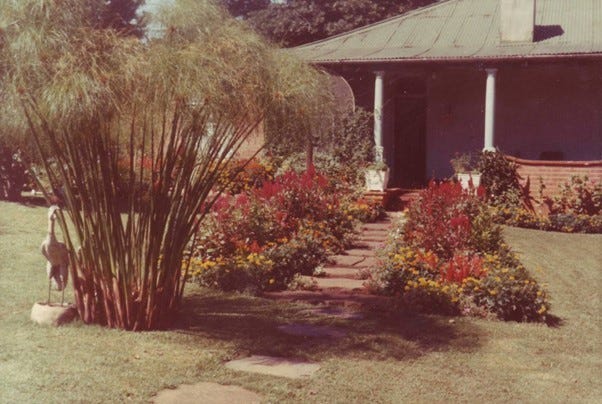
Stories of Mastelek who enjoys farming Boweia Volubilis

Go & have a look

Often, I see technicians dealing with issues and problems while sitting firmly on the seat of their pants at their desks. Call me old school, but I do not think this works! There is no substitute for the eyeball.

When I was a technical account manager at Madge Networks, I received a call about a problematic branch of Standard Bank. It was their flagship branch in Sandton. No expense had been spared and it was clad top to toe in marble. However, the staff at branch regularly reported that the network became toast. As is token-ring's self-healing nature it would correct itself automatically. The temporary outages were causing a great deal of frustration and technicians at the bank had been unable to diagnose the fault. I decided to investigate. On the first visit that I was at the branch I plugged in my notebook and did a health check of the network. It was running as smooth as a Husqvarna sewing machine. My mom owned one of those from the late sixties. I left and resolved to come back later.

On my second visit, I was sitting at my notebook in the room where the MAUs (token-ring hubs) were racked sifting through network traces looking for the proverbial needle in the haystack. The room where the network equipment was racked also served as the stationary store and had some mainframe printers. My thoughts were disturbed by one of the mainframe printers kicking into life. The print job completed and a few minutes later a staff member arrived to retrieve the print job. She walked over to the printer and the next moment the hubs started ā€œshotgunningā€. ā€œShotgunningā€ is the distinctive sound a token-ring network makes as the relays open and close when a fault occurs. The self-healing nature of the network kicks in as it starts attempting to isolate the fault. The manager of the branch ran into the room and excitedly asked if I had seen and diagnosed the fault. I assured him that I had captured the fault on my equipment and if he could give me a moment to analyse it, I would provide some feedback. But first, I walked over to the printer. It was located at the end of the room and a passage was left to reach it between piles of stationary boxes. Halfway down this passage was a piece of carpet covering a token-ring fly lead. Suspiciously I lifted the carpet, and immediately eyeballed the problem.

The human traffic over the carpet to the printer had badly frayed the fly lead and each time someone went to fetch a print job the frayed fly lead would short and cause a fault. We replaced the fly lead and moved the printer to a more suitable location and the problem was solved. Without being present and doing visual inspection many problems will remain unsolved. Thus, the most important aspect of solving problems is to go and have a look.

The Japanese are extremely familiar with the concept of go and have a look and to them it is known as genchi genbutsu. At its essence in means you need to develop, and design products based on being at the coalface and seeing the problems, not hearing about them second-hand. You need your own eyeballs and not a report given to you by an intermediary. Only then do you provide added value and solve problems. Even though this Japanese concept has been with me throughout my working life, I am not Japanese.

One morning before I arrived at Investec I had a phone call on my mobile that the dealing room wasn't able to operate. Connectivity was lost to the main server and the network was being blamed. I arrived at the dealing room and was accused of network changes the night before. Highly unlikely, I quipped, I was at a company event were buckets of beer were on offer and I was not capable of changing anything. So, I asked them to show me the problem. The application wasn't able to connect to the server but from a command line we could ping the server. The server IP address was 10.0.32.99

After a few minutes of head scratching I loaded Ethereal, now known as Wireshark, a packet capturing tool. One packet capture later I worked out that:

  • the app did a DNS lookup first before using the server name field as an IP lookup
  • the app was configured with 10.0.32.99 The IP was not assigned an A record in DNS against a DNS name.
  • the app did a DNS lookup on 10.0.32.99.investec.co.za (this failed), then it tried 10.0.32.99.co.za, and a result was returned for an A record from on the Internet,

It seems that overnight someone in South Africa registered the domain 99.co.za and as soon as that happened things went pear shaped. I resolved the problem by creating a DNS entry in the local investec.co.za zone with a server name for 10.0.32.99 and configured the app to use that server name.

After all this I expected the IT manager of the dealing room to appreciate the effort like the dealing room manager in London as written about in the Herd of Zebra article. How wrong could I have been! She said how dare someone register 99.co.za without asking her permission and why did I allow it. I was gob smacked for a while and then I let rip. It boggles the mind that people are appointed to manage Information Technology but do not understand the basics about DNS! My manager at the time called me in and said she did not like the way I talked to people. I was young and naive. In the world more and more people operate outside the sphere of their abilities. Even a real estate developer can become leader of the free world. In South Africa it is common for cadres of the ruling party to be deployed as Ministers in fields to which they have no clue about the fundamentals in the area in which they are the leaders. This has been the case in telecommunications which is to put it mildly, a rotting roadkill golden wildebeest carcass.

I was working at an ISP where the neighbours were building a multi-story building next door. One morning driving in a saw a car in the visitor's parking lot covered in cement. I was initially flabbergasted that such an incident could happen but when looking up from that parking lot, it was obvious that it was a matter of time before something like that happened. The path of the crane arm was directly overhead. Often when you have a look, the potential for an incident is there. If you don't look closely or you in a hurry you end up with your car covered in cement.

A bolt fell from the roof of a vendor neutral data centre. It smashed the windscreen of a car. A few minutes before that a number of people including myself had walked past that point which was a few metres from the entrance. Having car parks in areas that are dangerous seems to be common.

One of the companies I worked at has a set of values: distinctive performance, dedicated partnership, client focus and cast-iron integrity. These are laudable values, but you do not need to work at a specific company to live these values or any other values. In many cases people within the company do not even live the stated values.

Sir Richard Branson summarized all business values in a single sentence which is that it is all about doing the right thing. Most companies do not realize that the priority in life for individuals lies elsewhere. A company can easily replace an individual, but that same individual cannot with the same ease replace his family.

The difference between a good company and a great company is that a great company will always give more than what it takes. To this end the priorities of the individuals need to have the same level of focus as that of the company’s customers. The reason is simple in that without a happy employee, the company has a diddly squat chance of having a happy customer.

I worked at an ISP where the boss would regularly force his staff to compete against each other and in meetings he would kick the walls. It wasn't an environment where you excelled, you just existed.

Ronald Bartels | LinkedIn | Instagram

My journey into IT

My first job was for the Railways. It was fun working there until I was told that I could not be a member of their pension fund because I was disabled. I did not stay around to argue the point and moved on to work for a little networking company known as Network Interface Consultants.

There was a two-year probation before an employee could join the railway pension fund and I slaved away in blissful ignorance in what was to come. I wrote programs in Cobol with embedded SQL. The database was DB2 which was hosted on IBM and Amdahl mainframes. I was assigned to the Information Centre and my boss delegated me to program some management information systems. The railway wanted some simple reports which they had not been able to obtain from the Information Centre for years. The report requests were simple. They wanted:

  • Top 20 senders of goods per station
  • Top 20 receivers of goods per station
  • Consolidated Top 20 senders and receivers of goods per station
  • Top 20 types of goods send per station
  • Top 20 types of goods received per station
  • Consolidated Top 20 types of goods per station

Everything that was not in the Top 20 was aggregated into a 21st item named other.

I slaved away at my desk to write these reports with a few hiccups along the way. One memorable run had a logical flaw that resulted in a run lasting a full day and a bill of a quarter of a million Rands after which I finally delivered the program.

The next day they phoned me and said great, but they wanted additional reports. They wanted the report not by count but by financial value. Within an hour that was done and dusted.

The next request was to group all the stations into branches, i.e. stations were assigned a branch line number and the reporting was done per branch. The program took longer than what I envisaged as I had made a programming fault and could not spot it. It was a whole month before I had it working!

After I had delivered this version, I never heard from these guys again. A good many years later I was in a remote railway office and immediately recognized my reports laying on a table. I was impressed that my program was still being used!

Texas Instruments calculator

My first digital experience was using my dad's calculator, a Texas Instruments model, to help him pay and calculate the weekly wages on his farm, Oakvilla. This was an upgrade from a hand cranked adding machine that was used previously.

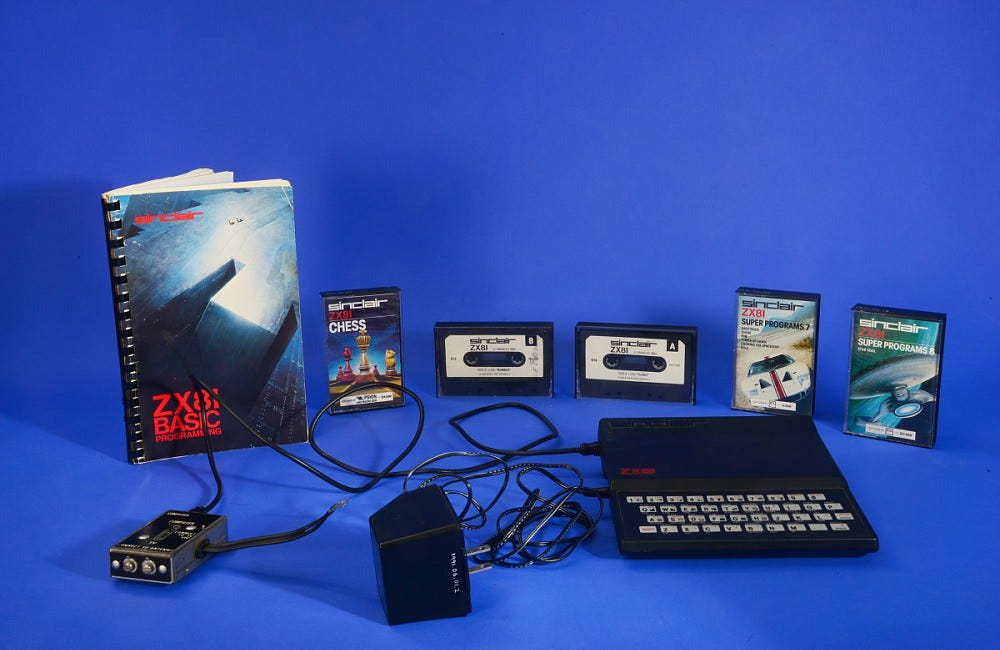
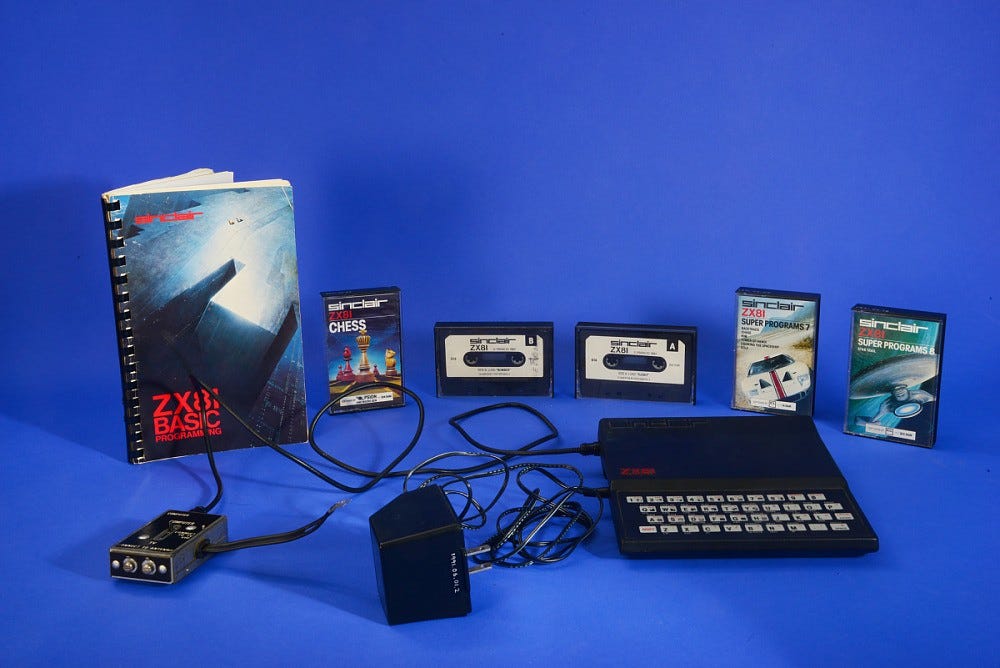
My first computer was bought by my dad while I was at Grey College. It was a ZX81 and would be the genesis for my career. It was a cheap system and I connected it to a television inherited from my grandmother Joey. I would sit on the end of my bed and input programs from British computer magazines. My mom has won a tape recorder as a prize at the local Spar and I used that to buy cassettes tapes that had programs stored on them that I could download to the ZX81. The programs would take ages to load and sometimes required multiple attempts. My favourites were the Flight Simulator and Chess programs.

The ZX81 only had 1K of RAM and required a clumsy addon to push it up to 16K. This addon was one which you could not bump while you were typing on a primitive plastics membrane keyboard. I was one of a million other similarly minded kids around the world learning about computers. I persuaded my dad to buy one from a computer store in Pietermaritzburg that was nestled in the lane behind Shuter & Shooter bookstore. Next to the computer shop was the Juicy Lucy where my dad treated me to a Cheeza after the purchase.

I scored a holiday job selling books at Shuter & Shooter. During the holidays they would hire a hall at the Royal Agricultural Showgrounds in Pietermaritzburg and basically move their warehouse there for the duration. I would have parents come in with book lists and the move around the warehouse picking out the books from the stacks and placing them in a cardboard box.

Once a year the showgrounds would host the Royal Show. I would look at all the new tractors and dream of owning one. I never did. But by far the best part of the show was carts selling homemade sweets from the Fudge Lady. Sweets have never tasted any better since those days as in my mind no-one has duplicated the smell and experiments of those carts.

We always had members tickets at the Royal Show. We would drink tea and have sarmies sitting in an enclosure service by waiters dressed up as Jeeves. Ouma Joey would join us and we would pretend to be posh watching the show jumping. I actually preferred the dogs being showed with the most boring being the cattle paraded around the ring.

When people refer to greater leaders of World War II, they refer to Churchill or Patton. When people refer to greater leaders in technology it is Jobs, or Gates. But there are greater leaders of World War II and technology than Churchill, Patton, Jobs, or Gates. They are Turing and Flowers, but history would not acknowledge them as such. Their work was the foundation of the allied victory in World War II and forms the basis of computer technology which underlies our modern society.

Make no mistake, Churchill and Patton were the public face of the victory in World War II with their combative actions and stirring speeches. Their leadership value was to inspire, but beyond that they lacked real substance. They would not change the world. That would be Turing and Flowers. They both worked at a secret facility in the UK, Bletchley Park, and it is here that computer technology was born. Turing would prevent U-boats from destroying shipping convoys and Flowers would help eavesdrop on the German command structure, decoding messages faster than what they could read it themselves.

Turing was the great theorist who formulated the basic algorithms of technology which we use to this day. He was also able to solve problems in intuitive ways, utilizing reasoning skills that leveraged more than just theoretical knowledge. In this way he was able to break the German Enigma codes, not once, but multiple times. The Enigma codes were what the Germans used to communicate with the U-boats in the Atlantic. Turing would seek patterns from known events then reverse engineer the coded messages. He built special purpose machines that solved the codes faster than some present-day general-purpose processors. A machine to solve a specific task is always faster than a general purpose one, even if it is more than 70 years old.

Flowers was a great practical man who was able to build complex technology with just the resources available in the 1940's. He broke the Lorenz code with that first computer. The Lorenz code was user by the German war command structure.

Turing would be ostracized and would take his own life when society tried to change his feelings of sexuality. The computer that Flowers built would be destroyed and due to the perceived impact of the cold war, never acknowledged.

It is a fallacy to believe that the great leaders are those that are well liked and for whom the most votes are cast. They are usually the most corrupt. The true leader succeeds without fanfare or reward, except his own belief and desire to solve a problem. That was Turing and Flowers!

In South Africa we have Highveld storms that are awe inspiring but snow and cold is not a regular experience. It has only been my travels beyond the shores of South Africa, that I have encountered snow. In those parts of the world it is a common and often unnoticeable experience. However, for me, it is always new and exciting. In the late nineties I travelled to New Hampshire in the United States with Peter Turvey. We were working for Madge Networks and trying to score an OEM deal for Token-ring switching with Cabletron. I clearly remember from my visit to Cabletron the experience of walking past the meeting rooms with no chairs. The CEO believed it would help to be more productive if meeting rooms had no chairs!

The state of New Hampshire was covered in snow and we drove to the Cabletron buildings. It was a large glass building and like most of these, the glass was polarized to only look out but not in. We arrived a few minutes early and parked in front of the building. Outside the building was a large pond that was completely frozen over. I looked in amazement at my first site of frozen water, never having seen so much of it frozen. I walked out into the middle and jumped up and down. Next, I picked up a rock from the edge and tried to crack it. I then tried to run and skate on it with nothing more than my shoes and ended up on my ass. We then walked into the building, where many people had gathered looking out the windows at the madman who was out on the frozen pond. The deal never happened, but I do not think we can blame that! By that stage, the perception was that Token-ring was dead.

Saxonwold Shebeen

I have since moved on from programming into networking and more generic IT functions. Also specializing in the odd technology themed joke, here and there. I have one April's Fool's day decided to change Google Maps' location of the South African Presidency to 1 Saxonwold Drive. When I did it initially, nothing happened. Two weeks later I saw it as the headline article on News24.

Around the same time my review of the Saxonwold Shebeen had a shout out on the radio.

The best April's Fool joke was when I went to De Beers to help with a Netware issue. Outside the door was a group of angry people asking the network manager why he had to clean the network on that day and he should rather do in at night or on a weekend. He had emailed the company on April Fool's day informing them that he was going to clean the network. They were going to use compressed air and blow the dust out of all the cables. He asked people to step away from their computers as the dust was going to come out of the fan ventilation holes on their desktops. It was legendary.

I also hang out on the MyBroadband forums. If I don't find something to laugh about there, then its a really slow day.

Aquaduct | A Roman-Inspired Masterpiece for South African Railways

In my time at Datavia, I crafted a program named Aquaduct, a nod to the grandeur of Roman engineering and my belief that I am the reincarnation of Julius Caesar. Aquaduct was a sophisticated system designed for the Chemical Laboratory of the South African Railways, tasked with storing and analyzing water samples collected at fixed intervals along the nation’s extensive railway network. These samples were critical for ensuring the quality and safety of water used in railway operations, a vital but often overlooked aspect of maintaining the infrastructure. Sadly, given the crumbling state of South Africa’s rail system under the current regime, I suspect this meticulous process has fallen by the wayside.

Aquaduct was built to run on DOS, leveraging the power and flexibility of Clarion, a robust development environment for the time. The program operated as a multi-user system, hosted on a Netware server, allowing seamless access and collaboration across the laboratory’s operations. It was designed in close collaboration with a dedicated team of scientists who provided detailed specifications, ensuring the system met their exacting standards. The result was a thing of beauty—functional, efficient, and reliable—a true testament to the Roman ideals of precision and durability.

The program’s core functionality revolved around storing and analyzing water sample data, enabling scientists to track quality metrics, identify trends, and ensure compliance with safety standards. Its intuitive design and robust architecture made it one of the finest programs I’ve ever written, a digital aqueduct channeling critical data with the same elegance and purpose as its ancient Roman namesake.

Ronald Bartels | LinkedIn | Instagram

Great trips to the Costa del Sol

One of the great trips I had, was to the Costa del Sol, or is that the Costa del Golf. It was a Madge Networks Sales Conference. We stayed in Marbella and flew into Spain landing at Malaga. We flew from South Africa via London and on the plane were a whole load of Germans. The Germans could not speak a word of English and I was trying to make conversation with the dude next to me in my best primary school German. It was hilarious.

When we landed, we collected our baggage and, on the way, out I saw the same German dude and his friend were talking to a Spanish baggage agent about his luggage. The conversation was going nowhere. A Spaniard and German trying to speak English which neither of them able to. I thought I would help and worked out he had to go to the baggage counter. Our transport had not arrived yet, so I thought I'd help him. We went to the counter where I eventually was able to determine the airline had his luggage and would fetch it for him. They arrived with a huge black dustbin bag. The German looked inside and all we could see was a mess. All the German could say was, ā€œWas ist hier los?ā€ and all the Spanish agent was doing was shrugging his shoulders. My transport arrived and I beat a hasty retreat, even though I had huge sympathy for my unlucky travel companion.

On a previous trip to Europe, I had landed in Schiphol Airport in the Netherlands. At the carousel, the passengers laughed as a pair of underpants came past. I laughed as well although the underpants look extremely familiar. Next came some socks, and other pieces of clothing which also looked like mine. Finally, out popped my suitcase that was ruptured and well and truly flattened. I collected the bits and went to the airline’s handling agent. It seems my suitcase had fallen off the trolley on the apron and had been run over by a 747. The airline provided me vouchers to replace my clothes and suitcase. The only hardened suitcase available was a green and pink one which I would continue to use for years afterwards. It stood out like a sore thumb.

The first activity on the agenda for that trip to Spain was parasailing. Before that I learnt the only words of Spanish that I know, ā€œUno cerveza por favor.ā€ The boat that towed us for parasailing had a huge deck from which we launched. I was first up, and the operator asked me how high I wanted to go. Of course, I said, all the way. I was released and after a few minutes the boat became a speck in the ocean below me. I could see Africa and then noticed the clouds drifting past me. At that moment I also noticed that the harness was rusted. Damn! My poephol tried to exit my body out of my throat. I had a long journey down, trying not to imagine the harness detaching.

Next we went go karting. The track was amazing and a proper racing circuit. Some of the karts were also high powered with paddle gears. We tore around the track at high speed and there was a female driver who humiliated us by lapping us. I was leading Peter, a work colleague, around the track, and entered the chicane. I hit my brakes, he did not. He pushed me into the hay bales and my kart ended up on top of me. I cracked my ribs. The next few days were spent around the pool with pain killers and alcohol.

The day before we left Spain, we decided to go for a cycle. My ribs were not that sore anymore. The hotel had some MTBs and after obtaining directions we disappeared down the road and onto a dirt road. A few kilometres down the dirt road we came to a river crossing. I was in front and after crossing stopped to make certain everyone else was also able to safely cross. A couple of metres downstream from where we were crossing was a gypsy. She was doing her washing and started cursing profusely about the dirt we had disturbed in the river with our bikes. My riding companions has disappeared on down the road and I was trying to say sorry, but her mouth made even the sailor in me blush. I then heard another sound. It was the unmistakable sound of a large truck's air brakes. Around the corner came a huge dump truck. It crossed the river and create a mini tsunami. It took the gypsy's washing and dumped it a few feet up the riverbank. The gypsy was silenced and dumbstruck! I did not wait around for here to find her senses again. On the way back to the hotel we stopped at a little inn to have a beer. We discovered that for the price of a bottle of water in the hotel, we could have six beers. We spend the rest of the day there.

Although Spain was a great destination, one of the best party places in the world is Elephant Hills at Vic Falls. Been there twice. First in a DC3 and then in an Air Zimbabwe 707. The 707 must be the noisiest aircraft ever. You really knew you were in a jet as it shook your bones! Those were legendary parties, but I was young and too embarrassed to jump kaalgat into the swimming pool like the rest. Regardless, first time I had beers before breakfast.

One of the attractions at Vic Falls is white water rafting on the Zambezi. The first time was exciting; however, our raft never came unstuck. That was probably not a good thing as on the second trip I was a bit more blasƩ.

One of the rapids is a grade five rapid. This rapid is too dangerous to go over, so we are meant to walk around it. As we were approaching it and heading for the side to disembark, I was sitting nonchalantly on the side of the raft. The raft stopped suddenly as it hit a submerged rock and I went overboard. I was in the water and everyone, including myself pissed ourselves laughing. I then started to swim back to the raft but noticed I was not moving. The current was tugging at me. I put my head down and churned the water. All to no avail as I was pulled into the rapid. A rapid is an explosion of bubbles and you cannot float. I suspect I was dragged through the rapid scrapping the bottom. I tried to breath but instead swallowed water. I closed my eyes and made a promise to God.

I washed out into the pool at the bottom of the rapid. If I did not have a life jacket I would have sunk as I was too weak to move. And if I were not wearing a helmet, I most probably would have smacked my head against a rock without any protection. Someone threw a rope, but they had to do it again as the first time I could not move my arms.

Once on the side I hurled water, breakfast and I suspect beer. The rest of the trip on the raft, I held onto the safety rope even in the calmest of the waters.

Ronald Bartels | LinkedIn | Instagram

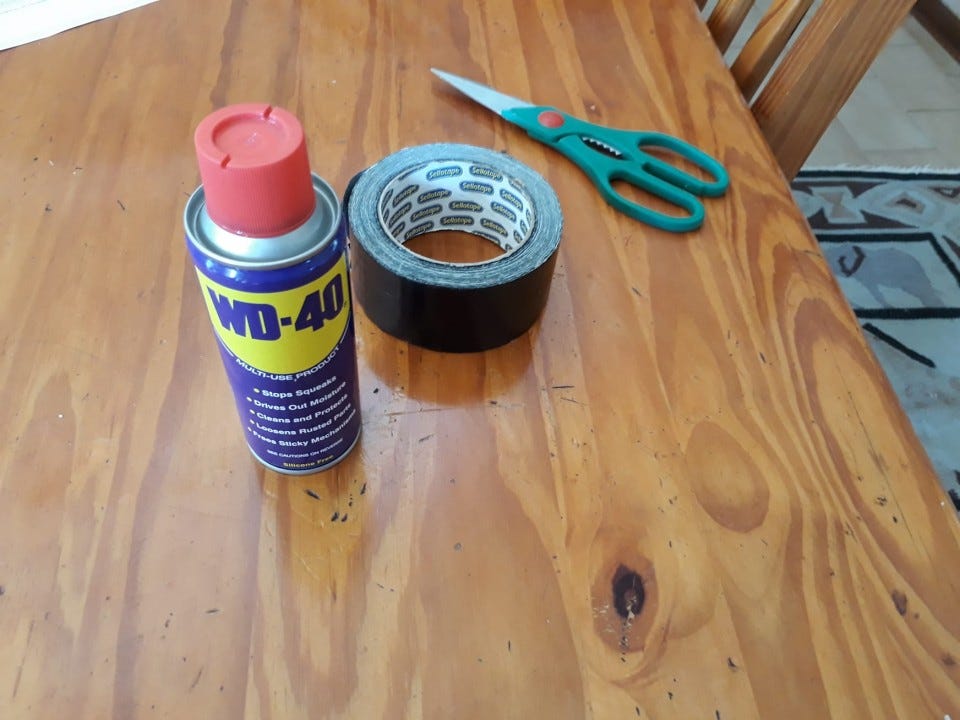
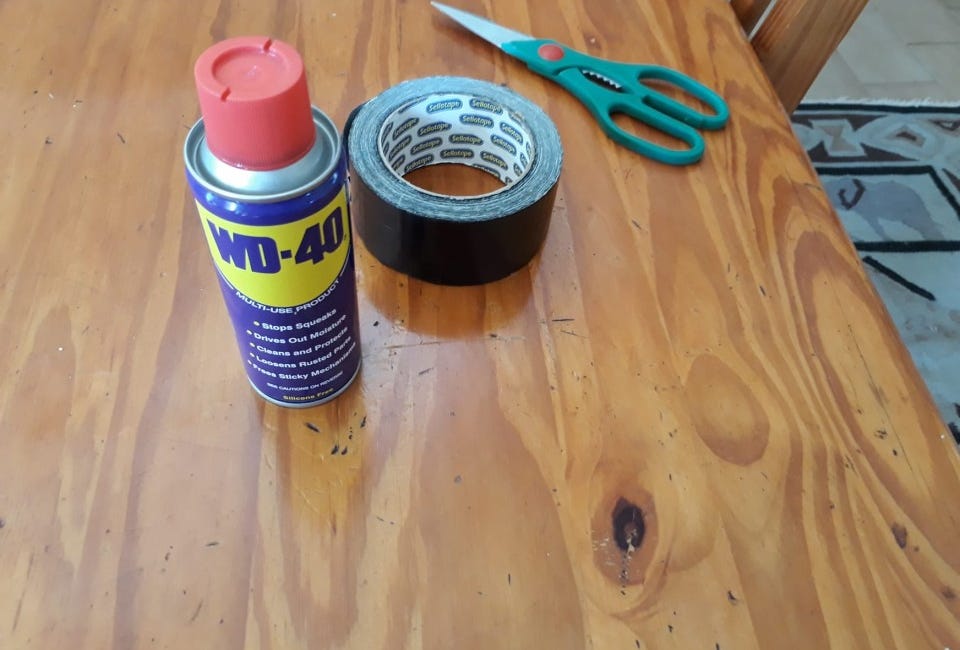
A common engineering joke is that if its loose then duct tape it and if its not loose then put WD-40 on it. That solves all problems. However, its not always that easy.

I worked at Madge Networks for over half a decade during the time where South Africa transitioned to a democracy. Madge Networks had a simple philosophy of ā€œsupport without limits.ā€ It meant that if you bought a Madge product you could be guaranteed that the company would assist you unconditionally in the use of that product and not charge you extra.

Madge went titsup. My analysis is that Madge Networks had a solution and decided to go out and find a problem. Robert Madge, the owner of Madge Networks, deferred to more incorrect strategic technology choices. The truth of the matter is that when something goes titsup, it’s not because of one reason only, but a myriad of them all contributing to the negative consequence. There are the immediate or visual ones, which are underpinned by intermediate ones and finally after digging right down, there are the root causes. There is never a singular root cause for anything.

As far as technology brainfarts go there is no better example than Kodak. They invented the digital camera that would eventually kill them off. However, they were so focused on milking people in their legacy film market that they never saw the tsunami. That tsunami also dealt a killer blow to another innovative company named Polaroid. Madge was a pre-cursor to Kodak and Polaroid. They perfected Token-ring and should have moved to developing silicon for future Ethernet and WiFi networking kit. Instead they went to merger and acquisitions but lacked the savvy skill in the disciple that Cisco mastered. Ironically, Cisco did make an offer to Madge Networks which was not accepted. As they say in this part of the savannah, ā€œEish!ā€

My first encounter with Madge Networks was in the heyday of Novell installing the FDDI adapters into Netware SFT III servers. Only adapters that worked without crashing the system. From that day I was a Madge fan.

Madge had a ā€œSwitching to ATMā€ strategy. The reasoning was clumsy but sounded sophisticated at the time. It was complicated and did not address the market for the desktop. The silicon for desktop connectivity was never going to be ATM. At that time there was also the Token-ring versus Ethernet debate. The conclusion was that Ethernet won but in fact users opted for wireless radios for their desktop networking instead of a clumsy wired connection. WiFi beat both Token-ring and Ethernet. Ironically, the Ethernet technologies today have more attributes of Token-ring than Ethernet as on the fibre side the standards all have their origin in FDDI. As an aside, one of the most stupid legacy defaults from Ethernet is its pathetically small frame size. Token-ring was designed far better on so many fronts and this was one of them! Nowadays you get Ethernet rings as specified by G8032. Taking about rings, another great attribute of Token-ring was source route bridging. It was miles better than Ethernet which only had pathetic transparent bridge. Token-ring allowed the creation of a far larger layer 2 domain without melting down due to broadcasts. Ethernet was forced to layer 3 to achieve equivalence.

All that effort in making a Token-ring MAC in hindsight could have best been leveraged by Madge in leveraging the acquired silicon developing expertise to climb on board the storage networking bandwagon that was about to hit. The underlying requirement was for high speed storage (never video or the other Jet Jetson technologies that was going to drive ATM). One of the driving attributes of ATM was that it had QoS. However, it was not the only way to solve it. Using higher level protocols, it was possible with Ethernet to achieve the same thing. And the silicon was way cheaper, as the cost reduction of Ethernet had already been progressing for several years. Nowadays, most multimedia traffic that requires prioritization uses less sophisticated QoS as defined by the ATM standards, but it does the job.

Somewhere in the late nineties some ponytail decided to change the Madge corporate identity. A change in corporate identity never works and never increases sales. No company has succeeded, but companies all try it. The only people who make money are the marketing agencies hired to do the job and the company that self-inflicts itself with this dumbass decision goes backwards. The classic case is Coke with its new Coke strategy. Luckily, they had enough bulk to reverse the mindless exercise. Whoever, at Madge decided that it was a good idea to go from lightning bolts to brown cardboard boxes, take note, it sucked. Never mind that the logo went from unique to bland.

And then that LANNET acquisition. Strangely, enough when I spoke to them later, they always said they were an Ethernet company. I think Madge Networks heard what they wanted to hear and put a square peg in a round hole. They tried to shove LANNET into ATM.

American Chopper on Discovery is one of the TV shows I watched. I often have sat on the couch and wondered why I was so fascinated by the Teutuls. I left it at, enjoyment. I also suspected that the pressures of working against deadlines and the bombastic and aggressive behaviour hit an accord with my work in Information technology (IT). However, I revisited the theme after attending a presentation by Peter Armstrong, where he asked the question of what the purpose of a rev counter in a car was. He assets it serves no purpose to the underlying functionality and purpose of a vehicle or is of any use to the driver. Now I would not buy a car without a rev counter, so if Peter's statements are correct, what is the underlying reason for that damn rev counter. There is no enjoyment for me in a car without a rev counter. I once drove an old sports car without one, but the loud sound of the engine in that case was a more than suitable substitute. I eventually found the answer in American Chopper.

American Chopper is about making motorcycles that are sick according to the older Teutul. Sick means cool, good looking and aesthetically pleasing. The bottom line is that the Teutils will not make a chopper unless it looks good. Yes, it must be functional and have a purpose, but it must be sick!

The aspect of quality is overlooked. A company that has been detailed enough to spend time on designs that make it look good, would have spent greater due diligence on the functionality. A better-looking product will be technologically better.

Secondly, there is the comfort. Product sets with rev counters, although delivering no functionality benefit, serves the purpose of harmonizing and making the purchaser of the product comfortable. This results in a satisfied customer, and a satisfied customer is the best advert for your business. As an example, I have missed the LCD panel with the paddle switches on Madge token-ring CAUs and switches. That was sick. The current generation of Ethernet switches with dull colours, bad designs and stupid flashing Christmas lights do not move me to confidence. It comes down to that fundamental genetic instinct to kick the tyres of a car. Admit it, you do it although there is no functional purpose to do it.

Before, I am cast out as a heretic into the wilderness, let me offer an example in Apple. Apple customers are the most vehement supporters of their products and I believe that the design of the products is core to this characteristic.

The hidden message to technologists is that do not stop when you have a functional product that satisfies a business requirement. Go the extra mile, to make it sick, like the Madge Networks kit.

One of Madge’s good customers was the Toyota factory in Prospecton just south of Durban. The IT manager Steve Kandasamy called to say the paint shop was reported intermittent network problems. He explained that the token-ring hub at the paint shop, a Madge Networks SmartCAU Plus was toggling between red and green on the network management station. Red meant a loss of connectivity.

Finally, I decided that I would fly down from Johannesburg to Durban to have a look as I was not able to remotely troubleshoot the problem. I arrived at the factory where the IT office always has a pot of Durban curry cooking on a primus stove in the corner. Best curry I ever tasted and never equaled.

We took the car to the paint shop and went via a circular route to the paint shop via the perimeter fence. When we hopped out at the paint shop, I noticed a clearly visible short cut road going directly from the paint shop to the IT office. When I queried this with Steve, he said I must never take the short cut. I did not question him on that any further.

We went into the paint shop and climbed a staircase to the top near the roof where the network cabinet was located with the failing hub. As I climbed the stairs, I noticed thousands of pigeons, inside and on the roof of the pains shop. When arriving at the network cabinet we noticed it was covered in pigeon sh*t. The sh*t was corroding the network chassis of the hub. We were literally in the sh*t.

I volunteered to drive back to the IT office to pick up the replacement hub while Steve removed the existing one. Outside I decided, to take the short cut. Fifty metres down the short cut I realized why it was not a good idea to use the road. All four tires popped. It turns out that that road was where the break down kits from Japan arrived and were unboxed. The containers where held together with large nails in the form of elongated and triangular spikes.

I went back to the paint shop and explained to an amused Steve what had transpired. He arranged a forklift with solid tires to pull out the car and a colleague arrived via a replacement car with a replacement hub. We replaced the hub in the cabinet while pain shop artisans installed a replacement roof on the cabinet of solid steel. The roof of the paint shop had those rotating mirror devices which the pigeons seem to ignore. I have no idea whether the Toyota factory still has a pigeon problem. It was a moment, but it was not like the sh*t hit the fan.

That happened at the turn of the millennium when a colleague who worked with me at Investec decided it was a good idea to cool the telecommunications equipment using a desktop fan. The networking room was not at an optimal temperature and in those days, cabinets had glass door which was useless at cooling the rack mounted equipment inside. The bearings in the desktop fan failed and the resultant smoke caused the gas suppressant to be dumped in the data centre. All this on the day before the millennium broke. Half the company thought the bug had hit.

So, in life I have known about being in the sh*t and the sh*t hitting the fan. The Presidency of Zuma was a moment where the shit the fan for the whole country. During those years the news was so debilitatingly depressive that I would often not listen to the radio or open up News24. I would rather listen to eighties music such as the band Queen or instead watch BBC documentaries. There is nothing calmer than David Attenborough and his nature programs. And there is also youtube videos of people repairing tractors. Far better karma than what is happening in the rest of the world.

Ronald Bartels | LinkedIn | Instagram

The life & times of BB – the travels & the stories of Ronald Bartels, born a South African

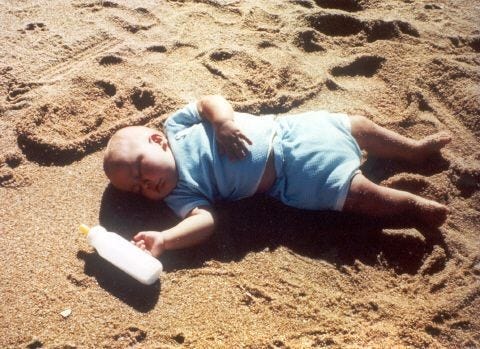
The four corners of the Earth are where we have been, where we are, where we will be going and where we end up. When I was a baby my parents told me I was attached to my bottle and would not give it up. They concocted a story that they had to give it to the elephant in the Bloemfontein zoo to feed her babies. That was the last I saw of it, but every family gathering they would have great pleasure in retelling the story. never realizing that it wasn't appropriate to retell traumatizing events.

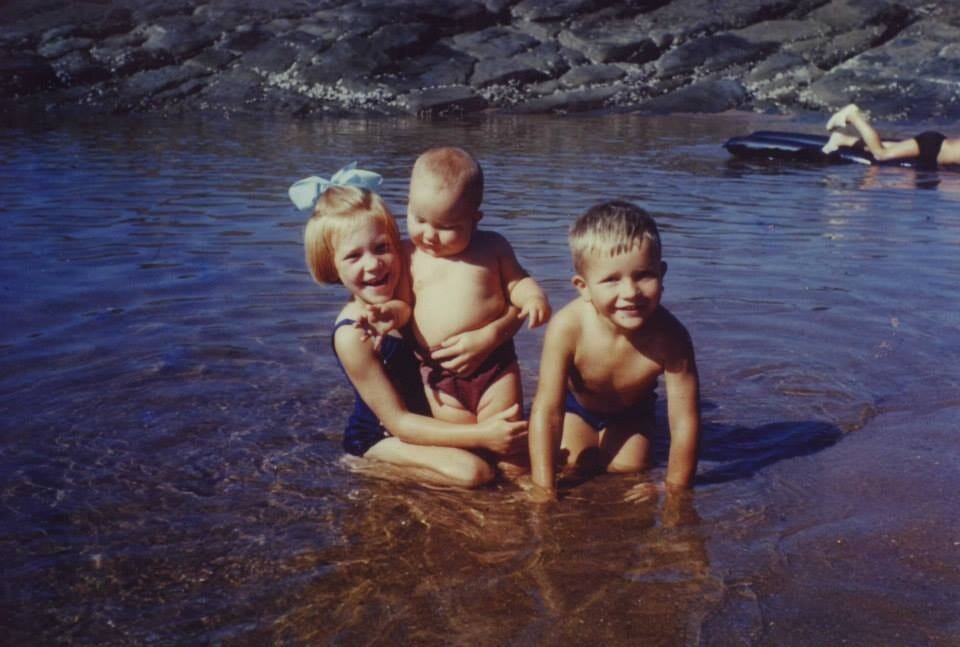
From that baby lying on the beach in blissful happiness at Thompson’s Bay, I now work in connectivity.

These are my stories.

Breaking the Mould of Stereotypes

Breaking the Mould of Stereotypes

Apartheid to democracy

Read full story

Cosmos, Blackjacks & Kharkibos

Cosmos, Blackjacks & Kharkibos

The Golden Liberals

Read full story

The Queen of Sheba

The Queen of Sheba

Comrade Ernie

Read full story

The Strong One

The Strong One

A dark night

Read full story

In my previous life I would have been a Roman Gladiator

In my previous life I would have been a Roman Gladiator

Maties

Read full story

In the beginning

In the beginning

Vredefort Dome

Read full story

Jeremy Clarkson and I agree that the best vehicle is a Massey-Ferguson

Jeremy Clarkson and I agree that the best vehicle is a Massey-Ferguson

I was born in the sixties a couple of years before Neil Armstrong took those famous steps on the moon. We lived in a dusty farmhouse in a valley in the KwaZulu Natal Midlands, a few kilometres north of the small town of New Hanover. The farm was nestled in a beautiful valley where my father grew potatoes and cabbages and other vegetables including madum…

Read full story

Herd of Zebra šŸ¦“

Herd of Zebra šŸ¦“

I was born on the Glorious Twelfth. This is the opening of the hunting season in Scotland where grouse is a common bird that is hunted. The yearly event is immortalized by the Scotch Whisky, The Famous Grouse! Just read the label.

Read full story

The Church in Sleepy Hollow

The Church in Sleepy Hollow

The first motorcar I can recall my dad owning was a Valiant. It was a big car and was partnered with my dad's Bedford truck at our farm located between Pietermaritzburg and Greytown. Pietermaritzburg is known as Sleepy Hollow. It is a dull place with not much happening in the town, except the yearly world famous ultra marathon known as The Comrades. Exc…

Read full story

Standstill

Standstill

Token-ring

Read full story

Being in the sh*t and having the sh*t hit the fan

Being in the sh\*t and having the sh\*t hit the fan

I worked at Madge Networks for over half a decade during the time where South Africa transitioned to a democracy. Madge Networks had a simple philosophy of ā€œsupport without limits.ā€ It meant that if you bought a Madge product you could be guaranteed that the company would assist you unconditionally in the use of that product and not charge you extra.

Read full story

The Gypsy

The Gypsy

One of the great trips I had, was to the Costa del Sol, or is that the Costa del Golf. It was a Madge Networks Sales Conference. We stayed in Marbella and flew into Spain landing at Malaga. We flew from South Africa via London and on the plane were a whole load of Germans. The Germans could not speak a word of English and I was trying to make conversati…

Read full story

Angels

Angels

As a teenager I sat in the Reunie Hall at Grey College in Bloemfontein and listened to Sir Laurens van der Post. It was in the immediate years before Die Groot Krokodil's Rubicon speech and many of my school mates were not convinced a democratic South Africa was viable. It is probably the greatest speech that I have ever heard where I was physically pre…

Read full story

I learnt to program on a ZX81

I learnt to program on a ZX81

My first job was for the Railways. It was fun working there until I was told that I could not be a member of their pension fund because I was disabled. I did not stay around to argue the point and moved on to work for a little networking company known as Network Interface Consultants.

Read full story

genchi genbutsu

genchi genbutsu

Often, I see technicians dealing with issues and problems while sitting firmly on the seat of their pants at their desks. Call me old school, but I do not think this works! There is no substitute for the eyeball.

Read full story

What really matters

What really matters

Dolos My brother AndrĆ© immigrated to Australia in the mid-2000s. He decided to leave the country as he had been mugged and did not have suitable engineering projects in his field as they had been cancelled. He was an expert in placing dolosse on breakwaters and affluent pipelines into the sea. He loved running and cycling having completed over ten Comrad…

Read full story

LAN Damager

LAN Damager

There I was shooting the breeze with an old mate. The conversation turned to why Madge Networks went titsup. My analysis is that Madge Networks had a solution and decided to go out and find a problem. They deferred to more incorrect strategic technology choices. The truth of the matter is that when something goes titsup, its not because of one reason on…

Read full story

The Irish Word for Social Media is Craic & it is a Better Alternative

The Irish Word for Social Media is Craic & it is a Better Alternative

In an Irish pub nestled between the tales and laughter, let me unfold the vibrant essence of Craic – a gem often overlooked in today's whirlwind of social media and technology. Picture this: amidst the hustle of Twitter, Facebook's frenzy, or even LinkedIn where you might stumble upon this very story, a transformation, a shift occurred.

Read full story

Growing Up on Oakvilla Farm next to the Inyosi River

Growing Up on Oakvilla Farm next to the Inyosi River

Copper Lines

Read full story

In a Modern World we have transitioned to Electronic Tombstones

In a Modern World we have transitioned to Electronic Tombstones

My wife used to say that often she would read about what I was thinking via something I had posted online instead of a personal conversation. Some things are easier to write about than to speak about. Something else my wife used to say is that I never took enough pictures of her and the children. I probably enjoy writing more than I do talking. That’s j…

Read full story

The Oakvila Farm Memories & the Path I Travelled

The Oakvila Farm Memories & the Path I Travelled

The Girl Next Door & Horseback Dreams

Read full story

P.O. Box 2, New Hanover, 3440

P.O. Box 2, New Hanover, 3440

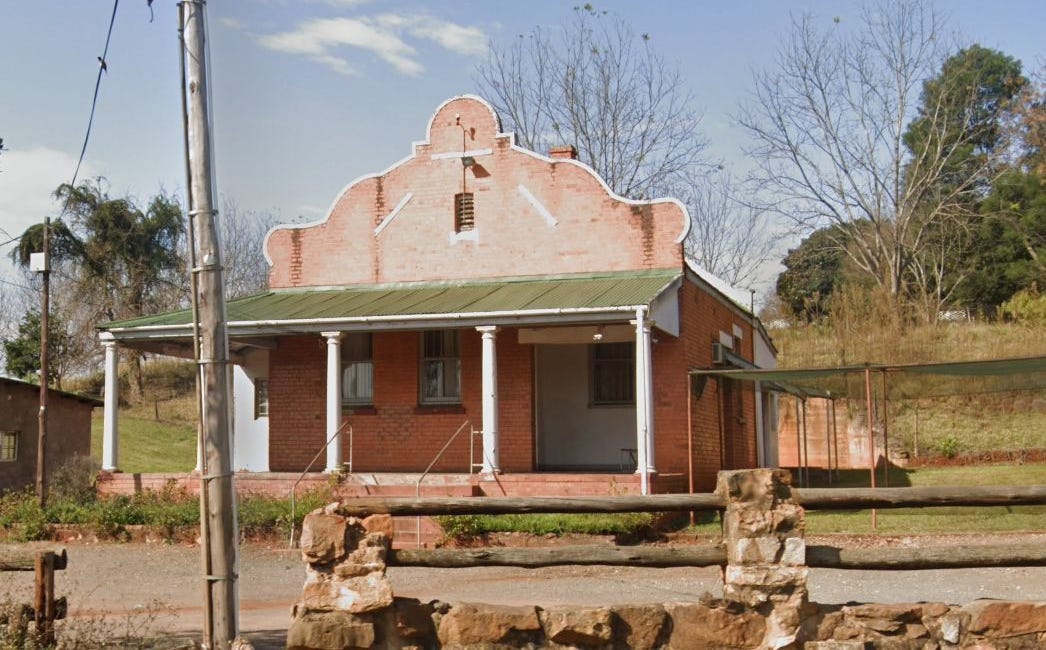
In the quiet rhythms of farm life, far from the clamor of cities, our connection to the wider world hinged on a simple metal rectangle: P.O. Box 2, New Hanover 3440. Our farm lay 15 kilometers outside that one-donkey town—a speck on the map so modest it couldn’t even afford a horse. New Hanover was the kind of place where time moved at the pace of a laz…

Read full story

Ronald Bartels | LinkedIn | Instagram

The day I closed down South Africa
Token-ring

In the mid-nineties I lived in Pretoria, in Hill Street, close to Loftus. Loftus Versveld is one of the prominent Rugby stadiums in the country. This was in the years immediately following the establishment of a full democracy in South Africa with Nelson Mandela leading the government. I worked for a token-ring company named Madge Networks as a Technical Account Manager. It was in direct competition with Ethernet, which would eventually become the dominant technology. The main competitor was Cisco.

One of my colleagues at Madge was Duncan Ogilvie. I was in contact with him when we stopped working at Madge and would often braai lamb chops and have a beer sitting on the stoep. During the pandemic he took his own life. Never knew that he was having mental health difficulties. He was a great mate.

The Madge offices were in Rivonia. My trip would start early mornings before seven as with heavy traffic the journey might take up to an hour. One morning I was driving in to work and was listening to a CD and switched to Radio 702 just before 7. Nowadays people rarely listen to CDs. The presenter on Radio 702 was John Robbie, an Irishman. The headline news was about major delays at Johannesburg International Airport which is now called OR Tambo that was reportedly caused by a computer problem. The country was at a standstill. I had worked at the airport for a major national airline installing many switches and CAUs and was very familiar with the environment. CAUs were token-ring hubs. I was coming up to the Buccleuch interchange and decided to go left to the airport instead of right to the office. Maybe there was something I could do to help.

A few moments later my mobile rang. It was the major national airline's IT manager who had heard the same news broadcast and asked me to meet him at the airport. He was as much in the dark about the situation as what I was. The two of us arrived at much the same time at the departure hall of the airport. The crowd and queues were extremely long. We walked to the front counters to determine from the staff what was the issue. Many of the passengers threatened us as the assumed we were hopping the queue and told us to get back into the line. Having struggled our way to the front we duly learned from the duty controller that there was no connectivity to the mainframe. Since my companion had walked over from the headquarters building, he confirmed it was not a general mainframe outage as the systems were all accessible and working from that building.

I had my laptop with me, an IBM Butterfly (one of the best laptops I have ever owned!) I attached my laptop using my Smart token-ring adapter to the network and loaded a good old DOS application called RingManager. I looked in dismay as RingManager proceeded to tell me that there were well over five hundred nodes connected onto the single ring (maximum should not be more than two hundred). The laptop screen then froze. Being a typical techie and not believing it the first time I proceeded to do it a second time with the same results by turning it off and on again. I conferred with the guys from the national major airline and told them that it was my suspicion that someone had looped the rings at the airport together. There was only one location where this was possible and that was the main fibre patching room. We proceeded to the patch room and at first inspection all was in order. However, when we started checking the patches, they were totally incorrect with the diagram pasted on the wall next to the cabinet.

The security guards confirmed that a cable installer had signed in and worked in the room at one in the morning connecting a new voice switch. We deduced that the patch cables were in his way, so he unpatched them all. He then installed his new fibre cables and then randomly patched the cables back. We started patching the fibres back to their correct position using the diagram on the wall. The technician who pasted the diagram on the wall was diligent and in today’s modern data centres this is never done. Nowadays you will never encounter diagrams present in patch rooms. When it comes to resolving problems, they are crucial. The assumption is you have it available electronically, but the fundamental problem is they were probably never created and not documented.

The airport network slowly started coming online as we worked through the patches and the departures were able to move from manual boarding to full digital ticket check-in and boarding.

After the crisis was over at around ten that morning, we had some strong cups of coffee. I asked the guys from the major national airline why there was no escalation as the operators had a network management alert console. No one had the answer, so we decided to go over to the operations area to work out the reason. The operator was sitting in his office blissfully unaware of the crisis. The network management console had a total of eleven million unacknowledged alerts. When questioned as to why there was no escalation the guy said that no-one had phoned him. He only does anything when someone phones him and since no-one phoned there was not any problem. He did not realize that his job was to tell people there was a problem. I never knew what happened to the poor bloke but there were some pissed off people ready to strangle him.

Change management

I have repeated seen changes done in isolation and not in an end to end fashion. In some companies each business unit does their own thing and does not consult with any other stakeholders. Change management will fail and cause outages unless there is a transparent end to end process where all stakeholders and their vendors within an organization have visibility to these types of activities.

Too often the changes are done in a fashion of need to know. I need to know and will tell you about it if I think you need to know. Murphy usually conspires to bring two changes together at the most inappropriate moment to cause absolute havoc.

Whenever I sit delayed in some airport, I often have the urge to go and ask the airport personnel who messed up the change process, because that is the most probable reason. The problem is not limited to a single national airline, in this case, South African Airways, but also countries as a whole. Ironically, South African Airways would go titsup due the cronyism in the post democratic South Africa under the control of the African National Congress.

The best example of a politician who was able to handle and manage change was Nelson Mandela. When I was at school at Grey College, Mandela was banned. We had no sight of him as his picture and words were banned and there is a famous Johnny Clegg song about it, Asimbonanga.

Braam Fischer

On the honours board in the Reunie Hall at Grey College under 1934 was the name of Braam Fischer. Fischer was a white Afrikaner, who was Mandela's lawyer and friend. Every hall period my eyes would drift to that name on the board. I knew who he was, and his name was cursed by the apartheid government in power. Some would have liked his name erased, but the school refused. Many famous people have matriculated from the school including Laurens van der Post, Denys Reitz and countless Springbok Rugby players. Of all these Fischer's ideals matched most closely those of the school's founder, Grey. He had died a horrible death in prison for his convictions and would not die in the comfort and praise of the nation. But his contribution was immense. Here is Fischer explained in the words of Mandela, delivered in that same Reunie Hall on 28 November 1997, where I sat:

Bram Fisher tel ongetwyfeld onder daardie klas van goeie mans en vroue wat op die wyse deur alle Suid-Afrikaners in verering gehou sal word.

Ons weet egter dat dit nie altyd die geval was nie. In sy lewe het hy voor die moeilikste keuses te staan gekom. En sy uiteindelike keuses, het hom 'n uitgeworpene gelaat in sy eie gemeenskap en in die geledere van sy beroepslui.

ā€˜'n Man so hartstogtelik verbind tot die wet en die gereg het gesterwe as 'n gevonnisde prisonier. 'n Afrikaner in murg en been, sonder verskoning of voorbehoud, was soos 'n melaatse behandel deur sy eie mense.

Aan die ander kant: die seun van een van die mees vooraanstaande en bevoorregte gesinne in die samelewing van daardie tyd, het sy lot ingewerp met die van die armstes onder die armes.

Dit mag klink na 'n verhaal van teenstrydighede. Daardie teenstrydighede was egter nie soseer in die man Bram Fisher nie; dit was die teenstrydighede van die samelewing waarin hy, en talle Suid-Afrikaners, moes leef.

Ons regstelsel het in botsing gekom met die ideale van geregtigheid vanwee die onderdrukking van die meerderheid, en die verwording van die wet om die geregverdigde weerstand van daardie meerderheid te onderdruk.

Dit was die gedwonge skeiding van mense en die ontsegging van basiese politieke regte op grond van ras en kleur, wat daartoe gelei het dat 'n mens se respek vir sy medemens in stryd kon kom met sy sy trou aan eie gemeenskap.

Bram Fisher se durf en moed in die wyse waarop hy hierdie moeilike keuses aangepak het, het dit makliker gemaak vir andere om op daardie pad te volg. Sy beeld, toegewydheid tot die stryd vir vryheid en menswaardigheid, aktiewe bevordering van nie-rassigheid – daarin le die fondamente van ons huidige pogings tot versoening.

Pause for a moment. The words are in Afrikaans. Afrikaans was the predominant language of what Mandela classified an illegal regime. Ironically, it was a language more associated with the kombuis than the voorportaal. It was the language of JT Elliot. What is implied by this is that it had its origins amongst the South African coloured population and not the boers (Dutch language farmers). They placed a higher regard on Dutch. Afrikaans was the language of Die Stem, written by Langenhoven who had been my oupa's neighbour in Oudtshoorn. It was only in 1952, the year after the establishment of Bible House, that my mom's aunt was the first one to be married in Afrikaans and not Dutch. Donald and Margarite Munro were the first to have the language used in a wedding officiated in the NG Kerk. But the language became hated as it was assimilated by the ruling governments who introduced systematic racism in the form of apartheid. The words in Mandela’s speech are amazing but even though it reflects on Fischer, it reflects more on the character of Mandela. Here is a leader who when imprisoned, learned the language of those oppressing him and when he came to honour his friend he did it in his Fischer's native tongue, even though it was a language he should have despised. Mandela was better and more fluent in Afrikaans than me. He was more an Afrikaner than what I would ever be.

We often debated politics at school. I was not shy to make my views know and was branded a kommunis. The word was generically used to describe any liberal. It was difficult to intellectually justify apartheid and we all realized it. I went to University and many of my friends participated in the border wars. Like all wars, it leaves its scars. Colloquially we refer to it as being bosbefok.

I am a liberal and in the language of the conservative world it is still misconstrued as it is identified as what they are not, while it should be identified by what they are. It is one of the fundamental reasons I always feel alienated as I am classified by what I am not, not by what I am. An example is the branding of people as disabled. I feel it is hugely insulting as people are physically or mentally impaired and they are not recognized for what they are! During apartheid there was the binary classification of white and non-white. This was abhorrent but the inherent bigotry in other areas has not been irradicated.

Unlike the other leaders I admire like Amundsen, Turing or Flowers, Mandela was still alive in my lifetime. While I was in the navy, a few thousand kilometres away from the border wars, I recall the speech by de Klerk when he announced Mandela’s unconditional release. I was travelling on the road between Muizenberg and Stellenbosch and listened to it on the radio. For me it was a defining moment, as I knew that my views and debates from ten years previously had been correct. I was driving past a fishing spot known as the hole.

The actual event I remember the most about Mandela was the 1995 World Cup. When he walked into the stadium with a Springbok jersey, he won over the complete nation, including many of his former enemies, and not just those of the black people. Then there was the 747 flypast by South African Airways, and we won the Rugby World Cup against the All Blacks, but that always seems of secondary importance. It was a simple gesture, but he was a great leader who understood that small and simple gestures can change the course of history and that he did. The event has been immortalized in the movie, Invictus.

When Mandela died, I was in holiday in Mauritius. We watched parts of the funeral on the television in out hotel bedroom. Ironically, the speeches by world and political leaders was not what I remember. A fake deaf interpreter named Thamsanqa Jantjie had been appointed by the ANC for the event. He proceeded to stumble his way through the proceedings like a drunk seagull directing traffic. This was only a minor indiscretion by the government of the day that was focused on full scale looting which would make Mandela tun in his grave.

That trip in Mauritius was notable in that we went on a fishing trip and bagged a sailfin, as well as a few Dorado and Barracuda! The sight of a sailfin break and jumping out of the waves behind the boat was an awesome and lasting experience.

I am not a Mandela. When I am suppressed, I have images of carving up my antagonist into little pieces with a sword. A good leader, negotiates and engages. That is what made Mandela a great leader. He was able to resolve a conflict situation in South Africa in a few decades where in other parts of the world, similar conflicts have continued for centuries. Leaders like Mandela do not come around often, and in our lifetime, we had him in South Africa.

In the Reunie Hall at Grey College, the Honours boards became filled, and a new row was placed above the old ones. Above 1934 is 1984. Look closely and you see a name, R. BARTELS. That is me! It is a great feeling to be the company of a hero like Fischer, who was honoured by the great leader, Mandela. I was honoured.

Early Years in Johannesburg & the Flat in Yeoville

My early years in Johannesburg were a mix of ambition, adaptation, and unexpected challenges. Fresh into the workforce, I landed my first job at Datavia, a division of Transnet, in the bustling heart of Braamfontein. I was a programmer, spending my days wrangling COBOL, embedded SQL, and JCL on an IBM mainframe. The work was technical and demanding, but it felt like a rite of passage, a chance to carve out my place in the world.

I found a flat in Yeoville, a vibrant suburb with a bohemian edge, just a stone’s throw from Berea and the infamous Hillbrow. During this time period, my future wife, Kathleen (Kath), was busy clubbing in Hillbrow at the Bella Napoli. At the time, Yeoville seemed like a decent spot, lively, affordable, and close enough to work. I had no idea that Hillbrow was sliding into chaos, its reputation as an inner-city cesspool growing by the day. Braamfontein, too, would eventually feel the ripple effects of that decline. Yeoville held on for a while, but over the couple of years I lived there, I watched its charm erode. There was a decent restaurant that served a great t-bone and the pizzeria was liberal with the garlic, just the way I liked it.

My flat was modest, furnished with hand-me-downs from my Tannie Marguerite, a sturdy dining table, a creaky bed, and a few chairs that carried the weight of family history. The one modern luxury I allowed myself was a Sony Trinitron TV, its crisp display a small source of pride. Life was simple, but I was content, focused on my job and settling into the rhythm of the city.

That rhythm shattered one evening when I was attacked at my doorstep. A group of three black youths cornered me, demanding my mobile phone, a bulky Bosch brick. Before I could react, a blade caught my shoulder. The pain was sharp, but the shock was sharper. I was lucky—it could’ve been worse—but that moment broke something in me. Yeoville no longer felt like home; it felt like a trap. I knew I had to leave.

I wasted no time. I called my mate Jose, hired a trailer, and planned my escape on the weekend. With his help, I packed up my Tannie’s furniture, my prized Trinitron, and whatever else I could fit. We hauled it all to Randburg, a quieter, safer suburb that promised a fresh start. The move was exhausting but liberating. Johannesburg had shown me its rough edges, but I wasn’t ready to give up on it—not yet. That would come later.

As a result of this experience I went and purchased a Colt .45 Model 1911. I would have this weapon up until the boys were born when I decided the probability of accidental discharge was not worth the risk. My brother lost his best friend at the age of four due to a gun accident. I never told Kath about the stabbing, as it was demasculinizing and a humiliation. But I became vigilant about security situations and moving in dangerous areas. Aware of the threat when family members drove into inappropriate areas and subliminally it was even there when I was sleeping. Since I don’t have a Colt pistol anymore, I have a broadsword. I even brandish it in my dreams.

Network Interface Consultants | A Tech Adventure in the Netware Era

My time at Network Interface Consultants, a Novell Netware reseller, was a whirlwind of tech challenges and triumphs in the early days of local area networks (LANs). As an ECNE and MCNE, I was knee-deep in the world of Netware, installing and maintaining LAN servers with a precision that felt like conducting an orchestra of bits and bytes. My days were filled with the hum of servers, the click of keyboards, and the occasional beep of a Motorola pager clipped to my belt.

One of my proudest roles was being one of the country’s go-to experts on System Fault Tolerance III (SFT III), Novell’s high-availability solution. It was a beast to configure, but ensuring those servers stayed online through thick and thin was deeply satisfying. Beyond that, I carved out a niche connecting PCs across LANs to mainframes and AS/400 systems, bridging the gap between the old guard of computing and the new. It was like teaching two different languages to talk to each other, and I loved every minute of it.

Messaging was where I truly shined. I worked on email systems, digital telex, and paging—technologies that were the lifeblood of communication in those days. The star of the show was a DOS-based email system called Da Vinci, which later evolved into the mighty Groupwise. I even had the privilege of installing Groupwise for Multichoice’s TV stations across Europe, which meant jetting off to Amsterdam on KLM—first class, no less. Those flights were lekker, a rare treat in a job that was otherwise all about cables, configs, and coffee.

One of my standout contributions was building a rudimentary monitoring system for the LANs. This was no off-the-shelf solution; it was a custom job, cobbled together with grit and ingenuity. The system was tied into the Message Handling Service (MHS), which integrated with Da Vinci. To keep tabs on the network’s health, I set it up to send a heartbeat signal every eight hours if there were no alerts. If something went wrong, like a server crash or a connectivity hiccup, MHS would dial up a paging system known as Radiospoor via a trusty US Robotics modem, alerting us through the paging company in Midrand (whose name escapes me now). We’d get a buzz on our Motorola pagers, and off we’d go to troubleshoot, often lugging a bulky Bosch mobile phone for backup communication.

Back then, South Africa’s analogue phone lines and Eskom power were rock-solid, outages were unheard of. But that reliability could be a double-edged sword. If my pager stayed silent for too long, a nagging feeling would creep in: Is everything actually okay, or is the monitoring system itself down? That’s why the heartbeat was critical—it was our reassurance that the system was still watching, still alive.

Working at Network Interface Consultants wasn’t just about tech; it was about problem-solving under pressure and finding joy in the small victories, like a perfectly synced mainframe connection or a page that didn’t come through at 2 a.m. It was a time when technology felt like a frontier, and I was one of its explorers, pager in one hand, modem in the other, ready to keep the network humming.

I drove a Honda Ballade, which would eventually be replaced by a BMW 320i. I would often drive with the Colt pistol, loaded and wedged under my thigh. The memory of being stabbed still haunting me. I would only give up on that Colt once my sons were born due to the risk of a weapon being found and accidentally discharged by them.

COBOL Programmer at South African Transport Services

In the early days of my career, I landed my first job as a COBOL programmer at South African Transport Services, the predecessor to what is now Transnet. I was tasked with working on the Branch Line System, a network of smaller railway stations scattered along the branch lines. These weren’t the heavy-duty lines handling bulk cargo, containers, or city-to-city transport. Instead, they serviced the kind of logistics that companies like Value Logistics or The Courier Guy handle today, smaller, everyday shipments. In a single year, the system processed at least 12 million consignments, or what we now call waybills. A consignment could be anything from a couple of microwaves destined for OK Bazaars to thousands of steam irons headed to Stuttafords.

The technology we used feels like a relic now. Each station was equipped with a green-screen terminal linked to the local post office, or ā€œposkantoor.ā€ For the more remote stations without green screens, staff relied on carbon-duplicated books to record consignments. These paper records were later manually punched into the system at the nearest green-screen terminal. It was a clunky, labor-intensive process, but it worked—at least most of the time.

Looking back, it’s surreal to think about how those branch lines have largely faded away. Many of the railway tracks we served are now overgrown with weeds, rusted beyond repair, or even stolen for scrap. The world has moved on, but that first job, writing COBOL code to keep those consignments moving, was my introduction to the intricate dance of systems and logistics that shaped my career.

Graduation & the Call to the Big Smoke

The air was thick with anticipation at my Maties graduation. The ceremony itself was a blur of gowns, proud smiles, and the weight of years of hard work finally paying off. I was the second guy off the stage, my heart still racing from the moment my name was called. As I stepped into the foyer, a man approached me, James Flower, a recruitment officer from Spoorweg. He had a sharp, no-nonsense air about him, the kind of guy who could size you up in seconds. ā€œWhat were your marks like?ā€ he asked, cutting straight to the point. I couldn’t help but grin. ā€œNailed distinctions in Computer Science,ā€ I told him. His eyes lit up, and before I knew it, he was pressing an airline ticket and hotel vouchers into my hand. ā€œCome up to the Big Smoke for an interview,ā€ he said, like it was already a done deal.

Back then, airline tickets were a different beast. None of this e-ticket nonsense, just red carbon copies, flimsy yet official. If you paid with a credit card, they’d haul out one of those wick-whack machines, sliding it back and forth to emboss your card details onto the carbon paper. The boarding pass came with a little sleeve to keep it safe, and the whole process ran on something called Galileo, I think—a clunky system with cryptic codes. Six or seven keystrokes, and boom, you had your pass. It felt like a ritual, like stepping into a world of possibility.

I flew up to Johannesburg, the Big Smoke, for the interview. Nailed that too. When I landed the job, it came with perks that felt like winning the lottery: an unlimited train pass and four free SAA flights a year. I could feel the world opening up, one carbon-copied ticket at a time.

From Total House to Braampark & Durban Adventures

During my time at Transet, I spent most of my days at Total House before we relocated to Braampark. My role rarely involved direct physical interaction with the mainframe, except when I found myself in Durban. Those trips were a unique blend of work and unexpected fun.

I’d occasionally travel to Durban with tapes in tow to run management information reports on the backup mainframe. This was done to avoid disrupting the live system. The Durban setup was different, more hands-on. While waiting for reports to process, which could take hours, we’d kill time in the mainframe room by playing cricket. Our makeshift ball was a bottle top wrapped meticulously in packing tape until it was just the right size for our impromptu games.

Over time, I grew comfortable operating the console myself, running tasks and monitoring the system. One memorable day, the shift crew decided they wanted to hit the beach and asked if I’d mind watching over things. I agreed without hesitation. Hours later, the manager walked in, expecting to see his usual staff, only to find me—an unfamiliar face—sitting at the console, managing the mainframe solo. The look on his face and the conversation that followed were, to say the least, quite interesting.
Ronald Bartels | LinkedIn | Instagram

My calling is to be a potato farmer

I was born in the sixties a couple of years before Neil Armstrong took those famous steps on the moon. We lived in a dusty farmhouse in a valley in the KwaZulu Natal Midlands, a few kilometres north of the small town of New Hanover. The farm was nestled in a beautiful valley where my father grew potatoes and cabbages and other vegetables including madumbis. The madumbis is a type of root plant known as the potato of the tropics but is not in any way related to real potatoes. Madumbis were originally grown in South-East Asia for well over six thousand years and was introduced to the Natal Midlands by Indian indentured labourers who came to work on the cane fields.

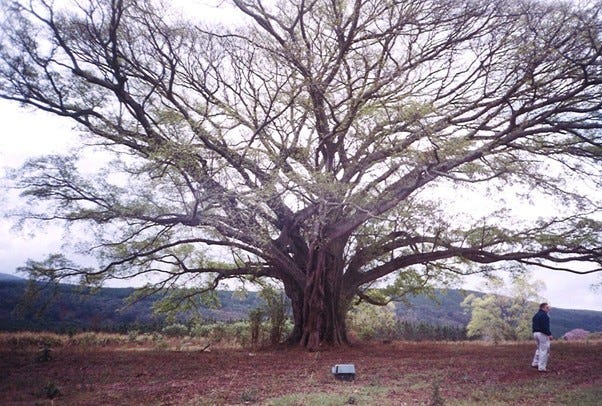
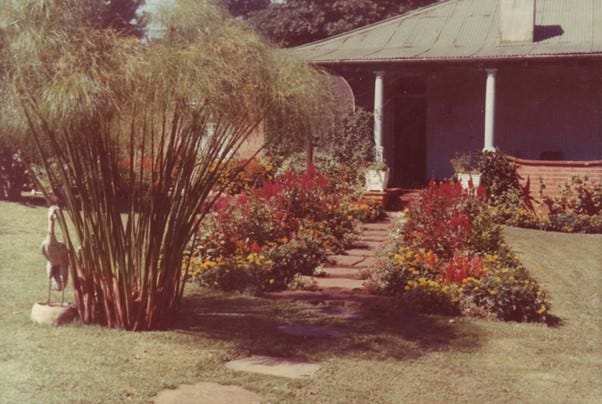
The farmhouse was located on the one slope of the valley through which the Inyosini river. It had wooden floors, red brick walls, and a green tin roof. Outside my window grew a glorious old wild fig tree that included thousands of weaver nests and a huge one inhabited by a family of Hamerkops. It was more on the side of being a hovel than a mansion, but it was a magnificent home.

The Inyosini river had two dams on it that my dad used for irrigation. A network of pumps and pipes fed the fields and I was there with my dad maintaining this infrastructure and along the way learnt a bit about plumping.

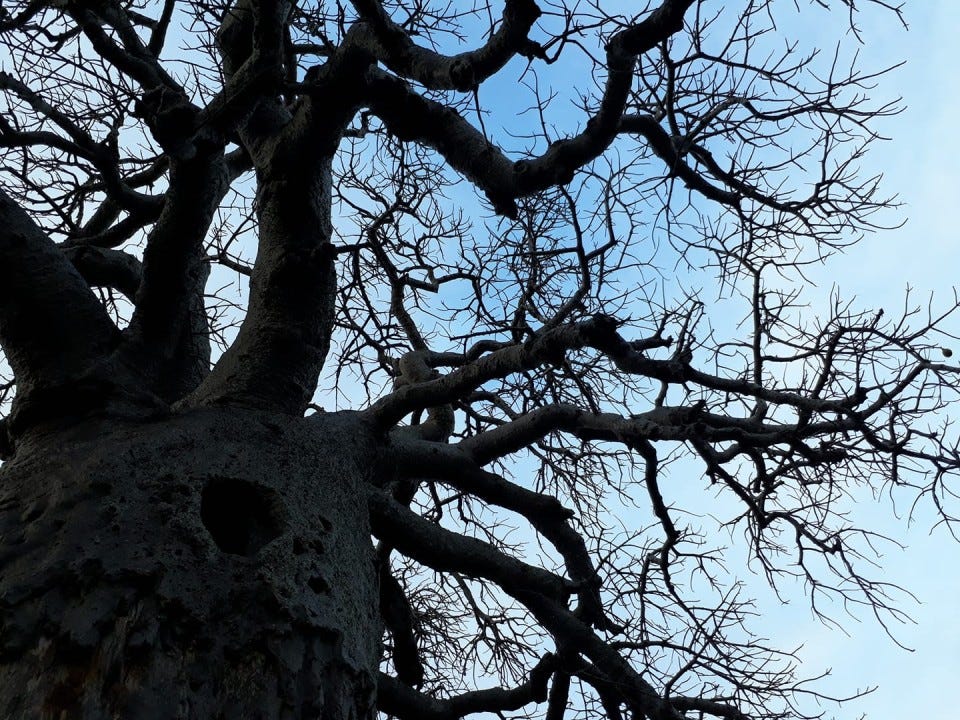
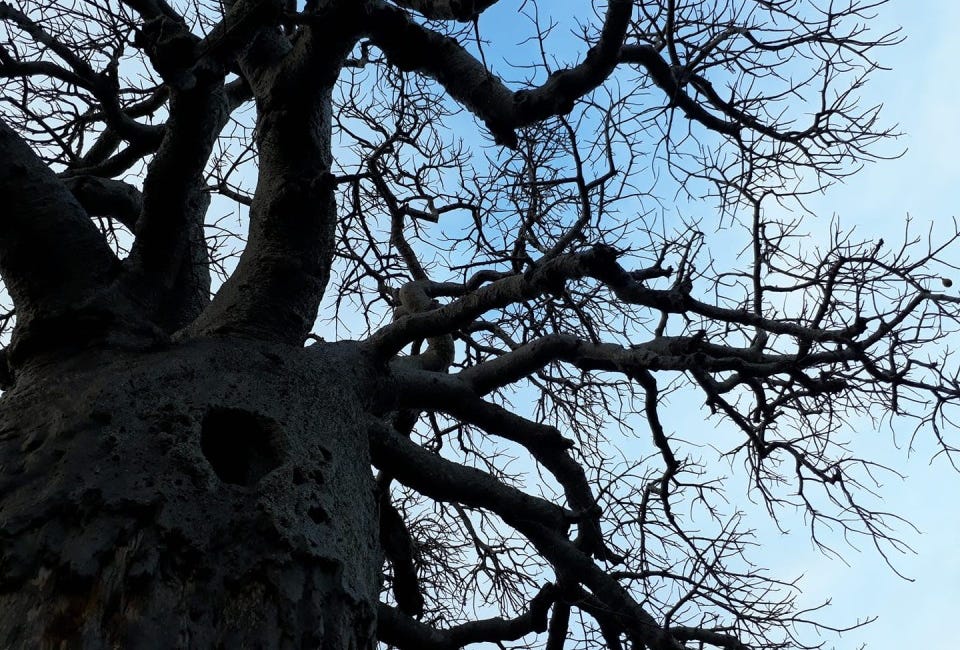
We had plants on our farm known as Gibisila. The botanical name is Bowiea volubilis but commonly known as a Climbing Onion or Sea Onion. The plants are now endangered and I still have a few that were harvested and moved from the farm. Its my link to that time of my life and are a fascinating plant. They are large green bulbs with green climbing stems which lack leaves. It is one of the top medicinal plants known but has been exploited excessively. It has been associated with curing a large number of ailments, often based on superstition.

We did not have television until the late seventies and then it was only a couple of hours a day with strictly curated content by the government of the day. My recollection of the Apollo moon landings were the interesting books and stickers that the Total fuel service station in town gave us. We never watched those landings live on TV like the rest of the world! The Total was at the beginning of the main road of the town. Halfway down was the New Hanover Tearoom, directly opposite the butcher. My dad would buy the Natal Witness religiously each day from the tearoom. A tearoom is what we in Natal called a Cafe or kiosk in the rest of the country. One of my first shocks when travelling to the rest of the country was that they did not have tearooms! The whole family would read the newspaper that my father bought as it was the primary source of information of the greater world.

I clearly remembered the day the television arrived. My dad had strung up an antenna that was located one and a half kilometres away from the farmhouse with several amplifiers along the way. After a minor disagreement with my mom about the cabinet (which had to be replaced) we all sat down to watch the test pattern. The neighbours and their kids also came to stare in awe at the new device! The first program we watched was Kraaines. I can recall lying on the wooden floor watching the Rugby test matches of the Springboks versus the All Black in New Zealand. I was in a plaster cast due to having broken my leg in a Rugby game. I grew up with New Zealand being the place the All Blacks came from, not realizing the historical link between Grey and that country.

On our farm lived a Zulu Nkosi named Gumede. He had livestock, a car, and a house with electricity. On weekends the grandsons of the Nkosi and I would play with Tonka toys, wire cars and tractors made from clay. We would then engage in the occasional game of football, but they refused to swim in the pool muttering under their breath about the madness of it all. There were no forms of entertainment with which the current generation is familiar. Instead of electronic games we had guava fights. The farm had a large orchard of guava trees and the fruits would serve as suitable weapons between the rival armies we established.

We had a Philips radio and turntable, and several LPs. They belonged mostly to my sister and one of them was a bootleg copy of Cold Fact by Rodriquez. I remember it well as it was one of our favourites. He was a bigger rockstar to us than the Beatles. In our isolation we did not realize that he was forgotten. It is an incredible story and one that spans my generation. That was the soundtrack embedded in our heads. The LP had the lyrics written on the back cover, which we learnt. No other LP had lyrics and so it was one that left the biggest impression on us.

We have often holidayed on the Kwazulu Natal coast and we would just skirt the area where I grew up, by about 30 km, travelling through Pietermaritzburg. One day I decided to stop by the farm. My dad, who had by then passed on, had sold the farm, and retired in the mid-eighties. I arrived at the farm and a crowd gathered to see and talk to Mastelek's child. I enquired about my playmates and one man stepped forward. Bengu, was the only one still alive. The rest he informed me had died because of HIV/AIDS epidemic. We cried and he asked me when I was coming back. The days when Mastelek was on the farm were always the best for him as then there was always food to eat and now the pickings were sparse. I apologized; I was not able to return. I took all the money out of my wallet, gave it to him and left. The soundtrack of Rodriquez was in my head...

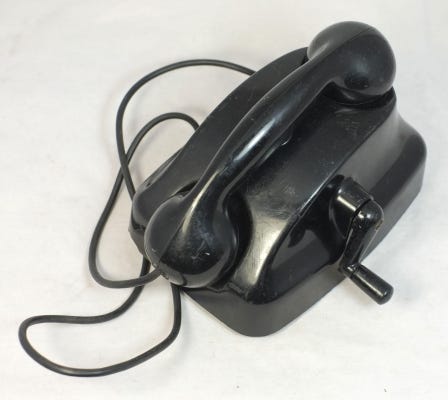
The main form of communications was an old black Bakerlite telephone, that operated on a party line which meant the whole neighbourhood could hear your conversation. The telephone lines used to hum, and flocks of birds used to use them to perch. The exchange in town was manual and was operated by Miss Bentfinger, so named as she always dialled the last digit incorrectly.

Our life was different. We would play. No Lego, no Steam for games, paintball, zilch! We would build go-carts to race downhill using the wheels from old farm implements. Our go-carts would take three kids and we would all climb on board to race down the steepest hill in the area. On one occasion, my brother persuaded me to climb into a tractor tyre which he then proceeded to roll down the hill. It was as awesome as bungi jumping. It went down the hill just as my dad was driving up the hill. He was not impressed, and we were subjected to a discussion and beating. My brother was like that, a maniac. And there were no rules yet about your parents not being allowed to dish out the odd snotklap! In those days we would be disciplined by a whip fashioned out of melted down plastic fertilizer bags. It hurt as bad as it sounds.

One year, we had a flood in the river. My brother’s idea of fun was that we climb into a tractor tube and ride the flood waters down the river.

The farm had a large guava orchard and we arranged armies to have fruit fights. A whole day could be taken on one battle.

My dad allowed me to use weapons. Trusting me with a shotgun and later with a 7mm Remington Magnum Sako, a highly powerful and accurate rifle manufactured in Finland. All before I was 10 years old. No ways would I allow my own boys near a weapon of any similar abilities due to their total lack of training.

When I was five years old, I received my first tractor driving lesson on a Massey Ferguson. Soon I was ploughing fields. This was followed by riding motorcycles and other vehicles. Even though I was unlicensed, my dad would allow me to drive to school.

The first digital device that I saw was a calculator, a TI-2500 Datamath. While Mark Shuttleworth was still in nappies, I would sit and help my dad work out the wages each week, and then we would sit on the stoep at a table and pay the labourers who worked on our vegetable farm. The process without the calculator would take hours but when the calculator came along it took minutes. That is when the seeds were planted in my mind to make a career around digital devices. The price tag on that calculator was R78.90. It was not a computer, but I was hooked.

My brother and sister both had me at the doctor for stitches while I was growing up. My brother jumped on the lid of a bricked storage compartment that we used for toys at my grandmother's house. The result was a split eyebrow and a visit to the doctor for stitches. My sister then bliksemed me using a spade. We were playing on the sand that was being used by my dad to build a new pool. Again, a trip to the doctor, who happened to be the neighbouring farmer who lived in a mock castle and drove a Pontiac.

There were two other experiences that were more dramatic than what my siblings did to me.

The first was on a hike up Blinkwater. Blinkwater is the highest mountain closest to my dad's old farm Oakvilla. A large group of us climbed to the top of the mountain. Near the top are several cliffs. I slipped close to the edge of one of these and went over the edge. I fell into a small tree growing just below the edge and held on tightly. If it were not for that tree I would have fallen to my death at a very early age! A teacher from Wartburg Kirchdorf school came and rescued me. He had to persuade me for quite a while to let go of the tree and for him to pull and carry me back to safety.

The next was when one Sunday we went to a braai with my mom's cousins at Hazelmere dam. My dad and I also went there to collect Black Bass for our dams on the farm. I was swimming in the dam when a powerboat came by at high speed. The wake hit me, I swallowed water and was pulled down beneath the surface by the swirl. I remember trying hard to work out where the surface was but was not able to do that. One of my mom's cousins had seen what had happened. No-one else did. He jumped in and pulled me out of the dam. My mom's three cousins were all were named Whisky. I do not recall which Whisky it was, but SlƔinte.

I am a Whisky fan, most probably because of those three cousins. I also long to be able to ride on a Massey-Ferguson again. As Jeremy Clarkson has discovered late in life. A tractor is the best vehicle of them all. My dad when he sold his farm told us we were not farmers and that it would be better for us to go to university and become engineers or accountants. It was the mid-eighties, and the infamous Rubicon speech was around the corner. I am not a farmer but my heart longs for the farm.

Ronald Bartels | LinkedIn | Instagram
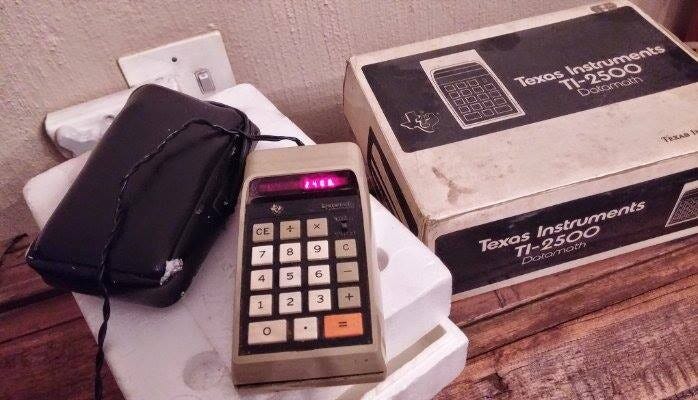

Discover the lively spirit of Craic, an overlooked gem compared to today's busy social media scene

An Irish pub, full of tales and laughter, is the best place for me to tell you about the vibrant essence of Craic – a gem often overlooked in today's whirlwind of social media and technology. Amidst the hustle of Twitter, Facebook's frenzy, or even LinkedIn where you might stumble upon this very story, about a different type of social media.

Once a beacon of swift information, Twitter transformed post-Elon Musk's acquisition, into a place of abrasiveness. It's a stark reminder of the dangers when digital realms lose ethical moorings and human decency. But there is an alternative.

Amidst this chaos, the finest form of social interaction is Craic. Hold on, it's not about indulging in vices. Craic encapsulates those moments when folks gather around a braai, a dinner table, or share a drink – be it beer, wine, tea, or coffee – engrossed in conversation. Originating from Ireland, it's bolstered with a good ol' bottle of whisky (or whiskey), sparking debates and immersive engagements.

Craic delves deeper; it's not just a chat, it's an immersive exploration. It ponders over the origins of things we often overlook in our fast-paced world. Modern marvels like phones, computers, or nuclear energy have ancestral roots we scarcely acknowledge. Even the sophistication of ancient civilizations, languages, and number systems often eludes our recognition. Imagine the Craic around the fire when the Pyramids were first raised!

When discussions arise, technologists often turn to smartphones for instant answers – but these sources aren't always definitive, failing when batteries die or signals vanish. Here's where the age-old debate of whisky versus Google comes in – and trust me, whisky triumphs!

Now, let me whisk you away to a little gem called Durty Nelly's, nestled alongside the Raite River near Bunratty Castle in Ireland. Picture it – a pub steeped in history. Durty Nelly's, adorned with a sign that piques curiosity, beckons with tales of its elusive namesake. Was Durty Nelly a woman you couldn't look in the eyes? Wink-wink! The pub's ambiance is woven with the cooing of pigeons, entwined with lively conversations, true Craic in its element.

Step inside. As dusk blankets the area and the River Shannon's mist drifts in, the warm glow of a peat fire illuminates the space. A piano tunes up, joined often by the beat of a Bodhran. And after a few pints of Guinness, the crowd erupts in drunken yet harmonious singing – a scene akin to Billy Mack crooning ā€œChristmas is All Around,ā€ only merrier.

A ritual unfolds as a Guinness is poured and left to settle for 125.27 seconds (an art in itself!). Observing the bubbles cascading in the glass becomes a mesmerizing prelude to that first creamy sip. The nuances of enjoying a Guinness, it's akin to mastering an art form or delving into physics. The bubbles flow downwards.

Amidst the sawdust-strewn floors, camaraderie reigns. Even if an American tourist stumbles in, a vividly green spectacle, laughter fills the air – reminiscent of Kermit the Frog. Here, conversations gravitate towards joyous tales; Craic is about laughter, not tears. And if someone trips, there's always a hand to steady them. Glasses clink multiple times, resonating with the chorus of ā€œSlĆ”inteā€ – the Irish cheer for good health.

Exiting into the night, stumbling towards waiting taxis, the confusion of climbing into the wrong one often adds to the laughter, a perfect ending to a night of merry-making.

Adjacent to Bunratty Castle, Durty Nelly's adds a medieval touch. Imagine reveling in a medieval banquet, serenaded by mesmerizing music, and sipping on Mead, a honey-based elixir that fuels the fervor of Craic.

Allow me to share a slice of Craic, my maiden voyage to Ireland for Liz and Noel's wedding. It involved a mad dash from Shannon to Cork to fetch Noel's suit, a spontaneous stop at Blarney Castle to kiss the Blarney stone, and a quirky encounter in a traffic jam between a Guinness truck and a tractor loaded with hay.

The unpredictable Irish roads, dotted with charming pubs, often beguiled travelers into impromptu stops. A pint led to another, and soon, dusk descended, urging us to hasten back to Shannon – albeit tardy for the wedding dinner. This resulted in a trust erosion of Noel and myself and we were designated a chaperone.

The chaperone was Liz’s brother Brian. Tasks unfolded, adventures ensued, and even a last-minute errand to fetch wedding rings turned into a detour to Durty Nelly's at the insistence of Brian. I’ll not forget the scene as we arrived back, Brian’s mom standing in the kitchen, greeting us with ā€œWipe that smirk off your face, Brain McGee.ā€ Despite this tardiness and slight mishap, the spirit of Craic prevailed.

So, in the realm of social media giants, remember, there's no app for Craic. No, sorry WhatsApp, this is a journey through tales, laughter, and the vibrant essence of human connection – something no digital platform can replicate.

And a final bit of Craic, before we end. On a follow up trip to Ireland we were in a greasy spoon after a Guinness infused visit to Durty Nelly’s. While waiting for the food I plonked myself next to an Irishman. Could not understand a word he said, and then he fell asleep. When the food was ready, I helped him up to a taxi. All I succeeded in doing was moering his head into the car door post. My friends were horrified. Did I not know who I had just assaulted? It was the southern leader of the Provisional IRA. I did not end up with concrete boots, but some good craic to tell people around the Chiminea.

Roanld Bartels

Ronald Bartels | LinkedIn | Instagram
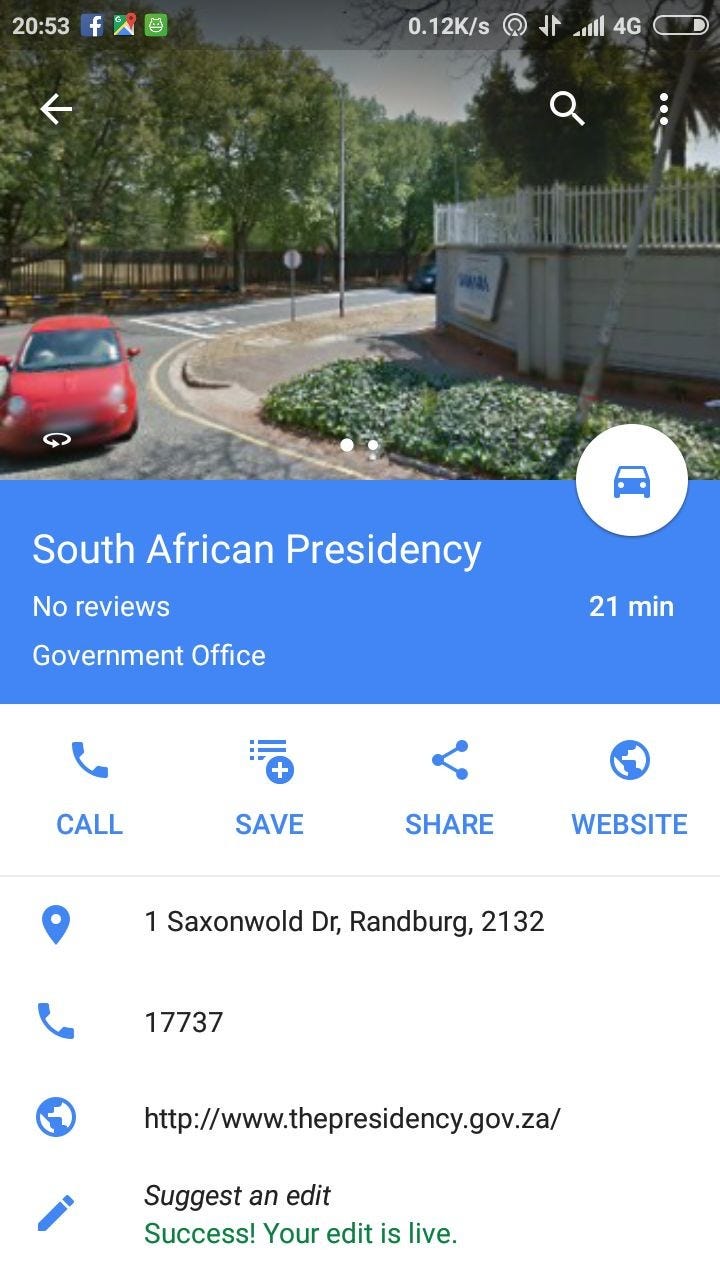
Scattering the virtual ashes

My wife used to say that often she would read about what I was thinking via something I had posted online instead of a personal conversation. Some things are easier to write about than to speak about. Something else my wife used to say is that I never took enough pictures of her and the children. I probably enjoy writing more than I do talking. That’s just me.

I have neglected writing when I changed jobs. My new boss never did encourage me to write and was very disparaging about journalists and Grandmasters on MyBroadband. MyBroadband (access it here) is the biggest technology site in South Africa and there should have been a better relationship with them!. I should not have paused. After all my name is on the board at Grey for Journalism. So I have started again and across multiple media!

On 17th August 2011 my wife passed away. Her wish was to be scattered to the four corners of the Earth. That is a difficult place to find on a map, so we selected three places in the Pilansberg and a koppie at the Norscot Koppies reserve. I also started writing a book, called the Second Corner of the Earth, which was a nod to her wish. Its a work in progress.

However, her facebook account remains as an electronic tombstone. I realized that when we go, all of that is going to remain is not our scattered ashes but our electronic presence. I started posting pictures of our sons and me online on a regular basis. Somehow it makes me feel that she can see them and smile down at us. I hope there are enough pictures for her to see! In addition, our house had been hit a few times by lightning. The hard disks were toast, which included our photos. The only ones that survived were the online ones. An example, is her favourite wedding picture (see above) which would have been gone had it not been posted online.

Social media has become toxic and can be debilitating. But if you see it as a scrapbook of life and scattered electronic tombstones, its context is different. Its memories, good and some even excruciatingly embarrassing. In reality, I’m writing it for myself and it provides enjoyment and purpose. If you just lurk on social media in a mindless scroll of other people’s content you brain slowly dies and becomes part of the Borg collective. And nothing screams Borg more than Tiktok that has assimilated a generation of mindless humans. If you create content and write yourself, then great, you mind will not shrink. You can even use some AI as a helper, its fine. The robots are not going to take over the world.

The Real Threat Isn’t AI — It’s Forgetting First Principles

Many moons ago, I had a burden. I had been letting go the emotional ashes that the presence of her worldly possessions had created. The last thing I let go were her shoes. I was present when she went and the shoes were on a chair in the room outside under my jacket. During the past year, no-one had asked me what happened in those moments and what were her last words. I logged onto facebook and posted it on her electronic tombstone, her facebook account. It was the same release as when the shoes left, a burden I did not have to carry myself. BTW: the words were: ā€œI don't know.ā€

My dad is Hanoverian and my mom is from the clan Elliot. How my oupa John's family ended up in Oudtshoorn from the Scottish border is something on which I still need to do some detective work? Regardless, I am sure the genes are responsible for the appreciation of a good Scotch.

I never owned a kilt and Argyle jacket. Kathleen (Kath) who was also Scottish would often suggest I go and buy one. It was one of those things that I would say yes and never get around to doing. The woman I loved died while I was standing next to her on a paramedic's stretcher. I crouched down with my hands over my head listening to the sounds of attempted resuscitation and defibrillation. When that happens you stare in the abyss of insanity.

Turning away from the abyss is not a single motion. It consists of a large number of small things. One of those was keeping the promise of getting that Scottish dress outfit. I went to Chris Mullender who imported the tartan from Scotland and a few months later it was ready.

Now on all smart occasions, I step out in the tartan of the clan Elliot.

PS: Babe, I hope you are still reading... (hope you have found this and know what I'm thinking!)

Ronald Bartels | LinkedIn | Instagram
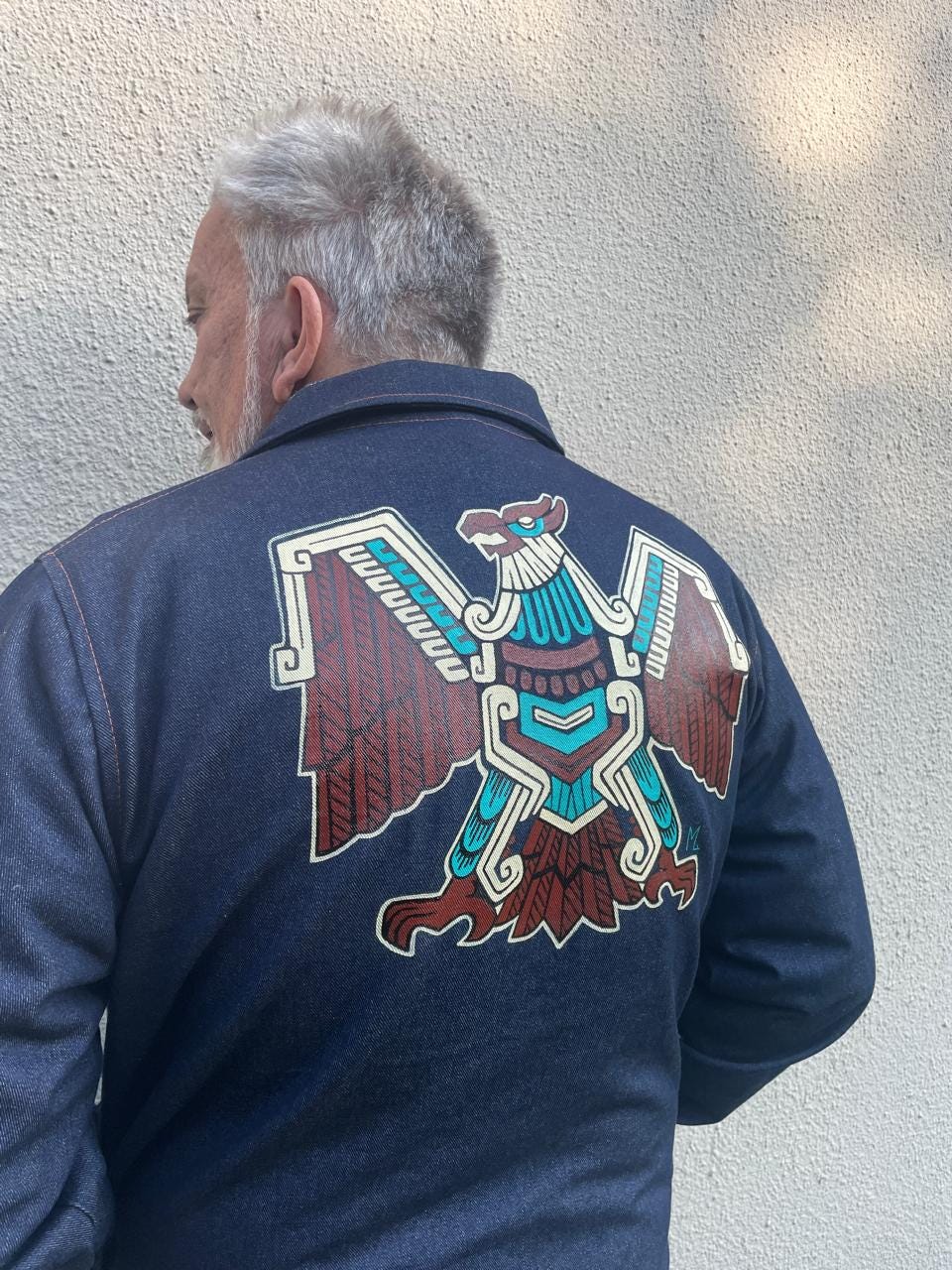
How to live to a ripe old age & enjoy it

Learn about the world as it will spark growth & creativity. I do that by researching & learning more about my heroes. My heroes are people with physical impairments that succeed.

Trigger deeper thinking & help keep your mind flexible. I do that by projecting myself as various historic figures in the history of humankind with which I have an affinity. I also write the first thing in the morning about awesome things.

Always be awesome. Find & discover things around you that will have you in awe. I do that, as an example, by visiting the British Museum when I’m in London & viewing the Elgin marbles & Tutankhamen’s Sarcophagus. I also find new secret places to watch birds.
Do a different thing each day. I do this by finding something new to do or & try each day. Reading, doing, eating, or alternative activities (like having a massage).

Crash & Burn. When creating its best to start using & showing what you have. I do this by failing fast as this will allow me to implement improvements quickly. I might be old but I do more new things than those that are younger.

Force your brain to work in both directions. Attempt to create as much content as what you consume. Freddie Mercury was a great entertainer, but he would not have done that from the audience.

~Roald Bartholomew

Ronald Bartels | LinkedIn | Instagram