The Morning Patrol with MastelekđŸ’Ș

Stories of Mastelek who enjoys farming Boweia Volubilis

Andabatae, the blindfolded gladiators of ancient Rome
Maties
Maties

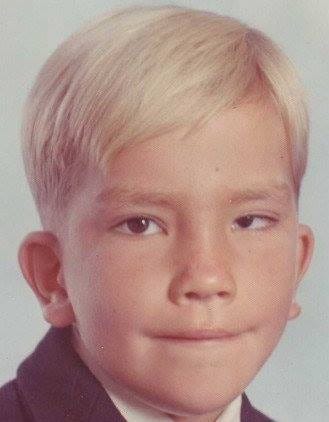
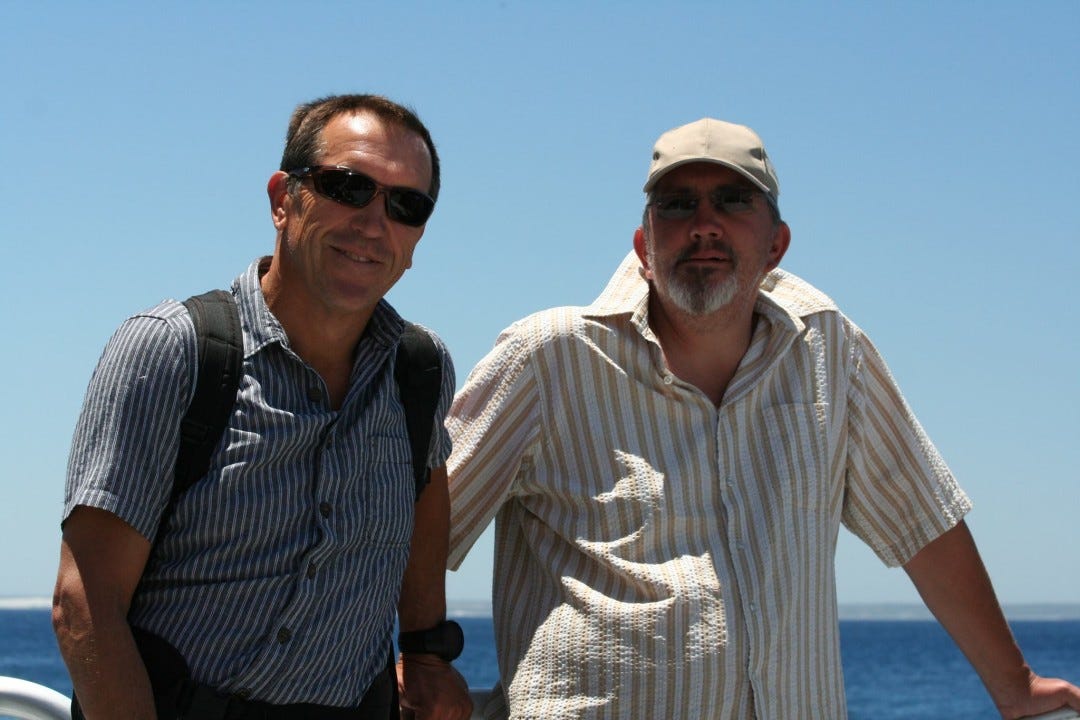
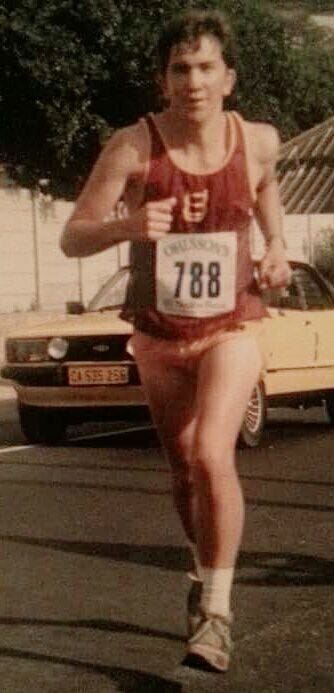
I went to university at Stellenbosch more commonly known as Maties. My brother was my mentor and helped me achieve a BSc in Computer Science and Mathematics. It was at University where I first encountered IBM-compatible PCs namely Olivetti M24s and CW16s. I initially wanted to complete a commerce degree, but computers were what fascinated me and that was the direction I took.

The late eighties in South Africa was a strange period with South African involved in a bush war in Southern Africa. Many of my contemporaries were involved in battles such as the one at Cuito Cuanavale. All white males were conscripted. If you went to University, the call up papers were delayed.

The system of Apartheid was on its last legs and we had some strange contradictions and stories. The biggest pop star we had no-one knew about named Rodriquez. We had songs about that time, like Weeping. Then there was the Groot Krokodil.

Jood

My dad had a friend he had acquainted at the many cocktail parties hosted by his in-laws, the Elliots, named Kobus Jordan. He was given the nickname of Jood and matriculated from Grey in the same year as Alan Paton started the Liberal Party. Paton wrote the novel, Cry the Beloved Country which is a classic South African work and one of the books I read early on in my life. Jood was the one who secured my place to attend Grey College. Jood was ‘n verligte which was a more liberal body of Afrikaans politicians as opposed to the verkramptes, who were more conservative. Jood famously wrote the Rubicon speech for PW Botha, who then tore it up and rejected the reconciliation proposed with black South Africans in its contents. He instead delivered his own version that went down internationally like a lead balloon.

A few years after the infamous Rubicon speech, I graduated with a BSc. South Africa had just signed off on the independence of South West Africa, which would become Namibia. At the graduation ceremony, the Data Processing division of the South African Railways had setup a table. I walked off the stage with my degree and into the foyer as one of the first graduates as my surname was Bartels and students were being called alphabetically. A James Flowers greeted me and asked me if I had a job. I replied in the negative and he asked me how well I had done. I aced Computer Science I proudly told him. He gave me an airplane ticket and hotel accommodation to visit Johannesburg for a job interview. I went for the interview and scored a job as a programmer on IBM mainframes. There was the little matter of me completing my conscription which I was released to do at 50% of my salary. When I returned to work after the Navy, it was around the time of the battle of Shell House and we were leopard crawling around the Transnet buildings with bullets flying around. The country was on tenterhooks because of the upcoming elections.

Word wakker

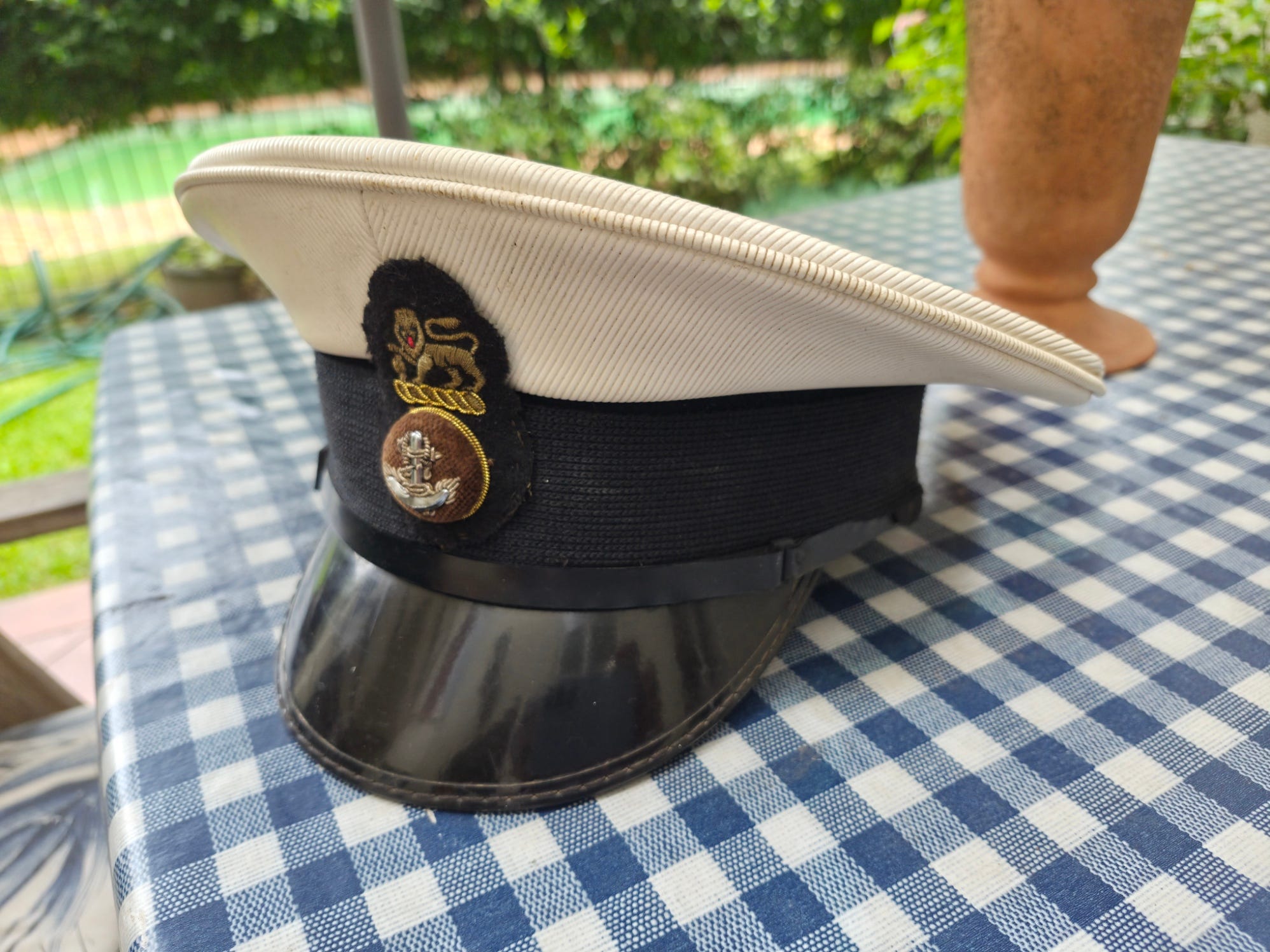
I reported at Saldanha for basic training in the South African Navy. I drove there in my Toyota 1.6GL and along the way encountered a Rinkhals at the Vredenburg crossroads. It attacked one of the tires of my car. I arrived at the base and one of the first requirements was to complete a medical. I had Microphthalmia which effectively meant I was visually impaired in my left eye. I was going to be send home, but I wanted to experience the same things that all my mates were having in the Defence Force. I passed the medical by pretending I had no problem with my left eye. The eye test required a person to look at an eye chart with your right eye and your left eye. I just repeated what I saw with my right eye covering my hand with my left hand after switching to my left eye and right hand.

By the time the Navy discovered I was blind in one eye, it is really obvious, I had passed range training and it was three months in. Luckily, there was a Commander Smith on the search for Computer Science graduates to look after the Navy’s computers, and there I was dispatched to Naval base Simonstown.

Every morning during training at Saldanha Bay, the base would parade at 8 am and the national flag would be raised on the rigging. I recall those parades and being piped awake with a wise ass saying “word wakker, word wakker, die dag word al hoe kaker...” The rigging on which the national flag was hoisted was painted white and one day I was in a group assigned to repaint it. One conscript was halfway up the rigging, when he dropped the paint tin. There was a huge splotch of paint at the bottom of the main mast of the rigging. We all looked at this and contemplated the opfok that was going to be due to us by the base Gunnery Instructor (GI) as punishment. I then decided to paint the splotch into a nice square at the bottom of the mast. No-one subsequently noticed and we escaped being dished out some of the legendary punishment by the GI.

Six months later, I was back at Saldanha Bay, in the role of the Navy's computer geek. As I walked past the rigging at the parade ground, I saw the new set of conscripts repainting the structure. And there they were, applying a fresh coat of paint on the square at the bottom of the rigging.

An example of this behaviour in an IT context is network engineers who force manual settings when automation is available. An example is network port settings which some guys insist on hard coding. Eish!

Computer geek

Andabatae are gladiators from ancient Rome that fought blindfolded. It was also the name of a computer programme I wrote while I was in the Navy. It was written in assembler to be used on a PC and interacted with a Braille computer known as the David. The telephone exchange operator of the Naval base was blind, he suffered from retinitis pigmentosa and we became friends. As conscripted servicemen we were not an enthusiastic bunch. We would disappear most afternoons to spend time at the Brass Bell pub. Our officers would phone the exchange to enquire where we were and our friend would cover for us by stating we were on the way to the harbour, or had just been to the stores, and send them on a wild goose chase. At the end of the day we would buy him beers.

The Andabatae computer programme provided voice and screen navigation on a text-based DOS system. It was used often with word processing software or with programmes such as DBASEIII. Also included was a file transfer utility to transmit files between the PC and the David computer.

The Romans have always fascinated me and in a previous life I'm sure that I would have been one of those gladiators.

While I was growing up, I very soon realized I was different because I had sight in only one eye. I was the youngest child in the family as was given the nick name of BB. I never realized what my real name was until my first day of primary school. But being blind in one eye I was constantly having to prove my normality to my friends by being extra boisterous. This involved being involved in all adventures and misdemeanours suggested or lead by my brother.

At the age of six my parents went on holiday to view the flowers of the Namaqualand. We went to stay with the Joostens for a few days. Egged on by my brother we were involved in a fruit fight with the cousins. This was great fun and we pelted each other using guavas that grew in the farmyard. That evening at the supper table, after prayer everyone was asked to repent their misdemeanours. I listen in shock as the cousins spilled the beans on our fruit fight to their parents. My brother leaned over to me and told me I was not to say a word about our involvement. When it came to my turn at the end of the table, I stood up and said I was not going to say a word as we were Amastelek. Mastelek was the Zulu name given to my father by the Nkosi of the Gumedes and meant the strong one!

My dad was very fluent in Zulu and could even distinguish regional dialects. The Zulus are at the best of times a boisterous and occasional aggressive group. The Zulu nature is about strength in the here and now. There is nothing like hearsay or deductive reasoning about the past. My dad would tell me that Zulus would only admit to a misdeed when accosted red handed. Else it did not happen, and this was the assimilated culture with which my dad lived. It accounts for what is happening in the current machinations around cronyism and corruption as the Stalingrad defense.

Railways

While I was working for the Railways, they became known as Transnet. After two years at the state-owned enterprise you could join the pension. While everyone who joined at the same time as I received a letter confirming their pension membership, I received a letter rejecting my membership as I was disabled. The discriminatory laws of apartheid South Africa meant exclusion from state pensions for disabled people. I resigned and walked out.

A few years ago, I went to the Donald Gordon Institute which is attached to the Wits Medical School for DNA testing. The researchers were pretty sure that they could identify something in the testing that was an abnormality. The blood tests were taken and send to the Netherlands. There were no known matches for any eye or kidney abnormalities. In most physical abnormalities with eyes, there is also a corresponding kidney abnormality. My Microphthalmia is like the Sardine Run on the east coast of South Africa. The reason for its existence is not known.

Badar

There is a great internal conflict about the term and grouping of being disabled. It is an undesirable term as the word itself means to be incapable, not able or lack the ability to perform tasks. It does not describe the actual physical or mental impairment as that would to be too much effort. It bundles everyone into a condescending grouping of those that are different. Groupings are created with criteria that matches a particular goal, most often political. Neither I nor anyone else who has physical impairments is not able. I am able, just like Douglas Badar, the Battle of Britain fighter pilot. Disabled is a bigoted term and should be removed from common use. Its is the same apartheid thinking that partitioned people into white and non-white. Able and Disabled.

I was born South African and hell no, I am not a disabled South African. I was excluded out of the old South Africa, and I feel excluded out of the new one as well. Much like other groups who have been stereotyped.

Basic Training & Dunbar’s Revenge

Basic training in the Navy was a crucible, a chaotic blend of discipline, exhaustion, and the kind of camaraderie that only forms under pressure. I was 22, a bit older than most of the fresh-faced recruits around me, which gave me just enough confidence to weather the storm. The guy next to me in the barracks, though, was a kid named Dunbar—18, wiry, and full of nervous energy. I’ll never forget the first time I saw him, at the medical bay for our inoculations. Most of us gritted our teeth and took the jabs, but Dunbar? He had a full-blown phobia of needles. When the medic approached with the syringe, his eyes went wide as saucers. He flat-out refused. It took three burly seamen to pin him down, and the second that needle came near, he was thrashing and screaming like a wild animal, throwing punches that didn’t land but sure made a scene. It was chaos, and I couldn’t help but feel for the kid. That was Dunbar—always a little too raw, a little too real.

The Able Seamen (ABs) and Leading Seamen (LSs) smelled blood in the water with Dunbar. They hounded him relentlessly, barking orders, piling on extra duties, and mocking his every misstep. Me? I was less fazed. I’d learned early on that a hard stare and a calm demeanor could keep the worst of them at bay. Dunbar, though, was an easy target, always fidgeting or mouthing off at the wrong moment. I took it upon myself to look out for him, deflecting attention when I could. We’d often pull late-night guard duty together, posted along the perimeter fence in the cold, sharing quiet moments between the monotony. Those shifts were when I got to know him—his quick wit, his stubborn streak, and his burning desire to get even.

Dunbar wasn’t one to let things slide. He hatched a plan one night, his eyes glinting with mischief. The ABs’ dormitory was his target, and his weapon of choice? A fire extinguisher. The idea was to sneak in while they were at the mess, let off the extinguisher, and slip out, leaving chaos in our wake. I agreed to help, mostly to keep him from doing something even dumber. But Dunbar, true to form, couldn’t wait. Instead of sneaking in, he punched out a window, slung the extinguisher through the shattered glass, and let it rip. Foam sprayed everywhere—beds, lockers, the works. Then he bolted, laughing like a maniac as we sprinted back to our barracks. It was an almighty mess, and we both knew there’d be hell to pay.

The next morning at parade, the ABs were livid, stalking up and down the ranks, scanning for guilty faces. Nobody fessed up, of course. Dunbar stood there with his signature grin, practically daring them to figure it out. Then the Gunnery Instructor (GI) rolled in, face like thunder. He called the ABs to attention, demanding to know why their dorm looked like a snowstorm hit it. No answers, just sheepish looks. So, he marched them up and down the parade ground for two solid hours, barking orders while we stood at ease, watching. Dunbar’s grin never faded, but I knew we’d poked the bear. Those ABs were going to be insufferable for the rest of training, and they didn’t disappoint—extra drills, sharper tongues, the works.

We made it through basic training, bruised but unbroken. After “klaar uit,” when we finally passed out of training, I lost track of Dunbar. He vanished into the Navy’s vast machinery, off to some ship or shore posting. I never saw him again, but I’ll always remember that wild kid with the needle phobia and the knack for stirring up trouble. Wherever he is, I bet he’s still grinning.

Sunette, Tea, & a Missed Chance

The Navy base hummed with its usual rhythm—boots on pavement, the distant clatter of machinery, and the sharp bark of orders echoing across the parade ground. My days often revolved around the personnel office, not because I had endless paperwork, but because of Sunette. She worked there, always in crisp white dresses that seemed to glow against the drab military backdrop. Her name alone—Sunette—felt like a burst of sunlight. I was smitten, and I’d find any excuse to visit her, usually under the guise of fixing her computer. My infatuation ran so deep that I poured my heart into coding a Navy personnel management system for her, which I grandly named Gladiator. It was my awkward attempt at winning her over, a digital monument to my crush.

One day, as I crossed the parade ground toward the personnel office, my mind probably lost in thoughts of Sunette, I ran straight into a Chief Petty Officer. He was a barrel of a man, all starch and authority, and he zeroed in on me like a hawk. “Hoekom is jou hare so woes, moes troep?” he bellowed, his Afrikaans cutting through the morning air. My hair, I’ll admit, was a bit wild—windswept and untouched by a comb. “Dit is omdat ek dit nie gesny het nie,” I replied, trying to keep it light. Bad move. His face turned crimson, veins bulging like they might pop. “Wie is jou bevelvoerder?” he demanded. I gave him Commander Smith’s name, and he stormed off, vowing to call my CO and ordering me to the base barber.

Instead of heading to the barber, I made a beeline for Commander Smith’s office. I knocked, and his calm “Come in” was a relief. He was behind his desk, papers neatly stacked, and offered me tea like it was the most natural thing in the world. I’m a tea man—better than coffee any day—and I think he liked that about me. We were tea buddies in a world of instant coffee drinkers. I accepted, and as I sipped, I mentioned I had something to tell him, though I hadn’t quite figured out what. Before I could say more, the old white rotary phone on his desk screeched to life. Those ancient post office phones were loud enough to wake the dead, and I could hear the Chief’s raging voice on the other end, still fuming about my hair.

Commander Smith listened for about a minute, his face unreadable. Then he cut in, cool as you like: “Chief, this is not how it works. You do not phone me or talk to me. You go to your commanding officer of equivalent rank to me and have him speak to me.” He slammed the phone down, and that was that. He turned to me, raising an eyebrow. “What did you want to talk about?” he asked. I shrugged. “Nothing,” I said, and he nodded, unfazed. “Excellent work on that Navy personnel system,” he added, almost as an afterthought. I left his office feeling like I’d dodged a bullet.

Sunette, though—she was the real story. I never mustered the courage to ask her out. The day before my final uitklaar, she invited me to visit her at her flat in Vishoek. I went, heart pounding, and she showed me her budgies, their cheerful chirps filling her small, sunny space. There was a spark, a static in the air, but some awkwardness—mine, probably—kept me from making a move. I was already half-focused on my new job in Johannesburg, my mind racing toward the future. I left, promising myself I’d stay in touch, but I never did.

Dammit. What a missed opportunity.

Eternal Flame

One evening stands out vividly from my days in the Navy, a time when the salty air of the Cape mixed with the raw energy of youth and a touch of rebellion. It was at the Brass Belle in Kalk Bay, a cozy spot tucked along the rugged coastline, where I first heard “Eternal Flame” by the Bangles. The song drifted through the dim, smoke-hazed room like a siren’s call, its haunting melody cutting through the chatter and clink of glasses. Outside, the waves crashed against the rocks with a fury that mirrored the restlessness in our souls—rough seas that night, pounding the shore as if protesting our fleeting shore leave. The Brass Belle was our favorite haunt, right next to a tidal pool that shimmered under the moonlight, and atop the bar counter sat that iconic brass statue of a lovely lass, forever poised in elegant allure, watching over us like a guardian of good times.

In the Navy we had WAFs and they were my eternal flames, especially Sunette in her white dress.

Across the road loomed the Parrot, a rowdier joint that always seemed to beckon with promises of mischief. The Navy brass had a habit of banning us from certain clubs when things got out of hand—fights, pranks, or just too much revelry—and the Parrot was often at the top of that list. I remember one chaotic afternoon when I witnessed the Military Police storm in to clear out the place. They barreled through the doors, barking orders and herding us ratings out like wayward sheep. The resentment boiled over; from that day on, the MPs were persona non grata among the sailors, symbols of the iron fist that clipped our wings just when we needed to soar.

That animosity spilled over in unexpected ways. One lazy afternoon at the mess in Simon’s Town, an MP pulled up on his gleaming motorbike, parking it right out front as if he owned the place. He strode inside with that typical swagger, leaving his ride unattended. Seizing the moment, one of our lads climbed onto the short wall surrounding the stoep and, without a word, relieved himself right onto the bike. Before long, a few more joined in, turning it into a impromptu act of defiance. You should have seen the MP’s face when he returned—priceless, a mix of shock, fury, and disbelief as he stared at his sodden machine. In that instant, amid the laughter echoing from the shadows, we felt a fleeting victory, a reminder that even under the weight of discipline, the spirit of the sea—and a bit of cheeky rebellion—couldn’t be fully tamed. Those were the days that forged bonds stronger than any anchor chain, memories etched like barnacles on the hull of my life.


Ronald Bartels | LinkedIn | Instagram

Lessons from three decades in networking that continue to hold true despite fast-paced tech advancements

Reflecting on over three decades in networking, there are recurring themes and lessons that have stuck with me. Technology may have advanced at lightning speed, but these foundational insights remain relevant.


1. Ostrich Syndrome

Just because you can’t see it doesn’t mean it’s not happening.

In networking, simply ignoring a problem doesn’t make it disappear. This “Ostrich Syndrome” – burying one’s head in the sand and hoping the issue will resolve itself – is common, especially among ISPs. ISPs frequently test only from their core, not from the actual user edge where customers experience issues. Their tools may not detect what the user is facing, and while they may rely on data showing that “everything looks fine,” end-users know better. The key takeaway here? Don’t assume that because you’re not seeing an issue, it doesn’t exist. Real visibility into customer experience requires testing from all perspectives, and better tools are often the difference between discovering and ignoring hidden problems.

đŸȘ¶Ostrich Syndrome in Networking | When Problems are IgnoredđŸ€Šâ€â™‚ïž

An example of Ostrich Syndrome is the way many techies approach the use of spanning tree:

🌳Spanning Tree is Not the Root of all Evil as Noobs Proclaim đŸ«š

2. Eating the Elephant One Bite at a Time

Effective maintenance is proactive, not reactive.

Networks are complex, and it’s tempting to ignore maintenance until there’s a forced outage. But most networks exhibit signs of degradation long before they fail entirely. Proactive maintenance is essential – by addressing the top interfaces with errors each day, you make incremental progress toward a healthier network, effectively “eating the elephant one bite at a time.” This approach requires a robust Network Management System (NMS) to identify and prioritize these problem areas, avoiding the “crisis-only” maintenance that results in bigger, preventable outages.

🐘Eating the Elephant One Bite at a Time | Proactive Network Maintenance for Long-Term Health☑

3. Causation

Workarounds are temporary; addressing root causes is vital.

The focus should always be on addressing the root causes rather than merely putting out fires. A common trap in networking is the quick-fix mentality: a workaround that temporarily resolves an issue but doesn’t address the underlying problem. This approach may seem efficient, but it leads to chronic recurrence, higher costs, and increased complexity. A mature organization takes time to investigate the root causes, knowing that the cost of fire-fighting far outweighs the effort of tackling the underlying issues once and for all. The bottom line? Invest in solving root causes and save time and resources in the long run.

🚧Causation in Technology | Workarounds are Temporary, Root Cause Analysis is EssentialđŸ—ïž

4. Normalization

Complexity is a risk, not an asset.

When it comes to firewall rules and network architecture, complexity is the enemy of reliability. You might have a million firewall rules, but if only four would suffice, then you’re complicating your network unnecessarily. Normalization means simplifying your network to its core essentials, eliminating redundant components, and ensuring that what remains is easy to maintain and troubleshoot. Complexity often arises from incremental, organic growth, where layer upon layer of fixes and features build up until the network becomes unmanageable. A well-normalized network is efficient, easier to troubleshoot, and more resilient. Cut the excess and streamline.

⚠Normalization in Technology | Complexity is a Risk, Not an Asset🚹

5. Time

Time is a fixed, limited asset in network management.

Time is an ever-present factor in networking, impacting everything from detection to recovery. Whether it’s the actual time versus detected time, restoration time, or escalation time, every second counts. Networks demand quick thinking and rapid response times; often, you won’t have the luxury of unlimited time to troubleshoot. Time must be respected and managed effectively, knowing that the faster you can respond, the less impact on your users and business. From workarounds to incident reporting, mastering time management within network operations is a skill every professional must develop.

⏰Time Management in Network Management | Making Every Second Count⌛

6. Visualization

Seeing the big picture reveals the hidden details.

While command-line interfaces (CLI) are invaluable, sometimes a picture is worth more than a thousand command outputs. Visualizations – in the form of network diagrams, metrics, and trend graphs – allow you to see the bigger picture and quickly identify problem areas. Without visualization, you’re often stumbling through dense data trying to spot patterns. With it, you can grasp overall health, spot trends, and, importantly, identify issues before they escalate. Visualization is about making the invisible visible, turning data into actionable insight, and helping you cut through the noise to focus on what matters.

📈Visualization in Computer Networks | Turning Data into Insight🚀

7. The Spawn of Satan

Technology from the dark side

Over the years, certain technologies have felt like they were designed more to frustrate than facilitate. Printers, wireless extenders, and certain manufacturers (I’m looking at you, Huawei) have consistently failed to live up to expectations. These “spawn of Satan” technologies test your patience and resilience, proving that not all tech is created equal. Choose your tech carefully and know which tools work best for your environment. A lesson for the ages: sometimes, it’s best to avoid problematic tech altogether rather than deal with the headache it brings.

😈The Spawn of Satan | Technology from the Dark SideđŸ‘č

8. Captain Jean-Luc Picard

“Make it So!”

In the world of Star Trek, Captain Picard could issue a command, and his crew would immediately execute it. Unfortunately, in networking, you can’t just say “Make it so” and expect results. Technology operates on its own logic, and there’s no way to command it into compliance. Understanding that systems function on their own terms, not ours, is crucial. You have to respect the constraints and rules of each technology, knowing that patience, troubleshooting, and methodical analysis are the real pathways to success, not just commanding it to “work.”

🛾Captain Jean-Luc Picard’s Leadership Lesson for Technology | “Make it So!”🖖

9. Rabbit Holes

Overthinking instead of solving

Networking issues can lead you down some deep, time-consuming rabbit holes. It’s easy to overthink a problem, losing hours on something that turns out to have a simple solution staring you in the face. Sometimes the answer comes by stepping back, clearing your mind, or consulting a colleague for a fresh perspective. That “lightbulb moment” often arrives when you stop overcomplicating things. Networking requires persistence, but it’s essential to recognize when to pull back and re-evaluate rather than getting stuck in endless troubleshooting cycles.

🐰Navigating the Connectivity SLA Rabbit Hole | MPLS vs. SD-WAN đŸ•łïž

10. When All Else Fails, Wireshark

Packets don’t lie

When every other tool and technique fails, there’s always Wireshark. Packet analysis is the ultimate truth in networking: packets don’t lie. Learning to read and interpret packets is a vital skill that every network engineer should master, as it provides an unfiltered view of network traffic and issues. Wireshark allows you to get to the heart of the matter, tracking down problems that can elude even the best diagnostic tools. In networking, Wireshark is the final arbiter – if you haven’t learned to read packets yet, it’s time to start.

🩈Wireshark | A Powerful Tool for Network Troubleshooting & Cybersecurity🏄


Bonus

  • Documentation | Don’t Leave It for Later

Good documentation can save hours in crisis

Documentation is often neglected until something goes wrong, but it’s one of the most powerful tools for network engineers. It ensures that knowledge isn’t lost, facilitates faster troubleshooting, and can expedite onboarding for new team members. Networks are complex environments with a multitude of interconnected devices, protocols, and configurations; without accurate and up-to-date documentation, troubleshooting is like wandering in the dark.

Committing to robust documentation saves time and money by reducing dependence on memory, simplifying maintenance tasks, and allowing smoother handovers when personnel change.

đŸ‘šâ€đŸ’»Don’t Leave Documentation for Later | Why Good Documentation is Essential in Network Engineering🚂

  • Redundancy | Avoiding Single Points of Failure

Failure will happen; redundancy keeps services running

Networks are expected to be up 24/7, but hardware, software, and connections fail. That’s why redundancy is essential. When every critical component has a backup, you have a safety net to catch unexpected failures. Redundant links, power sources, and failover configurations can mean the difference between seamless operation and extended downtime.

Redundancy isn’t just about duplicating infrastructure; it’s about creating resilience in the system design. However, it’s also critical to avoid “over-redundancy,” where too many backup systems become cost-inefficient and unnecessarily complex.

đŸ‘·How to Build a Resilient Last Mile SD-WAN & Avoid Single Points of Failure⛔


Each of these ten lessons (as well as the bonus ones) encapsulates a piece of hard-earned wisdom from years in the field. They’re reminders of what it takes to succeed in networking: clarity, simplicity, attention to causation, respect for time, and above all, the willingness to dive deep into the packet flow when all else fails. Networking has evolved, but these lessons remain as relevant today as they were in the nineties.


Ronald Bartels | LinkedIn | Instagram

Talking Heads

In all my years of hiring—and being hired—I’ve come to a rather sobering conclusion: the only undeniable truth about a great interview is that it was, indeed, a great interview. It tells you precisely nothing reliable about how the candidate will perform once they’re on the job. A charming, articulate, perfectly aligned conversation in a conference room or over Teams can feel like destiny, but it’s often just theatre—a momentary alignment of expectations, nerves, and performance.

I learned this lesson the hard way, or perhaps the fortunate way, during one particular recruitment drive. We were filling a key position on my team, and I interviewed four internal candidates. Two of them absolutely shone in their interviews. They answered every question with confidence, asked insightful follow-ups, and left me convinced that either one would be perfect. I was paralyzed by indecision, unable to choose between them. HR, ever practical, suggested a technical test to break the tie. Since they were all internal transfers, fairness dictated that we extend the test to all four original candidates.

When the results came back, I was stunned. The candidate who had delivered far and away the best performance on the test—the one who aced it—was the very same person who had stumbled through what I considered the weakest interview of the bunch. He had seemed hesitant, inarticulate, and frankly underwhelming in person. Yet the objective measure revealed his true capability. We hired him without hesitation, and he turned out to be one of the strongest performers I’ve ever had on my team. To this day, it was fortuitous that we hadn’t extended offers to the two “interview stars.” That experience cemented for me how dangerously misleading interviews alone can be.

Over time, I’ve observed what separates the interview champions from the rest. The real trick, if we’re being candid, lies in presentation and restraint. A sparse LinkedIn profile is gold: it gives you room to maneuver, to mirror exactly what the interviewer wants to hear without the risk of contradicting your own documented history. Fill it out too completely—every project, every role, every achievement—and you box yourself in. One stray detail from your past can torpedo the narrative you’re crafting in the moment. This leads me to a broader question: if a candidate’s LinkedIn profile is current, detailed, and comprehensive, why do we still demand a separate CV? Isn’t it largely a relic, a legacy habit from the days when rĂ©sumĂ©s were printed on paper and profiles didn’t exist?

My own LinkedIn is the opposite of sparse. It’s a living archive: every significant project, publication, patent discussion, and even that morning prime-time TV interview I did with Gerry Elsdon—it’s all there, publicly accessible. Yet time and again, I’ve sat across from interviewers who clearly hadn’t glanced at it. They’d ask questions answered plainly on my profile, or miss connections that would have made the conversation far richer. Until the world catches up and treats LinkedIn as the primary source of truth it has become, I suppose I must continue to rely on delivering that “great interview.” But it does make me wonder: should I thin out my profile to play the game more effectively? The thought feels like a betrayal of transparency, yet the evidence suggests the game rewards opacity.

In the end, hiring based solely on the traditional interview—what I now call the Legacy Manner—is a recipe for disappointment. It prioritizes performance in a high-stakes, artificial setting over demonstrable skill, consistency, and real-world evidence. My anecdote with the four candidates isn’t unique; it’s a pattern I’ve seen repeated across industries. If we want better outcomes, we need better filters: tests, trials, references, portfolios—anything that pierces the illusion of the perfect conversation. Interviews have their place, but treating them as oracles of future performance is a folly we’ve clung to for far too long.

Ronald Bartels | LinkedIn | Instagram

Comfort Food

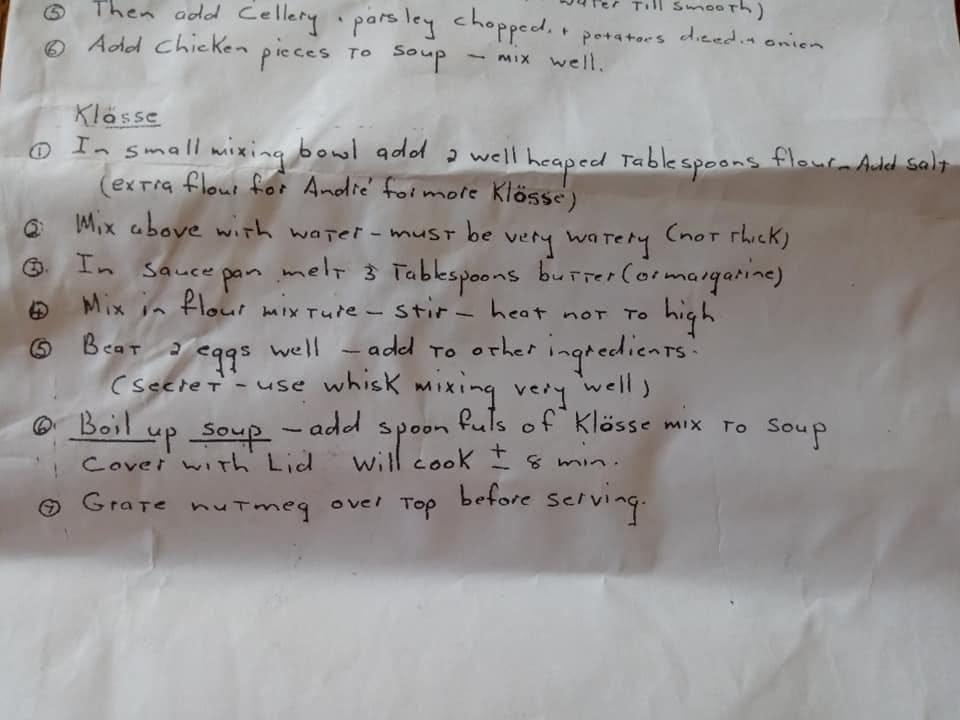
No matter how old I got, or how far I’d ventured from home, whether arriving back from hostel after a long term at school or traveling back a whole day after a semester at university—the first thing that greeted me at the door was the unmistakable aroma of Mom’s chicken soup simmering on the stove. Lenore had a way of timing it perfectly, as if she could sense my arrival. That rich, golden broth, laced with the earthy scent of carrots, celery, and herbs, would wrap around me like a warm embrace before I even put up my weary legs.

It was our family’s unspoken ritual: the standard fare for any homecoming, and the ultimate remedy when life felt a little too heavy. Feeling low after a heartbreak or a bad grade? Sick with a cold that left me sniffling and achy? Mom would simply say, “I’ll put on some soup,” and that was that. No fuss, no elaborate recipes pulled from cookbooks. Her version was beautifully simple, a hearty chicken base, tender vegetables coaxed to sweetness in the pot, and those fluffy dumplings dropped in at the end, bobbing like little clouds until they puffed up just right.

We’d sit at the kitchen table, steam rising from our bowls, and the world outside would fade away. The soup wasn’t fancy; it didn’t need to be. It was home in every spoonful—the quiet assurance that someone cared enough to nourish you body and soul. In those moments, with Mom across from me, ladle in hand and a gentle smile on her face, everything felt repairable. Her chicken soup with dumplings wasn’t just food; it was love, distilled into something warm and enduring.

Ronald Bartels | LinkedIn | Instagram

Martial Eagle sightings have dropped by as much as 60% since the late 1980s and the bird may be heading towards extinction, says a study (republished from UCT)

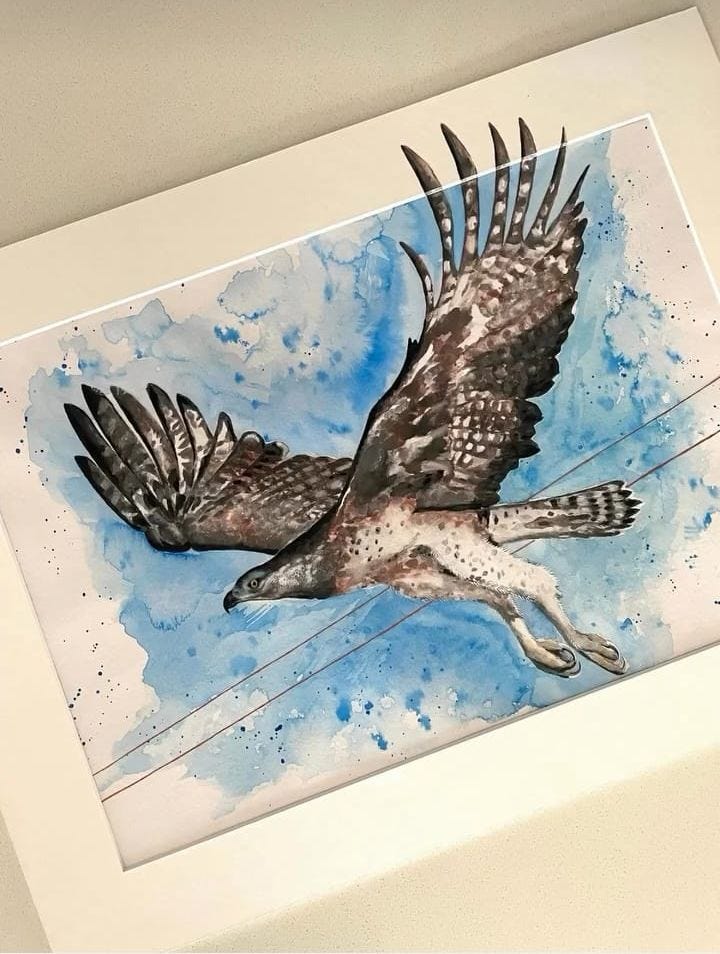
(Via https://www.instagram.com/megdanielart/) @Megdanielart

The population of Martial Eagles, Africa’s largest eagle species, is in free fall in South Africa and may be heading towards extinction. This is according to a new UCT study based on changes in sighting rates over the past 20 years.

Martial Eagle sightings have dropped by as much as 60% since the late 1980s, in stark contrast to human population growth across their shared natural habitat, said the study, which was published this week in the scientific journal Bird Conservation International.

Although the reasons for the decline remain unclear, researchers said that their findings point to an urgent need to better understand the threats to this iconic bird.

The research was conducted by Dr Arjun Amar and PhD student DaniĂ«l Cloete of UCT’s FitzPatrick Institute of African Ornithology, using two Southern African Bird Atlas Project (SABAP) surveys carried out 20 years apart. Their previous research showed that comparing these surveys provided an accurate way of measuring changes in the population size of this eagle species.

Protected areas a buffer?

Worryingly, the study also highlighted a marked decline in Martial Eagle sightings within protected areas, including in the world-famous Kruger National Park and the Kalahari Gemsbok National Park. However, declines in populations of the species in protected areas were not as severe as elsewhere, suggesting that these areas could act to buffer the factors leading to declines.

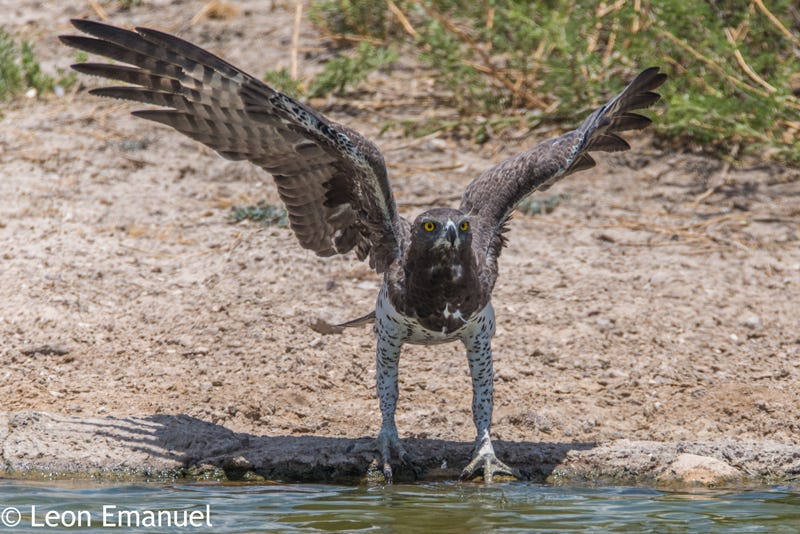
Martial Eagles mainly prey on large birds and reptiles, and small- and medium-sized mammals, but are strong enough to prey on small antelopes. They typically nest in high treetops.

Martial Eagles are now recognised as globally threatened. Photo Wikimedia Commons

Their plight made international headlines last year when Mozambican hunters killed an adult bird that had featured in a British documentary starring well-known wildlife presenter Steve Backshall. At the time, the bird was being tracked via a GPS satellite tag.

Total population figures for Martial Eagles are still relatively inexact, but their conservation status was changed in 2013 from “near threatened” to “vulnerable” – which means that they are recognised as being globally threatened.

The study published this week provides the most accurate assessment for the decline of the species in any African country and was possible due only to an army of volunteer bird watchers who contribute their sightings to the SABAP database.

Fynbos sightings stable

The study found significant declines in three provinces: KwaZulu-Natal, Mpumalanga and Limpopo. Changes differed across the biomes (distinct regions with similar geography and climate), with the species faring worst in the Grassland, Savanna, Indian Ocean Coastal Belt and Nama-Karoo biomes.

However, there was better news in the Fynbos Biome of the Western and Eastern Cape, where reporting rates remained more stable over the past 20 years.

“Despite having full legal protection in South Africa, this species is known to be targeted and killed by farmers who blame the species for predation of their livestock, or may be accidentally killed by poison left to kill other predator species,” the authors noted.

Another major threat for Martial Eagles may be electricity infrastructure, such as power lines, particularly among juveniles, which have a wider territorial range.

“We have now quantified the decline of the species in South Africa,” said lead author Amar. “But that is the only the first step. We now need urgent research to better understand the factors that are responsible for causing this iconic species to be lost from our countryside, so that these can be better controlled.”

Read the full paper in Bird Conservation International...

Ronald Bartels | LinkedIn | Instagram

Computers, Penguins, & a Touch of Rebellion

I faked my way into the South African Navy, plain & simple. I was blind in one eye, a fact that should have kept me out of national service altogether. But all my mates were heading off to the SADF, and I wasn’t about to miss out on the adventure, or what I imagined would be the fun. During the medical exam, when they told me to cover one eye and read the chart, I switched hands but kept using the same good eye both times. By the time the doctors 7 the Navy figured it out, I was already deep into my service, & more importantly, I’d become the guy who looked after the Navy’s computers. They couldn’t very well send me home now, could they? The computers needed me more than the rules needed enforcing.

I spent 21 months stationed in Simonstown, that sleepy naval base on the Cape Peninsula with its sweeping views of False Bay. My office sat right next to the library, a quiet corner where I could tinker away. In my early twenties, I wrote program after program for the Navy: personnel systems, stores inventory, monitoring tools. I named them all after the Romans, Gladiator, Andabatae, Aqueduct, Rubicon, because even then I half-believed I was Julius Caesar reincarnated, conquering the digital world one line of code at a time.

Life was easy in those days. There was plenty of free time between debugging sessions. I’d head down to Boulders Beach to swim & dive among the rock pools & swaying kelp forests. Back then, the African penguins were just a handful, not the bustling colony they’d become. I’d suntan on the massive granite boulders, the sun warming my skin while the ocean crashed below. On weekends, I’d hop on my bronze Peugeot bicycle and cycle the peninsula, up and over Red Hill, past baboons chattering on the roadside, sea spray whipping off the waves at Scarborough. One legendary ride ended in disaster when my gear cable snapped halfway down Smitswinkelbaai. I was cursing under my breath, but even that couldn’t spoil the scenery.

Then there was Sunette. She worked in the personnel office on base, always in crisp white dresses that seemed to glow against the drab dark & grey of military life. Her name alone, Sunette, felt like sunlight breaking through cloud. I was utterly smitten. I’d invent any excuse to wander over: “Your computer’s acting up again?” I’d say, fixing some minor glitch while stealing glances. In a grand, silent gesture of devotion, I poured everything into coding the Navy’s personnel management system, naming it SPQR as my personal tribute to her. But courage? That I lacked. I never asked her out.

The day before my final uitklaar, she invited me to her flat in Vishoek. My heart hammered as I knocked on her door. She welcomed me in, showed me her budgies chirping cheerfully in their cage, the small space filled with afternoon light. There was a spark, a tension in the air, but my own awkwardness held me back. My mind was already half in Joburg, where a new job waited. I left with vague promises to stay in touch, & never did. SPQR remained my unspoken love letter, a digital monument to a crush that never quite ignited.

The only real “action” I saw came one unassuming evening. I was heading off base in civvies to meet mates at the Brass Bell in Kalk Bay when a Chief Petty Officer cornered me. “Get a rifle from the guardhouse & come with me,” he barked. His face left no room for argument. I followed him to the mess, where the two flotillas, strike craft & minesweepers, had drunk themselves into a brawl. Sailors were ripping fluorescent tubes from the ceiling and hurling them like spears.

The Chief roared at them to stop. Most did, sheepishly. But one drunk sailor staggered toward us, knife in hand. “Shoot him in the leg,” the Chief ordered. I was holding an FAL—hardly a precision weapon. A shot would have killed or crippled him. Luckily, I hadn’t even loaded it. I flipped the rifle and smashed the butt into his jaw. Lights out. Man down.

I chambered a round, lined the rest up against the wall, and told them the next one to move would regret it. They complied. The Chief fetched the Gunnery Instructor, who marched the lot to the parade ground for hours of drill punishment. I slipped away and still made it to the Brass Bell to sink a few cold ones.

Authority clashes were rarer, but memorable. One morning, crossing the parade ground, my mind no doubt on Sunette—I walked straight into a barrel-chested Warrant Officer. “Hoekom is jou hare so woes, moes troep?” he bellowed. My hair was admittedly wild. “Omdat ek dit nie gesny het nie,” I replied flippantly. Wrong answer. His face went purple. He demanded my commanding officer’s name, Commander Smith, & stormed off, threatening a phone call while ordering me to the barber.

I went straight to Commander Smith’s office instead. He invited me in, offered tea, we were both tea men in a coffee-drinking Navy. and I accepted gratefully. Before I could explain, his old rotary phone rang loudly. It was the WO, still raging. Smith listened calmly, then interrupted: “WO, this is not how it works. You speak to your equivalent rank, who speaks to me.” Slam. Phone down.

He turned to me: “What did you want to discuss?”

“Nothing, sir,” I said.

He nodded. “Excellent work on the personnel system, by the way.”

I left feeling untouchable.

It was during those Simonstown years that history shifted. One day, driving my brown Kalahari Toyota Corolla 1.6 GL along the False Bay coast toward Die Bos to visit my brother, I heard F.W. de Klerk’s speech on the radio, announcing Nelson Mandela’s release. I was passing Die Gat, the ocean stretching endless beside me. The moment felt surreal, suspended between the old world and whatever came next. I’ve never forgotten it.

Looking back, those 21 months were a gentle interlude, computers, crushes, penguins, and the occasional riot broken up with a rifle butt. The Navy gave me freedom disguised as service, and I took every bit of it.

Ronald Bartels | LinkedIn | Instagram

Jim Beam

In the sweltering heat of Orlando during the early 2000s, those heady noughties when tech was booming and conferences felt like rock festivals, I found myself at an EMC gathering, rubbing elbows with data storage gurus and IT wizards. The days were a blur of seminars on enterprise solutions and networking sessions that promised to revolutionize the way we handled bits and bytes. But the real magic happened one evening when the organizers surprised us with a private concert by Hootie and the Blowfish in a cavernous arena. Standing room only, the place was electric, bodies packed tight as the band ripped through their hits, the bass thumping through our chests like a shared heartbeat. The energy was infectious; sweat-soaked shirts, fists pumping, everyone belting out lyrics to songs that defined a generation.

As the final chords faded and the crowd began to thin, my legs screamed for mercy after hours on my feet. No chairs in sight—just the empty stage beckoning like an oasis. I hoisted myself up onto the edge, dangling my feet over the drop, savoring the cool rush of air from the arena’s vents. That’s when Darius Rucker—Hootie himself—sauntered over, still buzzing from the performance, a guitar pick pinched between his fingers and a bottle of Jim Beam swinging loosely from his hand, gripped by the neck like an old friend. “Want a pick?” he asked, his voice gravelly from the set.

I glanced up, eyeing the bourbon instead. “No thanks,” I replied with a grin, “but I’ll take a shot of that Jim.” He chuckled, plopped down beside me without a second thought, and passed the bottle over. I tilted it back, the warm, smoky burn sliding down my throat in a generous glug, chasing away the fatigue. I handed it back; he took his turn, then pushed it my way again. There we sat, two strangers on the lip of that stage, the arena emptying around us, trading swigs under the dimming house lights. We didn’t talk much—maybe a nod to the crowd’s energy or a laugh about the heat—but we polished off that bottle, the world narrowing to the shared ritual of pass and sip.

When the last drop was gone, we stood up, a bit wobblier than before, exchanged a hazy “take it easy,” and staggered off in opposite directions. I never saw him again, but that fleeting encounter lingers like the aftertaste of good whiskey: a reminder that sometimes, in the midst of corporate chaos, life’s best stories unfold on the edges, unplanned and unrehearsed.

Ronald Bartels | LinkedIn | Instagram

Sunlit Memories & Undercurrents of Abuse

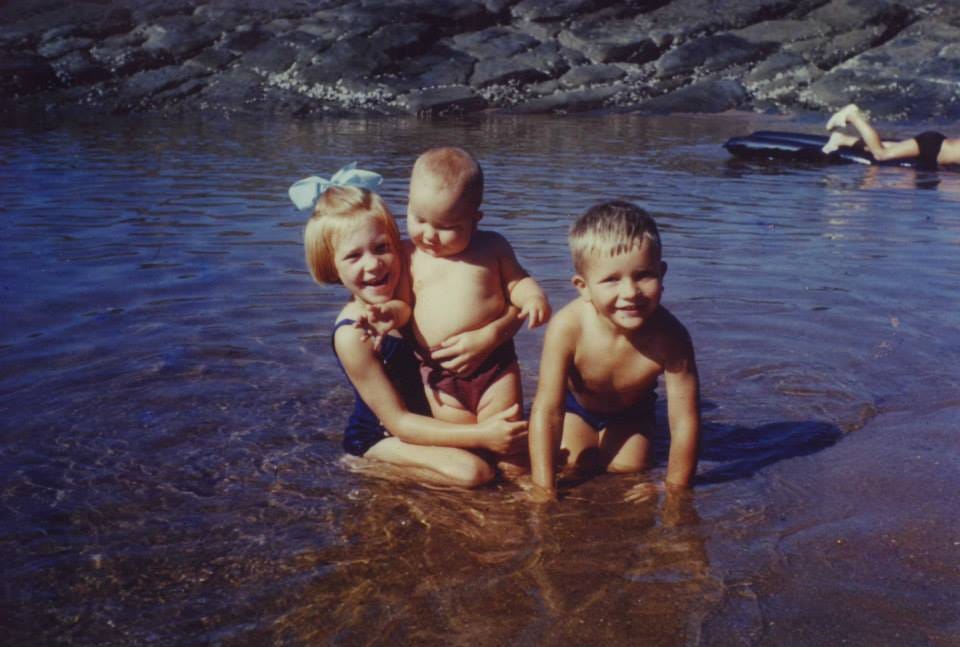
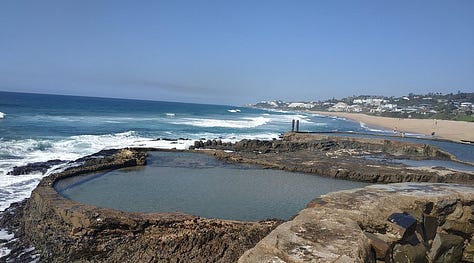
As children, my siblings and I cherished our holidays at Stegen’s Cottage in Salt Rock, a simple haven perched on a hill overlooking the Indian Ocean. The cottage was modest, surrounded by little more than scrubby bush and the distant roar of waves, a far cry from today’s bustling version. Our days revolved around lazy explorations and endless play, but nothing captured our hearts like Thompson’s Bay, our favorite beach just a short walk down the path.

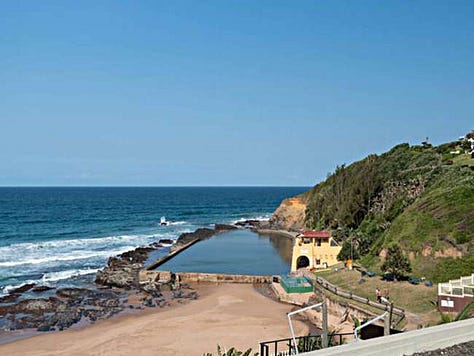
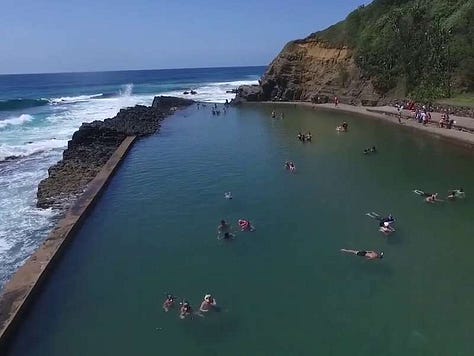
Thompson’s Bay was a slice of paradise, a crescent-shaped stretch of golden sand framed by rugged rocks and lush greenery. The beach itself is renowned for its gentle seas and safe bathing, making it ideal for young families like ours. At its heart lies a large tidal pool, a natural rock enclosure that fills with crystal-clear seawater at high tide. We’d spend hours splashing in its shallow, warm waters, watching small fish dart among the rocks and feeling the thrill as incoming waves crashed over the barriers, sending sprays of foam into the pool. The scenery was breathtaking—turquoise waters meeting the horizon, with stunning seaside views that seemed to stretch forever. Vibrant marine life added to the magic, turning every visit into an adventure. Even now, flipping through old family pictures, I can feel the sun on my skin and hear our laughter echoing off the cliffs. It was, without question, one of the most beautiful bays along the Dolphin Coast.

The property had a rich history, purchased by my grandmother’s brother around World War II for a mere 50 pounds. Back then, Salt Rock was a quiet backwater, untouched by development, a place where the war’s echoes barely reached. But over the decades, it transformed into prime real estate. By the 1980s, the land had become so valuable that every one of his descendants received an apartment in a new development built on the site. What was once a solitary cottage is now the Buxtehude townhouse complex, a modern cluster of upscale units with pools, balconies, and beachfront access—a far cry from the humble retreat we knew. Salt Rock itself evolved from a sleepy post-war outpost into a prime holiday destination about 20 years later, and today it’s a mecca for the affluent, boasting some of the most expensive properties in South Africa.

Those idyllic holidays came to an abrupt end when we kids started school. The Joostens, entangled in the kwaSizabantu’s (KSB) rigid dynamics, began sending us strange letters steeped in their absurd notions of repentance. My dad, furious beyond words, stripped his moer, jumped into his car, and drove straight to confront them. He made it crystal clear: if his children ever received another letter, there would be hell to pay. The letters stopped, but so did the invitations to the cottage. We were suddenly chopped liver, cast aside in the family fray.

The Stegens and Joostens as part of the KSB sect held a deeply perverted view of Christianity, one that twisted faith into control and blame. Women were forbidden from wearing makeup or nice clothes, reduced to plain shadows in a world that demanded their subjugation. Their perspective on boys and girls was equally warped—they’d blame women for any abuse if they dared to adorn themselves, claiming it was their fault for tempting fate. This toxic mindset led directly to the abuse of my Aunt Enid, and even now, it fills me with fury and agitation. It’s disgusting and primitive, a betrayal of any true spiritual path.

My mom stood in stark contrast, always radiant in her makeup and elegant clothes. At family Christmases at my grandparents’ house, she’d be the only one who looked truly beautiful and alive, a beacon amid the drab conformity. As people began leaving the sect, they’d seek her out, visiting to learn the simple arts of applying makeup and dressing with confidence—small acts of rebellion that reclaimed their dignity.

Fundamentally, if you’re a strong Christian, you take responsibility for your own actions and don’t palm off blame onto someone else. You can’t call yourself a Christian if you subjugate women or shift the fault for your failings onto them. Not only are you not a Christian, you’re not even a man. And for abusers, there’s no easy repentance; you face earthly justice first, processed here on this side, and when you cross over, it’s to burn in hell. Those holidays at Stegen’s Cottage may have faded, but the lessons from that time, about joy, transformation, and the dangers of distorted faith, remain etched in my soul.

Ronald Bartels | LinkedIn | Instagram

An Unforgettable New Year’s Awakening

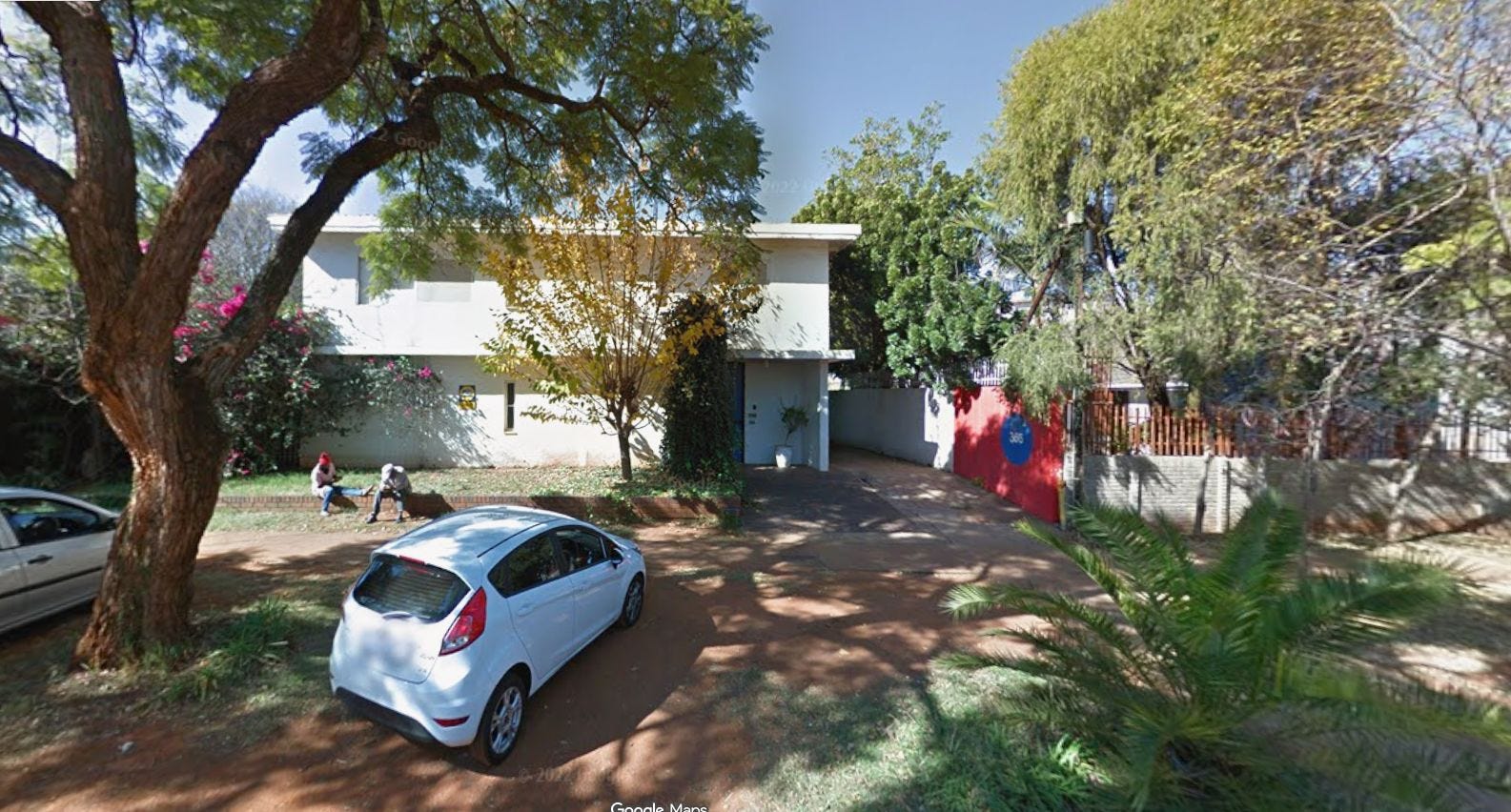
When my sister Lyn embarked on her diplomatic posting to Norway, she was married to Ernst de Jong, a man whose artistic presence filled their home with vibrant paintings that seemed to whisper stories from every wall. They both departed for the fjords, leaving behind their sprawling house in Hill Street, Arcadia—a stone’s throw from the old British High Commission. The keys were entrusted to Ernst’s son, Mark, but his struggles with alcoholism turned the place into a chaotic disaster. Bottles piled up like forgotten sculptures, and the air hung heavy with neglect. About a year into their absence, Lyn reached out to me: Would I consider staying there to keep an eye on things?

It was perfect timing, really. I’d just been stabbed—literally—in the back during a mugging in Johannesburg, and the idea of some quiet recovery time in Pretoria appealed immensely. Besides, it suited my work at Madge Networks, where I was knee-deep in tech projects that demanded focus, constant office presence and some travelling. So, I agreed, packing my bags and settling into what felt like a borrowed life of luxury. The house was enormous, a labyrinth of rooms echoing with the ghosts of previous gatherings. Ernst’s artworks adorned every corner; bold strokes of colour that made the space feel alive even in solitude. And then there was the deep diving pool in the backyard—a crystalline abyss that invited daring plunges on hot afternoons.

I developed a peculiar habit during my stay: rotating through the bedrooms like a nomad in my own temporary kingdom. Each move felt like a fresh start, a mini holiday resetting my mind. One night I’d claim the cozy guest room with its view of the garden; the next, a sun-drenched suite overlooking the street. It was liberating, this freedom to reinvent my evenings.

But let’s talk about New Year’s Eve—or rather, my profound disdain for it. As a cold-blooded mathematician and scientist at heart, I find the whole affair utterly arbitrary. It’s just another day, plucked from the calendar with no ties to any celestial rhythm. No solstice, no equinox, no meaningful position in Earth’s orbit around the sun. Nothing. Why celebrate a random flip of the page? I always aim to sleep right through it, cocooned in indifference. Invariably, though, the universe conspires against me—those infernal fireworks shattering the night like unsolicited applause. Even now, they sabotage my slumber without fail.

This particular New Year was the dawn of 1998, mere months after the world had mourned Princess Diana’s tragic death. The High Commission next door became a shrine of sorts, with an endless stream of floral tributes laid at its gates. I’d stroll past on my walks, admiring the blooms—exquisite arrangements of roses and lilies that turned grief into something almost beautiful.

That night, I’d chosen the main bedroom at the front of the house, closest to the street. True to form, I drifted off before midnight, curtains parted as always. It’s a ritual I’ve kept since forever: letting the sun wake me naturally, syncing my body to the day’s light. Me and the sun—we’re old allies, channeling that primal Neanderthal hunter instinct. Rise with the dawn, rest with the dusk.

I must have slept through the initial revelry, but around 2 a.m., flashing lights invaded the room, pulsing like a bizarre dream. I lay there for a moment, blinking in confusion, until realization hit: These were real, streaming in from the street. Groggy but curious, I sprang from bed in nothing but my boxers and stumbled to the front door. Stepping outside, I found myself face-to-face with a cluster of firefighters and policemen, their vehicles’ strobes painting the night in red and blue.

They stared at me, and I stared back, not yet registering I was half kaalgat. Then their eyes shifted upward, above my head. Puzzled, I followed their gaze. There, wedged improbably into the branches of the towering Jacaranda tree by the curb, sat a red Renault—a flimsy plastic French car, suspended like some absurd modern art installation.

The house was the second from the corner, and I could trace the car’s erratic path: tire tracks gouged into the grassy verge, evidence of a driver who’d failed the turn spectacularly. It had veered off the road, slammed into the guy wire anchoring a power line pole, and then—miraculously—ridden that wire like a ramp straight into the tree’s embrace. The driver’s door hung open, suggesting the culprit, likely poes dronk, had moered out.

I stood there, absorbing the surreal scene, until snickers from a couple of policewomen snapped me back. They were pointing, giggling at my half-kaalgat predicament. Heat rising to my cheeks, I retreated indoors without a word, closed the door firmly, and climbed back into bed. Sleep reclaimed me swiftly, the chaos outside fading like a half-remembered punchline.

In the spiderweb memories of my life, that Arcadia Incident stands out as a quirky moment—a blend of healing solitude and unexpected absurdity. And that New Year? It proved my point: arbitrary, random, and utterly unforgettable.

Ronald Bartels | LinkedIn | Instagram

Young Ronald's School Holiday in Slaapstad

It was a rite of passage in our family, one that my parents orchestrated with a mix of trust and perhaps a touch of mischief. When my sister and brother each reached Standard 3, they were bundled off alone on a Boeing 727 from Durban to Cape Town, entrusted to the care of my mother’s aunt, Margerite, and her husband, Donald. These were no ordinary relatives; Margerite and Donald held a small piece of South African history. They were the first couple to exchange vows in Afrikaans at the NG Kerk, shortly after the Second World War, breaking from the tradition of Dutch ceremonies that had lingered like an old colonial echo. Their family was deeply involved in Langehoven’s Saamwerk Kommittee, a nod to their commitment to Afrikaans culture and community.

Uncle Donald, with his no-nonsense demeanor, worked for the government in weights and measures—a role that made him something of a metric enforcer in the post-imperial era. He was the one who fined shopkeepers and stations stubborn enough to cling to imperial units. I’d heard stories of him pulling up to fuel stations in his massive bronze Valiant, filling the tank, then meticulously decanting and measuring the petrol to catch any discrepancies. The same went for greengrocers; he’d weigh their veggies and issue prosecutions if they fell short. Back home, my dad had one of those sturdy red railway station scales for measuring pockets of potatoes, and Uncle Donald would make the trip to calibrate it, ensuring everything was precise and fair.

So, when my turn came in Standard 3, under the watchful eye of my teacher Civvy—an ancient, bat-like figure with a peculiar fondness for maths that she enforced on us daily—I found myself at Durban airport, ticket in hand, ready for my own solo voyage. The Boeing 727 was a beast of a plane, its engines roaring louder than any tractor I’d ever heard chugging through the sugarcane fields. The flight was thrilling, a noisy ascent into independence, with the coastline unfolding below like a wrinkled map.

Upon landing in Cape Town, plans shifted slightly; Aunt Margerite and Uncle Donald were away on their own holiday, so I stayed instead with one of Andrew Elliot’s sons, a kind host who made me feel at home in the shadow of Table Mountain. My dad, ever the generous planner, had equipped me with enough pocket money to embark on a whirlwind of Springbok-Atlas bus tours. I hopped from one adventure to the next: circling the rugged peninsula with its crashing waves and fynbos-covered cliffs, ascending the iconic Table Mountain via cable car for panoramic views that stretched to the horizon, wandering the vine-draped streets of Stellenbosch and Paarl with their historic Cape Dutch architecture, strolling through the lush botanical wonders of Kirstenbosch Gardens, and even venturing to a game reserve whose name has long faded from my memory, where I spotted wildlife roaming free under the vast African sky.

One day I hope on the train from Plumstead to Cape Town and walked around the city. I was awestruck. It was the first major metropolis I had visited. And all on my own steam.

To capture it all, I was armed with an Instamatic camera—a simple, foolproof gadget from Kodak that made photography accessible to anyone. It used drop-in film cartridges, no fussing with threading rolls, and with a quick snap and flash cube, you’d have your memories preserved on square prints, ready to develop at the local chemist. It was my constant companion, clicking away at every scenic stop, turning fleeting moments into tangible keepsakes.

The highlight—or perhaps the shock—of the trip was a weekend escape to Yzerfontein, a sleepy coastal spot where the Atlantic Ocean met the shore in a relentless, icy embrace. Dipping my toes in for the first time, I was stunned by the bone-chilling cold of the Cape waters, a far cry from the warm Indian Ocean baths back in Durban. It was invigorating, a reminder of how vast and varied our country could be.

That childhood jaunt to Cape Town planted seeds of wanderlust that would bloom later in life. I’d return years on, crammed into the family Mercedes for a road trip with my parents, tracing those same routes with fresh eyes. And eventually, the Mother City called me back, as I headed there to study at Maties, Stellenbosch University, where the adventures of Standard 3 felt like a distant, noisy prelude to the chapters yet to unfold.

Ronald Bartels | LinkedIn | Instagram