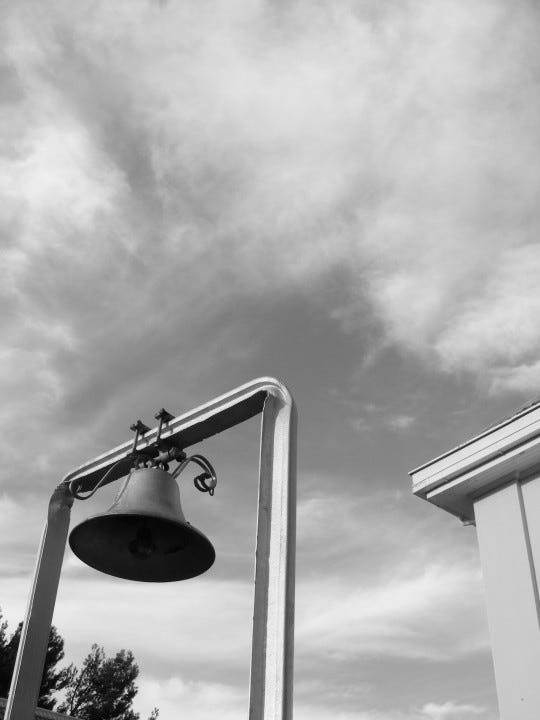
The Morning Patrol with MastelekđŸ’Ș

Stories of Mastelek who enjoys farming Boweia Volubilis

Flying down the dirt road between the Oakvilla farm & the New Hanover village

The dust rose soft like breath from the throat of the valley, between Oakvilla and New Hanover, fifteen kilometers of memory, where copper wires sang in the heat, a humming lullaby strung from pole to pole, like prayers the wind forgot to say.

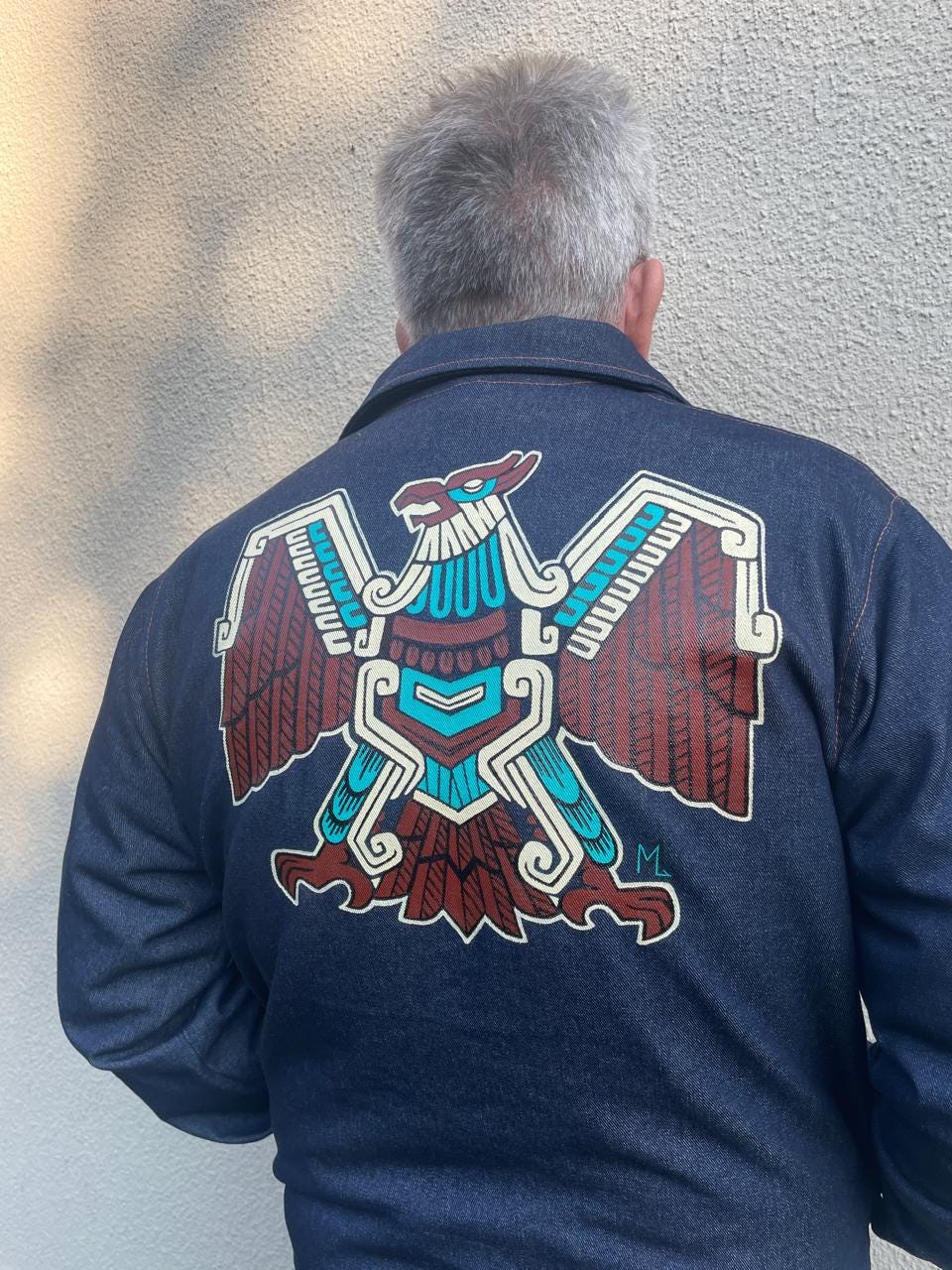
And on the highest perch, my eagle, his eyes a warning to the river’s skin, to leguaans slipping like ghosts through the reeds of the Inyosi. He watched me, sentinel of the childhood I wore like sunburn on my arms, as I pedaled my golden Raleigh, hair aflame in the afternoon wind, heart loose in my chest.

My father's kingdom was chrome and pride NH 3000 glinting under the African sky, his Mercedes purring like a lion fed. “In Alle Welt,” he’d say, and I believed him. But it was my mother who made thunder, who wore her ancestors in her cheekbones, her eyeliner sharp as her laughter. We’d roar down the road, putting voet in die hoek, as the Sterk Spruit bridge leapt toward us, and the car took flight over the old bump where gravity forgot its hold and we remembered joy.

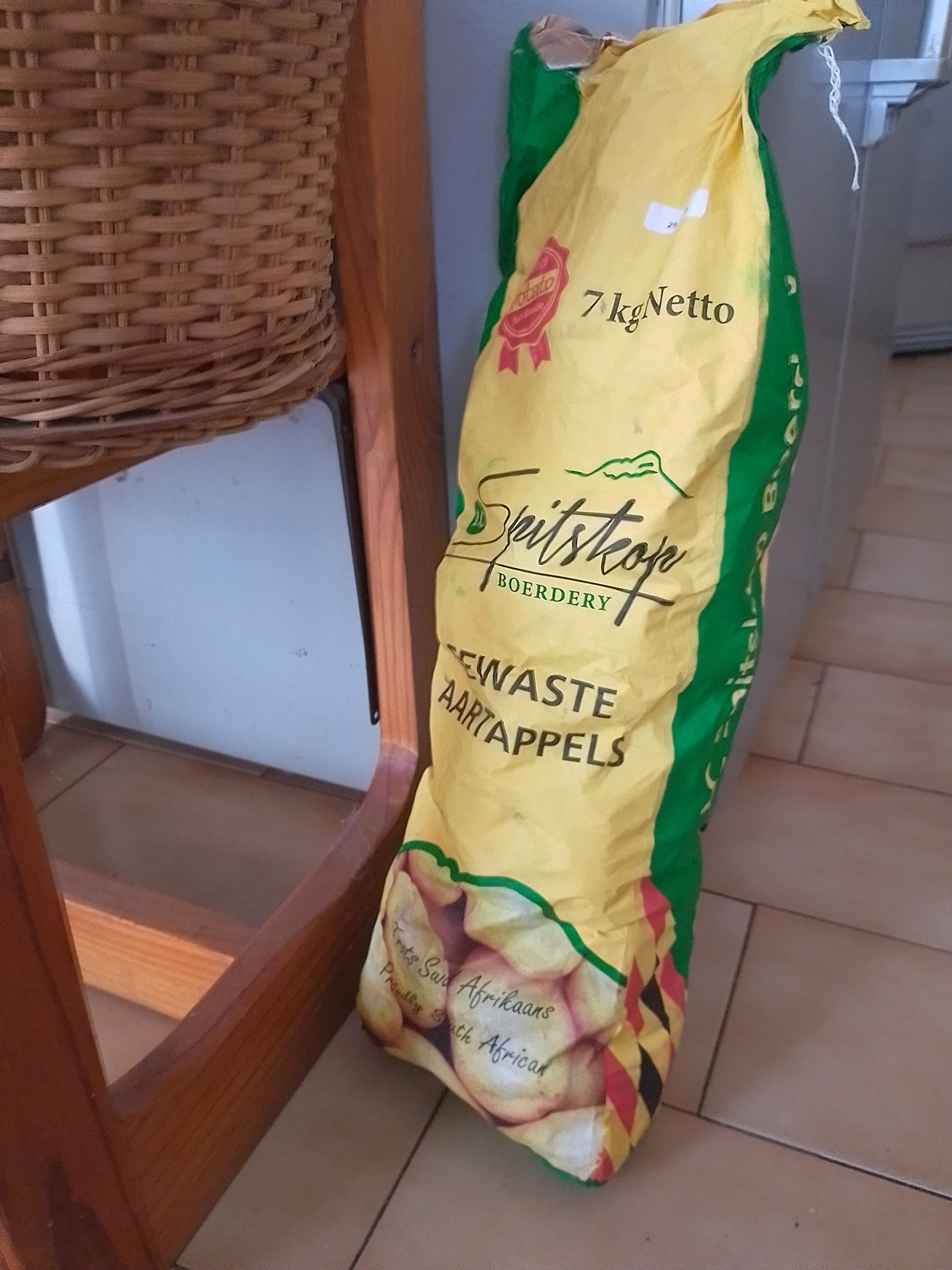
On payday, the Massey Ferguson grumbled awake, and the men, sun-worn and singing, piled into the trailer behind me me, a child driving stories older than myself down a road that knew all our names.

We fetched the mail in the dented Datsun bakkie, letters and newspapers and the smell of paraffin drifting from the tea room, a world in a page, the whole valley folded in print.

Halfway down, the tree stood not a tree, but a gathering, a cathedral of leaves and memory. Its shade was deep enough to swallow a village, its silence louder than thunder. And past it, always, Blinkwater Mountain gleamed, a jeweled crown in the morning light, reminding us that some things shimmer only when we move away from them.

Now, when I walk the dust in dreams, it is golden still. The wires sing, the eagle circles, and my mother’s laughter rides the wind.

~Roald Bartholomew

Ronald Bartels | LinkedIn | Instagram

Mastelek ncane's 2025

Looking back over this year, there are moments that made me proud, not just the some triumphs splashed across headlines, but the quiet, pervasiveness woven into the fabric of everyday existence. As Ronald Bartels, child of Mastelek, I’ve spent decades building, innovating, and connecting in ways that touch lives across South Africa. It’s not about ego; it’s about legacy. When I reflect on what I’ve accomplished, I can’t help but smile and say, “I did that.” Let me take you through some of the ways my work has become an invisible yet indispensable part of South Africa during the past year.

Picture this: You’re boarding a flight from OR Tambo International Airport in Johannesburg or Cape Town International, settling into your seat as the plane climbs to cruising altitude. The cabin crew wheels out the trolleys, and soon enough, a warm meal is placed before you. That seamless service? It’s powered by the connectivity and software solutions I provided. In the high-stakes world of aviation catering, where timing and reliability are everything, my systems ensure that orders are processed, inventories managed, and deliveries executed without a hitch. High above the clouds, as passengers enjoy their in-flight dining, it’s my technology humming in the background, making it all possible.

On the ground, commerce pulses through South Africa’s veins, and I’ve been the heartbeat for some of its most critical operations. Take one of the country’s most popular payment systems, millions use it daily for transactions big and small. At the company’s headquarters, every secure connection, every data transfer, relies on the robust connectivity I’ve supplied. It’s not just about moving money; it’s about trust, speed, and security in a digital economy where downtime could cost fortunes.

Communication is another realm where my imprint is deep. When you dial into the call centre of one of South Africa’s leading mobile MVNO’s (Mobile Virtual Network Operator), that crystal-clear connection and the software routing your query? That’s me. I’ve equipped them with tools that handle high volumes of calls efficiently, ensuring frustrated customers get resolutions without endless hold times. It’s gratifying to know that in moments of need, whether it’s a billing issue or a service query, my contributions keep the lines open and the conversations flowing.

Innovation thrives in collaborative spaces, and I’ve powered one of the best. The premier co-location workspace in South Africa, home to over 800 companies and 10,000 members, buzzes with entrepreneurial energy. From startups pitching ideas to established firms sealing deals, they all depend on the software and connectivity I’ve provided. High-speed internet, seamless cloud integrations, and reliable networks—I’ve made sure this hub remains a launchpad for dreams, free from the frustrations of unreliable tech.

Education, too, has felt my touch. In Doornfontein, amid the hustle of student life, there’s one accommodation complex that stands out: the only one with zero internet outages. Students cramming for exams, streaming lectures, or connecting with family back home do so without interruption, thanks to my tailored connectivity and software solutions. In a world where online access is as essential as electricity, I’ve ensured these young minds stay plugged in, fostering their futures one uninterrupted session at a time. At King Edward VII School (KES) in Johannesburg, a beacon of academic excellence and tradition, the entire campus thrives on the connectivity and software I’ve provided. From classrooms buzzing with interactive learning to administrative systems managing student records and communications, my solutions ensure uninterrupted access to digital resources, empowering the next generation of leaders. Whether it’s students researching projects or teachers delivering virtual lessons, it’s my technology keeping this historic school at the forefront of modern education

Retail giants across the nation, major shopping centres in every key city and town, operate like well-oiled machines because of me. From managing the sprawling complexes themselves to overseeing parking systems, voice communications, and building management, my connectivity and software forms the backbone. Shoppers gliding through malls, retailers tracking stock, security teams monitoring feeds, it’s all synchronized through systems I’ve deployed, turning chaos into efficiency.

Even in crises, my work shines. South Africa’s electricity grid, plagued by challenges, relies on contractors and vendors to synchronize and stabilize it during outages or faults. The software and connectivity they use to coordinate these efforts? Provided by me. In those tense moments when the lights flicker and teams race against time, my technology ensures real-time data sharing and precise control, helping restore power to homes, hospitals, and industries.

In the province of Limpopo, where rhinos face the constant threat of poachers, I’ve played a guardian role. The video surveillance cameras tracking these majestic animals and their would-be hunters operate on my software and connectivity. High-definition feeds, remote monitoring, and instant alerts, I’ve equipped rangers with the tools to protect endangered species, turning technology into a shield for our most treasured natural beings.

Daily necessities like fuel don’t escape my influence. At petrol stations nationwide, the fuel management systems that keep pumps operational and inventories accurate depend on my software. When drivers pull up to refuel, oblivious to the backend magic, it’s my connectivity ensuring smooth transactions and uninterrupted service, even in remote areas.

Leisure and lifestyle pursuits carry my signature too. Booking a four-ball at the prestigious Bryanston Country Club? The reservation system hums with my connectivity and software, making sure tee times are secured effortlessly. At the veterinary hospital in Fourways, where pets receive life-saving care, all systems, from patient records to diagnostic tools, rely on what I’ve provided. And if you’ve ever been in a fender-bender and visited a panelbeater for replacement car parts, their ordering and inventory management uses my tech, getting you back on the road faster.

Healthcare and finance, pillars of society, bear my mark. The oldest medical scheme in South Africa, serving generations, operates with my software and connectivity, handling claims, records, and communications securely. The nation’s most popular ISP equips its staff with my solutions, ensuring their own operations run smoothly as they connect the country.

Even celebrities aren’t immune. When Richard Branson jets into South Africa for business or adventure, he taps into my connectivity and software, whether for communications or logistics—proving that my reach extends to the global elite.

Mundane moments, like ordering a pizza from a popular chain whose boxes bear the Roman face of my alter ego, involve me: their point-of-sale systems and delivery tracking use my tech. And when your new bank card arrives safely at your door, the courier and verification processes lean on my software and connectivity.

One of my proudest contributions to the South African tech ecosystem came in November, during the bustling Africa Tech Festival in Cape Town. The concept for the Techshed initiative originated with me, a dedicated fringe event designed specifically for managed service providers (MSPs). It provided a relaxed yet focused space for networking, sharing insights, and showcasing innovative solutions outside the main conference halls.

Techshed was hosted at Workshop17’s inspiring co-working venue in the Watershed building, perfectly situated in the vibrant V&A Waterfront with its stunning views of Table Mountain and the harbour. The location embodied Cape Town’s creative energy, making it an ideal backdrop for collaboration among industry peers.

The highlight of the event was the official launch of Clavister, a cutting-edge next-generation firewall proudly made in Sweden, into the South African market. This marked an exciting milestone, introducing robust, high-performance cybersecurity solutions tailored for demanding environments. The enthusiasm from attendees was palpable as MSPs explored partnerships and discussed how Clavister could strengthen their offerings.

Looking back, Techshed not only fostered valuable connections but also underscored my vision of maturing the South Africa’s tech sector, blending global innovation with local ingenuity.

At the core of it all is my pioneering work in SD-WAN (Software-Defined Wide Area Networking). I’ve not only supplied these advanced solutions but also driven their evolution, incorporating NFV (Network Functions Virtualization) functionality and secure connectivity options that rival the world’s best. In an era of cyber threats and digital transformation, I’ve given businesses the edge to thrive securely and at scale.

This isn’t just a list of achievements—it’s a testament to persistence, vision, and impact. From the skies to the savannas, from boardrooms to bedrooms, my work as Ronald Bartels has made a difference in South Africa. Mastelek’s child? Absolutely. And yes, I did that!

PS: I went to Grey.

Ronald Bartels | LinkedIn | Instagram

Quirky Career Highlights

My career, much like a well-ridden cycling route, is a blend of exhilarating highs, unexpected turns, and the occasional crash, each moment a story that no resume could ever fully capture. Below is a collection of highlights that weave together the technical, the absurd, and the unforgettable from decades of navigating the wild terrain of IT, networking, & life. Including some pivots.

The Early Days | Coding & Chaos

  • Started at Grey College, where my name sits proudly on the honours board, just below anti-apartheid hero Bram Fischer, a humbling legacy to follow.
  • Learned to program on a ZX-81, pecking away at its membrane keyboard, sparking a lifelong love for code.
  • Mastered COBOL on an IBM mainframe, wielding JCL and embedded SQL off DB2, crafting enterprise systems in an era when computers filled rooms.
  • Received a R250,000 mainframe processing bill in 1991 for a branch line report—an expensive lesson in resource management.
  • Installed OS/2 using 23 stiffy disks on IBM Model 70 & 80 PS/2s become succumbing to Windows 95 and WIndows NT using CDs.
  • Coded programs in Turbo Pascal to transmit and receive via serial ports. The programs transferred word processing documents between DOS and CPM Braille computers which where known as Davids. It also included a TSR (Terminate & Stay Resident) that read the DOS screen over the David’s voice chip.

National Service

  • Faked my medical test to get into the Navy as I didn’t want to miss out on the fun.
  • Learned to leopard crawl under barbed wire with a FN FAL while a Browning machine gun was firing live rounds overhead.
  • Experienced survival training by being dumped in the middle of Saldanha Bay with a life raft that was too small for the group, forcing half to hang off the side in the water.

Network Adventures | From Modems to Mayhem

  • Connected to the Internet via a US Robotics Courier modem, later upgrading to the futuristic ISDN—my first steps into the digital frontier.
  • Maximized memory in DOS to load Smart Madge Token-ring adapters, juggling Netbeui, IPX, and SNA protocols like a digital circus act.
  • Brought a country to a standstill by closing the main airport, a network misconfiguration that taught me the power (and peril) of a single command.
  • Spanned core switch trunks incorrectly, plunging an entire network into darkness—a humbling reminder to double-check configurations.
  • Battled a 10Base2 terminator that overheated in the sun, increasing resistance and crashing the network—proof that even hardware has a bad day.
  • Chased rogue DHCP servers, unraveling network mysteries that left me blue in the face until a dodgy ISP demarc install was uncovered.
  • Tamed cable spaghetti in a data center, where torn paper labels tied with discarded telephone cable earned the title of “world’s messiest.”

Data Centre Disasters | Where Murphy’s Law Reigns

  • Faced pigeon droppings corroding a network chassis in a car factory’s paint shop—nature’s way of reminding me who’s boss.
  • Dealt with a desktop fan cooling telecom equipment that failed spectacularly, dumping gas in the data center on New Year’s Eve 1999.
  • Got shocked resetting a router due to uncovered electrical plugs in a cabinet, a literal jolt to my troubleshooting routine.
  • Pumped out a pond under a data center floor caused by an iced-up air conditioner, breaking an industrial vacuum cleaner in the process.
  • Saved a network switch with an umbrella when a pipe leaked in the server room, improvisation at its finest.
  • Survived a data centre fire, only for the fire department to drown the equipment, proving water can be as destructive as flames.
  • Witnessed a generator battery explode after air conditioners overloaded the circuit during a power failure—I changed my shorts that day.
  • Navigated a Peterbilt truck crashing into a data centre, shaking the building like an earthquake.
  • Discovered a network switch covered in cooking fat, inconveniently placed above a canteen stove.
  • Helped cold-boot an SAA mainframe after cabling contractors accidentally disconnected it while pulling CAT 5 under the floorboards.

Moments of Mischief & Misadventure

  • Dialed into an Anglo-American board meeting after spotting a video conference unit’s number in a magazine photo, a cheeky test of connectivity.
  • Installed a fake blue screen saver on a file server as a prank, only for the admin to panic and power it off.
  • Laughed through a change management meeting when my foot got stuck in a dustbin, earning roars of laughter from colleagues.
  • Starred as Dr. Frank-N-Furter in a Rocky Horror skit where Tequila was involved at a team-building event, bold, if not entirely coherent.
  • Forced to drink a Flaming Lamborghini at a Novell Netware event for wearing a Microsoft Certified Pig t-shirt as a dual-certified pioneer in South Africa.
  • Played an April Fool’s joke that went viral two weeks later, making national news headlines.

Media Moments & Public Presence

  • Appeared on Springbok Radio to discuss my Andabatae PC program, designed for blind operators—a proud moment of impact.
  • Featured on Irish TV post a Boks game at Lansdowne Road, sharing my rugby-fueled insights.
  • Spoke on Radio 702 about crashing into a camouflaged bollard at Rosebank Shopping Centre—a tale of automotive embarrassment.
  • Leopard-crawled across an office floor during the “Battle of Luthuli House” when AK47s started firing—survival instincts in overdrive.
  • Appeared on Gupta TV with Gerry Randseli during the height of state capture, talking about broadband and witnessed a memorable wardrobe failure.
  • Wore a black cowboy hat dressed as Kid Colt on Derick Watt’s show.
  • The investigative journalist known as Roald Bartholomew did a few notable articles in the Zuma years & then turned his hand to poetry.

Innovations & Achievements

  • Invented the Morning to Midnight data bundles, later adopted by Vodacom as Night Owl—a game-changer for South African connectivity.
  • Holds a patent for a power monitoring device, a testament to my knack for solving real-world problems.
  • Became the King of Netware SFT III, stabilizing clusters by tuning Madge FDDI adapters—a title earned through persistence.
  • Persuaded a high school headmaster to buy an Apple IIe, sparking programming journeys, including one that led to Cisco’s licensing scheme.
  • Created the best SD-WAN blog in the world, sharing expertise as a leader of the technology in South Africa.
  • Owns the world’s largest collection of bowiea volubilis, a quirky botanical passion that rivals my tech achievements.
  • The Head of the Nuclear Regulator in the States commented positively about my article on engineering resilience!

Near Misses & Life Lessons

  • Encountered a rat the size of a dog in airport tunnels while testing cables, nearly screaming for my mom.
  • Saw my life flash before my eyes when a network engineer unplugged the last live path, causing a total blackout.
  • Survived a building’s scaffolding collapse, proving network engineering can be a hazardous occupation.
  • Deleted the /var directory on a server, a mistake that taught me the value of backups the hard way.
  • Broke my leg in 27 places during a rugby maul collapse, a painful reminder of my physical limits as a partially blind athlete.
  • Cut my feet on glass in a tidal pool while in the Navy, only to be threatened with a charge for damaging government property.

Personal Triumphs & Quirky Tales

  • Completed the Argus Cycle Tour over 10 times, starting with my trusty university bike, blending my love for cycling with endurance.
  • Learned to drive on a Massey-Ferguson tractor, followed by my first car, a VW Beetle—a humble start to my journey.
  • Flew in a Boeing 707 to a Novell conference at Elephant Hills and survived Zambezi rapids on my backside after falling out of a raft.
  • Stood in the cockpit of a Boeing 747 SP at 45,000 feet, back when such access was allowed.
  • Skated on an iced-over pond in front of Cabletron’s New Hampshire office, blissfully unaware of their mirrored-glass audience.
  • Flew multiple times on KLM First Class to the Netherlands which was paid for by Multichoice and witnessed two old geezers have a pillow fight in the front of the Boeing 747.
  • I met my future wife doing the Full Monty to Hot Chocolate’s You Sexy Thing at the South African Computer Show.

Hacking

  • Helped of hacking nerds with sleuth work to track down servers that exposed the operations of one of the biggest bitcoin scams in history.

These moments, from coding on a ZX-81 to dodging bullets and battling data center disasters, paint a picture of a career that’s as much about resilience and humor as it is about technical prowess. They’re the stories I’ll tell in my memoirs, far richer than any bullet point on a resume.

Ronald Bartels | LinkedIn | Instagram

From Chaos to Opportunity in the Market

Late in the previous decade, I found myself knee-deep in the trenches of a major telecommunications company, brought on as a contractor to evaluate their processes. The gig seemed straightforward at first, dissect why their deployment & operations costs were skyrocketing past revenue, leaving the business teetering on the edge. Little did I know, this would be the spark that ignited my journey into SD-WAN, transforming a frustrating consulting stint into the foundation of my own venture.

I started on the deployment side, where the heart of the inefficiency pulsed. Everything was manual, human-driven, & precariously balanced on massive Excel spreadsheets that sprawled like digital labyrinths. Running a multimillion-dollar telecommunications operation on Excel? It was pure hell, error-prone, unscalable, and a breeding ground for mistakes. This setup bloated their HR costs with teams of people hunched over screens, manually inputting data, cross-referencing orders, and chasing down discrepancies. All the time, the CEO would be storming up & down the floors, shouting blue murder as clients contacted him directly as orders stalled. Worse still, there was zero revenue assurance. No system to validate that a service order for a network link to an operator had a corresponding invoice to the client. They were paying bills blind, trusting that everything matched up. Spot checks I ran revealed the ugly truth: links being paid for that weren’t even in use, or services delivered without ever being invoiced. Ghosting! It was like throwing money into a black hole, and the company was hemorrhaging because of it.

My first move was to advocate for ditching the spreadsheets in favor of a web-based workflow application tailored for telecommunications, one that could automate approvals, track orders in real-time, and integrate billing seamlessly. But the resistance was fierce, almost visceral. No one wanted change. The processes lived in the heads of the people running them manually, and they clung to that knowledge like job security. “Pfft,” I’d think, as they pushed back, did they really believe their manual expertise would save them in a digital world? This mindset wasn’t just outdated; it was sinking the ship. Automating would free up resources, reduce errors, and let the team focus on growth, but fear of being replaced by a machine blinded them to the bigger picture.

Diving deeper into deployment, the lack of automation was glaring. Links were provisioned entirely by hand, engineers rolling out to sites, logging into Cisco routers via clunky CLI interfaces on MPLS networks, typing commands line by line. It was labor-intensive & time-sucking, with no orchestration tools to streamline configurations or deployments. A single setup could take days, involving multiple handoffs, site visits, and inevitable human errors that led to downtime or rework. In an industry where speed & reliability are everything, this manual grind was far from optimal, it drove up costs, delayed rollouts, & left no room for scalability as customer demands grew.

Shifting gears, I turned to the service desk and operations, where chaos reigned supreme. Tickets poured in daily, overwhelming the agents and creating an eternal backlog. They’d resort to bulk-closing old ones just to clear the queue, regardless of resolution, a band-aid on a gaping wound. Digging into the data, I pinpointed the major culprit: the highest volume of tickets stemmed from link failures in redundant setups. The company sold customers two links for failover reliability, but if one went down, the customer had to log a ticket. Then an engineer would manually log in, diagnose, & swap circuits, a tedious, reactive process that ate hours and frustrated everyone involved.

That’s when I started hunting for a better way, & I stumbled upon SD-WAN, Software-Defined Wide Area Networking. It was a revelation. SD-WAN overlays intelligent software on top of existing networks, centralizing control and automating traffic management across multiple links. For deployment, it eliminates the need for manual CLI tinkering; instead, you define policies once in an orchestrator, & it pushes configurations automatically to edge devices, slashing setup times from days to minutes and reducing human error. Operationally, it shines in handling redundancy: SD-WAN monitors link health in real-time, dynamically rerouting traffic over the best available path without intervention. No more tickets for circuit swaps, the system self-heals, balancing loads, optimizing performance, and even prioritizing applications based on business needs. It solves the revenue assurance gap too, by integrating with billing systems for automated validation, ensuring every link is accounted for and invoiced properly. In essence, SD-WAN turns a brittle, manual MPLS setup into an agile, automated beast, cutting costs, boosting uptime, & freeing engineers for strategic work.

Excited, I evaluated a few solutions, eventually connecting with Fusion, which later rebranded to Nepean Networks. Their approach resonated, robust, scalable, and geared toward telecommunications pain points. By the time I was ready to pitch the full migration off MPLS to SD-WAN, fate intervened: the company folded under its own weight, a victim of the very inefficiencies I’d been uncovering.

But I wasn’t done. With the telecommunications giant gone, I saw the opportunity staring back at me. Why not take the reins myself? That’s how my SD-WAN journey truly began, not as a consultant fixing someone else’s mess, but as an entrepreneur building solutions from the ground up. It was a pivot born of frustration, insight, and a bit of serendipity, proving that sometimes, the end of one chapter is just the setup for the next.

Many service providers are still in the same boat, having saved some costs by moving from Cisco to Mikrotik, but not resolving the causation & grinding away in the trenches as above.

Ronald Bartels | LinkedIn | Instagram

I went to Grey!

The Golden Liberals
No alt text provided for this image

The term liberal means the assimilation of cultural attributes into a greater systematic governance. Two examples exist. Winston Churchill and George Grey. Churchill assimilated the Boers and the Commonwealth. Grey assimilated the Maoris. An example in America would be Lincoln who assimilated the Southerners. The binary nature of politics today where people are divided into left and right wing has resulted in the term liberal being misunderstood as liberal does not mean left wing. These is no way that either Churchill or Grey could be classified as left wing. They also were balanced and stood up to blatant dictatorship. A true liberal is gold and probably has some Scottish heritage. My ancestor, Christoph Bartels had a similar relationship with the Zulu’s while on my maternal side the Elliots and the Murrays, who were indeed Scottish, became boers.

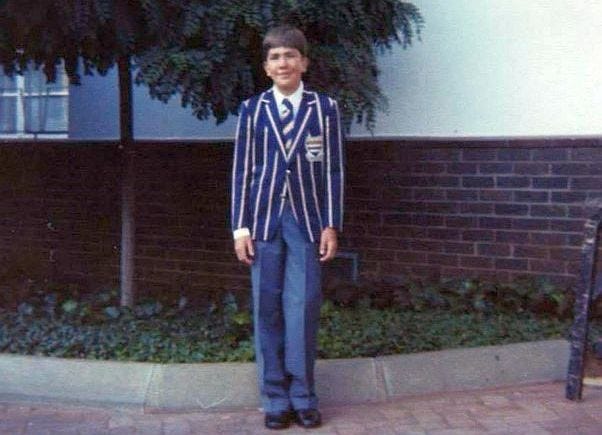
In 1980 I started my association with the Golden Liberals as my parents enrolled me at Grey College. That year there was a one hit wonder, Video Killed the radio star!

George Grey
George Grey

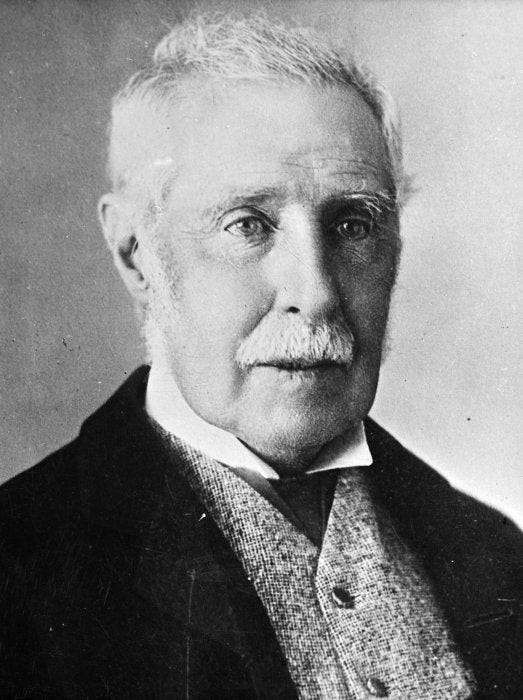
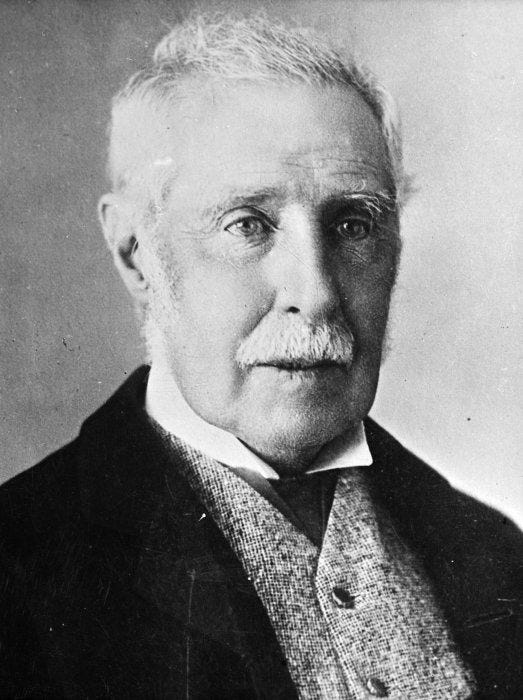
That day shortly after Easter as the second decade of the 19th century was starting was not the day George Grey was meant to enter the world. His mother went into premature labour in Lisbon, Portugal after inadvertently overhearing a conversation in which it was mentioned that her husband had died. George Grey's father had died in some insignificant skirmish. Tragedy did dog George Grey. Although he became a distinguished diplomat, he lost his own son early on in his marriage. He was estranged from his wife for the most part of his life, but notwithstanding, George Grey’s influence stretched over both New Zealand and South Africa. He was the founder of the school I attended, namely Grey College in Bloemfontein.

Grey was Governor General of the Cape Colony in the mid-19th century. South Africa did not exist in those days. The Cape Colony, the present-day Western Cape, was a British Territory. Just more than a decade before, the Boer population had started migrating north. Boer republics were established in the Free State, Transvaal, and Natal. My family was part of the grouping that ended up in current day Pietermaritzburg.

The reason for this migration is often stated that it was triggered by the abolition of slavery. However, this is a simplification of a problem where there were multiple causes including the pressure for greater farming resources.

Unlike, a similar trek that occurred in Northern America, the Boers did not decimate the indigenous population with modern weapons. In Northern America, the local indigenous tribes were exposed to genocide. An irony never lost on me whenever the first world wags its finger in self-righteousness. I am not a first world resident, confined to what a leader of the free world referred to as a shithole.

The British rapidly annexed the Boer colony of Natal and during the period following this event there was the infamous self-inflicted starvation of the Xhosa. George Grey was Governor during this time and resolved the situation by assimilating Xhosa officials into government structures. Having dealt with the Xhosa crisis he focused his attention further north.

Grey visited the Boer republics and was well received. He wanted to unite the British colonies and Boer republics and ironically the Boers were not averse to the suggestion. However, the British Foreign Office was!

George Grey's journey to the inland region of Southern Africa was vastly different in those days was vastly different than it is today. There were no roads and very few settlements. The social event that was most attended was the monthly church gathering known as Nagmaal, the Christian rite communion. The mode of transport was horses as well as the ox wagon. These ox wagons would be the primary source of transportation inland into South Africa before railways started to be laid out in greater lengths in the latter part of the 19th century.

Cosmos

Invaders

In those days there would have been no Cosmos flowers next to the side of the road or path. There would also have been no Blackjacks to catch on your socks or trousers when a person went to answer the call of nature in the veld (since there were no garages with toilets). Neither would there have been any Kharkibos dotted around the veld.

All these invader plants came to Southern Africa during the Anglo-Boer war, after George Grey's death. The war resulted when the colonies and republics became belligerent after the discovery of diamonds and gold at Kimberly and Johannesburg, respectively. When the war erupted, the British shipped in many troops and horses. The horses were provided with feed from Argentina and contained the seeds of Cosmos, Blackjacks and Kharkibos. This was the country to which Windhond, one of my family would eventually settle in.

George Grey's efforts to avoid this future conflict in the mid nineteenth century had not met with approval from his bosses in London. They decided to recall him. Sounds very much like present day cadre deployment and shenanigans by the ANC! On the ship back to Britain, he became estranged from his wife. Arriving back in London, a new government had been voted in and George Grey had new bosses. His new masters were not averse to his views and wanted him back at his old post. Fate, however, intervened. In New Zealand, the Maori wars broke out and George Grey was diverted to resolve the issues in that country. His influence on the course of South African history was stopped and instead his greatest legacy would be made in New Zealand.

It is highly unlikely that should George Grey have remained in South Africa that the conflict with the Boers would have escalated into a war. More importantly he would not have allowed the foundations of Apartheid to be laid. It is also unlikely he would have disenfranchised the indigenous population. It was also Grey who made a significant intervention to ensure that peace was made between the Boers and Basuto and that what is how Lesotho was established.

Grey resolved the conflict between the two belligerent parties by defining a mutually agreed border. Being a fit man, he walked the border with the parties including climbing out some steep koppies. Some of the Boers leaders were as portly as their contemporary counterparts and struggled to keep up. Soon afterwards the treaty was signed.

Kiwi

In South Africa George Grey had learnt his lessons well in how to deal with the British Foreign Office, and as a result made many unilateral decisions in New Zealand. More famously he created a new constitution without input from London. New Zealand did not turn out bad. It is one of planet Earth’s most progressive nation with a young woman as its leader. I often wish to be a Kiwi as the New Zealanders name themselves.

On a recent trip to London I walked through St. Paul's churchyard on the way to the London offices of the bank I was working for at the time. The crypt doors had just opened, and I popped in to have a look. There was the grave of Nelson, one of the most famous of British warriors, and next to him was interned Sir George Grey. It was an insightful moment for me to realize how prominent a member of Victorian Society he was that he was honoured with a position at the side of Nelson. In another twist of fate, South Africa would also have its own famous Nelson in Mandela.

Since his birth two hundred years ago George Grey left a great impact and legacy with his actions. One of those happened on that trip previously mentioned into the interior of South Africa, when he stopped at Bloemfontein.

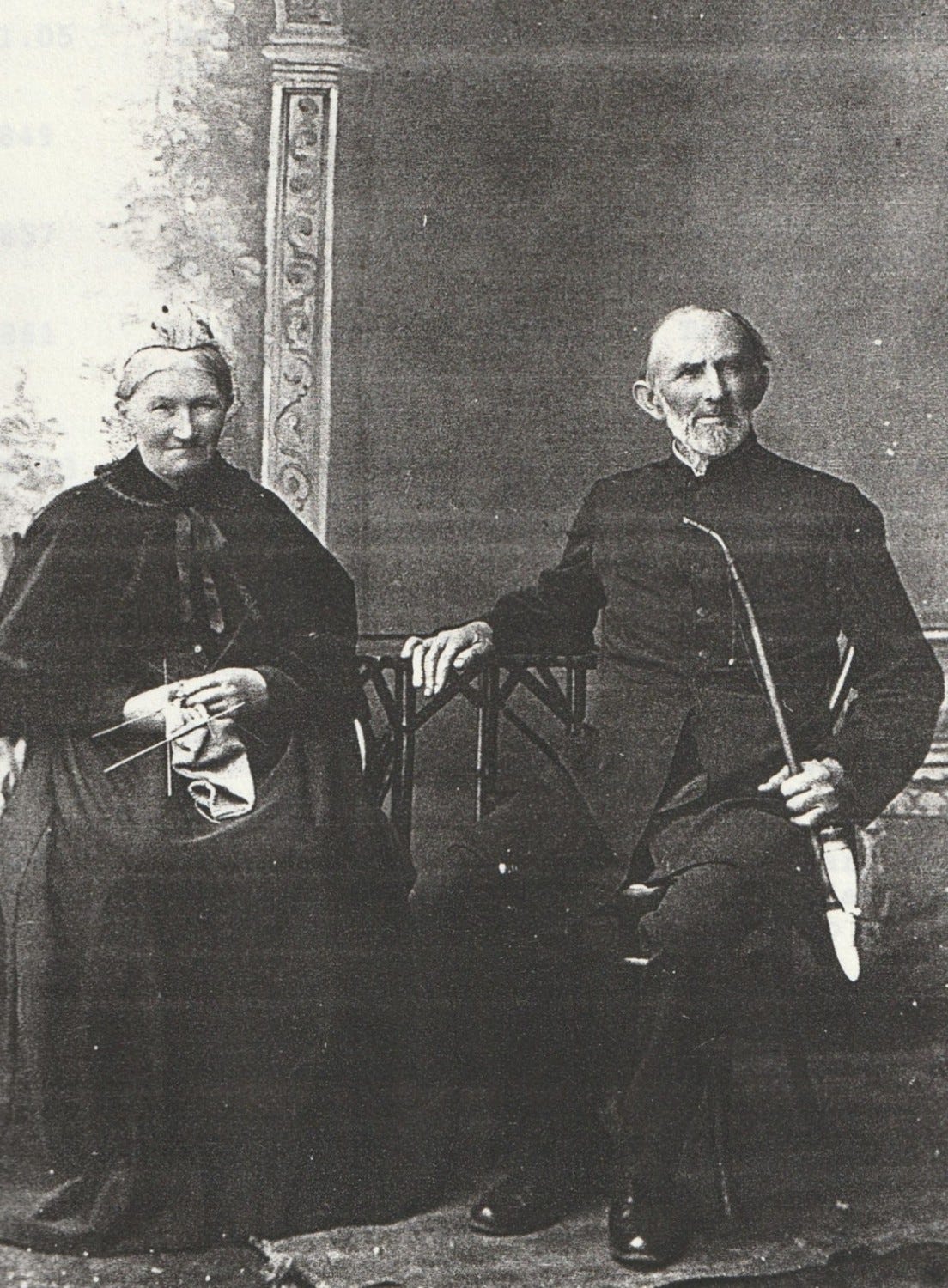
At Bloemfontein, he was met by an honour guard of horsemen which included Andrew Murray. Murray was one of the same descendants of my family of the Scottish Calvinists who came to this country a century before. During his stay at the settlement, Grey bequeathed a couple of thousand pounds for the establishment of a school for boys. This was in memory of his son who had died in infancy. That school became the world-famous Grey College, noted as a Rugby factory. One of the first leaders and teachers at the school was Andrew Murray. He became a well versed and revered theologian and effected formulated the basis of the Christian movement in South Africa. Elsewhere in South Africa, Christof Bartels was using his ministry to dull the trauma of his years in the cavalry. From the school's inception, the boys who would call Grey College their Alma mater would make their mark on South African and world history.

During the Anglo-Boer war the real leader was President Steyn, a Grey boy, and not Kruger. Churchill referred to him as the only real Englishman at the treaty talks, in a disparaging reference to the members of the unrefined British delegation. Steyn was a member of Temple Bar, and his adversaries were not close, neither in language, nor ability.

In the same war, a Grey boy, Deneys Reitz, would be a bittereinde, someone who would fight to the last. When peace was eventually made, he established one of the most prominent law firms in the new Union of South Africa. His book, Commando, would become one of the defacto standard stories about war. During the First World War, Reitz would serve as a Guard Colonel in the British Armed Forces. In the Second World War, he would be South African High Commissioner in London.
Laurens van der Post

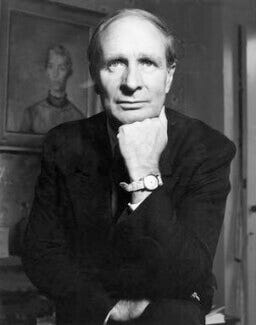
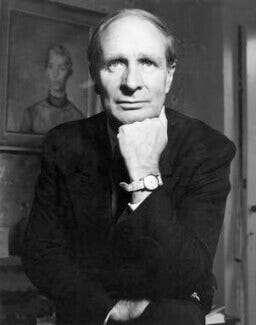
During the two World Wars there would be a couple of great men who graduated from Grey College and would make an impact on the global stage. The first was Sir Lourens van der Post. He was a novelist, philosopher and World War Two soldier. The other was Braam Fischer. Braam Fischer was Nelson Mandela's lawyer and friend. He would pay a heavy and torturous price for his opinions and actions. However, without the efforts of Braam Fischer the course of South African history might well have been very different. Mandela referred to him as the Afrikaner who changed his opinion and planted the seed in his mind that reconciliation was possible. Fischer used to live down the road from me in another suburb of Johannesburg known as Greenside.

During the Second World War, the headmaster's son gave his life to the cause of attempting to assist in the Polish Ghetto uprisings. The Polish uprising is notorious as the Russians knowingly did not intervene to stop the Germans suppressing the uprising. This would allow Stalin to better control a weakened post war Poland. The Headmaster's son was a pilot who was flying in supplies for the uprising, and whose effort with many other South African airmen would be unacknowledged post war due to political machinations.

Greybrakke

The political allies of Sir George Grey were known as Greyhounds or Windhonde in Afrikaans. Amongst the boys of Grey, we call ourselves the Greybrakke, which is a derivative of the Afrikaans word for hound or dog, but more specifically mongrel. That was the same nick name of Riebeeck Elliott. The character of these individuals has its roots in an act made on horseback in the flat and never-ending veld of the Free State by a liberal gentleman, who was ahead of his time.

Donuts & a coke

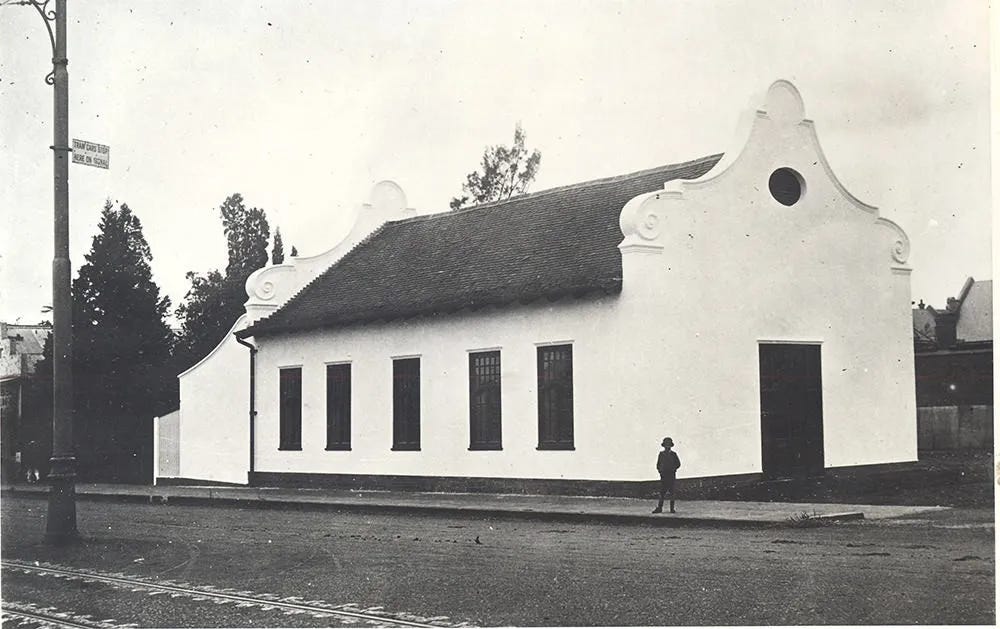
My dad would take me to Grey College in either our Mercedes Benz 300D or Nissan 1400 bakkie from the Natal Midlands to Bloemfontein. It was a five-hour journey stretching over parts of the roads that were always under repair. The roadside would be dotted with Cosmos, Blackjacks and Kharkibos. At Grey I was focused on academics as my sporting abilities were non-existent. That did not stop me from participating, even reaching the second team in my age group on occasion. The school had several old and historic buildings, many built by the famous South African architect, Herbert Baker. But the building that was the most comfortable was the one known as the Tuckshop. Nestled amongst the firs in a corner of the school, the building dated from the Anglo Boer war where it served as a temporary hospital. It was a wooden structure that had been covered in corrugated iron sheets. After school we would spend our meager pocket money on cokes and donuts and occasionally hot dogs. A school term was 10 weeks, and my mom would often post me letters with extra R10 notes in the envelop which when opened would necessitate a trip to the Tuckshop. In those days, the post office worked like a well-oiled machine. By the turn of the millennium, it became a joke as post and parcels would be subject to pilfering.

The Daly of academics

The clever boys in my standard were Jan von Delft and Japie Thiart who would always be in the first and second position in the academic standings. Except, one time, were I sparked and shocked everyone to stand at the top of the standard. It was like John Daly winning his first golfing PGA Championship going from zero to hero.

I was in the hostel where we were a bunch of rabble rousers. Because of my academic ability the headmaster, Michau Heyns would cut me slack, often punishing my mates while I walked off scot free. He would look and me and ask me why I would admit to some ludicrous escapade that my mates and me had participated in. I would attempt to prove my rebel credentials to him, and he would send me on my way without punishment. He was a mathematics teacher and I enjoyed mathematics. I was in his eyes a mathematician and not a rabble rouser.

Klaas

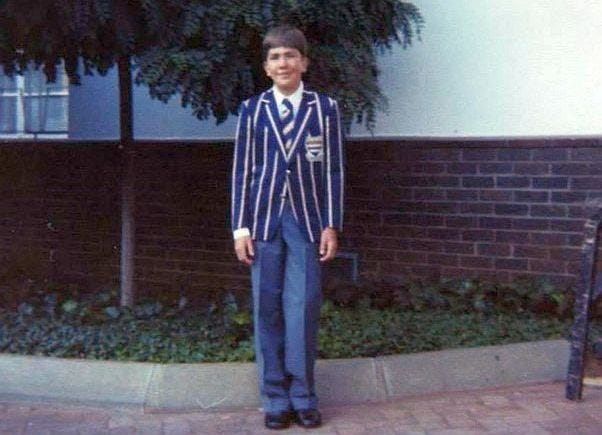
We had several traditions at Grey. We wore a blazer that was a fashion insult and greet each other with a handshake taken from an obscure French knife brand that some old pupils brought back from Europe after the First World War. The knife was a Opinel and that handshake is commonly known as that of John the Baptist. However, some things were universal. My friend at school was Eion du Toit who was ‘n verligte. We would know him as Klaas. The first day in the hostel when the prefects asked us where we came from, we gave out hometown names. Eion arrived a bit late and when the prefect asked him where he was from, he replied that get came from the plaas. The prefect promptly named him Klaas van die plaas on the spot, and that name would stick with him for the rest of his life.

We had many conversations and would meet often. One memorable year we drove to a Grey reunion meeting in Bloemfontein. Klaas was an expert in craic. At the reunion dinner we were a few minutes late as Klaas had brought along a bottle of Johnnie Walker Platinum Scotch whisky which we shared in the parking lot with a dozen other old Greys. Klaas would die from a sleep apnoea disorder. He was visiting Johannesburg and we had one last dinner and drink at the Parkview Golf course before I dropped him off at his bed and breakfast. He did not make it to morning.

Hansie

Often, we would go down to Grey around Founder’s Day in October. The one year I bumped into the headmaster who came after Heyns and whom we called Vollies. Now Vollies could talk the hind leg off a donkey and not give you any opening to butt in with your own conversation. He always reminds me of the day he found me in a plaster cast straddling the swimming pool gate. I had broken my leg in a rugby game but on that day decided to join my mates at the pool on my crutches. When my mates saw Vollies coming they scattered, leaving me in the position that Vollies found me. He was highly amused and wanted to know if I was planning to swim while I was in the cast. He helped me down and walked with me back to the hostel. By this time, my mates had remorse and had lined up at his office for the obligatory hiding. For once, he let us get off scot free.

Vollies invited me and Klaas to lunch in the Cricket pavilion. The past versus present game was being played that day. I was randomly placed next to Ewie Cronje who was the father of Hansie Cronje. Hansie had been implicated in a cricket fixing scandal that had ended his career. He had been banned Cricket and tragically died in an aircraft accident near George. Kathleen (Kath) & I had driven down to Grey for the funeral and were seated next to another famous Bloemfontein sports personally, named Zola Budd. Budd had participated in the Olympics and had a notorious race against Mary Decker who crashed into her. You know the rule, the one ramming you in the rear end is always to blame. As a South African aside, all Toyota taxis are known as Zola Budds and the Nissans as Mary Deckers. The Zola Budds are more reputably more reliable.

I decided to make conversation with oom Ewie and asked him how his day had been watching the Cricket. He turned to me and said that when you are young you go home to your family as that is the best place to be. When you are older, he continued, you go to your school because that is where a person then finds comfort. Tears started rolling down his face and we ate lunch for a few minutes in silence before the conversation picked up again. I realized that at the school were the fondest memories of his son and during this time is son would usually be visiting him. He remembers his son, not at Lord’s or any famous cricketing ground but a lonelier grassy patch in Bloemfontein with less spectators. Even though the tears were rolling down his face, there was no better place in the world he would rather be.

I have encountered many interesting characters associated with Grey. This included Hayward Kidson, one of South Africa's leading all time cricket umpires. I met him at a lunch at the Rosebank Hotel. He told me his greatest moment in the game was telling Bill Lawrie to f##k off when he was obviously out but he remained standing at the crease. Bill Lawrie he told me, won't even walk to catch a bus.

It would be well over fifty years after Grey’s trip on horseback before the first cars would make their smoky way to the settlement of Bloemfontein. And it would be one hundred and fifty years before George Grey's view of democracy would eventually become a reality in South Africa. The present-day history in South Africa would have been vastly different if Grey had come back to South Africa instead of going to New Zealand. It is highly likely that apartheid would never have been created with its policies of systematic racism. I am liberal and I was a Greybrak and I was born a South African.

1984

My Matric class was 1984 and we still maintain and keep contact. We always joke about how you know when someone went to Grey. The answer is they tell you.
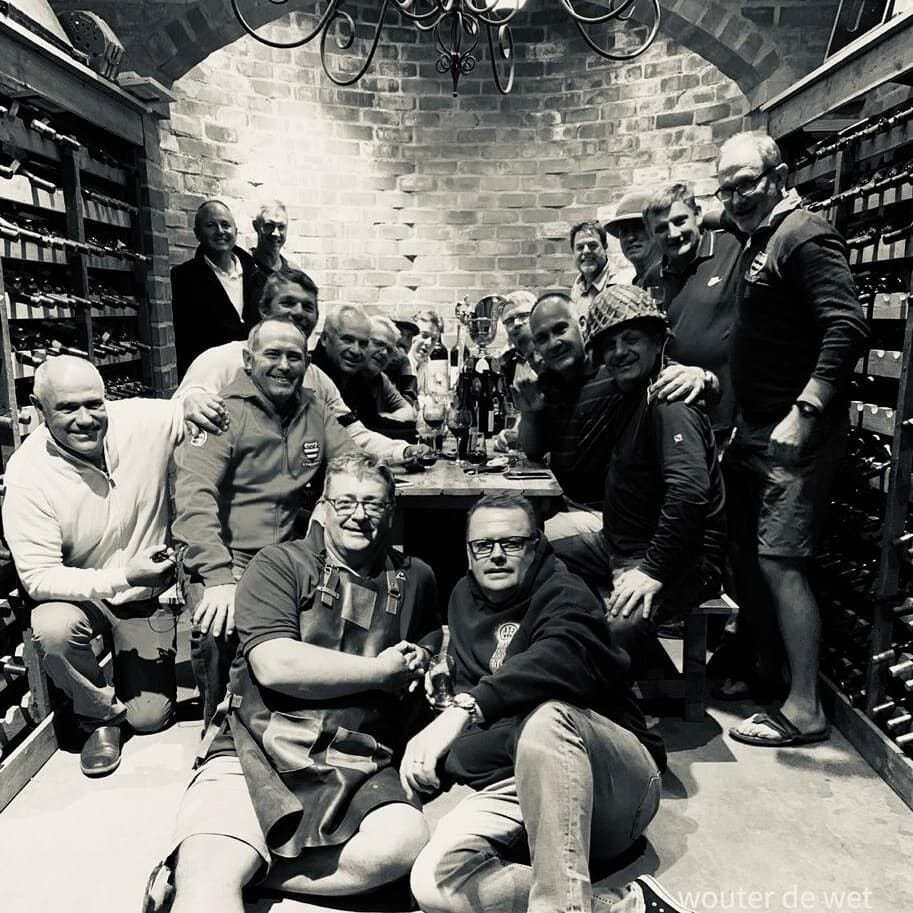
No alt text provided for this image

That year in 84 was one of the best in music, with Queen being the best.

Article content

Leith House | A Lesson in Lines and Loyalty

In Standard 8, I moved to Leith House, the third hostel at Grey College, as a “New Poep.” The initiation was brutal, akin to army basic training, grueling, relentless, and designed to toughen us up. It did. I shared a room with Gordon on the cold side of the hostel, where the winter chill seeped into our bones.

One winter weekend, after a rugby match, I returned to the hostel, still buzzing from the game. A matric named Visser was there, lounging with the arrogance of seniority. He made a derogatory remark about my eye, I had a coloboma. The words hit like a spark to dry grass. I saw red. Without thinking, I swung, my fist connecting with his face. Only after the punch landed did I realize the folly of my action. Visser was older, bigger, stronger, a matric towering over a Standard 8 kid. But some insults cross a line, and this was one of them.

His reaction unfolded in slow motion. I braced for the counterpunch, watching his fist arc toward me. I ducked, and it sailed over my head, but his jacket wasn’t so lucky, the seam split with a loud rip. I thought I was done for, ready to face the inevitable follow-up blows. But then, standing beside him was Andries Kriek, a prefect. He stepped in, placing a firm hand on Visser’s arm. “Stop,” he said, his voice calm but ironclad. “You asked for it with that insult.” He warned Visser that if he hit me, he’d have to deal with him.

For the rest of the year, I showed my gratitude by helping Kriek with chores. One day, while tidying his room, I stumbled across his stash of Penthouse and Playboy magazines hidden in his cupboard. In those days, such magazines were banned, their presence a rebellious secret. My eyes were opened, not just to the contraband, but to the unspoken codes of Grey.

Leith House had a self-regulating system, a balance between cheekiness and cruelty. There was a line, and everyone knew it. Visser crossed it, and Kriek, a true man of Grey, enforced it. His intervention wasn’t just about stopping a fight—it was about justice, about recognizing when a line had been breached and setting it right.

The Wit Olifant Caper

One eventful day, I was recruited by Kriek to carry paint cans. He and his fellow matrics were off to paint a rival school, Sentral’s, mascot, a concrete elephant known as die Wit Olifant, painted white, naturally. There I was, squeezed into a seat with a bunch of hefty rugby players in the back of a Ford Valiant, a beast of a car. We stopped at a suburb house belonging to one of the boys to raid his dad’s paint store. The matrics sat in the car, smoking, while I lugged the paint tins and loaded them into the boot.

We arrived at Sentral, ready to transform the Wit Olifant. Unluckily, I hadn’t packed paintbrushes—no one had given me that instruction. Without missing a beat, the matrics poured the cans over the concrete elephant. By the end, it looked like a psychedelic, mythical creature ready to take flight. Everyone was pleased. But that wasn’t the end.

The following Monday, Heyns climbed onto the tannoy and summoned the belligerents who painted the elephant to the office. I was in Afrikaans class with Trevors as the teacher. When I tried to leave, he didn’t believe me and told me to sit down. My conscience gnawed at me, so I approached him again, insisting I needed to go to the office. He agreed, but only after laughing so hard tears streamed down his face.

At the office, the matrics were lined up at the desk in front of Heyns. “What are you doing here?” he asked me. “I carried the paint cans,” I said proudly. He looked at me, noted I was good at maths, and let me go. Then, turning to the matrics, he flexed his cane with a loud swish, telling them they weren’t good at maths and to get ready to bend.

When I returned to class, Trevors had another fit of laughter when I told him Heyns had chased me away.
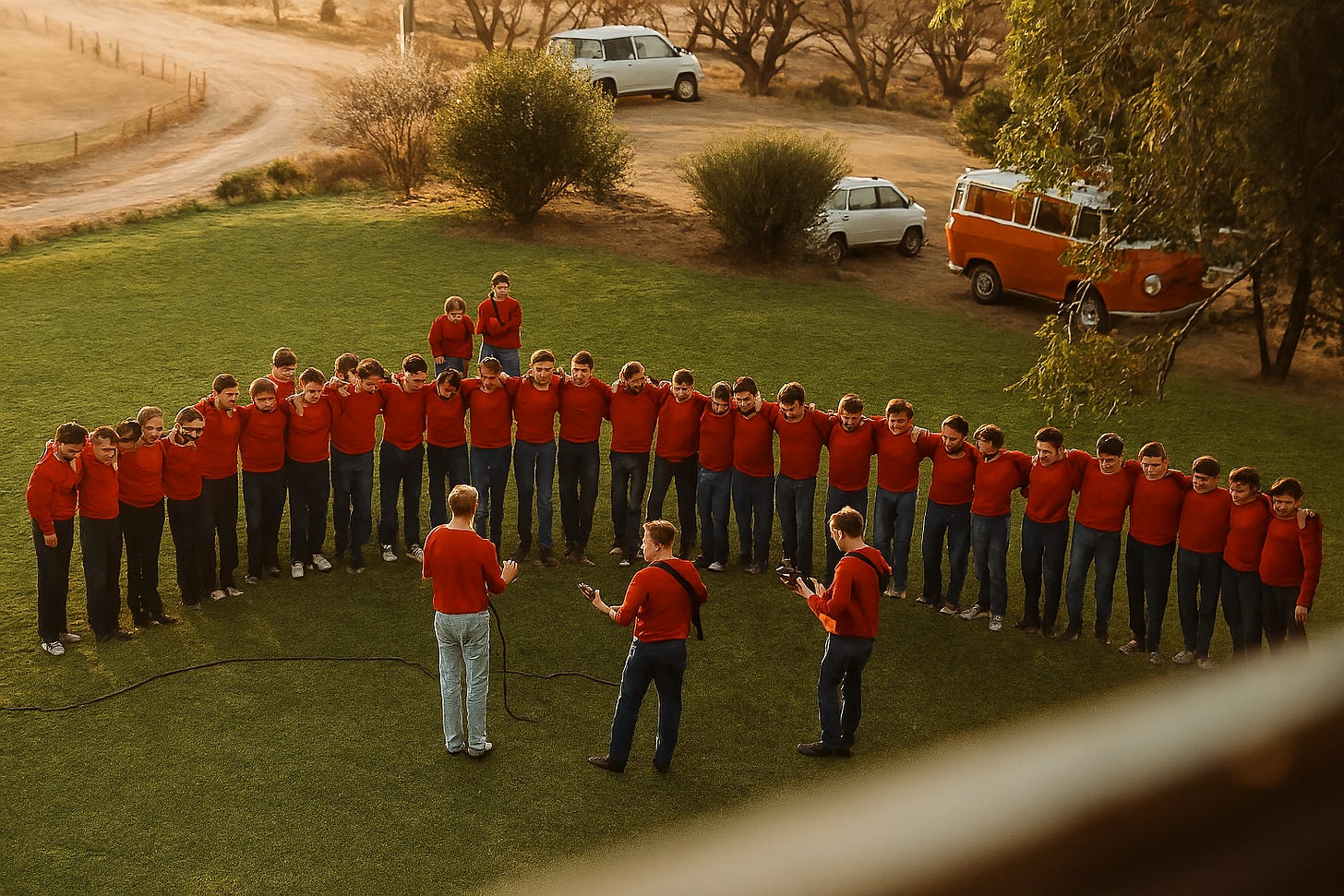
The Matric Serenade

The air in the Leith House Appel kamer buzzed with a nervous energy, the kind that only comes when you're young, reckless, and standing on the cusp of something unforgettable. The room smelled faintly of chalk dust and polished wood, with that out-of-tune upright piano squatting in the corner like an old friend who’d seen better days. Above it, the blackboard was a chaotic canvas of song lyrics scrawled in white chalk, our hymn sheet for the night. Printers weren’t a thing back then, so Bester and Marx, our resident piano maestros, pounded out the melodies on those worn ivory keys, coaxing notes to life despite the piano’s protests.

Chita and Grobbies, the guitar heroes of our crew, were the real showmen. Chita, named for his obsession with Tarzan films, swinging through our imaginations like a jungle king, had been taking lessons with Tommy Cronje, our long-haired geography teacher who moonlighted in a band and carried the kind of cool we all envied. They strummed their guitars with a confidence that made us believe we could pull this off. The songs? A trio of heart-on-sleeve classics: Air Supply’s Making Love Out of Nothing at All, Nelson’s To All the Girls I’ve Loved Before, and Peter Cetera’s It’s Hard to Say I’m Sorry. There was a fourth, but it’s slipped into the mists of time, lost like so many fleeting moments from those years.

The night of the final year’s Ball was the main event. We piled onto the old Mercedes school bus, its engine rumbling like it knew the weight of our mission. One of our mates, barely legal with his grade 10 license, took the wheel, our very own teenage chauffeur steering us through the night. We toured the girls’ school hostels, stopping beneath their balconies like Romeos in scuffed school shoes, serenading them like Juliet’s with all the passion our adolescent hearts could muster. The girls leaned out, their laughter and whispers floating down, and for those hours, we were legends. The stars above, the creak of the bus, the strum of guitars, it was iconic, a memory etched in the kind of clarity that only youth can sharpen.

Not everyone made it to the serenade. Some of our mates, chasing a different kind of thrill, were off drinking, their absence noted but not mourned in the heat of the moment. When we rolled back to the hostel, the night took a turn. One of the boys, too deep in his cups, was caught mid-tryst in his room, a scandal that sparked more laughter than judgment. It was the kind of chaos that defined us, messy, bold, and unapologetically alive.

Those school years, with the matric serenade as their crescendo, were a tapestry of crests and troughs, much like the waves of life. The Leith House Appel kamer, that battered piano, and the songs we sang beneath those balconies, they’re the small things, the bursts of warmth, that linger like a blue sunset noticed by no one else.

Keys to the Kingdom

At Grey College, I held the keys to a world of quiet adventure, a secret realm within the school’s hallowed walls. The keys to the library, the Centenary Hall, and the Main Building were more than metal—they were my passport to freedom, creativity, and a touch of mischief, carefully balanced to avoid the pitfalls that snared others.

The motto at the school was “Waardeer en daar is meer, abuse and you lose.” Well somehow I built the illusion of trust. Heyns was a maths teacher and as I was a good maths scholar, it was assumed that I would never abuse. I was given the keys to the Kingdom.

The Main Building’s central spire was my crow’s nest. Tucked beneath its peak was a small room, the birthplace of the Stabilis newspaper, where I poured my love for writing into a cheeky paper printed by the NG Kerk. Ja, well no fine. There were Easter eggs hidden in every edition. As one of the editors, I shaped stories that captured my view of the pulse of the school. On sun-drenched days, I’d slip through a window onto the roof, four stories high, basking in the warmth and the thrill of being somewhere forbidden yet serene. The view stretched across Bloemfontein, and something not likely to be revisited. The pigeons were not impressed.

The library was a different sanctuary, home to an Apple IIe that became my playground. When it wasn’t churning out school reports, I’d lose hours at its glowing screen, exploring a digital world that felt boundless. The library’s unrestricted access meant boredom was a stranger; there was always a new program to tinker with or an idea to chase. Those moments at the keyboard sparked a lifelong curiosity, a hobby that felt like a calling and became a career. Journalists weren’t paid well.

Then there was the Centenary Hall, where I wielded the keys to the stage and its lights. I helped illuminate school productions and concerts, orchestrating beams of light that brought activities to life. After formal dinners, when the hall emptied, I’d sneak back to savour leftovers—crumbs of decadence washed down with a stolen glass of wine. Those quiet feasts were a private celebration that have remained secret till now.

I wasn’t reckless, though. I’d seen friends face disciplinary hearings, even expulsions, for poor choices. So I moved like a shadow, the Ghost of Sir George Grey, slipping into these spaces after hours with calculated care. My secret weapon? A pair of two-way radios, shared with Marx, my ally in the hostel’s first room. He’d tip me off when Vollies, the patrolling teacher, left the building, giving me the all-clear. In return, I’d treat him to takeaways from Angelo’s or a doggy bag from the hall’s bounty, a fair trade for his efforts in preserving my secret.

Vollies, the deputy principal and Leith Housemaster was a complex character and I wonder if he knew and let it ride. One of the interactions I will always remember with him was this one. I had broken my leg in a game of Rugga and was in plaster and on crutches for 16 weeks. One day I accompanied some friends to a clandestine unsanctioned swim in the school pool. We hopped the gate. As I was busy with the effort of hopping over the gate with my leg in plaster, Vollies arrived. My friends scattered (yeah, the lafaarde) and I was left stranded on top of the gate. When Vollies asked me what I was doing I replied nonchalantly, “nothing.” Well, he pissed himself laughing and helped me down from the gate and walked back to the hostel with me and asked why I went for a swim when obviously I wasn’t able. I said I wanted to dip my toe of one leg in the water. I then recall him telling me about how his dad was troubled by the bottle and how he doesn’t touch the stuff. I think he was telling me to not do something stupid because of peer pressure. It actual fact, all I learnt at that stage, was don’t get caught and hence my assimilation of secret agent tactics.

Those years at Grey College included confusing emotions of crests and troughs. Holding those keys, I navigated responsibility and rebellion, to write my story while staying just out of sight. The spire, the library, the stage, they weren’t just places; they were chapters of a young life lived audaciously, quietly, and all I can say as a wrap is, I hope they can take jokes. While my fellow brakke were being caught and bliksem’d for the minor indiscretions of karreskud, I was sitting in the Centenary Hall feasting and toasting like Julius Caesar.

Karreskud | Gooi hom in die Sloot

The air was thick with mischief at Grey College in 1984, where the nights were long and the thrill of rebellion coursed through our teenage veins. Among the hallowed halls and hostel rooms, a peculiar tradition thrived among the matrics: karreskud. This was no ordinary prank, it was the art of sneaking out under the cover of darkness to disrupt lovers parked at the Free State Stadium, their cars fogged up with secrets. For us, it was a hoot, a rite of passage, a way to poke at the adult world while we were still boys.

Our matric setwork book for Afrikaans was “Gooi hom in die sloot!” Little did I realize that I would be required to jump into the sloot.

The hardcore karreskudders of the ’84 matrics were a tight-knit crew, a band of serial pranksters who treated these nighttime raids like an addiction. They were legends in their own minds, plotting their escapades with the precision of a heist. I wasn’t part of their inner circle—they figured I’d snitch, the goody-two-shoes who’d spill the beans to the housemaster. Little did they know, I had my own nocturnal wanderings, slipping out for the thrill of the night, not to tattle but to taste the same freedom.

The Voorsitter of the Karreskudders was my buurman who had room 205 in Leith House. He was Sir Dawid of Vryburg. I was resident in 206.
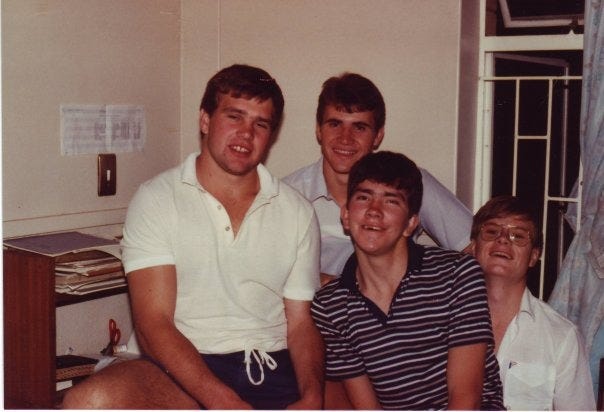
One fateful evening, as I roamed the schoolyard under the stars, I stumbled into their pack, en route to the stadium. Surprised to see me, they hesitated, then threw me an invite—a rare ticket to the chaos. I didn’t know it then, but I was about to witness the granddaddy of all karreskud encounters.

As we crept toward the stadium, one of the lads, eyes gleaming with anticipation, whispered about his dream target: a VW Beetle. “Perfect karreskud fodder,” he said. You could jump on the bumper, feet pounding, and if you had mates on both sides, you could make that Volksie hop like those lowriders in Mexico. The thought alone sent a ripple of laughter through the group.

Our first victim was a Mercedes, its windows steamed up like a sauna, heavy breathing fogging the glass. One of the skudders, a subject matter expert in the nocturnal mating habits of Homo Sapiens Skudders, peering in, declared with a smirk, “Hulle naai.” We launched our attack, rocking the car with gleeful abandon. But the guy inside? Unfazed. He kept at it, riding the moment like a cowboy at a rodeo, undeterred by our antics. I couldn’t help but be impressed by his commitment.

We had a number of other subject matter experts in the group. There was Nico, Lord of the Mags who knew a ton about car wheels and even a guy named Delport whose favourite prank was to shove a potato up the exhaust of a skudder’s victim. There was also Bes, who wasn’t a subject matter expert but was a langasem. His hand was in a splint as he had attempted to get a mulligan for a test by injuring his writing hand. He hand recently watched the film, Escape to Victory, where one of the players was purposely injured not to play.

Then, in the dim corner of the car park, we spotted our next mark: a Ford Cortina. That should’ve been a warning. You don’t mess with a Cortina man, he’s got grit, and probably something to prove. But we were young, invincible, and drunk on the thrill. We approached with military precision, surrounding the car and giving it a good shake. Big mistake.

The door flew open, and out came a furious driver, cursing like a storm and brandishing a pistol. The night exploded into chaos. He fired shots into the air, each crack splitting the silence like thunder. We scattered like roaches, legs pumping, hearts racing. I bolted for the nearest fence, only to realize it bordered the concrete sloot—a deep, treacherous trench carrying the river through Bloemfontein toward Loch Logan. No choice left, I leapt in, a few skudders beside me, and we ran, splashing through the shallow water for a kilometre until we reached a place to climb out, breathless and soaked. I was hauled out by a mate named Stokkies, who had ended up in the water of the sloot after attempting to tightrope walk a sewerage pipe over the sloot. For a moment there I though I’d be abandoned by my comrades, like when they left me dandgling on the pool gate like drying biltong when we went for an unathorized swim and Vollies rocked up.

Back at the hostel, we regrouped, counting heads. Wimmer and Stompie were the first to arrive back as their self preservation desire was the highest. Miraculously, no one was sporting bullet holes. Two guys, Gavin and Gustav straggled in late, pale as ghosts. They’d been nabbed by a passing police van, thinking they’d found safety. Instead, they were tossed into the back cage, roughed up a bit, and let go with a warning. They were delivered to the hostel by the cops. We laughed it off, adrenaline still buzzing, but we all knew we’d danced with the devil that night.

The housemaster, Vollies, was fast asleep, oblivious to our brush with disaster. We slipped back into our beds, the night sealing our secret. That was the granddaddy of karreskud—a tale of teenage bravado, a Cortina-wielding gunslinger, and a sprint through a concrete river that we’d never forget. As the years progress, the escapades of that night, stretch like “Visvang Stories.” Vleis, a keen fisherman himself is starting to claim that he could Karreskud 'n Hilux bakkie with his small toe.

The Forty Days Fiasco

The Forty Days celebration was a rite of passage at Grey College, a mischievous nod to the rock hit 40 Days, marking the final forty days of school. For us seniors, it was a chance to let loose, to etch our names in the annals of school legend with pranks that danced on the edge of rebellion. My mate, Dougie, and I had a plan that year, one that would make the quadrangle talk for weeks.

We had dodged the monotony of cadet marching, where wed trudge up and down roads and fields in formation, by volunteering at the local fire station. There, we learned the art of wielding fire hoses, the big ones, connected to the street hydrants, not the tame ones bolted to the school walls. It was practical knowledge, we told ourselves, but deep down, we knew it was a ticket to something grander.

When the Forty Days arrived, we waited for break time, when the quadrangle buzzed with students. As the crowd swelled, we unleashed the fire hose, its powerful jet sweeping across the quad like a rogue wave. Laughter and screams filled the air as students scattered, drenched and delighted, dodging the spray. It was chaos, glorious chaos, and we thought we were untouchable, until Dr. Michau Heyns, our headmaster, rounded the corner to investigate the commotion.

In a moment of reckless bravado, I swung the hose toward him. The water caught him square, soaking his suit. The quad fell silent, save for the hiss of the hose. His face turned thunderous, and with a barked order, he commanded us to shut it down and report to his office. My mate and I exchanged a look, part dread, part defiance, knowing wed crossed a line.

My history with Dr. Heyns wasn’t exactly spotless. Earlier that year, I’d published a cheeky photo of him in the school paper, hands in his pockets, captioned as him “playing pocket billiards.” It was a jab at his strict rule against students doing the same, a rule enforced with the sting of his cane. I suspected hed been biding his time, waiting for a chance to settle the score.

We stood in his office, the air heavy with anticipation, for a nerve-wracking twenty minutes while he changed into a dry suit. When he returned, he delivered a stern lecture about not getting “too big for our boots,” even with only forty days left. His words were sharp, but it was his actions that left a mark. He administered a caning unlike any other, one stroke for me, then one for my mate, alternating as we circled his desk. Six strokes each, the maximum, delivered with a precision that left no doubt about his displeasure.

As was tradition, we thanked him for the punishment, our voices steady despite the pain. Then, with tears stinging our eyes, we hobbled to the toilets. There, we filled a basin with cold water, desperately trying to soothe our throbbing backsides. The icy water offered little relief, but as we sat there, wincing and laughing through the pain, we knew we’d earned our place in the Forty Days lore.

That day, we learned more than just the mechanics of a fire hose. We learned about consequences, about the fine line between prank and peril, and about the stories that bind a school together. The quadrangle would dry, Dr. Heyns would move on, but the tale of the Forty Days Fiasco would echo through Grey College, a testament to our fleeting, fiery rebellion.

Years later a would meet Dr Heyns at a reunion. He face lit up in recognition saying I remember you. My ass gave an involuntary shudder in remembrance.
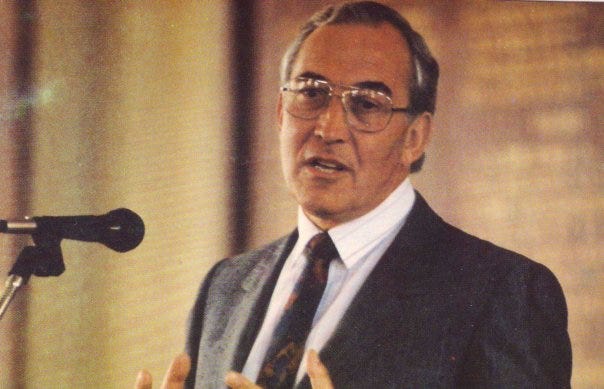
The Western Flyer Cyclist

From my earliest days on the farm, tearing down the dusty district road on my Golden Raleigh, cycling was my freedom. The wind in my face, the blur of grasslands and potato fields, it was my escape, my adventure. When I arrived at Grey College in Bloemfontein, that love didn’t fade. I convinced my dad to get me a Western Flyer, a cheap road bike that suited me just fine. I wasn’t about to be a boertjie with a clunky dikwiel. That sleek bike was my ticket to speed, and I became the notorious cyclist of Grey, zipping through the school grounds and the city streets with reckless abandon.

I’d race to the girls school, heart pounding more from the ride than the prospect of actually talking to anyone. When I got there, I’d be all teeth and no words, tongue tied and awkward. Unlike some of the self-proclaimed Casanovas in our ranks, I didn’t have wild tales to tell. One lad bragged about a tryst in the coal room, emerging covered head to toe in soot, his story as black as his clothes. My adventures were simpler, defined by the rhythm of pedals and the open road.

But not every ride ended in glory. One fateful day, I was speeding toward the poskantoor to withdraw some cash. The road was my playground, and I was flying until I hit a brick. At that speed, there was no saving it. I moered off, my face meeting the tar in a brutal slide. I broke a few teeth, bloodied and dazed, and limped back to the hostel. A hostel master, shaking his head, drove me to Universitas Hospital. The pain was sharp, but the embarrassment lingered longer. To this day, the lads never let me forget that spill, the day the notorious cyclist ate the road. Its a scar, a story, and a reminder: even the fastest fall sometimes.

The Gorgeous Jacqui Badenhorst
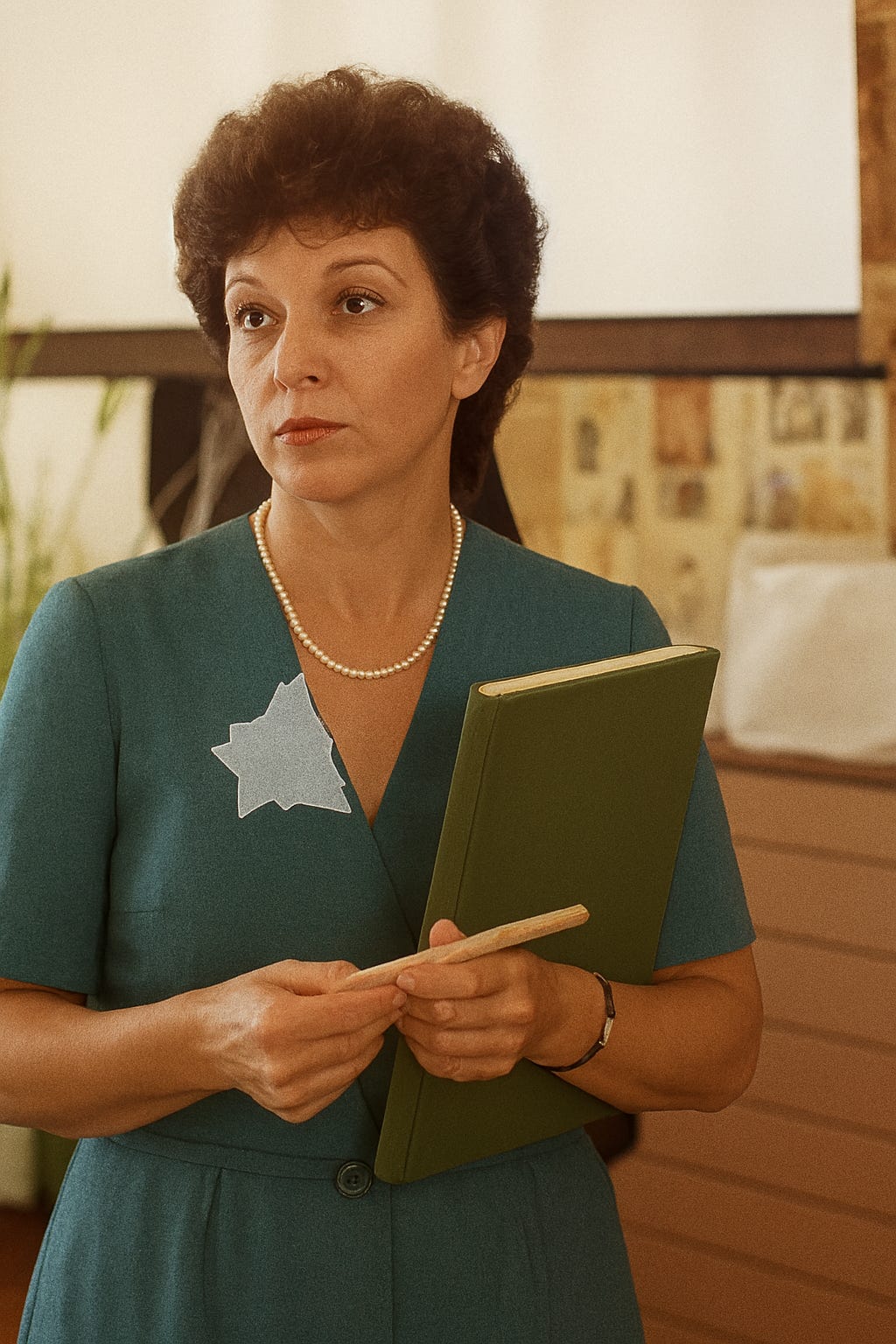
High school was a kaleidoscope of hormones, homework, and hero worship, and at the center of it all was our English teacher, Jacqui Badenhorst. She was no ordinary teacher—she was our Marilyn Monroe, brunette edition, with a magnetic presence that could stop a room. Always impeccably dressed, her outfits crisp and tailored, her makeup flawless, she was a vision of elegance in our dusty, Free State school. We were smitten, every last one of the boys.

The real show began when Jacqui turned to the green chalkboard. As she wrote, her chalk scratching out elegant cursive, her hips would sway in a subtle, rhythmic dance with each letter. It was mesmerizing, like a burlesque performance disguised as a lesson on Shakespeare or sentence structure. We’d sit, chins propped on hands, pretending to take notes while stealing glances at her graceful movements. The chalk dust would settle on her dress, and somehow, even that looked glamorous. Those bouncing bodacious buttocks were monuments like the granite boulders on the hill side of Oakvilla farm. Unforgettable.

But that sexy dance at the board wasn’t the thing that really made the testosterone flow. Her desk was in front of the board and when she read to us out of a text book or set work she would push her chair in at the desk and stand behind it. She would push her lower body hard against her chair and we would all be distracted. Not listening to one word she was reading. Occasionally there would be the grind up and down, like a stripper on a pole. To this day, I need a cold shower just thinking about it!

I was a diligent English student, but Jacqui’s class turned my effort into obsession. She had a way of making literature feel alive, like the words could leap off the page and into our lives. When she started using my compositions as examples for the class, I was over the moon. My stories, often scribbled late at night while at the hostel, were suddenly held up as the gold standard. I’d sit there, cheeks burning, heart racing, half-proud, half-mortified, and completely in love.

One day, Jacqui pulled me aside after class, her eyes sparkling with that warm encouragement she was so good at. “There’s a Navy essay competition,” she said, “and I think you should enter. Write a story with a naval theme. You’ve got the talent for it.” I didn’t know much about ships or the sea—our school was 600 kilometers from the nearest coast—but I wasn’t about to say no to her. I poured my heart into a story, weaving in the names of all my classmates as characters. It was a tale of adventure, camaraderie, and a touch of teenage bravado. I handed it in, hoping it’d make her proud.

Then came the curveball: I broke my leg. A clumsy tumble during a rugby match sent me back to our family farm to recover for a few weeks. Crutches, boredom, and the endless horizon of the countryside became my world. But when I hobbled back to school, still on crutches, I wasn’t prepared for what awaited.

The first hall period was a surprise. The principal called my name, and I limped to the stage, confused, the eyes of the entire school on me. There, in front of everyone, I was handed a certificate and an envelope stuffed with prize money. I’d won the Navy essay competition. The applause was deafening, echoing off the walls of the assembly hall. For a school better known for its sports trophies than its academic accolades, this was a big deal. I stood there, clutching my certificate, feeling like I’d just conquered the world.

From that day on, I carried myself a little taller, as if I had an extra feather in my cap. Jacqui’s belief in me had turned a farm cowboy into a momentary legend. My crush on her hasn’t faded with time, neither has the memory of her chalkboard dance and the pride she instilled in me.

Syssitia at Hamilton Hall

Hamilton Hall, a grand sandstone building designed by Herbert Baker, stood as the heart of our boarding school’s dining rituals. It was where the boys from Murray, Brill, and Leith hostels converged, three times a day, for meals that were as much about tradition as they were about sustenance. These were no ordinary meals; they were a syssitia, a communal affair steeped in ceremony, where we sat at long tables of twelve, each presided over by a prefect who commanded respect and order.

The ritual began outside the hall, where we lined up by house, standing in neat rows before marching in with military precision. Once inside, we stood behind our chairs, heads bowed, as a prayer was offered. A teacher would strike a gavel, its sharp crack signaling the start of the meal, and we’d sit, the oldest boys served first, a nod to the hierarchy that governed our world. Exactly twenty minutes later, the gavel would sound again, prompting us to stand, give thanks, and file out in an orderly exit.

Meals varied in quality. Breakfast and lunch could be hit or miss, but Sunday dinners were the highlight, a proper roast, the aroma of which filled the hall and briefly made us forget the monotony of hostel life. On less inspiring days, we were served what we dubbed “submarines”, a watery meat stew where you’d have to “depth charge” the pot with a spoon to unearth a elusive chunk of meat. If the food was particularly lackluster, some of us would sneak across the road to Angelo’s Roadhouse for a takeaway, a small act of rebellion against the kitchen’s offerings.

Angelo’s roadhouse has standard takeaway fare but something that was guaranteed to fill any hunger gap was their dagwood. It was the definitive greasy and cheesy loaded treat!

Tradition laced every meal with moments of camaraderie and mischief. Occasionally, a boy would rise to propose a toast—for a birthday, a special occasion, or just for laughs. One unforgettable toast followed the tragic news of a giraffe escaping from the Bloemfontein Zoo, only to meet its end under a lorry. That evening, as we choked down a particularly grim supper, a boy stood and proposed a mock toast “vir die kameelperd wat sy lewe gegee het vir ons aandete”, implying we were eating the unfortunate beast. The hall erupted in laughter, but the humor was short-lived. A lady staff member, face turning green, stormed out, and the boy who dared the jest was promptly caned.

Discontent with the food wasn’t uncommon, and once, we staged a full-blown eating strike, refusing to touch the dismal fare. The protest ended predictably: every one of us was caned, a painful reminder that defiance came at a cost. Punishment was part of the culture, as was the infamous “tea with the matrics.” During school breaks, tea and buns were served outside Hamilton Hall, but if the matrics invited you to join them, it wasn’t for pleasantries. These “invitations” were a forceful way of telling younger boys, especially the windgat ones—that their behavior needed correction. No one wanted that summons.

Tea itself was a race. To secure a cup and a bun, you had to sprint from class to be first in line; latecomers went empty-handed. For those with pocket money, there was an alternative: skipping tea altogether and heading to the tuckshop, a rickety old corrugated iron building, once a military hospital from the Boer War. There, a Coke and a donut offered a sweet escape from the rigid structure of hostel life.

Hamilton Hall was more than a dining room; it was a stage for rituals, rebellions, and the small moments that shaped our school days. The gavel’s echo, the taste of Sunday roast, and the sting of a cane for a cheeky toast, they’re etched into my memory, as much a part of growing up as the lessons we learned in class.

The Cast of Teachers

Our school was a vibrant tapestry of colourful teachers and mischievous antics, each leaving an indelible mark on my memories. Among them was Trevors Jordaan, a teacher and occasional rugby coach who seemed to embody joviality itself. His white shirt, a staple of his wardrobe, always bore the faint outline of a pack of Gunston cigarettes tucked into the pocket—a subtle badge of his laid-back demeanor. I’ll never forget the day in the bathroom when I glanced over and realized Trevors was, well, impressively endowed. It was the kind of moment that left you blinking in disbelief, a story whispered among us boys for weeks.

Then there was Dries vd Waal, the greenhorn teacher who arrived with a fresh face and ambitions to eventually take over as first team rugby coach from the legendary Lappies. One day, Dries was substituting for a teacher who was out sick. Paola and I, ever the provocateurs, decided to test his mettle with a heated political discussion, spouting the most outrageously liberal views we could muster. Dries, visibly shocked, marched next door to Trevors’ classroom to report our audacity. Moments later, he returned with Trevors in tow, who took one look at us, burst into laughter, and clapped Dries on the shoulder. “They’re winding you up, mate,” he chuckled. “It’s par for the course. You’ll get used to it.” Dries’ bewildered expression was priceless, and we reveled in our triumph.

Another unforgettable figure was Rock Ferreira, our Afrikaans and Latin teacher, always draped in a distinctive blue dust jacket. His classroom was a stage for our pranks, particularly Paola’s masterpiece: paper caricatures strung together with Prestik, expertly tossed to stick on the ceiling. They dangled there like trophies of our ingenuity, much to Rock’s bemusement, or perhaps he never noticed, lost in his world of declensions and Afrikaans idioms.

Our maths teacher, affectionately dubbed Seekoei for her plump figure, was actually named Truana. She presided over my domain of triumph, as maths was my forte. I consistently scored above 100% on tests, thanks to her habit of including a bonus question that I’d nail alongside every other problem. Those perfect scores were my quiet rebellion against the chaos of school life.

Then there was Religious Instruction, a period overseen by a teacher we called OS. He quickly gave up on teaching us anything about faith, as our class was a hotbed of arguments and debates. Instead, he let us run wild, turning the period into a playground for Paola and me to outprank each other. We’d devise elaborate schemes, knowing OS wouldn’t cane us like other teachers might. Those moments of unbridled mischief, free from the threat of punishment, were the heart of our schoolboy camaraderie.

These characters, Trevors with his cigarettes, Dries with his rookie earnestness, Rock with his dusty jacket, Seekoei with her bonus questions, and OS with his resigned leniency, wove the fabric of our school years. They were the backdrop to our pranks, our triumphs, and the stories we’d carry into adulthood, each one a thread in the rich tapestry of youth.

A Shattered Leg & a Haunting Connection

In 1982, my life took a dramatic turn on the rugby field at Grey College. I was 16, full of youthful bravado, chasing a rugby ball with everything I had. It was a crisp day, the kind where the grass smells sharp and the crowd’s cheers echo in your bones. Then, in an instant, a loose scrum collapsed on me. I felt a sickening crunch, and my world tilted. My leg was shattered, 27 pieces, the doctor later told me, as if it were a jigsaw puzzle they’d have to reassemble.

I tried to stand, driven by instinct and adrenaline, only to glance down and see my leg bent at a grotesque right angle. The sight hit me like a punch. I collapsed back onto the field, my fingers clawing at the grass, tearing it out in clumps as pain seared through me. The world blurred, shouts, teammates’ faces, the sky above, until I was loaded into an ambulance and rushed to Universitas Hospital. Morphine dulled the edges, wrapping me in a haze where time and faces melted together. Visitors came and went, their voices muffled, their identities lost in the fog of drugs. I was too out of it to recognize or remember them.

The medical bills piled up, but I was fortunate. The newly established Chris Burger Fund covered my expenses, a lifeline for a kid like me facing a long recovery. At the time, I didn’t think much of the fund’s namesake. I’d always assumed Chris Burger, a Western Province player, had died on the field at the Free State Stadium in 1980. It wasn’t until September, when I read about him, that the weight of his story hit me.

Chris Burger, only 28, had been in a similar scrum, on a similar field, just two years before me. A loose scrum collapsed, and he lay motionless, his neck broken. He told the doctor, “Dok, ek het geen gevoel in my bene en arms” (Doc, I have no feeling in my legs and arms). They carried him off on a wooden changing room door, a makeshift stretcher, to Universitas Hospital, the same emergency room where I’d been wheeled in. A neurosurgeon tried mild traction to relieve the pressure on his spinal cord, but it was no use. His teammates, including captain Morne du Plessis, visited him as he lay fully conscious, facing death with a courage I can barely fathom. He told a doctor, “I know my God. I am ready to go,” and passed away peacefully of respiratory failure early that Sunday morning.

Reading that, I froze. I had lain in the same emergency room where Chris Burger took his final breaths. The realization hit me like a wave, and I cried, hot, messy tears for a man I’d never met, for the fragility of it all, for the sheer luck that my injury, though brutal, hadn’t taken my life. His story, his courage, and the fund that bore his name became a thread connecting us across time, a reminder of how close I’d come to a different fate.

That fund, now part of the Players Fund, still supports injured rugby players. It’s a cause worth supporting, a way to honour Chris and others like him. If you can, please donate to www.playersfund.org.za.

The Brass Tap at Grey

The main building at Grey stands as a sandstone splendor, its weathered facade a testament to time and tradition. Behind it looms the Reunie Hall, where sturdy beams overhead have borne witness to the legacies carved by generations of boys. Off to one side, the ou klok chimes, a ringing tribute to the fellowship that binds us across the years.

But for me, the heart of Grey lies in a quieter corner, unassuming yet unforgettable: a simple brass tap fixed to a pillar along the walkway to the side of the main building. It’s not grand like the sandstone arches or storied like the beams of Reunie Hall, but to me, it’s every bit as iconic. That tap, modest as it seems, holds a memory that outshines the rest.

No water ever tasted better than the water from that tap, drunk straight from the stream, open-mouthed and greedy. It was better than Perrier, better than anything bottled or refined. That water didn’t just quench thirst, it refreshed the body and soul, a cool rush of clarity that seemed to carry the spirit of the school itself. Maybe it’s just me, caught in the haze of nostalgia, but when I think of Grey, it’s that brass tap that brings the most joy, its memory sparkling like the water it poured.

When I need my soul replenished, I journey to that tap.
Ronald Bartels

Ronald Bartels | LinkedIn | Instagram
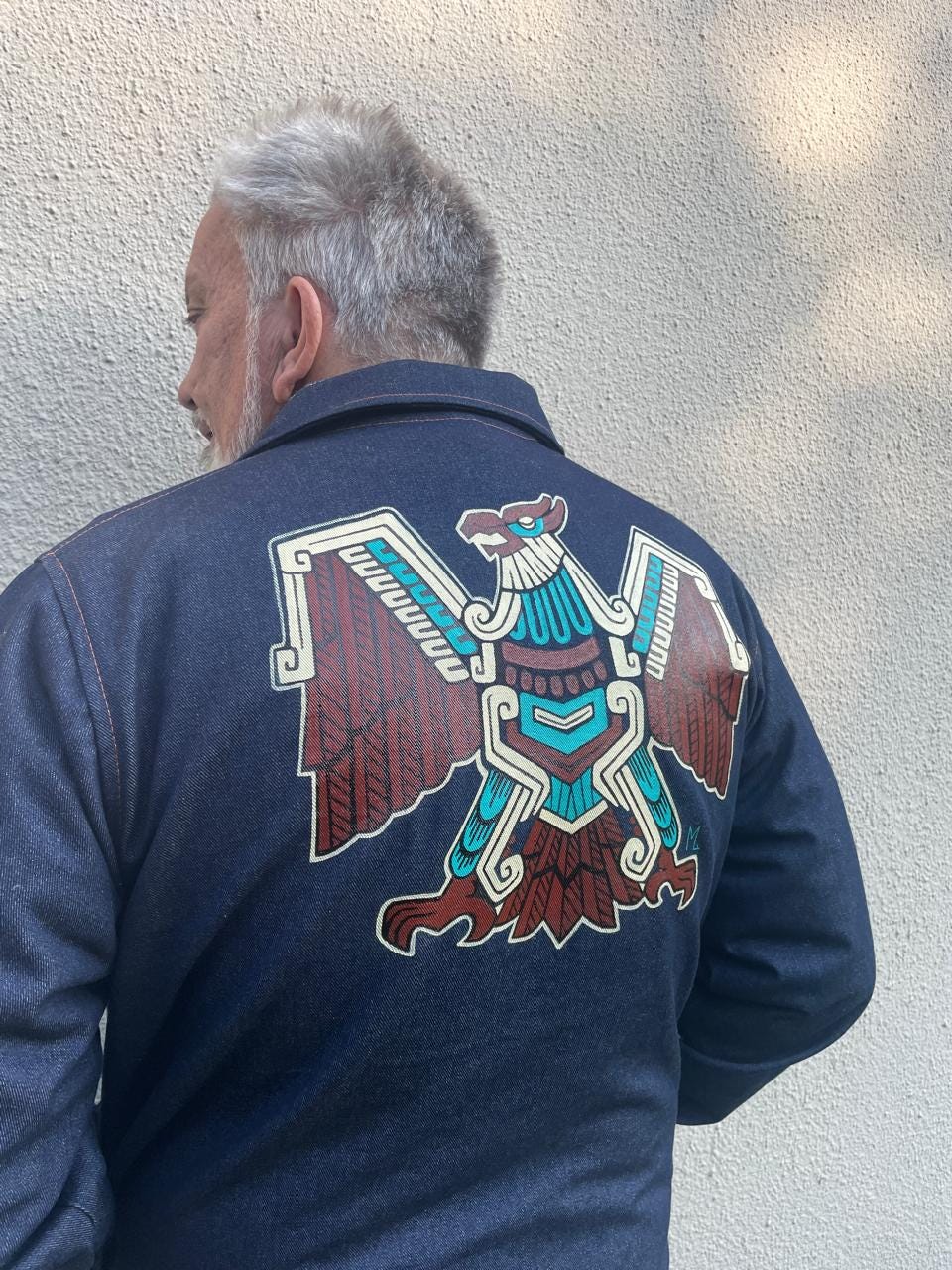
My ancestors arrived from Hanover aboard a ship named after the legendary Queen of Sheba, from Ethiopia

Comrade Ernie

Ernie Bartels

My dad Ernfried Bartels was commonly known as Ernie. He went to High School during the Second World War at the Hermannsburg Mission School just outside of the dorp of Kranskop. The school was the location of the original Mission established by Harms for evangelizing within South Africa. The original commune structure exists in that location to this day. It was also the school attended by the first prime minister of South Africa, Louis Botha.

My dad was aware that he was at a German school & at that the moment in time South Africans were in North Africa and Italy fighting the German nation because of the fascist policies and belligerence of the Nazis. He made make the choice to not associate with that grouping of Germans. He was no fascist.

He ran the Comrades Marathon and came in 69th in 1959. His stories about the race encouraged my brother to have a life long passion for running and in the end he finished 10 Comrade Marathons.

The Cult of Kwasizabantu

Also located outside Kranskop is the Kwasizbantu Mission that includes a greenhouse facility, dairy and water bottling plant. To all intends and purposes Kwasizabantu has given an air of sophistication in delivering Christian missionary work amongst the Zulus of the Valley of a Thousand Hills but was at its heart it is a cult. It has developed a self-sustaining model of financing its activities by creating various farming and business entities. Although there have always been undercurrents of abuse leaked and known to the outside community, it was only during the year of the pandemic that News24 finally exposed them for what they are in a string of stories revealing the perverted inner workings of the cult.

Auguste and Christoph Bartels

The Ship Kandaze

My dad's family traces its African roots to Christof Bartels, a missionary, who arrived aboard the ship Kandaze at Port Natal, the year after George Grey returned to England. The Kandaze was named after the legendary Queens of Ethiopia and belonged to the Hermannsburg Mission Society. The Society was originally meant to convert the heathen Galla, (commonly known as the Oromo) of Ethiopia to Christianity. Instead, the missionaries were declared persona non-grata in Ethiopia which was under the influence of the Coptic Church and ruled by Sultan Seyyid Said, the Muslimic sovereign. They searched for alternative converts, which happened to be the Zulu of Southern Africa. Thus, the Kandaze docked at Port Natal instead of Ethiopia. Elsewhere in Southern Africa a prominent theologian named Andrew Murray was leading a revival.

The Bible refers to the conversion to Christianity of one the Queens of Ethiopia’s officials in Acts 8:27-39. The succession for the throne in Ethiopia was matrilineal. Harms obviously named the ship for his missionary work after this legendary biblical figure.

Christof was in love with a girl name Charlotte. After his arrival in Natal, he learned she had dumped him. The broken-hearted Christof crossed out all references to her in his diary, which included detail logs of his journey on the Kandaze. He would eventually marry Auguste, who left Hanover on what could be best described as a long-distance blind date. They would spend more than a half a century together and die three months apart in the year that the Titanic struck an iceberg and sank.

Before becoming an ordained Lutheran pastor, Christof had been a cavalry officer in the Hanoverian army of the Saxe-coburg and Gotha. This army experience would help him as he established many congregations amongst the Zulus. His first congregation was established when he was ambushed by two Zulus. He was riding on horseback and instead carrying a lance, as he did when he was in the cavalry, he would carry a large stick. He was a highly trained and skilled military man as well as excellent horseman. He set amongst the two Zulus and administered a good beating. He admonished them and told them that he was coming by in one month again, and by that time he wanted them to have started on the building of a church. When he arrived back a month later, the two men had gathered all their families at the location and so his first congregation was created.

The Zulus

The Zulus are abrasive and are well versed in battle. It was no wonder that those Zulu’s appreciated a man who wield a stick in the manner that Christoff did, as the sport of stick fighting is a well ingrained in Zulu culture. Forget Churchill, Patton, Napoleon, or even Storming Norman but the greatest military genius was none of these, it was a Zulu named Shaka. He was able to mastermind the tactics that resulted in the biggest defeat of the British Army ever in a single skirmish. And this was achieved using inferior technology. It happened in the same area I grew up as a kid in Kwazulu-Natal.

It occurred at the Battle of Isandlwana shortly before the First Anglo Boer War. A force of British soldiers armed with the best weaponry at the time, were overwhelmed by a more skilled opposing Zulu force that was armed only with primitive weapons called Assegai, which are iron spears. These Assegai were combined with a highly skilled and mobile fighting formation known as the Buffalo horns which was devised by Shaka. This would be assimilated some sixty years later during the Second World War by the Germans for a type of more modern mobile warfare known as Blitzkrieg while my dad was at High School.

Ironically, instead of learning from the loss, the British covered it up by subsequently awarding a disproportionate number of battle honours to an insignificant action the next day at Rorke’s Drift. This stubbornness resulted in large scale methods of entrenched warfare continuing to be used including during the First World War. These methods were eventually reversed due to the enforced circumstances of the Second World War and its emphasis on mobility, which they should have realized from Shaka’s methods, if they paid any attention.

Martini-Henry rifle

The British were armed with the state-of-the-art Martini-Henry breech-loading rifle as well as two seven pounder mountain guns deployed as field guns and a rocket battery. The Zulus as mentioned were equipped mainly with the traditional assegai iron spears and Nguni cow-hide shields

The Zulus tactics, known as the “buffalo horns” formation (impondo zenkomo in the Zulu language). It comprised three elements. The horns which encircled and pin down the enemy and were made up of younger, greener troops. The chest which delivered the coup de grace where prime fighters composed the main force. And the loins which were used to exploit success or reinforce elsewhere, and these were often the older veterans who were positioned with their backs to the battle so as not to get unduly excited until required.

As a young boy I would visit with my family our Bruyns cousins on my maternal side at their farm just south of Dundee. The farm overlooked the battlefield. The outline of that hill where the battle occurred is etched in my memory as my dad pointed it out. Shaka did not lead the battle at that hill. He had long since been assassinated by his brother Dingaan, but he was a formidable leader and his tactics and philosophies lived on in the following generations of Zulu armies. The legacy of Shaka also lives on in South Africa who are a hardened and abrasive nation.

The Bruyns family had been part of the Gert Maritz trek party that had migrated from the Cape to Natal. They had encamped at present day Pietermaritzburg. Another leader of a trek party that had also arrived in Natal was Piet Retief. Retief decided to do a deal for land with Dingaan, the notorious Zulu leader who had assassinated his brother Shaka. Maritz was reluctant having been told that Dingaan would use the opportunity of a meeting to double cross the Boers. Maritz declined and Retief set off for Dingaan’s kraal without Maritz but not before riding past his tent and insulting him by calling him a lafaard (coward). Retief met his fate by being killed in Dingaan’s kraal.

At that stage elsewhere in the world in the Americas the native population was being subjected to genocide and in Southern Africa Dingaan’s actions resulted in a Battle known as Bloedrivier that would provide the Boers a foothold in the province. Ironically, the differences between Maritz and Retief was a common Boer characteristic. They would never have common purpose or agreement and always have various splinter groups. The organization that my maternal grandfather JT Elliot belonged to was known as the Saamwerk Kommitee and had as its primary purpose to unite the Boers into a greater and more united Afrikaner grouping.

The reasons Christof became a pastor was related to his feelings of being remorseful of his conduct while in the Hanoverian army. The army had often massacred rebellious adversaries with Christof running them through using his lance. He was influenced in his decision to become a missionary because he attended a revival service addressed by the leader of the Hermannsburg Mission, a Louis Harms. He felt he needed to repent for lancing those opponents. Today we would know it as post traumatic stress disorder, but in those days, he related it to a calling by God to atone.

Because he was a Hanoverian officer, Christof would maintain loyalty to the House of Sax-Coburg and Gotha, which would later become the House of Windsor in the United Kingdom of Great Britain. He was brought up for court martial before the Governor General of Natal for showing disloyalty to the Crown during the Anglo-Boer war. His crime was that of preaching against war, accusing both sides of being at fault. The Governor General summarily dismissed the charges when Christof told him he was perturbed at the charges as he prayed for the welfare and health of the Regent every Sunday in Church.

The rotten apple of Lilienthal

His descendants would live around Dalton and attend the Lilienthal Church. During the World Wars, their English neighbours would stand surety for them. Mostly because the government did not trust the immigrants who came from the territories of the German enemy. My grandfather Ludwig Bartels had a retired Colonel of the Natal Carbineers as a neighbour who drove over to intervene when the local police paid a visit to question the family’s loyalties.

Likienthal Church

Post-war the major event was the cult that was started by the pastor of Lilienthal, the notorious scoundrel, Anton Engelbrecht. Engelbrecht was a Lutheran pastor at Lilienthal Church. The church is located close to Dalton, a little backwater in the Kwazulu-Natal Midlands, north of the town of Pietermaritzburg. My dad and his family were members of the church. Engelbrecht started moving outside the boundaries of the philosophies of the Lutherans. This caused conflict with his congregation and Engelbrecht was excommunicated from the Lutheran Synod, and together with another dubious character, Erlo Stegen, started a sect known as Bible House that was based at Claridge close to Pietermaritzburg. Stegen was my paternal grandmother’s nephew. He was a rotten apple.

My dad, a young man just out of High School refused to leave the Lilienthal church even though his family applied emotional blackmail against him to join the cult. Engelbrecht based his cult on prayer sessions, that were eventually exposed as nothing more than sexual shenanigans behind closed doors. All performed under the ruse of religion. Twenty years after it started Engelbrecht's little facade crumbled deservingly around his ears. But his protĂ©gĂ©, Stegen, then created an offshoot, based on the same principles that exists to this day. Stegen had similar acts of religious based deviant sexual behaviour known as prayer sessions with acquaintances known as the Mamas. Perversely, sex was taboo to members of the cult who were ordered and pushed into a regime of pious exploitation. The cults of Engelbrecht and Stegen have destroyed many lives, including some of my own family. My aunt, Enid, was a beautiful woman. She joined Volkskas, nowadays known as ABSA, as an accountant, being one of the first females in this position in Kwazulu-Natal. She became engaged to a young man who truly loved her, and then her world turned insane. She was raped by Engelbrecht. Instead of following the normal course of justice, these maniacs within the cult supposedly prayed to God and concluded to suppress the crime. My dad was given the nasty task of having to meet the fiancĂ©e of my aunt and return the ring, “because that is what the Lord wanted!” The young man pleaded with my dad, saying no matter what has happened, he would still want Enid as his wife. My father's efforts to reconcile the pair were met by a brick wall. He cried when he related the story to me, one evening during the last years of his life, his body racked by Parkinson’s.

Amongst the older German community resident in Dalton after the Second World War it was common knowledge that Engelbrecht's violation of my aunt lead to the birth of a child.

I can only imagine the insanity faced by my aunt, abandoned by the Christians whose God was meant to be kind and generous. Yet, sickeningly, the cult always blamed the woman and exonerated the men. Enid died a spinster with a lifelong addition to sleeping pills and drinking Castle Stout. When Kathleen (Kath) & my boys were born and we went to visit her, and she said to me they were like her own grandchildren, and at the moment I walked outside and shed a tear, just like my dad at a life that could have been so different if people hadn't falsely made God's decisions for him. My dad often told me that the cult viewed prayer as making a phone call to God. However, he added, you do not know who would answer that call, as it could be God or Satan. Satan answered the calls of the cult was my dad's implication.

The cowshed myth

Stegen used knowledge of Enid’s rape and the sexual prayer orgies as leverage over Engelbrecht to initiate a palace coup at Bible House. Shortly after my own birth, he established Kwasizabantu Mission assimilating the assets and followers of Bible House. He wiped the history of Bible House by concocting a story about a revival in a cow shed. The story was nothing more than a regurgitation of an event described by JC de Vries that happened near Worcester the year before Christof Bartels arrived at Port Natal on the Kandaze. This was part of a Christian revival in South Africa at the time in which Andrew Murray played a prominent part. The Kwasizabantu narrative is this (something he read in Afrikaans Stegen translated to Zulu): When God comes down

Engelbrecht would retreat from his preaching and evangelizing and would marry one of the women with whom he had an affair, under the guise of Bible House prayer session. She was my dad’s brother, Heinz’s wife mom. A complicated web of abnormal relationships.

The abuse at the Mission continued and Enid’s sister Inge together with her husband Hogart Joosten formed the initial leadership backbone of Kwasizabantu, which was later assimilated by their son Dietmar. The other leaders at the Mission which came to prominence after Stegen became deposed due to increasing dementia was his daughters and Lidia Dube, a daughter of one of the Mamas. The Joosten’s other son who is my cousin AndrĂ© Joosten is an alleged rapist associated with various abuses at the Mission including assault. During the year of the COVID-19 pandemic, the Mission was exposed in a set of news articles published by News24, a prominent mainstream news organization, which triggered numerous criminal and other investigations.

The Joosten's are regarded as Kwasizabantu royalty because Hogart Joosten was the treasurer at Bible House and facilitated the funneling of funds from that entity to Kwasizabantu. To cover this blatant heist, Erlo attempted to wipe out the history of Bible House and insert a new narrative in the form a fake Damascus experience, the so called cowshed revival.

Several of my cousins as mentioned were deeply entrenched in the machinations of the cult and lived lives that were often like those of the Mennonites. The women wore drab clothing and no makeup and strangely wrote to us asking for forgiveness for incidents of insignificant misdemeanor or fun. Like when we attempted to peep into the bathroom window when my sister and her friend were bathing. The windows were frosted, and we saw zilch. However, one of my cousins held the ladder for my brother and me. We received multiple letters about this prank that had been subsequently portrayed as a sin. The cult members would be intimidated into seeking repentance for incidents that were superficial but would overlook gross human rights abuses.

The Engelbrecht and Stegen cults condoned sexual and physical violence based on perverse reasoning. The main doctrine of the cults was that followers need to continuously repent after which the deeds and crimes would be swept under the carpet. This created a toxic environment whereby cycles of abuse became ingrained into the workings of the cults including the Mission based outside of Kranskop. To strangers these monsters disguised themselves as calm, meek and humble humans.

A family member married the daughter of one of the Bible House followers, Dr Justin Mitchell. Mitchell, wrote the preface for a book about Stegen named “God amongst the Zulus”. The relationship was troublesome, and as with most followers in the cult of Engelbrecht, was most probably abused which affected her interactions later in life. The marriage would dissolve as a result.

True heroes

One of the other times I saw my dad cry was when he described the life of his hero to me, Albert Schweitzer. I can understand why Schweitzer was my dad's hero as not only was he awarded the Nobel prize during the year the Bible House cult was established, but he was also a humanitarian, theologian, doctor and one of the best musicians of his time. He was the antithesis of an Anton Engelbrecht as he was a man who lead by his actions. Schweitzer and Engelbrecht stood in contrast to each other at a similar point in time.

Cult leaders are emotional pop stars whose primary interest is their own enjoyment and wealth. They sweep up their adherents to follow a polluted road of self-indulgence. I have encountered these cult-like leaders in life whether it be in present day business, politics, religion, sport or even entertainment. They call themselves South African and often state they are Christians. I am not that type of Christian. Pious and compassionate people don't need words to identify themselves as their actions speak for themselves.

Ronald Bartels | LinkedIn | Instagram
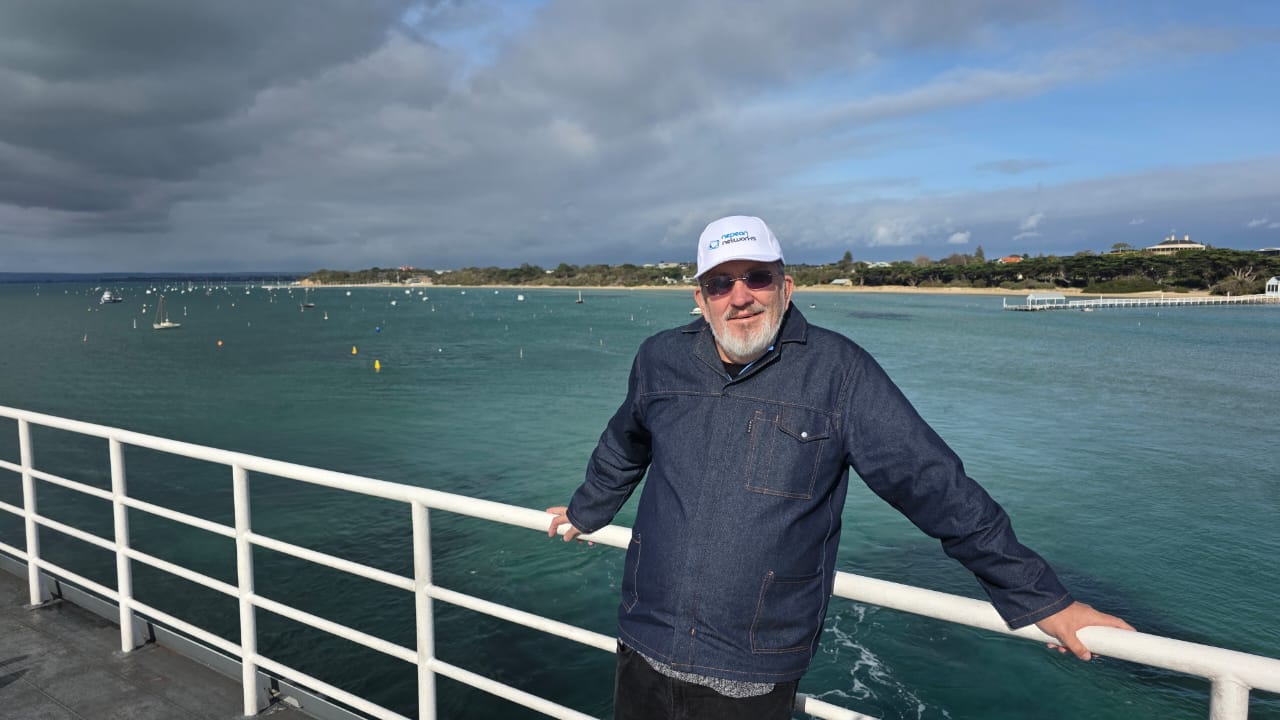
Joey never made us forget that we had Maritz blood

The first motorcar I can recall my dad owning was a Valiant. It was a big car and was partnered with my dad's Bedford truck at our farm located between Pietermaritzburg and Greytown. Pietermaritzburg is known as Sleepy Hollow. It is a dull place with not much happening in the town, except the yearly world famous ultra marathon known as The Comrades. Then there was the time it came to world prominence for looting. Not much of a feather in the town's cap.

The Bedford was a solid workhorse and was built with curves unlike any modern day equivalent cybertruck. The Valiant was replaced by a string of Mercedes-Benz cars, a 280 SE, a 280E, a 300D, and a 200. The latter two would take me to Grey College at least eight times a year if not more. In my last two years of high school my dad would allow me to take the wheel and drive. My dad would always register the cars as NH 3000, and in the mail would receive a magazine, called “In Alle Welt” from Mercedes-Benz. Mail has exited from our lives but that was one of the primary means of communication and doing business. The other being a Bakerlite phone.

The dirt road to our farm had a perfect hump near the fake castle of the neighbours, the Seeles, which when taken at speed would churn your stomach. The kids would all set on the back seat and we would watch as the speedo climbed to 200km/h. My mom would be an enthusiastic participant in the escapade and for my friends from school it would be the highlight of the trip to the farm.

After the Bedford and a Chevrolet El Camino, my dad started buying a string of Datsun/Nissan 1200/1400 bakkies. I even borrowed that to go on our matric holiday after graduating from Grey College. Notably it was used to cart many inebriated friends from the Wild Coast Hotel where we went a strip show. In those years, South Africa was still suppressed and heavily censured. Strip shows were illegal, and magazines were not allowed to publish any pictures of naked woman. The most popular magazine of the time was the Scope, where the centrefolds had white stars over their boobs. The Wild Coast Hotel was in the Bantustan of Transkei which allowed those strip shows as well as gambling. As South Africans we were meant to be pious Calvinists. The next day after this escapade, I was in the back of Grant’s (our host) beach buggy which crashed head on into a mate’s Ford Cortina bakkie. I slammed my head into the rollover bar. Grant and I went to repair the buggy in Margate without his dad being aware of it. But he knew as the next time he saw me he casually mentioned it. Grant snitched on me even though I was the aggrieved party. The Matric holiday was indeed wild. I recall us be bounced from the Palm Grove after the whole placed erupted into a brawl and I was forced to dodge flying beer bottles.

My parents and the neighbours together owned a yellow VW Combi. My siblings would use this to go to school for both primary and high schools at Wartburg-Kirchdorf. I would ride the Combi to primary school only as I went later to Grey for High School. I would always try and sit in the dog box at the back. This allowed me to read books without being disturbed by the rest of my fellow unruly passengers. My best memories of those trips are drinking Coca-Cola from a glass bottle which we bought from the New Hanover Tearoom. There is nothing better than finding a glass bottle of coke in a shop and buying it as it triggers those pleasant and carefree days.

There is another tearoom in which my family was involved. My mom’s family on her maternal side were part of the Gert Maritz trek party. Joey, my Ouma, make certain we knew about this. On a fateful day, a fellow trek leader, Piet Retief, decided to strike a deal with Dingane, Shaka’s brother. Maritz had heard via the grapevine that meeting Dingane would be unwise. However, Retief rode up to Maritz’s tent, called him a coward and proceeded to walk into an ambush in Dingane’s kraal. Joey, would make sure that we would never forgive that insult to our clan by Retief.

The Boers extracted revenge from Dingane in the Battle of Bloedrivier. At this battle the Boers concluded a covenant, Gelofte, whereby they agreed as part of the Gelofte to build a Kerk to honour God if they won the battle. This was duly done, and a Kerk was built in Kerk Straat in Pietermaritzburg. Before the Anglo Boer War, the Kerk was sold by the NG Kerk and would be used in various commercial iterations including that of a Tearoom. In the year before South Africa became a Union, my mom’s grandmother would contribute the single biggest portion to the funds to repurchase back the Kerk which would eventually become the Voortrekker Museum. The Kerk was donated back to the NG Kerk and a new modern larger Kerk build next to it where my parents were married in early 1961. Joey invited all the important people in the town and the reception was in the Maritzburg town hall, a beautiful red brick building, a stones throw from the Kerk.

Most Afrikaners are unaware of this part of their history, have never visited the Kerk or are even aware of its existence. Ironic as it means the Covenant that was made was broken. Most believe that the Covenant was the marking of the day of the Battle of Bloedrivier as a day of worship. This is also the narrative in James A. Mitchener’s book The Covenant. The Kerk a forgotten side artifact of a history rewritten with a superficial reading of the Covenant.

One day my brother in law who lives in America told us in a trip to visit the cousins who lived in Pretoria that the Voortrekker Monument, which we were passing was build as a result of the Covenant. I tried to tell him about the Gelofte Kerk in Maritzburg but he dismissed it. I never will, Joey, Johanna Maria Magdalena ,made certain of that.

Reference: Voortrekker Kerk Pietermaritzburg https://onafhanklik.com/2018/12/16/voortrekker-kerk-pietermaritzburg/

Ronald Bartels | LinkedIn | Instagram

The day television entered our lives & I discovered we had deep rooted rugby genes

My father, known far and wide as Mastelek, the strong man in Zulu, was a force of nature on our farm, but he rarely made a move without consulting my mother, Lenore. She was the quiet & beautiful anchor to his boundless energy, & their partnership was the bedrock of our family life. She was a classic Sophia Loren beauty, just like my own wife, Kathleen (Kath). But like any long marriage, theirs had its rocky patches. I never knew the full story behind one particularly tense period, perhaps it was the relentless grind of farm life, the dawn-to-dusk harvesting seasons that turned even my beloved potatoes (the best thing since sliced bread, in my book) into a symbol of exhaustion. Whatever the cause, Mom decided she needed a break & flew off to Cape Town on a Boeing 727 from Durban to visit her Aunt Marguerite for a well-deserved holiday.

We all piled into the Mercedes to fetch her from the airport upon her return. Dad, ever the character, had decided to grow a mustache in her absence, a thick, bushy one like Thomas Magnum from that TV show we’d later obsess over. To top it off, he donned an outrageous paisley shirt that screamed “look at me.” When Mom stepped off the plane & into the arrivals hall, she walked right past him without a flicker of recognition. The look on his face was priceless. By the next day, the Magnum ‘stache was history, shaved clean away, but that paisley shirt? It became a staple in his wardrobe, popping out for special occasions. I inherited his love for them; there’s something about a bold paisley that just feels right on a man with a story to tell.

Speaking of stories, I’ll never forget the day television first flickered into our lives. TV had just arrived in South Africa, & Dad couldn’t resist. He drove to Greytown and came back with a shiny Telefunken set nestled in a swanky, modern-style cabinet. His face was lit up with a moerse big smile, like he’d conquered the world. That grin vanished quicker than a summer thunderstorm when Mom laid eyes on it. She was thrilled about the TV itself, progress & all that, but the cabinet? No consultation, no dice. She had an antique fetish, just like me; I’d happily hunt antiques all day long if life allowed it. So, back it went.

The very next day, we trooped off to Greytown again, me in tow like a reluctant sidekick. I’m pretty sure the shop was Morkels, one of those old-school furniture places that smelled of polish & possibility. Mom wandered the aisles, eyeing the cabinets with that discerning gaze of hers, while Dad & I hung back, trying not to fidget. That’s when the door swung open, & in walked this giant of a man, tall, broad-shouldered, with an aura that filled the room. It was Oom Philip, none other than Philip Nel, the greatest Springbok of them all. Turns out he was family; Mom’s mother & his wife were cousins, so there were some serious rugby genes running through our bloodline. Her uncle, Windhond, had even been a junior Springbok back in the day. Oom Philip always said that Windhond should have been a full Springbok if his love for a Latin lass hadn’t diverted him to the Argentine. That family connection was via the Maritz’s. Yes, the descendants of the famous Afrikaner Trek leader whose blood ran like dust and granite through my Ouma Joey.

Dad spotted him immediately & introduced me with a proud grip on my shoulder. “Hier is my jongste seun,” he said, & Oom Philip shook my hand with a firmness that made me stand a little taller. They fell into easy conversation, Oom Philip recounting how he’d ride his horse 30 kilometers just to get to rugby games & practices in his heyday. His voice was steady, commanding yet kind, like a man who’d led armies into battle. He has done both on the sports field & in WWII. All the while, Mom was making her decision on the cabinet, an antique-looking one with ball feet & that classic, timeless elegance she adored. She was happy, Dad was happy. Happy wife, happy life, as the saying goes.

Meeting Oom Philip that day left an indelible mark on me, not just because of the family tie, but because he embodied the pinnacle of South African rugby spirit. Philip Jacobus Nel was born at the turn of the previous century on a farm in the Kranskop district of Natal, much like our own rugged patch of earth close by. Educated at Maritzburg College, he rose through the ranks as a formidable forward, playing lock or eighthman with unyielding grit. He made his Springbok debut before the depression years against the touring All Blacks, stepping onto the field at Kings Park in Durban for his first Test. Over his career, he played just short of half a century of Tests for South Africa, captaining the side in a dozen of them.

But what cemented his legacy as the greatest Springbok ever was his leadership of the 1937 tour to Australia & New Zealand. That team, affectionately dubbed “The Greatest Springboks,” achieved the impossible: they became the only Springbok side to ever win a Test series on New Zealand soil. Under Nel’s steady command, a quiet man with a voice that demanded respect, they swept the Wallabies in the warm-up matches before facing the mighty All Blacks. The series was a brutal, hard-fought affair: a narrow loss in the first Test at Wellington, followed by gritty victories in Christchurch & Auckland. With legendary players like Danie Craven & Boy Louw by his side, they outplayed, outlasted, & outthought the Kiwis, earning South Africa the status of de facto world champions in an era before official World Cups. Nel’s tactical acumen, his ability to rally his men through grueling conditions, & his sheer physical presence made him the heart of that invincible squad. He was the creator of the Springbok mantra to scrum the opposition into the ground, then go on to win the game.

As the ship carried them home from that triumphant 1937 tour, Oom Philip knew his rugby days were drawing to a close. In a poignant gesture that signaled the end of an era, he tossed his boots overboard into the vast ocean, a final farewell to the game that had defined him. It was a simple act, but one that captured the humility & finality of a true legend. Meeting him in that Greytown shop, amidst cabinets & family errands, reminded me that greatness often walks quietly among us, tied to the land & the people we love.

Some years after that serendipitous encounter in the Greytown furniture shop, I crossed paths with Oom Philip once more, this time at the Umvoti Agricultural Show, a bustling affair of farm machinery, livestock parades, & the earthy camaraderie of rural folk. By then, he was an older man, leaning on a cane for support, but his presence still commanded the space around him like the lock forward he’d been on the rugby field. Dad, ever the inventor with his “boer maak ‘n plan” mentality, had set up, showcasing his latest contraption: a tree stumper he’d built from scratch. It was a rugged machine designed to yank stubborn trees right out of the ground, clearing fields for planting with brute efficiency. Oom Philip eyed it with the keen interest of a fellow farmer, tested its heft, & bought one on the spot. Watching the transaction, I couldn’t help but feel a swell of pride in Dad’s ingenuity, Mastelek, the strong man, turning ideas into iron.

What struck me most that day wasn’t just the sale, but Oom Philip’s attire. He wasn’t sporting his Springbok jacket, the one that might have whispered of past glories on the pitch. Instead, he wore the colours of the Umvoti Mounted Rifles, his regiment from the war. It spoke volumes about where his heart truly lay in those later years, the indelible mark left by the conflict that had reshaped so many lives, including his. As they chatted, Oom Philip opened up about the bonds he’d formed with the Australians & New Zealanders during the war. He’d played against them before the guns started firing, in some of the roughest, most brutal rugby matches ever contested, down-and-dirty affairs where anything went, testing men to their limits.

But it was during the war itself that those rivalries transformed into unbreakable alliances. The Springboks, All Blacks, & Wallabies faced off again on makeshift fields across North Africa & beyond, in a series of unofficial tests that blurred the lines between sport & survival. Many of the pre-war greats, & those who’d shine after, donned their boots amid the chaos, playing for morale as much as victory. All of them, volunteers to a man, wore the red tabs on their shoulders as a badge of shared purpose. These games, held in places like near El Alamein or Beirut, weren’t just recreation; they were a way to engage the enemy in future battles, practicing the unconventional methods to win games & applying them to war. This spirit still lives on to this day & is central to the methods of Rassie, the current Springbok coach, who has more tricks up his sleeves than a magician at Boswell-Wilkie circus. They firmly cemented the relationships between our nations, turning former foes into brothers-in-arms.

Oom Philip spoke with a quiet fire about fighting the Germans hard, driven by a thirst for revenge after the fall of Tobruk early on in the war, a bitter defeat where thousands of South Africans, including comrades from his Umvoti Mounted Rifles, were captured. That loss fueled them through the grueling campaigns of North Africa & up into Italy, where he served as a Major, leading with the same steady resolve that had made him a rugby legend. That vengeance drove them all the way right up to the last vicious battles at Monte Cassino. Meeting him there at the show, cane in hand & stories flowing, reminded me that true greatness isn’t just in the tries scored or series won, it’s in the resilience of the human spirit, the plans we make, & the bonds that endure long after the battles end.

Ronald Bartels | LinkedIn | Instagram
My ode to mainly potatoes

For me, food has always been more than sustenance, it’s the thread that weaves together memories, family, & the simple joys that nourish the soul, but also heals it. Growing up on a potato farm under my dad’s watchful eye, those humble tubers became my first love, my ultimate comfort. From an early age, potatoes were the anchor of my meals & life, versatile & forgiving. We grew BP1, Van der Plank & Pimpernel variants. Baked whole until their skins crisped & their insides turned fluffy, or simmered into hearty soups that warmed the bones on chilly evenings, I adored them all. But Sundays were sacred: the potato roast, where we’d slice them thin, layer them in a Pyrex dish, drench them in fresh Jersey cream & cheddar cheese, & bake them in the Defy oven until golden & bubbling. That dish, with its creamy richness & caramelized edges, is what I imagine Heaven tastes like, pure, unadulterated bliss.

Then there’s my unexpected affair with Earl Grey tea. For some reason, it became my favorite, perhaps a nod to my days at Grey College, where the name echoed in the halls. Its bergamot-infused aroma & distinct, floral bite? That’s love in a cup, a soothing ritual that grounds me amid chaos.

Now the tea at Grey was definitely not Earl Grey. They served us tea in big metal urns that was made with bulk tea leaves of an unknown brand, often with some pieces of the leaves still floating on top. We would still rush during breaks in school to have a cup as something is better than nothing.

Steak, oh steak, the rugged star of our braais. A good rump, seasoned simply with salt & pepper, seared over glowing charcoal until medium-rare. We’d cut it straight on the board into juicy slices & devour it with our hands, no forks needed. My mom called it the German way, but to us, it was hors d’oeuvres in a farmer-cowboy style: primal, messy, & utterly satisfying.

Family recipes carry the weight of generations, like Stegen’s stew from my grandma Bertha, she of the Stegen lineage with its undertones of cult fame. It’s a resourceful marvel, born from thrift: gather all your leftover doggie-bag meats, toss in a bounty of vegetables, carrots, onions, celery, whatever’s at hand, & simmer it low & slow until the flavors meld into something magical. Similar to an Irish stew, but with our twist, & potatoes are non-negotiable, cubed & added to thicken & hearten the pot.

Now the stew at Grey was not that grand. As one Greybrak said, it was kameelperd and we referred to it as submarines as you would need to dive bomb the pot to find a piece of meat. It made me appreciate mom’s cooking. It became a memorable toast at supper to have a toast to the memory of the kameelperd who gave up his life for our supper. It was lead by the indomitable Burgermeester of Smithfield, Hansie.

Grandma Bertha’s influence shines brightest in desserts. Her Butterkuchen is the pinnacle of cakes for me, a memory wrapped in sweetness & pleasure. This German yeast cake starts with a soft, enriched dough base, spread thin in a pan, then dotted generously with butter, sprinkled with brown sugar (often infused with vanilla essence), & sometimes almonds for crunch. Baked until the top caramelizes into a golden, buttery crust, it’s simple yet divine, best enjoyed warm, when the butter melts into every bite.

Her German cookies evoke the holidays, though I’d savor them year-round. Syrupkuchen, a lesser-known treat perhaps akin to a syrup-infused butter cake or cookie, involves a yeast dough enriched with butter & sugar, baked & then brushed or soaked in Illovo golden syrup for a glossy, moist finish, sweet & subtly sticky, like a hug from the past. Lebkuchen, those spiced gingerbread delights, are made from a dough of honey, flour, nuts, & warm spices like cinnamon, cloves, & ginger; shaped into rounds or hearts, baked soft or crisp, & often glazed or chocolate-dipped for Christmas cheer. Pfeffernusse, or peppernuts, are tiny, dense spice cookies rolled from a molasses-based dough packed with black pepper, anise, cardamom, & other aromatics; baked hard, then softened over time in a tin, delivering a peppery-sweet bite that’s addictive.

Now when it comes to pastry then my goto is the chocolate croissants available from Fournos in Dunkeld West. Sitting down and enjoying a warm and fresh one with the chocolate dripping down your lips is indeed a treat. Washed down with a flat white.

At Grey we would have doughnuts & a coke from the Tuckshop still standing from the Anglo-boer war. It was far from any fancy pants pastry, but heck beggars cannot be choosers!

Not all family fare appealed, mind you. My dad & brother relished kop en pootjies with afval—those offal stews of sheep’s head & trotters, but I’d steer clear every time. No judgment; it just wasn’t for me. They said Ouma Joey made it the best. Ja, well, no, fine.

But every time Ouma Joey, her full name was Johanna Maria Magdalena, would visit us on Oakvilla farm, she would cook breakfast of stywe pap & wors drowned in gravy. This was the breakfast of champions & forever etched in my mind and triggered as a memory whenever I have a boerewors. As the more conventional alternatives go I like the Irish ones with bacon & eggs paired with black & white pudding. Preferably eaten next to a peat fire in an white-washed old cottage on the Burren.

For watching rugby or embarking on a road trip, nothing beats biltong. That dried, cured meat, spiced & air-dried to chewy perfection, encapsulates being South African, salty, savory, & endlessly snackable. Find one with some yellow fat attached & klopdisselboom.

Then, Mrs. Ball’s Chutney chicken, a staple that turns ordinary into extraordinary. Mrs. Ball’s Chutney, a beloved South African icon since the 19th century, is a tangy-sweet peach chutney born from Amelia Ball’s recipe, blending fruits, vinegar, sugar, & spices into a versatile condiment that’s now a pantry essential worldwide. For the chicken: Place bone-in thighs in a roasting dish, liberally coat & smother them in the chutney until fully covered, then bake in a moderate oven, basting occasionally, until the meat is tender & the sauce caramelizes into a sticky glaze. Served with rice or, naturally, potatoes, soul-soothing simplicity. Kathleen (Kath) would make this often.

A couple of times a week, we’d indulge in penne pasta tossed with a robust sauce of tomatoes, onions, garlic, & slices of chorizo sausage, simmered until the flavours deepened & the pasta absorbed every bit. I like to think it was Julius Caesar’s favorite, after all, what emperor wouldn’t conquer for such a dish?

At Maties I would cycle out to the Strand but halfway there was the Mooiberge strawberry farm. I’d stop to pick up a 1kg pallet, whose price I have since come to realize was as cheap as chips, & shove the box under my riding shirt for the ride back to my digs near the Stellenbosch station. That would be my supper. Just strawberries. Bliksem.

After obtaining my degree & become a sailor stationed in Simonstown, I would still cycle. My favorite route would take me via Scarborough where the ocean spray would soak me via the infamous Cape winds to Hout Bay Harbour. There I’d pop my bike against the wall at Snoekies & walk in for a fish & slaptjips. It was an experience. That became the benchmark for a good fish & slaptjips. The batter was crisp, the fish white & flaky & a decent portion of slaptjips that was soaked in paper. It was moerse because slaptjips=potatoes!

Now undeniably I’m a sucker for a Peppermint Crisp. You can literally bribe me to do anything by offering me one. I’d kill the bull.

One of the best meals is always a braai. Not only the eating but the fire process and the cooking on charcoal. That is therapeutic. I enjoy lamb chops on the braai and that is what Duncan and me would have each time he popped around for a braai. During Covid Duncan passed on via his own hand as he was suffering from mental health issues but he was a good mate. I still have lamb chops on the braai and think about how they still taste just as good and how that friendship still lingers.

Now every Friday we have a traditional pizza takeaway. Who cannot love a piazza and yes, pineapples are fine on pizza. At Grey we would often sneak away for takeways and have a Dagwood at Angelos. For the price of the pizza we could buy 20 Dagwoods as well as Cokes.

At Grey we ate in Hamilton Hall in a mass gathering of the hostels of Murray, Brill & Leith Houses. It was a syssitia, that ancient Greek communal meal that reinforced social bonds, discipline, and loyalty to the our alma mater. The syssita was found at more than just Grey but in many other gatherings centered around food. The syssita has been assimilated by the Christian faith which adopted and found inspiration in many Greek habits and ceremonies. The communion is based on the syssita. Another common one is the Oktoberfest with its long tables and swaying bodies. And, damn, do I love a good Oktoberfest with good helpings of pork like any German. The syssitia is as complex as its controlling and has assimilated into our lifestyles as breaking bread. One day I’ll open a restaurant chain, named SYSSITIA. Long communal tables and potatoes treated like a deity.

These foods aren’t just meals; they’re portals to the past, reminders of love, laughter, & experiences that shaped me. In them, I find nourishment for the body &, more importantly, the soul. Sometimes food is better than talking heads.

Ronald Bartels | LinkedIn | Instagram

“Ich bin ein Berliner!”

Dolos

My brother André immigrated to Australia in the mid-2000s. He decided to leave the country as he had been mugged and did not have suitable engineering projects in his field as they had been cancelled. He was an expert in placing dolosse on breakwaters and affluent pipelines into the sea. He loved running and cycling having completed over ten Comrades Marathons and half a dozen Iron Mans. He loved running and like me he also enjoyed cycling. The best memories were of us on the road either cycling or when I was helping him with his Comrades training.

The other thing he loved was the Springboks. Although we knew they were the South African Rugby team, to us they were the Springboks. It was easy to support a team that had an animal as a mascot and I just followed in his footsteps with his enthusiasm. But that is not what really mattered. It was the watching the game with him or being on the road together. And you do not realize that until he is not there. JT Elliot must have had the same emotions when he lost contact with his brother Windhond when he disappeared in Argentina ever to be heard from again.
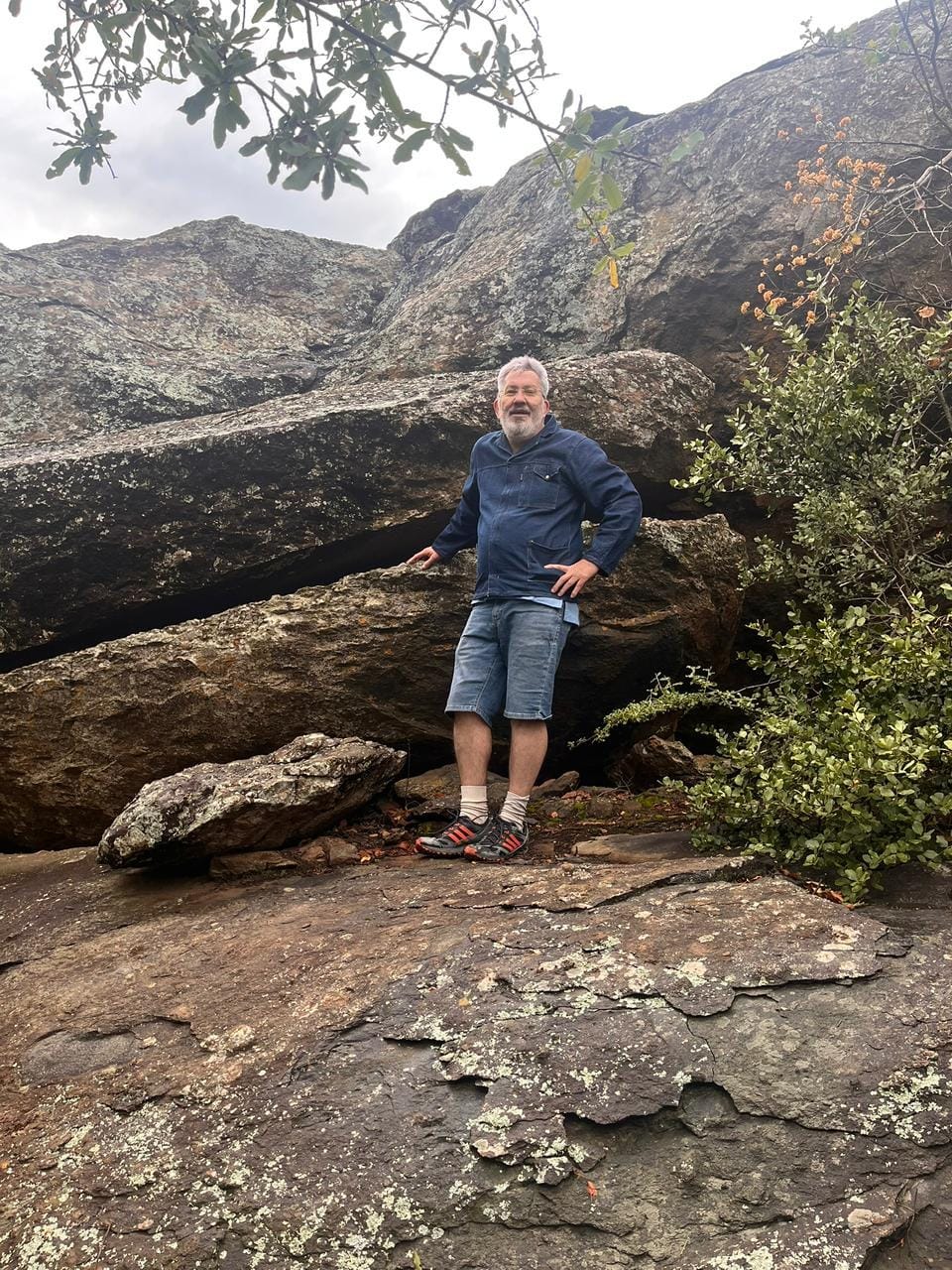
As Gadhafi was being overthrown in Libya, Kathleen (Kath) passed on and André went straight from his work without changing his clothes & climbed onto a plane from Australia to South Africa. All he did was to be here with me, nothing else really mattered. André passed on just before a mass murderer shot into a country music concert in Las Vegas the States and it was my turn to climb on a plane. André passed on from a heart attack riding a cycle race in the eucalyptus forests of Dwellingup in Western Australia. We left a ghost bike in the forest to mark the spot where he passed. A ghost bike is a bike painted white and left as a memorial at the location where a person died.

Craic

In present day society there is an over infatuation with social media such as whatsapp, facebook, twitter or even tiktok. Even politicians even have that disproportionate reliance on using it. However, the best interaction is not social media is but being together. The Irish best describe this as Craic. No, it is not to be confused with substance abuse as it is a common Irish term. Often when people meet around a braai, dinner table, or share either a pot of beer, bottle of wine, a cup of tea or a mug of coffee a conversation is likely to happen. This conversation is invariably about things and is referred to as Craic. And it is best reinforced with a good bottle of whisky (typically an Irish one, which would be known as a whiskey). Now talking about why some people call it whisky, and other whiskey is good Craic.

Craic is often a discussion about things that spark a debate or lead to an extensive and prolonged engagement. Things in our world are objects that exist or have existed for a long time. We typically assume that things in our modern world have only been around a short time but invariably many things have been known for a longer time that what we give it credit. Common things in our modern world like phones, computers and nuclear energy are now generations old but we still have the impression that their use has been only for a short period of time. We also do not give credit to the sophistication of ancient’s things including our civilization, language, and number systems. What would the Craic have been when the slaves sat around the braai when the Pyramids were first built?

Now the technologists usually revert to using smartphones to Google the thing that is being discussed. This is often not a definite source and does not work when the batteries are flat or there is no mobile signal. And I have yet to find that google out trump’s whisky/whiskey as a reference!

No alt text provided for this image

Craic addresses the questions, what and why and when and how and where and who about things. You will find awesome Craic at a little pub called Durty Nelly's which is located on the road between Limerick and Shannon in Ireland. I often wander there in my imagination. There I could tell people about things, not write about it or #hashtag...

Durty Nelly's

The Raite river flows into the Shannon estuary just south of Bunratty Castle. At this point the level of the river is also influenced by the tides. Right next to the river and tucked into the shadow of Bunratty castle is Durty Nelly's. Durty Nelly's is a pub, one of the only ones in the world like it and has been there forever. The first thing you notice about the pub is the huge sign outside. You pause for a moment to wonder who is Durty Nelly? She was the owner of the shebeen. On one side of the pub is a pigeon loft. You can hear the cooing of the pigeons raising slightly above the sound of the enjoyable conversation, Craic, if you concentrate. Durty Nelly's abounds in Craic.

The pub consists of two levels. As dusk settles in, and the mist moves in from the River Shannon, the place is lit up by the warm glow of a peat fire. You walk over the sawdust spread on the floor and find a table next to the peat fire. Occasionally, an American tourist will wander in, dressed head to toe in green. Someone starts playing a piano and which is often accompanied by a Bodhran. Typically, after a few pints of Guinness, you join in the singing, enthusiastically the Fields of Athenry.

Durty Nelly's is next to Bunratty Castle. Most evenings you can enjoy a medieval banquet in the castle and listen to the most amazing music and song as in the video above. At this banquet it is Mead, a honey-based drink, that lubricates the Craic. I am not Irish, but craic really matters.

Now during the depressing Zuma years, I was invited for an interview on the notorious Gupta owned television station, ANN7. My boss was deep in cohorts with Zuma and was at one stage chairman of his foundation and had arrange the spot to promote the wireless business at which we worked. It was known as Wireless Business Solution and would eventually become known as rain. The interviewer was with Gerry Rantseli Elson and I was on for a whole two hours. I had an extensive chat with Gerry about broadband and during a break she experienced a memorable wardrobe failure. It was not in retrospect a proud moment and Gerry was also booted for arguing with the Guptas.

Zuma and the Guptas were the centre of corruption and nepotism. At the height of this there was the strange occurrence of the Saxonwold Shebeen. One of the main protagonists was a bloke named Brian Molefe. I was tracked and recorded travelling many times to Saxonwold where the Guptas lived. These shenanigans were all exposed in a report released by the Public Prosecutor Thuli Madonsela named the State Capture report. Molefe justified this by stating that he was visiting a shebeen in the area. In was a source of great amusement in the country. The Guptas lived at 1 Saxonwold Drive and the press was full of reports of compromised government ministers visiting the location and leaving with bags of cash.

Eventually, Zuma would be ousted, and the country is still dealing with the aftermath of the controversial presidency. The Guptas skipped the country with the help of those compromised minister also managed to siphon out a few billion Rands. However, at the height of the Zuma Presidency I decided it would be a good April Fool’s joke to move the Office of the Presidency to 1 Saxonwold Drive on Google Maps. I made the change, then forgot about it. Two weeks later the headlines proclaimed the address change. The whole country joined in making hilarious reviews of the listing. This was by far my greatest prank, absolute incredible craic and something that would be a nuclear level repentance event in terms of the Kwasizabantu indiscretion meter!

I suppose these stories here are mostly craic and I wrote about personal experiences. There was one great world leader I never met or who was not alive in my lifetime and that was John F. Kennedy. However, his greatest speech was “Ich bin ein Berliner!” It was about aligning yourself with those who wanted and needed you the most. I have a South African passport and do not qualify or have any other citizenship. So maybe I am a South African but given all the stereotypes and categories with which I have failed to find an association, of all the things I am not. The Berliners found an affinity in Kennedy who went out of his way to align themselves with their cause which also suited his greater disagreement and resistance to the expansion of communism and the growing influence of Soviet Russia. The universal association of “Ich bin ein Berliner” is something with which I have a great affinity.

Ronald Bartels

Ronald Bartels | LinkedIn | Instagram