The Morning Patrol with MastelekđŸ’Ș

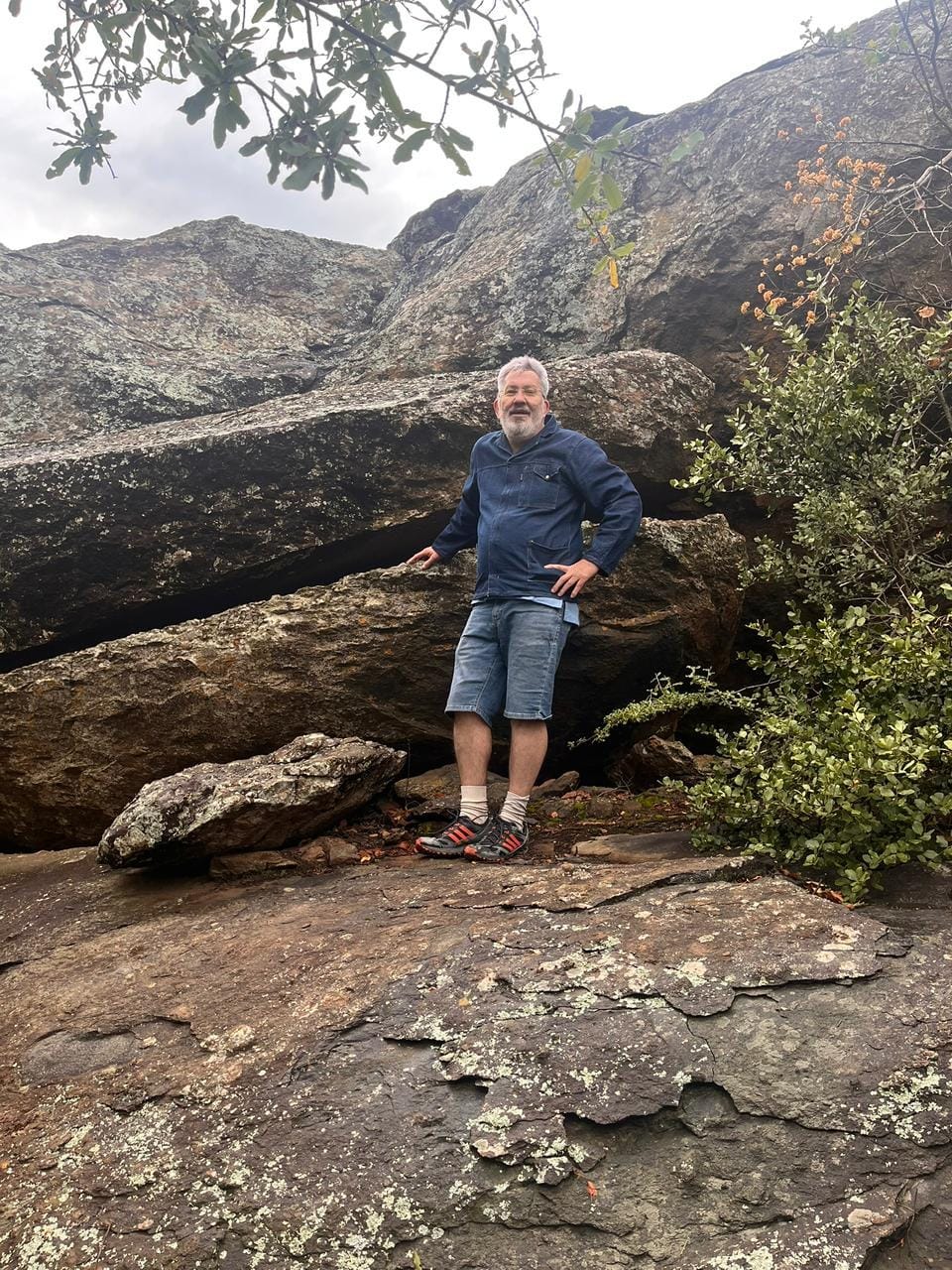
Stories of Mastelek who enjoys farming Boweia Volubilis

Morné du Plessis

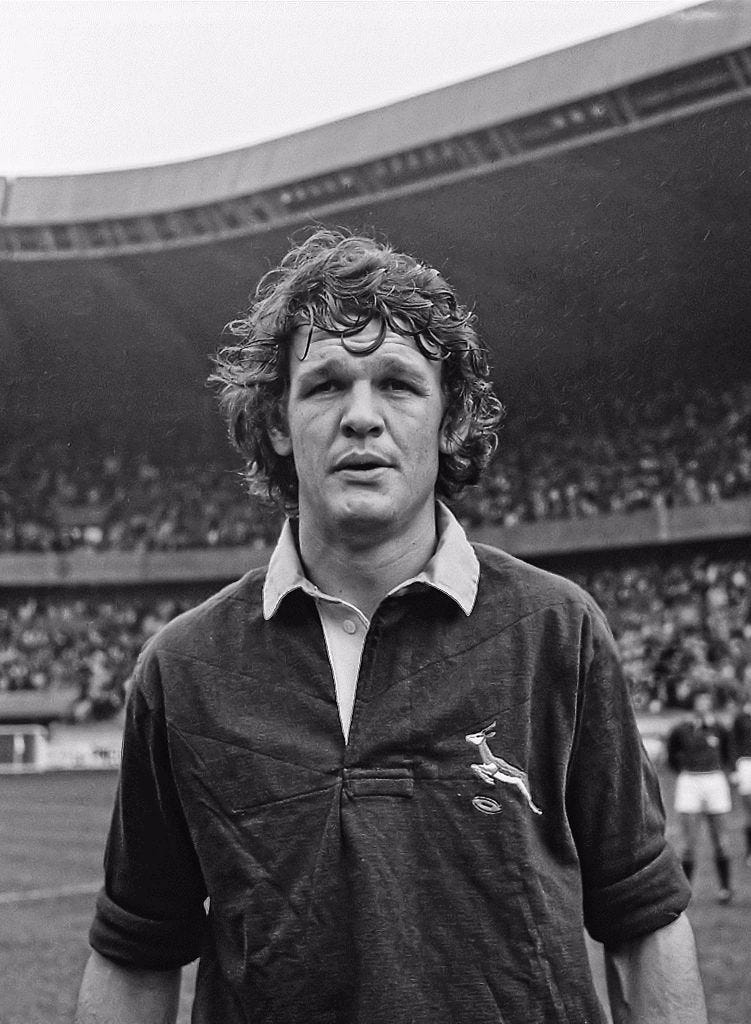
There are moments in sport when a man looks at what the game has asked of him, & quietly decides it has asked enough. For MornĂ© du Plessis, that moment came not in a stadium, not on a tour, not under the weight of a losing score, but in the silence after a teammate died on a rugby field. He was, by any measure, one of the finest rugby players South Africa ever produced. Born in Vereeniging on 21 October 1949 into a family where sport was simply the language of life, his mother Pat captained South Africa's women's national hockey side, his uncle Horace captained the national soccer team, MornĂ© carried bloodlines that ran deep into the soil of South African sport. His father Felix had played lock for the Springboks against the All Blacks in 1949, part of a team that swept that series 3–0. Six weeks after the last test of that series, MornĂ© was born. The oval ball, it seemed, had been waiting for him. He came to rugby almost by accident. At Grey College in Bloemfontein he excelled more at cricket than rugby, & it was cricket that drew him to Stellenbosch University. He even played five first-class cricket matches for Western Province, taking 16 wickets at 25.62. It took Barry Richards, one of the most gifted batsmen on earth, hammering him for two sixes in a single over of a Castle Cup match, to persuade Du Plessis that perhaps another game was calling. The game that was calling was rugby, on a campus where, as Du Plessis himself once said, going to Stellenbosch to play cricket was like going to India to play rugby. Danie Craven, the great patriarch of South African rugby, who lived in the same residence at Stellenbosch, converted him from lock to eighthman, deciding the 1.95-metre Du Plessis was, remarkably, too small to be a lock. It proved an inspired move. Du Plessis captained Western Province 103 times, a record that still stands today. Here is the number that stops people cold. In 22 tests he was on the winning side 18 times. As Springbok captain, his team won thirteen matches & lost only twice. He led South Africa to a series win over the All Blacks in 1976, winning 3–1 across four tests with scorelines of 16–7, a narrow loss of 15–9, then victories of 15–10 & 15–14 in the final test. He captained the Springboks to victories over France in 1975, winning 38–25 in Bloemfontein & 33–18 in Pretoria. He led his country to a 3–1 series win over the British Lions in 1980, playing his rugby through an era of growing international isolation, in a country where sport & politics had become impossible to separate. He was nominated South Africa's Rugby Player of the Year in 1976, 1977, 1979 & 1980. And then, before the 1981 tour to New Zealand, he stopped. Mental fatigue played its part. But the deeper wound had a name & a face. In 1980, Chris Burger, Du Plessis's Western Province teammate, a full-back of twenty-eight years, sustained a neck injury during a Currie Cup match against Free State in Bloemfontein & died. He had been playing under Du Plessis's captaincy. Craven tried hard to convince Du Plessis to make himself available for the New Zealand tour, & believed, with conviction, that South Africa would have won the series if he had. Du Plessis could not go. Some things weigh more than a rugby jersey. What he built after rugby tells you everything about the man. He established the Chris Burger Fund in 1980, serving as its chairman for thirty-eight years. Now called the Chris Burger Pedro Jackson Players' Fund, it supports catastrophically injured South African rugby players & has established a twenty-four-hour emergency helpline for serious rugby injuries. He co-founded the Sports Science Institute. He was elected to the Laureus World Sports Academy & chaired the Laureus Sport for Good Foundation in South Africa, helping raise R260 million to improve the lives of disadvantaged youth. In 2007 the South African government awarded him the Order of Ikhamanga in Silver for excellence in rugby & the promotion of sport for social change. In 1999 he was inducted into the International Rugby Hall of Fame. Wellington Lions loose forward Du'Plessis Kirifi carries his name into the modern era of the game. MornĂ© du Plessis was a cricketer who became a rugby captain, a Springbok who led through one of the most turbulent decades his country had ever known, a man who walked away at the height of his powers, not out of weakness, but out of an honesty about the cost that the game can quietly exact. He turned that honesty into thirty-eight years of work protecting the men who play it.

Ronald Bartels | LinkedIn | Instagram

Lost in France

The late nineties were a whirlwind for me—a time when life felt like one endless adventure, fueled by wanderlust and an unquenchable passion for rugby. South Africa was still basking in the afterglow of our 1995 World Cup triumph, and the Springboks were my heroes, guiding me across oceans to chase the thrill of the game. That year, I set my sights on France, where the Boks were scheduled to face off against Les Bleus in a two-test series. The first clash in Lyon promised grit and glory, while the second in Paris would be an epic showdown. Little did I know, this trip would deliver not just rugby highs, but a tapestry of mishaps, serendipity, and cultural quirks that would etch themselves into my memory forever.

It all began with the Eurostar from London, transiting through the Channel Tunnel where we were forced into a half hour stop in the middle. I must admit I was knyping my poephol during that wait. Emerging into the bustling chaos of Paris Nord station, I was immediately thrust into the raw underbelly of the city. As we stepped off the train, a well-dressed lady walking just ahead of me was suddenly accosted by a swift thief. In a blur, he snatched her bag and bolted, right down between the middle of the electrified train tracks, escaping as no-one was risking pursing them . The platform erupted in shouts and gasps, but the mugger was gone, leaving us all stunned. Welcome to Paris, I thought, clutching my own backpack a little tighter. It was a stark reminder that even in the City of Light, darkness lurked around the corners.

We checked into a modest hotel in the heart of the city, eager to shake off the journey. That evening, we wandered over to a charming restaurant nestled right beside the Notre-Dame Cathedral, its gothic spires looming like silent guardians. As we climbed the steps to admire the facade, we met the American PA of the CEO of Madge Networks, the company at which I worked. There she was, grinning ear to ear, meeting us in Paris. We laughed and shared a meal under the cathedral’s watchful eye, sea food and red wine flowing freely. But the real comedy unfolded back at the hotel. The bathroom was a postage-stamp-sized affair, with a shower so minuscule that I could barely fit. Half my body ended up outside the curtain, water spraying everywhere as I contorted like a pretzel. My butt protruded into the room, and by the end, I’d managed to soak only one side of myself. It was absurd, but in the moment, all I could do was chuckle at the indignities of budget travel.

The next morning, I headed to the train station to buy tickets to Lyon for the first test match. Language barriers have never been my strong suit, and my attempts at French were met with blank stares from the clerk behind the counter. Frustrated, I muttered a few choice swear words in Afrikaans under my breath. To my surprise, the man’s face lit up like he’d heard a familiar tune. He vanished into the back and returned with another employee, a burly fellow proudly sporting a Springbok jersey. “My colleague said you speak like me,” the new guy explained with a wink. “You swear at them?” I asked, half-laughing. “Yes,” he replied, “that’s how we communicate around here.” With that kindred spirit on my side, I secured our tickets in no time. Rugby truly is the universal language, or at least, a shared penchant for colorful expletives.

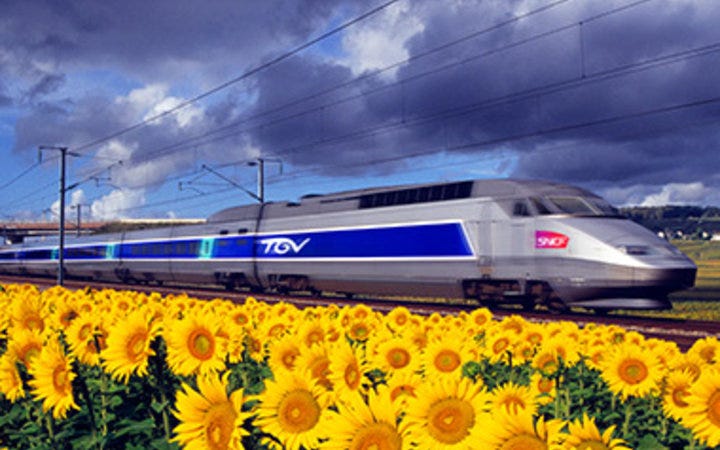
The TGV to Lyon was a revelation, though I nearly missed it entirely. Exhausted from an all-nighter exploring Paris’s nightlife, I dozed off as soon as the train pulled out. My travel companions later raved about the scenery blurring by at over 300 kilometers per hour, but I thought they were pulling my leg. “You’re joking,” I said, rubbing my eyes upon arrival. Turns out, it was no joke, the French high-speed rail was a marvel of engineering, and I’d slept through the whole damn thing. Vowing not to repeat the mistake, I made sure to stay wide awake on the return trip, marveling at the countryside whipping past like a dream.

Lyon welcomed us with open arms, its historic streets buzzing with pre-match energy. We grabbed a quick bite at a McDonald’s, where serendipity struck again. A busload of US Marines from Germany had pulled up, and among them were two South Africans—homesick lads hyped for the game. They spotted our Bok gear and invited us aboard their bus for an impromptu lunch: burgers washed down with cold beers from their cooler boxes, stories of military life swapped amid laughter. In a fit of inspired foolishness, they suggested I get a Marine-style buzz cut. Why not? I figured. A few hours later, shorn like a fresh recruit, I felt oddly liberated, though I’d soon learn the look had unintended consequences.

The match at the Stade de Gerland was a nail-biter, a close affair where the Boks clung on for dear life. France came out swinging, their flair and physicality testing our resolve. But in the dying minutes, Andre Joubert—the “Rolls Royce of Fullbacks”, took center stage. With the game hanging by a thread, he fielded a kick, sidestepped defenders like they were mere illusions, and sliced through the French line like a hot knife through butter. His vision, his unflappable calm under pressure, it was a masterclass in fullback artistry. The stadium erupted as he dotted down for the winning try, securing a hard-fought victory for the Springboks. I was there in the stands, decked out in green and gold, cheering myself hoarse. Little did I know, the TV cameras had panned to the crowd, capturing my ecstatic face. Back home, my mom spotted me on the broadcast and called immediately, not to celebrate my fleeting fame, but to ask, “What happened to your hair?” Ah, the buzz cut. Thanks, Marines.

Post-game celebrations spilled into a cozy curbside bar, where the spirit of camaraderie bridged any national divides. A group of Frenchmen at the next table, gracious in defeat, bought us rounds of Pastis, an anise-flavored liqueur that turned cloudy and milky when watered down, like alchemy in a glass. Amid the clinking glasses and raucous laughter, I found myself smitten with the waitress. Her smile lit up the room, her French accent was pure melody, and she navigated the chaotic crowd with effortless grace. It was a fleeting crush, born of the night’s euphoria, but in that moment, rugby had gifted me more than a win, it had cracked open the doors to the world’s unexpected joys.

After Lyon, we returned to Paris for the second test, this time staying awake to savor the TGV’s blistering speed. The city felt different now, alive with anticipation for the big match at the old Parc des Princes stadium, I believe it was the last game played there before its renovation. And what a send-off it was: an almighty thrashing by the Boks, a dominant display that left the French reeling. The Springboks’ forwards bulldozed through, the backs danced with precision, and the crowd’s roar was deafening. I soaked it all in from my seat, the atmosphere electric, knowing I’d witnessed history.

Paris itself was a mixed bag. We stayed in some dodgy hotel rooms—creaky beds, flickering lights, the works—and endured hair-raising taxi rides through traffic that defied logic. I caught glimpses of the rugby stadium and wandered past the Hîtel des Invalides, its golden dome gleaming under the sun. But truth be told, I skimped on the tourist trail. No climbing the Eiffel Tower, no strolling through the Arc de Triomphe, no pilfering jewels from the Louvre or gazing at the Mona Lisa’s enigmatic smile. I was too wrapped up in the rugby bubble, chasing the games rather than the sights. Hindsight is a cruel companion; I need to go back one day and do it properly.

One enduring gripe from the trip: French breakfasts. Stale bread and smelly cheese at best—hardly the fuel a rugby fan needs. Do the hens in France even lay eggs? I wondered. By the time I wrapped up in Paris and hopped a flight to Ireland to visit my friends Liz and Noel, I was craving something substantial. The first words out of my mouth upon landing: “Take me for a full Irish breakfast.” Bacon, eggs, sausages, black pudding—it was heaven on a plate, a hearty antidote to the continental minimalism. I have since learnt to love croissants for breakfast. I really do, but as a raw Natal farm boy who went to school in the Free State and then to Maties, no-one had up to that stage introduced me to them. I was blissfully ignorant.

Looking back, that French rugby odyssey was more than matches won or lost. It was about the serendipitous connections, the Marines’ buzz cut, the swearing ticket clerk, the Pastis-fueled toasts with rivals. It was rugby’s magic, weaving strangers into stories, and reminding me that the world’s pitch is vast and full of surprises. France, you elusive charmer, I’ll be back, for the sights, the speed, and maybe even another fleeting crush.

Ronald Bartels | LinkedIn | Instagram

The Try Line of Life

Rugby has always been more than a game in my family; it's a thread woven through generations, binding us with tales of triumph, heartbreak, & the sheer grit of the scrum. Hanging on the wall of my house is a sepia-toned photograph of Riebeeck Elliot, the rugby legend of our clan. Known as “Windhond” for his blistering speed on the wing, he toured Argentina as a Junior Springbok in the thirties. In that faded image, he's captured mid-stride, lean and fierce, his eyes locked on some distant try line. As a boy, I'd stare up at it, imagining the roar of foreign crowds & the dust of South American pitches. Riebeeck wasn't just a player; he was a symbol of what rugby could mean freedom, adventure, & a dash of immortality. Little did I know then that my own story with the oval ball would be far less glamorous, marked by mud, mates, & one catastrophic collapse.

My earliest rugby memories take me back to the green fields of Wartburg Primary School in the mid-1970s. I was a lanky kid, more enthusiasm than skill, but I found my place at the back of the scrum as an eighth man. There's something primal about those schoolboy games, the smell of fresh-cut grass, the sting of tackles, the camaraderie of a team of misfits charging forward. We'd play barefoot half the time, on makeshift pitches, dreaming of one day donning the green & gold. Rugby wasn't just sport; it was our rite of passage, a way to prove we were tough enough for the world.

My father, ever the enabler of these dreams, introduced me to the Boks early on. In the mid-seventies, he bundled us into the Mercedes for a trip to King's Park in Durban to watch the Springboks take on the French. I was barely old enough to grasp the rules, let alone the international rivalry, but the atmosphere was electric, a sea of flags, the thunder of boots on turf, and the collective heartbeat of thousands. The game itself is a blur now; what I remember is the chaos afterward. In the throng of exiting fans, I wandered off, lost in the maze of concrete stands and vendor stalls. Panic set in as the crowds thinned, & hours ticked by before I was found, not by my frantic parents, but by my dad's cousin, who scooped me up like a wayward rugby ball. That day taught me rugby's first hard lesson: the game doesn't end on the field; it spills into life, full of unexpected twists.

By the time I reached high school at Grey College in Bloemfontein, rugby had become my obsession. Grey was a rugby powerhouse, where the sport was religion and the first team were our gods. Every Saturday, we'd pack the stands to watch them battle it out, the air thick with chants and the crack of collisions. Our matric year had its share of glory and gut-punches. We lost badly to Queens College, where Daryll Cullinan, yes, the future cricket star, and Gary Loest carved us up like a Sunday roast chicken in Hamilton Hall. Another game etched in my mind was against Grey High, where our player Spiertjies who played flyhalf got carded for some overzealous play, leaving the team short-handed and seething. At Grey I played in the front row, alternating between prop and hooker, where the real war was waged, grunting, heaving, & holding the line against opponents who seemed twice my size.

But rugby giveth & rugby taketh away. My playing career came to a shattering end on those very Grey fields during a loose scrum that collapsed like a house of cards. I remember the pop, the white-hot pain, and then being carted in an ambulance after being injected with morphine to Universitas Hospital. My leg was broken in 27 places, a mosaic of fractures that required months of rehab. The doctors said I was lucky to walk again, let alone run. That injury closed the door on my dreams of higher honors, but it opened my eyes to rugby's brutal beauty. From then on, I was a spectator, a fan whose passion burned brighter from the sidelines, with the occasional appearance for the Crocs.

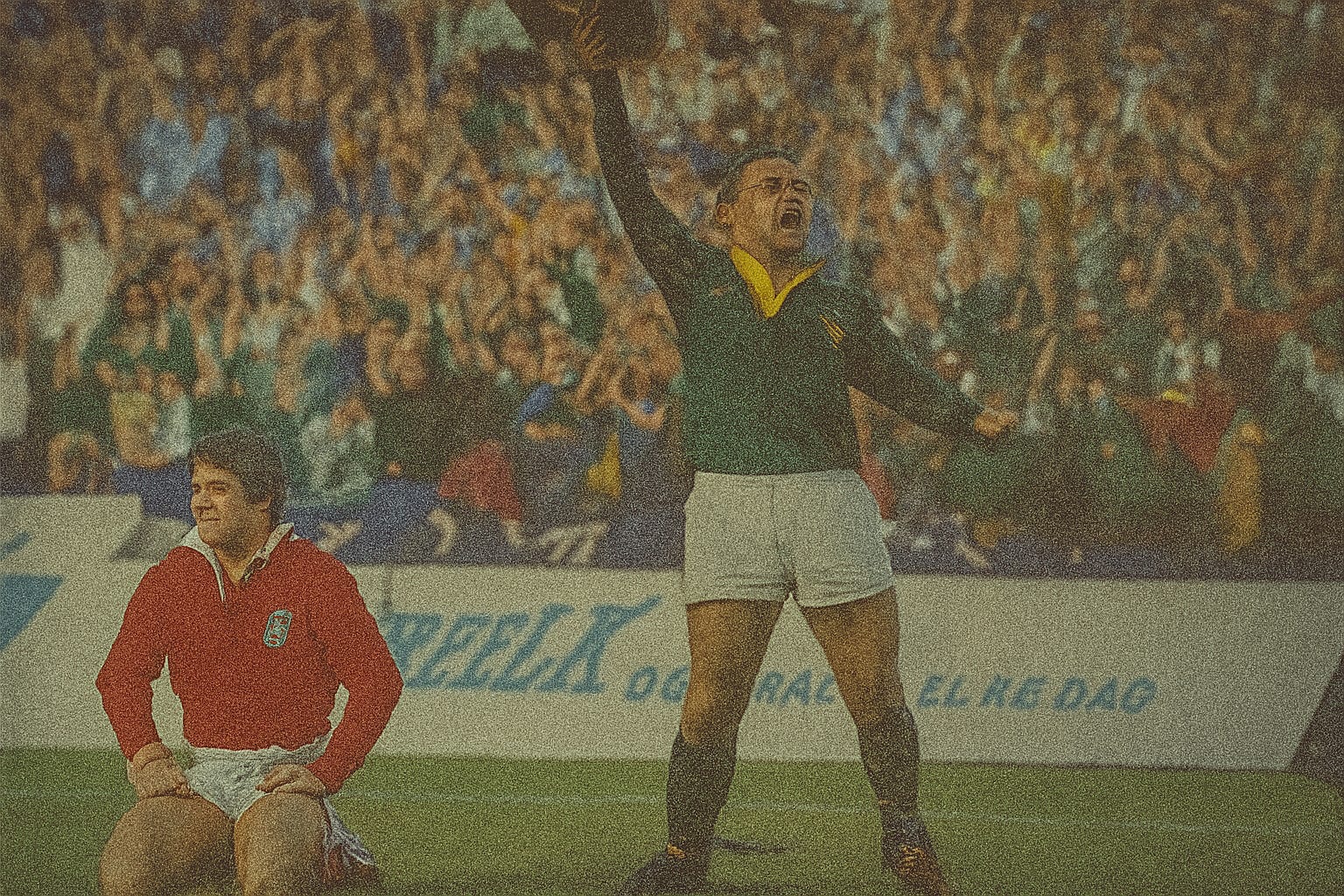
The 1980 British Lions tour remains the pinnacle of my rugby-watching life, a series that captured the nation's soul. I was in Standard 6 at Grey, wide-eyed & wild-hearted, when I went to Bloemfontein Stadium for the second test against the Springboks. We snagged seats right on the try line with Ian Delport, sitting on the fietsbaan, so close we could feel the spray of sweat from the players. The Lions were formidable, but the Boks were on fire that day. Gysie Pienaar, our local hero, ran them ragged, culminating in a spectacular try right in front of us. He dove over the line, ball clutched tight, then leaped up, punching it skyward like a conquered trophy. The crowd erupted; I screamed until my throat was raw. There's a historic photo of that moment, Gysie in triumph, the Lions deflated, & if you look closely in the background, there's a scrawny kid losing his mind. That was me. I talked about it non-stop to my dad, badgering him until he caved & took us to the final test at Loftus Versfeld in Pretoria. The Boks clinched the series, and I felt like I'd been part of history.

Fast-forward to 1995, and rugby was evolving – more professional, more global. South Africa was hosting the World Cup, a symbol of our post-apartheid rebirth. I watched the quarterfinal against Samoa with my brother Andre and my mate Jose, at the famous Ellis Park. The Samoans were demons on the field, tackling with a ferocity that bordered on mythical. Brian Lima, the “Chiropractor,” crunched into the Boks like a human wrecking ball, leaving bodies in his wake. Andre Joubert, our fullback maestro, broke his hand early but soldiered on. Chester Williams stole the show with a hat trick, his speed and guile turning the tide. That game was raw, visceral, a reminder that rugby could be as beautiful as it was brutal. We celebrated late into the night, toasting to a team that embodied our nation's resilience.

The late nineties brought me abroad, chasing rugby adventures across Europe. In Lyon, France, I witnessed Andre Joubert, the “Rolls Royce of Fullbacks”, single-handedly dismantle the French side. It was a masterclass: his sidesteps, his vision, his unflappable calm under pressure. I was there in the stands, decked out in Bok gear, when the camera panned to the crowd. Back home, my mom spotted me on TV and called immediately, not to cheer my fame, but to ask, “What happened to your hair?” The story behind that buzz cut is pure serendipity. Earlier that day, we'd bumped into a busload of US Marines from Germany at a McDonald's. Two were South Africans, homesick and hyped for the game. They invited us aboard for lunch, beers from their cooler boxes, stories swapped over burgers. In a moment of inspired idiocy, they suggested I get a Marine haircut. Why not? A few hours later, shorn like a recruit, I was beaming on national television.

The celebrations continued post-game in a cozy kerb site establishment, where a group of Frenchmen next to us bought rounds of apple cider. Amid the laughter & clinking glasses, I fell head over heels for the waitress, her smile, her accent, the way she navigated the chaos with grace. It was a fleeting crush, but in that moment, rugby had gifted me more than a win; it had opened doors to the world.

Not all trips ended in victory. The test at Twickenham against England was a heartbreaker. We were in it until the dying minutes when Stefan Terblanche, our winger, dropped a straightforward ball in-goal, gifting Jeremy Guscott an easy try. The loss stung, but the pub afterward was legendary. Emboldened by pints, we belted out “Shove that chariot up your ass”, a cheeky twist on their anthem, narrowly escaping the ire of the English fans. For that game, I'd borrowed a massive South African ceremonial flag from the High Commission & tied it to a long pole I'd “liberated” from our hotel. Waving it like a madman, I made national TV again, a blurry green-and-gold blur in the highlights.

My TV streak culminated in Dublin at Lansdowne Road, where the Boks trounced Ireland. The Guinness flowed like the Liffey, warming us against the Irish chill. After the final whistle, still buzzing from the win, I gave an incoherent interview to an Irish broadcaster outside the stadium gates. Slurring praises for the team and the pint in my hand, I must have sounded like a true rugby philosopher, or a complete fool. Either way, it was broadcast back home, adding to my accidental fame.

Looking back, rugby has been my life's try line, a pursuit of glory amid the tackles and tumbles. From Riebeeck's legendary tours to my own shattered leg, from lost-child escapades to international escapades, it's shaped who I am. It's taught me resilience, the joy of brotherhood, and the thrill of the chase. Even now, as I glance at that sepia photo on the wall, I feel the pull of the pitch. Rugby isn't just a game; it's the story we live, one scrum at a time.

Rugby at Grey College

At Grey College, rugby isn’t just a sport—it’s a way of life, woven into the very fabric of the school’s identity. Some might call it religious fervor, but I see it as a means to an end, much like American football in U.S. schools. The passion for rugby fuels school spirit, builds camaraderie, and ensures Grey’s legacy endures. It’s not about worshipping the game; it’s about what it does for the boys who pass through those hallowed halls. Braam Fischer, a Grey scholar & rugby player, embodied this. He played, he contributed, and he moved on, just as I did.

I went to Grey, and like many, I played rugby. In the lower standards, I found myself on the B team, eventually scrumming down in the front row for the Crocs. The Crocs weren’t the first team, nor were they the Cherries, but they were ours. The Head of Rugby’s job is clear: manage the Crocs and Cherries, mold them, and push the first team to be the best in South Africa. It’s a system, a machine, not unlike the Head of Mathematics drilling algebra into our heads. One’s not better than the other, just different. At Grey, we don’t say, “I played rugby at Grey.” We say, “I went to Grey.” That’s the badge we wear, rugby or not.

Nihil Stabile Quod Infidum. Nothing is certain that is untested. That motto hung over us, on and off the field. Playing for the Crocs, I learned lessons no classroom could teach. In the front row, you’re not just pushing against the opposition, you’re pushing against yourself. Grit, resilience, trust in the bloke next to you: these were the real trophies. I’m on the Grey Honours board, not for rugby, but for my own contributions. No rugby player ever claimed their name shone brighter than mine, nor mine than theirs. At Grey, it’s not about why your name is etched up there, it’s that you’re part of something bigger.

The scrum taught me that. You lock in, head down, & drive forward, knowing the team’s behind you. Maths class gave me logic; the Crocs gave me heart. Both shaped me, driving me to feel alive.

Ronald Bartels | LinkedIn | Instagram

The Proud Doubter like Thomas

My family’s documented Christian heritage stretches back five centuries, a unbroken thread woven into the tapestry of history. Previously Catholic, right up until Martin Luther nailed his Ninety-Five Theses to the door of the Castle Church in Wittenberg, sparking the Protestant Reformation. Our ancestors stood amid that seismic shift, embracing these new winds of change. Even our surname bears witness to this ancient lineage, derived from the Apostle Bartholomew, also known as Nathaniel in the Gospels. In the turbulent early days of Protestantism, it was shortened, perhaps for simplicity or survival, but the essence remained. You can’t carry such a legacy without it seeping into your very DNA. For me, faith isn’t born of some dramatic epiphany, no sudden conversion or “born again” moment under bright lights. It’s quieter, deeper: a tradition, a legacy, a source of quiet pride that’s mine alone. Its unique, not artificial.

I hold my beliefs close, not as a banner to wave or a doctrine to impose. They’re not up for debate or dissection by others, & I extend the same courtesy, no turning up my nose at someone else’s path. This, to me, is the core of Christian principle: “First, remove the log from your own eye before trying to take the splinter from your brother’s.” Yet, oh, how some ignore that wisdom, especially the charismatic types who parade their piety like a badge of superiority. They label you inferior, their faith a weapon rather than a balm. No, I say. That’s not faith; that’s hubris. I’m labelled a non-believer as I discount the myths, the manipulations and the cultism. Deep down we all know that is not faith.

I’ve seen the dark underbelly of this perversion firsthand. Members of my own family, women I love, were raped by these self-proclaimed holy ones. Abused, violated, and then, in a twisted mockery of grace, the perpetrators prayed for absolution, shifting the blame onto the victims. “It was her fault,” they whispered, as if scripture could sanitize their sins. This isn’t religion or humanity; it’s narcissism of the foulest stripe, cloaked in crosses and hymns. It poisons the well of true belief.

If someone corners me with that pointed question, ”Are you a Christian?”, I pause. From my actions alone, if you not pegged me as one, then no, not in your eyes. A true follower of Christ doesn’t broadcast faith through words or rituals; they live it through quiet support. A friend in need? You help, no questions asked, no ledger kept. Not for some eternal reward or a seat in heaven, but because it’s the essence of our shared humanity. It doesn’t need a label to be real.

Albert Schweitzer embodies this for me, a man whose life was a testament to principled action. Born in Alsace, he was a polymath: theologian, philosopher, organist, and physician. But it was his philosophy of Reverence for Life that drove him to abandon a comfortable existence & establish a hospital in LambarĂ©nĂ©, Gabon. This ethic held that all life is sacred, interconnected, & deserving of respect, extending not just to humans but to animals & the natural world. Schweitzer didn’t preach from pulpits; he rolled up his sleeves, treating the sick in remote jungles amid disease & hardship. His drive stemmed from a profound sense of ethical responsibility, influenced by his Lutheran roots & studies in philosophy, including Kant and Eastern thought. He saw helping others as an imperative, a way to affirm life’s value without expectation of reciprocity. In his words, “The purpose of human life is to serve, & to show compassion & the will to help others.” That’s faith in motion, not mere declaration.

Though our family name nods to Bartholomew, the faithful disciple who brought others to Christ through quiet invitation, my heart aligns more with Thomas, often dismissed as the doubter, but a figure of profound integrity. Thomas demanded evidence before belief, famously touching Christ’s wounds to confirm the resurrection. But his philosophy, as I see it, transcends skepticism: it’s about verification through experience, leading to committed action. Tradition holds that Thomas journeyed to India, founding Christian communities there through deeds, not just words. He built churches, healed the afflicted, & lived his faith amid persecution until his martyrdom. Like Schweitzer, Thomas’s ethos was actions define you. What you do reveals who you are, far more than what you say. It’s not about eloquent sermons or performative piety; it’s the quiet, tangible help you offer when it matters.

Help, in my view, isn’t an entitlement or a demand. It’s given when possible, calibrated to circumstance, never at the irreversible cost of the giver’s own survival. Balance is key; otherwise, it’s not compassion but folly. This is the faith I’ve inherited & shaped: rooted in history, tempered by experience, & lived through deeds. It’s mine, unapologetically, a steady compass in a world too quick to judge.

Ronald Bartels | LinkedIn | Instagram

Truth to Power from Eugene N. Marais

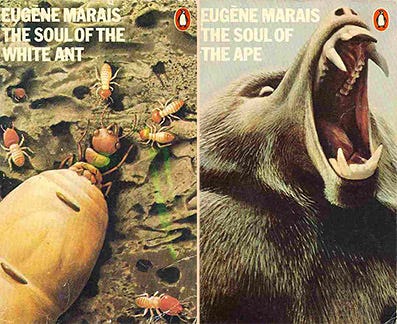
In the quiet corners of the farm house on Oakvilla, amid the dust-laden shelves that held the weight of my father’s intellectual pursuits, the books that stood out like sentinels of forbidden knowledge: Eugene N. Marais’s Die Siel van die Mier and The Soul of the White Ant, alongside Die Siel van die Aap and its English counterpart, The Soul of the Ape. My dad, Mastelek, a man whose mind was as vast and untamed as the veld he loved, kept both the Afrikaans originals and their English translations, treating them not just as literature but as blueprints for understanding the world. He pored over Marais’s observations of termite colonies and baboon societies, drawing parallels to human evolution that challenged the rigid doctrines of our time. “See here, BB,” he’d say, his finger tracing lines about the collective soul of the white ant, “if nature builds empires without a single king dictating every move, why do we insist on divine mandates for our own hierarchies?”

Those discussions, often on road trips in a lorry or bakkie, ignited something fierce in me. Marais’s work wasn’t mere natural history; it was a quiet rebellion against the creationist fervor peddled by the Calvinist prudes and the politicians who cloaked their bigotry in biblical certainty. If they were wrong about evolution, denying the intricate dance of adaptation and survival that Marais so vividly described, then surely they were wrong about apartheid, that monstrous system built on the lie of inherent superiority. My father’s passion for these ideas seeped into my bones, turning me into an apartheid dissident before I even fully understood the word. I carried that fire with me through the sandstone of Grey College, where I bumped heads with teachers and classmates alike. Debates on evolution morphed seamlessly into arguments against segregation, my voice rising against the tide of conformity. I survived those clashes, not scarred or unbowed, because the intellectual ground Marais had laid was sound, rooted in observation, not ideology.

Marais himself, though, was a tragic figure, his genius overshadowed by the very world he sought to illuminate. Born in Pretoria, he was a polymath: a lawyer by training, a poet whose verses captured the raw beauty of the South African landscape, and a naturalist whose studies on ants and apes predated modern ethology. His poems, like “Winternag” with its haunting evocation of a winter night, remain pillars of Afrikaans literature, blending melancholy with profound insight. Yet his life was marred by hardship. Addicted to morphine after a bout with malaria, he wandered the fringes of society, his groundbreaking work on termites—detailing their symbiotic societies and what he called their “phyletic soul”—plagiarized by the Belgian Nobel laureate Maurice Maeterlinck. Maeterlinck’s The Life of the Termites lifted passages verbatim from Marais’s articles in Die Burger and Huisgenoot, without credit, even admitting he’d never seen a termite in the flesh. Marais, ever the gentleman, called it a “left-handed compliment,” but the theft stung deeply, contributing to the despair that led to his suicide before the Second World War.

His own tribe, the Afrikaner community, failed to honor him as he deserved, perhaps uncomfortable with a man who questioned the certainties of faith and society. In a way, Marais’s story mirrored my own smaller rebellions: a life of unacknowledged brilliance, fighting against the plagiarism of ideas and the theft of dignity. Those books my father cherished didn’t just teach me about evolution; they taught me to question, to dissent, and to see the interconnected soul in all things, ants, apes, and apartheid’s unwilling subjects alike.

Ronald Bartels | LinkedIn | Instagram

My Love Affair with Tractors

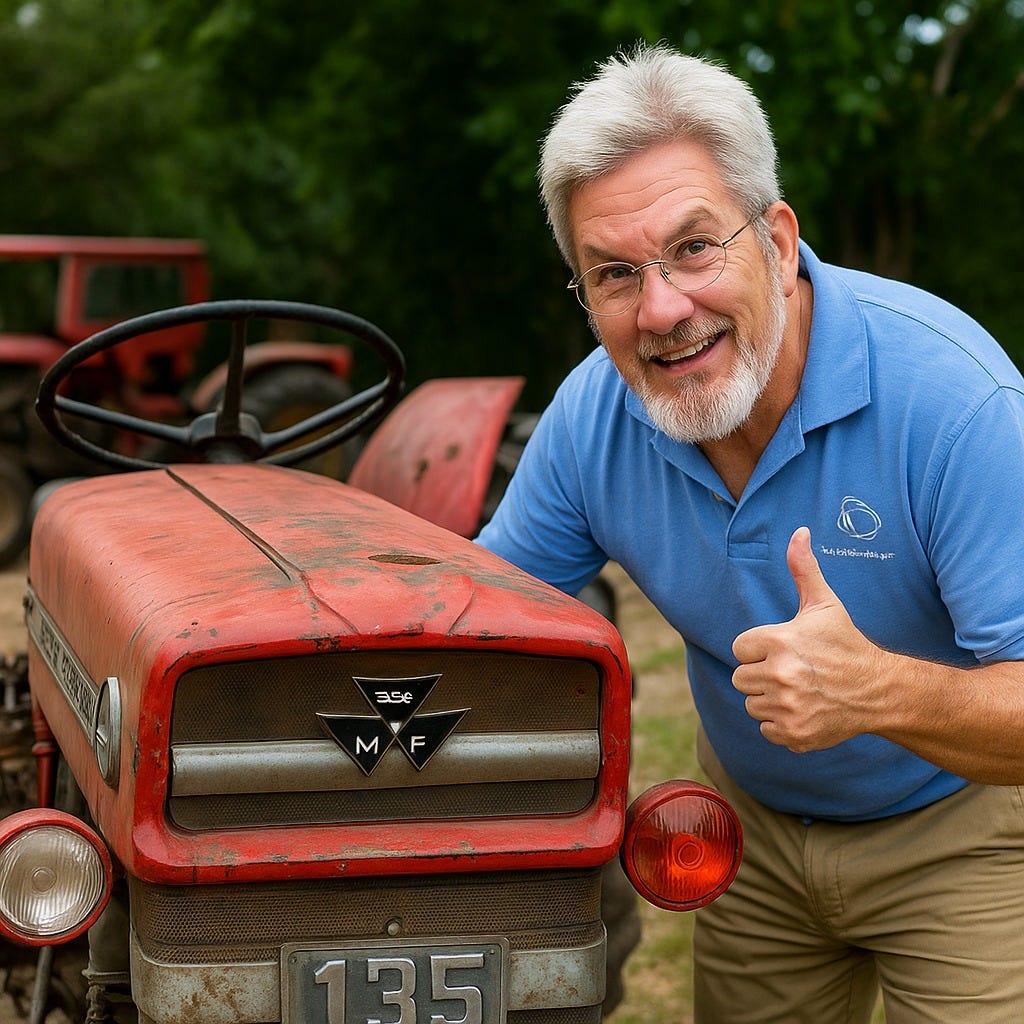
Growing up on Oakvilla Farm in the rolling midlands of Natal, South Africa, my world was a patchwork of green fields, muddy tracks, and the ceaseless hum of farming machinery. But nothing captivated me quite like the tractors. They were the beating heart of the farm, colossal beasts of red steel that churned the earth and shaped our days. I was so entranced by them that my very first word wasn’t “mama” or “dada,” but “ugandaganda” – the Zulu term for tractor, a word that rolls off the tongue like the rumble of an engine, full of power and poetry. To this day, it’s my favorite word, evoking the raw, mechanical magic that defined my childhood. My dad and mother were very proud of my first word, and readily informed all and sundry about it.

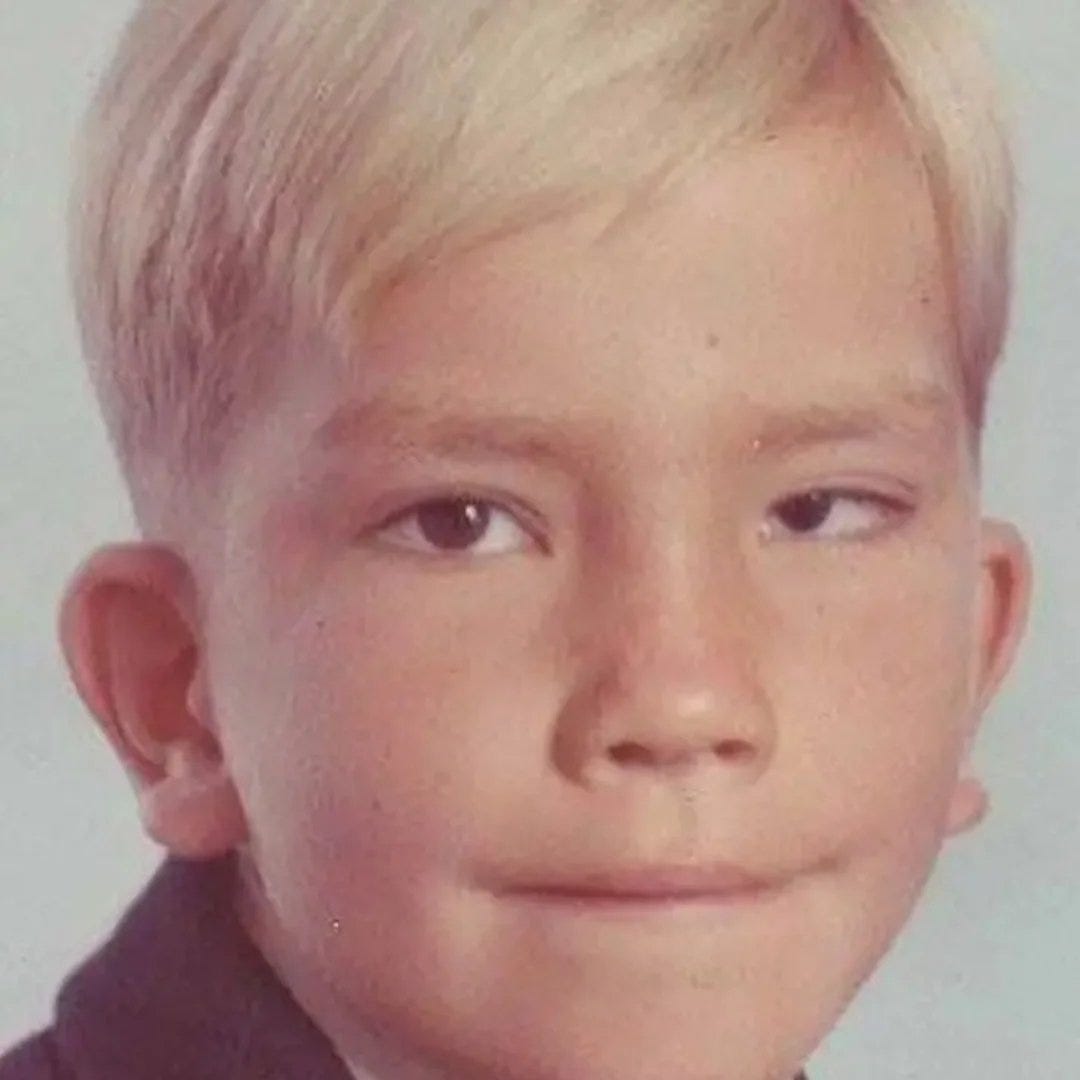
Back then, I was blissfully unaware that my given name was Ronald. Everyone, from my parents to the Zulu workers who shared our land, called me Beebee. It stuck like mud on a tire tread, a nickname that followed me through the dusty tracks and endless rows of crops. My fascination started early, as a plump toddler barely able to waddle. My parents, sensing my obsession, gifted me a shiny plastic red ride-on tractor with push pedals. I’d zoom around the yard for hours, imagining myself plowing vast fields, the wind in my blonde hair and the world at my command. Yes, I was blonde and my hair darken as a teenager.

As soon as I could toddle close enough, I’d beg to sit on my dad’s lap atop one of our real tractors. Those were glorious moments: the vibration of the engine thrumming through my tiny body, the scent of diesel mingling with fresh-turned soil. Before long, I’d grab the steering wheel with chubby hands, guiding us along the furrows. When I grew a bit taller – though still too short to reach the pedals, I’d hop off the seat and stomp on the brake or clutch with both feet, my laughter echoing over the fields. Holidays were the best; while other kids played games, I’d volunteer to plough, letting the Zulu tractor driver nap under a shady tree as I took the wheel.

Our farm was a symphony of cultivation, with potatoes as the star, a vegetable I now hold in almost religious awe, their humble tubers yielding endless bounty. We’d rotate in cabbage, cauliflower, Brussels sprouts, and madumbis, those creamy tubers that make the quintessential curry, rich and comforting like a warm embrace. To work the land, we relied on an arsenal of attachments: a tiller for breaking soil, a rotor for finer prep, and a massive multiple-row plough with circular ploughshares that sliced through the earth like a knife through butter.

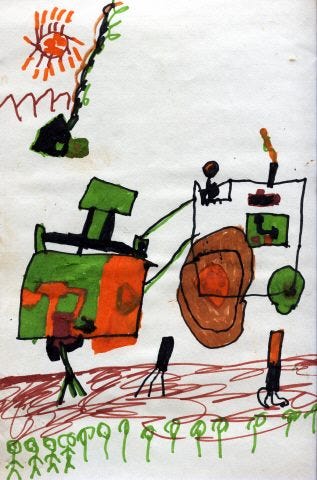
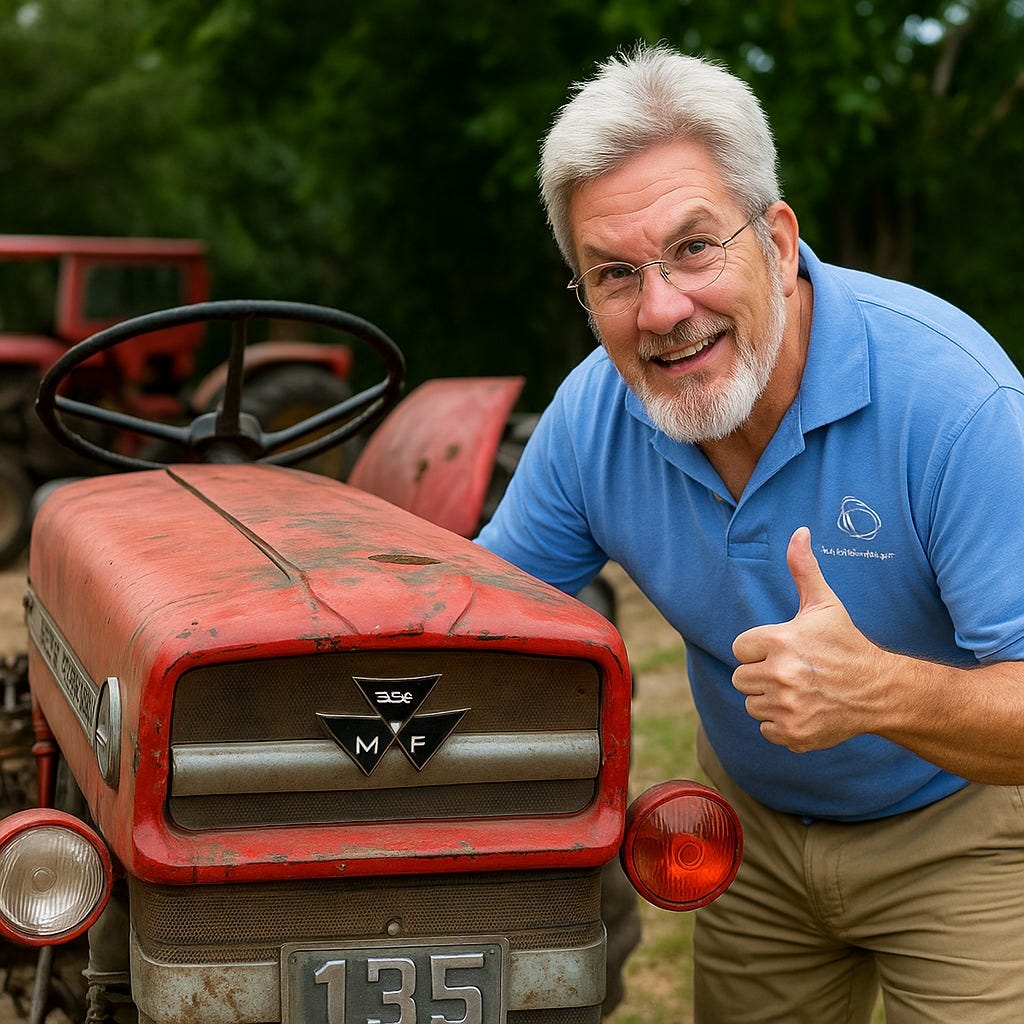
At the core of it all were our red Massey Ferguson tractors, the unyielding workhorses that powered everything. My dad, ever the innovator, even designed a custom attachment he dubbed the “Stelek Stumper”, a beastly contraption that uprooted tree stumps with ruthless efficiency, clearing fields for new planting in record time. (See my drawing as a kid of the tractor and stumper) We had a grader attachment too, essential for maintaining the valley roads after the relentless Natal rains turned them into quagmires. To top them off, we’d haul loads of gray shale using a converted Ford truck with a dumper body, which I’d help load using our yellow Massey Ferguson TLB (tractor-loader-backhoe). That TLB was a marvel, a Swiss Army knife on wheels.

My brother, my boet, & I once put it to mischievous use, building a makeshift dam across a stream that fed into the Inyosi River. We piled up earth and rocks, dreaming of our own private pond. But when it filled, the water overflowed and diverted the stream straight down the farm road, flooding everything in sight. That led to a frantic after-hours session in the dark, my dad using floodlights and the very same TLB to dismantle our creation, grumbling all the while but with a twinkle in his eye.

Not all our tractors were heroes, though. We had one blue Ford that was perpetually on the fritz, coughing & sputtering until it was finally abandoned to rust in a forgotten corner of the farmyard, a relic of mechanical defeat.

Beyond the fields, tractors wove into the fabric of our community life. On payday, we’d hitch a trailer to one and rumble into New Hanover dorp, ferrying the Zulu workers to the White House shop. Run by an Indian dealer, it was a wonderland crammed with everything imaginable: hardware tools on one shelf, fresh produce on another, clothes dangling from hooks, and even goods suspended from the ceiling on wires. It doubled as a greengrocer, supermarket, and candy emporium, that sweet counter was pure fascination, jars brimming with colorful temptations. Shops like that are lost to history now, replaced by sterile chains, but in my memory, it’s a chaotic paradise.

I’d also lend a hand hauling 20kg bags of mieliemeal from our storeroom to the workers’ quarters, balancing them precariously on the tractor’s rear attachment struts. Simple tasks, but they made me feel part of something bigger, the rhythm of farm life pulsing through every jolt and turn.

Even now, decades later, I crave the feel of a rusty tractor seat beneath me, each bump jarring my spine not as pain, but as a monk’s austere meditation – a reminder of hardship’s quiet grace. And the diesel exhaust roaring through the stacks? That’s no mere noise; it’s a symphony, pure and unfiltered, the soundtrack to a life forever tethered to those magnificent machines. Ugandaganda – the word, the wonder, the enduring fascination that started on Oakvilla and never let go.

Ronald Bartels | LinkedIn | Instagram

King’s Park, 1976

My first All Blacks Test was in 1976, when the Springboks hosted the New Zealanders at King’s Park in Durban. We left our farm, Oakvilla, mid-morning in the Mercedes-Benz 280E. My parents and I made the trip together. My brother went separately on the school bus. My sister skipped the whole thing to visit her friend Nolene.

We didn’t own Springbok jerseys or any proper kit in those days. I went in corduroy pants, a plaid shirt and my Grasshopper shoes. That was as close as it got to match-day attire for a farm kid from the Midlands.

First stop was the beachfront. We met my dad’s friend Oom Jan Strydom at Barons steakhouse, a place that sat in the same side street as Magoo’s Bar, the same Magoo’s that would later become notorious for reasons far darker than rugby. It was bombed by the ANC. Lunch was the mandatory steak, rump or sirloin, with basting and either pepper or mushroom sauce on the side. I always went for the monkey gland. Bliksems lekker. I could have happily turned around and be driven straight back to Oakvilla after that meal and still called it a perfect day.

Instead we pushed on to King’s Park. The place was packed. We parked some distance away and walked in with the crowd. Just past the ticket booth stood a trolley from The Fudge Lady. My mother bought toasted coconut marshmallows. Fresh, warm, with that unmistakable aroma you never get from the plastic-wrapped versions in Pick n Pay. I can still taste them.

We climbed to our seats on the open stands opposite the grandstand, right on the halfway line, second tier. The concrete steps felt dodgy even then. Behind us they had put up scaffolding for extra seats that almost certainly violated every health and safety rule in the book. But this was Africa, and the stands were full. My mom mentioned that Windhond played here. Windhond was her uncle, Riebeeck. He was a Junior Springbok.

There were no fly-bys that afternoon, but there were streakers. We laughed, and it was understood that the proper response was to try and hit them with ripe naartjies. Before kick-off there would be a quick sweep to pick up the fruit.

Then I saw him, the ice-cream vendor working his way along the row, polystyrene box balanced carefully. I tugged my dad’s sleeve. He raised a hand. The man opened the lid and dry ice billowed out. Among the loot I spotted them: Eskimo Pies.

I lost all composure and grabbed one.

You cannot understand what that meant unless you grew up on a farm like Oakvilla. We never had Eskimo Pies at home, and you didn’t find them in the New Hanover Tea Room either. Ice cream at home was the condensed-milk-and-cream version my mother made. This was different. Sitting in the stands at King’s Park on the day of an All Blacks/Springboks Test, biting into an Eskimo Pie, that memory is still sharp.

The game itself was epic. Sid Going was everywhere, cheeky and disruptive, impossible to ignore. On the Springbok side Morné du Plessis carried a presence you could feel from the stands. Years later, when Oom Jood told me that Morné had gone to Grey, I turned to my dad and said I wanted to go there too. I wanted to become a Brak as well.

After the final whistle I stretched out along the full length of the back seat of the Mercedes. The lights of the car snaked through the Midlands as evening settled. I slept the whole way home to Oakvilla, tired, full, and completely happy.

It was a perfect day for it.

Ronald Bartels | LinkedIn | Instagram

Growing up a cowboy

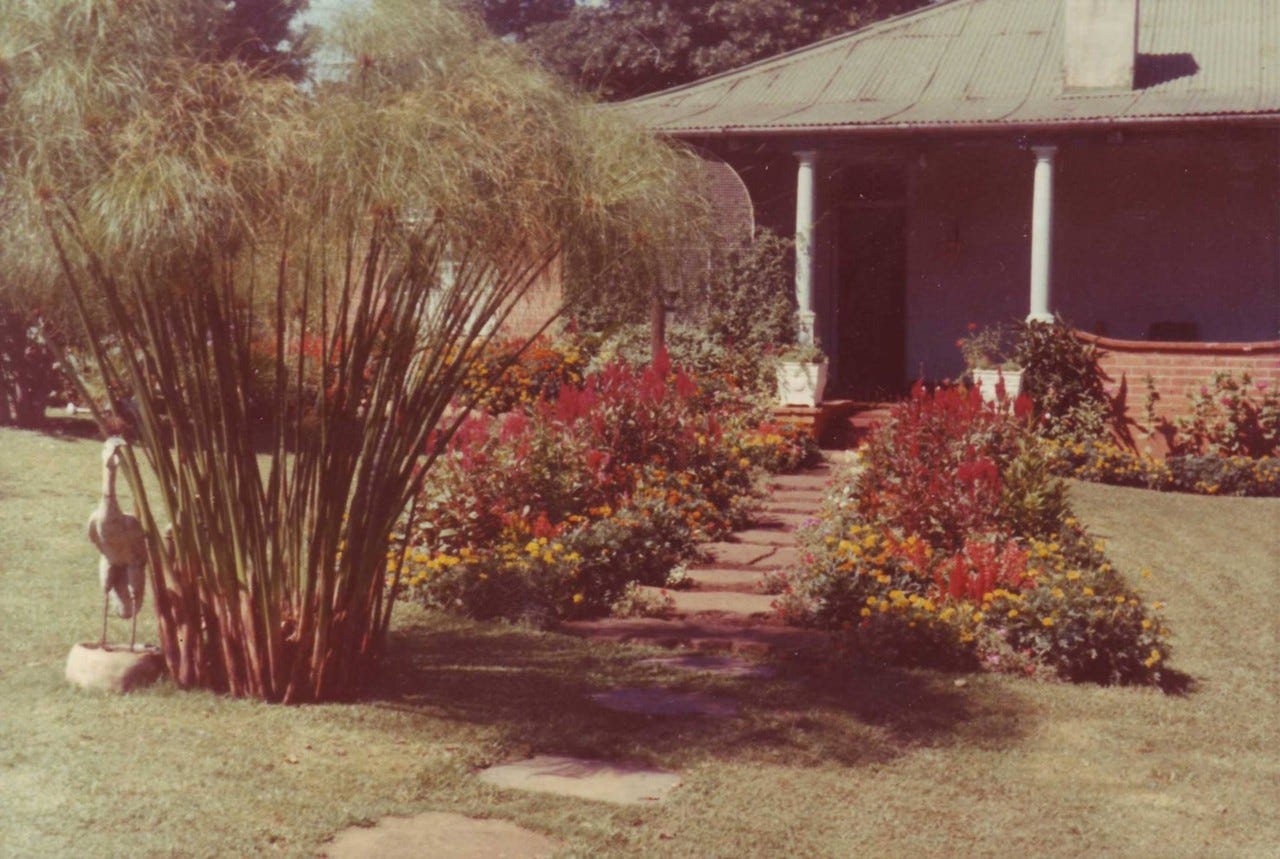
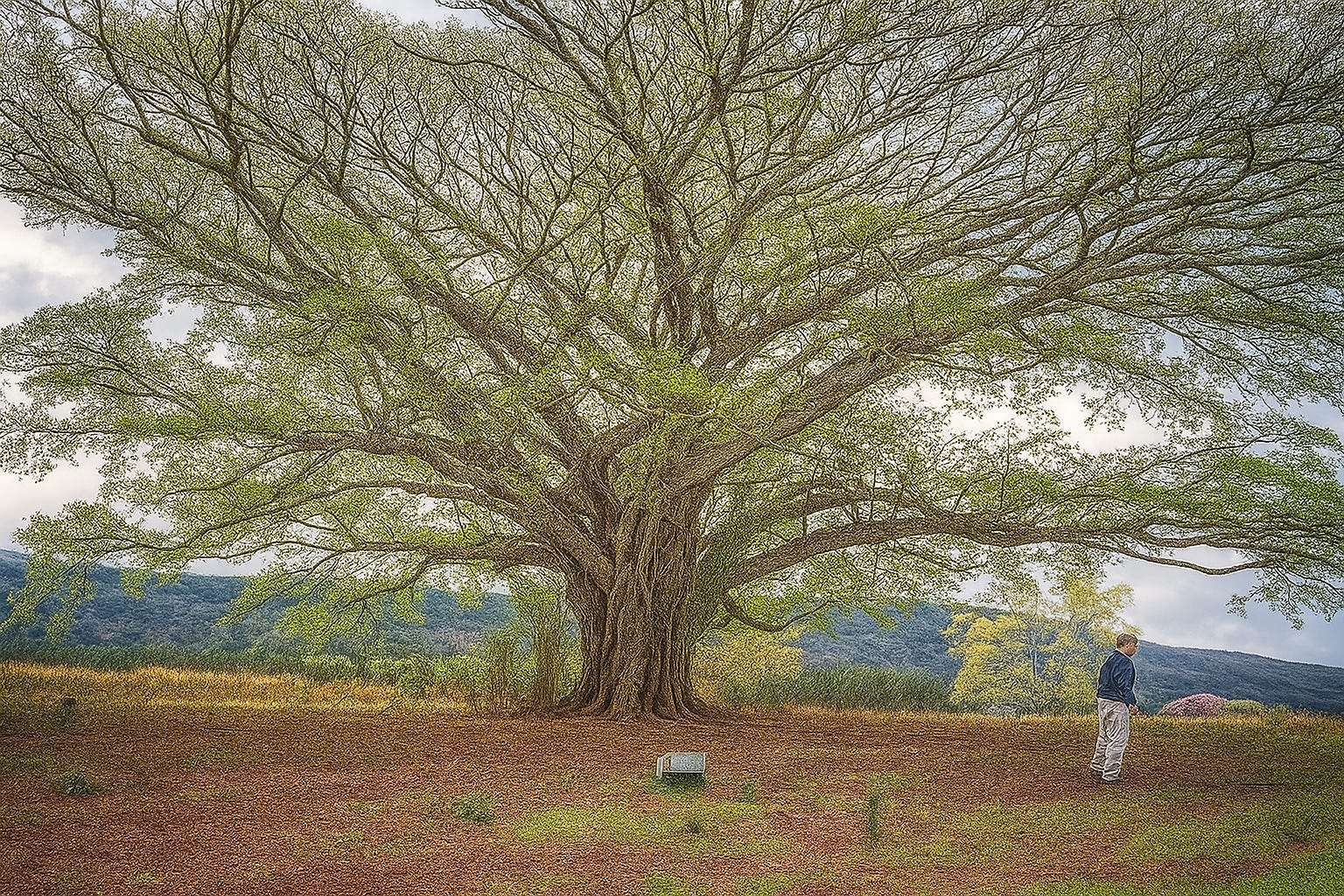
There are days when the Natal sun comes slanting in so low and slow, That you’d swear it was being lazy, like the tractor driver after lunch. And on those days—red-dust, still as death—you remember things. Things like a boy’s room, just off the stoep’s missing corner. Yes, the stoep wrapped round our house like a plaaswife’s apron, But it left out one side, the side with my bedroom. That’s where the wild fig grew, like a lone prophet A fig tree thick with whispering leaves, and in it, a Hammerkop’s nest Crumpled together like an old man’s thoughts.

I used to lie in bed, staring at that nest, Beneath a cowboy bedspread, Lone Ranger in fading thread. Outside, the sunbirds pecked at Leonurus, Their wings a kind of hymn, too fine for any church. I wore plaid shirts and plastic guns on my hips Like a Kalahari Clint Eastwood, Until one day Pa came along with the real thing A Finnish rifle, cold and straight-shooting, And an Italian shotgun with the smell of cordite and old men’s stories.

You see, on that farm, we grew potatoes Not just a crop, but a calling. Pa said meilies was for eating, but potatoes were for love. And Ma made them a dozen ways Boiled, fried, roasted, mashed, each one a hymn to simpler days. To this day, I bite into one and I am six again, Dust on my knees, sun on my back, Listening to Martial eagles cry from the copper phone lines Before dropping like justice on a sun-baked leguwaan.

Some kids grew up with lullabies, I had the creak of tin roofing in the wind And the smell of clay bricks after rain. That house, with its polished red tile stoep, Shone like pride, even in poverty. It stood with shoulders squared against drought and debt and death. And I—dusty, sunburned, gun-slinging in plastic Grew up with hammerkops, sunbirds, potatoes, And the slow, unspoken things that build a boy into the kind of man who doesn’t flinch When the rain forgets your name or the road cracks beneath your veldskoens.

~Roald Bartholomew

Ronald Bartels | LinkedIn | Instagram

Additional stories about growing up on Oakvilla farm
The Girl Next Door & Horseback Dreams

The farm next to Oakvila was a world of its own. The neighbouring farm was Sterk Spruit owned by a Doctor and named after the river that ran through it from the foot of Blinkwater mountain. At its heart was Linda, the girl who made my young heart race. Her family’s sprawling fields were just over the hill, and I’d concoct any excuse to wander that way. Horse riding lessons became my golden ticket. I wasn’t much for horses at first—my brother’s unease around them had rubbed off on me, but the prospect of seeing Linda made every dusty ride worthwhile. I’d saddle up, feigning confidence, while stealing glances at her as she moved with ease among the stables. Her laugh was like the chime of a bell across the valley, and though I never mustered the courage to confess my crush, those lessons were my happiest hours. The horses, the hay, the soft Natal breeze—they all blurred into the background, and it was just Linda, radiant and untouchable.

First Kisses & Fleeting Romances

Love, or whatever passed for it in those youthful days, was a whirlwind. My first kiss, or rather, a shy peck, came from Alison, whose father ran a dairy farm down the road. It was quick, awkward, and left my cheeks burning, but it felt like a triumph. Then came that unforgettable afternoon at school, when boldness overtook me. Louise, the German girl with eyes like a summer sky, and Rene, the French beauty with a mischievous smile, both found themselves on the receiving end of my newfound confidence. Two kisses in one day, proper ones, not pecks, and I was king of the world, if only for an afternoon. The schoolyard buzzed with whispers, and I walked taller, even if the thrill was fleeting and all because I was the designated judge to who was the better kisser. Needless to say, this unicorn was never repeated again


Flowers & Family Competitions

My mother’s hands were magic when it came to flowers. She could take a handful of blooms from the Oakvila garden and turn them into art, her arrangements winning ribbons at regional competitions. She taught me the craft, how to balance colors, how to let each stem breathe. I entered a youth competition once, more to make her proud than anything else. To my surprise, I won. The girls in the competition weren’t thrilled, their glares sharper than thorns, and I decided that was my first and last foray into flower arranging. Still, those moments with Ma, snipping roses and weaving greenery on the stoep, are pressed like petals in my memory.

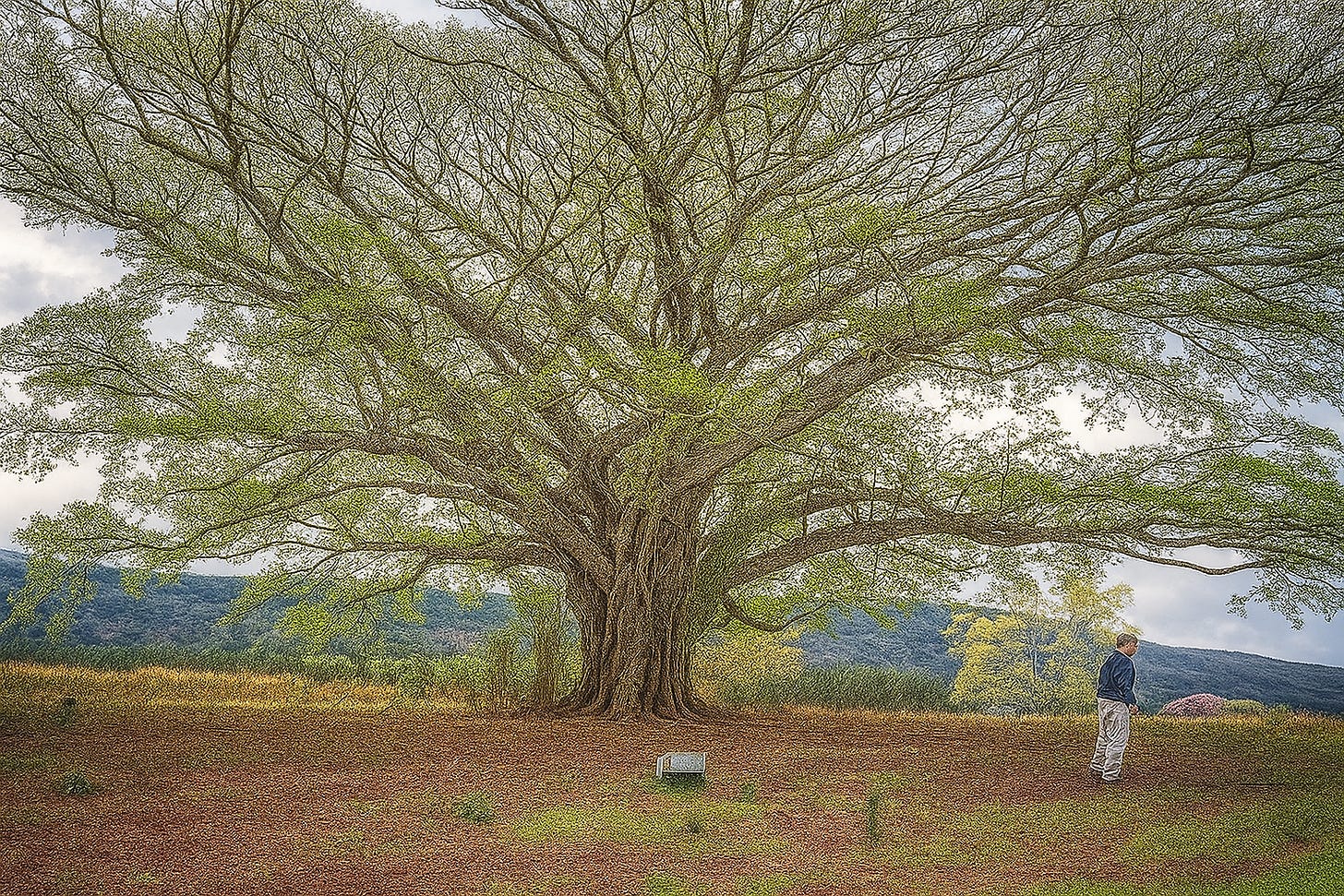
Shortly after my mom & dad married my oupa JT gifted my mom ‘n Knolklimop a.ka. Boweia Volubilis. This is a rare medicinal plant popular amount the zulus and I now have the descendants of that plant in my garden in the Big Smoke. All two hundred.

Sibling Shadows & Silent Resentments

My sister’s words always carried a sting when she spoke of Dad. “He never talked to me,” she’d say, “only to you, because you’re a boy.” It hurt to hear, and I’d push back, asking if she ever tried asking him about his life, his stories. She’d insist he wouldn’t have answered that it was because she was a girl. I wanted to shake her, tell her it wasn’t true. Dad built her a Wendy house, a proper sized dollhouse, just because she asked. He’d have answered any question, I’m sure of it, but she never asked. Next time she brings it up, I’ll tell her to stop, to see it wasn’t one-sided. Families are like that—misunderstandings grow like weeds if you don’t pull them out early.

Breaking from Shadows at Grey College

My brother was the smart one, always a step ahead, and I spent years trying to match him, not outshine him. It paid off, I topped my class at school, found my own strengths. Swimming was one. I won a race once, in the outside lane, blind to the other swimmers, just the crowd’s roar pushing me forward. I didn’t want to look like a fool, so I pushed harder and won. Even beat my brother once, though he’d outrun me any day. He shied away from horses and guns, especially after his friend’s tragic accidental death while handling his dad’s pistol. Dad taught me gun safety, how to respect a rifle, but my brother kept his distance. When a friend drowned in a neighbor’s pool, it shook me. I saw them pull him from the water, and instead of sadness, I felt a fire to learn to swim better. The neighbour doctor’s wife, an American nurse and former competitive swimmer, gave me lessons. Her three daughters including Linda were there, too, and I won’t lie—those swim sessions were as much about them as the strokes.

I wanted to step out of my brother’s shadow, to be my own man. I asked Dad to send me to a proper city school. Most were too pricey, but his friend Jood Jordaan suggested Grey College, his old school. Dad wrote a letter, but the first reply was a rejection. The party line was down, so he drove to town to call Jood. A week later, an acceptance letter arrived, and I was on my way. Jood and Dad went way back, to the sixties referendum when Dad was farming in Richmond. He’d wanted to cut ties with the British, a view not everyone shared. I asked him why and he said no-one needs to sing God save the Queen after watching a movie. A teacher, bitter about Dad’s politics, tried to ruin him—set fire to his farm, even placed a fake ad in Farmer’s Weekly claiming Dad was selling and leaving. Jood, a regional politician, helped Dad through it, and the police tracked down the culprit. The teacher was fired from his job and the district was one of the few in Natal to vote Yes to South Africa becoming a Republic. The Yes victory was small, only 2% and that in no small part was due to that incident and a shift in that district. That same Jood got me into Grey College, and I carried that chance like a torch, ready to light my own path.

Road Trips with Dad

The road to Bloemfontein stretched 500 kilometers, a long ribbon of dust and tar that carried Dad and me from Oakvila to Grey College, where I boarded. We’d pile into the Mercedes NH3000, its engine humming like a promise, or sometimes the Datsun, less grand but just as reliable. Those trips were more than travel—they were a classroom. I’d pepper Dad with questions about our family, our history, and he’d unfold stories like maps, tracing lines back to Richmond, the referendum, and the farm’s struggles. His voice was steady, weaving tales of resilience and roots against the hum of the road.

One year, I joined him on a proper trek, riding shotgun in a truck bound for the Kouebokkeveld to buy seed potatoes. The journey was endless, the landscape shifting from Natal’s green folds to rugged, open plains. We talked for hours—about the land, the seasons, our people. Those moments stitched me to my past, to him. But by my last year at Grey, we got a car with a cassette tape deck. Music filled the cab, and our talks grew quieter, the stories drowned out by scratchy tapes. I didn’t realize then how much I’d miss those long, uninterrupted conversations, the ones that made me know who I was.

Television & Rally Days

Getting our two-hour evening television fix was no small feat at Oakvila. Nestled halfway down the valley’s slope, our house was a dead zone for TV signals. At first, Dad rigged an antenna atop the mountain behind us, tethered to the house by a long, snaking cable. It worked until fire season, when flames claimed the setup. Undeterred, Dad had a signal repeater installed by the lime shed across the valley, bouncing the signal back to us. With that, we were glued to High Chaparral, Bonanza, and Village People—not the pop group, but a gritty series about South African miners. Those evenings, huddled around the flickering screen, felt like a hard-won victory.

The farm had other thrills, too. Dad’s Tinkabi, an irrigation tractor with a massive tank and oversized wheels, was a beast. Powered by a Lister diesel engine, it sprayed insecticide and weedicide across the fields. In winter, starting it was a battle. The crank handle demanded muscle, and everyone—family, farmhands—lined up to take a turn. When the engine finally roared to life, it kicked like a mule, and you had to leap back to avoid a whack from the spinning handle. It was a ritual, equal parts chore and adventure.

But nothing beat the annual Natal Rally. The organizers would visit Dad beforehand, begging him to keep the irrigation running near the starting line. The result? A gloriously muddy mess. We’d drag our deck chairs to the edge of the field, settling in to watch cars fishtail and slide. Heavy-footed drivers spun out, some veering off the road entirely, plowing into sugar cane fields at breakneck speed. One year, a car smashed into the telephone pole where the martial eagle used to perch, man, that pole was moer toe, and the crowd roared. From our vantage point, we’d track the cars tearing through the valley, cheering when someone took a wrong turn and vanished into the cane. I’d dream of climbing into a souped-up Ford Capri, voet in die hoek, tearing through that special stage with the crowd’s shouts in my ears. Those rally days were pure, electric chaos, and they lit up Oakvila like nothing else.

Doves, Forts, & Farm Adventures

My parents brought home white fantail doves, proud little creatures that puffed out their chests like they owned the place. Dad had a special birdhouse on a pole built for them, a multi-level affair with tiny rooms and a quaint black roof, perched like a palace in the yard. I reckon the martial eagle, ever-watchful from its telephone pole, nabbed a few—the doves’ soft cooing was no match for the weavers’ racket in the wild fig tree. Ma’s garden, a prize-winning spectacle of lawns and rockeries, turned our dusty farmhouse into something out of a countryside dream, and those doves added a touch of elegance, like we were lords of a manor.

We were vegetable farmers, not livestock keepers, so meat came from the New Hanover Co-op butcher. The few chickens we had were scrawny, street-smart survivors, darting around the yard like they’d studied evasion tactics. Catching one was a mission—they’d bolt like lightning. When I did snag one, I’d draw a line in the sand, press its beak to it, and watch it freeze, transfixed. I’d laugh till my sides hurt. The farm was alive with guinea fowl, their cackling chorus filling the sunset. You couldn’t walk ten steps without finding porcupine quills or their speckled feathers. Dad loved a guinea fowl roast, though its gamy taste never won me over. He’d insist it wasn’t sporting to shoot a bird on the ground or in a tree—only in the air. With just one good eye, I was a crack shot, the challenge feeling as natural as breathing.

I built forts all over Oakvila, my cowboy playgrounds. There was one in the old sheds, where carpenter bees bored nests into the beams; another in the wild fig tree; one in a donga near the dam’s slopes; another by the babbling stream in the horse camp, where wild Canna plants grew; and one atop the hill, where granite boulders looked like giant Zulu bums. If I’d been naughty and Ma or Dad came looking, I’d vanish into a fort. Once, I disappeared for two full days, sustained by phuthu and maas from the Zulus, who’d chuckle at my antics. I could’ve lasted longer.

One day, Dad roped me into hunting for a missing tractor. The driver had vanished, and the party line buzzed with no sightings. We hopped in the Datsun, scouring the farm. Near the dam wall, we spotted tracks plunging into the water, the tractor’s exhaust stack poking just above the surface. I dove in, hooked chains to the frame, and we hauled it out. The driver was never seen again. Word among the workers was he’d been drinking, took the tractor to visit his girlfriend, and feared Dad’s wrath—Mastelek, they called him. He never returned.

At night, Oakvila was pitch-dark, save for the glow of Zulu fires. I’d roam with a battery torch, camping in my forts just for the thrill. My brother and I spent holiday hours building dams in the farm’s streams, piling stones and mud with a beaver’s obsession. He’d later become an engineer, and I got it—there was a deep satisfaction in shaping water’s flow. We had no beavers on Oakvila, but we had seen them on the nature programs on the Telefunken; we were the beavers, crafting our own wild world.

Zulu Neighbors & Farm Justice

The Zulus on Oakvila, the Gumedes and Ncunes, were a wary lot, steeped in their own ways. They propped their beds on bricks to ward off the tokoloshe, a mischievous spirit I never saw but felt through their hushed tales. The Gumedes marked their cheeks with distinct cuts, badges of their lineage, while the Ncunes stretched their earlobes for bold, ornate earrings that caught the sun. I soaked up their world before I knew my own, learning Zulu as my first tongue, its rhythms as natural as the farm’s dust. But city life—the Big Smoke—diluted it, and now those words slip through my fingers like sand.

They taught me to fear snakes early, especially the puffadder. “It has teeth in its tail,” they’d say, claiming it could strike backward while lazing on a path. I later learned it was just the snake’s sluggish ambush style, but the myth sank deep, and I’d leap over any shadow on a trail. Dad, fluent in Zulu and its dialects, often doubled as a court interpreter when the magistrate—a schoolmate—needed help on busy days. He said Zulu justice didn’t truck with hearsay. A man caught red-handed would confess, but a cow in your kraal wasn’t theft unless you were seen driving it there. No proof, no crime.

Dad hired a towering Ncune as the farm’s walkabout, armed with a knobkerrie to deliver swift justice to anyone caught in the act. But harvest days softened the edges. Vegetables that didn’t make market grade were handed out free to the workers, the rest bartered with a neighbor down the road—a mechanic who’d fix tractors or trade milk for our surplus. Oakvila ran on deals like that, a web of barter weaving us all together, as much a part of the farm as the soil itself.

Thorns, Stews, & Sunday Braais

One day, my sister’s scream echoed across the farm—she’d driven a thorn clean through her foot. She wailed as Dad, calm as ever, grabbed pliers and yanked it out. That set her off again, crying blue murder, tears flowing like a burst dam. Life on Oakvila was like that—sharp moments softened by family. Our farmhouse glowed with incandescent bulbs, no LEDs in sight. The shed had a massive mercury vapor light, like the ones on city streets, humming bright. Electricity powered the farm’s heart, especially the irrigation pumps. Dad, ever resourceful, bought a Wolf electric lawnmower and strung together a tangle of extension cords to tame Ma’s sprawling lawn. In his office, an old valve radio crackled with Morse code and foreign tongues, its wavebands pulling in voices from across the globe. I’d sit there, mesmerized by the pops and hisses, worlds away from our valley.

Ma’s kitchen was a haven of German comfort. Her Stegen’s stew, a recipe from Oma Bertha, was a hearty cousin to Irish stew, rich and warming. We ate brown bread with meat preserves and porridge wurst, a spread I loved but rarely saw elsewhere—store-bought spreads were a luxury glimpsed only in other kids’ school sarmies. Potatoes were our staple: bratkartoffel, poeffer roti, or halved spuds roasted with cheese and spring onion, crisp and golden. Ma served cabbage with nutmeg, and we feasted on farm-grown carrots, cauliflower, and brussels sprouts, alongside Zulu imifino and madumbis. Breakfast was mielie pap, oats, or phutu with maas, but the real treat was Ma’s stywe pap with gravy and boerewors, the Voortrekker’s fare, filling us with history.

Sundays meant braais, the fire loaded with steak, chops, and wors. One Sunday, Dad spotted monkeys raiding the mealies in the valley. He called for his Finnish Sako 7mm Remington Magnum, only for me to confess I’d shot all the bullets in target practice. Unfazed, he sent me for the Czechoslovakian Winchester .458 elephant gun. From the stoep, he took aim, and a monkey vanished like it’d been zapped by a death ray. The rest scattered, bolting for the hills as if the devil himself had arrived. Dad fired again, missing a monkey but hitting an irrigation pipe. A geyser erupted, sending his mate, the magistrate, into fits of laughter. I joined in, only to be sent to the shed for a spare pipe to fix the mess. That braai, with its chaos and meaty smoke, was Oakvila at its finest—wild, warm, and unforgettable.

Phone Books & Walkie-Talkies

Next to the old Siemens Bakelite phone in the farmhouse sat a stack of phone books—Pietermaritzburg, Durban, and the Yellow Pages. They were like treasure maps, listing every person’s number and address in the area, with the Yellow Pages cataloging goods and services. Those books are gone now, swallowed by the internet’s endless sprawl. Dad pored over ads in the Natal Witness and Farmer’s Weekly, always on the hunt for a deal. Ma loved her Garden and Home, dreaming up new corners for her prize-winning garden. My sister, meanwhile, was glued to Scope, its centrefold the first thing I’d sneak a peek at—especially when censorship laws slapped white stars over the models’ nipples. Scope spilled stories we’d never catch on TV or in the papers, a window into a racier world.

The Reader’s Digest was my real teacher, arriving each month in the postbox. I’d devour it cover to cover, its pages schooling me in English better than any classroom. Life on Oakvila moved slow, purchases weren’t impulsive. A trip to the shop took planning, sometimes weeks or months, the pace of the farm setting its own unhurried rhythm.

The real thrill came from Dad’s National walkie-talkies, made in Japan, powered by eight AA batteries each or a 12V line. They worked from one end of the farm to the other, turning me into a kid straight out of CHiPs on our Telefunken TV. I’d cycle to New Hanover, one radio clipped to my belt, and call Ma in the kitchen when I was in range. My brother and sister weren’t keen to chat, so Ma was my lifeline, her voice crackling back through the static, tying me to home no matter how far I roamed.

Yamaha Scramblers & Dirt Road Thrills

When [CHiPs](https://www.instagram.com/reel/DNCojbptoi-/?utmsource=igembed&igrid=AvDGQjg6hVAxrwrn63VYRy “Chips”) started flickering on our Telefunken, Dad brought home two Yamaha scramblers—a DT175 and an AG100. They were our new stallions, replacing the horses for tearing around Oakvila. My brother, the daredevil, led the charge, bragging about his jumps and hill climbs, with me hot on his heels. The best spot was the dam wall, where you’d hit the dirt at speed, the slope steepening near vertical. Time it right, and you’d launch into the air, landing perfectly still on the wall—a heart-pounding thrill that never got old. We carved routes through sheer drops and rocky paths, racing circuits on the district’s dirt roads, kicking up clouds of mud and dust.

Those bikes were freedom, but one lesson stuck hard. A kid in the district died when a corrugated iron sheet flew off a truck’s bed, striking him. From then on, I never tailgated a truck, the memory of that tragedy keeping my throttle in check no matter how wild the ride.

Watching Films on the Telefunken

At Oakvila Farm, the Telefunken television was the heart of our family entertainment, glowing warmly in the living room as we gathered to watch a mix of old movies and classic TV shows. Among the films, [Oklahoma](https://youtu.be/BIGGVE-KiE “Oklahoma”)!_ stands out vividly in my memory, its vibrant musical numbers and sweeping landscapes filling the screen. It was one of many old cowboy movies we enjoyed, alongside Western staples like Bonanza and High Chaparral, broadcast on the SABC with Dorian Berry’s familiar voice as the continuity announcer, guiding us through the evening’s lineup. The Telefunken also brought us timeless religious-themed classics like Ben-Hur, its epic chariot races and grand storytelling captivating us. Those evenings spent watching the flickering screen created a cherished ritual, blending nostalgia, adventure, and drama in the cozy embrace of the farm.

In die hart van my huis, op die muur in die eetkamer, hang ‘n stukkie geskiedenis wat my altyd laat glimlag – ‘n Willow-patroon serviesbord vir gebraaide vleis, so groot dat selfs die Koningin van Engeland trots sou gewees het om dit op haar tafel te gebruik. Dit is my ouma Joey se bord, wat sy van haar ma geĂ«rf het. Haar ma was ‘n Maritz, en ek vertel almal dat dit op die Groot Trek was.

Daardie porselein op my muur is gemaak aan die draai van die 19de eeu, so dit was definitief op die Groot Trek. As dit kon praat, watter stories sou dit nie vertel nie! Getrek met os-wa van die Kaap na Natal, deur stofwolke en rivierkruisings, deur die swaarkry van die Voortrekkers. Dit het sekerlik feesmale gesien, waar families bymekaargekom het om te eet en te bid, te midde van die wildernis. Vir my is dit meer as net ‘n bord; dis ‘n skakel na my voorsate, ‘n herinnering aan hul moed en deursettingsvermoĂ«. Elke keer as ek daarna kyk, voel ek die gewig van daardie geskiedenis, en ek wonder oor die hande wat dit gehou het, die stories wat dit stilweg bewaar.

Paving the Way | Shale, Mud, and Unforgettable Farm Adventures

Growing up on the farm, the rhythm of life was dictated by the seasons, the soil, and the whims of the weather. But nothing quite captured the essence of our resourceful, hands-on existence like those rainy seasons when the dirt roads turned into treacherous quagmires. My dad, ever the practical problem-solver, had a simple mantra: if the rain was going to try to keep us from the world, we’d fight back with whatever the land gave us. That’s how I learned the art of loading shale stones onto a dump truck—a chore that doubled as one of my fondest childhood adventures.

It all started with the school run. We’d pile into our trusty yellow Kombi van each morning, a cheerful beacon against the green fields and rolling hills. But come the rains, those roads became a slick nightmare. The wheels would spin futilely in the deep mud, the van bogging down like a stubborn mule, and we’d be stuck, laughing nervously as the clock ticked away to being late. My parents were adamant: education was non-negotiable. “No missed days,” Mom would say firmly, while Dad nodded, already plotting our counterattack. Missing school wasn’t an option in our house; it was the gateway to a bigger life beyond the farm fences.

So, out came the equipment—relics of farm ingenuity that felt like extensions of our family. The loader was a beaten-up old blue Ford tractor, its paint chipped and faded from years of hard labor, with a sturdy bucket bolted to the front like a giant metal scoop. I’d climb up into the seat, feeling ten feet tall, as Dad guided me through the controls. “Easy on the throttle, now scoop low and lift steady,” he’d instruct, his voice calm but commanding. We’d head to the shale pits on the property, where I’d maneuver that bucket to grab heaps of jagged, gray stones—nature’s own paving material, tough and unyielding.

Then there was the dump truck: a converted Ford spud truck, originally designed for hauling potatoes but repurposed for just about anything that needed moving. It had that classic rumble, a deep-throated growl that echoed across the fields as we loaded it up. Bucket by bucket, we’d fill the bed with shale, the stones clattering like applause as they tumbled in. Dad and I would work side by side, with the farm labourers pitching in. The air would fill with dust and the scent of the dust, and by the end of the day, our hands were calloused, our clothes caked in grit, but our spirits soared.

We targeted every troublesome spot—the low dips where water pooled, the curves where the Kombi always slipped. Spreading that shale felt like laying down a promise: no more spinning wheels, no more frantic pushes to free the van from the mud’s grip. Layer by layer, we paved those bits, creating makeshift roads that held firm even in the heaviest downpours. It wasn’t fancy asphalt; it was raw, rugged, and entirely our own handiwork. And it worked. Come rain or shine, we’d make it to school, arriving with stories of our latest conquests over the elements.

Looking back, those days weren’t just about fixing roads—they were about resilience, family bonds, and the sheer joy of turning hardship into triumph. I can still feel the vibration of that old Ford tractor under me, hear the satisfying thud of stones hitting the truck bed. It was absolutely fun, the kind of simple, sweaty fun that sticks with you. Even now, decades later, just thinking about it brings a wide smile to my face. What a great memory, etched in shale and mud, a testament to the farm life that shaped me.
Ronald Bartels | LinkedIn | Instagram
Multiple Forced Trips to the Doc for Stitches

Growing up on Oakvilla farm in the Natal Midlands, life with my siblings Lyn and Andre was a mix of the rough-and-tumble freedom of rural childhood and something sharper, more one-sided. I was the youngest, and it often felt like I bore the brunt of their mischief—or worse. Never once did I raise a hand against them in retaliation during those early years; I was the one who ended up with the scars, both visible and otherwise.

Andre, my brother, had a particular knack for turning everyday moments into emergencies. One afternoon in the farm shed, while I was wobbling around learning to ride my bicycle, he decided to “help” by forcing me straight into Dad’s Mastelek tree stumper, a hefty machine for clearing fields. The impact sent me sprawling, and off I went to the doctor for stitches. Another time, at my grandparents’ house, I was happily playing inside an old storage bin when Andre jumped onto the lid with all his weight. The sudden slam drove my head against the sharp corner inside, splitting my eyebrow open. Again, stitches, and another trip to the doctor.

My sister Lyn wasn’t far behind. One day, while I was digging in the sandpile Dad had delivered for building the new swimming pool, she came at me with a spade. She swung it hard, aiming for my head in what felt like a deliberate attempt to scalp me, Apache-style. The blow landed, blood flowed, and it was yet another dash to the doctor for stitches. My retaliation which included my brother was to pelt her with oranges in the farm house during one lazy Sunday.

These incidents weren’t rare pranks; they piled up, and Andre’s assaults grew into outright punches as we got older. I took it all without fighting back, until one day I’d had enough. In a moment of desperation, I threatened to shoot him with Dad’s old Lee Enfield rifle. That was the breaking point. Dad, sensing the tension boiling over, decided it was time to separate us. I willingly packed my bags and headed off to boarding school at Grey College, a move that probably saved us both.

Years later, in my matric year, Andre was home from varsity for Christmas. We started wrestling on the front lawn, the way brothers do, but this time I was stronger, older, and ready. I pinned him down and, for the first time, let my fists settle the old score, all those punches he’d rained on me over the years. His shouts brought Mom running. Without a word of question, she kicked me hard with her high heels to break it up. I protested, explaining I was only paying him back for the years of abuse, but she brushed it aside, saying he had a sore neck. In the end, it didn’t matter. We were even. From that day on, the air cleared, and we became firm friends, true brothers at last.

That newfound bond deepened over time. When I got married, Andre was my best man. He was working in Perth when he heard the news in his office about Kath’s passing. Without a second thought, he rushed to the airport in whatever clothes he was wearing and caught the first flight back to South Africa to be there for me.

Andre passed away in Dwellingup, far from the farm where we’d grown up. Now, with him gone, Lyn is the only one left of our immediate family. Those childhood battles on Oakvilla left me with stitches and stories, but they also forged the complicated ties that held us together in the end.

Ronald Bartels | LinkedIn | Instagram