The Morning Patrol with MastelekđŸ’Ș

Stories of Mastelek who enjoys farming Boweia Volubilis

The Technology Odyssey of a Cold Blooded Mathematician
My fascination with computers began in the simplest of ways, back in the 1970s on our family farm. My first taste of the digital world came from my dad’s Texas Instruments calculator—a rechargeable marvel that could perform basic arithmetic and even some advanced functions. I was utterly captivated by its glowing LED red display and the way it crunched numbers effortlessly, hinting at a future where machines could handle the mundane and unlock new possibilities. It was a far cry from the pencil calculations we were used to, and it sparked a lifelong curiosity in me.

Fast forward to my school days at Grey College, where I got my hands on an Apple IIe. This 8-bit machine, with its colorful graphics and floppy disk drive, introduced me to the world of programming in BASIC. I’d spend hours typing in code for simple games and utilities, watching pixels come to life on the screen. At home, I had a Sinclair ZX81, another 8-bit wonder, but far more rudimentary—it relied on a cassette tape deck for storage, which meant patiently waiting through screeching audio tones to load programs. Both systems taught me the fundamentals of coding, fostering a love for problem-solving through loops, conditionals, and subroutines.

University at Stellenbosch (Maties) marked a significant leap. We started with MS-DOS and GWBASIC on Olivetti M24 IBM-compatible PCs, clunky but reliable machines that ran our early programs. Soon, we transitioned to Turbo Pascal, which I adored for its structured elegance and speed—it’s a pity it’s no longer in mainstream use today. Our curriculum expanded to Data General System IV UNIX systems, where I dove into C, lex, and yacc to build compilers, unraveling the mysteries of how languages are parsed and executed. We even bootstrapped MINIX, an early Unix-like OS, onto those IBM compatibles. MINIX was what Linux was based on and its the most widely used operating system to this day as its used in every Intel processor for management. Alongside, I learned Microsoft assembler and crafted TSR (Terminate and Stay Resident) programs. During one holiday break, I built an assembler utility paired with a Turbo Pascal backend to interface with an alarm system via a serial cable—a practical hack that blended low-level control with higher-level logic.

My time in the Navy brought real-world applications. I wrote a TSR that monitored and logged user activities, essentially a precursor to modern security tools, helping detect system abuse. Another project involved interfacing a David Braille computer to an IBM-compatible PC via serial connection, enabling blind users—lawyers, switchboard operators, and others in South Africa’s blind community—to access computing in the 1980s. I also used Clarion, a database-oriented language, to develop the Navy’s personnel system with various modules for tracking and management.

Moving to Transnet introduced me to the behemoth world of mainframes. On IBM mainframes, I programmed in COBOL with embedded SQL on DB2, orchestrated by JCL scripts—handling vast datasets for enterprise needs. I repurposed Clarion for a National Laboratory system that logged water samples from railway lines across the country. Networking became a focus too: I set up SNA communications over token-ring, integrated Novell NetWare with OS/2 gateways, and grew intimately familiar with OS/2 as my desktop OS. We dabbled in Natural on Adabas for database work, all running on IBM PS/2 machines—tough as nails, with keyboards sturdy enough for impromptu cricket games.

Joining a Novell reseller shifted gears to networking expertise. I installed Novell NetWare on Compaq servers, which boasted unparalleled management software that no modern equivalent has matched. I earned my Enterprise CNE and later Master CNE certifications, while using OS/2 alongside Windows 3.1. This era introduced me to Windows NT, leading to multiple MCSE certifications as I mastered server administration.

At Madge Networks, known for their Texas Instruments smart adapters, I worked with hardware that offloaded network processing from the PC, crucial for memory-constrained DOS and Windows 3.1 environments. The arrival of Windows 95 was a game-changer; I ran it on an IBM Butterfly laptop, appreciating its portability. We deployed token-ring switches and hubs, managed via TrueView and TrueView/32—WYSIWYG tools that made network oversight intuitive, far superior to today’s often clunky alternatives.

By the time I joined Investec, Windows had evolved into my steadfast desktop companion: from Windows 2000 and XP, all the way up to Windows 11 today. I’ve remained agnostic in the desktop wars—though I must confess a deep-seated disdain for Macs and their infamous one-button “penis mouse,” which always felt like an ergonomic afterthought.

In parallel, I’ve embraced Linux deeply, mastering Debian and openSUSE for servers, applications, and even SD-WAN nodes. The ecosystem’s versatility is endless, powering everything from secure gateways to custom scripts. For browsing and cybersecurity, Firefox has been my go-to since its early days, paired with Wireshark (originally Ethereal) for packet analysis—essential tools for anyone in networking, where understanding the flow of data is paramount.

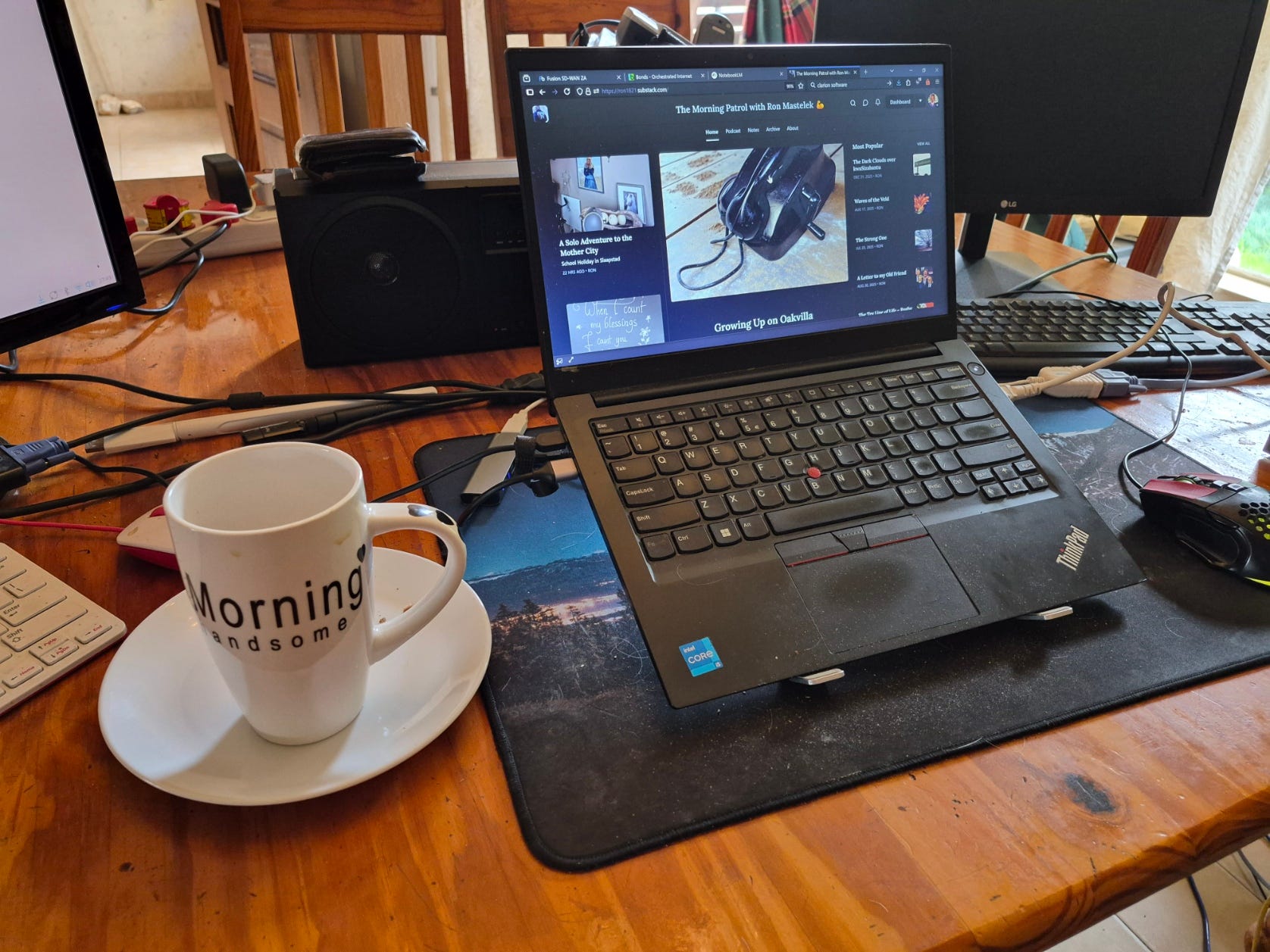
To this day, I type these reflections on a ThinkPad laptop, a reliable workhorse that echoes the durability of those early IBM PS/2s. From that humble TI calculator to modern Linux servers, each system has been a stepping stone, teaching me resilience, innovation, and the sheer joy of bending technology to human will. Computing isn’t just tools—it’s the thread weaving through my life’s adventures.
Ronald Bartels | LinkedIn | Instagram

Insightful conversation leading up to our wedding

When Kathleen (Kath) & I decided to tie the knot, her dad wasted no time stepping in like the family patriarch he was. “I’ve got Dr. Don Veysie lined up to handle the ceremony,” he announced. It was a done deal. A meeting was promptly scheduled, and off we went to his church office, where the good doctor jumped straight into the fray. No small talk, no pleasantries about the weather or our engagement story. Instead, he laid down the law: “I’ll only marry you if you complete a marriage guidance course first.”

Kath, ever the practical one, lit up at the idea. “That’s brilliant,” she said, and just like that, we were signed up. I nodded along, but in the back of my mind, I couldn’t shake the feeling that this was some kind of elaborate test. Before we left, he pulled me aside and said, “Come see me alone once the course is done.” An examination? A secret ritual? My imagination ran wild.

The course itself turned out to be a revelation—not the fire-and-brimstone I’d half-expected, but a series of practical evenings that felt like upgraded date nights. We’d hadn’t been together for long, and this forced us to dig deeper, uncovering quirks and habits we’d somehow glossed over in the early stages of the romance. It was eye-opening, the kind of preparation that made me grateful we’d agreed to it. No regrets there.

Once we’d ticked that box, I rang up the doctor and arranged to meet at his home office in Parkview. I arrived a bit nervous, palms sweaty, half-convinced this was where he’d deliver the verdict: thumbs up or elope to Parys? We sat across from each other at his desk, and he didn’t mince words. “Are you a Christian?” he asked point-blank.

I paused, then dove in. “Well, I’m Lutheran, but I have a problem with labels.” He leaned forward, intrigued. “Why’s that?” At the time, the Hansie Cronje cricket scandal was still fresh in everyone’s minds, the South African captain caught in a match-fixing mess, blaming it all on the devil tempting him. “You see, Doctor,” I said, “I don’t believe the devil exists. It’s just an excuse people use to dodge responsibility. If I don’t buy into that, does it mean I’m not a Christian?”

He didn’t flinch. Instead, he smiled and said, “I agree with you.” Now it was my turn to be surprised. “How so?” I pressed. He leaned back, explaining it with the calm precision of someone who’d pondered this a thousand times: “Absolute evil and absolute good can’t coexist—they’d cancel each other out, leaving nothing. The devil, as absolute evil, doesn’t fit in a world like ours.” As a cold-blooded mathematician, that logic hit home. It was elegant, almost equation-like, balancing the scales of existence.

His words stirred up memories of what my dad had taught me about the biblical Jesus. The Bible, he’d said, was penned by Greek speakers who thought in metaphors, not literals. Faith wasn’t about declarations or labels; it was about integrity, actions over words. Gauging someone’s heart by what they said aloud was a fool’s errand, intent showed in deeds. I shared a bit of that with the doctor, and he studied me quietly for a moment, as if weighing me up.

Then, with a nod, he said, “I see you at the wedding ceremony.” Relief washed over me like a tidal wave. As I’d been spilling my guts, a nagging doubt had crept in, maybe brutal honesty wasn’t the smartest play here. But it had worked. We were cleared for takeoff.

In my relief, I almost forgot the practicalities. “How much do I owe you?” I asked. He chuckled. “I expect nothing, but whatever you give, I won’t say no.” Fair enough. On the big day, I slipped a wad of crisp notes to my brother, my best man, with instructions: “Stitch up the dominee for me, I might forget in the chaos.” Later, my brother confessed he’d thought I was being a bit of a schnorrer and topped it up with Dad’s help. At the reception, Dr. Veysie pulled me aside with a grin. “Thanks,” he said. “I had a good chat with your brother.” It was a small gesture, but it capped off the whole adventure perfectly, honest, unexpected, all with a unique touch.

Ronald Bartels | LinkedIn | Instagram

The Maternal Legacy in the Calvinist Influence of Afrikaans

My maternal grandfather, John Elliot, carried the blood of Scotland’s rugged hills in his veins, a descendant of both the Elliots and Murrays—clans known for their resilience and deep Protestant faith. These forebears weren’t just wanderers; they were part of a deliberate wave of Scottish Calvinist ministers and schoolteachers recruited by the British authorities who took control of the Cape Colony in the early 19th century. After the British seized the Cape from the Dutch, and solidified their hold, they sought to anglicize and “civilize” the region, including the rural Boer communities who were often isolated and resistant to outside influence. The Church of Scotland played a key role here, sending educated Calvinists like my ancestors to fill vacancies in the NG Kerk and establish schools. These Scots brought their strict Calvinist theology, emphasizing predestination, moral discipline, and education as tools for upliftment. It was an effort to bridge the cultural divide, teaching English, scripture, and basic skills to the Boers, who were spreading out into the frontier. In essence, this migration helped weave Scottish threads into the fabric of South African society, influencing everything from church governance to community schooling during a time of colonial transition.

The Murrays, in particular, left an indelible mark. My great-great-grandfather, Andrew Murray Sr., emigrated from Scotland in the 1820s, becoming a pivotal figure in the NG Kerk. Born in 1794, he married a woman of Huguenot and German descent, and together they raised a large family in Graaff-Reinet—sixteen children, with five sons following him into the ministry. His son, Andrew Murray Jr., born in 1828, became one of South Africa’s most renowned theologians, pastoring churches across the Cape and authoring over 200 books on prayer and devotion. The Murrays were instrumental in establishing and expanding the NG Kerk, promoting education and missionary work that reached deep into South African society. It was this lineage that named my grandfather John and his brother Andrew, honoring the Murray side through their mother—a nod to the family’s prominence in shaping Afrikaner religious life.

Years later, when I boarded at Grey College, one of the hostels bore Andrew Murray’s name, a quiet reminder of that heritage staring back at me from the dormitory walls. My grandfather himself grew up in Oudtshoorn, rubbing shoulders with neighbors like C.J. Langenhoven, the celebrated Afrikaans poet and advocate who penned the words to “Die Stem.” Langenhoven, born in 1873 in the nearby Ladismith area, was a force in promoting Afrikaans culture and language during a time when English dominance loomed large. My grandfather rose to become treasurer of Langenhoven’s Saamwerk Komitee, an organization focused on cooperative efforts—in literature, politics, and community building—that embodied the spirit of unity Langenhoven championed amid the fractious Afrikaner world.

And fractious they were, those early Afrikaners, like herding cats. Rivalries simmered and boiled over into generational feuds, none more emblematic than the tensions between Gerrit Maritz and Piet Retief during the Great Trek of the 1830s. Maritz, a pragmatic leader, clashed with Retief’s bolder ambitions, even offering to take risks in his stead to avoid disaster as the Voortrekkers pushed northward against Zulu forces and British oversight. These old grudges lingered in family lore; my Ouma Joey would recount them with a stern eye, ensuring we carried the torch forward, lest we forget. Read about my Ouma’s clan (The Maritz Clan).

There’s an ironic twist threading through all this piety and division. In the mid-20th century, Erlo Stegen, founder of the kwaSizabantu Mission and a well known cult, triggered a revival among the Zulus that echoed eerily familiar tales. His book, God Among the Zulus, described a manufactured spiritual outpouring starting in the year that I was born at Mapumulo, complete with confessions, healings, and communal transformation. But when I once stayed with the Joostens during my parents’ holiday to Namaqualand, I rifled through their dusty bookshelf and pulled out a biography of Andrew Murray. Devouring it, I learned of the 1860 revival in Worcester, where Murray Jr. witnessed an explosive awakening—prayer meetings erupting in fervor, sinners repenting en masse, and the Spirit descending like fire on Pentecost. Later, reading Stegen’s narrative, the parallels struck me: the buildup of prayer, the sudden breakthrough, the ripple effects across communities. It felt less like coincidence and more like assimilation, a borrowed blueprint from the Murray story in the Western Cape. This wove a strange thread between my maternal family’s Calvinist roots and the evangelical fervor on my paternal side, blurring the lines of our household’s divided faiths. Read more about kwqSizabantu (The Light Does Not Touch kwaSizabantu).

Ironically, it was at this stay with the Joostens that I myself truly became Mastelek ncane. Read the story about The Strong One.

As for me, I leaned more Lutheran than Calvinist—easier to entertain ideas like evolution without drawing fire. In Lutheran circles, you could ponder Darwin’s theories without immediate ostracism, whereas the NG Kerk crowd saw it as a hard stop, a threat to creation’s literal timeline. My dad, fed me stories from a young age: tales of ancient creatures roaming the earth, our humanoid ancestors evolving over half a million years, not mere thousands. Yet, bound by family ties to the NG Kerk, my mother—ever dutiful—dragged us along with Ouma to services. I’d nod off in the Lutheran pews, lulled by the softer sermons, but in the NG Kerk? No chance. Those kwaad oomies glared with eyes like hawks; I was too kak bang to doze. I toed the line, straight-backed and alert. I’ll never forget the uitkak from Ouma Joey when I slyly pocketed change from the collection plate, swapping my R1 note for what I figured was a fair 50c tithe. Her wrath was biblical, a lesson in thrift and theology I’d carry for life. I explained I wanted an ice cream after church. We did go get ice creams and Ouma bought Dunlop cigarettes.

My alma mater, Grey College, is in essence one of those early Calvinist schools, established by George Grey initially as a seminary but transited very early on into a school for boys. Read more about Grey (Cosmos, Blackjacks & Kharkibos).

Ronald Bartels | LinkedIn | Instagram

Wimpie was there when I was Blocking Bytes & (Wild Wankers) Blushing Bankers

Ah, the early 2000s – the “naughties,” as we called them back then. I was the network guy at Investec, tucked away in the Sandton headquarters, wrangling cables, switches & firewalls like a digital cowboy. The internet wasn’t the sleek, HTTPS-everywhere beast it is today; it was mostly plain old HTTP, wide open and wild. And boy, did people discover its true purpose: porn. It spread through the office like a virus, popping up on screens faster than you could say “bandwidth hog.”

We couldn’t have that, of course. Investec was a serious bank – or at least, we tried to pretend it was. So, we rolled out the blocks. Checkpoint firewalls, filters, the works. But those clever buggers on the trading floor? They were relentless. A new site would emerge overnight, and by morning, they’d be hammering away at it. Block one, and up sprang two more. I’d watch the logs: denied, denied, denied. But no, they wouldn’t quit after one try. They’d refresh like madmen, hoping the digital gods might change their minds. Ja nee!

Then there was this one chap in IT, a real character. I’d stroll by his desk mid-morning, and there he was, glued to the Teasers website. Teasers, for the uninitiated, was this cheeky spot for booking... entertainment. “What are you doing on that site all morning?” I asked him once, straight-faced. Without missing a beat, he replied, “Planning my evening.” Classic. Turned out Teasers had started posting some “teasers” of their own – wink wink, nudge nudge, say no more. Eventually, we blocked it too, and the dealing room erupted. “How are we supposed to unwind now?” they’d moan. I told them to pick up the phone and book their tables the old-fashioned way. Touch grass, lads.

One evening, kicking back with Star Trek (with Captain Picard, naturally), I saw the red alert siren blare across the Enterprise. Lights flashing, klaxons wailing – genius! I thought, “That’s exactly what we need.” Next day at the office, I fired up Windows Notepad – if you could even call that an editor – and got to work. Swapped the bland block page background to a glaring red, embedded a Star Trek red alert WAV file for good measure. Boom. Instant office theatre.

Investec had this open-plan policy: no walls, no cubicles, just one massive floor buzzing with bankers. Everyone could see and hear everything. So, I’d be heading to the coffee machine, and suddenly – WHOOP WHOOP WHOOP! Red alert from some poor soul’s screen. Heads would turn, laughter would ripple across the floor. Some victims turned beet red, slinking under their desks in embarrassment. Others? Plain the moer in – furious, slamming their mice like it was our fault they got caught.

It was brilliant fun for about a month. Productivity? Debatable. Morale? Sky-high, at least among the non-offenders. But then HR caught wind (or rather, ear) of it. They marched over to my desk: “Remove that red alert. It’s disruptive.” I played it cool. “Well,” I said, “we’ve got this thing called change control. Submit the form, it’ll go through the process.” Never mind that I’d slapped it in without a single approval. Bureaucracy, my shield! But eventually, the powers that be won out. The alert vanished, the page went back to boring white, and that was the end of our little sci-fi porn saga.

Looking back, those were the days when the web felt like the Wild West – untamed, full of surprises, and occasionally embarrassing. We tamed it, bit by bit, but not without a few laughs along the way. Investec survived, the traders adapted, and I learned that sometimes, the best firewalls come with a side of humor.

Ronald Bartels | LinkedIn | Instagram

A trip to the land of the Silver Fern & a Kiwi wedding

In a summer before the pandemic, I packed my bags for New Zealand, drawn across the world by the wedding of my old Kiwi mate Jason to his bride-to-be, Mel. Jason, ever the entrepreneur, ran a wireless internet service provider out of Hamilton, keeping the Waikato region connected in ways that suited his laid-back yet tech-savvy style. Mel, on the other hand, was a force of nature, a biker through and through, with a gleaming Harley that roared like thunder. Their union promised to be as unique as they were, and I couldn’t miss it.

The journey started with a flight to Auckland via Hong Kong, a layover that tested my patience from the get-go. Hong Kong airport is a soulless beast; overpriced, sterile, and utterly forgettable. With half a day to kill, I ventured into the city, hoping for some spark of adventure. What I found was a chaotic crush of humanity, towers scraping the sky, and streets so packed it felt like wading through a human river. No room to breathe, no wide-open spaces; it was no place for a cowboy like me. I swore then and there I’d never set foot in that concrete jungle again.

Touching down in Auckland, I made my way south to Hamilton, where Jason hosted me. It was peak summer, the kind of warm, golden days that make you forget the world beyond the horizon. We kicked things off with a trip to the Waitomo Caves, famous for their glowworms. Sliding into a boat for a silent ride through the underground waters, we were enveloped in darkness punctured by thousands of tiny blue lights clinging to the ceiling like a private galaxy. It was surreal, magnificent, a moment where nature’s quiet magic leaves you speechless. On the way back, we pulled over at a roadside farm stall for smoothies made from the freshest fruit I’d ever tasted. Sweet, tangy perfection in a cup; nothing’s come close since.

With Christmas approaching, Hamilton buzzed with holiday spirit. We drove up to the Mormon temple on the hill, where the Christmas lights display was a local spectacle. Strings of bulbs twisted into elaborate scenes, illuminating the night like a fairy tale. It was wholesome, festive, and a far cry from the rowdy celebrations back home, but it warmed the soul all the same.

Adventure called next, leading us to Mount Ruapehu, the largest volcano on the North Island. Summer had stripped away the snow, but the ski lifts still ran for sightseeing. We started the ascent in shorts and T-shirts, basking in the valley warmth, but at the top, we bundled into cold-weather gear against the biting wind. The ride up was smooth, uneventful, rewarding us with panoramic views that stretched endlessly, green hills rolling into distant haze, a reminder of New Zealand’s raw beauty.

But the descent? That’ll be seared in my memory forever. The lift carried us over ancient lava fields, vast valleys, and sheer gorges carved into the mountain’s flank. A few hundred meters above one such abyss, the whole thing ground to a halt. No warning, no explanation. Mobile signal? Nonexistent. Peering down, my heart climbed into my throat, the jagged black lava below looked like a bed of razor blades, vicious and unforgiving. Minutes ticked by. Jason sat beside me, both of us pretending it was fine, but inside, my anxiety built like a storm. Half an hour in, I was questioning every life choice that led me there. At 45 minutes, panic clawed at the edges. After a full hour, the lift jerked back to life. Back on solid ground, my legs were jelly; relief flooded me like a tidal wave. Talk about earning your stories.

From there, we headed to Rotorua, where the geothermal activity announced itself long before we arrive, the whole place stank of sulfur, like rotten eggs on a hot day. But the drive was worth it, winding alongside spectacular rivers that sparkled under the sun. We blew off steam with some clay pigeon shooting, and I have to say, I aced it. Pump-action shotgun in hand, I felt like the cowboy I am, nailing every target with precision.

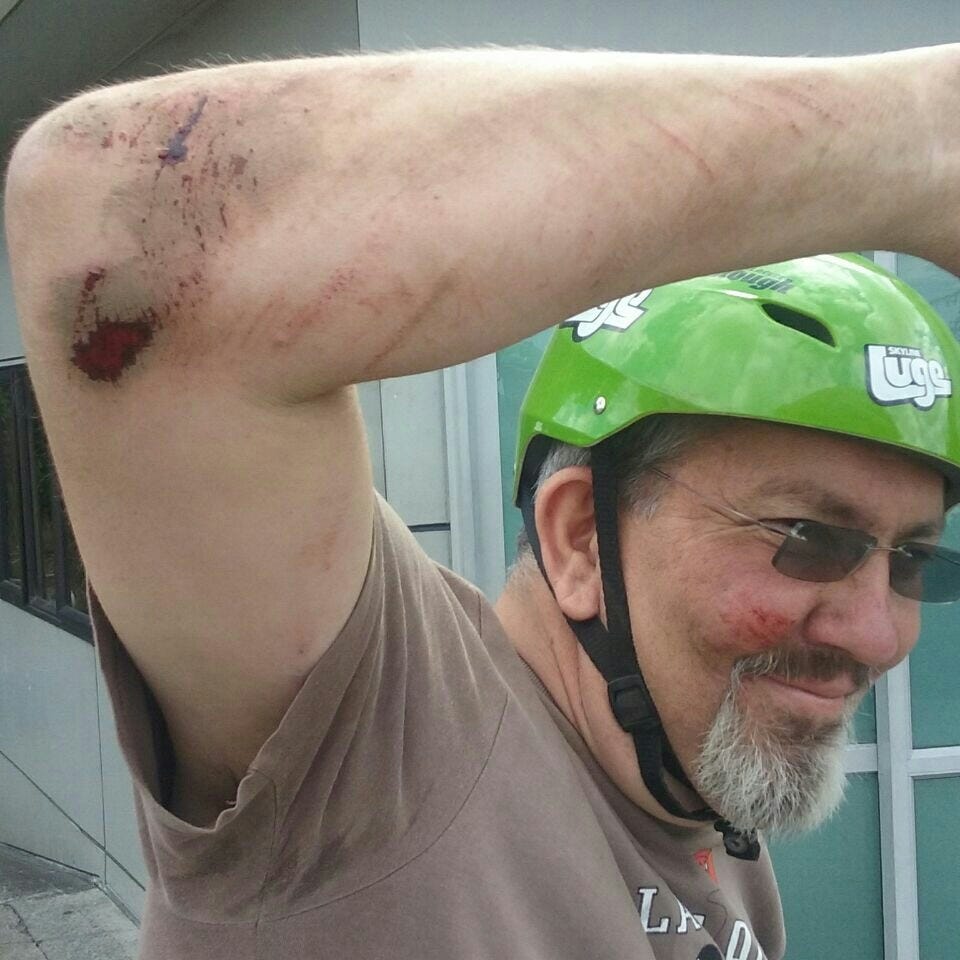
Next up was the luge track on a nearby mountain, karts racing down winding paths at breakneck speed. My first run was flawless, pure adrenaline. The second? Not so much. Someone nudged me into the side, my wheels caught the grass, and I was airborne. Landed hard, bruised and bleeding, needing a patch-up at first aid. Nothing a long, cold beer couldn’t fix afterward.

The highlight, of course, was the wedding itself, held on the black-sand beach at Raglan. It was hands down the best venue I’ve ever seen, waves crashing, endless ocean horizon, the sun dipping low. Jason and Mel exchanged vows with the sea as their witness, her Harley parked nearby like a chrome sentinel. It was raw, romantic, something else entirely.

All too soon, it was time to head home, again via that cursed Hong Kong layover. I sat in the terminal, muttering curses in Afrikaans under my breath, vowing once more to steer clear. New Zealand had given me thrills, scares, and memories for a lifetime—proof that the best trips are the ones that test you just enough to make the triumphs sweeter.

Ronald Bartels | LinkedIn | Instagram

Time to brick the abrasiveness

For a decade, my life revolved around the sterile corridors of banking. Each morning, I’d slide into my car in Douglasdale, pointing it toward the gleaming tower at 100 Grayston Drive in Sandton. The commute was a ritual of endurance, back and forth through Sandton’s relentless traffic, often stretching to an hour or more each way. On heavy days, it ballooned to three hours total, a slow crawl of brake lights and exhaust fumes. To pass the time, I’d flick on the radio, tuning into the news. It became my constant companion, accumulating up to two hours a day of headlines, analyses, and urgent dispatches from around the globe. What did it all mean? In retrospect, nothing profound. It was just noise filling the void between home and office, a soundtrack to the gridlock.

These days, I’ve severed that tie. I never listen to the news anymore. Occasionally, I’ll pause in front of a random TV screen in a waiting room or stumble upon a social media post that catches my eye, but that’s it. The world feels increasingly unhinged, a cacophony of chaos that I’d rather tune out. Power rests in the hands of abrasive leaders, men and women who wield insults like weapons and thrive on division. There’s not a single figure among them reminiscent of Mahatma Gandhi’s quiet strength and moral clarity. Take the so-called leader of the free world, for instance: his love for barbs and attacks has tipped the global balance, leaving the world not improved, but more fractured. Wars rage on multiple fronts, desperation creeps into everyday lives, jobs evaporate in economic whirlwinds, and trade wars echo the petty squabbles of medieval rogues and kings from a more primitive era.

I’m no ideologue. I’m not “woke”, nor am I an asshole reveling in cynicism. I’m a liberal at heart, guided by a core set of values that prioritize human progress, advancing society toward equity, innovation, and shared prosperity without the extremes of dogma.

One night, I had this vivid dream that lingers with me still. Every mobile phone on the planet suddenly bricked, dead, useless slabs of glass and metal. The youth wandered the streets like zombies, disoriented and adrift without their digital lifelines. The older folks, unfazed, retreated to their cars, turning on the radios that still hummed with life. Like those trips of mine to Sandton. I logged onto my laptop, and the internet chugged along as if nothing had happened, the fibres, the CDNs, all functioning smoothly. But strangely, there was no mention anywhere of the global phone blackout, no frantic updates or viral panic.

I woke up with the details etched in my mind, so sharp that I instinctively reached for my own phone to check if it was real. It wasn’t, of course. But in that moment of clarity, I realized what my subconscious was telling me: I’m trying to brick the bad news, to render it inert and powerless in my life. In a world drowning in digital deluge, perhaps the greatest act of self-preservation is simply unplugging from the frenzy. But the better solution is to create your own story, you own content, your own life. You own sense of reality and like the wings of a butterfly start a wind to trigger subliminal forces to reverse the madness.

In a perfect world, (or if I had as much dosh as Jeremy Clarkson) I’d be riding around on a tractor and farming potatoes. Rubberbanding from my digital quests back to where I started on Oakvilla Farm.

Ronald Bartels | LinkedIn | Instagram

The Mark of Difference

I came into this world in 1966, in the midlands of Natal, South Africa, a time when the country was still stitching itself together under apartheid’s rigid seams, and families like mine navigated life on the edge of sprawling farms where the soil was as unforgiving as the politics. My parents, of staunch Lutheranism and Calvinist descend, weren’t the sort to fuss over rituals beyond Sunday services and the occasional braai. We weren’t Jewish, no ancient covenant etched into our bloodline. Yet there I was, marked in a way that set me apart from the very beginning, my penis marked like prophets of the Old Testament, with questions long before I had words for them.

It started with the farm boys, those black kids who roamed the dusty potato fields with me, their laughter cutting through the heat of the Inyosi Valley. We were all the same in our ragged shorts and scraped knees, chasing chickens or avoiding a beating when we pushed the boundaries. But when we relieved ourselves on the nearby trees or bushes, I noticed the difference. They had foreskins; mine was gone, leaving a smooth, exposed landscape that was as distinct as an Italian sculpture. “Why?” I asked my mother later, as she made supper in the kitchen of the dusty farmhouse on Oakvilla Farm. She paused, her hands flour-dusted, and exchanged a glance with my father across the kitchen. “It’s cleaner that way, BB,” she said. “Less chance of disease. Your dad had it done, and your brother too. All the white boys around here do, keeps things healthy.” My father nodded from his chair, newspaper in hand, adding gruffly, “It’s just how it’s done. No fuss.”

And indeed, it was. In our tight-knit community of white farmers and smallholders, circumcision wasn’t a debate; it was as routine as the first inoculation or the christening gown. Most of the boys I grew up with, blond or brown haired lads from the neighboring plots, mostly Lutheran, bore the same subtle alteration. It bound us in an unspoken fraternity, a rite we didn’t choose but inherited like the accent that marked our spoken words. I wondered sometimes if it was the church’s doing, some Lutheran edict buried in the hymnal. But no, our pastor preached grace and baptism, not blades and covenants. Research into those years turns up no religious mandate from the Church in South Africa; circumcision wasn’t a sacrament in our faith, as it had been fiercely rejected by early Christians for Gentile converts. If anything, it was the echo of mid-20th-century medicine, a holdover from global trends where doctors in the West touted it as a bulwark against phimosis, infections, and even venereal diseases, claims that filled hospital wards and parenting manuals from the 1950s through the ‘70s. My mom was devoted to her Dr Spock book whose advice was circumcision.

Digging deeper into the archives of that era, it’s clear why Natal’s white families leaned into it so readily. In the 1960s, neonatal circumcision rates among white South Africans mirrored patterns in English-speaking countries like the UK and US, where up to 80-90% of newborn boys were snipped in the post-war boom, all in the name of hygiene and disease prevention. South Africa’s medical establishment, influenced by British colonial practices, promoted it similarly: easier to do on infants, supposedly fewer complications later in life, and a perceived shield against the unclean ailments that loomed large in a tropical climate. Studies from the time, sparse as they are on specifics for white cohorts, echo my parents’ words, citing reduced urinary tract infections and penile issues as rationale, though much of it was anecdotal, propped up by the era’s enthusiasm for interventionist pediatrics. In Natal, with its mix of English settlers and missionary legacies, it became cultural shorthand for modernity and cleanliness, a quiet assertion of civilized norms in a land divided by skin and custom. No grand conspiracy, just doctors’ ink and mothers’ worries, passed down like the family Bible but in the form of Dr Spock’s words.

I’m proud of my manhood. On one memorable occasion even take a leak on the window of John Orrs during Christmas window shopping. I was a boy, but not only a boy, a cowboy.

As I got older, that mark became more than a curiosity, it shaped interactions as my first time standing in the communal showers at Grey made me realize that the Afrikaners were like those black kids. Irony. Am I less of a lover for it? The question nags like an old itch. Some say the foreskin heightens sensation, a lost layer of intimacy. Others, and I’ve read the debates, argue it shifts the focus, makes pleasure less about singular friction and more about the whole dance: touch, rhythm, connection. Maybe I’m biased, but I’ve never heard complaints. If anything, it’s taught me that love’s not confined to anatomy; it’s in the vulnerability of baring all, scar and soul. That’s my story, etched in flesh and memory, a small cut in a big world, linking me to fathers and farms, to a Natal sun that burned away the unnecessary, leaving only what endures.

So I’m German, Scottish, Afrikaner, sort of English and by all accounts, a Jewish lover.

Ronald Bartels | LinkedIn | Instagram

Christoph Bartels' arranged betrothal

In Zululand’s clutch he made his stand, Near Kranskop’s crags and Tugela’s gentle flow; A lone missionary in that wild land, Where the seeds of faith in quiet furrows grow.

Isolated ‘mid the Zulu hills he dwelt, In prayer and preaching, fervent, undismayed; Of earthly love his chances all but knelt No gentle hand to soothe the price he’d paid.

His brethren far in Hanover perceived The solitude that weighed upon his soul; They sought a maiden, virtuous and believed, And offered him young Augusta’s hand to hold.

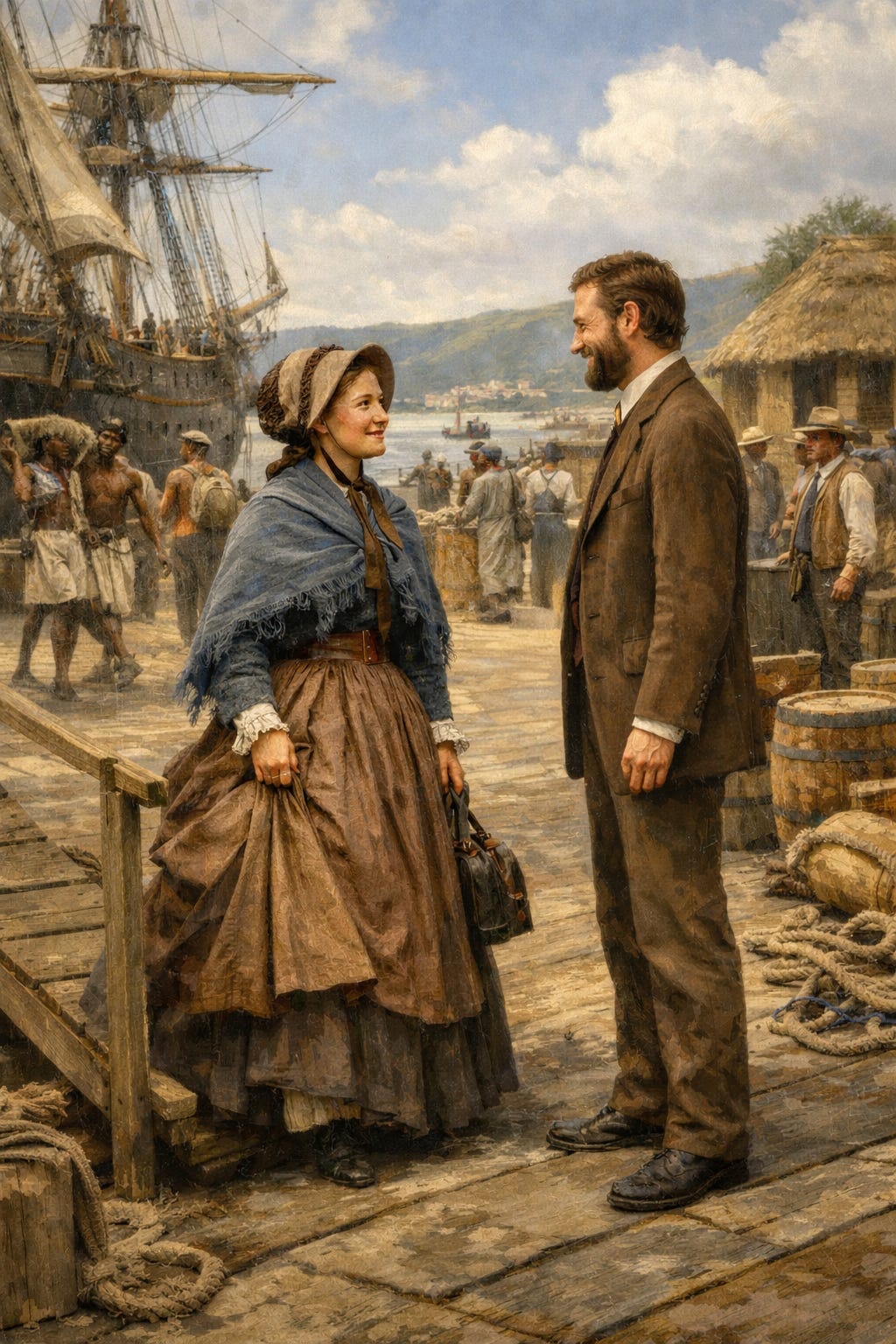
She, pure of heart, prepared the daunting quest, To journey halfway round the world’s wide span; On nothing more than honour’s sure bequest, The word that he was an honourable man.

“Love follows honour,” so the elders taught, And honour in his letters brightly shone; With quiet courage, fearing not the fraught, She sailed across the seas to claim her own.

At Port Natal’s sunlit, teeming docks she stepped, Her eyes in anxious wonder searched the crowd; Christoph stood waiting, heart in silence kept, Till gaze met gaze beneath the southern cloud.

In that first instant, swift and mutual fire, Attraction bloomed as dawn dispels the night; Her steady glance fulfilled his deep desire, And Charlotte’s lingering pain took sudden flight.

As man and woman, side by side they trod The mission paths in Zululand’s embrace; Raising their children beneath the hand of God, She aided every duty, every grace.

For forty years their union stood as one, Through seasons harsh and mercies gently sent; In godly work beneath the African sun, Their hearts in faithful service were content.

Then, hand in hand, they slipped from mortal sight— But months apart they answered the final call; The broken lance at last lay bathed in light, In honour’s love that conquers all.

Thus in God’s harbour, deep and ever sure, The penitent found joy forevermore; With Augusta his anchor, strong and pure, Redemption’s voyage reached its golden shore.

~Roald Bartholomew

Ronald Bartels | LinkedIn | Instagram

Correspondence from the Second Anglo Boer War

Among the most vivid characters in our family story is my ancestor Christoph Bartels, the missionary who came to South Africa in the service of the Hermannsburg Mission Society. His letters back to Germany form a remarkable archive, humble, dutiful, & strikingly consistent in one peculiar way.

Every single letter began with a detailed rant about his health. His stomach ailments were a constant torment: sharp pains, discomfort that never seemed to ease. He was a heavy smoker, pipe never far from his hand, yet he never appeared to draw the obvious connection between the two. After laying out his complaints in full, he would always catch himself. The pains were not that important, he would insist. There were far more pressing matters in the Lord’s work. Then came the apology for burdening the Mission Society with such trivial personal woes. Year after year, letter after letter, the pattern repeated like a familiar hymn.

But one letter broke the mould entirely. It concerned a matter so serious that even Christoph could not set it aside.

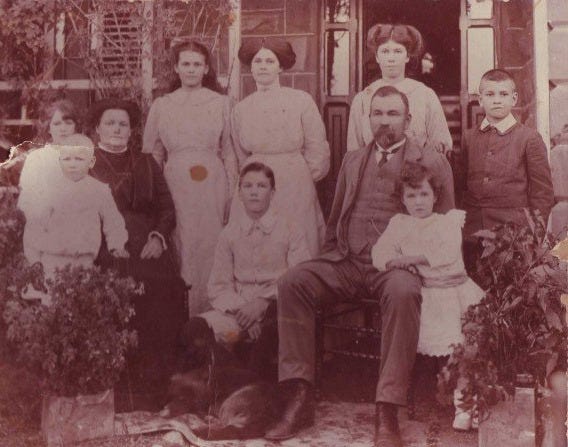
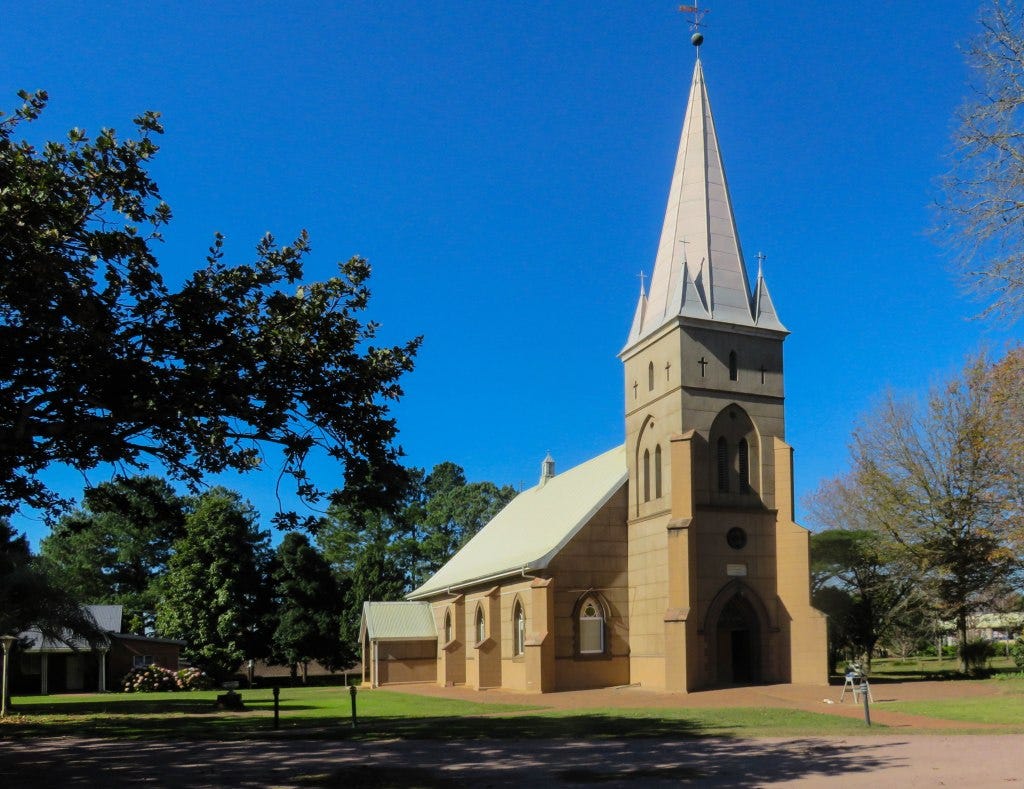
By that time, he had retired from frontline missionary work among the Zulu people & had been asked to care for the church & congregation at Wartburg in Natal. It was a small, rural German settlement where most of his flock were farmers, hard-working men & women tilling the soil, including his own sons. The community blended German settlers with a large number of Boer families. In that little village, the two streams of my own ancestry flowed together: the missionary Bartels line & the Boer lines of the Maritz & Bruyns families.

Wartburg

Christoph had not always worn a clerical collar. As a young man he had served as a Hussar in the army of the King of Hanover. He left the service before Bismarck’s Prussia invaded & annexed the kingdom. The King of Hanover, from the same royal house that had once linked Hanover & Britain, commanded a loyalty that Christoph never forgot. The bloodshed of war, however, had left deep scars on his soul. The lives he had taken weighed heavily upon him, those that he had run through with his lance. Seeking redemption & solace, he turned away from the sword & offered himself to the church as a missionary.

When the Second Anglo-Boer War broke out, Christoph found himself once more in the shadow of conflict. This brutal struggle between the British Empire & the Boer republics of the Transvaal & Orange Free State would last two years. It was fought over gold, diamonds, political rights, & imperial ambition, & it tore through the land with great suffering on all sides.

From the pulpit in Wartburg, Christoph took a clear & courageous stand. He told his mixed congregation of Germans & Boers not to choose sides. War, he said, was a hindrance to true faith & Christian living. “Avoid it,” he urged them. “Do not sell your stock or your crops to either side.” Neutrality & peace were the only paths worthy of followers of Christ.

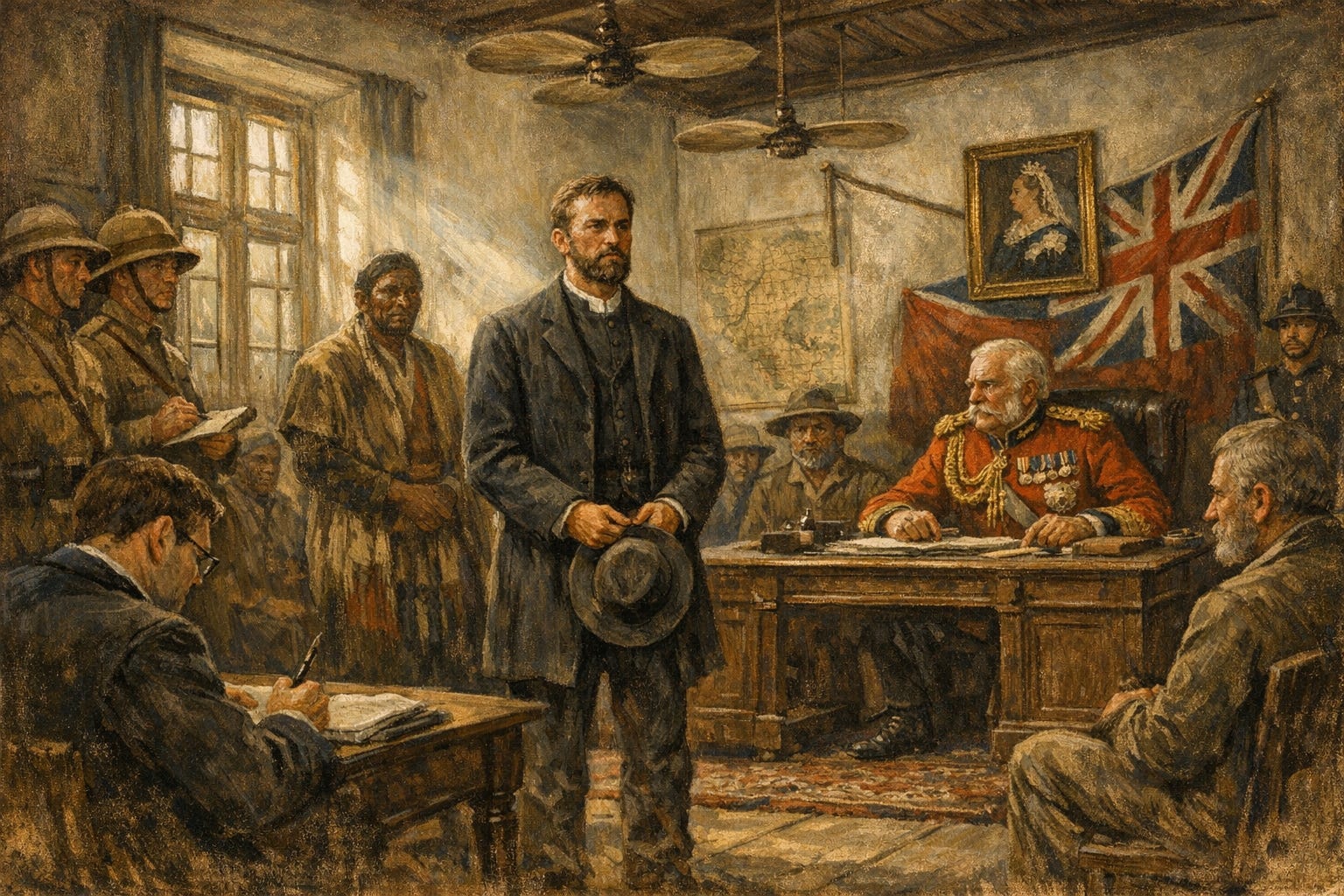
The military authorities in Natal did not take kindly to such talk. They saw it as disloyalty to the Crown & hauled the elderly pastor before a tribunal convened by the Governor of Natal.

Christoph stood before his accusers without flinching. Looking the Governor straight in the eye, he asked:

“How can you accuse me of disloyalty to the Crown? Every Sunday in my church I pray for the safety & well-being of the Queen. I have honoured her & remained loyal. I was once a soldier in the service of her father’s crown, but now I am a man of God. My duty is not to stir up aggression, but to point the way to peace. Had I been disloyal, I would long ago have stopped those prayers.”

The Governor listened, then heaved a deep sigh. He turned to the military men & prosecutors with visible irritation. “Do not ever waste my time, or this man’s, by bringing a servant of the cloth before me again,” he said. The case was dismissed at once, & Christoph was sent back to his flock with an apology for the spectacle.

He returned to Wartburg, but the war ground on. Many who heard his words knew in their hearts that the old pastor was right. Yet the tides of fear, anger, & self-righteousness had already carried most too far down the road of conflict to turn back. Like every war, this one too eventually ended.

In the years since, whenever I think of Christoph Bartels, I see a man who carried the scars of one war into the pulpit of another, & chose peace. A heavy smoker who never quite solved the mystery of his aching stomach, yet whose faith was rock-solid. A former Hussar who became a true servant of the his Prince of Peace.

I like to imagine that in heaven the Lord shook His head at the follies of men, smiled at the stubborn old missionary from Wartburg, & marked his name with particular affection: a man of true faith & quiet honour, who refused to let war silence the Gospel of peace.

His blood runs in my veins, German missionary & Boer farmer alike, & I am proud of it.

Ronald Bartels | LinkedIn | Instagram

Encounters with the Eternal Sentinels of Tsitsikamma Forest

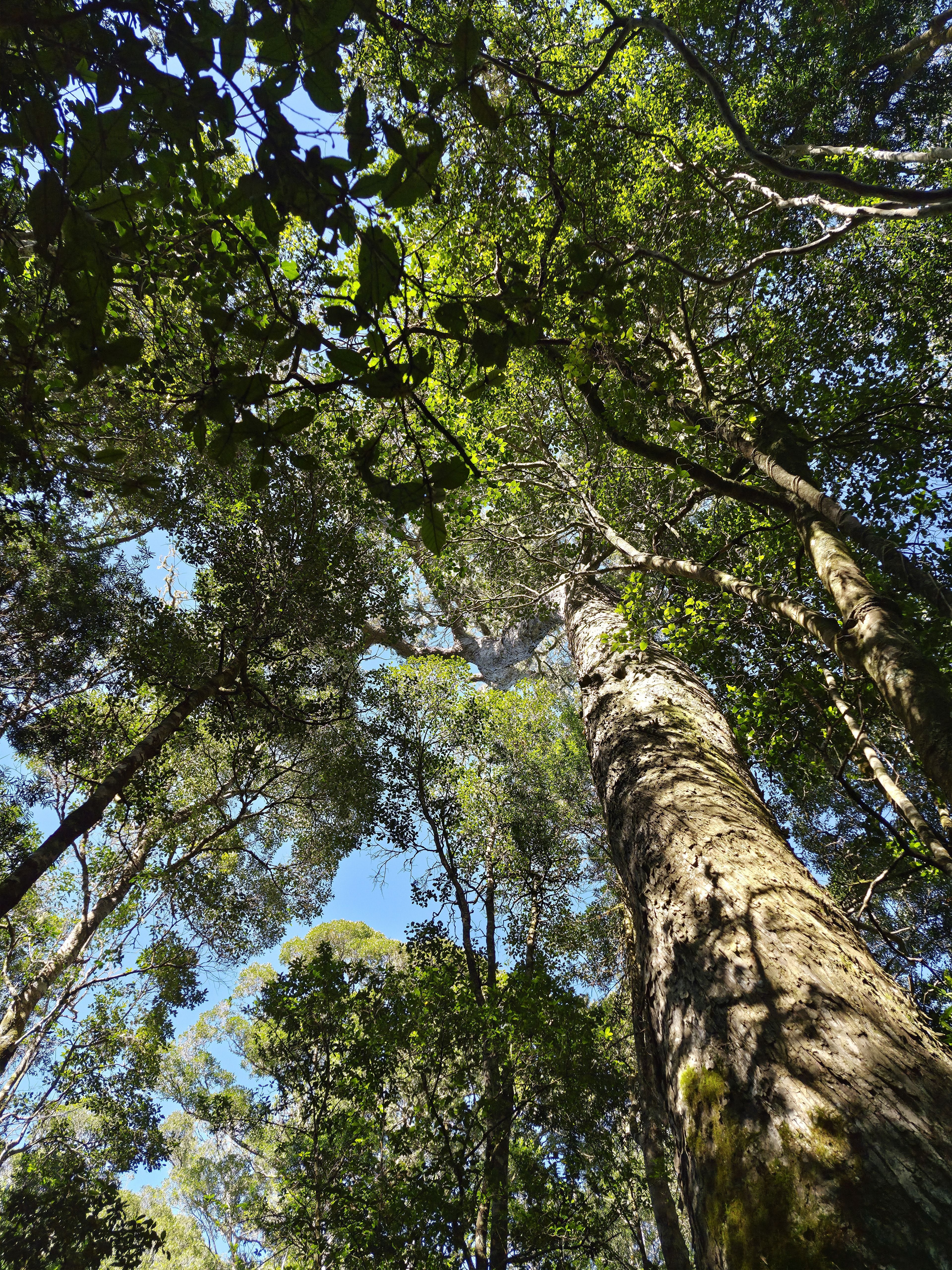
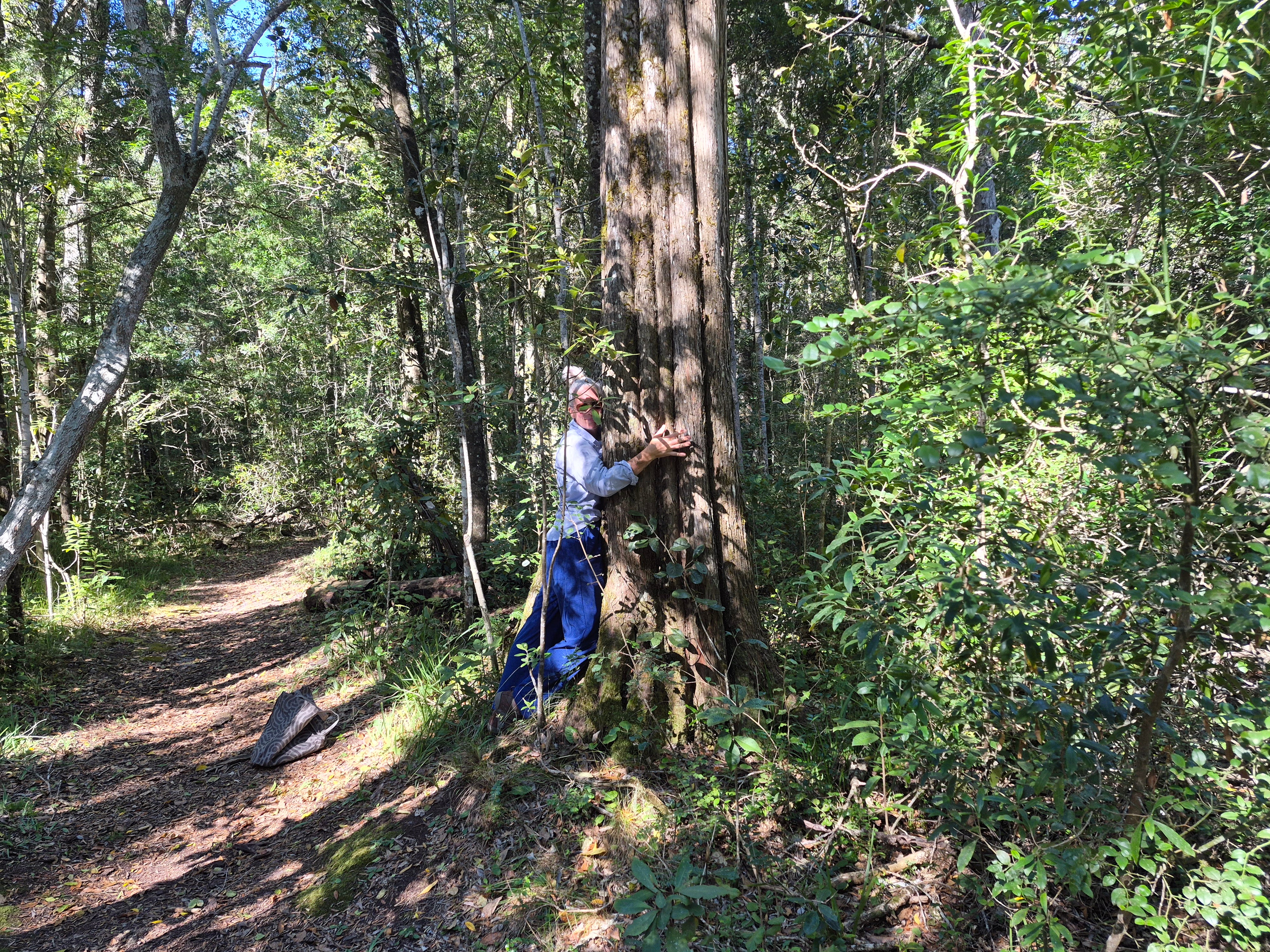
In the hushed embrace of the Tsitsikamma Forest, where the ancient Plaatbos area unfolds like a forgotten chapter from the earth’s own diary, Megs and I wandered one crisp morning, our footsteps soft on the leaf-strewn trails. This was no ordinary hike; it was a pilgrimage into the heart of mystery, where the veil between the seen and the unseen thins to a whisper. For centuries, indigenous tribes across the world have spoken of these elusive guardians, known as Sasquatch to some, Yeti to others, or by sacred names like the Oh-Mah of the Native American peoples, the Wild Man of ancient European lore, or the Yowie in Aboriginal tales. They are the soul creatures of the wild, wandering sentinels of the forest, often dismissed as Bigfoot by the skeptical, but revered as eternal watchers by those who listen.

The trees here are titans, each one a living monument to time’s patient art. We paused beneath the towering Outeniqua yellowwoods, their bark etched with the wrinkles of millennia, reaching skyward like ancient pillars holding up the canopy. Nearby, the candlewoods stood sentinel, their slender forms glowing faintly in the dappled light, as if lit from within by some inner flame. Alders clustered along the damper edges, their leaves a shimmering green veil, while wild pears dotted the understory, their twisted branches heavy with the promise of potential fruit. Megs and I stood in awe, necks craned, feeling dwarfed by these giants. But they were more than wood and leaf; they pulsed with souls, vibrant and alive. If you lingered long enough in silence, as we did, the forest revealed its secrets. Through the interplay of shadows and streaks of pale light filtering through the foliage, these souls would manifest, ethereal figures twice our height, gliding soundlessly like wraiths born of the earth itself. Their forms were cloaked in the forest’s own garb: drapes of vibrant moss, clusters of mushrooms sprouting like jewels, and ferns unfurling as natural armor. Camouflaged perfectly, they blended into the bark and undergrowth, invisible to the hurried eye.

These beings have taunted humanity for eons, their presence a teasing riddle, always just beyond the grasp of proof. They leave no footprints in the damp soil, no snapped branches to betray their passage, only the rational mind’s frustration. Yet, there they are, eternal and undeniable to those who attune themselves. As we meandered deeper, we found traces of their whimsy scattered like forgotten offerings: dried fragments of ornamental mushrooms, their caps curled like ancient scrolls; leaves in a riot of colors, crimson, gold, and emerald, arranged as if by deliberate hand; and gnarly sticks twisted into shapes that hinted at stories untold.

Our path led us to a hidden stream, its waters murmuring a melody that drew us like a call from Mother Earth’s heart. We followed until the sound swelled into something truly musical, a symphony of ripples and cascades. There, in a spot where the forest’s energy converged, the soul creatures had wrought their magic. Giant staircases, hewn from the very rocks by forces beyond human ken, ascended to their most holy sanctuaries, deep, ancient hollows brimming with healing essence. These steps were no crude carvings; they were masterpieces, shaped like the strings of colossal harps, allowing the water to play upon them in harmonious notes that soothed the spirit and mended the weary soul.

Even the Knysna loeries, those iridescent birds with their emerald plumage and crimson wings, revered these places. They flitted between the hallowed spots with similar camouflaged grace as the giants, melting into the foliage one moment and emerging the next. They knew the streams as fonts of replenishment, dipping their beaks into the purest flows, and their calls rang out in exuberant bursts, trills of joy that echoed through the trees, as if celebrating the forest’s hidden vitality.

But alas, not all who enter this realm perceive its wonders. Humans buzz past on mountain bikes and segways, their engines whining like impatient insects, or they huff and puff in noisy packs, chattering and stomping without pause. In their haste, they miss it all, the subtle dances of the souls, the sacred staircases, the loeries’ songs. Worse, they crush the forest’s smaller denizens underfoot: the slow-churning chameleons blending with branches, the armored songololos curling into protective balls, the iridescent dragonflies skimming the air like living jewels. The giants observe this intrusion from their shadowed realms, and I swear, in the quiet moments, you can almost hear their sighs, a deep, resonant exhale that rustles the leaves, a lament for the disconnection of our kind. In those woods with Megs, I felt a profound kinship with the unseen, a reminder that true existence thrives not in proof, but in presence.

Einstein

Albert Einstein was a man whose mind unlocked the secrets of the universe, yet he understood that the stars above us are only part of the story. People often painted him as an atheist, a cold rationalist who dismissed the divine in favor of equations and experiments. But that was a misunderstanding, a simplification of a soul far more nuanced. At his core, Einstein recognized a profound difference between the relentless pursuit of scientific truth and the deeper yearnings of humanity. He wasn’t blind to the mysteries that science couldn’t touch; instead, he embraced them with a sense of awe that he called “cosmic religious feeling.”

Einstein once famously said, “Science without belief is lame, belief without science is blind.” It was his way of articulating that balance, a harmony where facts illuminate the path, but wonder and ethics give it meaning. He rejected the idea of a personal God meddling in human affairs, preferring instead the God of Spinoza: an impersonal force revealed in the orderly beauty of nature, the elegant laws that govern everything from atoms to galaxies. This wasn’t atheism; it was a reverence for the universe itself, a acknowledgment that science explains the “how” but leaves the “why” to something more profound. In his view, belief wasn’t about dogmas or rituals but about fostering ideals for individual and communal life, a moral compass that science alone couldn’t provide.

This resonates deeply with my own journey. I’ve come to believe that being right doesn’t guarantee happiness. You can be utterly correct in your facts, armed with irrefutable data, and still feel empty inside. Conversely, you can be wrong, delightfully, humanly wrong, and find joy in the midst of it. Einstein knew this intuitively: human happiness doesn’t have a direct correlation to scientific accuracy. It’s not about proving theorems or debunking myths; it’s about presence, that quiet awareness of the balance between righteousness and joy. We must be rationally aware to avoid the extremes and their inevitable destruction, the fanaticism of unyielding logic on one side, or the chaos of unchecked emotion on the other.

Einstein understood we have to rationalize this balance, to weave the threads of empirical knowledge with the fabric of human experience. In doing so, we don’t diminish science; we elevate our humanity. It’s a lesson I’ve carried through my own trials, reminding me that the greatest discoveries aren’t always in the lab, but in the heart’s quiet reconciliation with the cosmos, or a walk in the forest.

Ronald Bartels | LinkedIn | Instagram