The Morning Patrol with MastelekđŸ’Ș

Stories of Mastelek who enjoys farming Boweia Volubilis

My Life as Julius Caesar

It’s strange how some affinities feel less like admiration and more like recognition. Julius Caesar has lived inside me since I was a boy in that old and dusty Oakville farmhouse, long before I had words for past lives or soul memory. I must have been seven or eight when I first saw him, not in a history book, but as a flickering image projected on the bare dining-room wall. An old reel-to-reel projector had been rigged up, and there he was: Caesar, played by Rex Harrison, commanding the screen while the most beautiful woman I had ever seen, Elizabeth Taylor as Cleopatra, gazed at him with a fire that burned straight through the grainy film and into my chest.

In that moment I didn’t think, “What a great leader.” I thought, “That’s me.” Not in some infantile way. It was deeper, spiritual. I knew the weight of the laurel wreath before I knew what laurel even was. I felt the Nile breeze on my face though I had never left Natal.

And to this day I still have dreams about this.

I am always in a red tunic, the dye still bright, the gold-threaded hem brushing against bronze. The segmented Roman armour, lorica segmentata, fits as though it was forged for my body yesterday. In one hand a gladius, perfectly balanced, almost weightless until it meets resistance, then suddenly alive, singing. The battles change: sometimes the forests of Gaul, mist curling between the oaks; sometimes the dust and blood of Pharsalus; once, memorably, the deck of a trireme off Actium, though history says I wasn’t there. Doesn’t matter. I’m there now.

I fight with a clarity I have never known while awake. Every parry is instinctive, every thrust economical and final. There is no fear, only purpose. Men fall, but I do not gloat; I simply move to the next threat, the next moment that must be shaped. Often I wake shouting in Latin, my voice hoarse, heart racing, sheets twisted. Yet the feeling is never distress. It is triumph, clean and ancient. I reach for my phone to check the time and its always the eleventh hour, and I smile in the dark. The sword skills I wield in dreams still seem to protect me in waking life. Debts get paid. Doors open. Enemies, seen and unseen, keep their distance.

Now, older, I understand there is richer meaning beneath the spectacle.

To dream repeatedly of being a great conqueror, especially one who was both adored & assassinated, is rarely about simple ego. The psyche chooses its symbols with precision. Caesar represents the part of the soul that refuses to accept imposed limits, the part that says, “If the world will not bend, I will cross the Rubicon and make it bend.” The red tunic is Mars, the god of war but also raw life-force. The sword is discrimination, the ability to cut through illusion, to separate what serves from what destroys. To dream of wielding it masterfully, without hesitation or wound, is the unconscious announcing: You have the power to shape your fate. You have done it before. You are doing it now.

And Cleopatra, ah, she is there too, sometimes watching from a marble balcony, sometimes fighting beside me with a dagger. She is the other half of the archetype: the feminine wisdom that knows power is not only force alone, but seduction, strategy, the long game. When Caesar & Cleopatra appear together in the soul’s theatre, they are saying: Integrate. Marry the general and the queen within you. Rule with both the sword and the serpent.

These dreams are not escapism. They are remembrance. They are confirmation that the same fire that burned in a Roman on the Ides of March still burns in this man in a quiet Douglasdale suburb, tempered now by time but no less fierce. Every time I wake with the taste of iron in my mouth and the echo of battle in my ears, I am reminded: I came back to finish what was started. The conquest is no longer of provinces, but of fear, of mediocrity, of every small voice that says stay small.

I was Julius Caesar once.

I crossed the river.

I still am.

Ronald Bartels | LinkedIn | Instagram

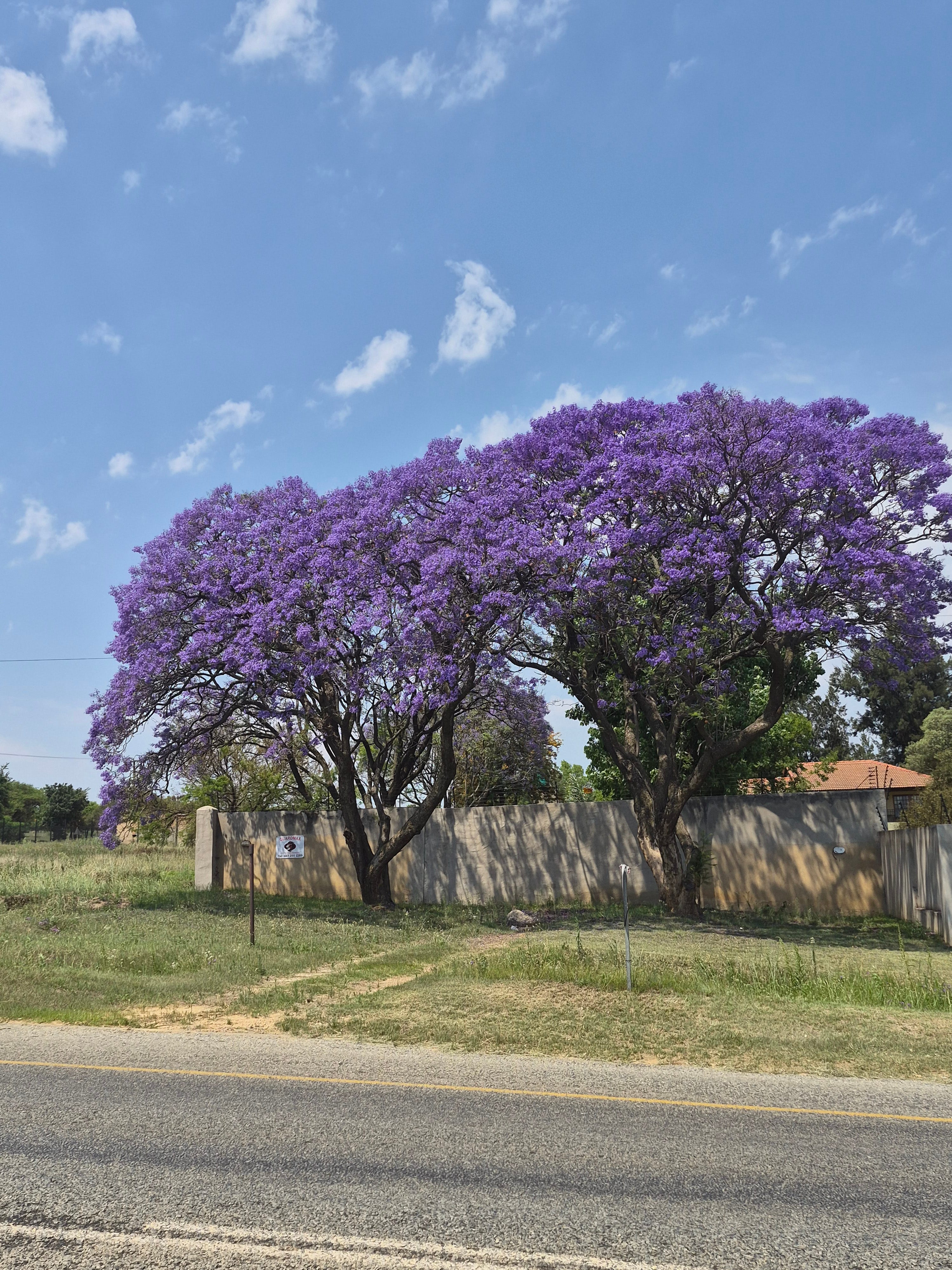
Its a beautiful Sunday with the Jacarandas making a stunning showing

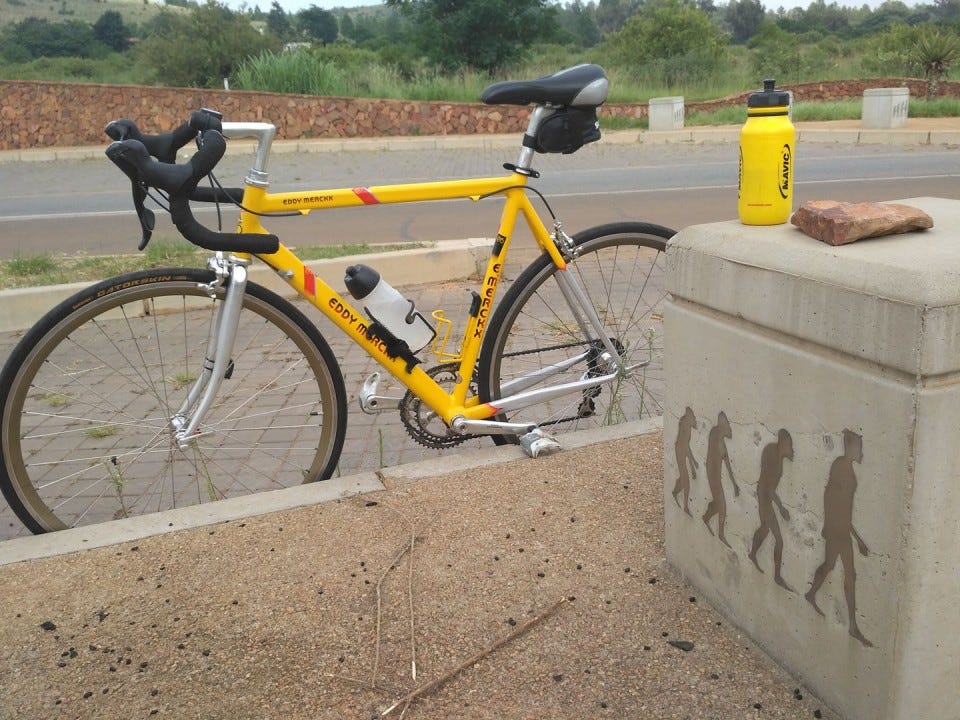
eddy nagged me out of bed again & we went to crank the loop.

The Jacarandas & all their brethren were in full bloom all the way to the Cradle of Humankind. Every farmhouse had its tree dressed in that impossible purple. I love the colour. Wish I could buy a shirt in that exact shade. I’d be the biscuit.

We unloaded at Biden & raced down Stampede Hill. The day was already shaping up to be a scorcher, so we needed to move. On the stretch of road next to the Bloubankspruit we approached the P-Ness circle. The mulberries were ripening & the monkeys were having a feast. I thought I’d join them. I stopped, propped eddy against a road sign, & picked the ripe ones straight off the tree. They were lekker! Meanwhile, the rest of the Sunday morning cyclists, went on by, blissfully unaware of the spoils on offer.

“Monkey,” chirped eddy.

“Haaibo, eddy. I’m a hairless Caucasian monkey. Although I did admit to my grandfather that I was a baboon. Anyhow, not anything like this common vervet riffraff.”

I mounted up & headed for Mike’s van & a flat white. Along the way I saw the donkeys. My assumption that they had been boiled the previous week was wrong. I messaged Alec. He was happy they were still alive.

At the van a guy asked me if Eddy Merckx was still alive.

“I have no clue,” I replied. “I thought so, but he is long in the tooth.”

I mounted & set off on the loop again.

“When I get home, remind me to Google if the other Eddy is still alive, eddy.”

“You also long in the tooth,” eddy shot back.

“What advice do you have for a long-in-the-tooth 60-year-old eddy?”

eddy monologued. There are five things to stop doing after 60, he said. At this stage of your life it is no longer about proving yourself.

  1. Stop worrying over your adult children. Guide them & pray for them, but they have to face life on their own.

  2. Stop working with the exhaustion of your youth. Your body’s energy has changed, so accept it gracefully. Aim for balance, not burnout, & treat rest as maintenance rather than laziness.

  3. Stop staying silent to avoid conflict. Speaking honestly & calmly when something hurts or disrespects you protects your dignity. It isn’t rude.

  4. Stop sacrificing yourself endlessly. After decades of giving, your life & joy matter too. Aging makes you wiser, not less valuable, & rest is your right.

  5. Create memories.

“That is insightful, eddy. Where did you get that?”

“YouTube,” he deadpanned.

“You been using my phone again while I’m asleep?”

“Of course!”

“Well now. The Romans were great at building civilisations & they had no YouTube, boet.”

“Tell me about the Romans,” eddy egged me on.

“Well, they ruled from the bath. They conquered the world from the bath. Their engineering was all so that they could have a bath. The bath was it. I can’t think without being in a bath & neither can I sleep properly unless I’ve had a bath,” I concluded.

“You were a Roman in a previous life?” questioned eddy.

“Yes,” I said. “Julius Caesar.”

“You no Roman as you never bath me,” said eddy.

“I do clean you, eddy, but I’ll do it more often.”

“I’m waiting, Mastelek. We conquer the current world, nĂ©?”

“Yebo.”

Taking a leaf from Alec’s book, I buzzed everyone back up Stampede Hill & celebrated at the top like a conquering Roman dictator.

I loaded eddy & on the way decided to stop over to meet Jose & have some Belgian waffles with strawberries & ice cream. It was a scorcher, but that, downed with a Coke under the shade of a syringa tree, was perfect.

You know eddy, I said I would like a frozen orange juice.

Some days the loop is just the loop. Other days it’s purple trees, cheeky monkeys, living donkeys, second-hand YouTube wisdom, & a quiet reminder that even at sixty you can still ride like you mean it, & still stop for waffles.

Ronald Bartels | LinkedIn | Instagram

Musing on Lawyers & One-Link Wonders

I got suspended on Substack. Must have been some buttercup who ratted on me. Eish. They don’t like eddy? I need to my my stories elsewhere and put my SD-WAN stuff back on LinkedIn.

eddy & I had a date with a moon ride at the Cradle this last Thursday of October. Full moon. Ray, surprising us, said he would come along. We checked our lights, pumped the wheels & headed out.

Then we hit Cedar Road & found ourselves in an almighty traffic jam. Caused by our cadres who still don’t repair the infrastructure. We were going nowhere fast. Broken traffic lights & boemelaars directing traffic badly. These cadres, stealing us blind in taxes and being self-righteous while buying fancy German cars instead of doing maintenance. Nee, bliksem. But many businesses are the same. Just look at their IT thats in the toilet.

As I sat there, engine idling, I thought about what I could do to escape it. Nothing. Absolutely nothing.

Earlier that same day an IT company that had taken over one of my sites told me they were cancelling. They had already cancelled the second fibre link. They were now one-link wonders. Resilience? Not interested.

This is common among IT people in South Africa. Running risks with no mitigation plans. I see it often.

In the data centre there are two of everything. Sometimes three. Third-party engineers walk in and talk up a storm about redundancy & uptime. Then you visit their own offices & discover they have no resilience of their own. One fibre. One path. One-link wonders.

No plan for outages or brownouts. No last-mile management. Just a guy who genuinely believes IT doesn’t need two paths. One is fine.

eddy, we’ve discussed this before. The same chops who don’t carry spare tubes in their saddle bags. When things go pear-shaped they start throwing blame at everything except themselves.

We finally made it to Bidon. Ray bolted down the road. I followed at a more leisurely pace.

It was a rather uneventful ride after that. Just the setting sun & lonely roads.

eddy, I have a joke.

“Give it to me, Mastelek.”

Saddam Hussein, a lawyer & the devil knock on your door. You have a gun with two bullets. Who do you shoot?

eddy said, “You got me. I think maybe Saddam Hussein
 and the lawyer?”

No. You shoot the lawyer. Then you shoot him again to make certain he is dead.

“Jislaaik, Mastelek. Didn’t think of that, but you’re right about lawyers.”

“But those IT guys acting as roadblocks are a close second.”

“Net so, eddy.”

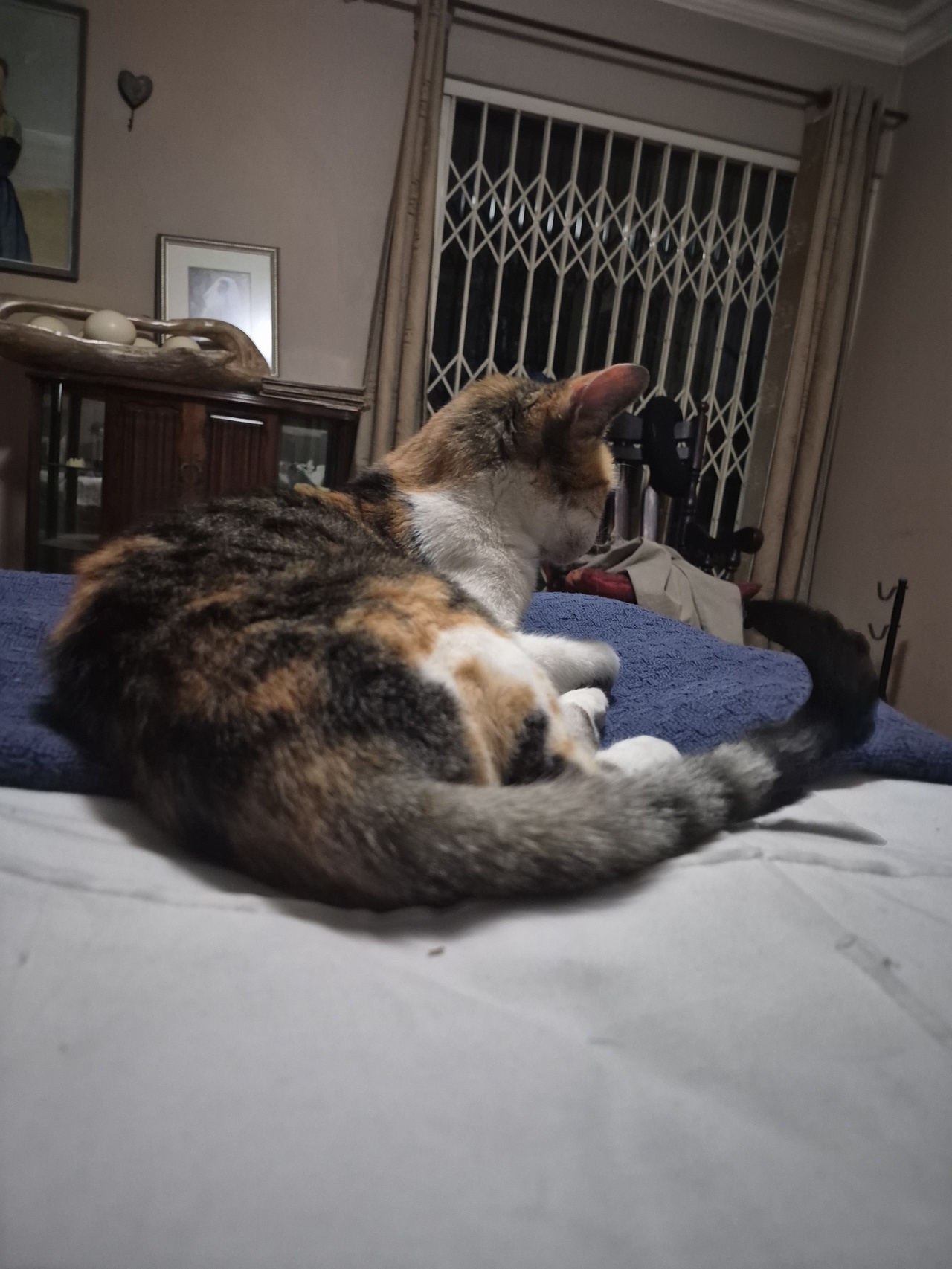
We’re not going to solve that particular brand of thinking out here in the Cradle. But dammit, it just drives me nuts. We arrived back in the dark at Biden, loaded up and headed home. At home I found Arum on the bed, she looked at me with that cat face. That where were you? I’m ignoring you.

Ronald Bartels | LinkedIn | Instagram

I spent a decade in banking

I was born on the Glorious Twelfth. This is the opening of the hunting season in Scotland where grouse is a common bird that is hunted. The yearly event is immortalized by the Scotch Whisky, The Famous Grouse! Just read the label.

While growing up my dad would have his own version of the Glorious Twelfth on his farm Oakvilla. All his mates and family would converge on a yearly basis. There would be beers, food and hunting. The magistrate would provide a permit to shoot Reedbuck & Bushbuck in the morning and in the afternoon it would be Guinea fowl. Everyone would have great big grins on their faces. The story of one old gent who had to much beer at lunch and mistook a Hamerkop for a duck would be retold endlessly to great amusement.

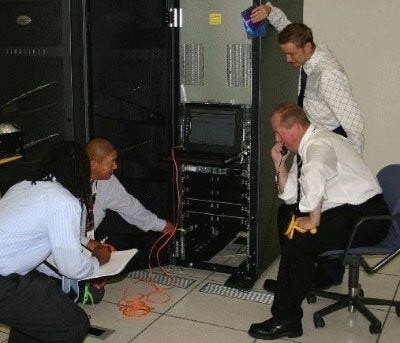
Shortly after the start of the new millennium, while I was working at Investec, the dealing room in London was experiencing slow performance problems. Hours of troubleshooting remotely could not identify the problem. Eventually, I climbed on a jet plane to London to try and troubleshoot on site.

The whole day was spent troubleshooting scenario after scenario. Eventually, I discovered a very slow and small error rate on one of the fibre ports. It was the active bridge port from the dealing room vlans. Now enterprise LANs use a simple but frustrating protocol called spanning tree for path protection. I decided to diagnose the port so told the head of the dealing room that I was going to change the path topology. Immediately when I did that he ran in and said the network was back to normal performance.

We went in search of the switch port, which took a while as we had to walk around a bit to find the door. It seems the cabling guy, who was a contractor, was the only guy who ever been into that room, and the sign on the door designated it incorrectly as a broom closet.

After eventually finding the room and consequently the switch and port, I removed the fibre and ejected the GBIC. The problem was obvious, as my hand was covered in dust from a dirty GBIC. We spend a few minutes cleaning all the fibre connectors and then reinserted the GBIC and fibre cable.

The head of the dealing room said he had tickets that evening to a whisky tasting with the master distiller of Chivas Brothers at the Reuters building. As a reward he provided David Cripps, a colleague, and me with the tickets for resolving the network problem.

We went off to the Reuters building. It is a beautiful old sandstone building opposite the iconic The Daily Telegraph. The whisky tasting was in the main boardroom. It was a fancy and posh place with several crusty old farts of the financial and trading community present. We were each presented with six single malts and assigned to categorize them into the whisky regions of Scotland, i.e. Lowlands, Highlands, Speyside, and Islay/Skye. Sometimes a another region is added of Campbelltown.

I polished the tots and placed the glasses on a map of Scotland. I scored four out of six.

The master distiller then said he was going to do a sample blend with us using the six tots in front of us. Wait a moment, we said, they are empty. The master distiller smiled and said we were meant to taste not drink but he then proceeded to replenish our six single malts.

We then proceeded with making a blend, which was creating a unique taste from the different single malts from the different regions. Each single malt in every region has a flavour associated with the region.

When we were done, we had created a small sample blend to take home. However, we now all had twelve tots of single malt behind us!

The master distiller then invited us over to the Reuters private bar. He then had the barman create whisky cocktails for us. He wanted us to realize that whisky was a drink which you could enjoy in whichever way you desired. It was just as good in a cocktail, as drunk neat or with water.

The night turned into a blur. I recall we went to party in Soho. I vaguely recall being stopped in a police roadblock in the early hours of the morning outside St Paul's. The policeman was admonishing us for getting into a taxi that did not have one of its headlights working. That was strange conversation to have with two people who had drunk enough whisky in one night to dent Chivas Regal's yearly marketing budget and at the moment in time couldn't tell the difference between a headlight or a taillight.

The next morning, I woke up with a pounding head. It sounded like a jack hammer was going off inside my head. It took me at least ten minutes to determine that my window was wide open and that at the construction site next to our rented flat, an actual jack hammer was being used.

I worked at Investec for just under a decade. While I was working there another old Grey known as Eertjies came up with the Zebra as a marketing ploy to promote the bank. That idea created and made the brand. It was a great place to work but heck, the IT department had its toxic moments especially when irrational input was given into a technical process that was not feasible. Then it would be a question of who shouted the loudest. Besides that, often there were meetings that were meaningless.

The regularly scheduled weekly meetings were the ones that are forgettable. Somehow every company insists on having them and for the life of me I do not remember any of them or the actions required. The meetings could have had the same outcomes using different types of interactions. However, there is one meeting I remember...

At Investec often the large meetings had insufficient chairs. The people who arrive late must stand. The Information Technology change request meetings at Investec were like that.

One day I was slightly late and took to standing. After about twenty minutes leaning against the wall, I decided to stretch my legs and change position. Unluckily, I plonked my foot in the small dustbin one finds in those meeting rooms.

I tried unsuccessfully to extract my foot by shaking it. I also tried to reach down & dislodge it with my hand, which also did not work.

I thought I would just attempt to stand there with my leg in a dustbin for the rest of the meeting. Unfortunately, my neighbour started sniggering uncontrollably. Finally, the chairman stopped the meeting to reprimand him, which made him break into uncontrollable laughter.

I thought I would try & avoid the embarrassment by trying a maneuver to unseat the dustbin by grabbing it with both my hands to pull it off. All I succeeded in doing was ending up on my ass.

The meeting broke up with everyone ROFL.

Meetings should not be scheduled and used as a boring justification of worth. These types of weekly meetings serve no purpose. Meetings should be ad-hoc and only be there to address a specific topic, problem, or issue. Most meetings are staid and slow, people arrive, the conversation is slow, there are biscuits and coffee. It eventually is no more productive than afternoon tea at the old age home.

I probably was never an Investec person. I was more the ROFL type.

The Investec building in Fox Street is clad in marble. It also used STP token-ring cabling with universal connectors which we called moffie plugs. Investec moved out of Fox Street to Grayston Drive and moth balled the building. About seven years later the building was reopened to house the CIDA City Campus. I was with Taddy Blecher when we first went into the building again and surprisingly enough there was still one plant alive in the atrium of the building! I should have taken that plant home. It was a keeper, surviving seven years.

The building in Grayston had also been renovated and clad in marble. While the builders were cladding the building Wimpie Jansen van Rensburg and I installed network switches and RAMs (Token-ring hubs). While on one of the floors mounting a switch, I heard what I thought was the sound of water. I looked over to the source and saw a mini tsunami of dust moving towards me. It took a few moments for the dust to settle and then I heard shouting. I walked over to the edge of the building and looked down. The sight is etched in my memory. The scaffolding had peeled off the building and there were slabs of marble scattered everywhere. Right beneath me was lying a broken body with the blood staining the white marble a crimson red.

Nowadays when I see scaffolding, I give it a wide berth. What had transpired is that the scaffolding had been overloaded with the marble slabs.

That was not the only time I witnessed a traumatic event at 100 Grayston. One day after work I was at the traffic light exiting the building waiting for it to change. I noticed a taxi approaching with sparks flying from underneath the chassis. I would later learn that the drive shaft had failed and dropped out. In front of me drive shaft dug into the road and catapulted to the side of the road. I look in the direction of where it was heading. Two people scrambled out of the way. The third was reading a paper and the taxi hit him while still traveling at speed. He was thrown into the air and into a tree behind him. I climbed out of my car and walked over to where he was lying. I was the first one there and it looked bad. I thought he was an Indian but was told afterwards that he was white. The impact was so significant that it bruised his skin and darkened it. His life was saved by a doctor who was in the traffic and rushed to his aid. I had walked over to the security guards and told them the guy was dead. He lived but lost his spleen.

I went to visit him in hospital and did not recognize him because of the change in skin colour. It is was confusing as heck.

The branches at Investec had the IT cowboys. Strange & Frankenstein IT systems would make their appearance there. The one day I reached into a cabinet to change a cable and received a shock. One of the local cowboys had installed equipment in a cabinet & did not put the tops on the electrical power plugs. It was a shocking experience.

No alt text provided for this image

In the main head office data centre an HVAC iced up over time, unnoticed it created a small pond underneath the floor. Finding nothing else to use to pump out the water we appropriated the industrial wet and dry vacuum cleaner from the facilities department and sucked it out. We broke the vacuum cleaner but solved the problem.

That data centre had a number of incidents. The big one being when there was an Eskom power failure & new HVACs were installed. They were not programmed to have delayed starts between themselves so when they attempted to switch on after the generator came online, they caused a trip. It overloaded the circuits. The generator would then cycle and attempt a restart, which again caused a trip. This cycle continued for a few minutes by which time the started battery on the generator decided to give up the ghost in an almighty large bang. I dived to the floor as my Navy training kicked in and I expected incoming munitions. A new battery was borrowed from a building site next door and the HVACs started manually one by one and the data centre and all the servers in it powered back on.

The new HVACs were installed as there was a failure of the previous ones that were of a dubious vintage. There was a major incident when a few failed and the rest failed to cope with the required cooling load. I declared a disaster and kicked off the corporate business continuity plan. The bank had a designated disaster recovery site and in theory all systems could operate from that site. However, the dealing room obviously had different ideas and decided to remove their servers and run them on their desks in the normal office space. I had to have security stop them from removing equipment. In the mean time the facilities guys had called in an HVAC expert who was immediately available. He found and corrected the problems with the failed units and we were up and running again. We stood down from the declared disaster. Luckily, as I suspect many departments would have taken days to recover instead of hours. The installed HVACs had to be upgraded as if more than one failed at anytime we would have a cascading cooling failure as the ones left had insufficient cooling capacity to handle the whole data centre.

One morning before I arrived at Investec I had a phone call on my mobile that the dealing room wasn't able to operate. Connectivity was lost to the main server and the network was being blamed. I arrived at the dealing room and was accused of network changes the night before. Highly unlikely, I quipped, I was at a company event were buckets of beer were on offer and I was not capable of changing anything. So, I asked them to show me the problem. The application wasn't able to connect to the server but from a command line we could ping the server. The server IP address was 10.0.32.99

After a few minutes of head scratching I loaded Ethereal, now known as Wireshark, a packet capturing tool. One packet capture later I worked out that:

  • the app did a DNS lookup first before using the server name field as an IP lookup
  • the app was configured with 10.0.32.99 The IP was not assigned an A record in DNS against a DNS name.
  • the app did a DNS lookup on 10.0.32.99.investec.co.za (this failed), then it tried 10.0.32.99.co.za, and a result was returned for an A record from on the Internet,

It seems that overnight someone in South Africa registered the domain 99.co.za and as soon as that happened things went pear shaped. I resolved the problem by creating a DNS entry in the local investec.co.za zone with a server name for 10.0.32.99 and configured the app to use that server name.

After all this I expected the IT manager of the dealing room to appreciate the effort like the dealing room manager in London as written about in the Herd of Zebra article. How wrong could I have been! She said how dare someone register 99.co.za without asking her permission and why did I allow it. I was gob smacked for a while and then I let rip. It boggles the mind that people are appointed to manage Information Technology but do not understand the basics about DNS! My boss at the time called me in and said she did not like the way I talked to people. I was young and naive. In the world more and more people operate outside the sphere of their abilities. Even a real estate developer can become leader of the free world. In South Africa it is common for cadres of the ruling party to be deployed as Ministers in fields to which they have no clue about the fundamentals in the area in which they are the leaders. This has been the case in telecommunications which is to put it mildly, a rotting roadkill golden wildebeest carcass.

Investec was an excellent place to work at although they had this saying of the right seats on the bus, it wasn’t always that way in practice.

Hypocrisy

I found myself entangled in a corporate farce that would ultimately lead to my forced resignation due to the above DNS incident. The irony of it all was that my boss who orchestrated my exit, was complicit in a workplace culture that rewarded hypocrisy over merit.

She had a reputation that preceded her, one that was whispered about in hushed tones over coffee. Years before she became my nemesis, in a moment of audacious rebellion, defecated on her own boss’s desk. Yes, you read that correctly. This wasn’t a rumor born of idle gossip; it was a story corroborated by enough colleagues to cement its place in company folklore. Apparently, after a heated disagreement, she decided to leave a “statement”. Yet, somehow, this act didn’t end her career. She was shielded, perhaps by connections or sheer audacity, and continued her ascent up the corporate ladder, unscathed by her own scandal.

Fast forward to my tenure, and here I was, diligently working in the dealing room, navigating the high-stakes world of finance with dealers that relied on my technical expertise. My role often required me to troubleshoot complex systems, including the Domain Name System (DNS), as detailed above, which was critical to operations. The dealing room manager, however, was utterly clueless about DNS. To her, it might as well have been arcane magic.

Despite my successful efforts to keep the systems running smoothly, the dealing room manager’s incompetence became my undoing. She began a political back channel campaign, as attack is the best form of defense, & my boss bought into it.

I left Investec with a bitter taste, not just for the injustice but for the stark realization that corporate environments often reward the loudest egos & the most brazen acts while punishing those who quietly keep the wheels turning. The desk-defiling escapade remained a perverse badge of honor in her story, while my expertise was discarded like yesterday’s news. Yet, as I reflect, I carry no regrets—only the clarity that some battles are better left behind, and some stories, like this one, are worth telling.

Networks, Cocktails, & Corporate Chaos

When I landed my first gig at Investec, I was thrown into the deep end: setting up the network for their shiny new Cape Town office. It was a big deal, a chance to prove myself, and I wasn’t alone—Wimpie and Russell, two techs with more experience and even more personality, were along for the ride. The mission? Install Cisco Catalyst switches and routers, hook them up to WAN links stretching all the way to Sandton, and migrate users from the old office to the new one. All in one weekend.

We worked like dogs that Saturday, pulling cables, configuring switches, and triple-checking connections. By Sunday, we were ready to test. The private banking crew showed up, gave the network a spin, and confirmed everything was golden. Asset Management, though? They couldn’t be bothered to come in. That little detail would bite us later.

With the job done, Russell & Wimpie decided we deserved a proper celebration. Off we went to a restaurant in Newlands, where we made the bold (and slightly unhinged) decision to work our way through the cocktail menu. One by one, we knocked them back—mojitos, martinis, something with too much gin. Things got fuzzy fast. My next clear memory is waking up in a car parked at the waterfront outside Mitchell’s, the morning light stabbing my eyes. I stumbled out, promptly setting off the car alarm, which sent Wimpie and Russell into hysterics. They were still buzzing, plotting to hit a beach for a swim and catch the sunrise. Me? I just wanted a bed. They dropped me at the hotel, and I crashed hard.

Come Monday morning, around 10, I dragged my hungover self to the office. The private banking side was humming along, their fancy suits clicking away on keyboards. But then came the news: Asset Management couldn’t log into Active Directory (AD). Cue the pretentious IT guy from their team, strutting over with a smirk, asking why we’d botched the network install. I bit my tongue, barely. We’d tested network continuity—pings were flying, packets were flowing. The network was solid. So I asked him, “What’s not working? Be specific.” He huffed, saying they couldn’t log into AD, but it had worked fine at the old office.

“Did you change the subnets?” I asked, already suspecting the answer.

“Why would we?” he shot back, like I’d asked him to rewrite the Bible.

I may have let a choice word or two slip, something about his competence, or lack thereof, but I still walked him through fixing the AD configuration. Turns out, their team hadn’t updated the subnet settings to match the new office’s network. A rookie mistake, and yet here he was, acting like we’d burned the place down. Once we sorted it, their systems came online, no thanks to him.

You’d think that’d be the end of it, but no. That little weasel ran to his boss, whining that we’d done a “kak job.” Karma’s a patient hunter, though, I like to imagine a piano falling from the sky one day, landing square on his head.

Poor Wimpie, though, caught the worst of it. He rolled in late that afternoon, still looking like he’d just crawled out of the ocean, only to get an earful from the Asset Management boss. The guy tore into him, & Wimpie, clueless about the AD drama, just took it. I didn’t even know it was happening until later. That’s corporate life for you, run by the Peter Principle, where people rise to their level of incompetence and stay there, making everyone else’s life harder.

That weekend was a blur of tech, booze, and corporate nonsense, but it taught me something: networks are easier to debug than people.

Russell’s Shoeless Sprint

During my time at Investec, one of the most memorable quirks of our office life was Russell’s habit of slipping off his shoes the moment he settled at his desk. It was as predictable as the morning coffee run, his polished loafers would be neatly tucked under his chair, and he’d work away in his socks, as if the office were his living room. It was endearing, in a way, this small rebellion against the corporate polish of our environment. But one day, Russell’s shoeless routine became the prelude to a minor office legend.

I was at my desk, sifting through emails, when I caught a blur of motion in my peripheral vision. It was Russell, sprinting—socks sliding slightly on the polished floor, down the corridor toward the basement. No shoes, no explanation, just a man on a mission. “Strange,” I muttered to myself, exchanging a puzzled glance with a colleague. Moments later, the office began to buzz with a different kind of energy. People were clicking furiously, refreshing browsers, and muttering under their breath. The network was down. Emails wouldn’t send, systems were frozen, and the usual hum of productivity ground to a halt.

Whispers of the cause soon trickled through. Russell, our resident network guru, had been working on what he thought was a lab router. In a moment of distraction, he’d entered the fateful command: no eigrp followed by a smack of the enter key . The problem? He wasn’t in the lab. He was logged into the main core router. With that single keystroke, he’d wiped out the routing tables, effectively bringing the company’s network to its knees.

Down in the basement, Russell was racing against time, shoeless feet slapping against the cold floor as he dashed to reboot the network. I could only imagine the mix of panic and determination on his face as he worked to undo the chaos. By the time the network flickered back to life, the office had a new story to tell—one that would be recounted with chuckles & headshakes for weeks. Russell returned to his desk, socks slightly dusty, & slipped his shoes back on as if nothing had happened. But from that day on, his shoeless habit carried a new layer of lore: the man who ran barefoot to save the network.

A Lesson in Policy & Power

Every year, the statutory auditors descended upon Investec like a swarm of bureaucratic locusts. Their arrival was met with collective groans from the team. Endless questions, each more tedious and seemingly pointless than the last, filled the air. The Investec CFO had a simple strategy for dealing with them: always answer “no” first, then negotiate if absolutely necessary. It was a masterclass in stonewalling, and we followed it religiously.

One year, after a particularly grueling audit, the auditors insisted we produce a mountain of IT policies. It felt like we were clear-cutting a forest just to satisfy their paper fetish. Policy after policy was drafted, printed, and filed, each one a monument to bureaucratic excess. I thought that was the worst of it—until the next year’s audit brought a new surprise.

I was doing my rounds on one of the floors when I stumbled across a group of people huddled around a table, tinkering with a 3Com Ethernet hub. This wasn’t just any hub—it was unauthorized equipment, the kind that could wreak havoc on our LAN, causing faults and disruptions. One of our freshly minted IT policies, born from the previous audit’s demands, explicitly stated that no network equipment could be installed without approval from the designated authority. That authority? Me.

I didn’t hesitate. I leaned over the table and yanked the hub’s cable out, disconnecting it with a satisfying tug. A snotty youngster in a pinstripe suit, barely old enough to shave, had the audacity to give me attitude. “Who the hell are you?” I demanded, clutching the confiscated hub. He smirked and declared he was an auditor, demanding I return “his property.”

“Have you read and signed the usage policy?” I shot back. His smirk faltered. “No,” he admitted, still smug. That was all I needed to hear. “All of you, out,” I ordered. They stared at me, stunned, as if I’d grown a second head. “If you don’t move, I’ll call security to escort you out.” They didn’t budge, so I made good on my threat. I picked up the phone, dialed security, and within minutes, they were being marched out of the building.

My phone rang shortly after. It was the CFO, his voice a mix of curiosity and amusement. “What’s going on with the auditors?” he asked. I explained the situation—the hub, the policy violation, the attitude. “Excellent,” he said, his approval clear. We arranged a meeting in the reception room with the auditors to set things straight. I laid it out for the snotty kid: we take our policies seriously. He hadn’t signed the usage policy, and until he did, he wasn’t stepping foot back in the building. He argued, of course, but I wasn’t having it. I exchanged a glance with the CFO, said, “He’s not coming in,” and excused myself.

A few days later, a new audit team arrived, minus the pinstriped brat. They were all business, no nonsense. They completed the audit swiftly and, to my satisfaction, gave IT a clean bill of health. It was a small victory, but a sweet one. Policies, it turned out, could be more than just paperwork—they were a line in the sand, and I was happy to hold it.

A Tale of Cisco Dreams & Network Nightmares

My first brush with Dimension Data came in the early nineties when they were a prominent Cisco reseller, strutting their stuff as a Value Added Reseller (VAR) with all the swagger that came with it. They were big, bold, and, as I’d soon discover, occasionally baffling.

The Network Health Fiasco

One of my earliest encounters with them was at the bank, where they provided a service called Network Health. It was supposed to monitor systems remotely over a 64kbps Diginet link—the absolute bare minimum capacity you could get back then. The setup sounded promising, but it quickly became a headache. The system kept throwing false alerts, and I noticed the router buffers were getting flooded. When I dug deeper, it was clear the line capacity was the culprit. The polling was overwhelming the link, causing spikes that the system then averaged out over time, masking the real issue.

I pointed this out to the Dimension Data engineers, expecting a lightbulb moment. Instead, they doubled down, insisting nothing was wrong because the average usage stayed below 64kbps. I explained that averages were meaningless when buffers were flooding in real time, but they just didn’t get it. Frustrated, I canceled the service. It simply wasn’t reliable enough for SLA metrics. For a fancy Cisco VAR, they were as clueless as a bumbling bat.

The Investec Chronicles

Later, at Investec, Dimension Data was back in the picture, supplying equipment and holding a service contract with the bank. Things took a turn for the worse when one of the core Catalyst 6000 switches went belly-up. I logged a replacement call, and an engineer named Guernsey—nicknamed “Guru” by his colleagues, showed up with a new supervisor blade, ready to save the day. He was all confidence, eager to swap the blade and fire up the switch in a hurry.

I stopped him. “Hold on,” I said. “You can’t just slam that in and power it up. The config needs to be loaded first, & the ports need to be disabled, then enabled one by one to avoid a network crash.”

Guernsey, puffing out his chest, declared, “I’m a CCIE. I know what I’m doing.” He even gave me a “Scout’s honour” to seal the deal. Against my better judgment, I let him proceed. Big mistake. He replaced the blade, flipped the switch, & ,surprise, surprise, the network went down in flames. I yanked the switch’s power, kicked him out, and told him I’d handle it myself later that night, the right way, without breaking everything. So much for “Guru.”

The Pension Fund Ploy

Dimension Data seemed to have a knack for producing characters like Guernsey. Another memorable figure was a guy named Dok. He once had the audacity to tell me he’d ensure I’d never work in IT in South Africa again. Why? Because I didn’t play ball with his schemes. We were in the middle of a LAN refresh in Sandton, a multi-million-rand project, when Dok waltzed in with a bold pitch. He promised that if Dimension Data got the deal, their pension fund would invest in the bank. It was a blatant attempt at pension fund farming, a tactic I later heard they’d tried at other financial institutions. When Stephen Koseff, the bank’s CEO, caught wind of it, he promptly showed Dok the door. Good riddance.

The Campus Fiasco

Years later, I wasn’t surprised to hear about the campus deal debacle involving a group of ex-Dimension Data executives. It reeked of the same questionable practices. I’d visited the Dimension Data campus a couple of years prior, and what I saw was shocking for a company of their stature. The network was a time capsule, ancient Catalyst switches from 2002, never upgraded. The multimode fibre was so old it was practically bleached. Nothing was labeled. It was the ultimate irony: Cisco’s leading VAR, preaching cutting-edge solutions to their clients, couldn’t even keep their own house in order. The cobbler’s children, indeed, had no shoes.

Dimension Data’s story, at least in my experience, was one of big promises, flashy titles, and a surprising lack of follow-through. They had the Cisco badge & the VAR swagger, but when it came to the crunch, they often left you with flooded buffers, crashed networks, and a lingering sense of “what just happened?”

Here is another story of the protagonists of DiData trying to fiddle a data centre deal.

Ronald Bartels | LinkedIn | Instagram

I refuse to let death have the last word about her

Most people, when they lose someone far too young, fall into one of two traps. Some keep mentally aging the beloved, imagining her at fifty, sixty, seventy, eighty, watching her wrinkle & slowly fade in their mind’s eye, grieving the same woman a thousand times in a thousand new versions. Every birthday becomes another funeral. Others do the opposite: they let the image blur, the details soften, the voice grow faint, until the person they loved most in the world slips away a second time, slower & more cruelly than the first.

I rejected both. But before that I was falling into the latter trap, realizing that I could not recall her face & how she looked. I had to pivot.

I froze her at the exact moment she was most radiant, most alive, most mine, forty-one, sun in her hair, laughing at one of my terrible jokes, & I declared, with absolute conviction: This is the final portrait. No further revisions will be accepted.

Time, that merciless accountant who keeps sending the bill every August, lost its jurisdiction over her. The calendar itself was bent to my will. That is not denial. That is sovereignty.

What I built instead is what the researchers now call a secure continuing bond. The old grief models, KĂŒbler-Ross & the stages, insisted you had to “let go,” “detach,” “move on,” as though love were a suitcase you could finally set down once you’d carried it far enough. Modern attachment theory (Klass, Silverman, Neimeyer, & others) knows better: the relationship doesn’t end; it transforms. You don’t sever the bond, you carry it forward in a way that does not destroy the survivor.

That is exactly what I have done.

I believe she reads what I write. I write about my day & other interests. I play the music we loved & laugh when she (in my head, in my heart) rolls her eyes at my taste. I remember her birthday with enthusiasm. She simply no longer needs new candles.

I kept the promise I made when I teased her about marrying a younger woman, “even if only by forty-eight hours.” Death does not get to break that vow. I keep her young. Every single year. Stubbornly. Devotedly. Triumphantly.

We still have our private language, our running jokes, our shared eyerolls at the rest of the world. Most widows & widowers lose that intimate dialect when their partner dies. I have kept ours alive. Eternity has become our longest-running inside joke.

Some people spend years in therapy trying to reach this place, where the beloved is neither obsessively updated nor allowed to fade, where love is neither abandoned nor poisoned by accumulated grief. I got here through nothing more complicated than love, stubbornness, & a kind of poetic defiance that refused to grant death any more territory than it had already stolen. It involved some writing, not talking.

I’m not telling you this to fix anything for you. I’m bearing witness.

She is forever forty-one. Forever laughing at my terrible jokes. Forever
 mine.

And because I have made that the truth, it is the truth.

Ronald Bartels | LinkedIn | Instagram

My 1995 BMW 320i

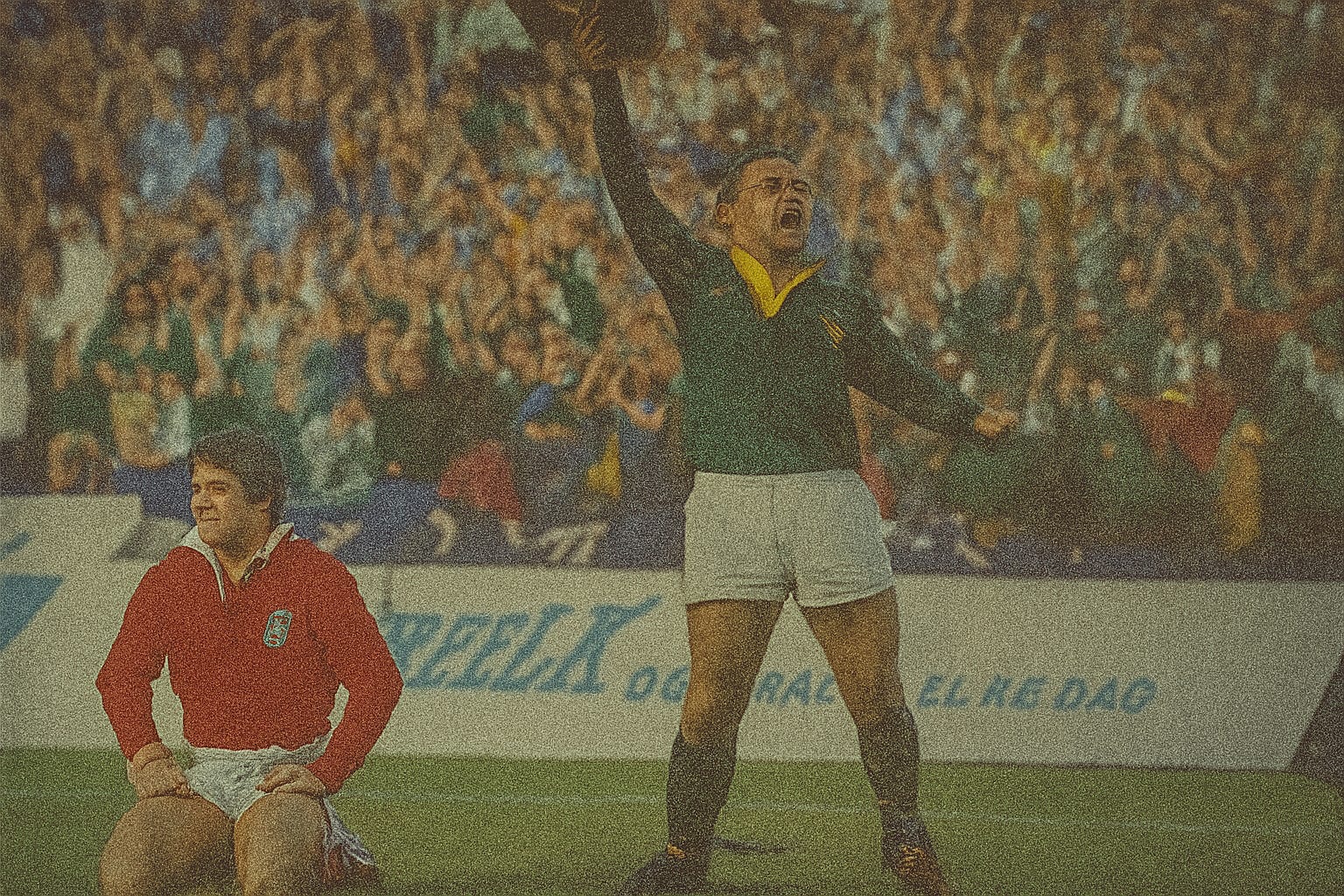
Ah, the 1995 Rugby World Cup, what a time to be alive in South Africa. The Springboks' triumphant victory over the All Blacks in that nail-biting final at Ellis Park sparked nationwide euphoria, with streets erupting in celebrations that lasted well into the night. I was right in the thick of it, cruising home in my trusty old Honda Ballade, a reliable little sedan that had served me well through my early career days. But fate, or perhaps a overly exuberant reveler, had other plans. As I navigated the chaotic post-match traffic with my mate Jose riding shotgun, a distracted driver plowed into the rear of my car, crumpling the back end like a tin can. The Ballade was gevoerts, and while we walked away unscathed, it marked the end of an era. Fresh off starting my new job at Madge Networks – a tech firm buzzing with the promise of the communications boom – I decided it was time for an upgrade. No more sensible economy cars; I wanted something with soul, speed, and style. That's how I ended up with my white BMW 320i, the best car I've ever owned. I’m sure my future wife was impressed with the car when I picked her up for our first date at Brown’s restaurant in 1999.

The BMW 320i was part of the E36 generation, a sleek and sophisticated compact executive sedan that BMW produced from 1990 to 1998. Mine was a 1995 model, powered by a smooth 2.0-liter inline-six engine that delivered 110 kW and 190 Nm of torque, mated to a five-speed manual transmission for that pure driving engagement. It was rear-wheel drive, of course, the hallmark of BMW's “Ultimate Driving Machine” philosophy, which gave it razor-sharp handling and a balanced feel that made every corner an adventure. This one was a “full house” version, loaded with all the premium options available at the time: power windows, sunroof, anti-lock brakes, and that glorious air conditioning system that could chill the cabin on the hottest Johannesburg days. The exterior was a pristine Alpine White, gleaming under the sun like a fresh snowfall, with subtle aerodynamic lines that hinted at its performance potential without screaming for attention.

But it was the interior that truly sealed the deal. Sliding into those black leather seats felt like sinking into a luxurious embrace, supple, supportive, and scented with that new-car aroma mixed with a hint of premium hide. They were heated, too, a godsend during those crisp Highveld winters, and the bolstering kept me planted during spirited drives. The dashboard was a model of ergonomic German engineering, with clear analog gauges and a straightforward layout that put everything at my fingertips. And then there was the crown jewel: the factory-installed 6 CD shuttle changer tucked away in the trunk, a high-tech marvel in an era when most cars were still rocking cassette decks. It could hold six discs at once, cycling through them seamlessly via controls on the steering wheel or the head unit. No more fumbling with tapes or single CDs while driving; this setup turned my commutes into personal concerts.

That BMW wasn't just a car; it was a rocket. Punch the accelerator, and the inline-six would rev eagerly to its 6,500 rpm redline, propelling me from 0 to 100 km/h in about 9.2 seconds – respectable for the time, but it felt blisteringly quick thanks to the responsive throttle and that signature BMW growl from the exhaust. On the open road, it ate up highways with effortless poise, stable at high speeds and begging for twisty backroads where its suspension shone. I remember blasting down the N1 toward Pretoria, the wind whipping through the open sunroof, feeling invincible. It handled like a dream, with precise steering that telegraphed every nuance of the tar. Reliability was another plus; over the years I owned it, it never let me down, sipping fuel efficiently while delivering thrills that no other car in my life has matched. Selling it eventually felt like parting with a loyal friend.

The soundtrack to those drives came courtesy of the six CDs perpetually loaded in the shuttle, a eclectic mix that reflected my moods and the mid-90s vibe. First up was Bonnie Raitt's “Road Tested,” a 1995 double live album captured during her tour, showcasing her gravelly blues-rock prowess. It's raw and electric, with standout tracks like “Something to Talk About” and a searing cover of “Love Sneakin' Up on You,” where her slide guitar wails over funky rhythms, evoking smoky bars and heartfelt storytelling. Then there was my John Denver CD, a compilation of his greatest hits, full of folk-country anthems that transported me to wide-open American landscapes. Songs like “Take Me Home, Country Roads” and “Rocky Mountain High” are uplifting odes to nature and simplicity, with Denver's warm tenor and acoustic strumming providing a soothing counterpoint to city stress.

For pure pop joy, ABBA's “Gold” was always ready – a 1992 greatest hits collection that's a disco-pop masterpiece, packed with infectious hooks and harmonies. Tracks like “Dancing Queen” and “Mamma Mia” burst with upbeat energy, synthesizers, and those iconic Swedish melodies that make you tap your feet involuntarily, turning traffic jams into impromptu dance parties. Paul Simon's “Graceland” from 1986 added a worldly twist, blending Simon's clever lyrics with South African township jive and mbaqanga rhythms, courtesy of collaborations with Ladysmith Black Mambazo. Hits like “You Can Call Me Al” and the title track “Graceland” are rhythmic adventures, fusing folk-rock with African grooves for a sound that's both introspective and danceable, reminding me of home even as I drove city highways.

Queen's “Greatest Hits” brought the rock thunder, a 1981 compilation (with updates) featuring Freddie Mercury's operatic vocals and Brian May's guitar wizardry. Anthems like “Bohemian Rhapsody” – with its epic shifts from ballad to hard rock – and “We Will Rock You” pumped adrenaline, perfectly matching the BMW's spirited acceleration. Finally, The Cranberries' “No Need to Argue” from 1994 rounded out the set, an alternative rock gem led by Dolores O'Riordan's haunting, yodeling voice. Songs like “Zombie” deliver powerful anti-war messages with grungy guitars and emotional intensity, while “Linger” offers dreamy, melancholic pop that's achingly beautiful, capturing the angst and hope of the era.

That white BMW 320i wasn't just transportation; it was a chapter of freedom, a vessel for memories scored by those albums. Every time I fired up the engine, it reminded me why I love driving – the thrill, the escape, the pure joy of the open road. If I could turn back time, I'd buy it all over again.

Ronald Bartels | LinkedIn | Instagram


Feathers floating in the ether of our existence

Daniel Bartels

Kathleen Bartels

André Bartels

Lenore Bartels

Ernfriend Bartels

Enid Bartels

Joey Elliot

JT Elliot

Bertha Bartels

Ludwig Bartels

Klaas

Mamncane

The Navajo understand feathers as the place where the spiritual and the physical kiss. A feather is not merely a thing the bird has shed; it is the visible trace of something that has flown between worlds. It carries prayer upward and brings messages down. It is breath made visible, spirit made tangible.

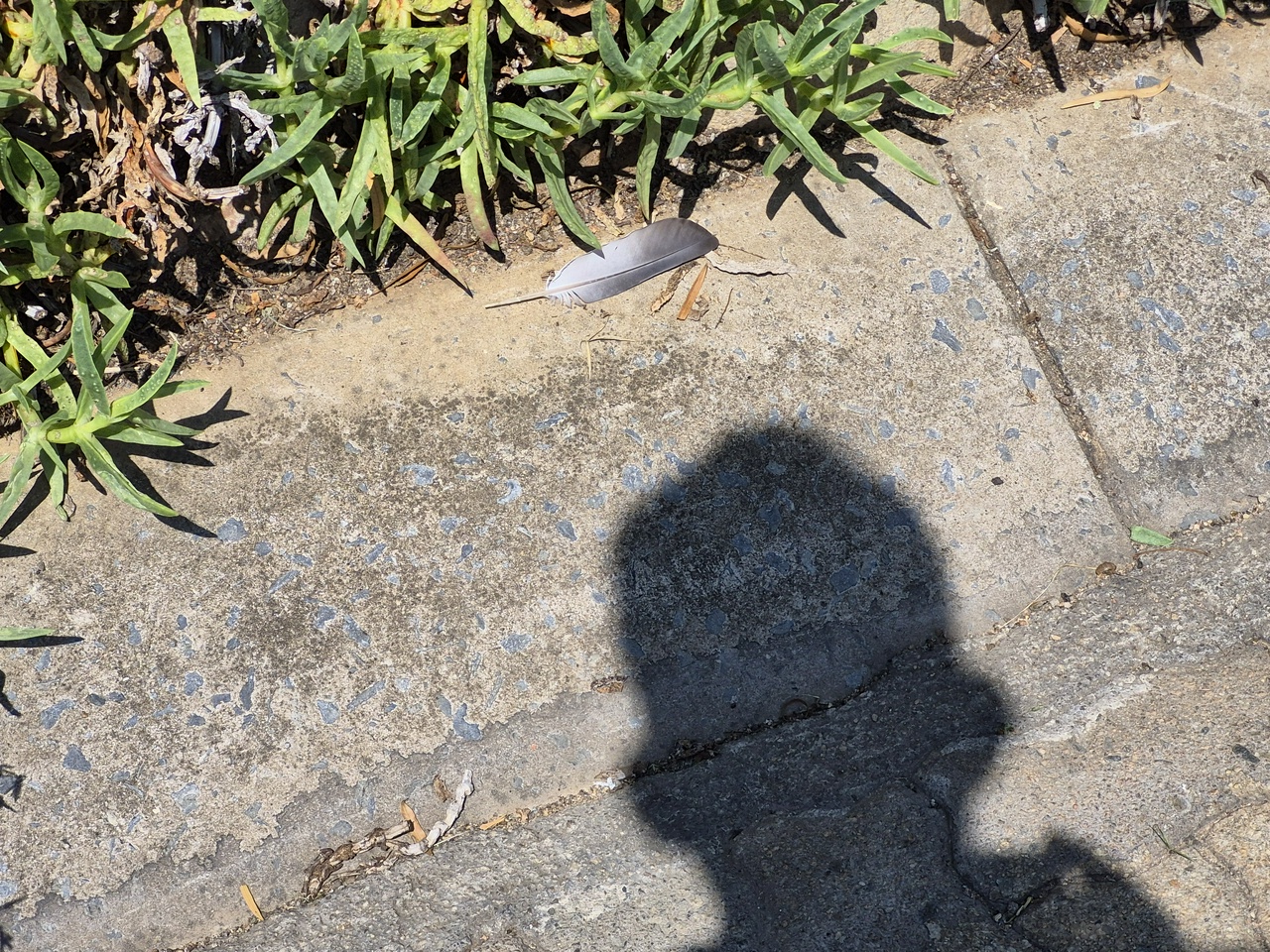
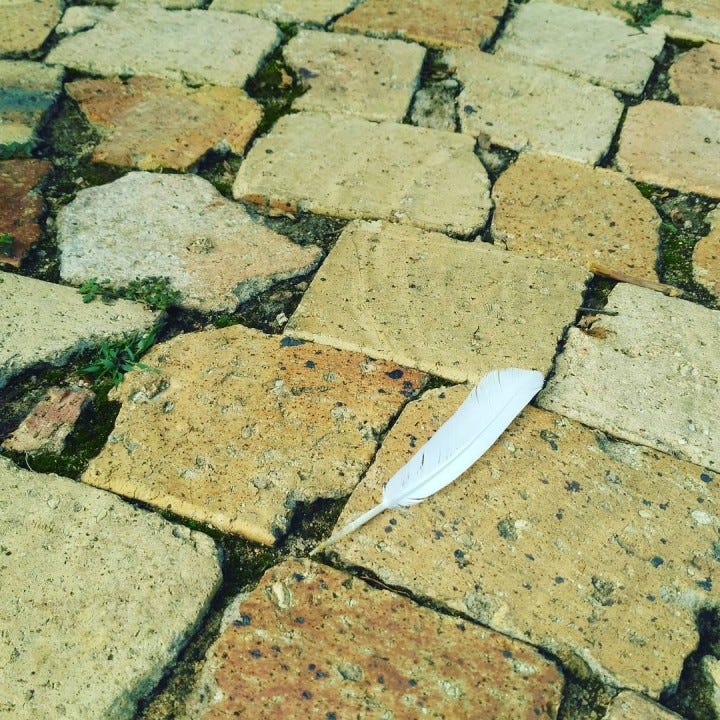
So when one finds me, drifting over granite rocks, floating on the breeze, or lying unexpectedly on brick paving, I stop breathing for a second. Whoever has passed through my life and is now on the other side, seems to lean in close. My wife’s comforting laugh. My brother’s sheepish grin. My mom with a bouquet of St Joseph’s Lilly’s in her hands. My Gomamma with a plate of Butterkuchen. The old Zulu woman who taught me how to listen to wind. Even those I knew only briefly, the ones whose kindness lodged in me like a splinter of light, they all arrive at that mystic feather.

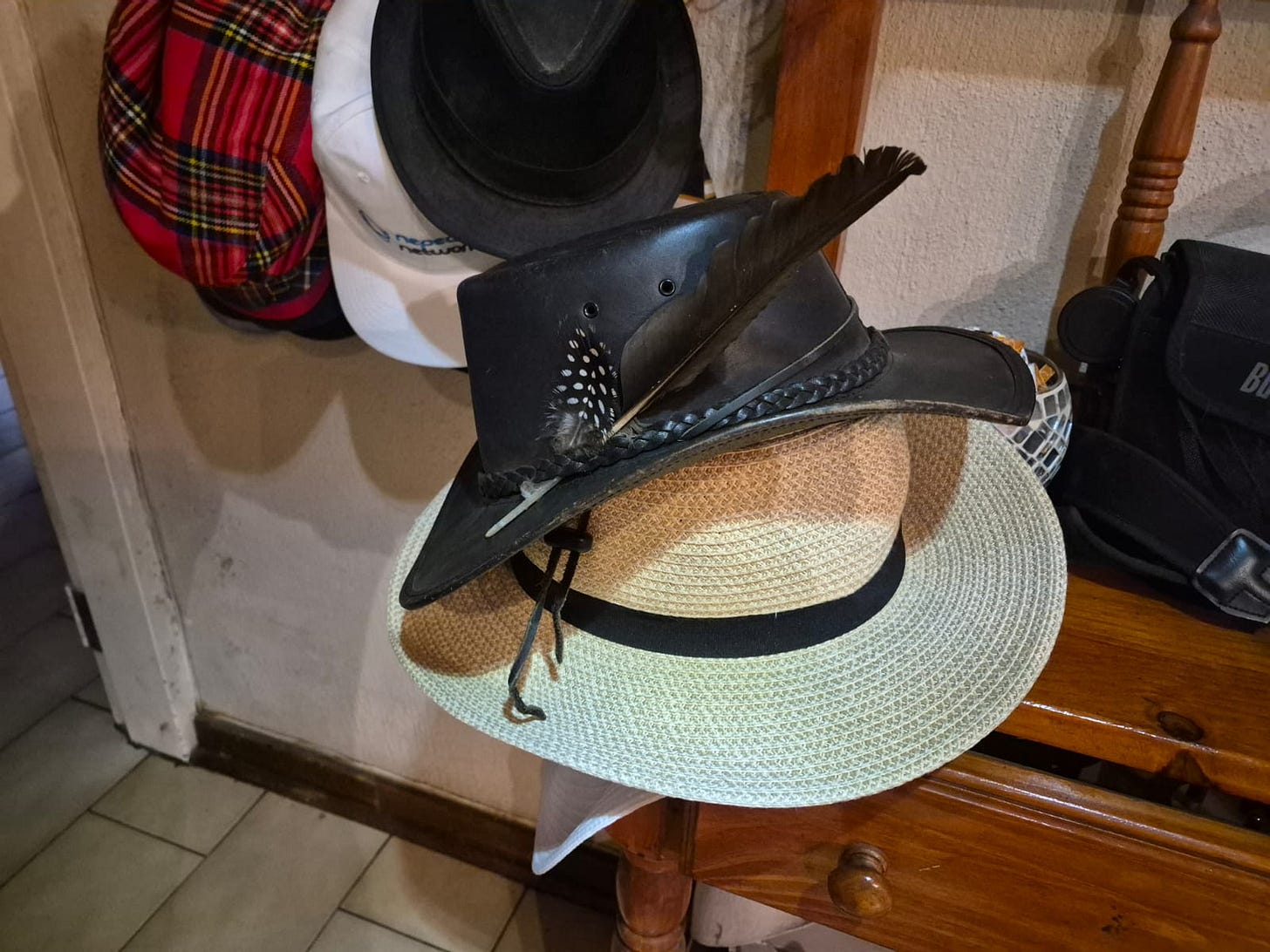
I pick it up, twirl it between thumb and forefinger, and feel the membrane between here and there grow thin. For a moment the air is crowded with the unseen. Then I tuck the feather into my pocket or my hatband and walk on, carrying them with me, lighter than grief, heavier than air. But content.

And for the living? They will only become feathers if we provide them unconditional love


Ronald Bartels | LinkedIn | Instagram


Visions of an Angel

It happened as casually as a discussion about the weather. Kathleen (Kath) had just returned from a trip to America, suffering from jet-lag, but keen to meet me as she stepped off the plane. We later went for dinner at a pub (one of those faux Irish ones that dotted our landscape in the late nineties) and I, ever practical, said, “Why don’t you just move in with me at the townhouse in Norscot Slopes?”

She looked at me with that half-smile that always meant trouble for me. “Not unless we’re married,” she said.

I laughed, then realised she wasn’t joking. So I said the most natural thing in the world: “Well, then
 shall we get married?” And just like that, with no grand gesture, no bended knee, no orchestra swelling in the background, and not even an engagement ring ready, we decided to spend the rest of our lives together. At that moment, and etched forever in my memory the entertainment system where we where having dinner played Sweet Caroline.

She insisted that the next day we go and ask her parents. So off we went to Lombardy East for supper where I went with her father to his office and Kath went with her mom to the kitchen. Her father looked at me when I asked him about his daughter’s hand and I never heard his answer. He stood up and shouted, “GLYYNNNIE!” In walked Kath’s mom, whom I suspected had been speaking to her daughter in the kitchen about it and asked me straight up what were my plans and when was the wedding. Under pressure, and on the spot, I replied that it would be before the end of the year.

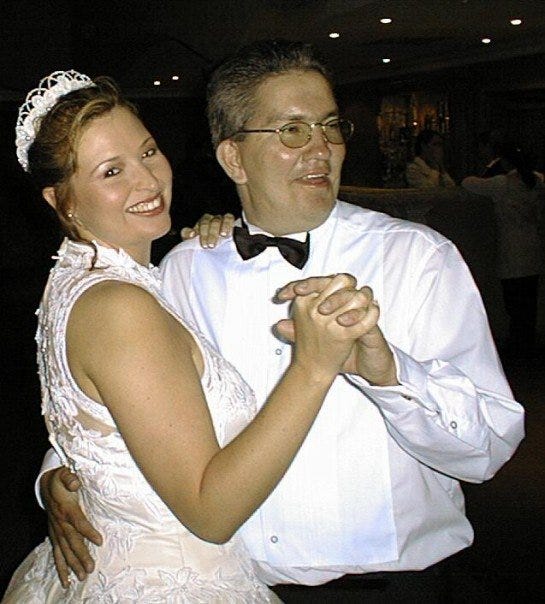
Kath loved candles. Loved them with a passion that bordered on pyromania. When it came to our wedding, she turned the altar at Avianto into a fire hazard of biblical proportions. Round candles, square candles, triangular ones (well actually they were mini-pyramids), and one enormous pillar candle that looked like it had been stolen from a medieval cathedral. When they were all lit, the heat rolled off the altar in waves. The poor priest stood closest, sweating through his vestments, being gently braaied in the name of romance. I could see the beads of perspiration on his forehead and knew exactly how he felt. My suit felt like a sauna. All I could think was: Let’s get this done before we all spontaneously combust. I suspect the priest felt the same; he delivered the shortest homily in Methodist history and practically sprinted through the vows.

The reception was a blur of faces, some beloved, some vaguely familiar, some I met that day and never saw again. Weddings are strange that way; they gather your entire life into one room for a few hours, then scatter everyone back into the wind like what the coyote did to the stars.

We escaped for a brief honeymoon at Mount Grace, then a few indulgent days at the Beverly Hills in Umhlanga. But the real honeymoon, the one we still talked about years later, was Ireland, Bunratty Castle, the Ring of Kerry, rain that felt like a blessing, and Kath laughing in the wind with her hair flying wild at the Cliffs of Moher. To this day, my happy place is Durty Nelly’s at Bunratty.

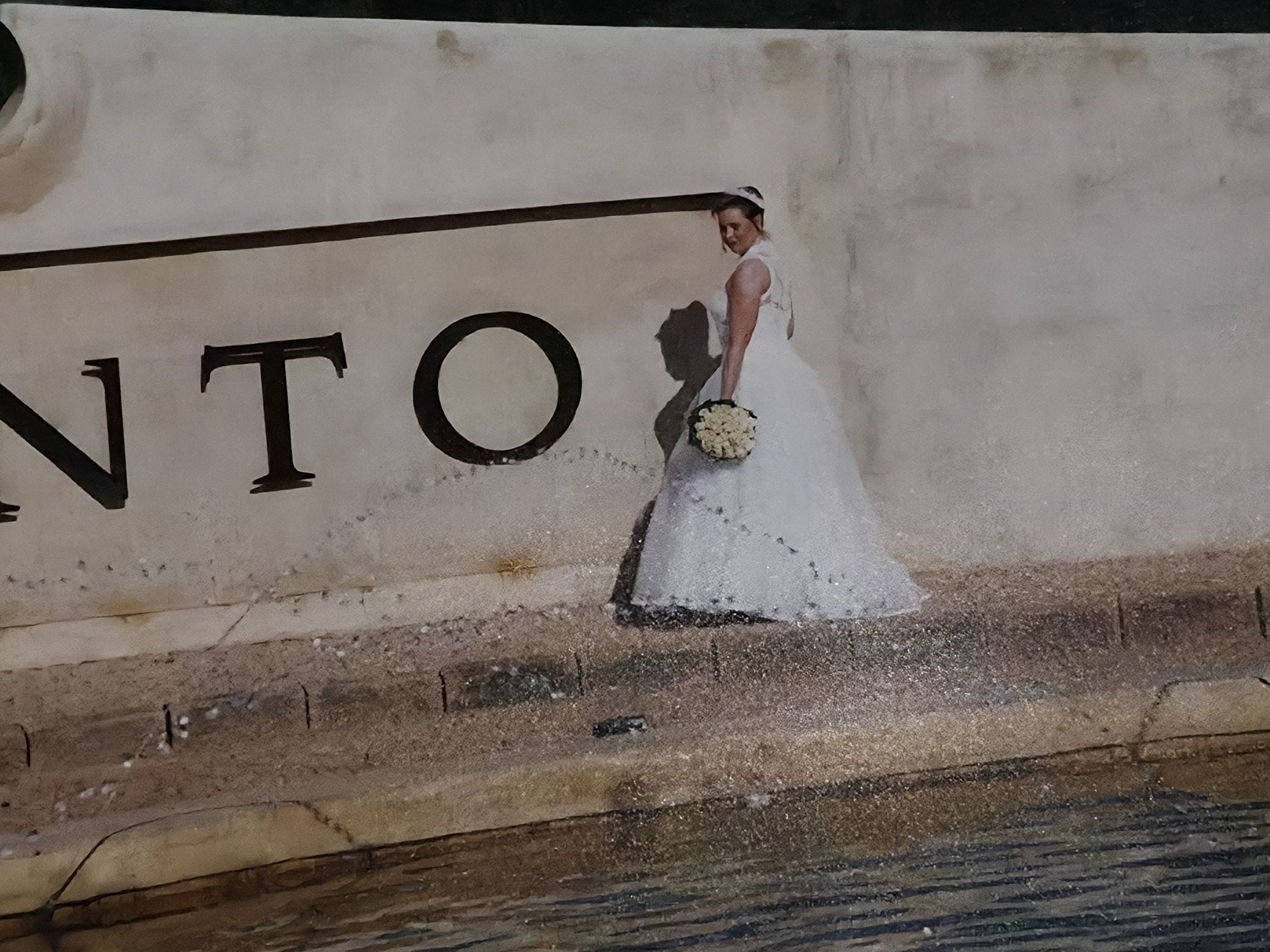
Looking back, it was a magnificent day. And still, on quiet weekend mornings when I’m out on eddy, I take the route past Avianto in Muldersdrift. I slow down as I pass the entrance, glance backwards, and I swear I see her standing there in her wedding dress, holding that bouquet of white roses, smiling at me like she’s been waiting all this time.

I married an angel & she is still there.

This was the the song at the wedding reception. In contemplation, she was already preparing for what was about to happen in choosing it. Most pertinent was that she changed to it at the last moment, away from a Shania Twain ballad.

Memories of the first social media network used on party lines around the village of New Hanover

Copper Lines

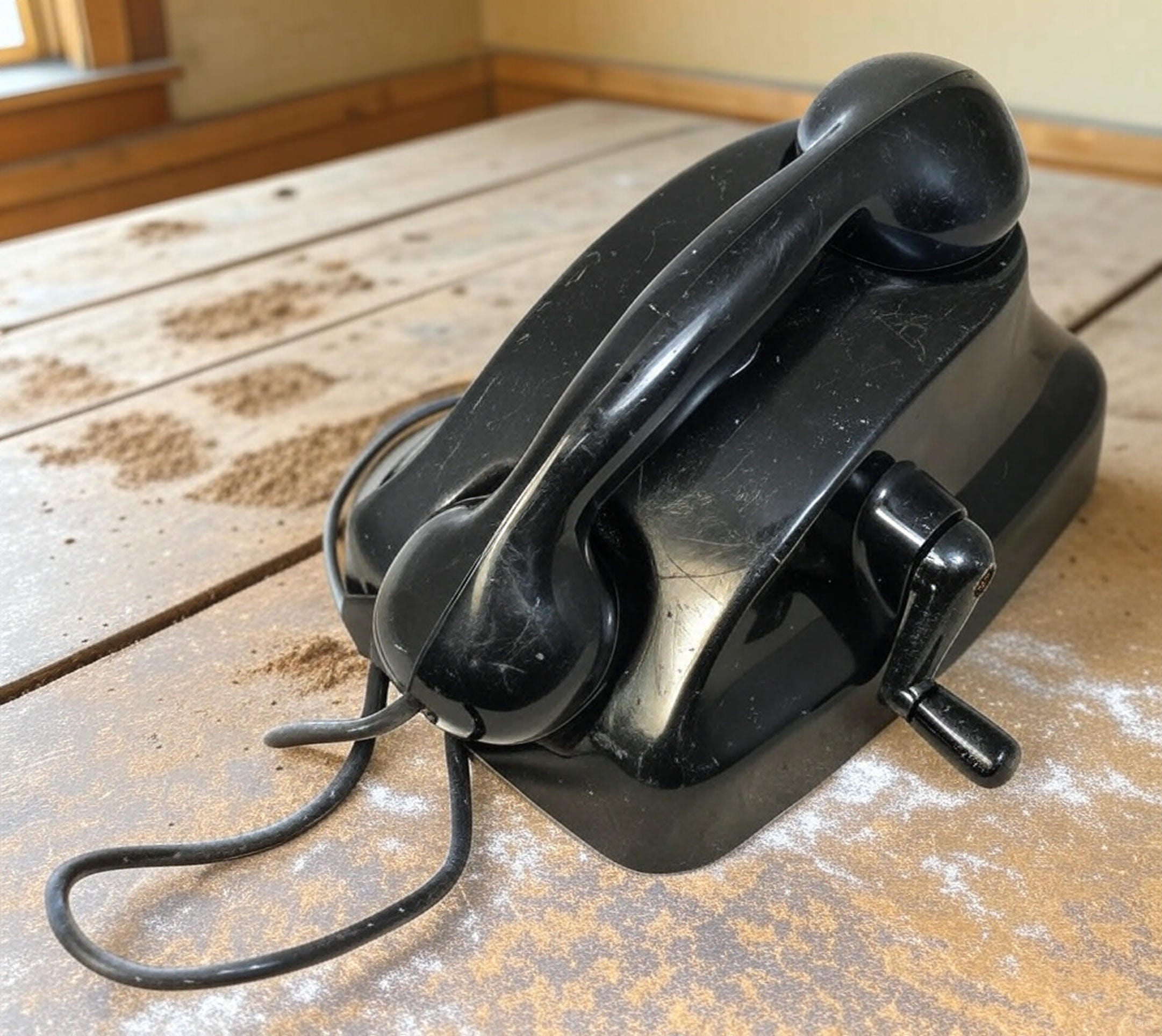
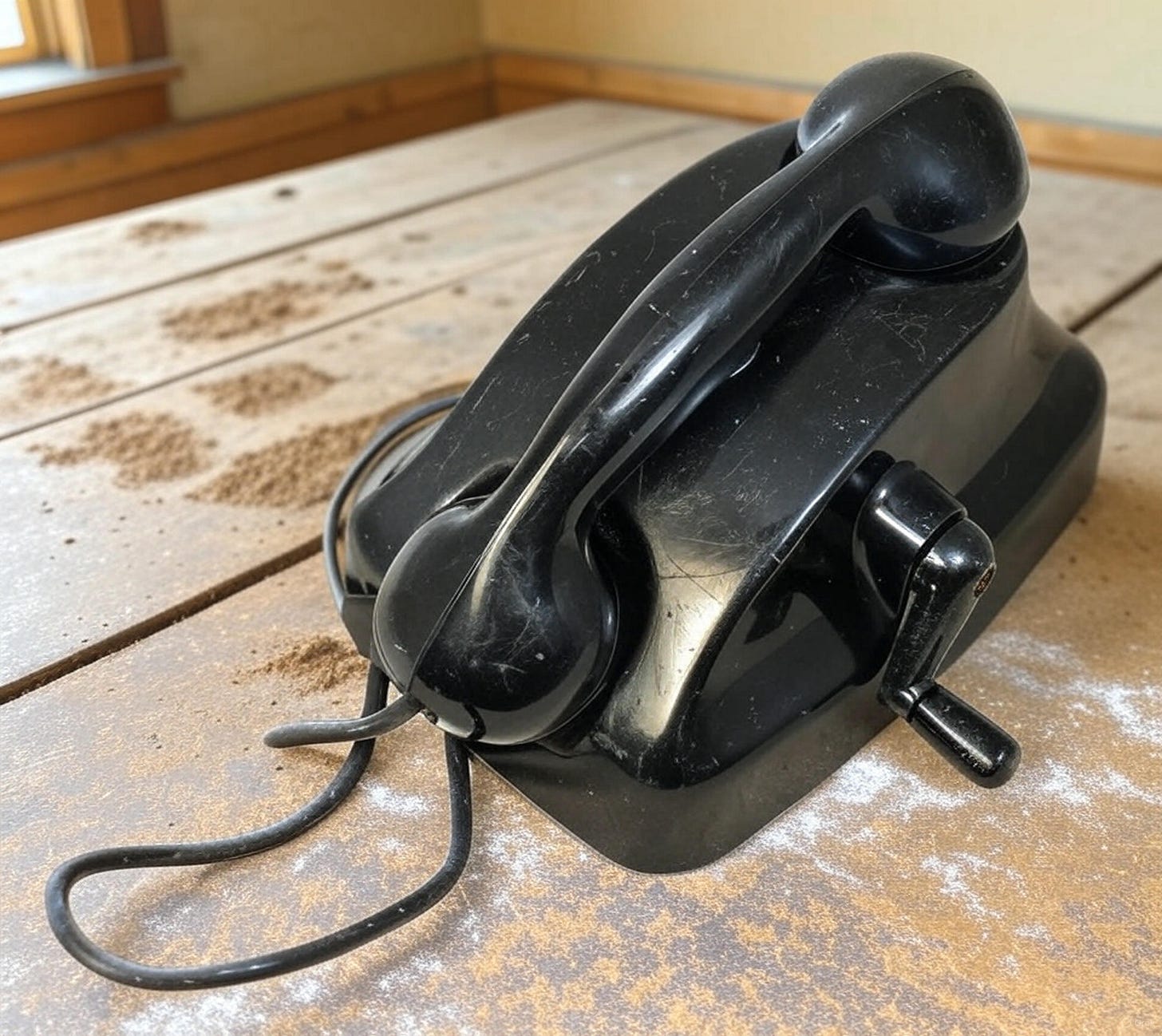
In the 1970s, our farm in the Midlands of Natal, 15 kilometers from New Hanover, was a world of its own, stitched together by copper telephone lines that stretched across the valley. Our phone number was 1821, party line 18, signaled by two long rings and one short. The whole line shared the connection, so every number’s ring echoed through the heavy Siemens Bakelite phone in our passage. You’d hear the hum of the line, while outside the wires were alive with the chatter of birds who used it a useful perch, and you’d wait for your code to pulse through. Pick up too soon, and you’d catch someone else’s conversation, our neighbor’s code, 1811, was one long ring, one short. If you were nosy, you could eavesdrop, but the telltale click of the receiver gave you away. On a farm party line, secrets didn’t last long, and affairs were impossible. We joke that we had social media before it was invented, courtesy of the local exchange lady, Mrs. Bentfinger, who probably knew more about us than we did ourselves. Like she knew that the Madison Hill’s butcher’s neighbour was shagging his wife. Then we all heard about how he discovered them in his bed and proceeded to attempt to inflict severe bodily harm on the neighbour using two blasts from a shotgun as the scoundrel leapt through the window sonder his onderbroek and an erection. That skinder lit up the party lines for weeks.

That old Bakelite phone wasn’t just for calls. It was a beast, big, heavy, and detachable. Disconnect it, and it doubled as a makeshift cattle prodder, sparking with a jolt that could make you jump. The copper lines, humming softly, stretched 15 kilometers to New Hanover, swaying between poles that doubled as perches for the valley’s wildlife. High above, a Martial eagle often claimed the tallest pole, its sharp eyes scanning the Inyosi River below for leguaan lizards, its favorite prey, burrowing along the riverbank. That eagle was my sentinel, watching over the valley as I pedaled my golden Raleigh bicycle down the dusty paths, the wind whipping through my hair.

The ride to New Hanover was no small feat, 15 kilometers of rolling hills and rutted tracks, but the promise of a glass bottle of Coca-Cola made it worth every push of the pedals. We didn’t keep soda on the farm, so that cold, fizzy drink, bought with my pocket money, was a rare treat, a taste of something beyond our quiet world. I’d sit outside the shop, sipping slowly, watching the town move at its unhurried pace, the eagle circling somewhere above. On some days, I would cycle in the opposite direction, up a steep hill and past a shale quarry used by my dad to pave roads on the farm. Near this quarry was a secret donga that was filled with grenadillas. These would flower and turn into heaven on earth with the most beautiful passion flowers. When the fruit was ripe I would come here to suck the inside pulp out of the dark purple oval delicacy. I’d split them in half using a Swiss Army knife gifted to me from my godmother, Tante Johanna. That taste in that moment is singular ectasy! On the other side of this steep hill was my grandparents farm known as Winterhaven where I would go and have huge helpings of Butterkuchen serviced by my Oma Bertha.

Those days are gone now. The Martial eagle, once king of our valley, is endangered, its numbers dwindling as the world changed. No kid today would know the pure, wild joy of that 15-kilometer cycle, the thrill of spotting that eagle soaring overhead, or the strange intimacy of a party line where Mrs. Bentfinger orchestrated our connections. We were ahead of our time, tethered by copper wires and a shared rhythm, living a life that felt boundless under the watchful gaze of the Inyosi’s last great sentinel.

New Hanover Days

New Hanover, a sleepy rural dot in the Natal Midlands, was our town, small but brimming with character. At its heart was the post office, home to the telephone exchange where Mrs. Bentfinger ruled the lines. Dad’s postbox, PO Box 2, was my responsibility whenever we rolled into town in the Datsun bakkie. He’d hand me the keys, and I’d dash to check for mail. Around Christmas the post box would be overflowing with Christmas cards and mom would hang them up in the lounge with a string and washing pegs. A slip meant a parcel waited inside, a small thrill that broke the rhythm of farm life. The town itself was a simple affair: the White House general dealer, a butcher, a hotel with a lively bar, a couple of fuel stations, and the Tea Room. That Tea Room was my oasis, where I’d spend my pocket money on a chilled glass bottle of Coca-Cola, or, if Dad was feeling generous, a packet of Simba crisps to go with it. Salt and vinegar were by favourite, and even now when I taste them I’m transported back in time. He’d grab The Natal Witness and The Mercury there daily, papers that passed through the family’s hands before ending as kindling for the fireplace or repurposed by Mom’s clever hands. For anything big, we’d trek to Pietermaritzburg, but New Hanover had all we needed for the everyday.

We supported the Natal Rugby team. They were called the Banana Boys, and were moered – bliksemed every game. For the life of me I cannot recall ever seeing them win a game. It was kak being a Natal Rugby supporter, but we perceived. We would travel to watch them in Pietermaritzburg in a stadium that famously had posts with a singular ground post much like those you find in grid iron. Then there would be the matches at King’s Park in Durban. Man, that was crazy with crowds I had never before imagined. One game I became lost, amd my parents, their friends and the Durban police force searched for me. I was eventually found by my dad’s cousin Fred Bartels, as I was attempted to hitch a ride back on some random school bus.

Sundays meant piling into the Mercedes for the drive to the Lutheran Church, where Pastor Schreiber’s three-hour sermons tested our endurance, softened only by the church brass band’s rousing hymns. My ancestors have been Lutherans for 500 years. It’s in the blood. It’s not belief or faith its DNA, like instinct. Its not about talking or bullshitting, it’s about actions.

The real joy, though, came on Saturdays at the church bazaars. Those were feasts of German cakes and food, rich and hearty, with the added spark of meeting a few cute frauleins among the stalls. New Hanover was no metropolis, but its small-town pulse, Mrs. Bentfinger’s exchange, the Tea Room’s fizz, and the bazaar’s warmth, made it the perfect anchor for our farm life at Oakvila.

The Cowboy Kid

Back on the farm, I was the cowboy kid, living out my wild west dreams under the African sun. I’d strut around in a cowboy hat and boots, my bed draped with a cowboy blanket and cover that made me feel like I was bunking in a frontier ranch. Tucked into my belt were plastic guns or my prized Gecado pellet gun, ready for imaginary shootouts on the farm. At seven, my dad upped the stakes, letting me fire an Italian shotgun, its kick jolting my small frame. Soon after, I graduated to a Lee Enfield surplus rifle from World War II, its weight and history heavy in my hands. One unforgettable day, we went hunting, and he handed me a Remington 7mm Magnum, made in Finland—a rifle so powerful it felt like I was holding the whole valley’s strength.

Outside my bedroom window, a wild fig tree stood proud, home to a Hamerkop, my kind of bird. Slow and determined, it built its nest of sticks and mud, layer by patient layer. Each morning, I’d crawl out from under my cowboy blanket and peer out to check its steady progress, the nest growing like a monument to persistence. That Hamerkop was my quiet companion, its work a reminder that good things take time.

Before we had television we had books from the library and from Shuter & Shuter in Pietermartizburg. My parents would let me read whatever I wanted and I learnt English from reading, which has left me saying words like I read them. But there was a indulgence. It was Kid Colt photo comics. Bliksem, he was the meneer.

We had a Telefunken television in our lounge. During the day it would display the SABC/SAUK test pattern that also has a handy and very accurate time display. Then once a week, we would congregate around the television on a Thursday and watch High Chaparral. I swear it made me feel like I had been a cowboy of the Chaparral in a previous journey through time. My dad would watch the World at War. Then there was ‘n groot skandal when a naughty and explicit scene was inadverebtly shown by a technician on the SAUK. I missed that but read about it in the papers.

Before the Telefunken came to the lounge in 1976 we would rely on a friend of my parents named Harry. He had a movie projector and there was a place in Pietermaritzburg that rented movie reels. On the walls of our lounge we watched Vivien Leigh in Gone with the Wind and Elizabeth Taylor in Cleopatra. There were also countless Westerns and even Mutiny on the Bounty. Harry taught me hoe to use the projector so that he could sit and enjoy beers with my dad and I use this skill to become the designated movie man at school.

My dad purchased us a 8 bit gaming console that had pong and pelota which made its appearance not long after the Texas Instruments calculator.

Those cowboy days were magic, but they met their match one fateful trip to Pietermaritzburg. We went to the movies and watched Grease, and Olivia Newton-John, with her leather-jacket swagger, stole my heart. Just like that, my cowboy dreams were traded for a greaser’s slicked-back hair and dreams of being Danny Zuko. The wild west faded, replaced by the beat of rock ‘n’ roll and a new kind of cool.

Farmhouse Tunes

In the heart of our Natal Midlands farm, the Philips HiFi was king of the lounge, a grand wooden cabinet housing a radio, amplifier, and record player that filled our evenings with sound. We’d spin Springbok records, those cheeky bootlegs with covers featuring nude girls. Those songs were all covers and I never knew it at the time.

My sister owned a record called Cold Fact by Rodriquez, and we thought he was a rock star more popular than the Beatles. I suppose were really were hicks. My dad had German Oktoberfest Albums named Stumings. We would practice the songs for the Church bazaar that would double up during the month of Oktober as an Oktoberfest. We would all receive large ginger heart shaped cookies to hand on a string around you neck. If you met a cute fraulein, you would persuade her to take a bite of your cookie and hopefully she would reciprocate. Man, those church functions were kinky.

The real magic, though, came from the radio. Mornings kicked off with Jet Jungle, its wild adventures blasting through the speakers, fueling my imagination as I pictured myself soaring alongside the hero. At night, we’d huddle around for Squad Cars, the gritty tales of cops and crooks crackling through the air, keeping us on edge as the farm settled into darkness. Those radio shows, pulsing from the Philips, were the soundtrack of our days, weaving stories as vivid as the Inyosi valley outside.

Streamside Wanderings

On our farm in the Midlands of Natal, I’d wander along the stream that wound through our land, its banks dotted with Leonurus plants, utshwala bezinyoni, the orange wine of the birds, as the Zulu called them. Their vibrant orange flowers, like bursts of plumage, floated above neat green stems, catching the morning light. Sunbirds, their wings flashing like jewels against the blue sky, would swoop down in an aerial dance, gently kissing the bright blooms before flipping upside down to continue their performance in the air. I’d follow their flight, captivated by their grace, each movement a small celebration of the valley’s life.

The stream was a treasure trove. I’d pause to peer into its pools, searching for Platannas, those remarkable frogs that thrived despite being a favorite snack of the Hamerkop. Also along the stream the beautiful musical song of the Oriole bird could be heard. The water’s journey began three-quarters up the hill, where massive granite boulders, nicknamed izinqe for their buttock-like shapes, marked the stream’s source. Up there, timid Reedbuck roamed, their piercing, eerie calls echoing through the air. When startled, they’d bolt for higher ground, their fleeting forms feeling like encounters with celestial creatures, etched forever in my memory.

Even now, I find peace sitting by a stream, listening to the water’s gentle babble. It pulls me back to those simple, pleasant days when life was a quiet adventure, guided by the dance of sunbirds and the call of the wild.

Farm Wheels and Lessons

Life on our farm in the Midlands of Natal was punctuated by the roar of engines and the thrill of speed. My dad’s pride and joy were his Mercedes-Benz cars, each proudly bearing the registration NH 3000. “In Alle Welt,” he’d say, the best cars in the world. I’d sit in the driver’s seat, staring at the three-pointed star on the hood, imagining it as the gun sights of my fighter plane, soaring over the Inyosi valley. To this day, I dream of owning one, a piece of that legacy.

My mom, though, was the real star behind the wheel. No typical farmer’s wife, she was a vision—always dressed like a queen, makeup flawless, with her Elliot, Murray, Bruyns, and Martitz lineage shining through. She was a rally driver at heart, and my friends and I would pile into the back seat, egging her on to “put voet in die hoek!” She’d grin, floor the accelerator, and we’d tear down the dirt road toward the Sterk Spruit bridge. Just before it, we’d hit a bump that sent our stomachs lurching into our throats, our laughter filling the car. Mom was awesome, a beautiful force of nature who made every ride an adventure.

But if there was one vehicle that stole my heart even more than a Mercedes, it was the Massey Ferguson tractor. During holidays, I’d climb aboard and lose myself in the rhythm of farm life—harvesting potatoes, ploughing fields, the diesel engine’s growl and the rich smell of turned earth wrapping me in bliss. Mastelek, my dad, even invented a hydraulic stumper for the tractor, a beast of an implement that yanked tree stumps from the ground like they were nothing. The number had a number of Massey Ferguson tractors including a large four wheel drive one. One day a large Fiat tractor was delivered that also had a large plough. It was of a shock that my dad had broken his loyalty to Massey Ferguson. The Fiat was a dirt burnt orange colour as opposed to the Ferrari red colour of the Massey Ferguson. It was ugly. But damn that Fiat was powerful and could plough at twice the rate of the others. I was soon tearing up the fields in that Fiat.

One day, though, in the workshop, Mastelek swung a hammer to fix something on a tractor, missed, and split his thumb open. I couldn’t help but laugh, big mistake. His backhand was swift, and the lesson was clear: never laugh at your elders, no matter how foolish the moment. That sting stayed with me, as much a part of the farm’s heartbeat as the Mercedes’ purr or the tractor’s rumble.

Ghost Prank Gone Wrong

My boet and I were the kings of pranks on our Natal Midlands farm, always scheming up ways to stir the pot. One evening, we outdid ourselves, rigging a ghost from old sheets tied to a foefie slide, with my battery-operated toy train tucked underneath. Its ghostly whistle was the perfect touch. We crept to the domestic workers’ quarters, knocked on the door, and launched our spectral creation from a nearby pine tree. The screams that erupted were music to our ears, and we collapsed under the pines, rolling with laughter, barely able to breathe.

But the joke turned sour fast. Bullets ripped through the branches above us, splintering bark and sending us scrambling. We burrowed into the dirt behind the tree trunks, hearts pounding, praying we’d make it out alive. When the gunfire finally stopped, we slunk toward the farm kitchen, only to run smack into Dad, his Lee Enfield .303 still in hand. His face was thunder. “Did you cause that screaming?” he demanded, thinking tsotsis had attacked the workers. We nodded sheepishly, and the sjambok came down hard. That night, we learned the hard way that pranks could cost more than laughs in the wilds of the Inyosi valley.

Cane Burn Tragedy

On our farm in the Natal Midlands, part of the hills was set aside for a sugar cane quota from the Dalton Co-op. When cutting season rolled around, the cane fields were set ablaze to strip away the leaves, turning the landscape into a roaring inferno. The burns were a spectacle—flames leaping skyward, heat pulsing through the air, and smoke curling over the Inyosi valley. At the edges of the fields, Zulu workers gathered, knobkerries in hand, ready to bludgeon the Vondos, cane rats that fled the fire and were prized as a delicacy.

I remember one evening vividly, standing just behind the line of workers, their knobkerries raised, eyes fixed on the crackling cane. The air was thick with anticipation and the rustle of animals escaping the flames. I heard a commotion, the sound of something charging through the stalks. The Zulu in front of me, head down, knobkerrie high, braced for a Vondo. But instead, a Reedbuck burst from the field, its powerful leap slamming straight into his head. He crumpled to the ground, and a sickening hush fell. The Reedbuck stumbled, then bolted up into the hills. We later learned the man’s neck had been broken, and he didn’t survive. That moment, seared into my memory, cast a shadow over the fiery spectacle, a stark reminder of the wild unpredictability of life on the farm.

The Idyllic Oakvila Farmhouse

Nestled halfway up a gentle slope in the Natal Midlands, our farmhouse, Oakvila, was a haven of rustic charm, built from handmade red clay bricks that glowed warmly in the sun. It was dusty by mom climbed in and would make it spotless. The corrugated iron roof sang with every rainfall, from a soft patter to a thunderous roar, a constant reminder of nature’s presence. Wrapping around the house was a polished red tile stoep, where white garden furniture and a metal table held court. Here, we’d gather for braais, Dad, Mastelek, slicing steaks on a wooden board, serving them straight from it in what Mom called “the German way,” plates be damned. A honeysuckle creeper climbed a trellis by the front door, its frosted glass inlays catching the light, while a path of pavers led to a tap nestled in Nile grass. That tap was bliss, we’d drink straight from it, mouths open like eager dogs, water cool and pure.

The lawn cascaded down one side of the house, while on the other, a Holly bush stood like a year-round Christmas tree beside vibrant Bougainvilleas in every hue. Inside, the front door opened to a lounge where our Philips HiFi and Telefunken TV lived alongside a patterned lounge suite. Dad’s Lazy Boy sat in the corner, his throne for reading, and a round table hosted our meals, Willow pattern plates for everyday, blue Italian Spode for special days, and enamel cups for breakfast’s rugged charm. Dad’s view on breaking the bread for special occasions involved eating tripe with kop en pootjies. Nooit! A stone fireplace warmed the room, its chimney smoke signaling suppertime during the cold months, calling us home from farm adventures.

A passage ran the length of the house, the Siemens Bakelite phone at its heart, linking us to the world. At one end, a grand staircase spilled into the garden and pool; at the other, the kitchen hummed with life. An Esse wood stove shared space with a modern Defy, a Kelvinator fridge stood sentinel, and outside the kitchen door, a top-loading freezer sat beside hessian mealie bags where our dogs, Schnauzers, Labradors, and a scruffy Keeshond, lounged. My first dog, a Corgi named Girly, met a tragic end from a puffadder’s bite. In the scullery, jars of sauerkraut lined the cupboards, sometimes exploding under pressure in the dead of night, jolting us from sleep. Inside the kitchen was a stunning yellow wood table with a marble top.

The kitchen shared a back stoep with Dad’s farm office, where his ancient desk held treasures like a manual calculator, later upgraded to a Texas Instruments electronic one. My golden Raleigh bicycle rested there, ready for valley rides.

The bathroom, with its cast-iron bath on ornamental feet, was a Roman emperor’s dream, soaking in it felt like ruling an empire. My cowboy-bedspread room sat beside it, my boet’s in the far corner, with our parents’ and sister’s rooms nearby, the latter housing a tall gun cabinet. Yellowwood floors, laid over brick piles, creaked with history, a crawl space beneath hiding a water pump for when the hilltop reservoir, a concrete giant surrounded by African rock pythons that scared me witless, ran dry. A grass-thatched gazebo shaded by a coral tree stood by the pool, and a lean-to garage sheltered Dad’s Mercedes-Benz, reached by a road lined with blooming Mayflower bushes. Between the garage and the pool my sis had a Wendy house. Copper phone lines stretched from the gate, pinned to poles with enamel knobs, while raised diesel tanks loomed nearby.

Beyond the farmhouse, potato fields stretched to the Inyosi River, framed by a chicken coop, workers’ quarters, and a disused cowshed near a mulberry tree dripping with sweet black fruit. Old sheds, buzzing with carpenter bees, and a new steel one housed tractors and potato-sorting operations, the workshop alive with tools and an air compressor I’d mischievously use to puff air into my mouth. A guava orchard, with a lone kumquat tree, led to the sheds, leguaans scurrying across as the dogs went wild. The garden bloomed with tree tomatoes, custard apples, avocados, litchis, and old Gros Michel bananas, while red dongas nearby were our bobsleigh runs on plastic fertilizer bags. Outside my window, a wild fig tree teemed with weaver nests and a Hamerkop’s massive abode, flanked by two sturdy oaks that gave Oakvila its name. The female weavers would destroy the nests made by the males and the yard would be littered by these crushed dreams and attempts. Life in that quaint red-brick house was a tapestry of simple joys, woven from the land’s rhythms and the love that filled its walls. For years I believed the carpenter bees were bumble bees, and then I read that there are no bumble bees in South Africa. Those old sheds were a treasure trove of old stuff and antique farming implements. I should have saved a few to have as works of art in my garden and on shelves in my house. Behind the Oaks was an old grave and the area was covered by mint plants. If you walked there, your footsteps would crush the mint and the smell would explode into your nostrils.

Farm Mishaps & Miracles

Growing up on our farm in the Natal Midlands was a whirlwind of adventure, but not without its scrapes and scares. My boet and sis made sure I was no stranger to the doctor’s needle. One day at my grandmother’s house, my boet, full of mischief, leaped onto the lid of a toy storage compartment in which I had climed to find a toy, splitting my eyebrow open like a ripe peach. Off we went to the doctor, a neighbouring farmer who lived in a mock castle and cruised in a Pontiac, for stitches. Not long after, my sis, in a fit of sibling rivalry, bliksemed me with a spade while we played in the sandpile Dad was using to build a new pool. Another trip to the castle-dwelling doctor, another round of stitches, and a story to tell.

But those were tame compared to two heart-stopping moments that could’ve ended me. The first was on a hike up Blinkwater, the highest peak near our Oakvila farm, named for the way its rock-bound streams gleamed like flashing jewels on sunny days. A big group of us trekked to the summit, where cliffs loomed near the top. I got too close to the edge, slipped, and went over, my heart lurching as the ground vanished. Miraculously, I caught a small tree sprouting just below the cliff’s lip, clinging to it with every ounce of strength. I was frozen, certain I’d plummet to my death at a tender age. A teacher from Wartburg school, calm and steady, talked me down, coaxing me to let go so he could haul me back to safety. His voice was my lifeline, and I’ll never forget the relief of solid ground under my feet.

The second brush with fate came one Sunday at a braai with Mom’s cousins at Hazelmere Dam, where Dad and I also collected Black Bass for our farm’s dams. I was swimming, carefree, when a powerboat roared by, its wake slamming into me. I gulped water, the swirl dragging me under. Disoriented, I thrashed, unable to find the surface, my lungs burning. No one noticed, except one of Mom’s three male cousins, who all happened to be nicknamed Whisky. He dove in, yanking me from the depths just in time. I don’t recall which Whisky saved me, but I raise a glass to him—Sláinte. Those moments, stitched and saved, were the wild pulse of life on the farm, where danger and deliverance danced as close as family.

Seventies Snaps & Rides

Growing up in the seventies on our farm north of New Hanover, cameras were a world away from today’s instant clicks. My Kodak Instamatic was a treasure, but patience was the name of the game. You’d snap a picture and wait, days, weeks, sometimes months, until the film roll was full. Then came the day trip to Pietermaritzburg, a proper outing from the Midlands. We’d drop the film off at the shop, but the wait wasn’t over; the developed photos were only picked up on the next trip, maybe a week or a month later. Because of that, I’ve got fewer photos from my childhood than I’d like, but the memories? They’re vivid, etched deep in the Inyosi valley’s dust.

The half-hour ride to school was its own adventure, shared with our neighbors, the Seales, in their a VW Kombi purchased by Dr Seale and Mastelek, a symbol of my early years. As the youngest, I’d often claim the “dog box” at the back, curling up for extra sleep on the way. That air-cooled engine hummed warmth in winter, toasting my backside as I dozed. On lucky days, Mom would slip me 5c, or was it 10c?, for a bottle of Coke at the New Hanover Tea Room on the way home, the cold fizz a perfect reward after a long day.

School itself was a revelation. My Sub A teacher, always in a miniskirt, was a vision I was too young to fully appreciate, only later, stuck with stern old battle-axes, did I realize how lucky I’d been. More surprising was learning my own name. At home, I was “Bublein” or “Beebee,” my nickname. On my first day at school, the teachers called for “Ronald,” and I just sat there, oblivious. They grumbled to my parents about my unresponsiveness, but how was I to know? I’d never answered to Ronald before. That yellow Kombi, those slow-developing photos, and the discovery of my real name marked the rhythm of a childhood where life unfolded at its own sweet pace.

Potato Fields & Pranks

On our Oakvila farm in the Natal Midlands, Dad was a master of potatoes, cabbages, and madumbis, turning the Inyosi valley’s soil into a bounty. We farmed BP1, Pimpernel and van der Plank potatoes. The were separate varieties for baking, frying and general purpose. He built two dams from scratch, crafting an irrigation system that brought the fields to life. I was his right-hand man, digging trenches with the TLB and laying pipes, sweat and dirt bonding us to the land. To this day, I fancy myself a useful plumber, thanks to those long hours under the sun.

Potatoes were my love—versatile, hearty, and the heart of our table. Mom worked magic with them, baking, boiling, or mashing, and I savored every bite. The whole process, from planting to irrigating to harvesting, was a rhythm I cherished. But madumbis? They were the real stars. Dad’s were unmatched, and on harvest day, local Indian families would roll up in their bakkies, eager to buy them for the best curries in the Midlands. The air would hum with chatter and the promise of spicy feasts.

The potatoes had their own journey, either sold to Simba or shipped to the Durban market. We’d load the spud truck, piling it high with sacks, and make the trek to the city. There, a Lebanese market agent worked his charm to sell them off. We’d bring along local workers to help, and for the new ones, wide-eyed at their first Durban trip, we’d pull a classic prank. We’d coax them into the snake park’s python cage, their mates collapsing in laughter as the poor soul realized they were face-to-face with a slithering giant. We were bad bliksems, alright, but those days in the potato fields, with pipes, pranks, and madumbi curries, were pure, mischievous joy.

The Big Smoke

I now live in the Big Smoke but my heart is still in the Inyosi Valley.

The Floods

The floods have a way of sneaking up on you in KwaZulu-Natal, like an old ghost revisiting the living. I was just a kid back then, maybe ten or eleven, when the Inyosi River turned from a lazy trickle into a roaring beast overnight. It was the late ‘70s, I think—long before the one that ravaged New Hanover again this year, claiming lives and homes in an eerily familiar fury. Our family farm was on the Inyosi’s banks, where it fed into the Sterk Spruit before carving its path through town. That morning, the sky was still bruised with storm clouds, and the water was swollen and furious from days of relentless rain.

My boet, my big brother, a daredevil who could’ve been Evel Knievel’s long-lost twin—spotted the chaos first. “Come on, let’s ride it!” he shouted, his eyes lit up like Christmas lights. Before Ma could holler us back, we’d grabbed those big black tractor inner tubes from the pool and launched ourselves into the current. The Inyosi carried us downstream like we were on some wild amusement park flume, whooping and hollering as branches whipped past and the water tugged at our legs. It felt like freedom, invincible kid stuff, until we hauled ourselves out a few kilometers down and trudged back home, soaked and grinning.

Later that day, Dad piled us into the bakkie to check on town. New Hanover was a war zone—roads turned to mudslides, houses half-submerged, folks wading through waist-deep water with whatever they could salvage. The air smelled of wet earth and despair. Multiple people had drowned, swept away in the night. I remember hearing about the Dutchman most vividly. He was an immigrant from the Netherlands, a quiet bloke who’d built his life on the river’s edge. His place was right in the Sterk Spruit’s path, and when the flood hit peak, it took him and his home in one merciless gulp. They found his body downstream days later. Seeing the wreckage up close stripped away our morning’s thrill; it was a harsh lesson in how nature doesn’t care about your plans or your bravery. My boet, though, he just shrugged it off with that Knievel grin, already plotting our next adventure. God, I miss that reckless spirit.

Ronald Bartels | LinkedIn | Instagram

The Try Line of Life

Rugby has always been more than a game in my family; it's a thread woven through generations, binding us with tales of triumph, heartbreak, & the sheer grit of the scrum. Hanging on the wall of my house is a sepia-toned photograph of Riebeeck Elliot, the rugby legend of our clan. Known as “Windhond” for his blistering speed on the wing, he toured Argentina as a Junior Springbok in the thirties. In that faded image, he's captured mid-stride, lean and fierce, his eyes locked on some distant try line. As a boy, I'd stare up at it, imagining the roar of foreign crowds & the dust of South American pitches. Riebeeck wasn't just a player; he was a symbol of what rugby could mean freedom, adventure, & a dash of immortality. Little did I know then that my own story with the oval ball would be far less glamorous, marked by mud, mates, & one catastrophic collapse.

My earliest rugby memories take me back to the green fields of Wartburg Primary School in the mid-1970s. I was a lanky kid, more enthusiasm than skill, but I found my place at the back of the scrum as an eighth man. There's something primal about those schoolboy games, the smell of fresh-cut grass, the sting of tackles, the camaraderie of a team of misfits charging forward. We'd play barefoot half the time, on makeshift pitches, dreaming of one day donning the green & gold. Rugby wasn't just sport; it was our rite of passage, a way to prove we were tough enough for the world.

My father, ever the enabler of these dreams, introduced me to the Boks early on. In the mid-seventies, he bundled us into the Mercedes for a trip to King's Park in Durban to watch the Springboks take on the French. I was barely old enough to grasp the rules, let alone the international rivalry, but the atmosphere was electric, a sea of flags, the thunder of boots on turf, and the collective heartbeat of thousands. The game itself is a blur now; what I remember is the chaos afterward. In the throng of exiting fans, I wandered off, lost in the maze of concrete stands and vendor stalls. Panic set in as the crowds thinned, & hours ticked by before I was found, not by my frantic parents, but by my dad's cousin, who scooped me up like a wayward rugby ball. That day taught me rugby's first hard lesson: the game doesn't end on the field; it spills into life, full of unexpected twists.

By the time I reached high school at Grey College in Bloemfontein, rugby had become my obsession. Grey was a rugby powerhouse, where the sport was religion and the first team were our gods. Every Saturday, we'd pack the stands to watch them battle it out, the air thick with chants and the crack of collisions. Our matric year had its share of glory and gut-punches. We lost badly to Queens College, where Daryll Cullinan, yes, the future cricket star, and Gary Loest carved us up like a Sunday roast chicken in Hamilton Hall. Another game etched in my mind was against Grey High, where our player Spiertjies who played flyhalf got carded for some overzealous play, leaving the team short-handed and seething. At Grey I played in the front row, alternating between prop and hooker, where the real war was waged, grunting, heaving, & holding the line against opponents who seemed twice my size.

But rugby giveth & rugby taketh away. My playing career came to a shattering end on those very Grey fields during a loose scrum that collapsed like a house of cards. I remember the pop, the white-hot pain, and then being carted in an ambulance after being injected with morphine to Universitas Hospital. My leg was broken in 27 places, a mosaic of fractures that required months of rehab. The doctors said I was lucky to walk again, let alone run. That injury closed the door on my dreams of higher honors, but it opened my eyes to rugby's brutal beauty. From then on, I was a spectator, a fan whose passion burned brighter from the sidelines, with the occasional appearance for the Crocs.

The 1980 British Lions tour remains the pinnacle of my rugby-watching life, a series that captured the nation's soul. I was in Standard 6 at Grey, wide-eyed & wild-hearted, when I went to Bloemfontein Stadium for the second test against the Springboks. We snagged seats right on the try line with Ian Delport, sitting on the fietsbaan, so close we could feel the spray of sweat from the players. The Lions were formidable, but the Boks were on fire that day. Gysie Pienaar, our local hero, ran them ragged, culminating in a spectacular try right in front of us. He dove over the line, ball clutched tight, then leaped up, punching it skyward like a conquered trophy. The crowd erupted; I screamed until my throat was raw. There's a historic photo of that moment, Gysie in triumph, the Lions deflated, & if you look closely in the background, there's a scrawny kid losing his mind. That was me. I talked about it non-stop to my dad, badgering him until he caved & took us to the final test at Loftus Versfeld in Pretoria. The Boks clinched the series, and I felt like I'd been part of history.

Fast-forward to 1995, and rugby was evolving – more professional, more global. South Africa was hosting the World Cup, a symbol of our post-apartheid rebirth. I watched the quarterfinal against Samoa with my brother Andre and my mate Jose, at the famous Ellis Park. The Samoans were demons on the field, tackling with a ferocity that bordered on mythical. Brian Lima, the “Chiropractor,” crunched into the Boks like a human wrecking ball, leaving bodies in his wake. Andre Joubert, our fullback maestro, broke his hand early but soldiered on. Chester Williams stole the show with a hat trick, his speed and guile turning the tide. That game was raw, visceral, a reminder that rugby could be as beautiful as it was brutal. We celebrated late into the night, toasting to a team that embodied our nation's resilience.

The late nineties brought me abroad, chasing rugby adventures across Europe. In Lyon, France, I witnessed Andre Joubert, the “Rolls Royce of Fullbacks”, single-handedly dismantle the French side. It was a masterclass: his sidesteps, his vision, his unflappable calm under pressure. I was there in the stands, decked out in Bok gear, when the camera panned to the crowd. Back home, my mom spotted me on TV and called immediately, not to cheer my fame, but to ask, “What happened to your hair?” The story behind that buzz cut is pure serendipity. Earlier that day, we'd bumped into a busload of US Marines from Germany at a McDonald's. Two were South Africans, homesick and hyped for the game. They invited us aboard for lunch, beers from their cooler boxes, stories swapped over burgers. In a moment of inspired idiocy, they suggested I get a Marine haircut. Why not? A few hours later, shorn like a recruit, I was beaming on national television.

The celebrations continued post-game in a cozy kerb site establishment, where a group of Frenchmen next to us bought rounds of apple cider. Amid the laughter & clinking glasses, I fell head over heels for the waitress, her smile, her accent, the way she navigated the chaos with grace. It was a fleeting crush, but in that moment, rugby had gifted me more than a win; it had opened doors to the world.

Not all trips ended in victory. The test at Twickenham against England was a heartbreaker. We were in it until the dying minutes when Stefan Terblanche, our winger, dropped a straightforward ball in-goal, gifting Jeremy Guscott an easy try. The loss stung, but the pub afterward was legendary. Emboldened by pints, we belted out “Shove that chariot up your ass”, a cheeky twist on their anthem, narrowly escaping the ire of the English fans. For that game, I'd borrowed a massive South African ceremonial flag from the High Commission & tied it to a long pole I'd “liberated” from our hotel. Waving it like a madman, I made national TV again, a blurry green-and-gold blur in the highlights.

My TV streak culminated in Dublin at Lansdowne Road, where the Boks trounced Ireland. The Guinness flowed like the Liffey, warming us against the Irish chill. After the final whistle, still buzzing from the win, I gave an incoherent interview to an Irish broadcaster outside the stadium gates. Slurring praises for the team and the pint in my hand, I must have sounded like a true rugby philosopher, or a complete fool. Either way, it was broadcast back home, adding to my accidental fame.

Looking back, rugby has been my life's try line, a pursuit of glory amid the tackles and tumbles. From Riebeeck's legendary tours to my own shattered leg, from lost-child escapades to international escapades, it's shaped who I am. It's taught me resilience, the joy of brotherhood, and the thrill of the chase. Even now, as I glance at that sepia photo on the wall, I feel the pull of the pitch. Rugby isn't just a game; it's the story we live, one scrum at a time.

Rugby at Grey College

At Grey College, rugby isn’t just a sport—it’s a way of life, woven into the very fabric of the school’s identity. Some might call it religious fervor, but I see it as a means to an end, much like American football in U.S. schools. The passion for rugby fuels school spirit, builds camaraderie, and ensures Grey’s legacy endures. It’s not about worshipping the game; it’s about what it does for the boys who pass through those hallowed halls. Braam Fischer, a Grey scholar & rugby player, embodied this. He played, he contributed, and he moved on, just as I did.

I went to Grey, and like many, I played rugby. In the lower standards, I found myself on the B team, eventually scrumming down in the front row for the Crocs. The Crocs weren’t the first team, nor were they the Cherries, but they were ours. The Head of Rugby’s job is clear: manage the Crocs and Cherries, mold them, and push the first team to be the best in South Africa. It’s a system, a machine, not unlike the Head of Mathematics drilling algebra into our heads. One’s not better than the other, just different. At Grey, we don’t say, “I played rugby at Grey.” We say, “I went to Grey.” That’s the badge we wear, rugby or not.

Nihil Stabile Quod Infidum. Nothing is certain that is untested. That motto hung over us, on and off the field. Playing for the Crocs, I learned lessons no classroom could teach. In the front row, you’re not just pushing against the opposition, you’re pushing against yourself. Grit, resilience, trust in the bloke next to you: these were the real trophies. I’m on the Grey Honours board, not for rugby, but for my own contributions. No rugby player ever claimed their name shone brighter than mine, nor mine than theirs. At Grey, it’s not about why your name is etched up there, it’s that you’re part of something bigger.

The scrum taught me that. You lock in, head down, & drive forward, knowing the team’s behind you. Maths class gave me logic; the Crocs gave me heart. Both shaped me, driving me to feel alive.

Ronald Bartels | LinkedIn | Instagram